
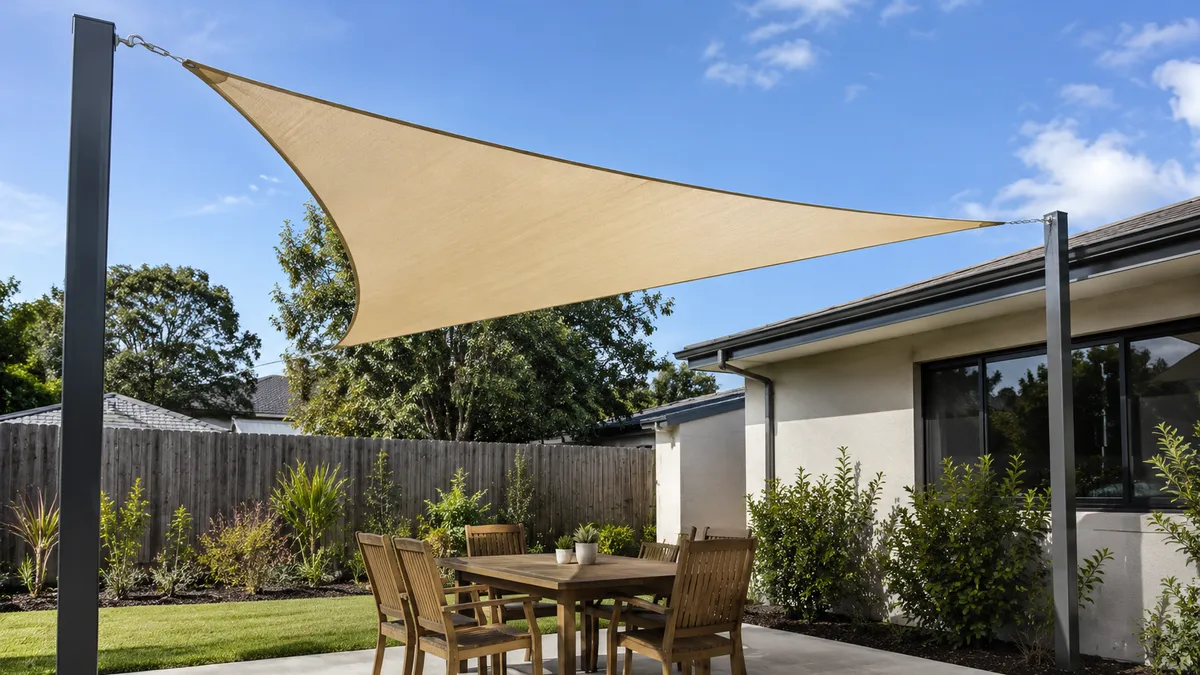
Quick Answer
Quick shade sail route
Choose a shade sail when three or four structural anchor points can hold tension and the site can create slope, hardware room and removal access. Measure fixing points before fabric size, then choose shape and material. Use an awning, umbrella, canopy or no-drill shade when supports are weak or retraction matters.
Choose a shade sail when each corner can reach structural masonry, a steel post or engineered timber; choose another shade when the only supports are fence posts, fascia or trim.
Guide Path
Choose your shade sail path
Start with shape, size and installation limits before buying fabric or hardware.
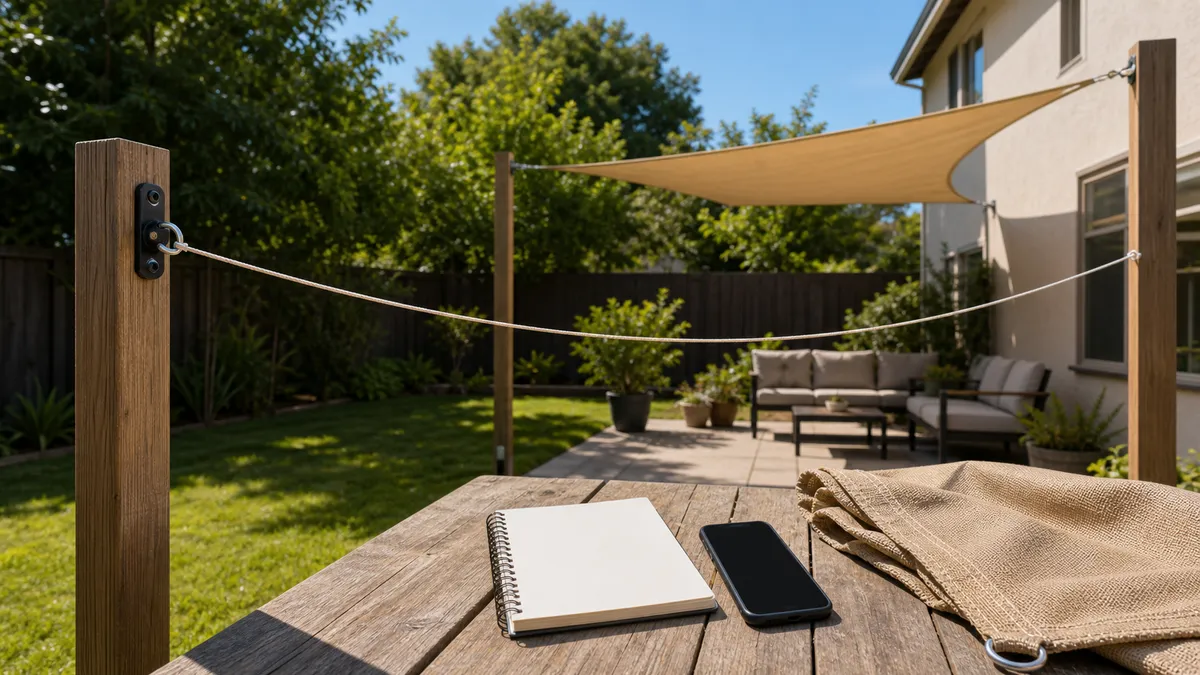
Shade sail size calculator
Sizing starts with the anchor spread, not the patio floor size.
The calculator helps estimate fabric after leaving room for turnbuckles, shackles and edge movement.
Best when:You know the planned anchor points but not the sail size.
Check first:Hardware gaps, corner movement and sun angle.
Use the size calculator →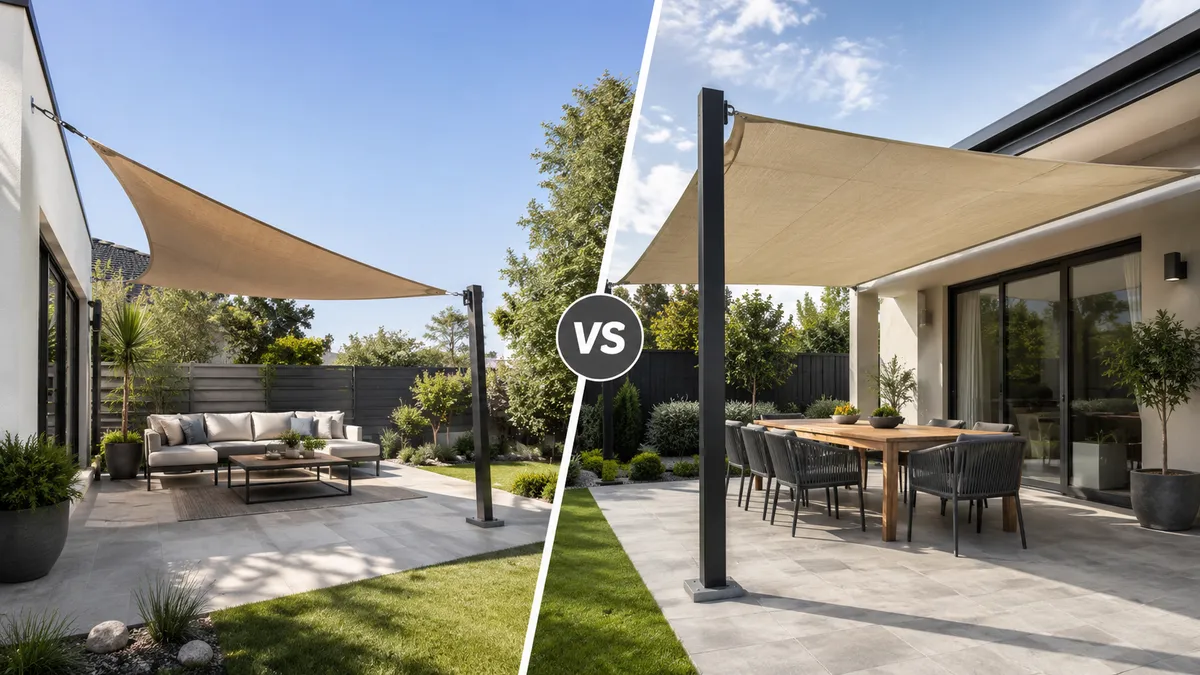
Triangle vs rectangle shade sails
Shape changes coverage, anchor count and where shade actually lands.
A rectangle covers more area, while a triangle can fit awkward corners with fewer anchors.
Best when:The furniture shape or anchor layout is still undecided.
Check first:Anchor count, runoff direction and coverage gaps.
Read the shape guide →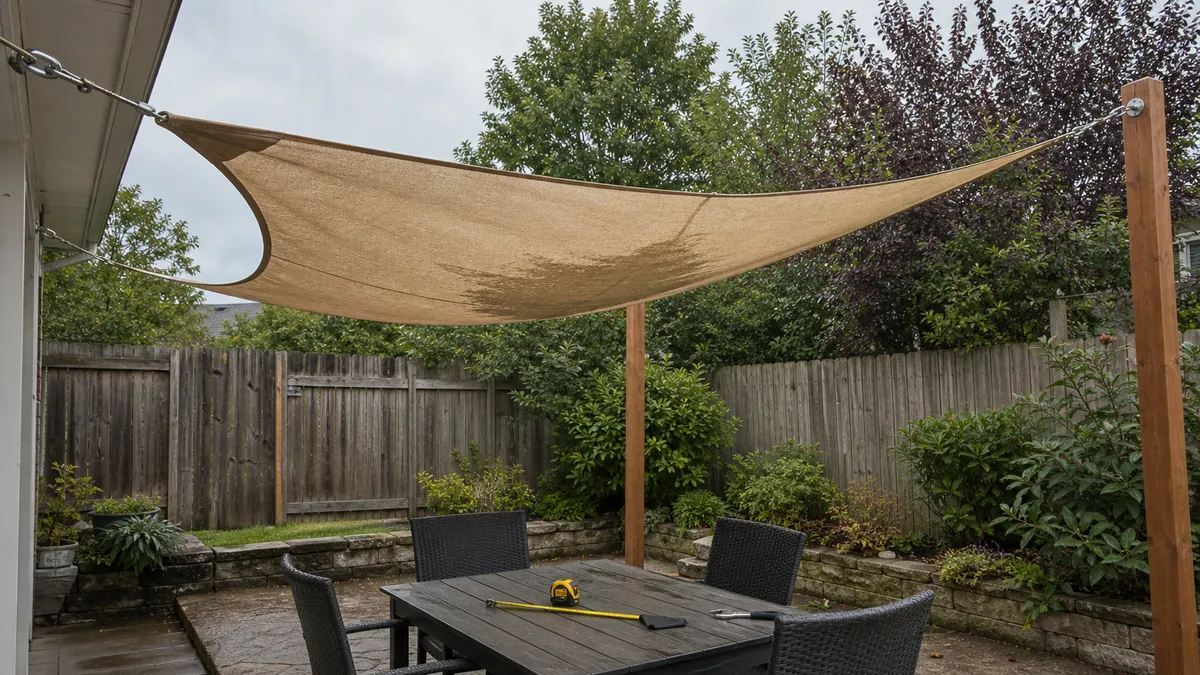
Shade sail installation mistakes
Most bad sail installs start with weak posts, poor slope or no room to tension the fabric.
Check the failure points before buying a larger sail or extra hardware.
Best when:You are planning posts, wall plates or the first install.
Check first:Post depth, wall structure, slope and tension hardware.
Read the installation guide →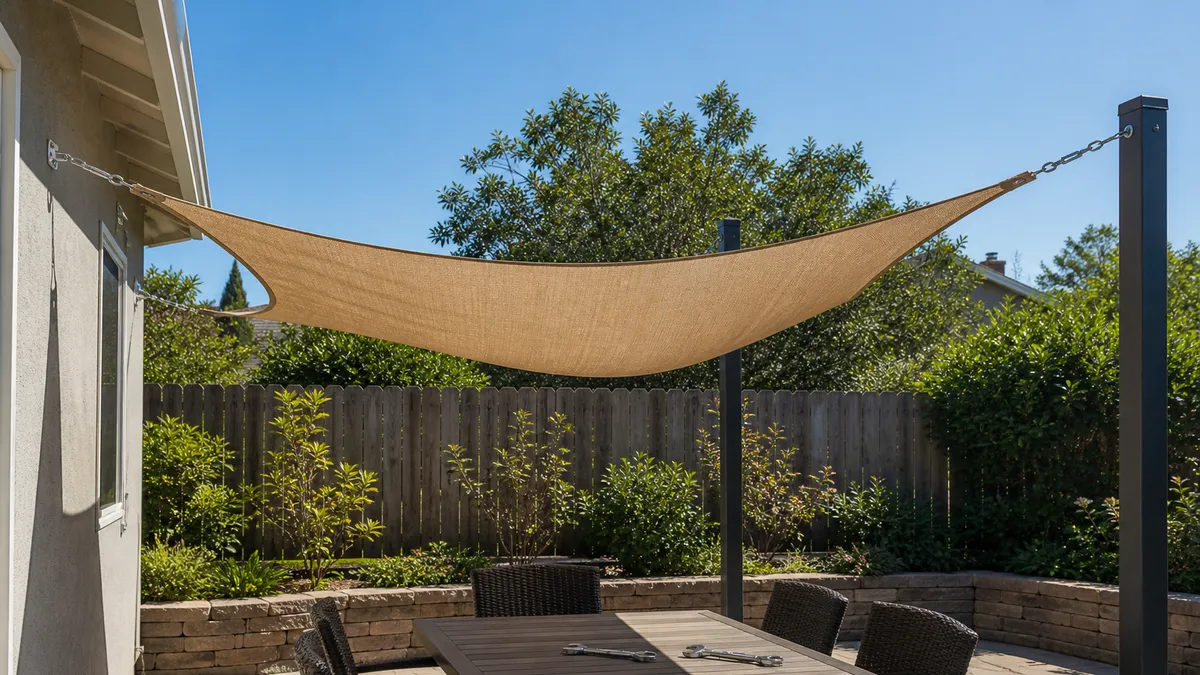
Sagging shade sails
Sagging usually points to fabric stretch, weak anchors, poor tension or the wrong hardware gap.
Retensioning helps only when the structure can actually hold the load.
Best when:An existing sail droops, flaps or loses shade shape.
Check first:Turnbuckles, corner movement and anchor strength.
Read the sagging guide →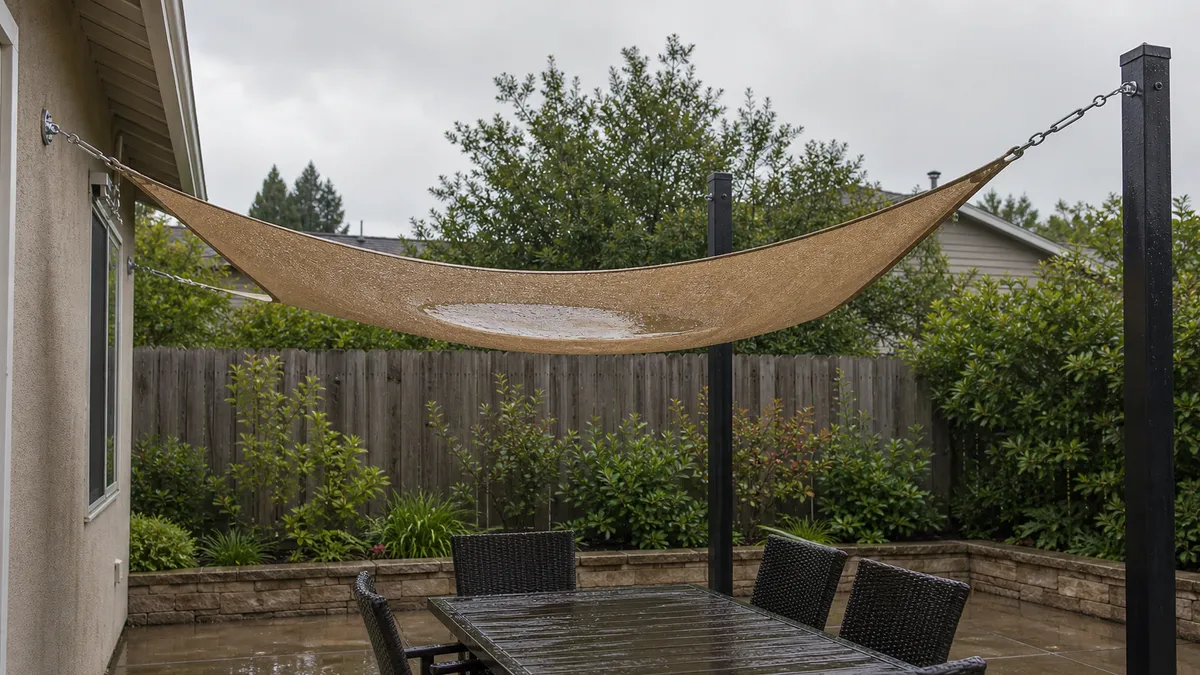
Shade sail water pooling
Water pooling is usually a slope and fabric problem, not just a cleaning issue.
Waterproof sails need a stronger runoff plan than breathable mesh.
Best when:Rain collects in the fabric after storms.
Check first:High-low corners, pitch and waterproof fabric choice.
Read the pooling guide →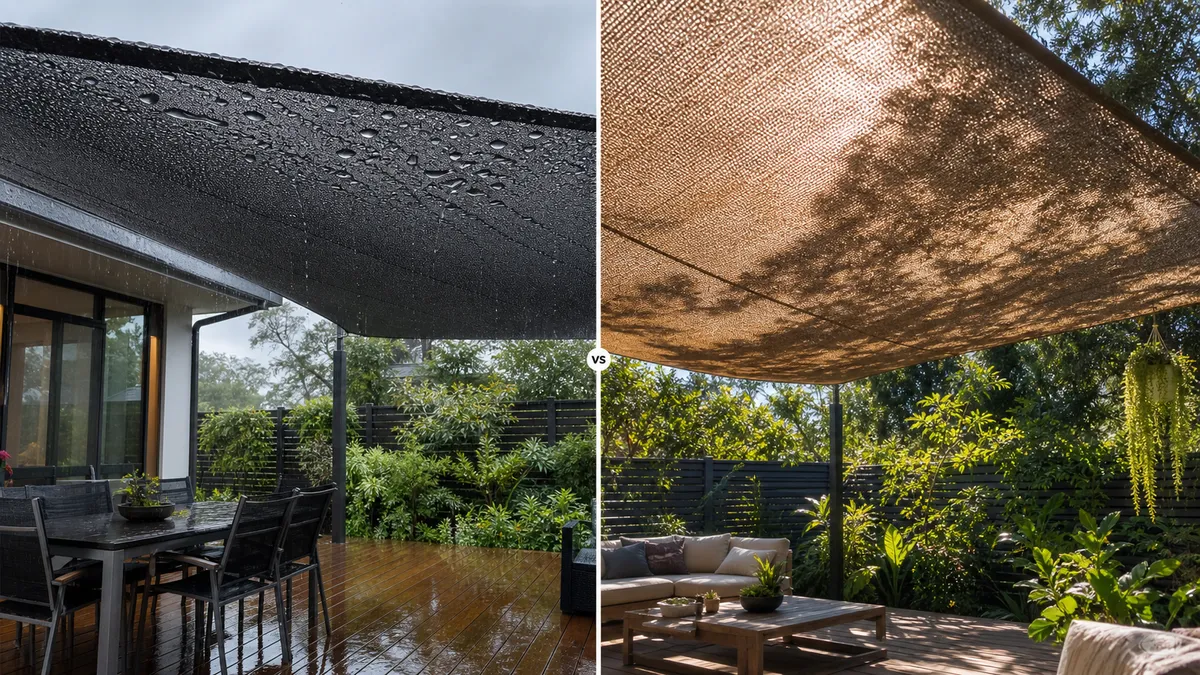
Waterproof or breathable?
Fabric choice changes heat, rain behavior and slope requirements.
Use the comparison before treating a shade sail as rain cover.
Best when:You are choosing between HDPE mesh and waterproof coated fabric.
Check first:Runoff, pooling risk and whether the anchors can create real fall.
Read the fabric guide →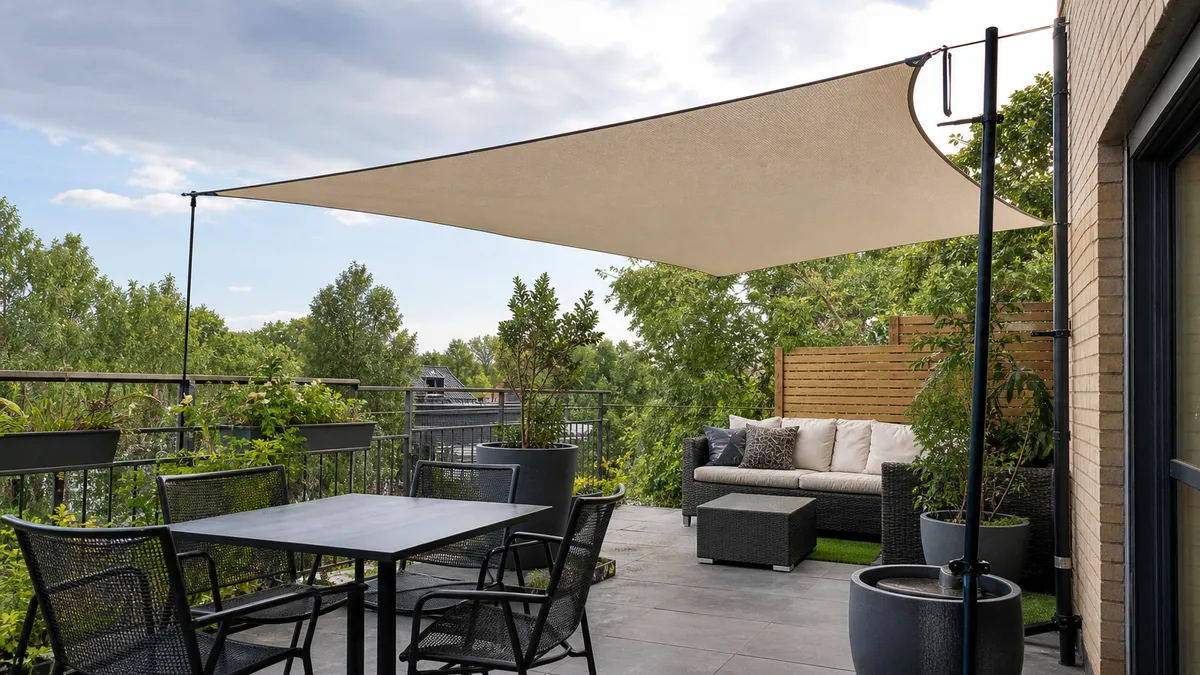
What should I buy for a patio?
A patio sail has to match furniture coverage, anchor strength and daily use.
Use the buying guide when the site is a patio rather than a broad yard plan.
Best when:You want a patio-specific shortlist before ordering.
Check first:Dining area size, wall or post options and fabric type.
Read the patio buying guide →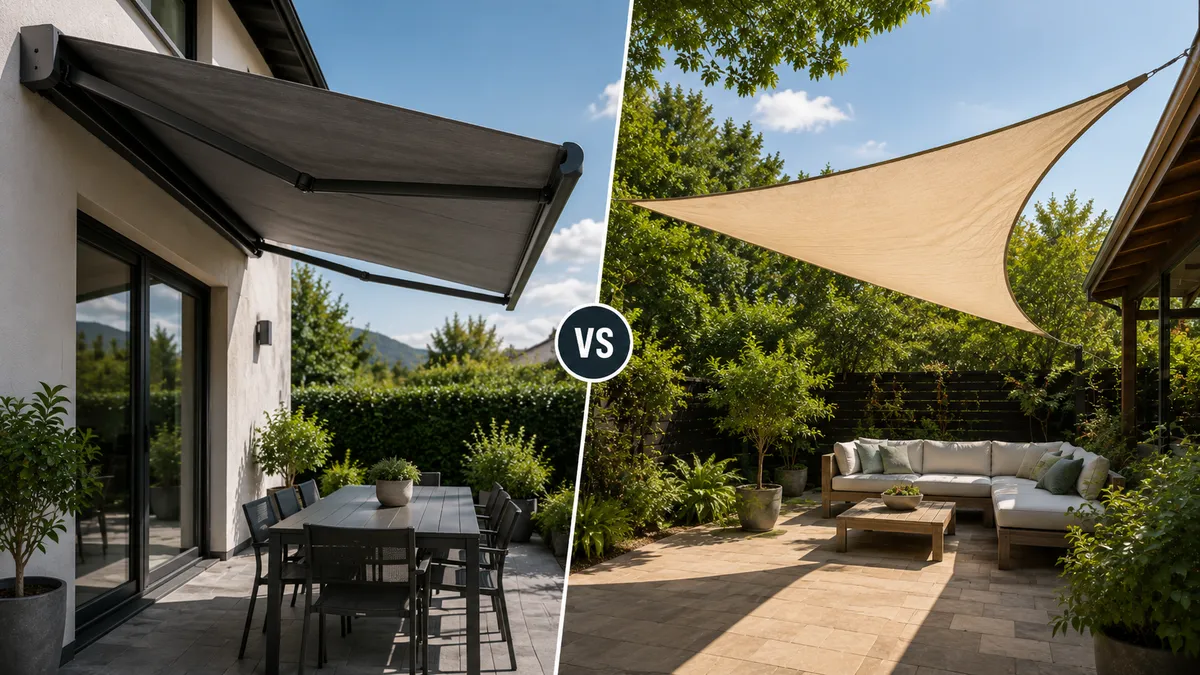
Shade sail vs awning
Sails and awnings solve different patio problems even when the shaded area looks similar.
A sail needs anchors and stays exposed, while an awning retracts from a wall.
Best when:You are choosing between fixed overhead fabric and house-mounted retractable shade.
Check first:Wall structure, post options, wind and daily use.
Read the comparison guide →Start with anchors, not fabric size
Each sail corner needs a real fixing point before fabric size means anything. Mississippi State University Extension frames a shade sail around anchoring points, posts, hooks and turnbuckles, not around color or a packaged square-foot number. That is the right order for a patio, driveway edge, pool area or garden seating corner.
Name the support at every corner. Structural masonry, a steel post, reinforced concrete or engineered timber may work when the attachment method is right. Gutters, fascia, vinyl siding, trim, light pergola rails and thin fence posts are stop signs until the load path is verified. A sail looks light, but tension and wind pull on the anchors.
Do not buy yet if the wall construction is unknown, the only support is a fence post, the corners are nearly level, the hardware gap is missing, the sail cannot be reached for storm removal, or the budget ignores posts and footings. Move to the shade sail installation guide, post guide or wall-anchor guide before buying fabric.
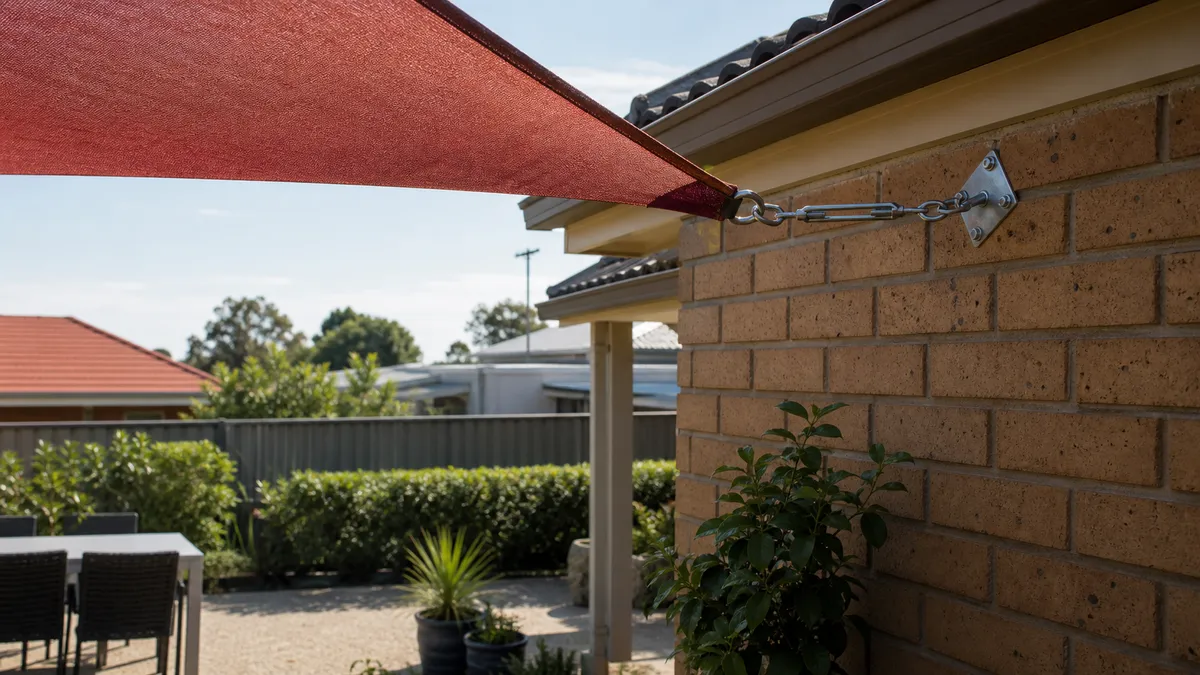
A house wall helps only when the fixing reaches real structure behind the finish. Shade Sails Canada separates wall, post and frame hardware for a reason: the eye plate or pad eye is only as trustworthy as the substrate behind it. If the answer is unclear, use a freestanding post or temporary canopy instead of hopeful drilling.
Also check the side view. A low corner must clear heads, doors, chair backs and normal walking routes; keep cooking equipment outside the sail footprint rather than treating clearance as permission. A high corner that needs a ladder for every storm is not practical either. Plan the anchor height, access and takedown while the drawing is still cheap to change.
- Stop if a gutter, fascia board, decorative trim or thin fence post would carry a corner.
- Stop if waterproof fabric is desired but no high and low corners can be created.
- Stop if turnbuckles, shackles and eye plates have no room between the sail and fixing points.
- Stop if the corners cannot be reached for storm, snow or seasonal removal.
- Stop if posts, concrete, wall plates or professional review are outside the budget.
Size, shape and clearance before ordering
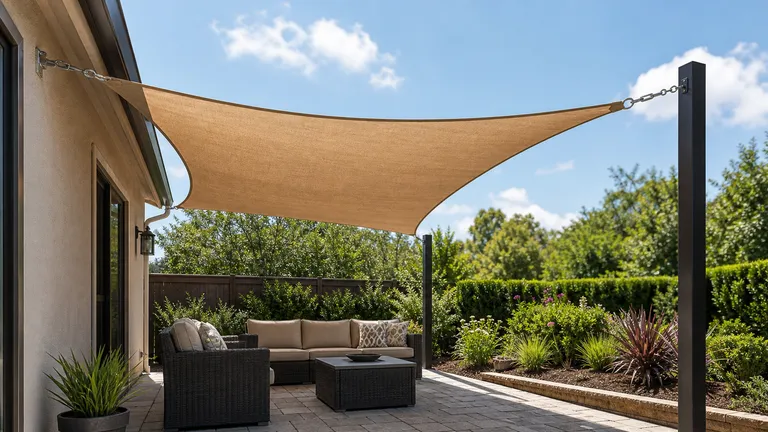
Shade Sails LLC tells installers to measure from fixing point to fixing point and check diagonals on four-sided sails. Do not measure only the patio floor, table size or the space between posts at ground level. The eye-to-eye spread, corner heights and diagonal distances decide whether the fabric can tension cleanly.
The fabric panel is normally smaller than the anchor spread. Turnbuckles, shackles, chains or ropes need space, and custom makers allow for stretch and hardware length. Curved sail edges can also cut into the fully shaded rectangle; Shade Sails LLC describes about 10% edge deflection in its measuring guidance. A rectangle labeled for a broad area may leave corners of a dining table exposed.
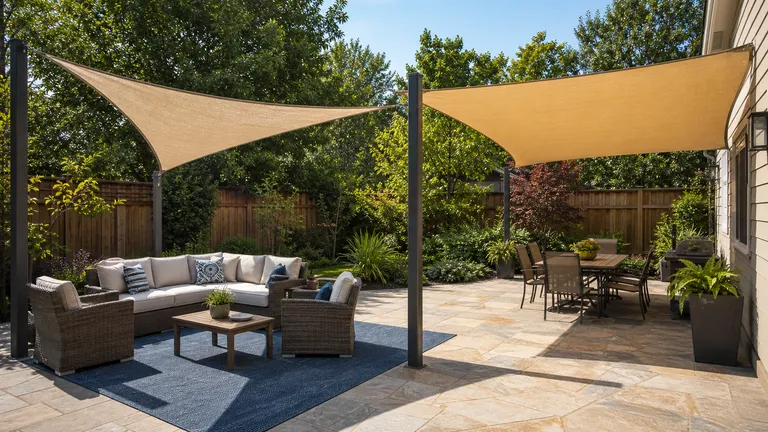
Triangles need three anchor points. They are often easier to tension and slope in awkward yards, but they leave more unshaded edge. Squares and rectangles need four reliable anchors and usually cover a dining table, lounge set or play area more completely. Two smaller sails can beat one large panel when the available points create poor slope or too much wind exposure.
Use broad examples only as a first sketch. A small triangle might suit one seating corner, while a rectangle can cover a six-chair table if four anchors and diagonal height difference exist. The exact fabric size belongs in the size calculator or size guide after the fixing points are known.
Clearance matters as much as coverage. The lowest edge should not cut through the walking route, the door swing or the place where a tall person stands up from a chair. The highest edge should not put the hardware so far out of reach that the sail stays installed through storms because removal is inconvenient.
Shape Map
Shape choices before you order fabric
Use this as a hub-level map, then move to the size calculator or shape comparison for exact sizing.
| Shape route | Use it when | Check before buying |
|---|---|---|
| Triangle sail | Three strong anchor points already line up and partial shade is enough. | Make sure the open side does not miss the chair backs or table edge. |
| Square or rectangle sail | Four strong fixing points can surround the seating or dining area. | Check diagonals, hardware gaps and high-low corners before ordering. |
| Two smaller sails | One large panel would be flat, hard to tension or too exposed to wind. | Leave space between panels so runoff, airflow and removal still work. |
Fabric, slope, wind and removal
Breathable HDPE mesh and waterproof coated fabric solve different jobs. Mesh is usually the sun-first option rather than dependable rain cover, while coated fabric needs slope and runoff planning. Polyfab describes heavy-duty shadecloth as HDPE with UV stabilizers, which supports the material distinction without pretending every fabric has the same performance figure.
Waterproof coated fabric is for rain-priority shade, not a flat patio roof. Home Depot's shade sail manual gives 20 to 30 degrees as runoff guidance, while Shade Sails LLC gives a 25% or 1:4 high-low difference for its mostly waterproof context. Treat those numbers as product-source warnings: if the site cannot create visible fall and safe runoff, do not buy waterproof fabric.
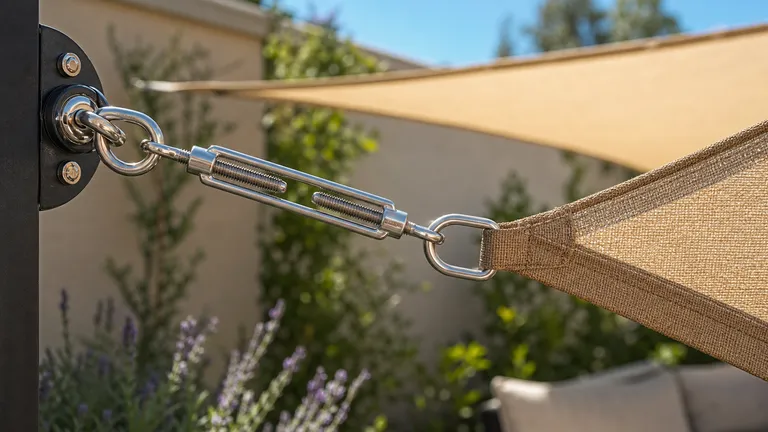
Tension is not only about a neat look. Home Depot warns to tension firmly to avoid sagging without overstretching, and Polyfab warns that loose fabric can cause premature mechanical failure. If a corner moves, a post leans or a wall plate pulls, do not keep tightening the turnbuckle. Unload the sail and fix the support question first.
Wind exposure changes the whole purchase. A sail on an open corner, driveway, pool edge or roofline can act differently from one in a sheltered courtyard. The Advanced Textiles Association notes that engineered shade structures may need code-aware design, extra support or easier winter removal. Use that as a caution, not as permission to calculate loads from a blog post.
Plan storm removal before the first install. Many manuals tell readers to remove sails for severe weather, storms or snow, so every corner should be reachable with normal tools. If removal needs a ladder during a warning, choose a smaller sail, lower hardware, an awning that closes or temporary shade.
Keep heat sources out from under the fabric. The Home Depot manual warns against open flame and heat sources near shade sails. Do not place grills, fire pits, patio heaters or hot exhaust under the sail just because the shade falls in a convenient place.
Installed cost: fabric is only one line item
Fabric-only pricing hides the expensive parts. Shade Sail Installation, a commercial referral source, lists small simple installs around $200 to $500 and large complex projects around $2,500 to $5,000. Treat that as a market range from one commercial source, not a universal quote for every wall, soil, wind zone or custom fabric order.
Separate the budget into fabric, hardware, posts, concrete, wall plates, access, labor, inspection, tension adjustment and seasonal removal. A small mesh replacement on existing anchors is a different project from four new steel posts set in concrete. Shade Sails LLC shows large posts and concrete footings in its own examples, which explains why support work can outrun the fabric cost.
Hardware kits are not a complete installation plan. Turnbuckles, shackles, pad eyes, snap hooks and corner rings still have to match the sail load, metal exposure and substrate. A stainless hardware kit does not make fascia, hollow masonry or a weak fence post safe.
Include access work. Drilling high masonry, setting posts near utilities, reaching a second-story wall plate or retensioning a tall sail may require tools and labor not shown in a product listing. If the sail will need seasonal removal, price the time and access needed to take it down and reinstall it.
Budget
Cost items to price separately
Price the finished shade, not only the fabric panel.
| Cost item | What changes the cost | Pause when |
|---|---|---|
| Fabric panel | Shape, size, HDPE mesh or coated fabric, custom corners and edge finish. | The fixing-point measurements are still estimates. |
| Hardware kit | Turnbuckles, shackles, eye plates, pad eyes, snap hooks and corrosion grade. | The wall, post or masonry substrate is unknown. |
| Posts and footings | Steel or timber post size, height, soil, concrete, drainage and access. | Wind exposure, utilities, local rules or footing design are unresolved. |
| Wall plates and anchors | Solid masonry, structural timber, backing, flashing and fastener type. | The proposed attachment is fascia, trim, veneer or hollow construction. |
| Labor and access | Ladders, drilling, concrete work, high walls, tight yards and removal visits. | The sail cannot be removed safely before storms or winter. |
The dollar ranges above come from a commercial cost source and should be checked against local labor, soil, access and permitting conditions.
When a shade sail is the wrong choice
Use an awning for retractable house-side shade when a load-bearing wall can support it and the shaded area sits close to the house. An awning has its own wall and wind checks, but it can close when the weather changes. A sail stays exposed unless someone removes it.
Use an umbrella, weighted canopy or renter-friendly shade when drilling is not allowed or the only possible sail corners are weak. A temporary shade that can be moved beats a permanent-looking sail attached to trim, railings or fence posts by assumption.
Use a pergola, roofed patio cover or other designed structure when the job is reliable rain cover, snow exposure, frequent storms or a permanent outdoor room. A waterproof shade sail can shed rain only when slope, runoff and removal are designed together.
Use professional support work when the sail is large, tall, exposed, close to a pool, close to a public walkway, or dependent on wall plates in uncertain construction. Spend first on posts, footings and review before fabric, not on a heavier fabric panel.
Color and fabric weight can wait. If the anchor count, support type, slope and removal routine do not pass, the shade sail is the wrong product for today. Route to the awning, canopy, no-drill shade, posts or wall-anchor guide instead of forcing a sail into a weak site.
Next guide
Use the narrower guide when the site has a special constraint
Move to a focused guide when the question is no longer general shade-sail planning.
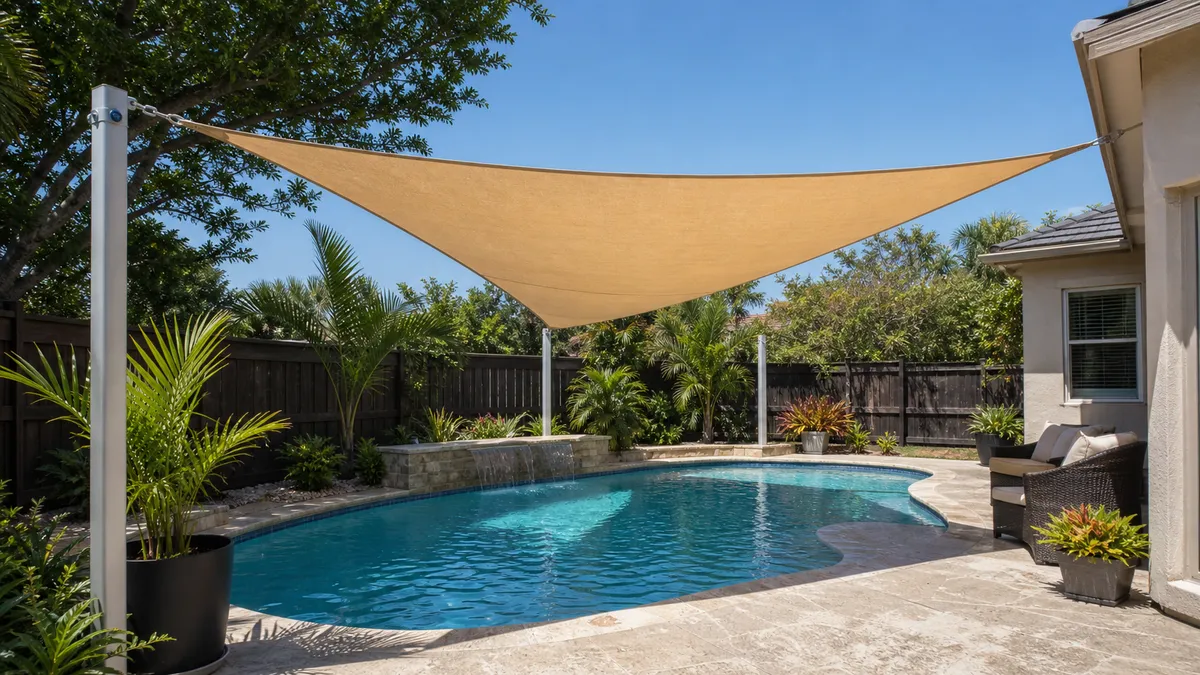
Shade sail for pool
Use this when the sail has to work around swimmers, wet walking routes, gates, glare, runoff and pool equipment.
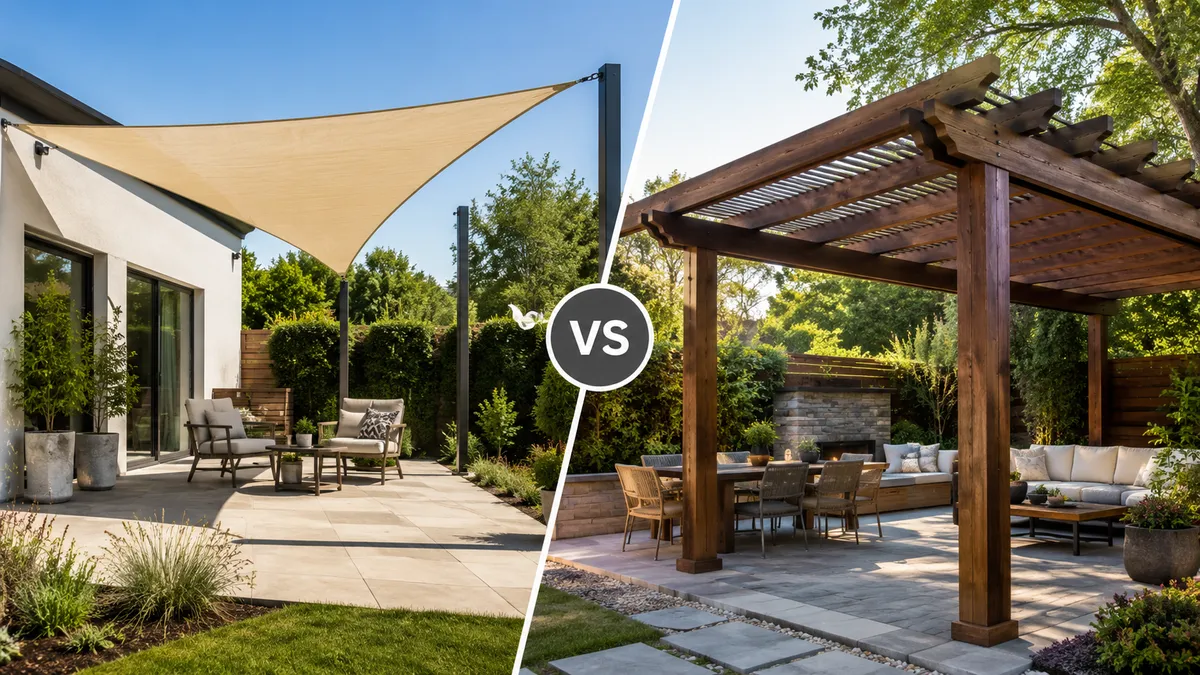
Shade sail vs pergola
Use this when the real choice is removable fabric shade versus a permanent patio structure with posts, roof options and permits.
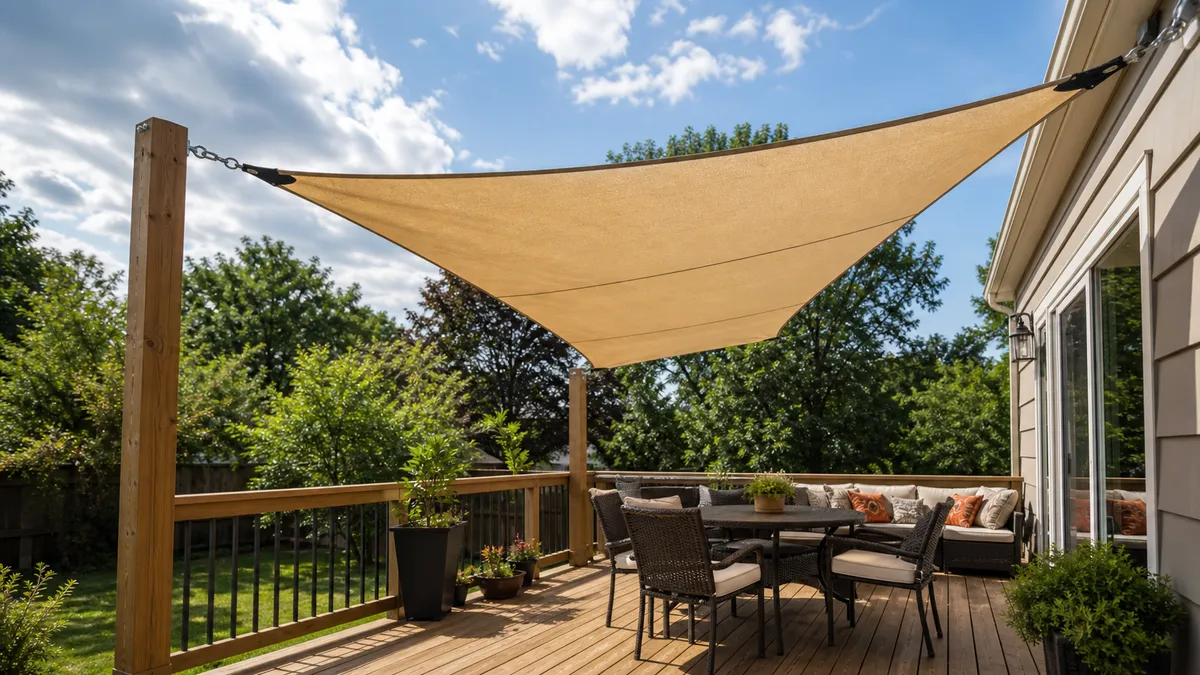
Shade sail for deck
Use this when railing, fascia, ledger, stair clearance or elevated structure makes the deck harder than a ground patio.
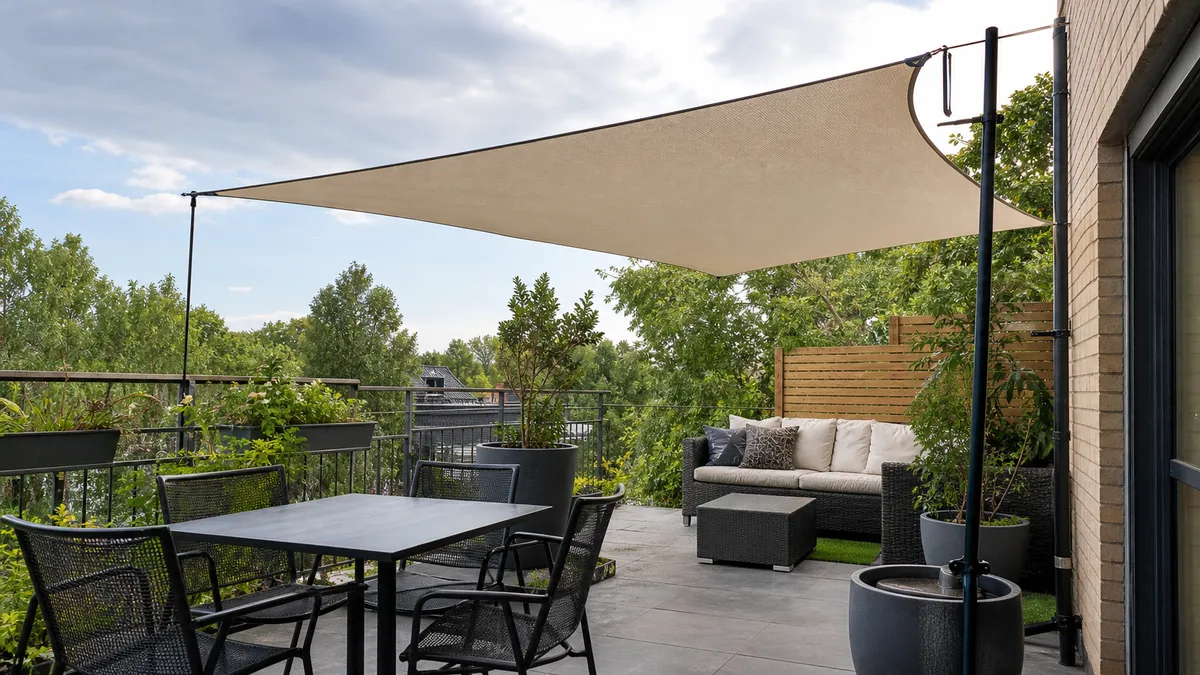
Shade sail without drilling
Use this when rental rules, weak walls or temporary shade needs make tensioned permanent anchors doubtful.
Common mistakes to avoid before buying
Buying fabric before fixing eyes are installed can leave the finished sail too large, too flat or impossible to tension. Shade Sails LLC recommends installing fixing eyes first and then measuring, because the finished fabric follows the real anchor points.
Assuming fence posts or fascia can carry tension is another expensive mistake. Fence posts are usually built for fence loads, not overhead fabric pull. Fascia and trim may hide the structure rather than carry it. Use the installation guide, posts guide or wall-anchor guide before trusting those corners.
Ignoring the hardware gap creates sagging before the sail is even used. Turnbuckles need adjustment travel after the first tensioning, and shackles or eye plates need enough room to work without long rope leaders. A maxed-out turnbuckle on day one leaves no correction room.
Choosing waterproof coated fabric without visible fall leads to pooling. The water-pooling guide belongs next if rain collects in the middle, but the best fix is planning high and low corners before buying. A flat waterproof sail should not be treated as a roof.
Ignoring wind exposure turns a calm-day sketch into a maintenance problem. If gusts hit one corner, if nobody can remove the sail quickly, or if an anchor moves when tension is applied, stop shopping and solve the support or choose another shade type.
Watch-outs
Before you buy or install
- Do not treat fence posts, fascia, gutters, siding or decorative trim as shade sail anchors without verified structure behind them.
- Do not use waterproof coated fabric on nearly level anchors; plan slope, runoff and removal access first.
- Do not keep tightening a sagging sail if a post, wall plate, masonry joint or eye fitting moves.
- Do not place grills, heaters, fire pits or open flame under shade sail fabric.
- Large, tall or exposed installs may need professional support design, local-rule checks or permit-aware review.
Read Next
Related hub
Best Shade Sail for Patio
Use this when best shade sail for patio is closer to the real constraint than the current page.
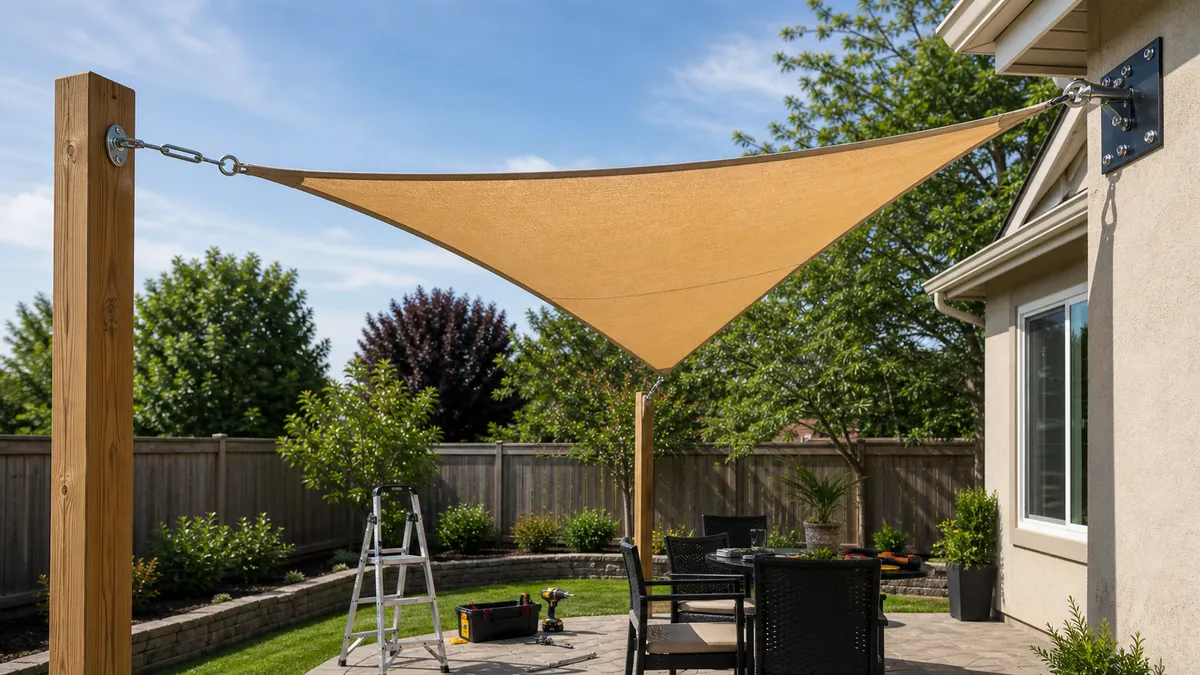
Shade Sail Installation Guide
Use this when shade sail installation is closer to the real constraint than the current page.
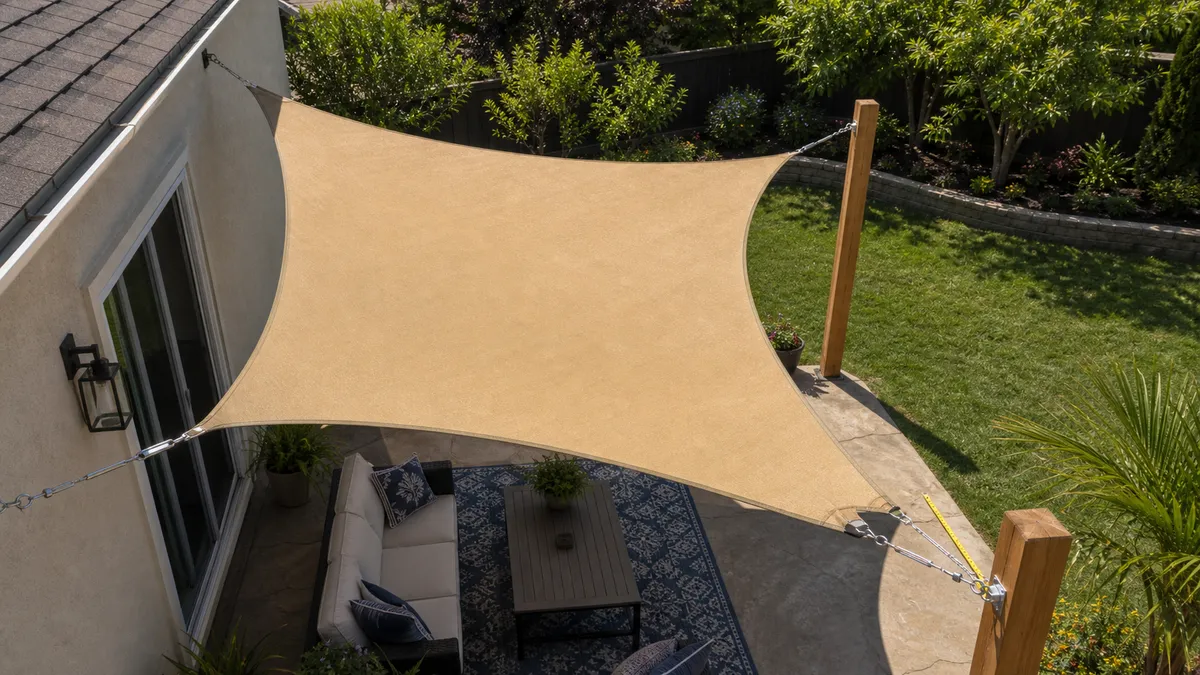
Shade Sail Size Guide
Use this when shade sail size guide is closer to the real constraint than the current page.
Triangle vs Rectangle Shade Sail
Use this when triangle vs rectangle shade sail is closer to the real constraint than the current page.
Waterproof vs Breathable Shade Sail
Use this when waterproof vs breathable shade sail is closer to the real constraint than the current page.
Shade Sail for Pool
Use this when shade sail for pool is closer to the real constraint than the current page.
Shade Sail vs Pergola
Use this when shade sail vs pergola is closer to the real constraint than the current page.
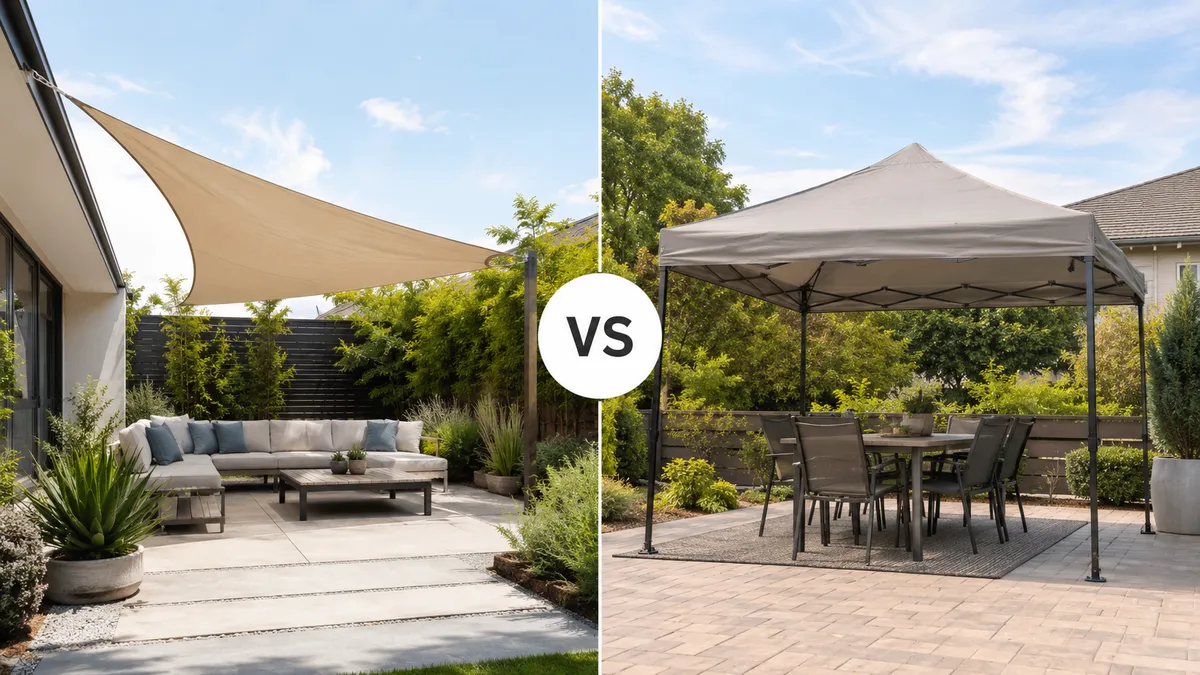
Shade Sail vs Canopy
Use this when shade sail vs canopy is closer to the real constraint than the current page.
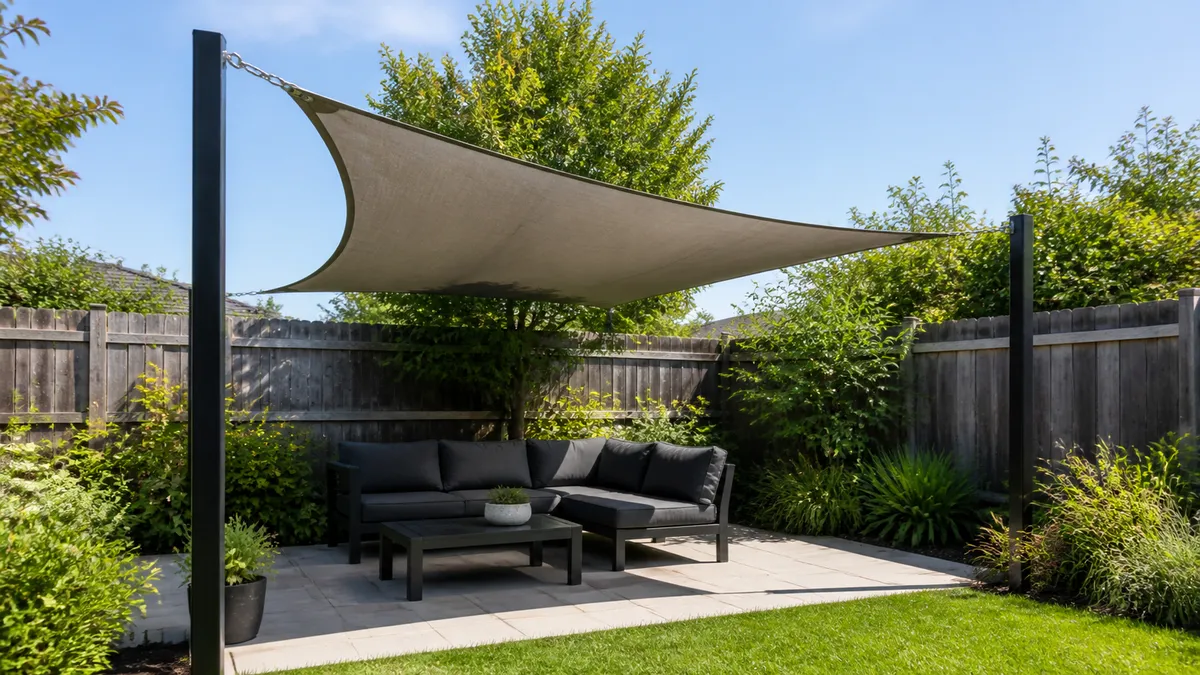
Shade Sail Posts
Use this when shade sail posts is closer to the real constraint than the current page.
Shade Sail Wall Anchors
Use this when shade sail wall anchors is closer to the real constraint than the current page.
Questions
FAQ
Can I attach a shade sail to a fence?
Do not assume a fence can carry sail tension. Many fence posts are built for fence panels, not fabric loads pulling from above and changing in wind. Use purpose-built posts, verified wall anchors or another shade type unless the fence structure has been checked for the load.
Is the shade sail size the same as the anchor spacing?
No. Measure fixing point to fixing point, then allow for turnbuckles, shackles, stretch and curved sail edges. Four-sided sails also need diagonal checks. Use the size calculator or size guide after the anchors are set, not before the fixing points are known.
How much slope does a waterproof shade sail need?
Waterproof fabric needs obvious fall and safe runoff. Home Depot's manual gives 20 to 30 degrees as runoff guidance, while Shade Sails LLC gives 25% or 1:4 for its mostly waterproof context. Do not apply those numbers blindly to every product, but do not buy waterproof fabric for level anchors.
Should I remove a shade sail in storms or winter?
Many manuals advise removal for severe weather, storms or snow. Plan reachable corners, usable turnbuckles and a storage routine before installation. If the sail cannot come down without a risky ladder job, choose a smaller sail, lower fixings or shade that can close quickly.
Is HDPE mesh better than waterproof shade sail fabric?
HDPE mesh usually suits sun-first shade rather than dependable rain cover. Waterproof coated fabric fits rain-priority sites only when the anchors create fall and runoff. Mesh does not make weak anchors safe, and waterproof fabric does not make a flat roof.
When should I choose an awning instead of a shade sail?
Choose an awning when the shaded area sits near a load-bearing wall and you need retractable shade. Choose an umbrella, canopy or no-drill shade when anchors are weak or drilling is not allowed. A shade sail fits best when fixed overhead shade and structural corners are realistic.