
Quick Answer
Short answer: awning or detached camp shade
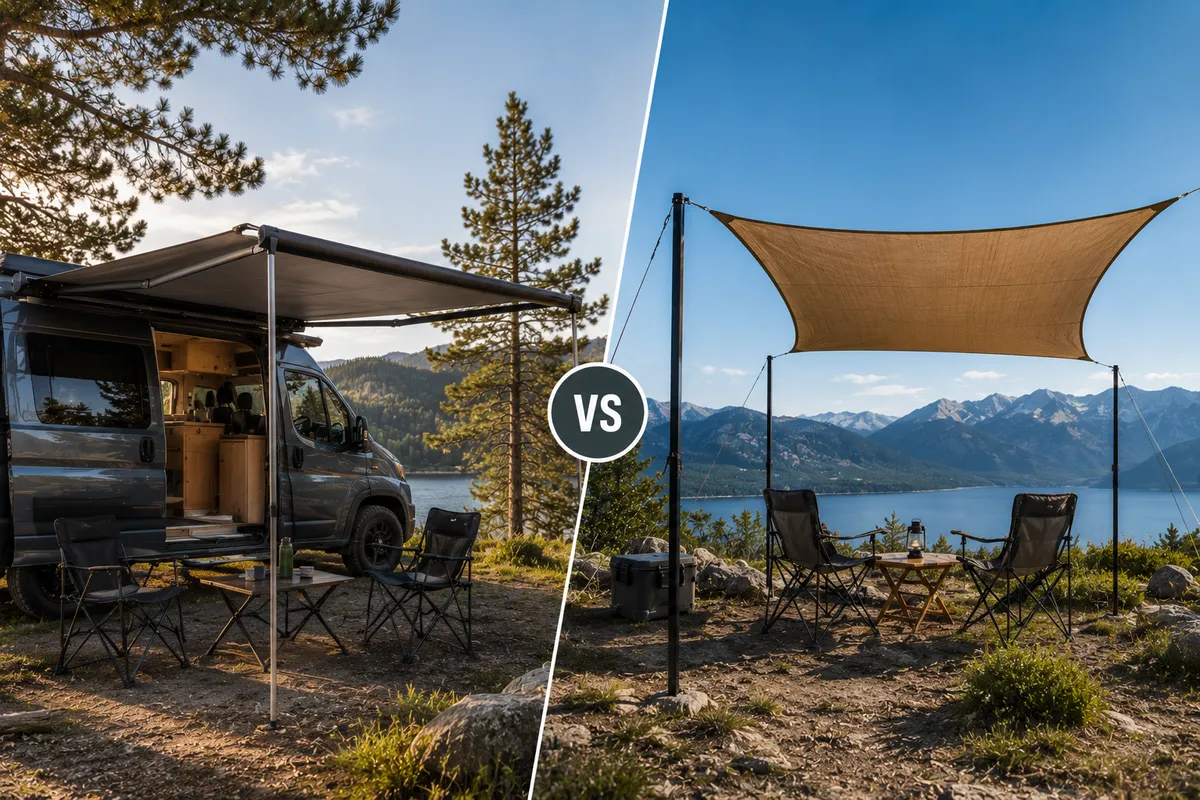
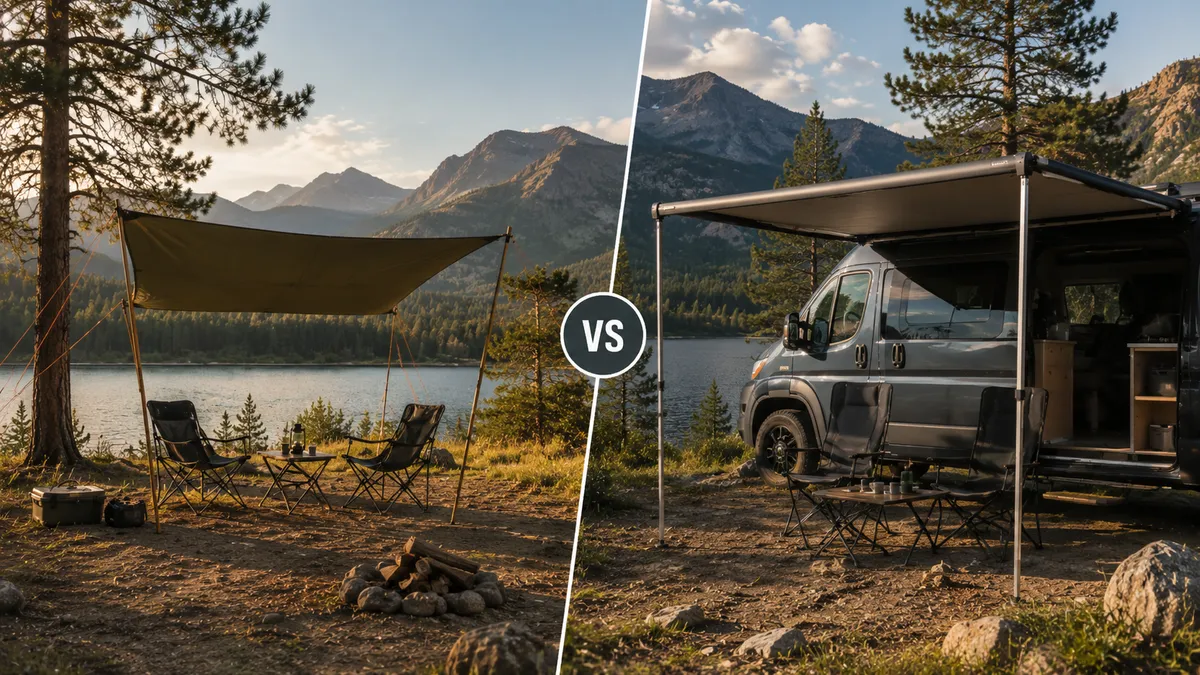
Choose a campervan awning for fast repeatable shade beside the van only after the rack, brackets and pack-down routine check out. Choose a detached shade sail or tarp-style camp setup when shade must stay behind, sit away from the van or avoid a rack purchase. Treat both as fair-weather camp shade, not storm cover.
Use the mounted awning for quick side shade from a proven rack; use detached fabric when camp shade must stand without the van.
Campervan awning vs shade sail at camp
The campervan awning vs shade sail decision is mostly about what has to stay fixed. A roll-out awning carries its case on the van, so the camp setup can be quick beside the sliding door. A detached shade sail or tarp-style shelter carries more loose parts, but it can shade a table, kitchen box or chair group away from the vehicle.
Weather changes the answer. ARB awning instructions still call for legs, pegs and guy rope in wind, and Dometic guidance says to close an awning for wind, heavy or prolonged rain, or unattended camp. REI tarp guidance points the other way: a separate tarp needs poles, stake points, guylines, angle and retensioning before it becomes useful shade.
Use the table before shopping. It includes setup effort and weather checks because a cheap fabric panel is not cheap if the site needs poles, sand anchors, spare cord and a drying bag, and a fast awning is not fast if the rack rating or bracket fit is unclear.
Comparison
Camp choice by situation
Read the weather and setup cells as required checks, not as small details.
| Camp situation | Choose | Setup time | Wind/rain check | Why |
|---|---|---|---|---|
| Quick lunch stop beside the sliding door | Mounted campervan awning | Fast after the case is already fitted; legs and pegs may still be needed. | Do not leave it loose if gusts reach the side of the van. | The shade opens where the door, stove box or fridge slide already sits. |
| Multi-night base camp with a fixed table area | Detached shade sail or tarp | Slower because poles, stakes, guylines and angle need setting. | Retension after wind shifts or fabric stretches. | The shade can stay over camp furniture instead of following the van. |
| Van leaves for a day trip | Detached fabric only if it stands on its own anchors | Extra time for independent poles and all tie points. | Pack it down if nobody can check wind, pooling or pulled stakes. | A side awning leaves with the vehicle; detached shade remains only when fully self-supported. |
| No rack, weak rack or rental campervan | Skip the mounted awning unless fitting is approved | Awnings add install time because rack, brackets and load limits come first. | Loose or overloaded roof cargo is a road hazard before camp begins. | A no-drill fabric setup avoids permanent vehicle work, but still needs safe anchors. |
| Exposed beach, desert or soft sand | Use low, well-anchored fabric or pack down early | Sand anchors and extra guys take longer than normal stakes. | Rising wind, lifting fabric or moving anchors means stop. | Both setups can fail fast when soft ground cannot hold the pull. |
| Gravel, hardstanding or poor stake ground | Mounted awning only if legs can be secured | Hard ground slows pegs, weights and guy-line placement. | Slipping legs or bouncing stakes are pack-down signals. | Detached poles need reliable ground contact; the awning still needs leg control. |
| Rain in the forecast | Neither for heavy rain; use only light rain with slope | Both need a deliberate high-low angle before rain arrives. | Pooling, sagging seams or prolonged rain means close or remove fabric. | Water needs a runoff path; flat fabric is a puddle, not a roof. |
| Crowded or regulated campground | Use whichever fits fully inside the pitch | Boundary and tie-off checks happen before poles or pegs go in. | Guy lines cannot cross walkways or attach to forbidden trees, vegetation or structures. | Some campgrounds count stakes and guy lines inside the assigned site boundary. |
Setup time and camp routine
Do not compare setup time by invented minute counts. Compare the actions. A mounted awning saves the fabric-spread step because the case, roller and arms are already on the van. It still may need legs on solid ground, pegs, guy rope, slope for rain and a full close check before driving.
A detached shade sail or tarp asks more questions at every camp. Where can poles stand? Where can stakes hold? Is the windbreak on the correct side? Will runoff miss the seating area? REI's tarp examples use stake points, angled poles and guylines, and one C-fly example uses at least eight stakes. That is flexibility, but it is not quick side-door shade.
Pack-down matters as much as setup. The awning has to be fully retracted and latched before the van moves. Wet awning or tarp fabric should be dried at the next chance instead of stored damp for days. Muddy stakes and wet cord should not be rolled tight against fabric for long storage.
Setup
Setup effort by step
The awning is quicker only after the permanent vehicle work is already done.
| Step | Campervan awning | Shade sail / tarp | Delay or stop trigger |
|---|---|---|---|
| First install | Rack rating, brackets, case length and door clearance must be settled. | No vehicle mount, but poles, stakes, guylines and fabric size must be packed. | Unknown vehicle or rack rating stops the awning install. |
| Arriving at camp | Unroll or deploy from the case, then set legs as needed. | Find the shade spot, wind direction, anchor points and pole positions. | Crowded pitches can block the detached fabric spread. |
| Ground contact | Legs or struts may need solid ground and pegs. | Poles need stable feet; stakes need soil, sand or anchors that hold. | Slipping legs or pulling stakes stop setup. |
| Guy lines and tension | Guy rope may be needed in wind even for a mounted awning. | Guylines are central to the shelter and need retensioning. | Lines across walkways or outside the site boundary are a no-go. |
| Rain slope | One side or leg may need to sit lower so water runs off. | The fabric needs a high-low pitch before rain starts. | Any pooling or sagging fabric means close or remove it. |
| Leaving camp | Shade leaves with the van and must be fully closed first. | Shade can remain only if it stands alone and rules allow it. | Unattended fabric in rising wind should come down. |
| Wet drying | Retract wet only for travel, then open and dry when possible. | Shake off mud, separate wet hardware and dry fabric before storage. | Long damp storage risks mildew, staining and hardware corrosion. |
Rack load, anchors and campsite rules
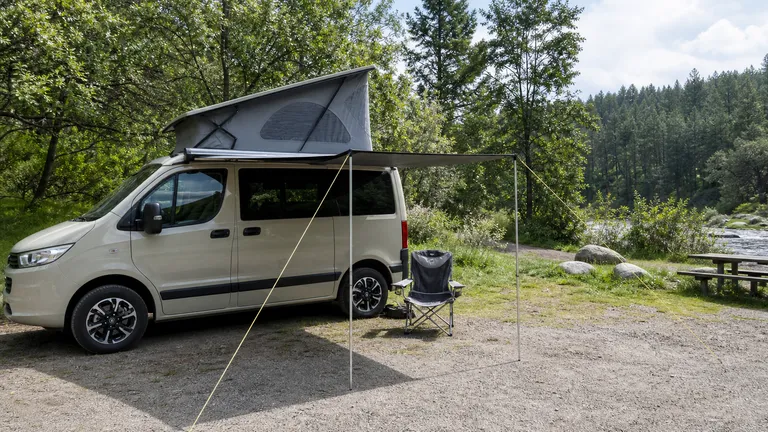
Treat a vehicle awning as road-mounted cargo first. Count the awning case, brackets, locks, rack, roof box, solar panel, boards and any other roof gear against the lowest relevant vehicle or rack limit. Yakima describes dynamic weight as rack plus attached load, and Thule says the lower of the rack instructions and vehicle roof-load recommendation controls.
That load also changes driving. Thule warns that roof loads affect driving and braking behavior and increase side-wind vulnerability. NHTSA's secure-load guidance is a useful reminder here: do not carry excessive cargo, and double-check that roof cargo is secure. If a bracket moves, the case rattles or one rating is missing, do not mount the awning.
Detached shade moves the risk from roof load to anchors. Poles, stakes, guy lines, sand anchors, snow stakes, spare cord and tensioners decide whether the fabric can stand without the van. Trees and campground fixtures are not free anchor points. Zion National Park rules keep equipment, stakes and guy lines inside assigned boundaries and prohibit attaching items to trees, vegetation or structures. Joshua Tree also prohibits lines to vegetation and limits camping equipment to defined site areas.
Rental and no-drill vans usually point toward detached fabric, but that does not make every tie-off acceptable. Check the rental agreement, campsite rules and walking paths. If the only available line would cross a neighboring pitch, a fire lane or a path to the bathroom, choose a smaller tarp, a freestanding shelter or no fabric.
Category research
Camp shade categories to compare
Use these searches after deciding whether camp shade should stay with the van or stay at the site.
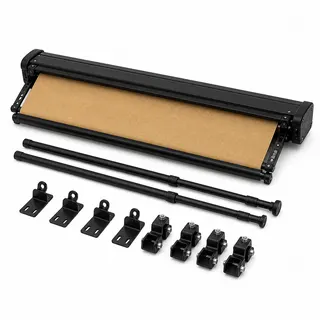
Van awning
Campervan Awning
For shade that packs with the vehicle and sets up quickly.
- Vehicle-mounted shade
- Fast camp routine
Check:Mounting rail, wind and pack-down.
Search on Amazon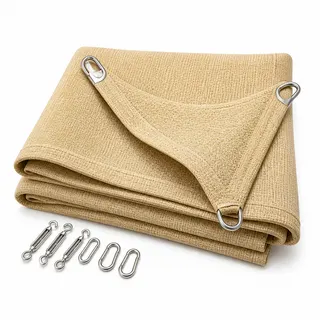
Fabric shade
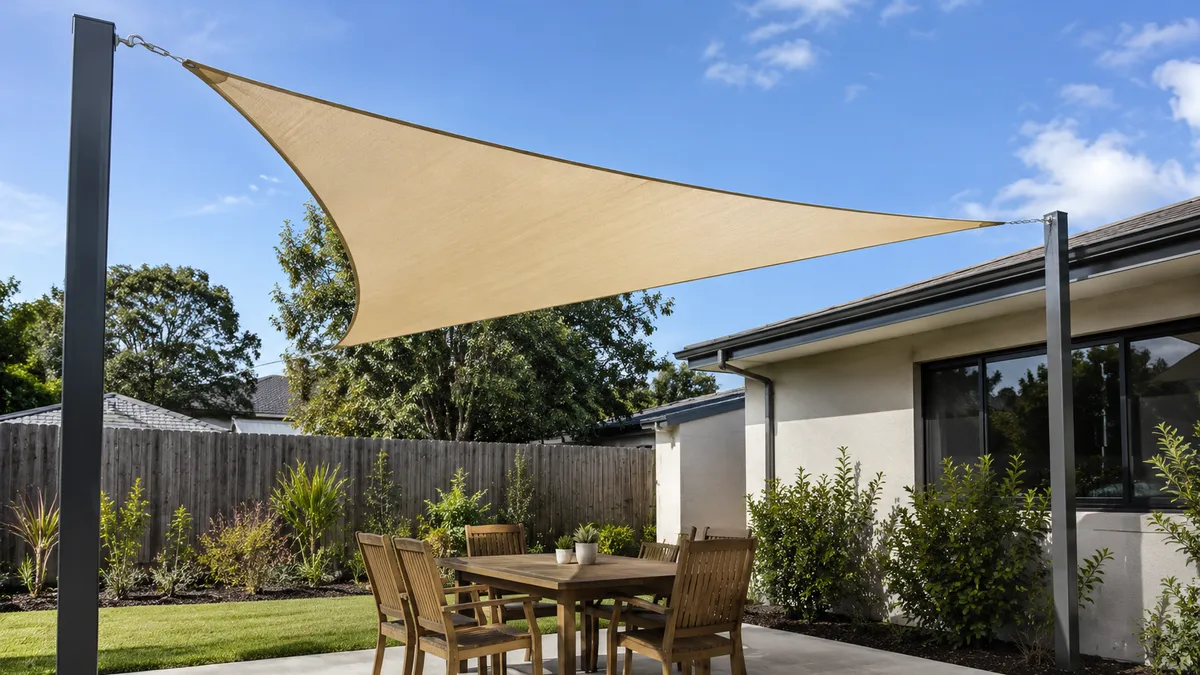
Shade Sail For Campervan
For camp shade when anchor points and setup time are acceptable.
- Flexible shade area
- Needs anchors
Check:Trees, poles, lines and removal.
Search on Amazon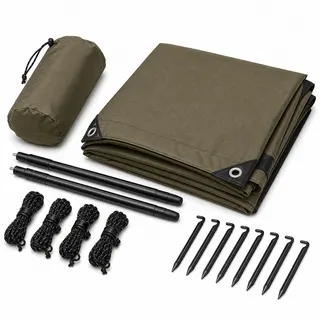
Tarp shelter
Camping Tarp Shelter
For lightweight shade when low cost and pack size matter.
- Cheap flexible cover
- More setup work
Check:Pole height, guy lines and wind.
Search on AmazonWind and rain: what each setup can actually handle
Wind does not care whether the fabric came from a case or a stuff sack. ARB instructs awning legs to be pegged and guy rope used in wind. Dometic guidance says to close an awning when wind is anticipated or when the awning will be left unattended. A detached tarp or sail needs the same respect: choose natural windbreaks when available, set guylines before bad weather and carry spare stakes, cord and tensioners.
Rain is not solved by the word waterproof. ARB calls for an awning angle so water runs off instead of collecting on top. Dometic guidance says one strut should sit lower for easier runoff and warns that trapped water can stretch fabric around stitching. A tarp or shade sail needs the same high-low pitch and a site where water will not channel under the living area.
The stop triggers are simple. Close or remove fabric when gusts lift the edge, struts slip, stakes pull, water pools, seams sag, heavy rain is forecast or the camp will be unattended. If fabric has to be packed wet for travel, dry it at the next realistic opportunity.
Weather
Wind and rain comparison
Neither side should be treated as storm shelter.
| Weather issue | Campervan awning | Shade sail / tarp | Stop trigger |
|---|---|---|---|
| Gusts | Legs and guy ropes may be needed; close before wind builds. | Needs a windbreak, guyline angle and retensioning. | Fabric lifts, arms flex or lines start snapping. |
| Soft sand | Legs can wander unless pegged or anchored correctly. | Sand anchors and wider stakes may be needed. | Anchors creep or the pole base sinks. |
| Gravel or hardstanding | Legs still need slip control or weights suited to the surface. | Normal stakes may not drive or hold. | A support cannot be secured without blocking walkways. |
| Flat fabric or pooling | Set one side lower so water runs off. | Pitch with a clear high side and low drainage edge. | Any ponding, sagging or seam strain. |
| Heavy or prolonged rain | Close it; do not treat the awning as a roof. | Pack down or use a shelter designed for the weather. | Rain is steady enough that fabric cannot shed it cleanly. |
| Unattended setup | Close before leaving camp or sleeping through uncertain weather. | Leave up only when permitted, stable and weather is calm. | Nobody can react to wind, pooling or pulled anchors. |
| Wet storage | Retract wet only when travel forces it; dry later. | Separate wet cord, stakes and fabric until dry. | Fabric will sit damp in a bag for days. |
All-in cost, not product-only cost
The sail or tarp side can start cheaper, but only if the missing hardware is already in the kit and the site accepts it. REI tarp examples show the component list: fabric, poles, stakes, reflective guylines, tighteners and a bag. Add sand anchors, spare cord, stronger stakes and a drying routine when the surface or weather requires them.
The awning side usually costs more before the first trip because the case, compatible brackets and rack capacity have to exist first. A possible rack or platform upgrade can cost more than the awning fabric decision itself. Add locks or quick-release mounts only if they still match the bracket instructions and do not hide the load check.
Avoid exact price shortcuts unless a local quote or real product feed is available. A single product listing does not create a market range. The useful comparison is the component list: count everything that must be bought, carried, fitted, inspected, repaired or dried.
Cost
Cost components to count
Use this before deciding that the sail is cheaper or the awning is worth the higher upfront spend.
| Cost item | Awning side | Sail/tarp side | Count it because |
|---|---|---|---|
| Main fabric | Awning case with roller, arms and packed cover. | Shade sail, tarp or camp shelter fabric. | The visible fabric is only the start of the setup. |
| Vehicle hardware | Compatible brackets, bolts, backing plates or side-rail mounts. | Usually none unless tying to the vehicle is allowed. | A weak bracket can turn shade into road cargo risk. |
| Rack or platform | May need a rated crossbar, rail or platform upgrade. | Not needed for a fully detached setup. | Roof capacity, bracket spacing and case length decide awning fit. |
| Ground supports | Legs, feet, pegs, guys or wall kits depending on model. | Poles, pole feet, stakes and guylines are central parts. | Shade fails when the ground contact is underbuilt. |
| Loose-ground hardware | Extra pegs or anchors for exposed camps. | Sand anchors, snow stakes or wider anchors for soft ground. | Normal stakes may not hold in sand or loose soil. |
| Tension and spares | Replacement guy cord, pins, straps or small fittings. | Tensioners, spare cord, spare stakes and small repair hardware. | Small parts get lost or bent faster than the main fabric wears out. |
| Storage and drying | Wet case care and room to open fabric later. | Bags that separate wet fabric from muddy stakes and cord. | Damp fabric and dirty hardware shorten service life. |
| Add-on coverage | Side walls, privacy screens or wind panels if needed. | Extra panels, longer poles or a second tarp. | Low sun, wind and rain often need more than overhead shade. |
No exact prices are listed because rack upgrades, anchors, local availability and existing camp gear change the total quickly.
Tie-breaker when both would work
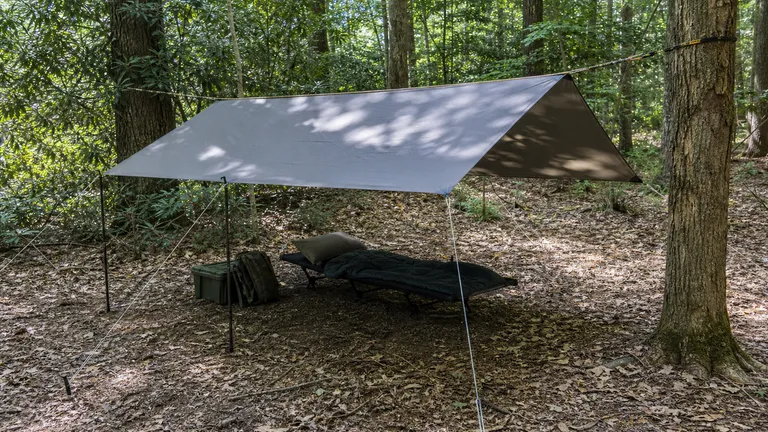
Choose the campervan awning when the shaded area is beside the vehicle, the rack and brackets are already proven, and the awning will be closed before wind, rain or driving. This fits lunch stops, roadside cooking, quick overnight camps and repeated shade at the sliding door.
Choose the detached shade sail or tarp when the shaded area is away from the vehicle, the van leaves camp during the day, the roof load is already busy, or the budget cannot absorb brackets and rack work. The catch is that the detached setup must fit inside the campsite and stand without forbidden tie-offs.
Use five final checks: Does the van leave camp? Is the roof already carrying other gear? Can every stake or anchor stay inside the boundary? Will fabric dry before long storage? Is the real shade needed beside the van or over a separate camp area?
- Pick the awning for repeated side-door shade from a verified rack.
- Pick detached fabric when shade must remain after the van leaves.
- Skip both if the tie-off, load rating, drying space or weather routine is unresolved.
When neither is right
Use neither setup when the rack rating is unknown, brackets are loose, wind is rising, heavy rain is forecast, fabric is already sagging, water is pooling, soft ground cannot hold anchors, or campsite rules block tie-offs. Those are not shopping questions. They are pack-down or choose-another-shelter questions.
A pop-up canopy can make more sense when shade must stand alone and the pitch has enough room for a weighted or pegged frame. A driveaway shelter can make sense when camp needs to stay behind and the space needs walls, storage or weather separation. A smaller tarp can be better when wind, site boundaries or packing room make large fabric awkward.
Sometimes the right move is the campsite shelter, trees already provided by the site, a smaller seat-level shade or no fabric until the wind drops. For broader campervan awning types and mounting checks, use the campervan awning guide. For the wider tarp-versus-awning camping decision, use the camping tarp vs awning guide.
Watch-outs
Before you buy or install
- Do not mount an awning when the vehicle roof rating, rack rating, bracket compatibility or remaining dynamic load is unknown.
- Do not drive until the awning is fully closed and no loose fabric, pole, strap or guy line can move.
- Do not leave either setup open in rising wind, heavy or prolonged rain, pooling water or unattended camp.
- Do not tie shade lines to trees, vegetation, park structures or rental-vehicle parts unless rules and permission allow it.
- Do not run guy lines across walkways, neighboring pitches, fire lanes or campsite boundaries.
Read Next
Related guides
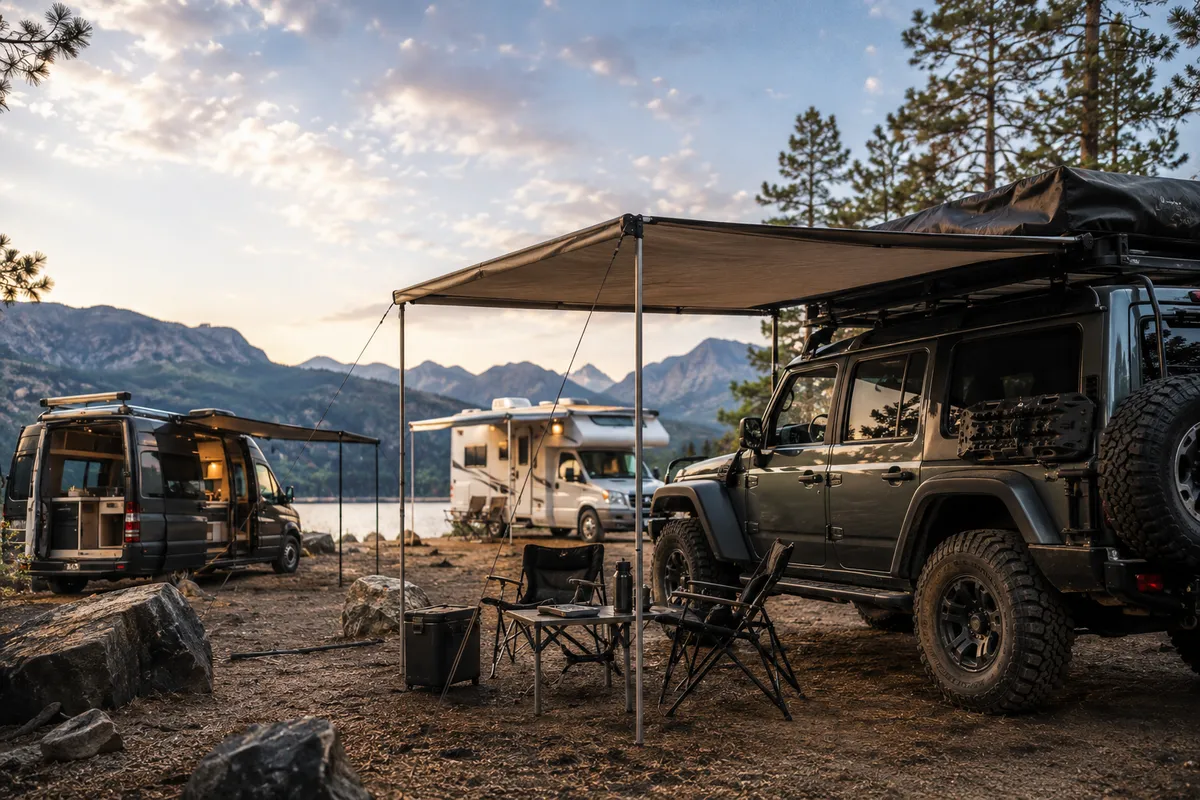
Vehicle Awning Guide
Use this when vehicle awning is closer to the real constraint than the current page.
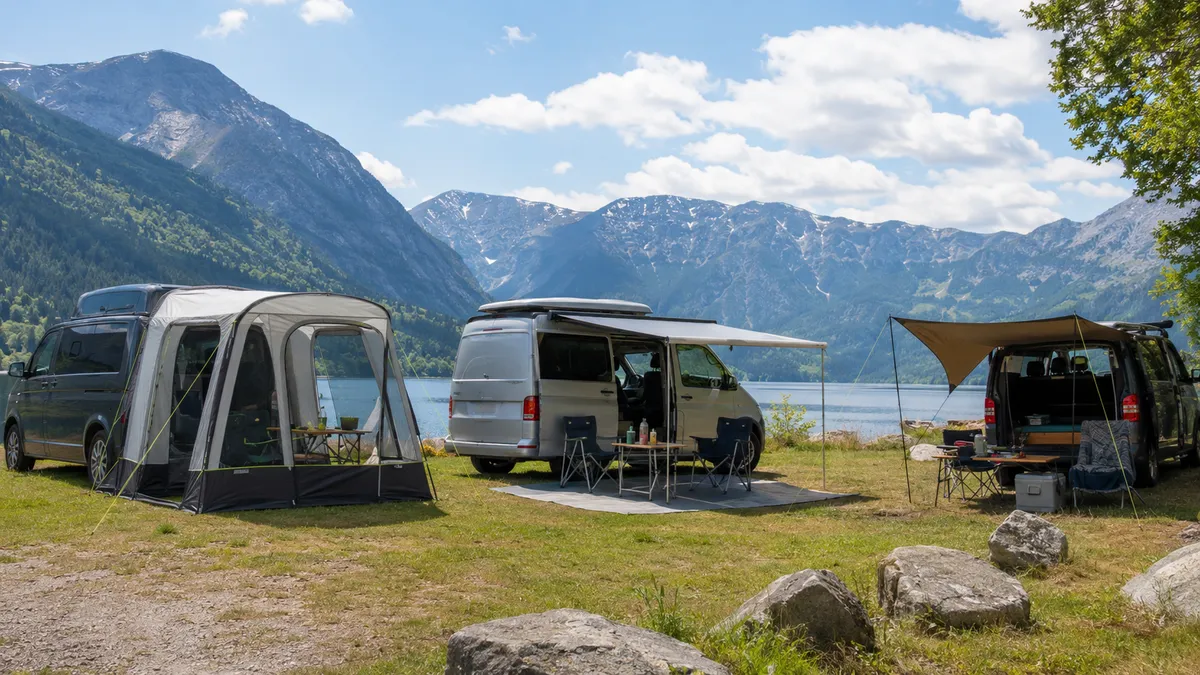
Campervan Awning Guide
Use this when campervan awning is closer to the real constraint than the current page.
Camping Tarp vs Awning
Use this when camping tarp vs awning is closer to the real constraint than the current page.
Shade Sail Guide
Use this when shade sail is closer to the real constraint than the current page.
Questions
FAQ
Is a campervan awning better than a shade sail at camp?
A campervan awning is better for quick shade beside the van when the rack, brackets and case are already correct. A shade sail or tarp-style shelter is better when the shaded area must stay at camp, sit away from the van or avoid permanent vehicle hardware.
Which is faster to set up, a campervan awning or a shade sail?
The awning is faster after installation because the fabric and arms travel in the case. It may still need legs, pegs, guys and slope. A detached sail or tarp takes more camp work because poles, stakes, guylines, angle and boundaries must be checked each time.
Which costs less after all the hardware is counted?
Detached fabric can start cheaper, but poles, stakes, sand anchors, guylines, tensioners, bags and spares can close the gap. A mounted awning usually costs more upfront when brackets, locks or a rack upgrade are needed. Compare the full setup, not the fabric price.
Which handles wind and rain better?
Neither should be treated as storm-safe. Awnings need pegging or guying in wind and should be closed for heavy rain, rising wind or unattended camp. Sail and tarp setups need solid anchors, a windbreak when possible, slope, guylines and retensioning. Pooling water or moving anchors means stop.
What should I use if the van leaves camp during the day?
A vehicle awning leaves with the van. Use detached shade only if it has its own poles or anchors, fits inside the campsite boundary and follows tie-off rules. If nobody can check wind, rain or stakes while the van is gone, pack the fabric away.
Can I use a shade sail with a rental campervan?
Detached fabric is usually safer than mounting hardware to a rental van, but it still needs permission-safe tie points and campsite-safe anchors. Avoid tying to rental parts, trees, vegetation or park structures unless the agreement and campground rules clearly allow it.