
Quick Answer
pergola for privacy: the short version
Choose a pergola for privacy by tracing who can see the space, from what height, and from which side. Use curtains or retractable screens when wind, rental rules or approvals are uncertain; use fixed slats, louvers or panels only when posts, footings and permissions are known. Use plants when delayed coverage and pruning are acceptable.
Buy the privacy layer that interrupts the actual sightline: removable fabric for uncertain wind or rules, fixed slats or louvers for proven structure, and plants only when growth time is acceptable.
Buying Direction
What to buy or use for pergola privacy
Use this table after the sightline, exposed side, wind surface, approvals, airflow and plant timeline are clear.
| Situation | Buy / use this | Why |
|---|---|---|
| Level neighbor can see a dining or lounge seat | Use a fixed slat panel, curtain, retractable side screen or planting on that exact view line. | Side privacy fails at eye level, so roof shade alone will not hide seated use. |
| Upstairs window, balcony or slope overlooks the pergola | Plan an offset screen, taller allowed screen, angled louvers or layered planting. | A normal side panel can leave the elevated view open even when it looks tall from the patio. |
| Low east or west sun and privacy arrive together | Compare adjustable louvers, sliding screens, side curtains or a retractable vertical screen. | Low-angle glare often passes under overhead pergola shade and needs a vertical layer. |
| Exposed side yard or gusty corner | Start with retractable fabric, open slats, partial panels or planting instead of a solid wall. | Solid screens and tight curtains add side area that catches wind. |
| Rental patio or strict HOA | Use movable planter screens, freestanding screens or removable curtains where written rules allow. | Drilling, footings, wall brackets and permanent planting can create approval or lease problems. |
| Green privacy is the long-term goal | Use mixed shrubs, a planter trellis or lattice with interim fabric if privacy is needed now. | Plant coverage takes establishment, training, mature-size planning and pruning access. |
Choose privacy by sightline, not by pergola size
A pergola roof can make a patio cooler and still leave the dining table, lounge chair or hot tub visible from the side. Start by naming the viewer: a seated neighbor across the fence, a standing person at the sidewalk, an upstairs bedroom window, a balcony, a raised deck or a gap beside the side yard. The screen only has to interrupt that line, but it has to interrupt the right line.
Walk the patio at the hour when privacy fails and mark the side that leaves the seat exposed. West and east sides often bring low glare as well as privacy loss, while a side yard can bring wind through the same gap. YourHome treats vertical louvers, sliding screens, external blinds and plant-covered structures as tools for low-angle sun because top shade misses light that enters from the side.
Then decide how permanent the fix can be. Curtains and retractable screens are useful when rules, wind or rental limits are unclear. Fixed slats, louvers and panel walls make sense only when posts, footings, brackets and attachments are known. Plants soften the view, but University of Maryland Extension guidance on mixed privacy screens stresses establishment, mature size and site suitability before a living screen works.
- Trace the viewer's eye point to the seat, table, spa edge or walkway you want to hide.
- Choose a removable layer when approval, exposure or anchors are still uncertain.
- Use fixed panels only after the post, footing, wall attachment and local rule checks are clear.
How high and where the screen needs to be
A seated privacy problem is lower than a standing privacy problem. A dining chair, lounge chair and spa seat can each put the protected eye line at a different height, so do not size the screen from the catalog photo. The ADAAG manual's seated wheelchair eye-level guidance sits around the low 40s to low 50s inches, and outdoor furniture can move that higher or lower.
Standing views need more height. The Ergonomics Center of North Carolina adult data puts many standing eye heights roughly in the mid-50s through upper-60s inches. That does not mean every pergola needs a tall wall; it means the panel, slat angle, curtain edge or plant mass has to cross the line between that viewer and the protected seat.
Use a string test before buying. Stand at the neighbor-side eye point, sidewalk edge, deck, window or balcony that creates the problem. Pull a string or laser line toward the table, lounge seat or hot-tub waterline. Mark where that line crosses the pergola bay. A 6 ft screen can still fail when the viewer is uphill, upstairs or standing on a raised deck.
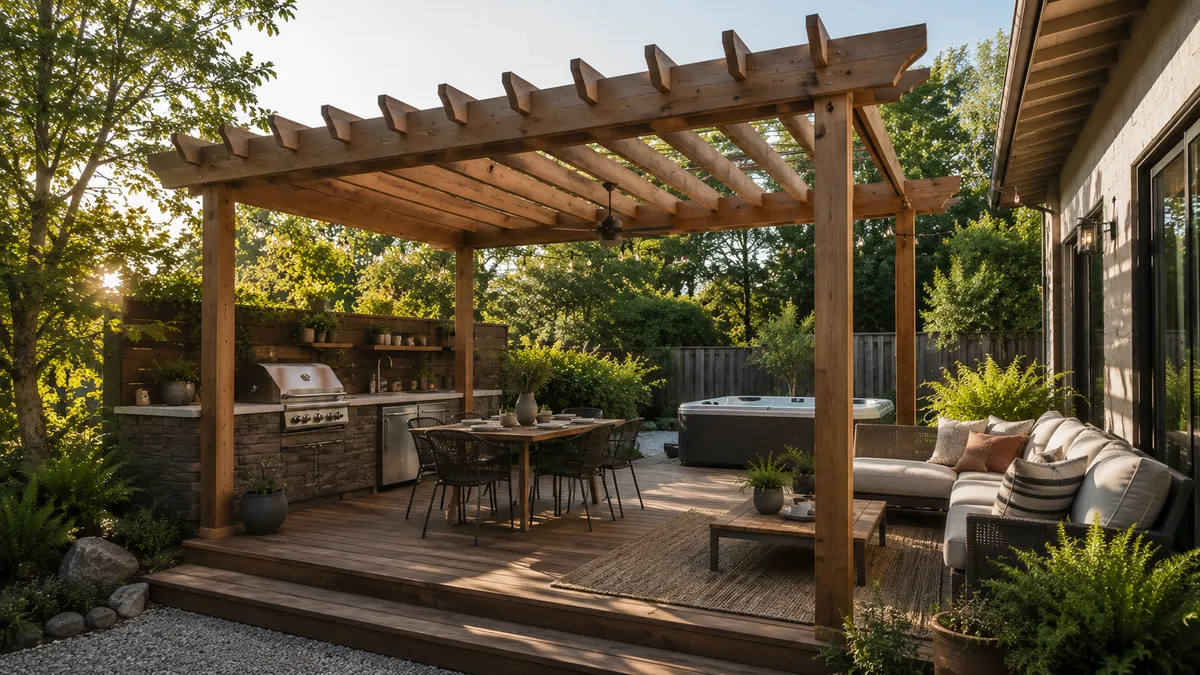
For hot tubs, check both privacy and access. Screening one side can hide the water while trapping steam, blocking service panels or tightening the path around steps. If the spa is the main reason for the pergola, the related hot-tub pergola guide is a better next check for ventilation and access clearances.
- Measure from the actual chair, sofa, spa seat or standing area, not from the patio slab.
- Treat upstairs windows, balconies and slopes as separate sightlines.
- Keep the screen close enough to cross the view line without blocking doors, steps or service access.
Screens, curtains, slats and louvers compared
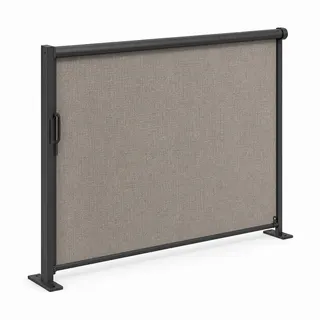
Retractable side screens are best for a single exposed bay where the view line is clear and someone will close the screen before bad weather. They can disappear when the patio is open, but they should not be treated as storm windbreaks. The Clas Ohlson side-screen manual describes the screen for sun and privacy and warns against severe wind use, so a retractable screen still needs fast closing and periodic fabric and fastener checks.
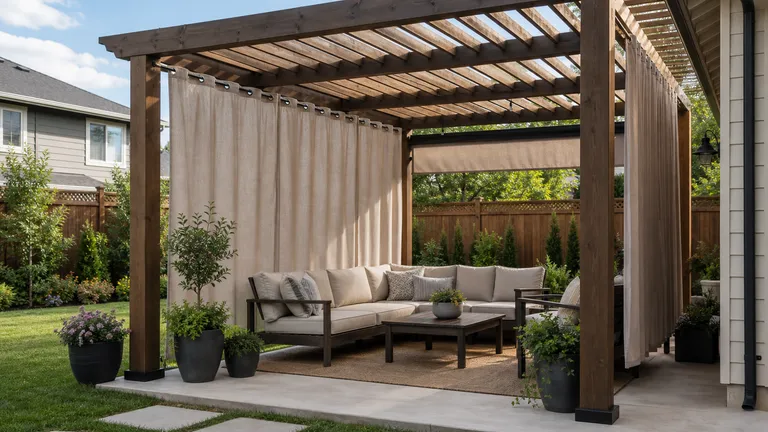
Outdoor curtains are forgiving on rented or rule-heavy patios because they can be seasonal and removable. They work well for dining seats and low sun when the rod, track or cable is secured to a real frame. Wet fabric needs drying time, mildew checks and tiebacks that do not flap into grills, heaters, door swings or chair backs.
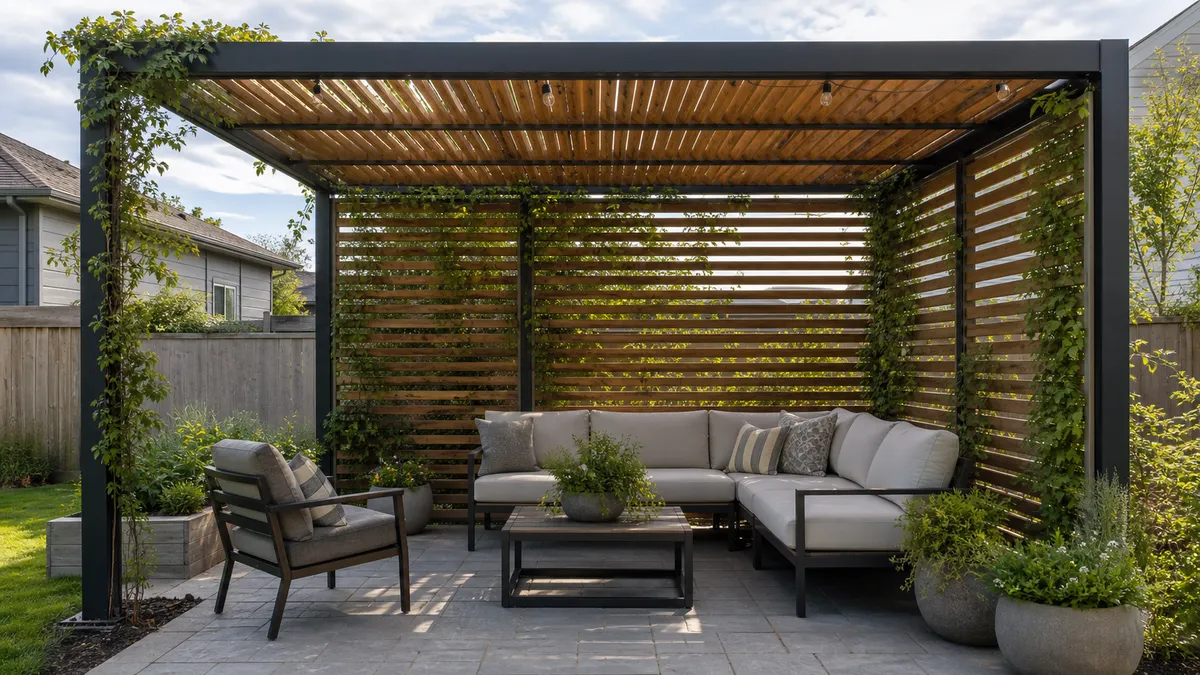
Fixed slats and privacy panels give the most immediate visual block, but they demand the most proof. Tight slats hide more, while spaced slats keep more air moving. The trade-off is physical: more privacy usually means less airflow and more wind surface. Do not attach panels to deck boards, fascia, pavers, thin slabs, rotten timber or unknown masonry and call the job done.
Adjustable louvers help when the same side has both low sun and an unwanted view. Angling the blades can block a standing view from one direction while leaving some air movement. They need hardware access, cleaning and a way to stay usable after dust, pollen, leaves and rain. If the blades must stay fully closed every day to work, a simpler fixed screen may be easier to maintain.
- Choose retractable screens for one clear view line and a realistic closing habit.
- Choose curtains when seasonal removal and softer coverage matter.
- Choose slats or louvers only when tighter privacy, airflow loss and structural checks are acceptable.
Category Research
Privacy categories to compare
Compare categories after the sightline, wind exposure, approvals and anchoring are clear. Use them to narrow the style before checking dimensions, mounting and rules.
Removable
Retractable side screen
For a single exposed bay or side-yard view line that can be opened before bad weather.
- Best for one side gap
- Needs closing routine
- Check post spacing first
Check:Check post spacing, attachment substrate, fabric care and severe-wind instructions.
Research this typeSeasonal
Outdoor curtain kit
For dining or lounge privacy where fabric can dry, tie back and come down seasonally.
- Good for renters when allowed
- Needs tiebacks and drying
- Keep away from heat sources
Check:Check rod support, tieback points, mildew risk and clearance from grills or heaters.
Research this typeFixed
Slatted or louvered privacy panel
For permanent side privacy where posts, footings and local approvals are already confirmed.
- Instant privacy
- Needs proven structure
- Can reduce airflow
Check:Check footing size, post condition, fasteners, corrosion risk and allowed height.
Research this typeWind, anchoring and rules that can stop the project
Privacy material turns an open pergola side into a wind-catching surface. Solid screens, tight fabric, dense lattice and leaf-heavy vines catch more wind than an open frame. The safe starting point is not a generic wind number; it is the actual posts, footings, wall brackets, fasteners, corrosion exposure and weather routine for that site.
Fixed panels need known structure. Seltsystems pergola installation guidance points to load-bearing substrate and selected anchors, and wind-screen manuals require attachment that matches the substrate. Apply the same discipline to privacy upgrades. Do not rely on pavers, fascia, deck boards, thin slabs, rotten posts, loose railings or unknown masonry without a qualified check.
Rules can matter as much as hardware. Portland's public fence and outdoor project guidance is only a local example, but it shows the kind of details to check: property lines, height, setbacks, footings, posts, lattice or trellis additions and possible permit triggers. HOA rules may also cover visible structures, exterior colors, fence style, landscaping and maintenance.
Renters need a removable path. Maryland People's Law Library and Texas Law Help both point renters toward written permission before improvements or modifications. Treat drilling, wall attachments, concrete footings, permanent screens and permanent planting as written-approval items. Freestanding screens and movable planters are often easier to remove, but they still need wind and trip checks.
- Retract or remove fabric before severe wind when the manual requires it.
- Keep all posts, footings and screens inside the allowed property area.
- Get written approval before permanent exterior changes on rental or HOA-controlled property.
Plants, vines and trellis privacy
Plants can make a private pergola feel less boxed-in than a solid wall, but they are not instant. University of Maryland Extension notes that natural privacy screens need proper establishment in the first one to two years. If the patio needs privacy this season, use interim fabric, lattice or a movable screen while the planting fills in.
Use mixed planting where possible instead of one fast-growing wall. A single species can fail from pests, disease, drought, deer or a local invasive restriction. UMD flags mature size, spacing, utilities and invasive concerns as part of the planning work. Bamboo, privet, wisteria and other fast screen plants can be a problem in some regions, so local extension advice matters more than a generic plant list.
Vines add support demands. University of Minnesota grape trellis guidance describes the importance of end posts, braces, anchors and line posts because vines create weight and tension as they grow. On a pergola, wet foliage, woody stems and training wires can add load, hold moisture against timber or metal and make pruning harder if access is tight.
Plan maintenance before planting at the pergola edge. A vine that reaches the roof can shade well, but it also drops leaves, traps moisture, needs annual pruning and may block gutters, louvers, lights or fans. A planter screen is easier to move and control, but it can dry out faster and may need winter protection depending on the plant and climate.
- Use interim curtains or panels when privacy is needed before plants mature.
- Choose plants by local invasive risk, mature size and pruning access.
- Size trellis, wires and braces for mature growth, not just the first season.
When not to buy a pergola privacy kit
Do not buy a kit just because the patio feels exposed. If the problem is an upstairs window or a raised deck, a standard 6 ft side screen may leave the view open. Start with the line-of-sight test and consider layered planting, an offset screen, a permitted taller screen or a different location for the seat.
Skip fixed privacy panels when the anchors are unknown. A privacy wall can turn a light pergola into a structure that sees much larger wind forces. If the posts, footings, brackets or wall substrate are uncertain, use removable fabric, a freestanding screen, movable planters or a separate fence or planting plan until structure is verified.
Do not solve privacy by killing airflow. A solid side wall beside a grill, heater, fire pit, outdoor kitchen or hot tub can trap heat, smoke, moisture and steam. Keep ventilation and clearances ahead of concealment. For a spa, use the hot-tub pergola guide when access, steam, cover lift and service panels affect the plan.
Choose a non-permanent privacy move when rules are unclear. Lease limits, HOA review, shared fences, easements, property lines and setback rules can all change what is practical. A movable planter screen or freestanding panel may be less dramatic, but it is easier to remove than a drilled screen, concrete footing or mature vine grown in the wrong place.
- Use planting or a different seat location when elevated views are the real problem.
- Use freestanding screens when drilling, footings or wall attachments are not approved.
- Use less blockage when airflow, heat, smoke or spa steam matters more than full concealment.
Watch-outs
Before you buy or install
- Side screens, solid panels, dense lattice and wet vines add wind surface to an open pergola.
- Do not attach fixed privacy panels to deck boards, fascia, pavers, thin slabs, rotten timber or unknown masonry without a qualified check.
- Screens near grills, heaters, fire pits, hot tubs or outdoor kitchens need airflow and clearance before privacy.
Read Next
Related guides if your situation is different
Pergola Guide
Use this when pergola is closer to the real constraint than the current page.
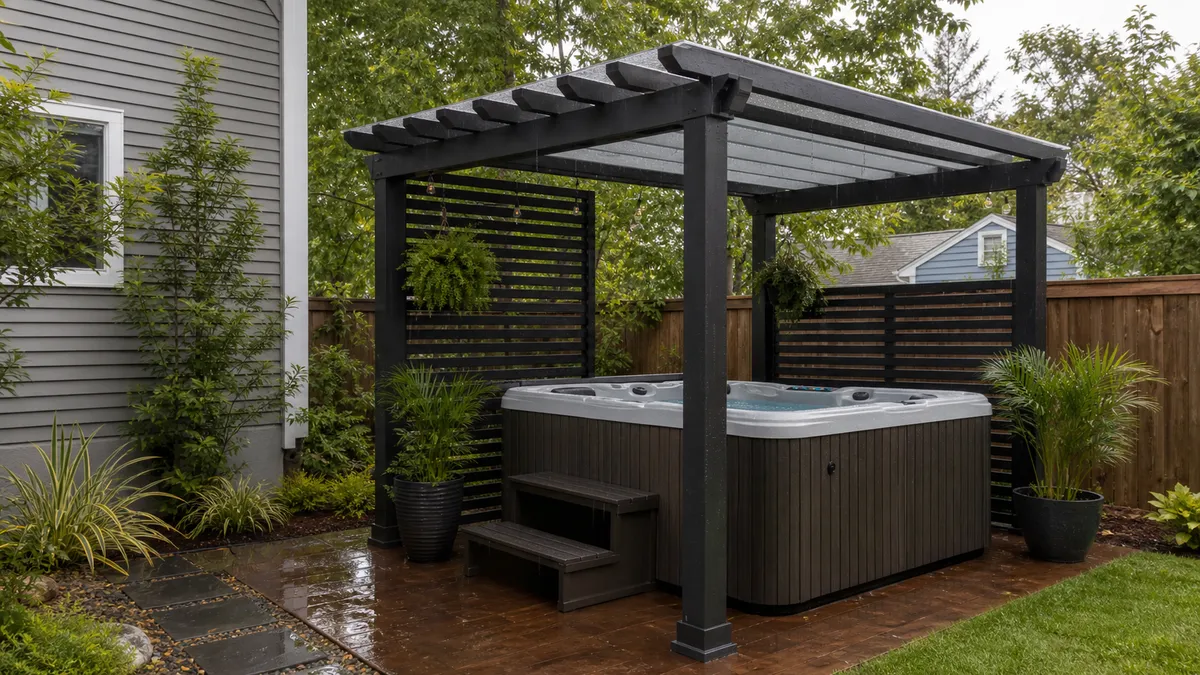
Pergola for Hot Tub
Use this when pergola for hot tub is closer to the real constraint than the current page.
Backyard Shade Ideas That Actually Work
Use this when backyard shade ideas is closer to the real constraint than the current page.
Patio Shade Ideas
Use this when patio shade ideas is closer to the real constraint than the current page.
Questions
FAQ
How do I make a pergola private without blocking airflow?
Use partial screening instead of a solid wall. Angled slats, adjustable louvers, spaced battens, curtains tied open at the edges and mixed planting can hide the main view line while leaving air gaps. Full privacy and full airflow rarely happen together.
How high should a pergola privacy screen be?
It depends on the viewer. Seated privacy can be lower than standing privacy, while upstairs windows, balconies, decks and slopes can see over a normal side panel. Test from the viewer's eye point to the protected seat or spa edge before assuming 6 ft is enough.
Are pergola privacy screens safe in wind?
They can be, but only when the screen type, anchors and weather routine match the site. Solid panels, curtains and dense lattice catch wind. Retractable fabric should be closed or removed when the manual requires it, and fixed panels need proven posts, footings and fasteners.
Are curtains or fixed panels better for pergola privacy?
Curtains are better when the patio is rented, seasonal, rule-heavy or exposed to changing weather. Fixed panels are better for instant permanent privacy only when structure, approvals and airflow have been checked. Curtains need drying and tiebacks; panels need stronger anchoring.
How long do vines take to give privacy on a pergola?
Plan on establishment and training rather than instant coverage. Many living screens need one to two years before they work well, and vines still need pruning, support checks, local plant selection and mature-size planning. Use interim fabric if privacy is needed this season.
Do I need permission for a pergola privacy wall?
Possibly. Local rules, property lines, screen or fence height, setbacks, HOA review, shared fences and easements can all matter. Renters should get written approval before drilling, wall attachments, concrete footings, permanent screens or permanent planting.