
Quick Answer
Quick answer for an overheating greenhouse
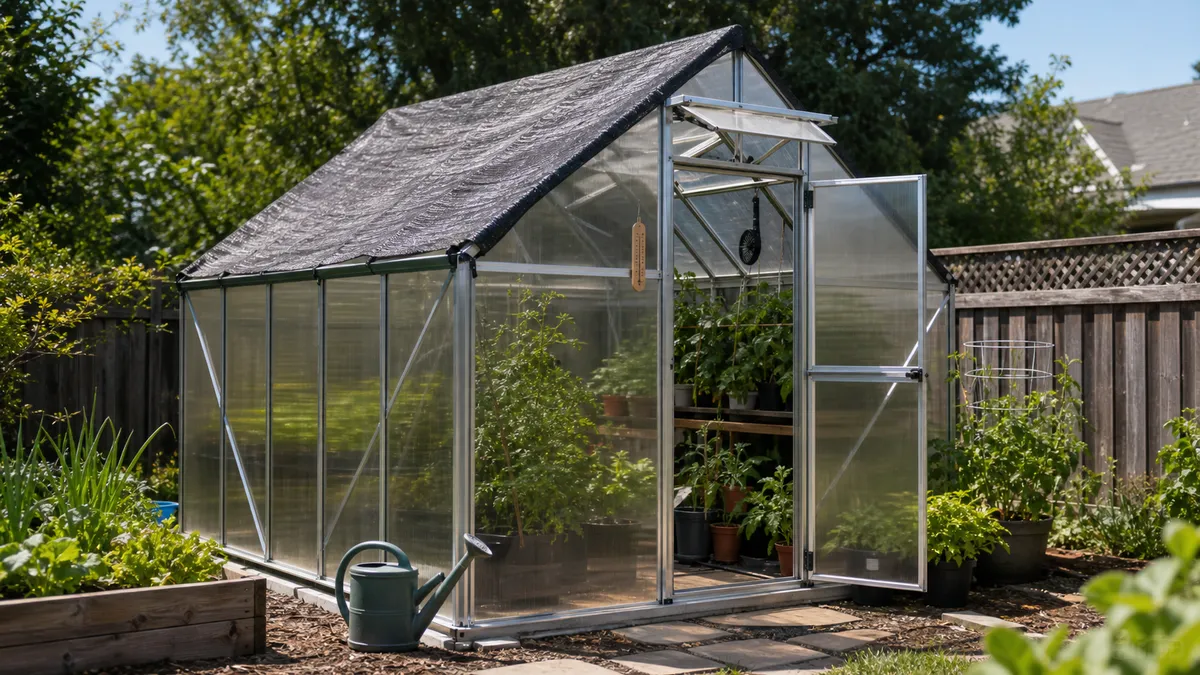
Assume trapped hot air plus solar gain until thermometer readings prove otherwise. Record the inside high, outside high and night low, then give hot air a clear way out before adding darker shade. If crops still wilt, drop flowers or fail to set fruit, move from ventilation to shade, root-zone water, exhaust fans and heat-wave triage.
Cool the greenhouse by exhausting hot air first, then reduce solar load with measured shade and steady root-zone moisture.
Diagnose the heat symptom before choosing a fix
A greenhouse overheats for different reasons, and the first fix changes with the symptom. UGA Extension warns that a greenhouse can trap enough heat to injure or kill plants without ventilation. USU Extension also recommends a max/min thermometer because one hot episode of enough duration can reduce crop performance. Start with numbers, not a guess from the doorway.
Set one thermometer at plant height and compare the inside high with the outside high. Also note the night low. A house that stays far above outside during the day needs a better exit and intake opening. A house that stays hot through the night may need crop movement, open sides, fan timing or a pause on cool-season crops rather than another layer of shade cloth.
UGA gives 85°F as a general maximum for many greenhouse plants, but crop tolerance varies. Treat that as a caution line, not a universal crop death point. Tomatoes, beans, cucurbits, lettuce, seedlings and potted plants fail in different ways, so match the symptom to the crop before changing the whole greenhouse.
Diagnosis first
Symptoms, likely causes and first readings
Use the symptom to decide whether the next action is ventilation, shade, water, humidity control or crop movement.
| Symptom | Likely cause | First reading | First fix | Stop sign |
|---|---|---|---|---|
| Inside high stays much hotter than outside | Trapped hot air or weak exhaust | Read the max/min thermometer at plant height | Open roof vents, end doors and roll-up sides early | Crops keep wilting after the air path is fully open |
| Air feels still even with a fan running | Circulation fan is mixing air but not removing it | Confirm there is an exhaust fan and intake opening | Add exhaust plus clear replacement air | Humidity rises or leaves stay wet after fan use |
| Plants wilt at noon and recover at night | Peak heat plus root-zone water demand | Probe soil moisture in containers, beds and raised benches | Water roots early and reduce the afternoon heat load | Wilting continues after roots are moist and vents are open |
| Flowers drop, fruit set fails or tomatoes stay green | Crop heat threshold is being exceeded | Record day and night temperatures during flowering | Reduce peak heat, improve night cooling and move sensitive pots | Flower drop continues through several hot nights |
| Leaf scorch appears near the roof or south/west side | Direct radiation on the hottest glass or plastic face | Find the scorch side during the failed hour | Use light exterior shade over that zone without blocking vents | Scorch spreads after cloth traps air or touches leaves |
| Plants stretch after shade is installed | Too much shade or shade left in place too long | Compare new growth with unshaded plants of the same crop | Reduce shade percentage, shorten the shaded period or uncover | Growth stays weak while the greenhouse is still hot |
| Condensation rises after misting | Humidity is building faster than air is exchanged | Look for wet leaves, fogged plastic and high relative humidity | Stop misting until exhaust and intake air are working | Foliage stays wet into evening or disease appears |
Open vents and intakes before adding more shade
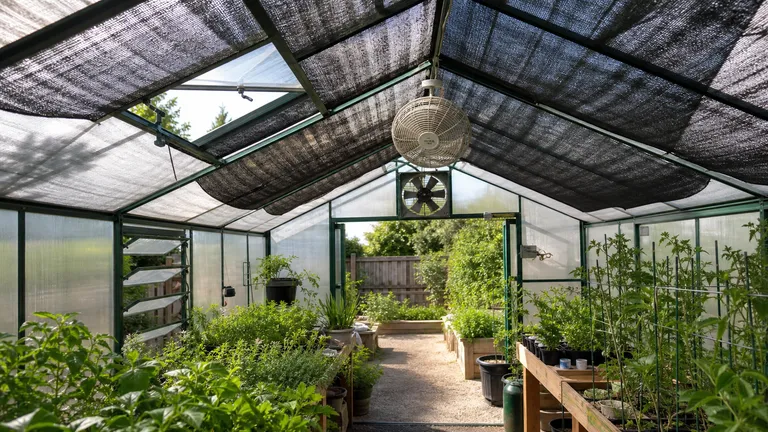
The first permanent fix is usually ventilation, not darker cloth. USU Extension's high-tunnel temperature guidance starts with opening end doors or vents, then opening sidewalls or roll-up sides when the house still runs hot. That order matters because shade cloth reduces sun load but does not remove the hot air already trapped inside.
Good natural ventilation gives warm air a high exit and gives outside air a low or side intake. A roof vent, ridge vent or high door opening lets hot air leave. Roll-up sides, open end doors or low side openings bring replacement air across the crop. UGA Extension warns that houses with only side vents may depend too much on wind pressure, so a calm day can still leave the greenhouse hot.
Walk the greenhouse while it is heating up. Remove storage tubs, flats, weeds or plastic curtains that block side openings. Open the structure before the inside air spikes, not after plants are already wilted. If roof vents, doors and roll-up sides cannot be opened because shade cloth, clips or benches block them, fix that obstruction before adding any new cooling product.
Well-ventilated tunnels can still run hot. Utah State Extension notes that high tunnels may be 10-15°F warmer than outside during the day even with ventilation. That does not mean ventilation failed; it means the next steps are measured shade, fan-assisted exchange, root-zone moisture and moving vulnerable crops during the hottest weather.
- Open roof vents, ridge vents or high doors before the greenhouse heats up.
- Use roll-up sides or end doors to provide intake air across the crop.
- Keep shade cloth, hanging baskets and stored flats from blocking vents.
Use fans to exchange air, not just stir hot air
A circulation fan or HAF fan can even out air around leaves, but it is not the same as ventilation. UVM Extension's high-tunnel engineering guidance separates air mixing from air exchange: heat and humidity leave only when inside air is exhausted and replaced with outside air. A fan pointed at plants may reduce stagnant spots while the greenhouse as a whole stays too hot.
For active summer ventilation, UGA Extension gives one full greenhouse air exchange every 60 seconds as a benchmark. The same source notes that one exchange per minute without evaporative cooling may hold the greenhouse around 8°F above outside, while half that airflow may leave it about 15°F above outside. UVM gives another rule of thumb: 8 CFM per square foot of growing area for summer cooling.
Those numbers help with sizing; they are not a wiring plan. Permanent exhaust fans, thermostats, shutters and wet-location equipment should follow the manufacturer instructions and local electrical rules. Use outdoor-rated, GFCI-protected equipment, and do not run unsafe cords across wet greenhouse aisles or under irrigation lines.
The intake opening matters as much as the exhaust fan. If the fan pulls against a sealed wall, it cannot move enough replacement air. Put intake on the opposite end or side where possible, keep plastic, pots and dense foliage out of the airflow, and avoid short-circuiting so fresh air enters and exits without crossing the crop.
Ranked fixes
Fixes ranked by effort and cost
Move down the list only when the lower-effort fix does not match the symptom.
| Level | Action | What it solves | Do not use it for |
|---|---|---|---|
| Free / same day | Open roof vents, doors and roll-up sides early; clear blocked intakes | Trapped hot air and poor natural exchange | A sealed greenhouse with no high exit or side intake |
| Low cost | Add a max/min thermometer, temporary light shade and morning root watering | Unmeasured heat spikes, direct radiation and dry root zones | Permanent fan sizing or chronic night heat |
| Medium cost | Install an exhaust fan with a real intake opening and thermostat control | Still air, high inside highs and weak air replacement | A greenhouse where vents and doors are blocked closed |
| Higher cost | Use fan-and-pad evaporative cooling where dry incoming air and design support it | Peak heat after ventilation and shade are already working | Humid climates or sealed houses with wet foliage |
| Stop / move | Move containers, seedlings or trays; pause cool-season crops during the heat spell | Crop damage that continues after air, shade and water fixes | Trying to force bolting or failing plants through damaging heat |
Add shade cloth only after airflow is working
Shade cloth is useful, but it is only one greenhouse cooling fix. It cuts solar radiation and can reduce crop heat stress. It does not exhaust trapped hot air, lower humid night temperatures or replace an intake opening. If vents are closed or the exhaust fan has no replacement air, darker cloth can leave the greenhouse dim and still hot.
Use light to moderate shade for most vegetable production. USU Extension notes that 20%-30% shade can still leave enough sunlight in high-solar-radiation conditions. UGA high-tunnel tomato guidance uses 30%-50% shade from late spring to early fall in Georgia high tunnels, and Penn State recommends 30%-50% shade cloth for most vegetables. Do not jump to 70%-90% shade because plants wilted once at noon.
Placement matters. Exterior cloth intercepts radiation before it heats the cover and enclosed air. Interior cloth can reduce direct leaf scorch, but more heat has already entered the greenhouse. Keep shade cloth above the canopy, not draped on leaves. Penn State warns that hot cloth touching plants can burn them, and movement can damage foliage.
Do not let cloth block the same vents that need to cool the house. Leave roof vents, doors, sidewalls and fan shutters working. For detailed guidance on greenhouse shade cloth percentage, color, outside placement and fastening, use the greenhouse shade cloth buying guide. For crop-by-crop percentages, use the percentage guide after vents and intakes are already open.
- Start with 20%-30% shade or 30%-50% shade cloth when the crop and climate support it.
- Keep shade cloth above the canopy and away from leaf surfaces.
- Leave roof vent, side vent, exhaust fan and intake opening access clear.
Keep roots moist without creating a humid disease box
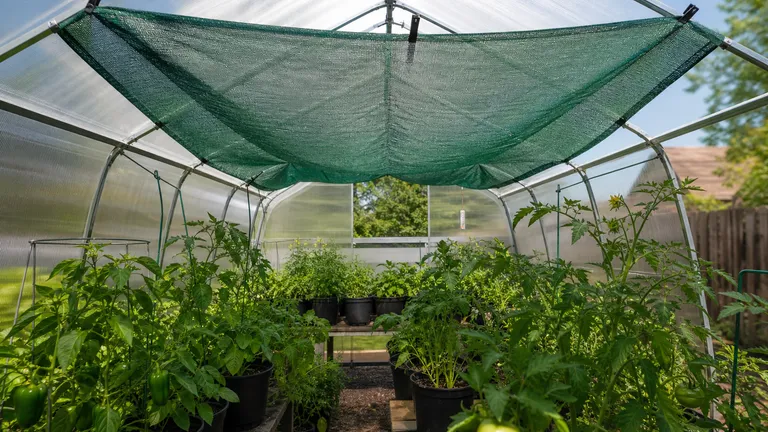
Heat stress is worse when roots are dry. During hot weather, test containers, raised beds, grow bags and bench crops earlier than usual because root zones can dry before the aisle soil looks dry. UMD Extension recommends water, nutrients and mulch for heat-stressed vegetables, and it specifically suggests 30% shade over sensitive crops such as tomato, pepper and squash during heat stress.
Water the root zone instead of using wet leaves as the cooling plan. Drip irrigation, soaker lines and careful morning watering keep moisture where plants need it while reducing wet foliage. UMD high-tunnel best practices point to drip irrigation as one way to reduce moisture and humidity pressure inside covered structures.
Wet foliage plus still humid air can trade heat damage for disease pressure. University of Minnesota Extension notes that tomato leaf mold is favored at relative humidity at or above 85%, and it recommends scouting during humid high-tunnel periods. If misting or overhead watering leaves foliage wet into evening, ventilation has to improve before more moisture is added.
Mulch can help buffer root-zone moisture where it fits the crop and bed. Do not bury stems or create damp piles against crowns. The goal is steady root-zone moisture through the hot part of the day, with leaves drying quickly and air still moving around the crop.
- Test containers and raised beds first; they dry faster than in-ground beds.
- Water early enough that leaves and greenhouse surfaces can dry.
- Use relative humidity and condensation as warning signs, not comfort numbers.
Use evaporative cooling or misting only with enough ventilation
Evaporative cooling is an escalation after ventilation and shade are already working. It works by cooling incoming air as water evaporates, so it performs best when the outside air is hot and dry. UGA's hobby greenhouse guide says evaporative cooling can reduce incoming air temperature by 10-30°F in hot, dry climates, but the cooling is smaller in wet, humid climates.
Fan-and-pad cooling is different from spraying a sealed greenhouse. The pad needs air pulled through it, and that air needs to leave the house after crossing the crop. Without enough exhaust, the greenhouse can become humid while temperature relief stays weak.
Be careful with misting. UGA's greenhouse cooling guide notes that fine mist equipment needs tiny nozzles, filtration and uniform distribution. It also warns that mineral deposits can reduce photosynthesis and wet foliage can raise disease risk. UGA high-tunnel tomato guidance found that misting or fogging without active ventilation gave negligible cooling while raising humidity and soil moisture.
Use misting only when the greenhouse has enough air exchange, the crop tolerates it and the foliage dries. Stop if condensation forms on the cover, leaf surfaces stay wet, relative humidity stays high or disease appears. In a humid greenhouse, more water in the air can raise plant disease risk and heat stress for the person working inside.
- Use evaporative cooling after ventilation and shade are already working.
- Avoid misting a sealed or already humid greenhouse.
- Watch foliage wetness, condensation and mineral deposits.
Emergency heat-wave actions and when to stop
During a heat wave, work before the greenhouse heats up. Open vents, doors and roll-up sides early. Start exhaust fans before the inside air spikes. Water the root zone in the morning. Add temporary light shade over the hottest crop zone, not the entire greenhouse by default. Move potted seedlings, trays and tender container crops to a cooler place if the thermometer shows the house is staying above crop tolerance.
Flowering crops need extra attention. University of Minnesota Extension reports tomato stress above about 85°F by day and 70°F at night during the pollination window, green beans aborting flowers above 95°F especially when soil is dry, and cucurbit or bee-activity problems around 90°F. UMD Extension also warns that day temperatures over 95°F and night temperatures over 75°F can cause flower drop or malformed fruit in vegetables.
Stop trying to cool every crop in place. Move containers and seedling trays if the inside high remains damaging after ventilation, shade and water changes. Harvest vulnerable fruit if heat will ruin it. Let cool-season crops go if they bolt and the forecast stays hot. Remove or reduce cloth if plants stretch under shade while temperature remains high.
Protect the person working in the greenhouse too. UMD high-tunnel best practices warn that humidity and lack of airflow can raise heat-illness risk in tunnels. Avoid peak-heat work in a stagnant humid structure, especially during heat alerts or poor air quality. Cooling the crop is not worth staying inside when the air feels unsafe.
- Open early, run exhaust early and water roots before peak heat.
- Move seedlings, trays and potted crops when the thermometer stays above tolerance.
- Leave the greenhouse during dangerous heat, stagnant humidity or poor air quality.
What will not fix trapped greenhouse heat
Darker shade cloth over a sealed greenhouse will not remove trapped hot air. It may reduce light while humidity and night heat stay high. Use darker cloth only after vents, doors, sidewalls, exhaust and intake air are working and crop response still calls for more radiation reduction.
A small circulation fan will not fix a house with no exhaust path. It may move heat from the roof area into the crop zone without lowering the greenhouse high. If the fan does not push air out or pull outside air in, treat it as mixing help, not cooling capacity.
Misting a closed humid greenhouse is another false fix. It can make leaves wet, fog plastic and raise disease pressure while the air remains hot. Water roots first, then use misting only if active ventilation can carry humid air out.
Cloth draped directly on leaves can create burn, rubbing and stagnant pockets. Closing vents to hold a brief cool period inside also fails once sunlight returns; the greenhouse quickly becomes a heat trap again. Buying fans, cloth or irrigation parts before measuring inside high and outside high usually delays the real fix.
False fixes
Common fixes that do not solve trapped heat
Replace each false fix with the action that addresses the real cause.
| False fix | Why it fails | Use this instead |
|---|---|---|
| Darker cloth on a sealed greenhouse | It cuts light but does not remove hot air or humid night air | Open vents, sidewalls and exhaust first, then use measured shade |
| HAF or circulation fan with no exhaust | It stirs hot air without replacing it with outside air | Add exhaust plus a clear intake opening |
| Misting with doors and vents closed | It can raise humidity, condensation and disease risk | Water roots and use mist only with active air exchange |
| Shade cloth touching crop leaves | Hot fabric can burn, rub and trap still air around foliage | Raise cloth above the canopy and keep one side open to air |
| Watering foliage instead of roots | Wet leaves do not solve dry root stress and may stay humid | Use drip, soaker lines or morning root-zone watering |
| Closing vents to hold cool air in | Sunlight quickly turns the closed structure into a heat trap again | Vent early and keep air exchange running through peak heat |
Choose shade cloth after vents and intakes are working
Once roof vents, roll-up sides, exhaust fan and intake opening are working, shade cloth is easier to size. The next question is no longer whether shade cloth can rescue a sealed greenhouse. It is which percentage, color, placement and fastening method reduces solar load without slowing the crop or blocking ventilation.
Use the greenhouse shade cloth buying guide for cloth selection, outside versus inside placement, seasonal removal and greenhouse-specific fastening. Use the shade cloth percentage guide when the next step is 30%, 50%, 70% or 90% across different crop groups. Keep this page as the cooling diagnosis: measure heat, open the air, protect roots, use misting carefully and move crops when the greenhouse stays damaging.
- Read the greenhouse shade cloth guide when cloth type, placement and fastening are the remaining questions.
- Use the percentage guide when crop light needs, heat duration and over-shading risk decide the number.
- Return to diagnosis if shade reduces light but the greenhouse is still hot and humid.
This won't fix it
Do not skip these checks
- Shade cloth cannot exhaust trapped hot air from a sealed greenhouse.
- Misting without active ventilation can raise relative humidity, condensation and disease pressure.
- Use outdoor-rated, GFCI-protected electrical equipment and avoid unsafe cords in wet greenhouse aisles.
- Do not keep working inside a stagnant humid greenhouse during dangerous heat.
Read Next
Related fixes
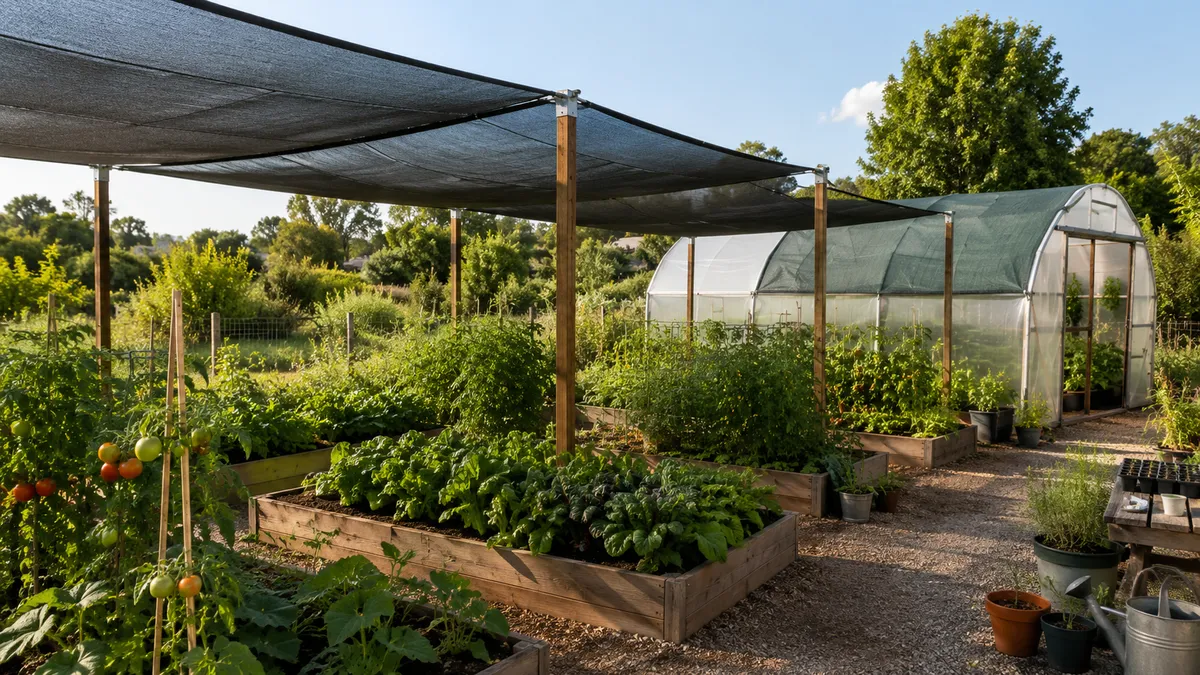
Shade Cloth Guide
Use this when shade cloth is closer to the real constraint than the current page.
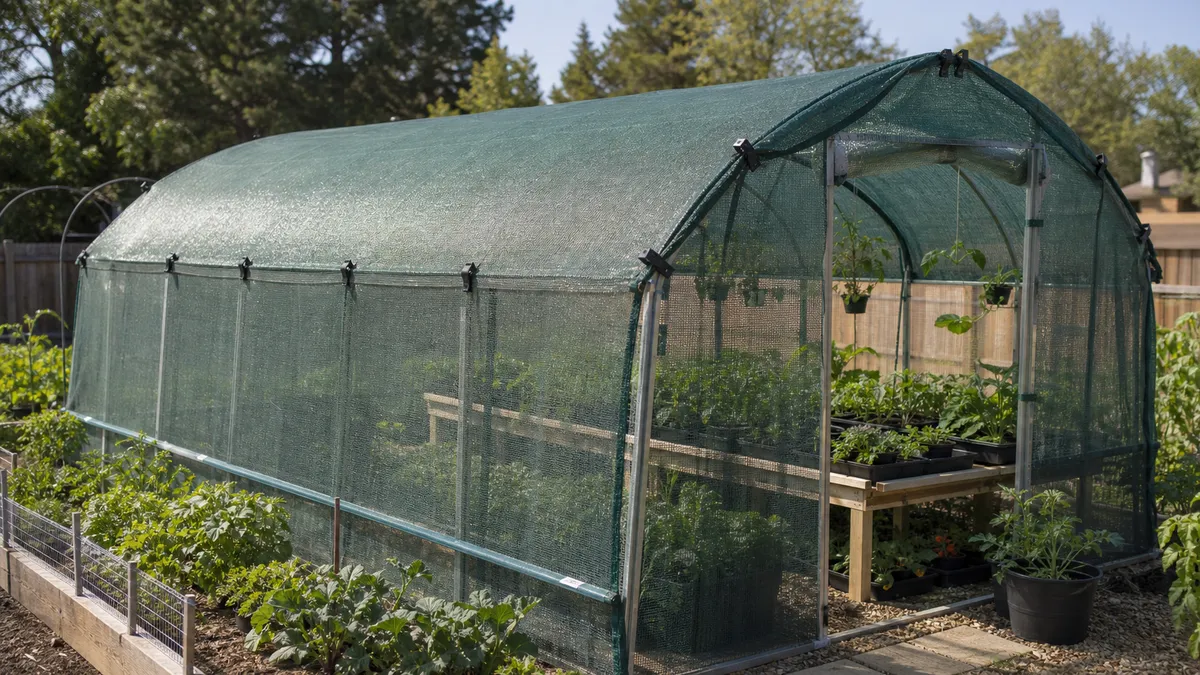
Shade Cloth for Greenhouse
Use this after vents, doors, exhaust and intake air are working and the remaining choice is greenhouse cloth percentage, color, placement or fastening.
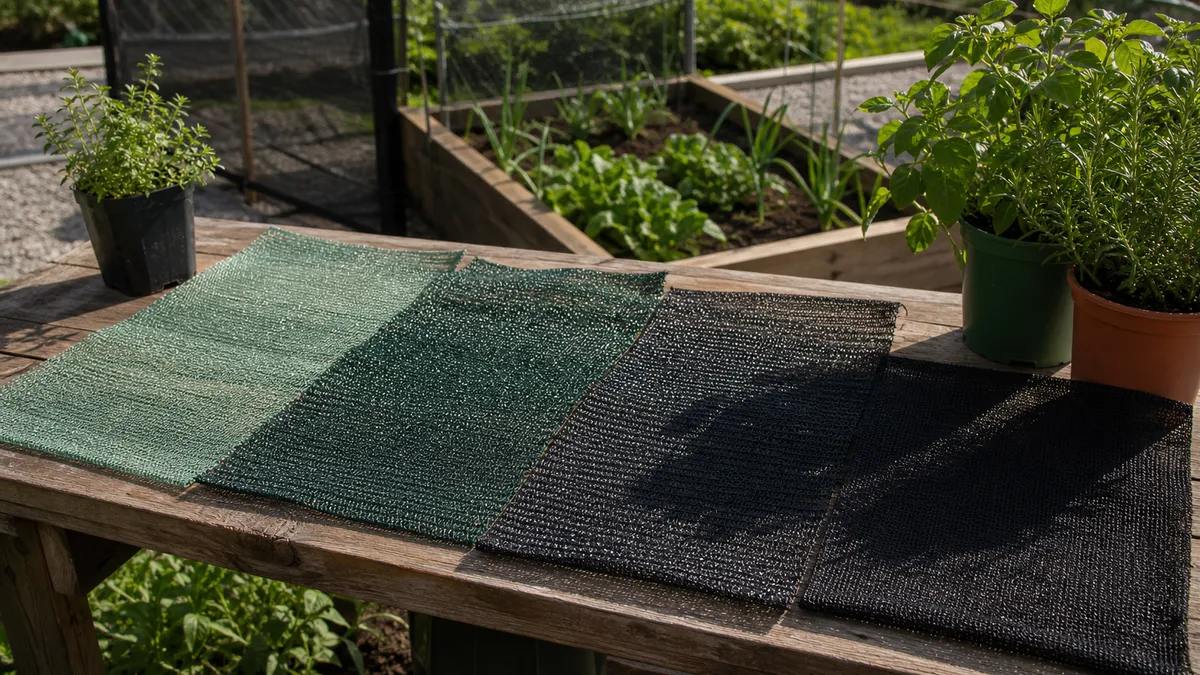
Shade Cloth Percentage Guide
Use this when crop light needs and heat duration decide whether 30%, 50%, 70% or heavier shade belongs in the plan.
Questions
FAQ
What temperature is too hot for a greenhouse in summer?
UGA Extension gives 85°F as a general maximum for many greenhouse plants, but crop thresholds vary. Tomatoes can have pollination trouble above about 85°F days and 70°F nights, while beans and cucurbits show different heat symptoms. Use a max/min thermometer instead of guessing.
Does shade cloth actually cool a greenhouse?
Shade cloth reduces solar radiation and crop heat stress, so it can help a hot greenhouse. It does not remove trapped hot air. Open vents, doors, sidewalls, exhaust and intake air first, then choose greenhouse shade cloth and percentage by crop and climate.
Should I use a fan or open vents first?
Open vents first. Roof vents, end doors and roll-up sides let hot air leave and replacement air enter. A circulation fan can mix air around leaves, but heat leaves only when air is exhausted and replaced with outside air.
Is misting good for cooling a greenhouse?
Misting can help only when ventilation is strong enough and incoming air is dry enough. In a sealed or humid greenhouse, misting can raise condensation, wet foliage and disease pressure while giving little cooling. Water roots first and use misting cautiously.
When should I move plants out of the greenhouse?
Move potted seedlings, trays and sensitive crops when inside highs stay above crop tolerance after ventilation, shade and watering. Also move or stop forcing crops when plants keep wilting, dropping flowers, failing to set fruit or stretching under darker shade.