
Quick Answer
shade sail installation mistakes: the short version
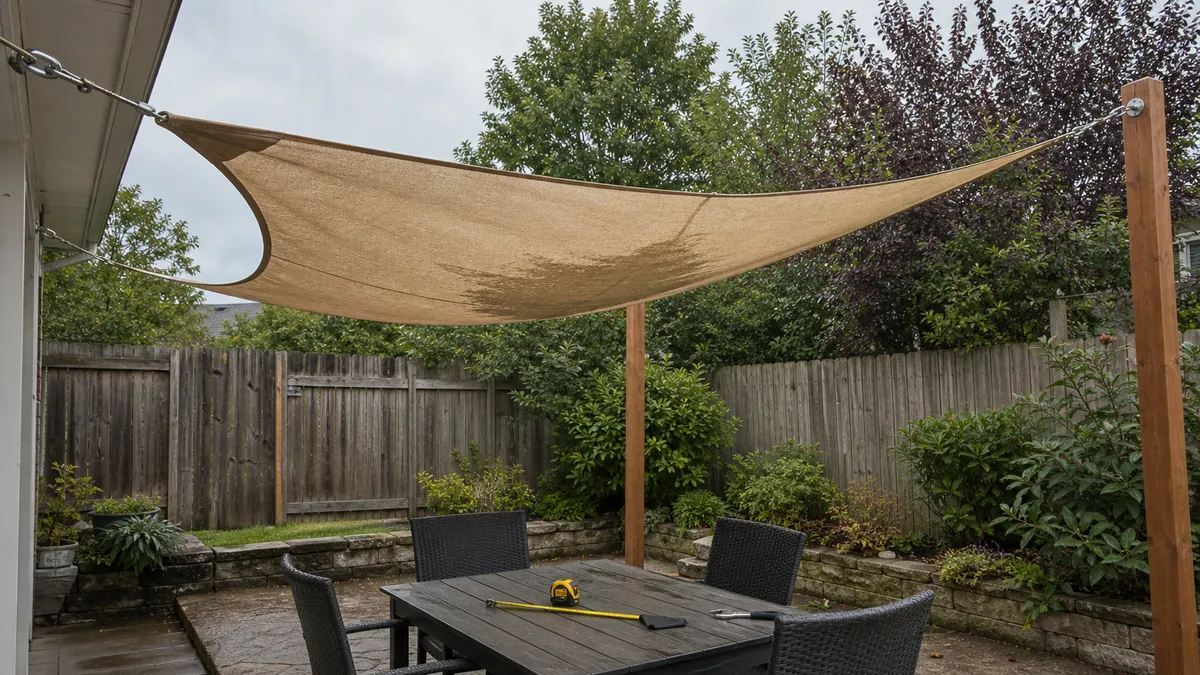
Most shade-sail mistakes start with weak supports, poor slope, wrong fabric size or mismatched hardware. Check posts, wall plates, turnbuckles, height difference and drainage before tightening harder or blaming the fabric. These checks prevent most repeat problems.
Repair weak posts, bad anchors or missing slope before adding tension when a shade sail sags, flaps or pools water.
Diagnosis
Most common problems
Check the symptom before buying another shade product.
Fabric flaps even in mild wind
Loose or uneven tension often shows up as early movement.
Rain collects in the middle
Ponding is a slope failure.
One post leans after installation
Movement at the support can become structural damage.
Turnbuckles are fully closed but fabric remains loose
There may be no adjustment travel left.
Diagnosis checklist before tightening
Inspect the loaded sail before adding tension. If a corner support moves when the sail is loaded, the support is the first fault to solve. If all supports stay still but the center droops, verify fabric size and adjustment travel. If water gathers after rain, verify height difference before blaming the material.
Look for four signals: moving posts, closed turnbuckles, flat corner heights and hardware that is bending or mismatched. These signals point to structure, sizing, drainage and hardware. Treat them separately so one repair does not hide another fault.
Mistake patterns often arrive in pairs. A sail that was measured too large may also have no drainage slope because the installer tried to use convenient same-height points. A post that leans may also explain why the fabric seems to lose tension after every windy day.
Another mistake is ignoring access for future adjustment. Turnbuckles placed above a roofline or behind thorny planting will not be checked. Put tensioning hardware where a person can safely reach it, because outdoor fabric always needs periodic inspection.
For example: Fabric flaps even in mild wind. Check corner alignment and hardware tension before resizing the sail. Loose or uneven tension often shows up as early movement. Stop and reassess if the support, mount or weather problem is still visible after the first fix.
Before ordering: Fabric flaps even in mild wind. Check corner alignment and hardware tension before resizing the sail. Loose or uneven tension often shows up as early movement. Stop and reassess if the support, mount or weather problem is still visible after the first fix.
- Moving post or wall plate points to support failure.
- Closed turnbuckle with loose fabric points to sizing or hardware-gap error.
- Flat corners with wet fabric point to drainage failure.
- Bent hooks or mixed metals point to hardware selection problems.
Fix table
Symptoms, first fixes and stop signs
Start with the symptom you can see before buying parts or adding more shade.
| Symptom | First fix | Why it works | Stop if |
|---|---|---|---|
| Fabric flaps even in mild wind | Check corner alignment and hardware tension before resizing the sail. | Loose or uneven tension often shows up as early movement. | More tension can worsen damage when the support is moving. |
| Rain collects in the middle | Create a lower drain corner or change fabric type. | Ponding is a slope failure. | Cracked masonry around a fixing point needs professional attention. |
| One post leans after installation | Stop using the sail until the footing and post are checked. | Movement at the support can become structural damage. | Water pooling over people or doors should be treated as an installation failure. |
| Turnbuckles are fully closed but fabric remains loose | Recheck sail size and hardware gap. | There may be no adjustment travel left. | More tension can worsen damage when the support is moving. |
Fixes ranked by effort and cost
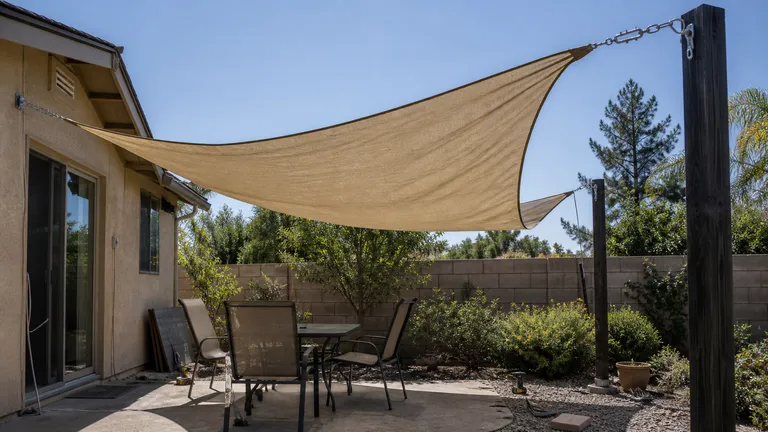
A low-cost correction is rebalancing turnbuckles; a medium correction is replacing hardware; a high-cost correction is rebuilding posts or wall plates. Start with the cheapest reversible test only when supports are stable. Tightening a sail attached to weak points can make the damage worse.
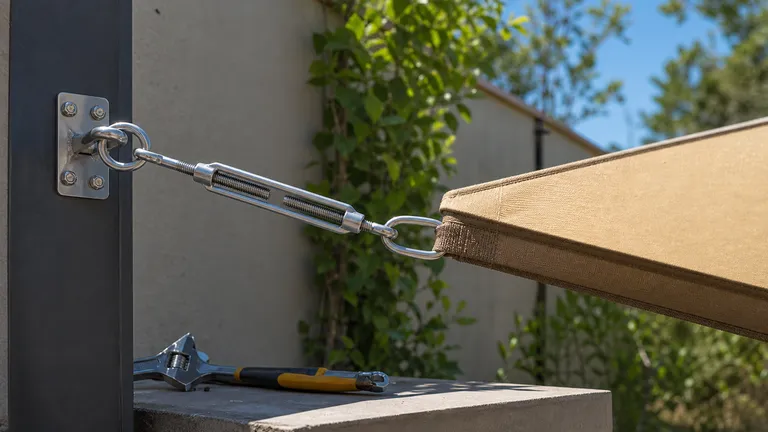
If the hardware has enough travel, tension diagonally and evenly. If hardware travel is gone, replace the connection set or reorder the sail after measuring between fixing points. If a post leans or masonry cracks, remove load and repair structure before fabric returns.
Hardware mismatch is another common cause. A long turnbuckle on one corner and a short improvised connector on another corner can make even tension difficult. Use a consistent connection plan so adjustment travel and load direction make sense at every point.
Sail orientation can also create unexpected runoff. A low corner over a walkway may technically drain the fabric and still make the patio worse. Place the low point where water can fall onto gravel, planting or a planned drain route.
In practice: Rain collects in the middle. Create a lower drain corner or change fabric type. Ponding is a slope failure. Stop and reassess if the support, mount or weather problem is still visible after the first fix.
- Low effort: retension evenly and inspect after one windy day.
- Medium effort: install correctly sized turnbuckles, shackles and eye plates.
- High effort: reset posts, add footings or move anchors into structural material.
This will not fix the installation
A larger sail will not fix weak anchor points. More tension will not create drainage on level anchors. Waterproof fabric will not stop ponding when every corner is level. Decorative hardware will not become rated hardware because it fits the hole.
The repair must match the fault. Sagging from an oversized sail needs sizing or hardware travel. Pooling needs height difference. Flapping needs tension, edge stability or smaller spans. Support movement needs structural repair.
Footing depth and post stiffness should be treated as part of the shade setup. A tall slender post can flex enough to make the sail flap even when the footing remains intact. If movement is visible at the top of the support, the fabric is reporting a structural issue.
After any correction, inspect twice: immediately under tension and again after weather. Some mistakes only appear after fabric has stretched, hardware has seated or soil around a new footing has settled.
If one post leans after installation, stop using the sail until the footing and post are inspected. Movement at the support can become structural damage.
- Do not solve weak posts by pulling harder.
- Do not solve ponding by buying thicker waterproof fabric.
- Do not solve wrong size by using every last thread of adjustment.
Prevention on the next install
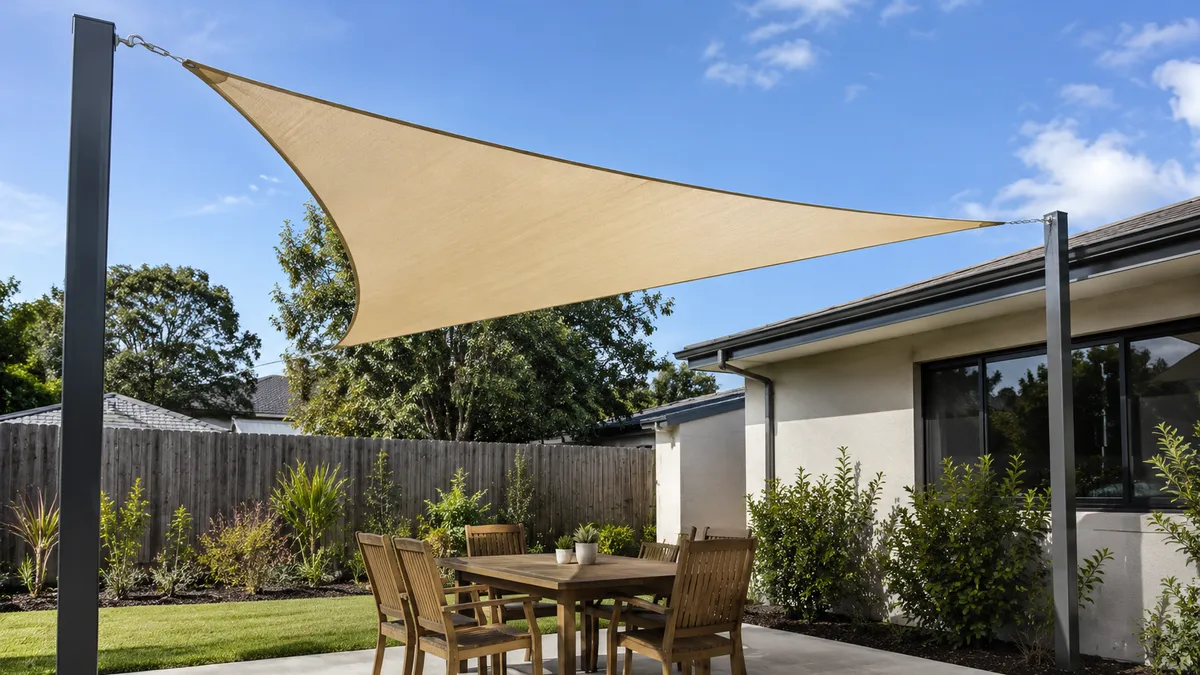
Before the next sail goes up, mark the anchor heights and hardware gaps on paper. Put the low corner where water can leave without dumping onto a door, grill or walkway. Confirm that each support is meant for tension and not just for appearance.
Good prevention also includes a takedown rule. If the manufacturer says to remove the sail for storms or winter, make the hardware reachable enough that the rule can be followed.
For wall-mounted corners, watch the surface around the fixing after the first week. Hairline cracks, crushed cladding or widening holes are early warnings. Removing load early is cheaper than repairing a damaged wall after a season.
When turnbuckles are fully closed and the fabric is still loose, remeasure the sail and hardware gap. There may be no adjustment travel left.
This won't fix it
Do not skip these checks
- More tension can worsen damage when the support is moving.
- Cracked masonry around a fixing point needs professional attention.
- Water pooling over people or doors should be treated as an installation failure.
Read Next
Related fixes
Shade Sail Guide
Use this when shade sail is closer to the real constraint than the current page.
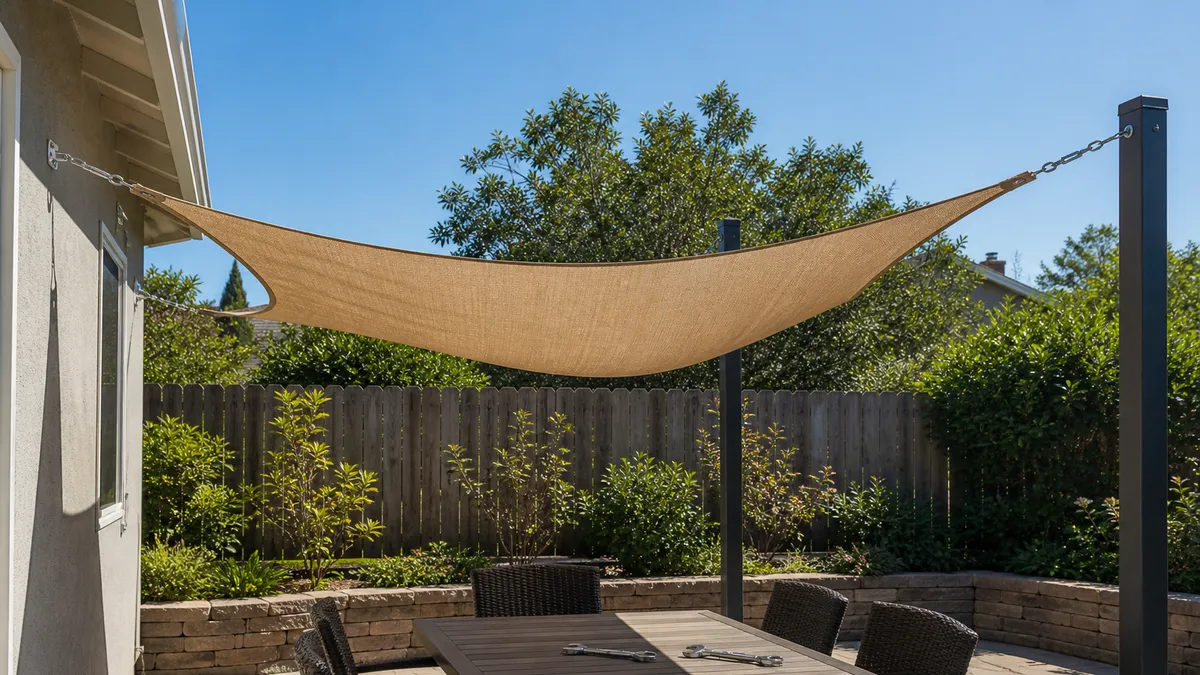
Shade Sail Sagging
Use this when shade sail sagging is closer to the real constraint than the current page.
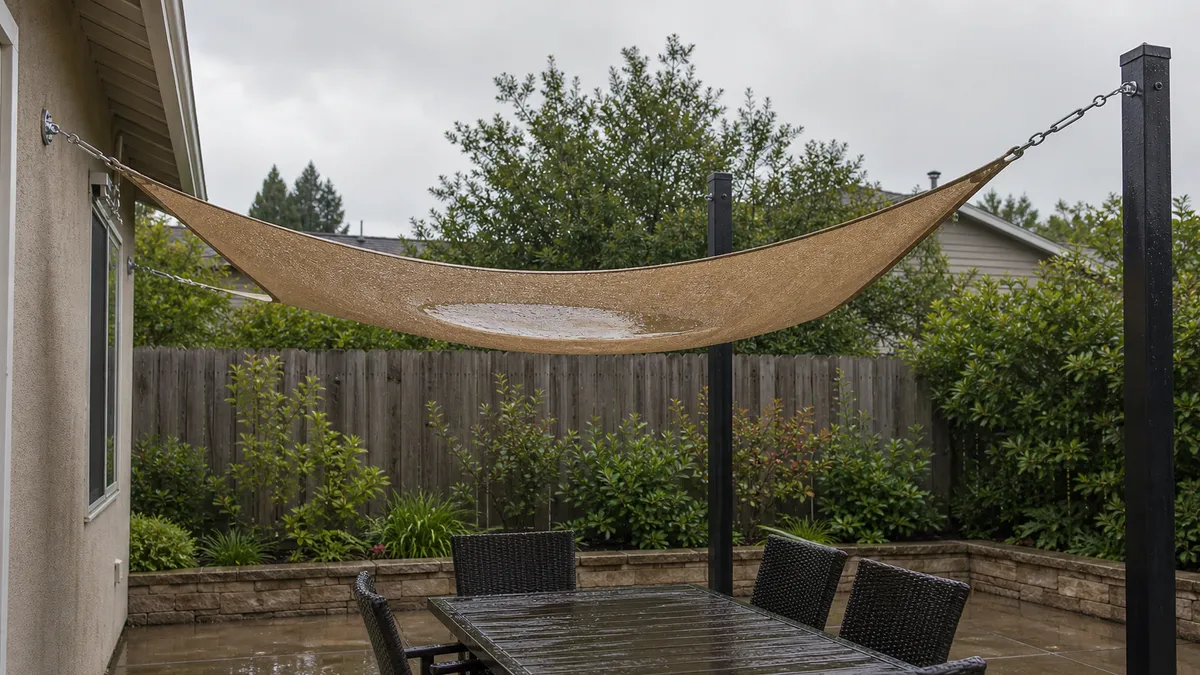
Shade Sail Water Pooling
Use this when shade sail water pooling is closer to the real constraint than the current page.
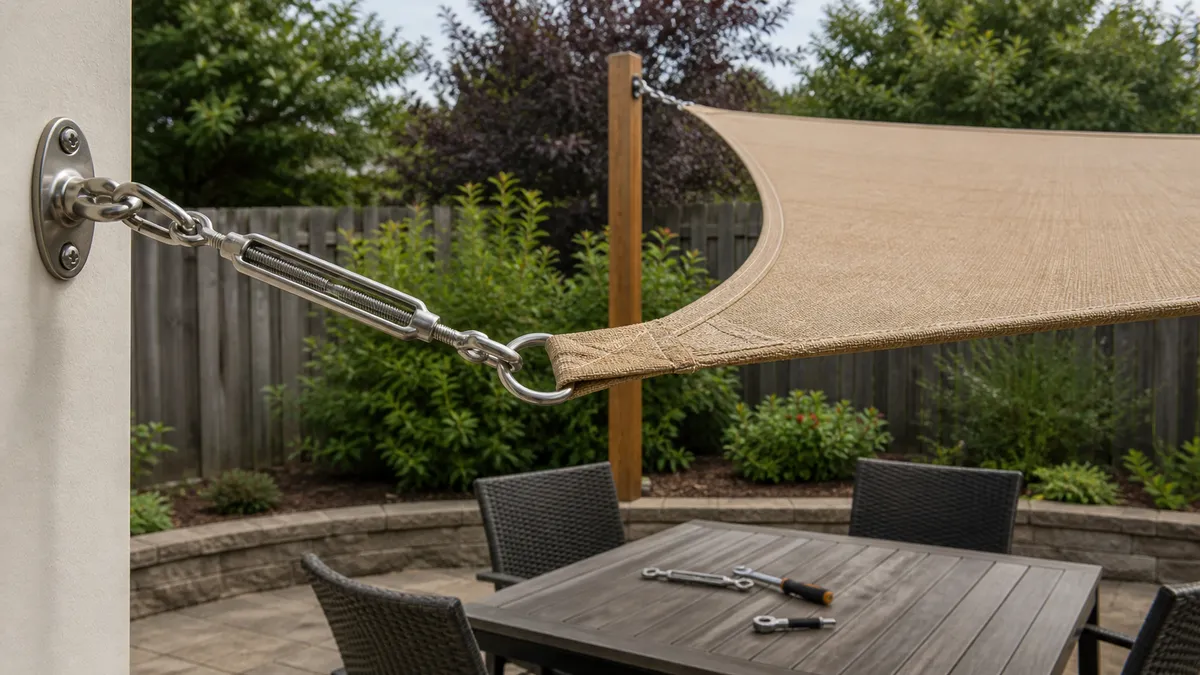
Shade Sail Tensioning Guide
Use this when shade sail tensioning guide is closer to the real constraint than the current page.
Questions
FAQ
What is the most common shade sail installation mistake?
The common mistake is starting with fabric size before proving the anchors. A sail needs strong fixing points, hardware room and slope. If those are wrong, better fabric will not prevent sagging, flapping or pooling.
Can I attach a shade sail to a fence post?
Do not assume a fence post can carry sail tension. Many fence posts are sized for fence panels, not overhead fabric loads. Use purpose-built posts or engineered anchors unless the structure is verified.
Why does my new shade sail still sag?
Sagging can come from oversized fabric, closed turnbuckles, uneven tension, stretchy fabric or moving supports. Check adjustment travel and post movement before ordering another panel or pulling harder in wind.