
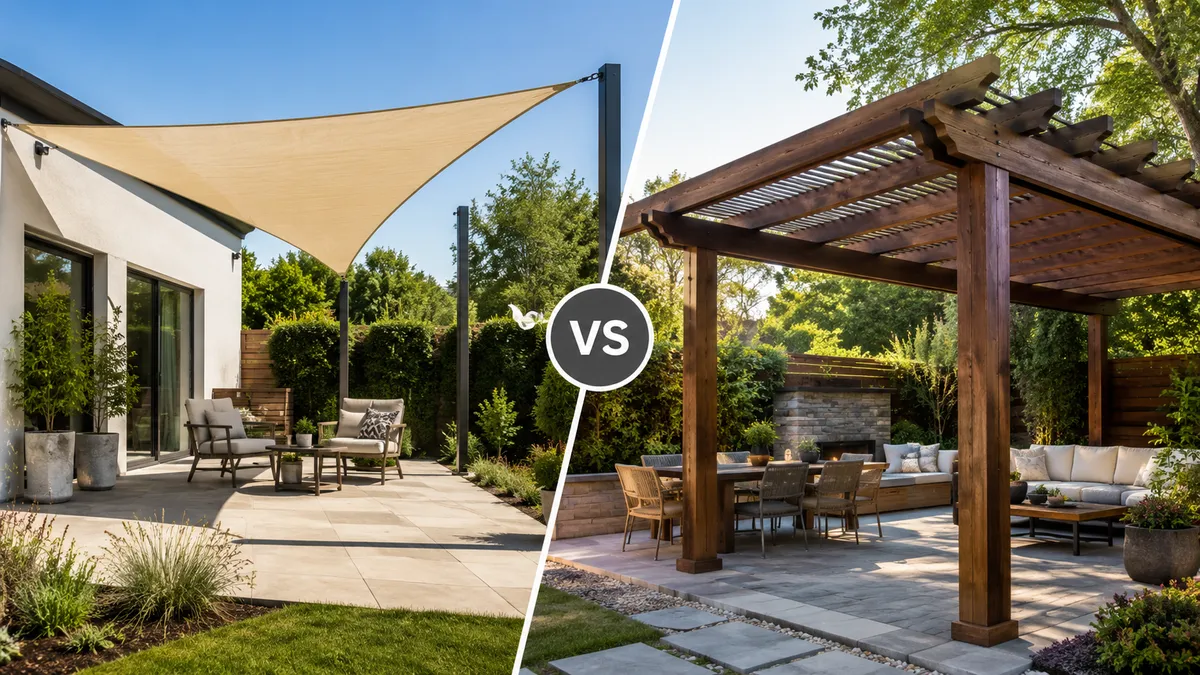
Quick Answer
Short answer: shade sail or pergola
Choose a shade sail for lower-commitment patio shade where strong posts, walls or wall plates can carry a tensioned setup. Choose a pergola when you want a permanent outdoor-living structure and posts, footings, drainage and local rules are acceptable. Compare installed cost, wind, rain and renter/homeowner limits before buying.
A shade sail wins when the site can carry tensioned fabric without permanent overbuild. A pergola wins when the patio should become a lasting room-like structure.
Shade sail vs pergola at a glance
A shade sail is tensioned fabric between anchors; a pergola is a structure built from posts, beams and optional shade layers. That difference matters more than the first product price. A sail can be the leaner answer when anchor points are already strong. A pergola becomes more sensible when the patio needs a permanent frame for repeated daily use.
Do not compare fabric to timber, aluminum or steel as if they are finished projects. Compare the finished setup: posts and footings, wall plates or eye bolts, turnbuckles or tensioners, drainage, local rules and the bad-weather routine. The cheaper-looking option can stop being cheap when every corner needs new structure.
The first walk-through should happen during the failed sun hour. Mark where people sit, where the shade has to land, which surfaces can carry load and where rain would drain. If the site cannot answer those questions, use the patio shade finder before buying either system.
Comparison
Side-by-side fit check
Use this before comparing kits, fabric size or product photos.
| Decision point | Shade sail | Pergola | Better fit |
|---|---|---|---|
| Upfront commitment | Lower when real anchors or posts already exist. | Higher because posts, beams and footings are part of the job. | Shade sail for staged testing; pergola for permanent commitment. |
| Installed cost | Fabric price can mislead once posts, wall plates, turnbuckles and labor are counted. | HomeGuide lists installed prefab and custom pergola ranges that move quickly into multi-thousand-dollar projects. | Compare installed totals, not kit prices. |
| Structure | Needs tensioned anchors that can take pull from several directions. | Needs posts and footings that can handle the frame plus any roof, louvers or screens. | Choose the option your structure can carry safely. |
| Rain | Needs slope or twisted mounting heights so water does not pool. | An open pergola does not shed rain unless a roof, canopy or louver system is designed for drainage. | Choose by drainage, not by shade area. |
| Wind and snow | May need seasonal removal, retensioning and strong hardware. | Can be stronger when engineered, but roof panels and side screens add wind surface. | Avoid casual anchors in exposed sites. |
| Renter fit | Possible only when removable or permission-safe anchors are legitimate. | Usually too permanent unless written permission allows posts and footings. | Renters usually start with removable shade. |
| Low-angle sun | Overhead fabric may miss side glare. | Open overhead beams may also miss side glare without screens, vines or louvers. | Use vertical or adjustable shade for east/west sun. |
| Upgrade path | Good for testing shade before committing to structure. | Better for lights, privacy, roof panels, plants or a long-term patio-room feel. | Pergola when future upgrades are part of the plan. |
Installed cost and installation work
Cost sources are useful only when they separate kit price from the structure that makes shade safe. HomeGuide, a commercial cost source, gives installed pergola examples around $1,450-$5,750 for many prefab projects and around $4,300-$9,350 for a 12x12 ft custom wood example. Those ranges are not quotes, but they show why a pergola is usually a structure project, not a fabric purchase.
A shade sail can still be the cheaper answer when posts, walls or beams already line up with the shaded area. Cool-Off's shade-sail instructions call for planning anchor strength, sun path, wind direction and a hardware gap at the corners. Add wall plates or eye bolts, turnbuckles, tensioners, posts, footings, reinforcement and labor before calling the sail inexpensive.
Local rules also change cost. Scottsdale's pergola guidance is only one city example, but it shows that even structures that avoid a building permit can still face setbacks, planning approval and stormwater rules. Armadale's building sheet is a different local example where pergolas and shade sails can both be regulated. Use those examples as reminders to verify local building, zoning, HOA and utility requirements.
Cost
Installed-cost items to price
The real budget is product plus structure, labor and future maintenance.
| Cost item | Shade sail | Pergola | What changes the total |
|---|---|---|---|
| Fabric or kit | Usually lower at the product level. | Usually higher because the frame is the product. | Size, fabric, metal, timber, finish and included hardware. |
| Posts, anchors and footings | Can be minimal with existing strong anchors; expensive when every corner needs a post. | Core part of the project. | Soil, patio slab, span, footing depth, attachment method and access. |
| Labor | Rises with high posts, wall plates, concrete and custom geometry. | Rises with kit size, footings, assembly, roofing and electrical add-ons. | Site access, existing structure and whether professional installation is needed. |
| Permits and rules | May apply when posts, attachments or large structures are involved. | More likely to trigger setback, roof, drainage or accessory-structure rules. | City, HOA, lease, attachment type, size, height and roof coverage. |
| Roof, screens or louvers | Usually separate from the sail decision. | Can become a major cost and load change. | Drainage, wind exposure, privacy goals and electrical work. |
| Maintenance and replacement | Fabric, stitching and hardware may need seasonal inspection or replacement. | Frame, finish, roof panels, vines and drainage still need care. | Weather exposure, snow, trees, coastal air and how often the shade is left up. |
Use cost ranges as planning context only. A local quote can change the answer when posts, footings or attachments are difficult.
Renters, homeowners and permanent changes
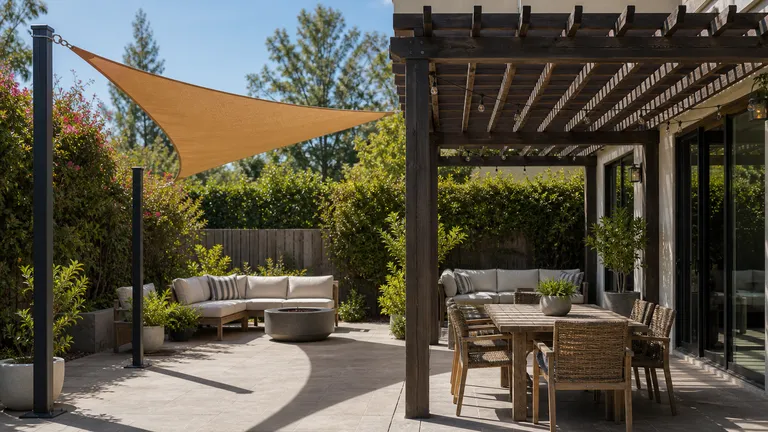
Renters should treat holes, posts and permanent anchors as permission issues before they compare shade coverage. A shade sail is not automatically renter-friendly if it needs wall plates, roof anchors or concrete posts. A pergola is usually an even bigger permission problem because it changes the patio structure and may affect setbacks, drainage or HOA appearance rules.
Homeowners can justify the extra work when the patio is becoming a long-term outdoor room. A pergola is stronger as an upgrade path for lighting, vines, side screens, roof panels or louvers, but only when the posts and footings are planned for those loads. YourHome's shading guidance is useful here because it separates fixed shade from adjustable and seasonal shade.
If you are not sure how long the layout will stay, a sail can be a better first move. It lets you test where shade actually helps before paying for a structure. Once furniture placement, drainage and bad-weather routines are clear, the narrower shade sail guide or pergola guide can take over the details.
Category research
Shade sail and pergola categories to compare
Use category searches after the comparison has narrowed the permanent-vs-fabric decision.
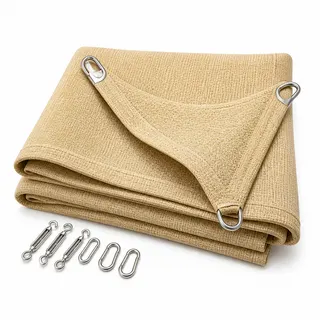
Fabric shade
Shade Sail Kit
For lower-cost shade when anchors and slope are realistic.
- Lower structure
- Needs tensioning
Check:Anchor quality, wind and removal.
Search on Amazon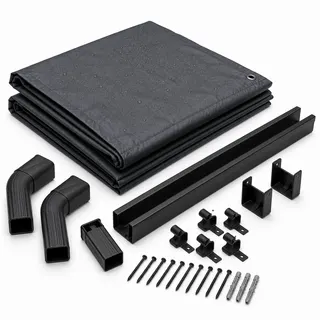
Pergola cover
Pergola Canopy Cover
For adding shade or rain control to a frame.
- Frame-based shade
- More permanent
Check:Post strength, drainage and rules.
Search on Amazon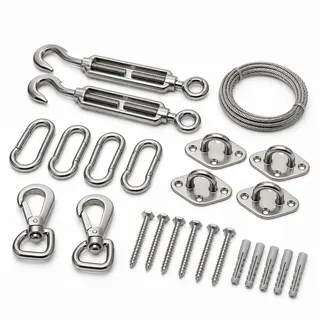
Hardware
Shade Sail Hardware Kit
For sail installs once the structure path is known.
- Turnbuckles and plates
- Hardware-driven fit
Check:Material grade and wall or post anchor.
Search on AmazonWind, rain and low-angle sun
Weather performance depends on geometry and structure, not just whether the product is fabric or a frame. Cool-Off gives a shade-sail rule of thumb of about 1 ft of slope for every 10 ft between attachment points to help runoff. That does not make a sail a roof. It means a waterproof or rain-exposed sail needs deliberate high and low corners before water has somewhere to go.
Wind changes both options. Four Seasons warns against weak fascia, brick veneer and single-post shortcuts for shade sails, and it also advises removing sails for snow accumulation. A pergola can be more permanent, but side screens, roof panels and heavy vines create more wind surface. In an exposed yard, the better product is the one designed for that exposure and easy to secure before bad weather.
Low-angle east or west sun is a separate problem. Overhead sails and open pergolas can both miss glare that comes under the edge. YourHome's passive-shading guidance points readers toward vertical or adjustable shading for low-angle sun. That can mean a side screen, drop shade, vines, louvers or an awning, not simply a larger overhead product.
UV protection should stay realistic. EPA sun-safety guidance recommends shade, especially during the stronger 10 a.m. to 4 p.m. window, but it does not treat shade as complete protection. Around pools, bright paving or sand, reflected UV can still matter.
Maintenance and daily use
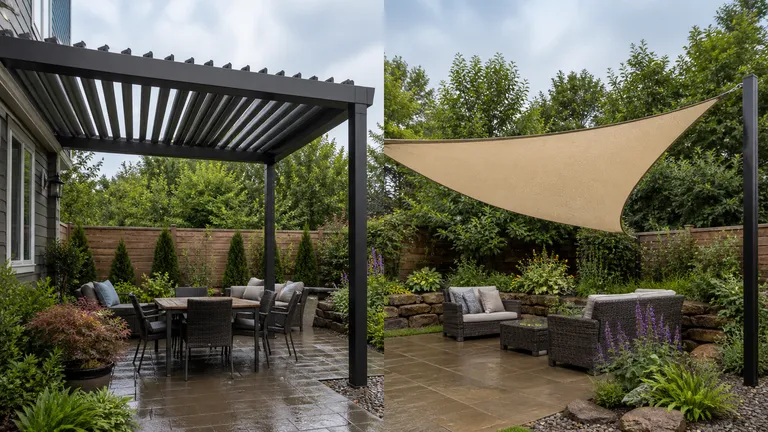
A pergola reduces daily setup only when the permanent parts are planned correctly. If the frame is open, it may still need shade cloth, vines, a canopy or louvers before it gives enough comfort. Those add-ons bring cleaning, drainage, leaf load, fastener inspection and possible replacement. Permanent does not mean maintenance-free.
A shade sail is also not set and forget. It may need retensioning, seasonal removal, fabric inspection and hardware inspection. Roof Extenda's anchor guide is a manufacturer example, but it is useful because it treats anchor location, wind category, fasteners and inspection as part of the system, not afterthoughts.
Daily use is the simplest tie-breaker for many patios. Choose the sail when fixed seasonal shade is enough and someone will remove it when conditions call for it. Choose the pergola when you want the patio to feel ready every day and you are willing to own the structure, not just the shade.
Tie-breaker when both options technically fit
If both options can be built safely, decide by commitment, upgrade plans and the failed sun hour. A shade sail is better when you want to test shade in stages, avoid a large permanent project or work around existing posts. A pergola is better when the goal is an outdoor room that can support privacy, lighting, plants or a roof layer later.
Bad-weather routine is the next tie-breaker. If no one will remove the sail before snow or retension it after storms, a casual sail plan is weak. If no one wants to clean roof panels, manage vines or maintain drainage, a pergola plan is also weak.
The final tie-breaker is where the shade fails. If the problem is overhead heat at a table, either option can work with the right structure. If the problem is side glare into faces, neither option wins until vertical shade is part of the plan.
When neither a shade sail nor a pergola is right
Neither option is ready when the site cannot safely accept anchors, posts, drainage or permanent changes. Weak fascia, brick veneer, fence posts, thin decking and unknown roof edges should not be turned into sail anchors by wishful thinking. A patio that cannot accept footings or setbacks is not ready for a pergola either.
Neither option is ideal when the problem is portable, temporary or mostly side-facing. A large umbrella, freestanding canopy, retractable awning, side screen, trees or the patio shade finder may solve the actual need with less structure. That is especially true for renters and for patios that change layout every season.
Keep heat and flame out of casual shade planning. Cool-Off specifically warns not to use a barbecue under a shade sail. For grills, heaters or fire features, treat clearance, ventilation and non-combustible surroundings as a separate safety decision before adding fabric or roof coverage.
Watch-outs
Before you buy or install
- Do not attach a shade sail to fascia, brick veneer, fence posts or decorative framing without proper structural confirmation.
- Do not treat an open pergola as a rain roof unless the roof, louvers or canopy are designed for drainage.
- Do not choose either option for low side glare until vertical or adjustable shade is considered.
Read Next
Related guides
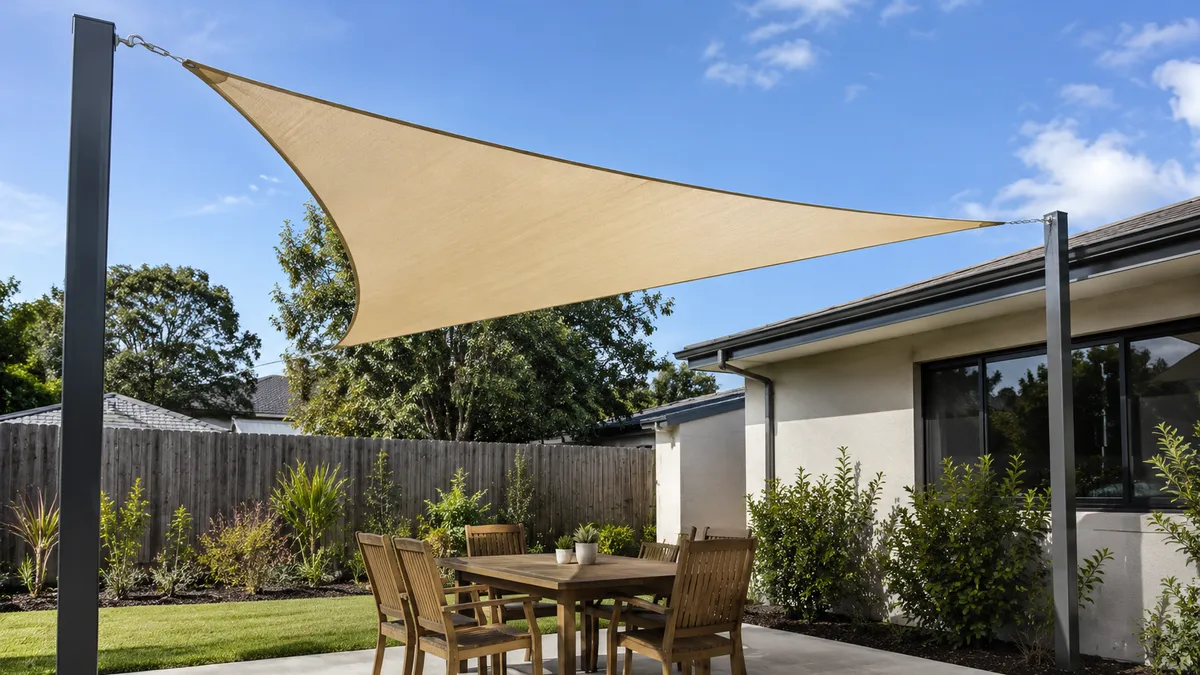
Shade Sail Guide
Use this when shade sail is closer to the real constraint than the current page.
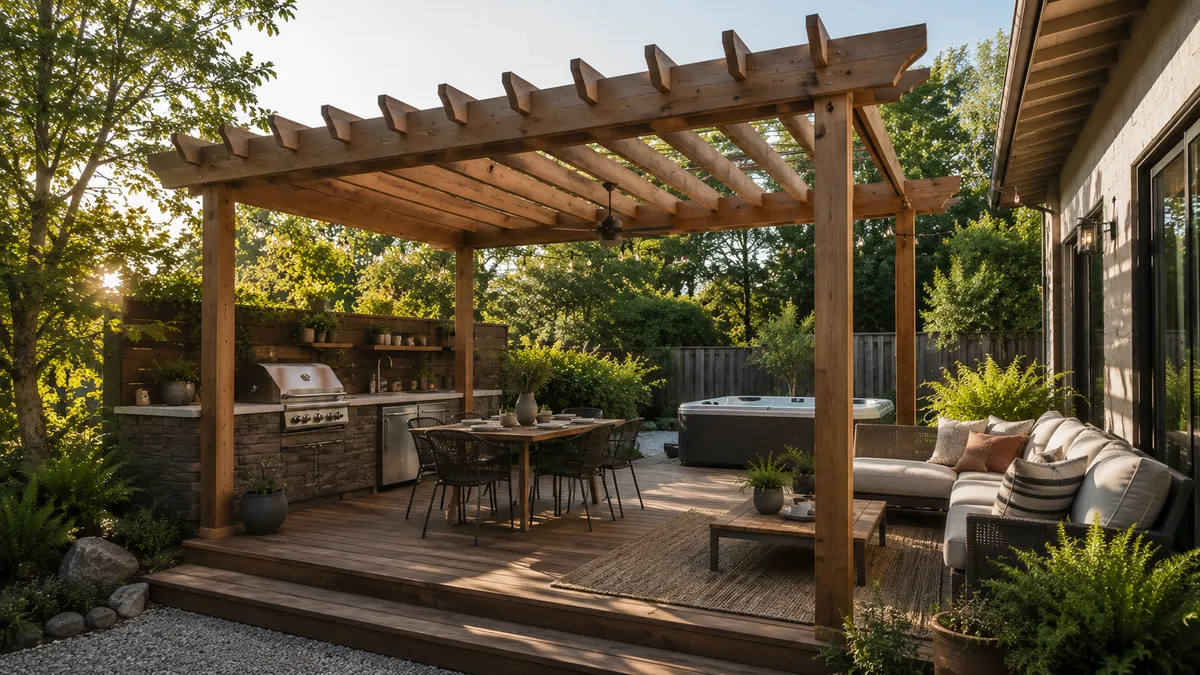
Pergola Guide
Use this when pergola is closer to the real constraint than the current page.
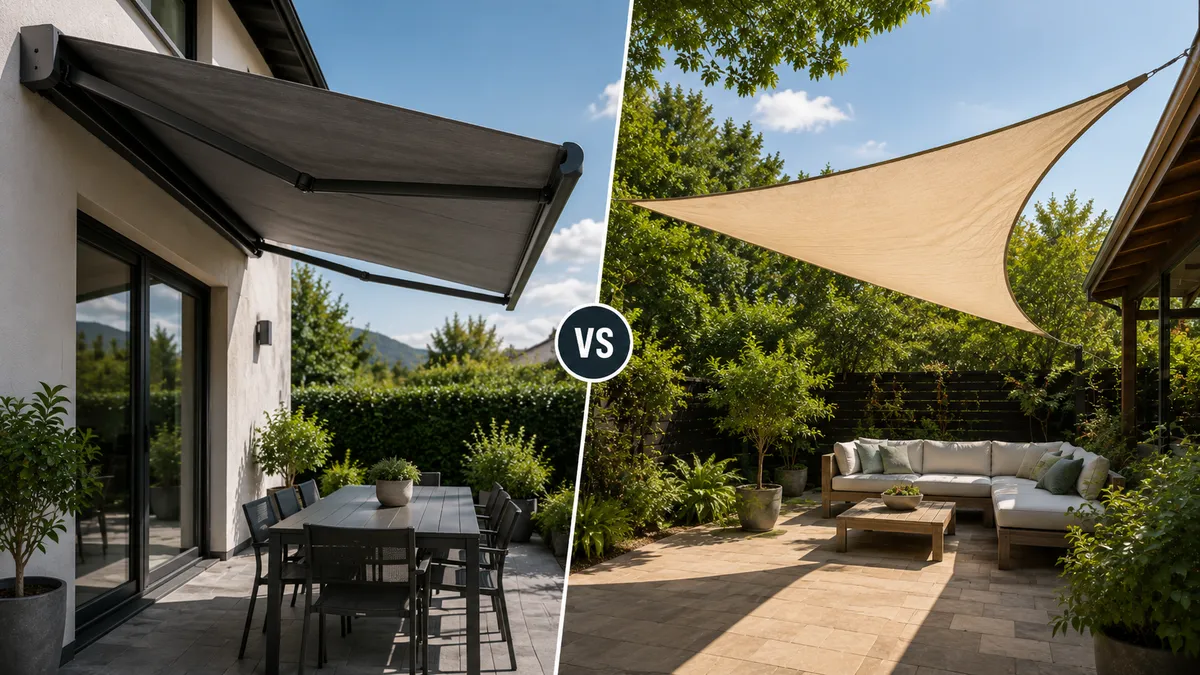
Shade Sail vs Awning
Use this when shade sail vs awning is closer to the real constraint than the current page.
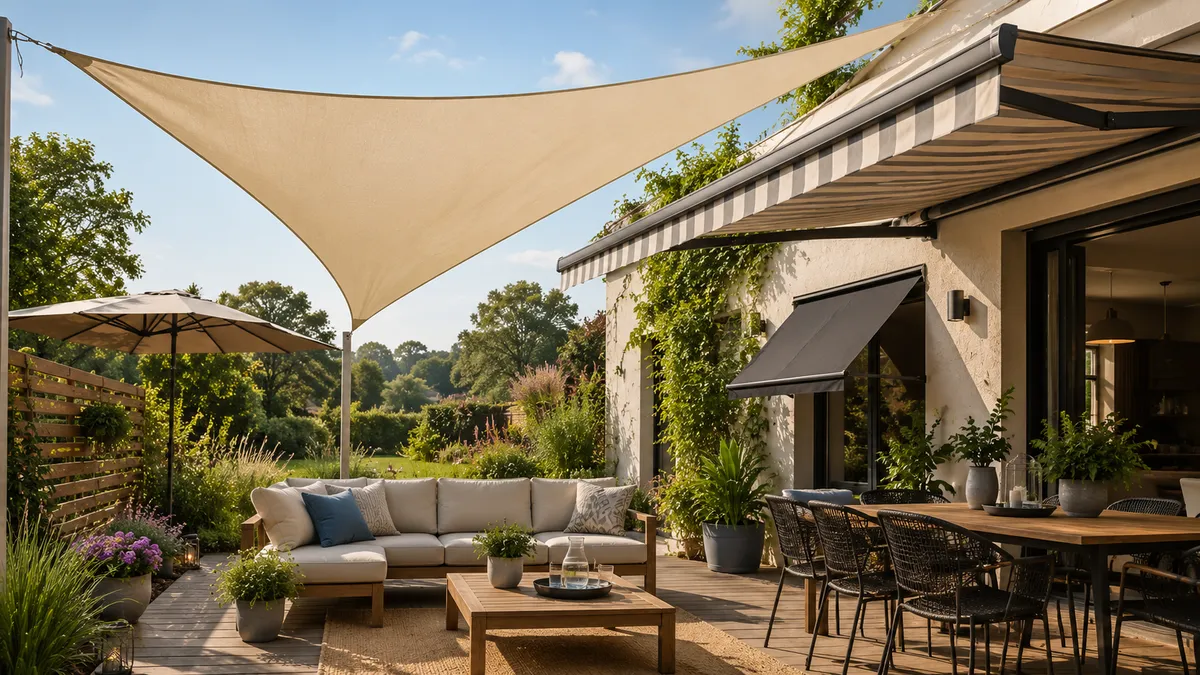
Patio Shade Ideas
Use this when patio shade ideas is closer to the real constraint than the current page.
Questions
FAQ
Is a shade sail cheaper than a pergola after installation?
Usually, but not always. A shade sail is often cheaper when strong anchor points already exist and the project only needs fabric, hardware and careful tensioning. The gap narrows when every sail corner needs a new post, footing, wall plate or professional reinforcement. A pergola usually costs more because the frame, posts and footings are the project.
Which handles wind better, a shade sail or a pergola?
Neither is automatically better in wind. A shade sail depends on tensioned anchors, hardware, fabric area and whether it can be removed before bad weather. A pergola depends on posts, footings and what is added to the frame. Roof panels, louvers, screens and vines can all add wind surface.
Is a shade sail or pergola better for rain?
An open pergola is not a rain roof unless it has a roof, canopy or louver layer designed for drainage. A waterproof shade sail also needs slope or twisted mounting heights so water does not pool. If rain protection is the main goal, compare drainage design before comparing shade area.
Which is better for renters?
Renters usually start with removable or no-drill shade. A shade sail can work only when the lease allows the anchors or the setup is truly freestanding and safe. A pergola is normally too permanent without written permission because posts, footings and attachments change the space.
Can I attach a shade sail to a pergola?
Only if the pergola framing is designed for the sail's tension loads and the attachment points are appropriate. Decorative rafters or light privacy frames should not be treated as sail anchors. If a pergola will carry a sail, plan that load before the pergola is built.
When should I choose neither?
Choose neither when the anchors are weak, footings are not allowed, drainage would run toward the wrong place, the lease or HOA blocks permanent changes, or the real problem is low side glare. In those cases, an umbrella, freestanding canopy, retractable awning, side screen or smaller test setup can be the safer first move.