
Quick Answer
how to block low afternoon sun on patio: the short version
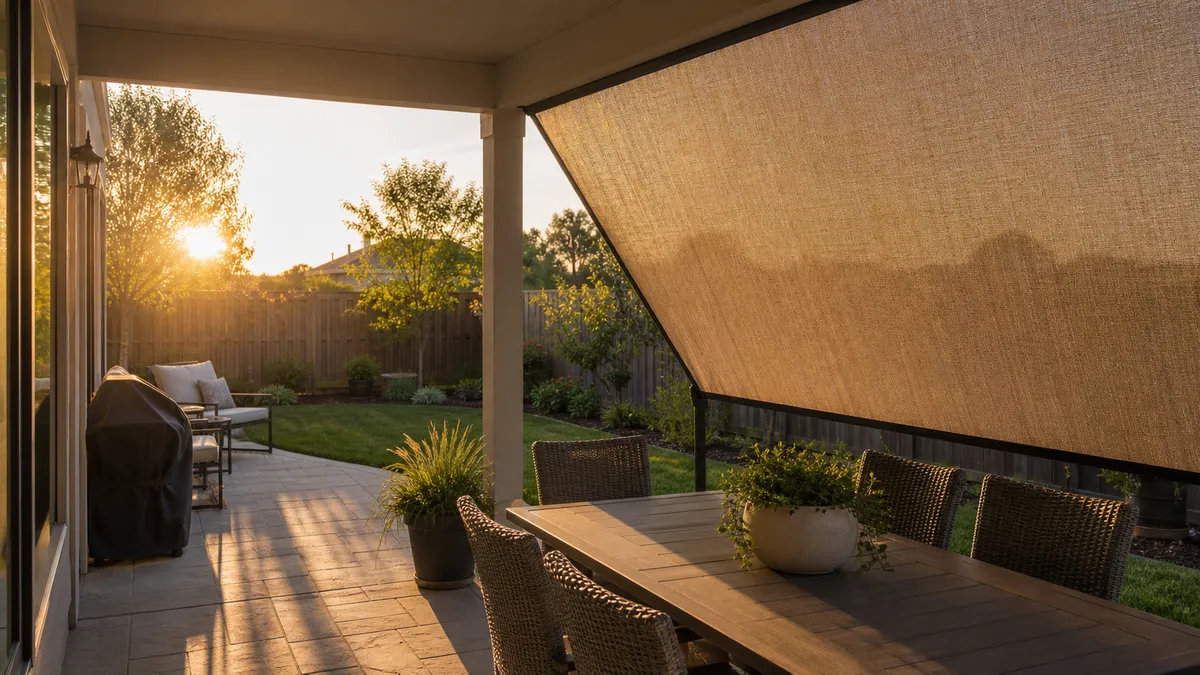
Block low afternoon sun from the side first. Add a side screen, curtain, drop valance or west-side planting when glare enters under a roof edge. Buy more overhead shade only if the bad-hour test shows the light still comes from above.
Use side shade when low afternoon sun enters below the roof edge; test the glare line before buying more overhead fabric.
Diagnosis
Most common problems
Check the symptom before buying another shade product.
Sun hits seated faces below an existing roof
The roof is already bypassed by low-angle light.
Awning helps at noon but not after 4 p.m.
Projection is not the missing dimension.
Rental balcony cannot be drilled
The side solution must still respect the lease.
Large open patio has room for planting
A living blocker can intercept the low sun line.
Diagnosis checklist for low sun
Low afternoon sun is easy to misdiagnose because the patio may already have overhead shade. If the sun hits eyes under the edge of an existing cover, the missing shade is vertical. Stand at the seat and trace the light back to the west or southwest edge.
Check whether the problem is direct glare, reflected glare from paving or heat stored in a wall. Direct glare needs a blocker. Reflected glare may need surface changes. Stored heat may need airflow, planting or a different seating time.
The best test is temporary and ugly. Hold a sheet, cardboard panel or folded screen at the suspected edge during the glare hour. If the seat becomes usable, you have proven the blocker location before spending money on a finished shade product.
Planting works best when the sun angle is predictable and patience is available. Tall grasses, vines or shrubs can soften glare, but they may take a season or more to fill in. Use a temporary panel while the living screen matures.
For example: Sun hits seated faces below an existing roof. Add an exterior side screen or curtain. The roof is already bypassed by low-angle light. Stop and reassess if the support, mount or weather problem is still visible after the first fix.
Before ordering: Sun hits seated faces below an existing roof. Add an exterior side screen or curtain. The roof is already bypassed by low-angle light. Stop and reassess if the support, mount or weather problem is still visible after the first fix.
- Glare under a roof points to side shade.
- Bright paving glare points to surface reflection.
- Hot wall after sunset points to stored heat.
- Moving shadow line points to a time-specific blocker.
Fix table
Symptoms, first fixes and stop signs
Start with the symptom you can see before buying parts or adding more shade.
| Symptom | First fix | Why it works | Stop if |
|---|---|---|---|
| Sun hits seated faces below an existing roof | Add an exterior side screen or curtain. | The roof is already bypassed by low-angle light. | Side screens can act like sails when wind hits them. |
| Awning helps at noon but not after 4 p.m. | Add a drop valance or side panel. | Projection is not the missing dimension. | Blocking every opening may trap heat on still evenings. |
| Rental balcony cannot be drilled | Use a clamp-approved screen or weighted privacy panel. | The side solution must still respect the lease. | Rental panels should not clamp to prohibited rails or fragile trim. |
| Large open patio has room for planting | Use seasonal planting or a trellis on the west side. | A living blocker can intercept the low sun line. | Side screens can act like sails when wind hits them. |
Fixes ranked by effort and cost
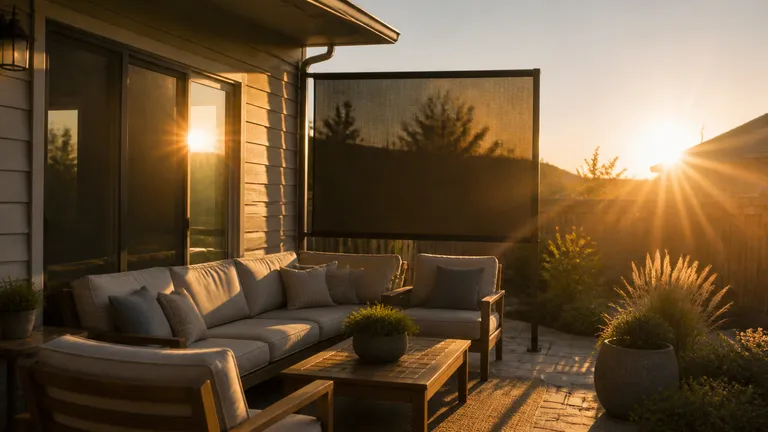
A movable screen is the low-effort fix; a built trellis or exterior roller shade is the higher-cost fix. Curtains on a rod, clamp panels and planters can be tested quickly. Permanent screens, awning valances and pergola side panels need stronger mounting and better wind planning.
The blocker height matters. Many patios need 4 to 6 ft of vertical shade at the exposed side, not another 10 ft of roof. Test with a sheet or cardboard before buying a finished product.
Exterior solutions usually beat interior ones for patio comfort because they stop glare before it reaches the seating area. An indoor blind may cool the room while the outdoor chair remains unusable. The shade has to live where the person is sitting.
For covered patios, check whether the low sun bounces off a wall or floor after passing the edge. In that case, the blocker may need to sit at the reflection source rather than at the patio boundary.
In practice: Awning helps at noon but not after 4 p.m. Add a drop valance or side panel. Projection is not the missing dimension. Stop and reassess if the support, mount or weather problem is still visible after the first fix.
- Low effort: move seating or test a temporary panel at the glare edge.
- Medium effort: add outdoor curtains, a clamp screen or a weighted privacy panel.
- High effort: install exterior roller shades, a trellis or an awning valance.
This will not block low afternoon sun
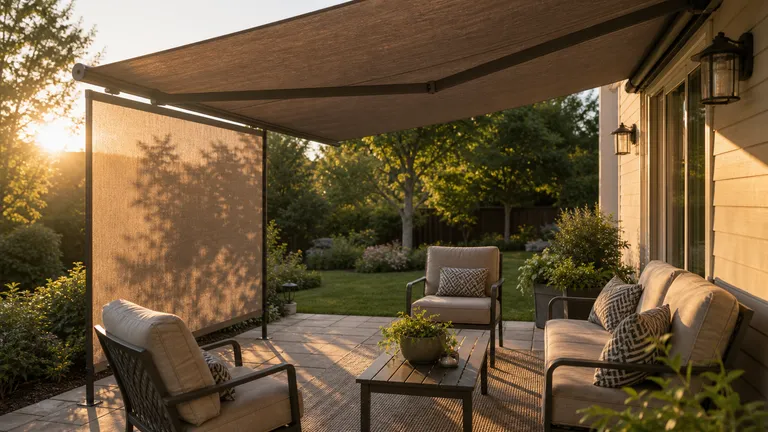
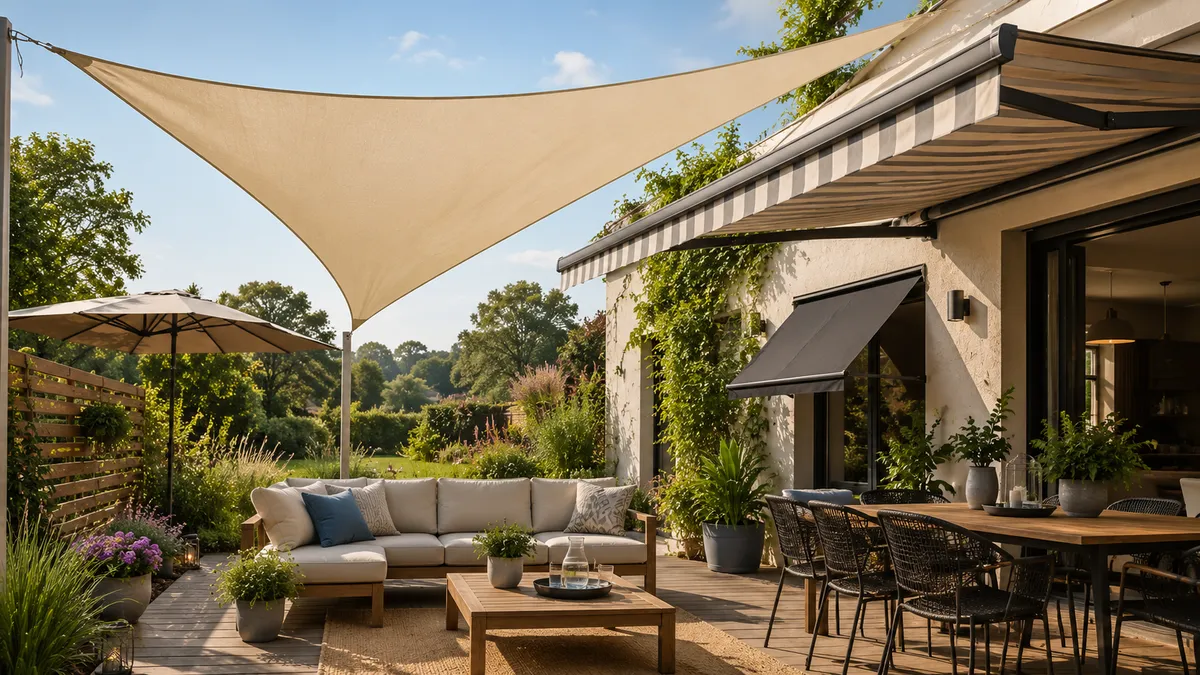
A flat overhead canopy will not stop sunlight that enters below its front edge. A larger umbrella may help only if it tilts toward the sun. A shade sail can miss the problem completely when it is high and level.
Do not solve glare by darkening the entire patio if one side opening is the source. Targeted side shade keeps the space brighter and cooler than a heavy overhead layer that still leaks light.
Height should be tested from the seated eye line. A 6 ft screen may be unnecessary for a low chair, while a standing bar table may need a taller blocker. Use the actual furniture when measuring, not an empty patio.
If the patio faces a scenic view, choose adjustable shade instead of a permanent opaque wall. Curtains, louvers or movable screens can block glare only during the harsh window and reopen the view later.
If a rental balcony cannot be drilled, use a clamp-approved screen or weighted privacy panel. The side solution still has to respect the lease and leave the rail undamaged.
- Do not buy more overhead area until the side sun line is tested.
- Do not use loose fabric where wind will snap it against furniture.
- Do not block ventilation completely on hot patios.
Preventing the same problem next season
Mark the glare line in late spring and again near late summer because the sun angle shifts during the season. A screen that works in May may be too short in August. Adjustable panels or curtains handle seasonal movement better than one fixed board.
Planting can be a long-term answer, but it needs time and placement. Use temporary shade while shrubs, vines or trees grow into the required line.
If the patio also needs privacy, combine the goals carefully. A dense privacy wall may block airflow and make late-day heat worse. Slatted panels, outdoor curtains or planting can reduce glare while preserving some movement of air.
For multi-story buildings, remember that the light angle may come from above a balcony edge but below a roof edge. Test from the actual chair height before buying a standard privacy screen.
Where a large patio has room on the west side, seasonal planting or a trellis can intercept low sun before it reaches the seating area. This works best when there is enough space for growth and maintenance.
This won't fix it
Do not skip these checks
- Side screens can act like sails when wind hits them.
- Blocking every opening may trap heat on still evenings.
- Rental panels should not clamp to prohibited rails or fragile trim.
Read Next
Related fixes
Patio Shade Ideas
Use this when patio shade ideas is closer to the real constraint than the current page.
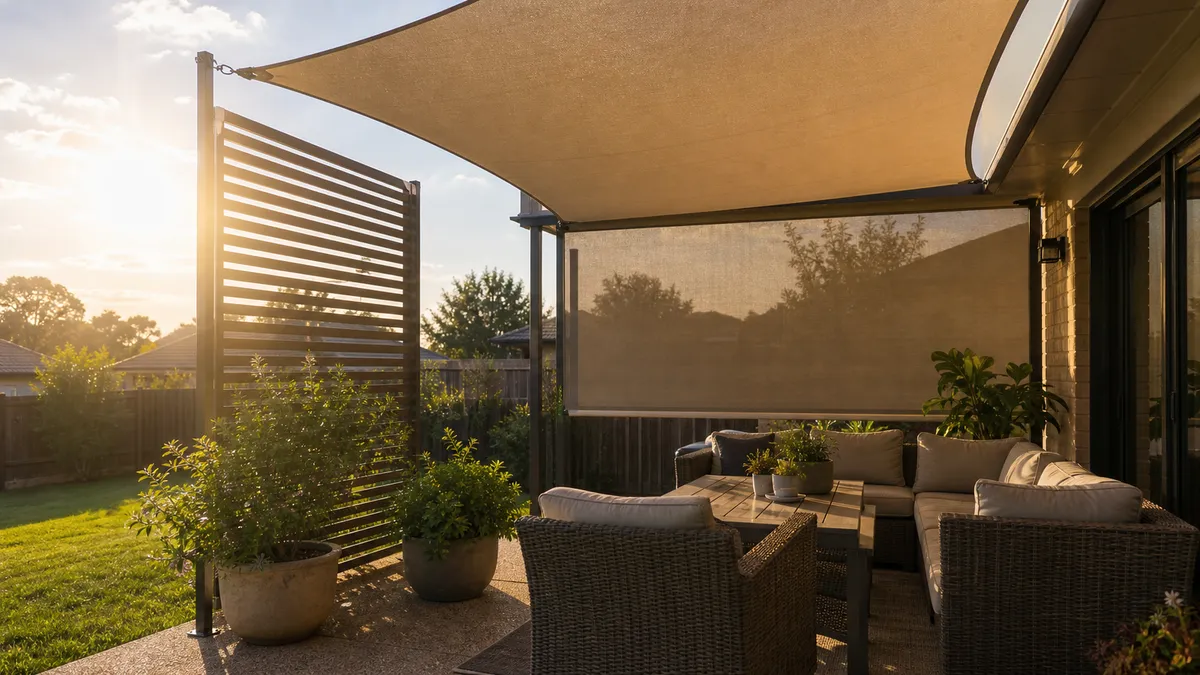
West-Facing Patio Shade
Use this when west facing patio shade is closer to the real constraint than the current page.
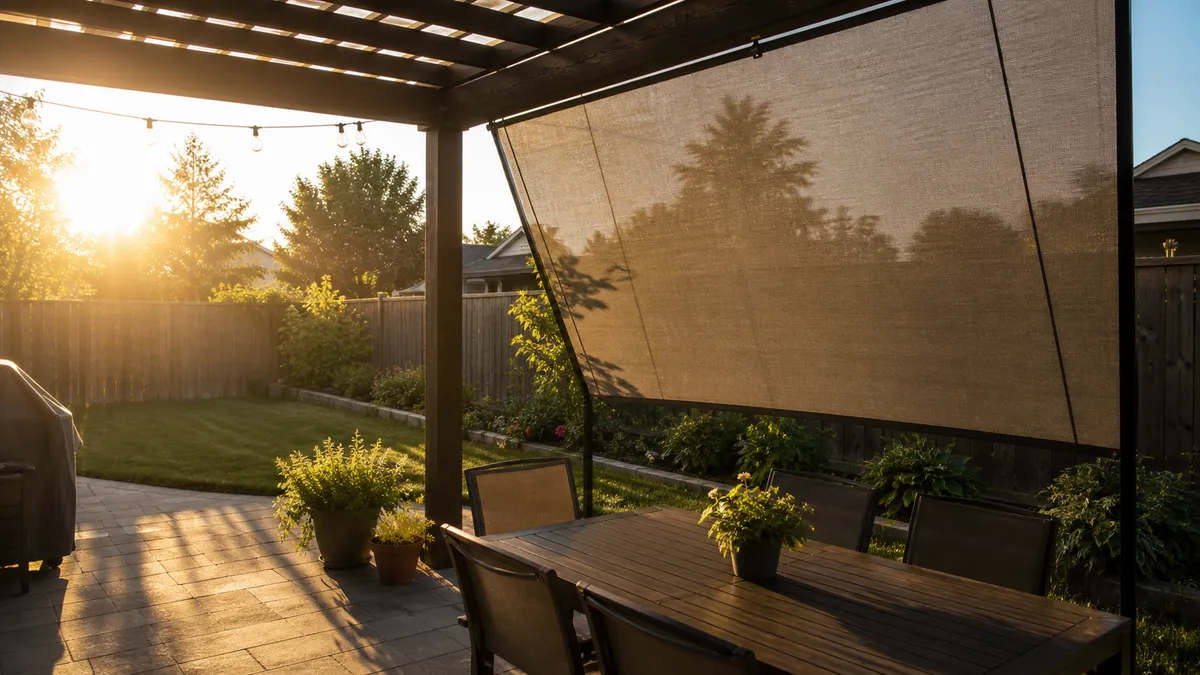
Best Patio Shade for Afternoon Sun
Use this when patio shade for afternoon sun is closer to the real constraint than the current page.
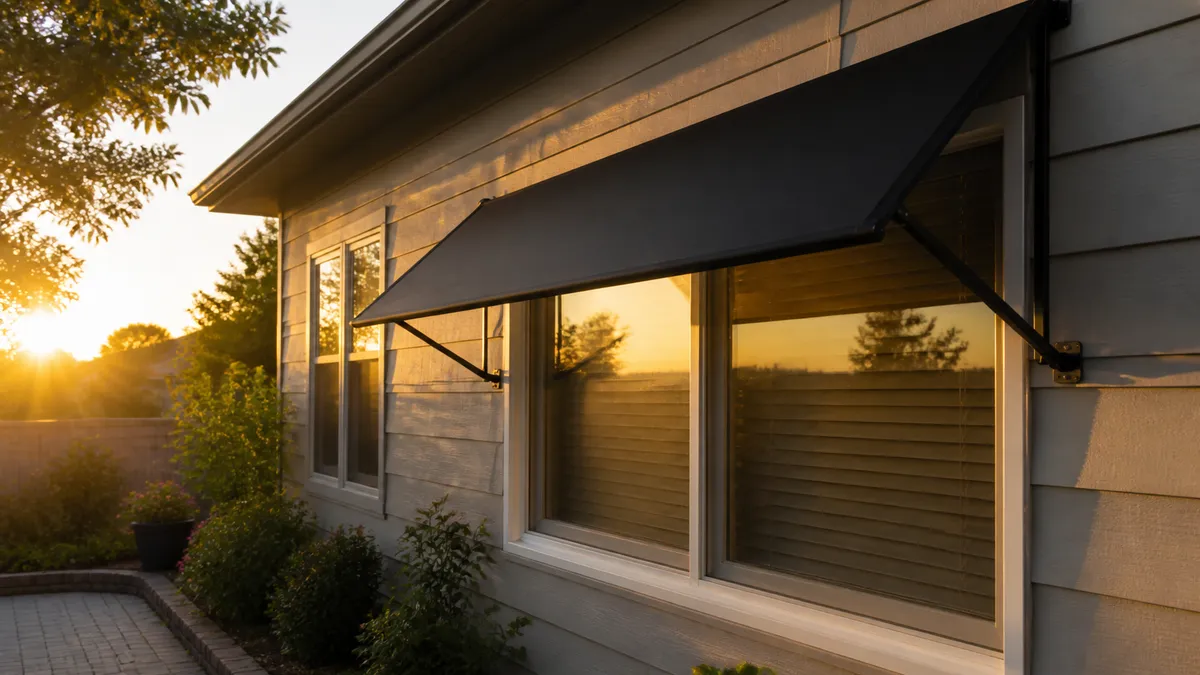
Awning for West-Facing Window
Use this when awning for west facing window is closer to the real constraint than the current page.
Questions
FAQ
Why does my patio roof not block afternoon sun?
Afternoon sun often arrives from the side, below the roof edge. A roof that works at noon can miss faces after work. Test from the seated position and block the side opening before adding another overhead layer.
What is the best shade for low west sun?
Use a vertical blocker: an exterior roller shade, curtain, side screen, trellis or planting. A tilting umbrella can help in smaller spaces, but a flat sail or canopy may still let glare pass below the edge.
Can plants block low afternoon sun?
Plants can work when the sun line is predictable and there is room on the west side. Use a temporary panel while shrubs or vines fill in. Keep airflow open so the patio does not become hotter.