
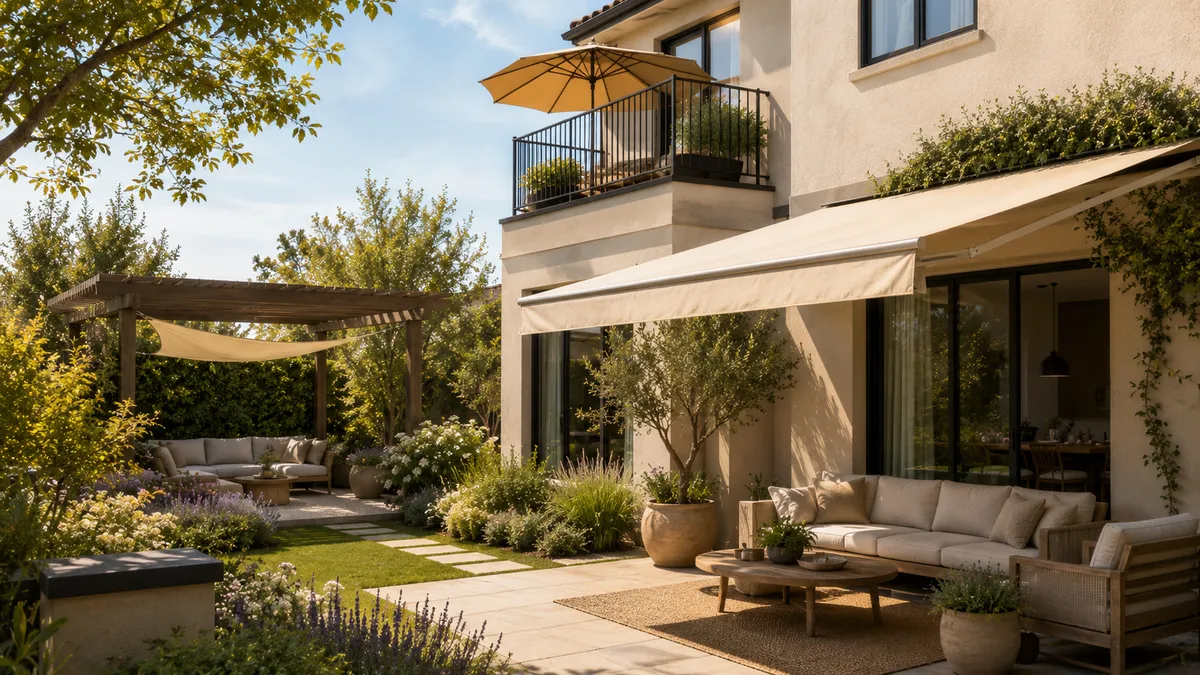
Quick Answer
Quick outdoor shade route
Choose outdoor shade by the hour that makes the space unusable, then match the shade to the structure that can actually hold it. Overhead heat, low west sun, garden heat and vehicle shade all point to different families. If drilling, anchors, rack load or wind exposure are uncertain, start with removable shade and use the route cards first.
Choose the shade family that fixes the failed hour and has proven support; use removable shade when walls, posts, ballast, lease permission or roof-rack limits are not clear.
Guide Path
Choose the outdoor shade route that matches the problem
Start with the place that fails and the hour it fails. A patio, balcony, vegetable bed, pergola plan and vehicle camp need different shade, different supports and different weather rules.
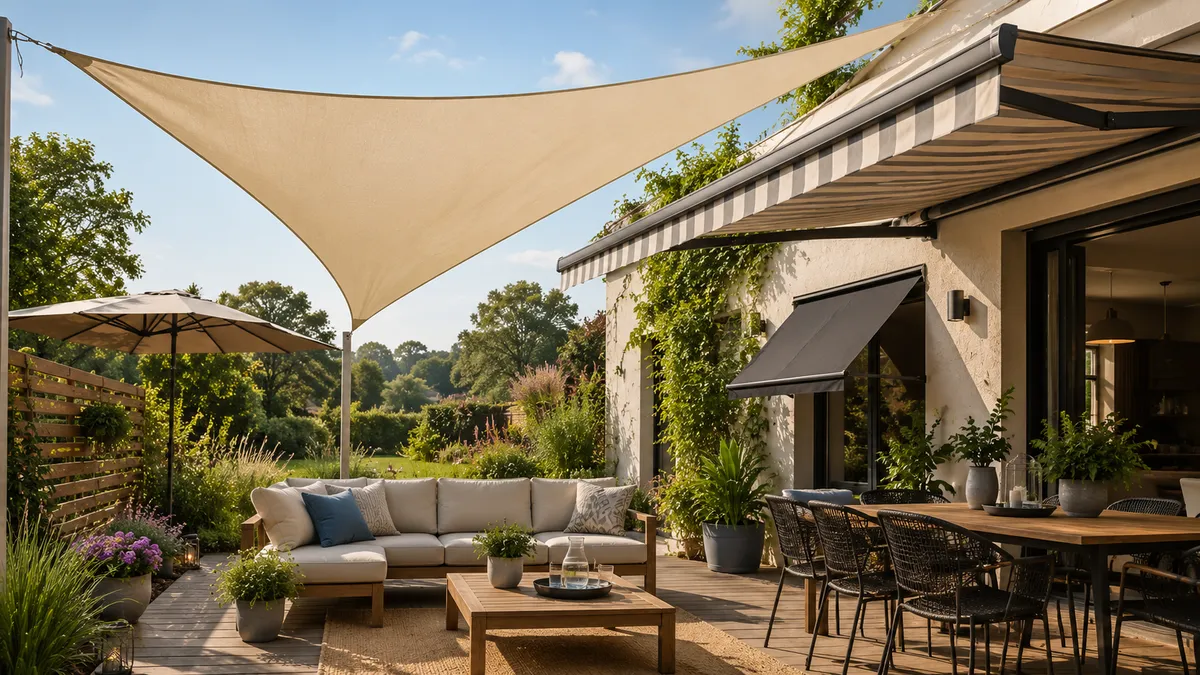
Patio seating and mixed backyard shade
Start here when several fixes still look possible: awning, sail, umbrella, canopy, side shade or a smaller layout change.
Narrow the choice after you know whether the hard hour is overhead sun, low side glare or hot paving.
Best when:The space is a patio, deck or seating zone and several shade types still look possible.
Check first:Failed hour, furniture movement, door swing, grill clearance and whether shade must move with the season.
Watch out:Do not buy for listed square footage before checking where the shadow lands at the bad hour.
Open patio shade ideas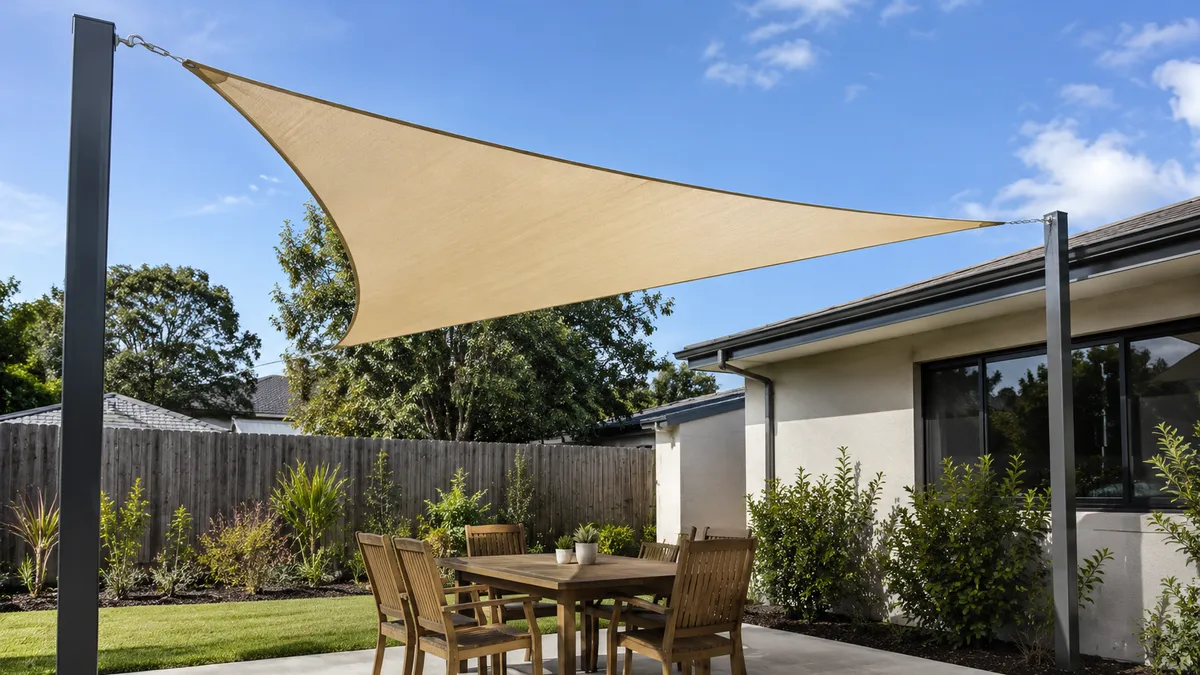
Shade sails for open yards and pool edges
A shade sail fits open ground only when posts, masonry or structural timber can carry tension.
Use it for broad fixed overhead shade, not as a shortcut around weak anchors or no-drill limits.
Best when:The area has no useful wall but can accept real anchor points beyond the shaded footprint.
Check first:Anchor spread, hardware room, slope, high and low corners, wind exposure and removal routine.
Watch out:Fascia, vinyl siding, fence boards, decorative rails and loose masonry are not proof of support.
Read the shade sail guide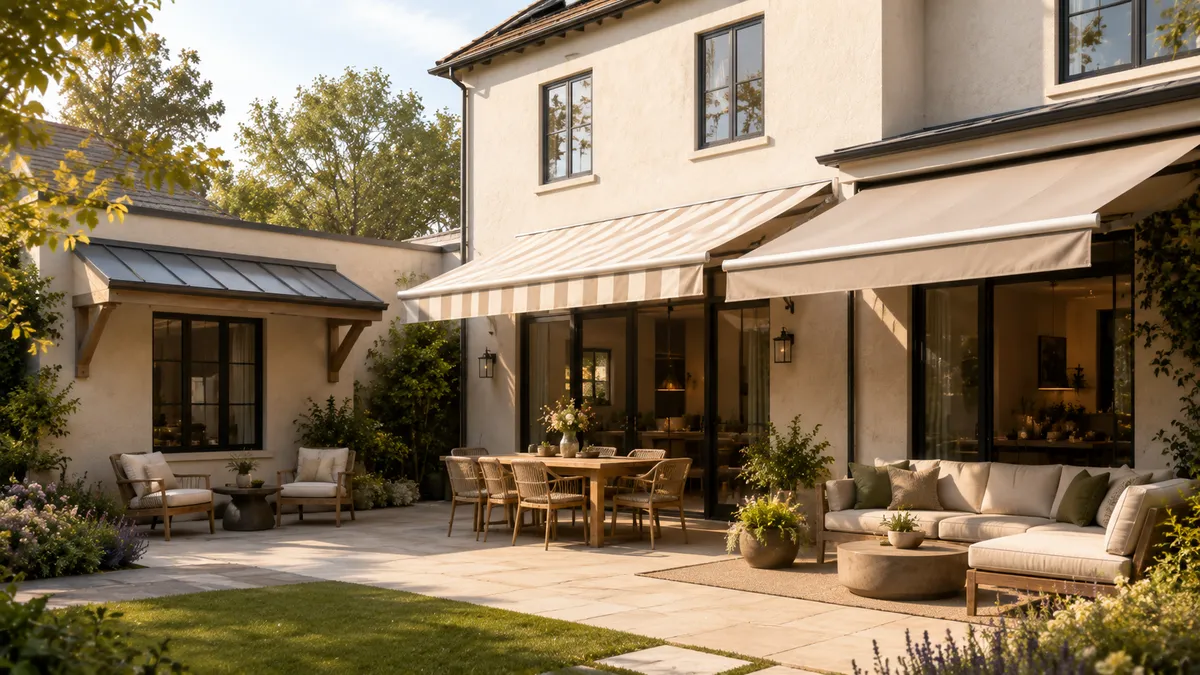
Wall-side retractable awnings
A retractable awning makes sense when the hot table, doors or windows sit close to a wall that can take brackets.
Energy.gov notes that exterior awnings can cut summer solar heat gain before it reaches south or west windows.
Best when:Shade should project from the house and close for winter sun, storms or days when the patio stays unused.
Check first:Masonry or framing, mounting height, projection, front-bar clearance, sensor habits and local or HOA rules.
Watch out:Awnings are shade products first; rain, wind and snow limits still come from the specific product instructions.
Read the patio awning guide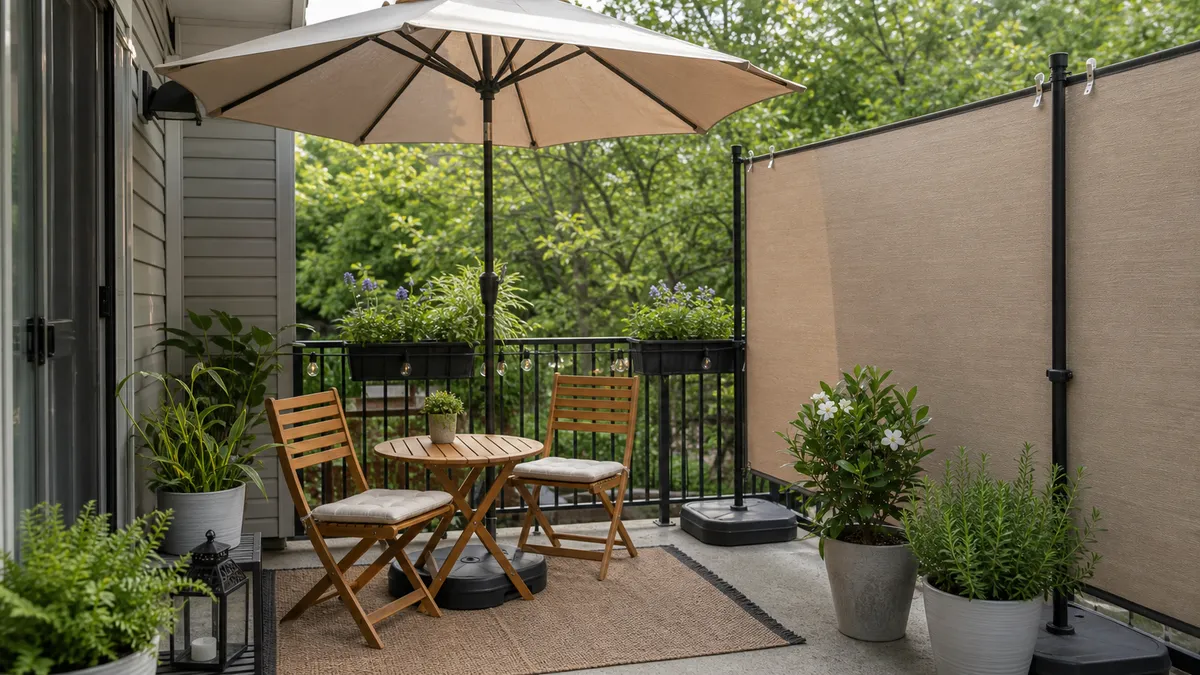
Renter, balcony and no-drill shade
Choose removable shade when a lease, building rule, balcony handbook or HOA limit blocks drilling.
Weighted umbrellas, freestanding screens, approved clamps and tension poles still need permission, ballast and wind discipline.
Best when:The real limit is no holes, shared rails, appearance rules or a surface that must stay unmarked.
Check first:Written rules, rail limits, base footprint, trip points, storage, drainage and whether clamps are allowed.
Watch out:No-drill does not mean no-load; light railings and furniture are not designed anchors.
Read renter shade options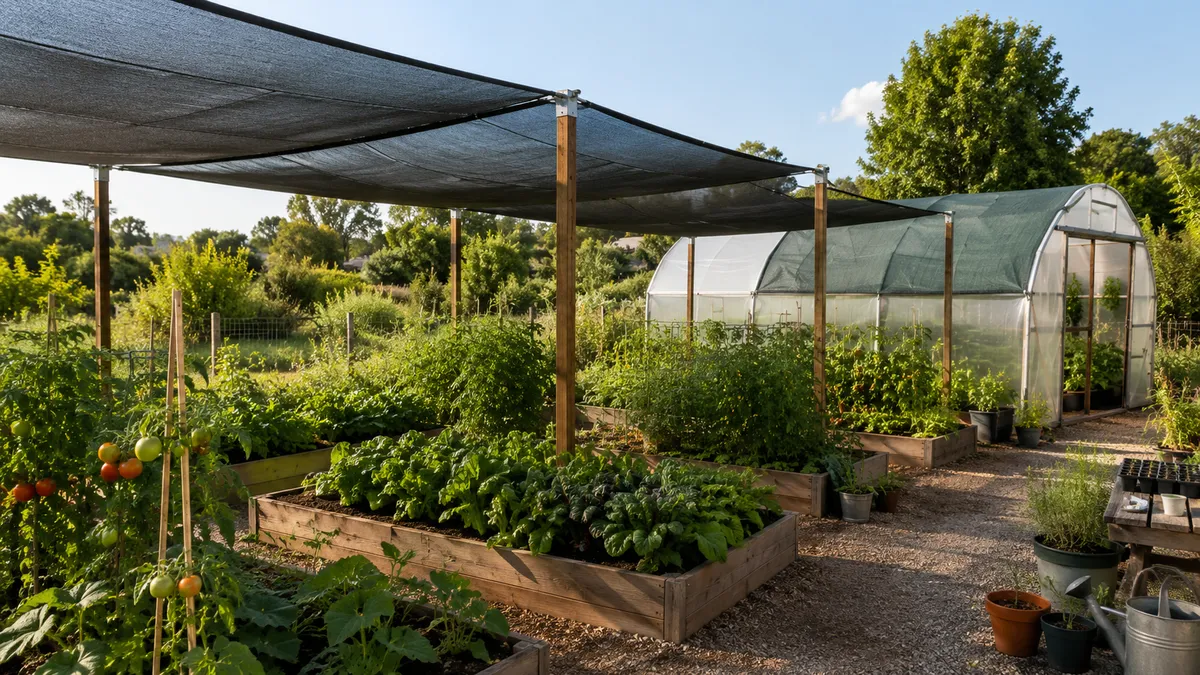
Garden beds and greenhouse shade cloth
Shade cloth belongs to plant light and heat management, not patio roofing.
Extension guidance commonly starts vegetables and high tunnels around 30% to 50% shade, with airflow and timing checked.
Best when:Crops wilt, bolt, sunscald or overheat during a known heat window.
Check first:Crop group, cloth percentage, support frame, ventilation, pollinator access and removal timing.
Watch out:Heavy cloth left too long can reduce growth, trap humidity or make disease pressure worse.
Read the shade cloth guide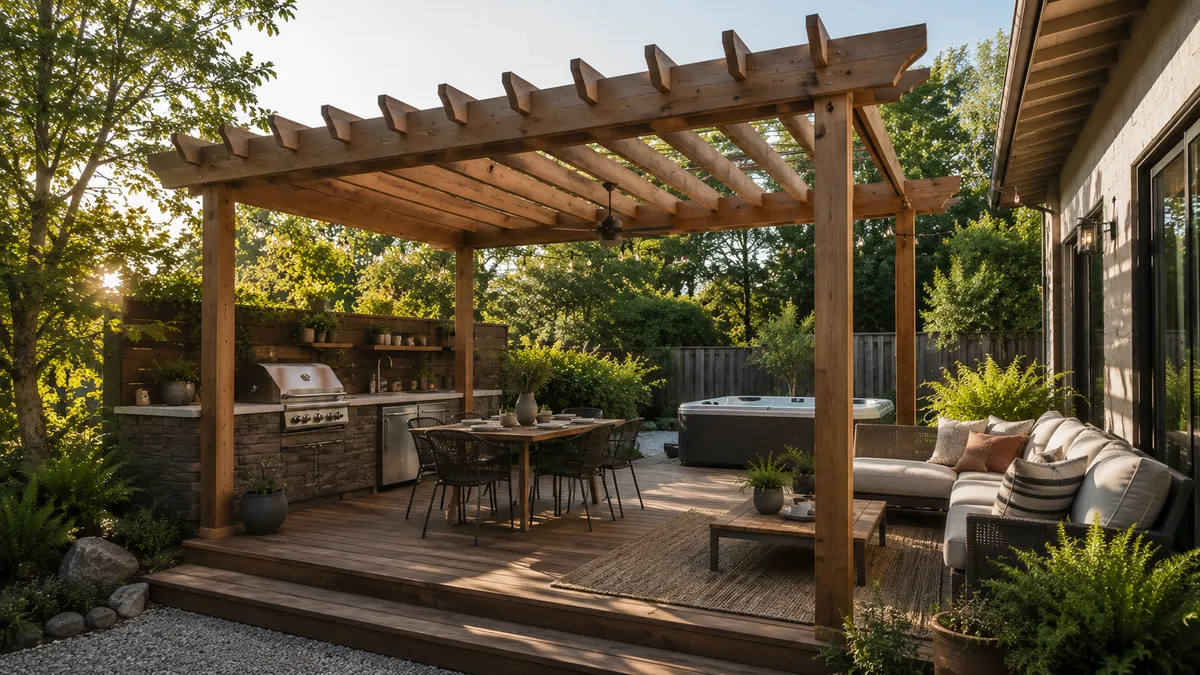
Pergolas, screens and side shade
Choose this route when the project is closer to an outdoor room than a fabric shade fix.
Pergolas, louvered covers, vines, drop screens and side panels can solve privacy, low glare or rain goals that overhead fabric misses.
Best when:The space needs posts, a frame, side screening, privacy, a roof layer or a permanent outdoor-room feel.
Check first:Footings, drainage, wind surface, side-screen load, maintenance, permits and clearances around grills or doors.
Watch out:A pergola is not automatically safer than a sail; posts, roof panels and screens still create load.
Read the pergola guide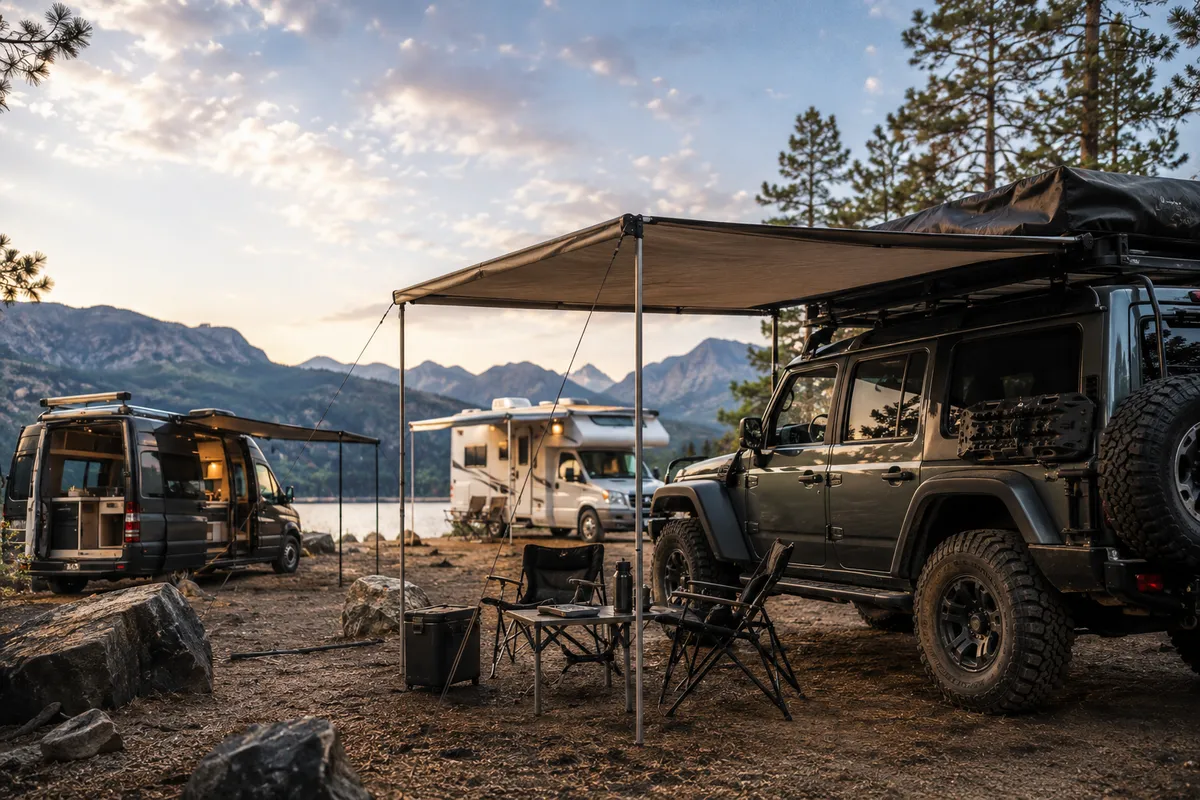
Vehicle, campervan and camp shade
Vehicle shade starts with the rack, bracket and packed weight before fabric coverage.
Use a mounted awning only when the vehicle manual, rack limits and road securement checks support the added load.
Best when:Shade is needed beside a van, 4x4, RV, tailgate or mobile camp kitchen.
Check first:Roof rack capacity, crossbar spread, bracket fit, door clearance, packed case movement and pack-down routine.
Watch out:Airstream describes awnings as sun protection first; wind, heavy rain and unattended camp call for retraction.
Read the vehicle awning guideMap the failed hour before choosing shade
Outdoor shade ideas become useful once the failed hour is specific. Walk the space when it becomes uncomfortable, then mark whether the sun is high overhead, low from the east or west, reflected from paving or glass, or trapped under still fabric. YourHome and Building America both separate high-angle shade from low-angle side sun because the geometry is different.
Low west sun often needs vertical or adjustable side shade, while high midday sun is usually an overhead shade problem. A deeper roof, sail or canopy can still let evening glare pass below the front edge. In that case, a side screen, drop valance, planting strip or seat rotation may work before a larger overhead product.
Heat can also come from surfaces and trapped air. A paved courtyard may need lighter surfaces, airflow and movable shade rather than a dark fixed roof. A greenhouse or high tunnel may need shade cloth plus vents, not patio fabric. A camp kitchen may need shade that can pack away quickly when wind changes.
Use the EPA UV Index guidance as a safety boundary. Shade can make a space cooler and reduce exposure, but EPA still recommends clothing, hats, sunglasses and sunscreen when UV is moderate to extreme. Its shadow rule is a simple field check: when your shadow is shorter than you are, sun exposure is stronger.
Size and coverage ranges by shade family
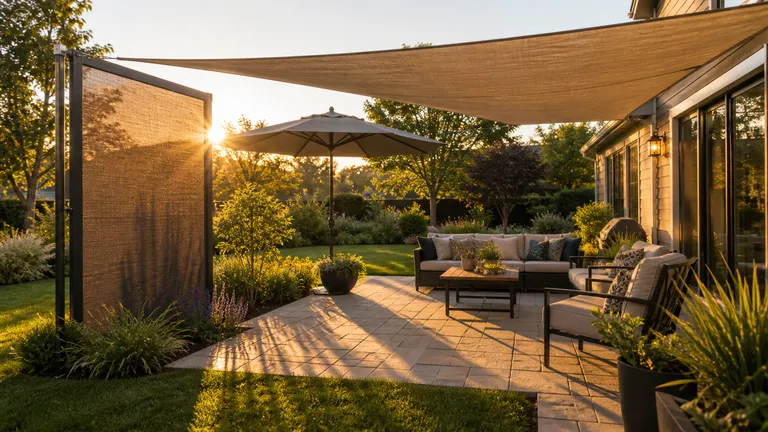
A small bistro seat may only need compact shade, while family dining needs a wider useful shadow with room for chair pullback. Treat catalog canopy size as a starting point, not a promise. The useful shadow shifts with season, sun angle, chair pullback and the distance between the shade edge and the seating edge.
Wall awnings are sized by projection, width, mounting height and front-bar clearance. A wide awning with too little projection may shade the wall more than the table. A low awning can block a door, a grill lid or the view from a window. The wall and bracket line matter as much as the fabric.
Shade sails need more anchor spread than the final shadow. Turnbuckles, shackles, edge curves and corner movement reduce the usable fabric area, so the anchor plan should be wider than the seating plan. For open yards and pool edges, also leave clear walking routes under low corners and away from tension hardware.
Garden cloth uses roll width, shade percentage and support height instead of patio square footage. A bed under hoops can use a narrow panel, while a greenhouse or high tunnel needs vent access and airflow planned with the cloth. Vehicle awnings are limited by packed length, bracket spacing and door clearance before open canopy size matters.
Cost bands that change the project
Price jumps when shade moves from a loose product to a mounted project. A portable umbrella, folding screen or seasonal cloth panel can stay in lower-cost, easy-to-change territory when ballast and storage are simple. A freestanding canopy, heavier base set, side screen or larger umbrella costs more when wind shutdown and storage are realistic.
HomeGuide lists retractable awnings around $200-$3,000 installed for manual models and $1,000-$6,000 installed for motorized models. LawnStarter gives a similar installed patio and deck awning band around $1,000-$6,000. Treat those as commercial pricing references for awnings, not a price rule for every shade family.
Shade sails can look inexpensive until posts, concrete, hardware, slope planning and professional help enter the job. Pergolas and framed covers move into a different budget because footings, roof layers, drainage, screens and permits may be involved. Vehicle awnings add brackets, rack hardware, wall kits and packed-road securement to the fabric price.
Spend first on a test that proves the shade problem without forcing a permanent commitment. A movable umbrella, temporary screen or patio shade finder result can confirm the failed hour before you pay for brackets, posts, footings, motors or rack-mounted cases.
Materials, airflow and weather limits
Energy.gov names opaque, tightly woven, light-colored awning fabrics and ventilation openings as comfort factors. That guidance helps with wall-side shade and window heat gain, but it does not make every dense fabric better. A patio that already traps hot air may feel better with mesh, side interception or a retractable cover than with a dark waterproof roof.
Shade sails split into breathable mesh and coated or waterproof fabrics. Mesh usually gives better airflow and lower pooling risk, while coated fabric needs a stronger pitch and runoff plan. Decks.com shade-sail guidance treats anchor planning, hardware, tension and weather removal as parts of the same installation check.
Shade cloth is a density decision. UConn notes shade cloth is made across 10% to 90% densities, and extension sources often discuss 30% to 50% for many vegetable heat problems. The cloth still needs a support frame, open sides or ventilation, and a removal plan when light becomes more important than heat relief.
Umbrellas and canopies are movable, but wind is not a minor detail. CPSC warns that airborne umbrellas have caused deaths and serious injuries, and its safety alert references anchor performance under beach-umbrella standards. Treat bases, guy lines, stakes and shutdown rules as part of the shade, not accessories.
Vehicle and RV awnings add road and weather rules. Yakima explains that available vehicle load includes the rack and load together, so the awning, brackets and case cannot be checked alone. Airstream says travel awnings are primarily sun protection and should be retracted for stronger wind, extended rain, heavy rain or snow.
When permanent shade is the wrong first move
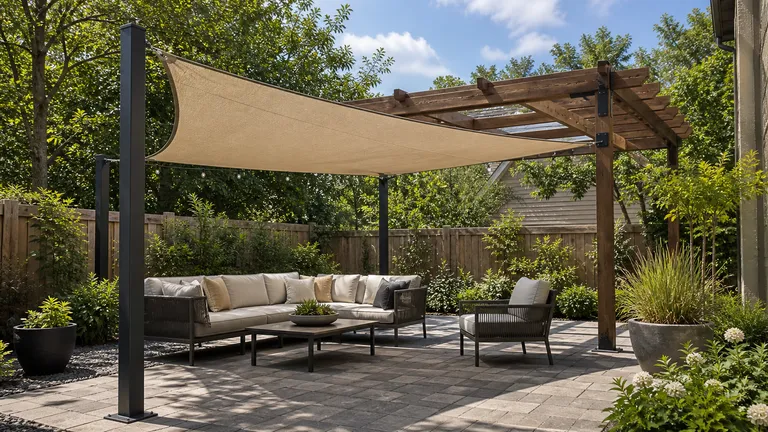
Use removable shade first when drilling is banned, the site is exposed to unattended gusts, or the only anchor is fascia, vinyl siding, gutters, light railing or unknown masonry. A smaller umbrella, folding screen, portable canopy or temporary cloth panel is easier to change after the sun test proves what works.
Permanent overhead shade is also weak when the problem is side glare. If low sun slips under the cover, spend first on a side screen, exterior curtain, valance, planting strip or seat move. If the problem is a greenhouse heat spike, spend first on shade cloth percentage and ventilation rather than a patio roof idea.
Avoid a fixed vehicle awning when the rack rating, bracket fit, packed case movement or road clearance is unclear. Use a tarp, freestanding shelter or parked-camp canopy until the mount is proven. At a campsite away from the vehicle, a separate shelter may beat a bolted side awning.
Children, pets and traffic paths can make a shaded space awkward. Low corners, guy lines, cords, base plates and heavy ballast should stay out of doorways, pool edges, play routes and food service paths. A shade setup that makes the route unsafe is the wrong first move even if the shadow looks correct.
Mounting, load and permission checks before buying
Check masonry, structural timber, wall framing, engineered posts, post footings, ballast or roof-rack crossbars before ordering fabric. Fabric is usually easier to choose than the support. A patio awning pulls through brackets and arms. A sail pulls through corners and tension hardware. A canopy or umbrella transfers force into bases, stakes or ballast.
Do not treat siding, fascia, gutters, fence boards, decorative posts, light balcony rails or unknown masonry as approval. Shade-sail and awning sources repeatedly warn that anchors, hardware and extreme-weather removal matter. If you cannot prove the substrate or load path, stop at removable shade or ask a qualified installer before buying fixed hardware.
Rentals, condos and HOAs add a second permission check. A clamp or tension product can still violate a rule, damage a railing, block drainage or change the exterior appearance. Written permission and a shutdown plan matter more than whether the product leaves a visible hole.
For vehicle shade, check the manual, rack maker, bracket instructions and packed case after installation. Roof load, crossbar spread, accessory weight and driving movement all matter before the awning opens at camp. If the packed case moves during a shake check, the camp shade problem has become a road-safety problem.
Next step when two shade types still fit
Use the patio shade finder when the same space could take an awning, sail, screen or removable canopy after the failed-hour check. The finder is useful when the answer depends on low sun, no-drill limits, wind routine or the difference between human comfort and plant protection.
If the route is already clear, go straight to the narrower guide. A wall-side patio belongs in the awning guide. Open fixed shade belongs in the shade sail guide. Vegetable and greenhouse heat belong in the shade cloth guide. Vehicle camp shade belongs in the vehicle awning guide. Outdoor-room projects with posts, screens, privacy or rain goals belong in the pergola guide.
Watch-outs
Before you buy or install
- Shade reduces exposure but does not replace EPA UV protection guidance for clothing, hats, sunglasses and sunscreen.
- Do not attach permanent shade to fascia, vinyl siding, gutters, fence boards, decorative rails or unverified masonry.
- Keep shade fabric, sails, canopies, umbrellas and awnings away from grills, fire pits and other combustible heat sources; follow the product manual clearance instructions.
- No-drill shade still needs permission, ballast and wind discipline; a movable product can still become hazardous.
- Vehicle awnings need rack, bracket and packed-case checks before road travel or camp deployment.
Read Next
Related hub
Shade Sail Guide
Use this when shade sail is closer to the real constraint than the current page.
Patio Awning Guide
Use this when patio awning is closer to the real constraint than the current page.
Shade Cloth Guide
Use this when shade cloth is closer to the real constraint than the current page.
Pergola Guide
Use this when pergola is closer to the real constraint than the current page.
Vehicle Awning Guide
Use this when vehicle awning is closer to the real constraint than the current page.
Patio Shade Ideas
Use this when patio shade ideas is closer to the real constraint than the current page.
Renter-Friendly Patio Shade
Use this when renter friendly patio shade is closer to the real constraint than the current page.
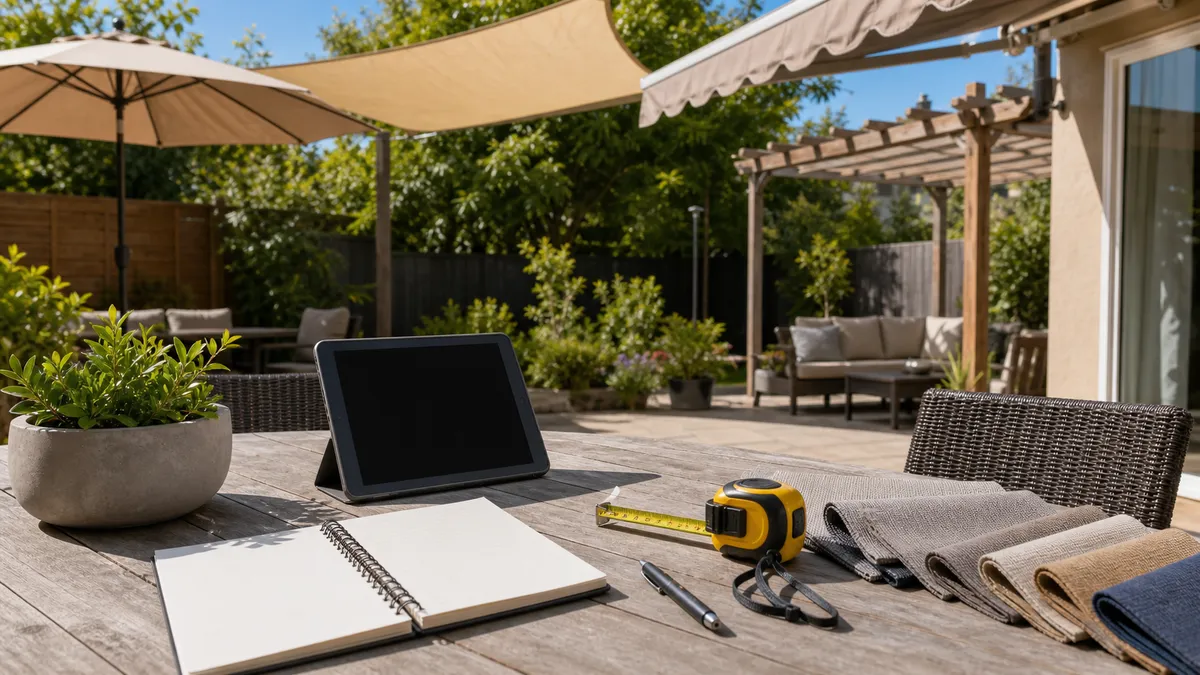
Patio Shade Finder
Use this when patio shade finder is closer to the real constraint than the current page.
Questions
FAQ
What is the best outdoor shade for a patio?
For a patio beside a strong wall, start with a retractable awning. For open ground, compare a sail, umbrella or freestanding canopy. If the problem is low west sun, choose side shade such as a screen, curtain or valance before buying more overhead fabric.
What outdoor shade works without drilling?
Weighted umbrellas, freestanding canopies, folding screens and approved clamp or tension products are the usual no-drill routes. Check lease, HOA or balcony rules first. No-drill still means you must manage wind, ballast, trip points, storage and rail loads.
Is outdoor shade enough for UV protection?
No. Shade helps comfort and can reduce exposure, but EPA guidance treats shade as one layer. When the UV Index is moderate to extreme, use protective clothing, a hat, sunglasses and sunscreen, and take indoor breaks during the strongest exposure window.
What shade is best for vegetable beds or a greenhouse?
Use shade cloth, not patio fabric. Many extension sources discuss 30% to 50% cloth for vegetable heat management, but the right density depends on crop, heat timing and airflow. Keep support frames open enough for ventilation, watering and pollinator access.
When should I avoid a permanent awning or shade sail?
Avoid permanent shade when anchors, wall framing, post footings, lease permission, wind exposure or rain runoff are unresolved. Use a removable umbrella, screen, canopy or cloth test first. Fixed fabric should not be the experiment when the support is unknown.
What should I check before buying outdoor shade?
Check the failed hour, sun direction, support, permission, wind routine, rain behavior and clearance. Then choose the shade family and open the narrower guide. Buying before those checks often leads to the wrong size, weak mounting or shade in the wrong place.