
Quick Answer
Rain shade: the short version
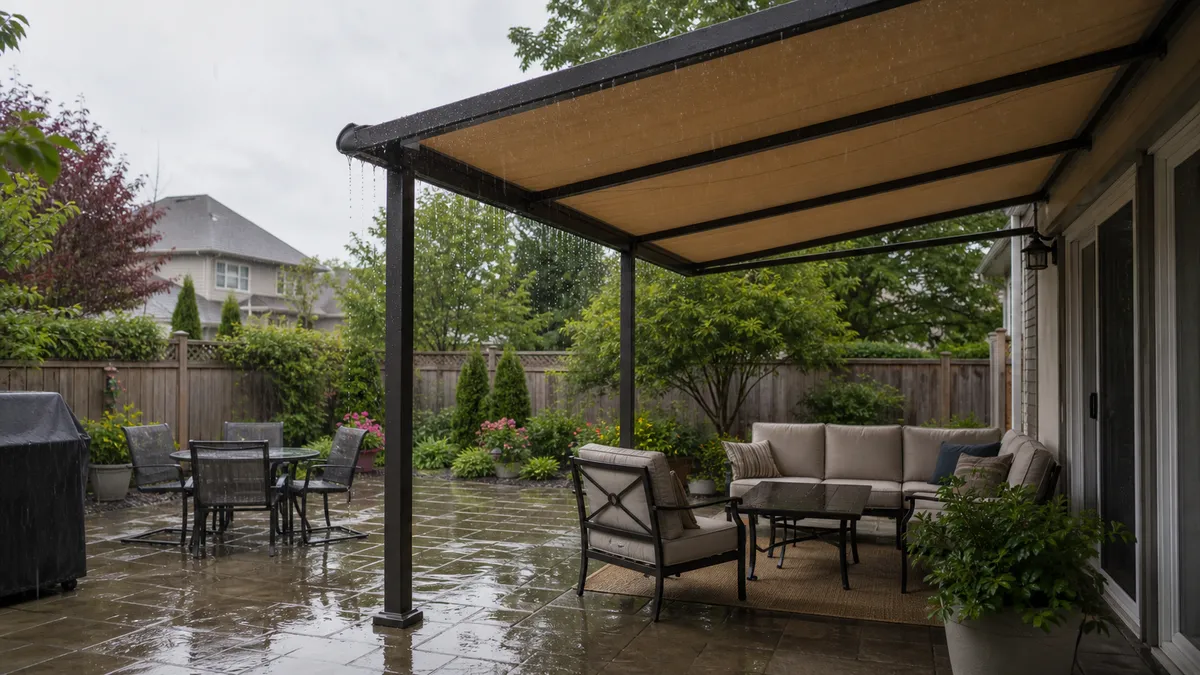
Patio shade for rain usually fails because fabric, slope, runoff or wind has been misread. First check whether water passes through the cloth, pools in a low spot, drips onto the wrong edge or blows in from the side. Do not buy new fabric yet if anchors, drainage, electrics, heat sources or permissions are uncertain.
Choose rain cover only after you know the failure: breathable mesh needs replacement, pooling needs slope, bad drip lines need drainage, and storm wind needs retraction or removal.
Diagnosis
Most common problems
Check the symptom before buying another shade product.
Rain drips through the whole fabric
Mesh shade can reduce drizzle and heat, but it is not a roof for dry seating.
Water bags in the middle
A flat waterproof patio shade can hold water until the fabric, arms or anchors are overloaded.
The table stays dry but chairs or walkway get soaked
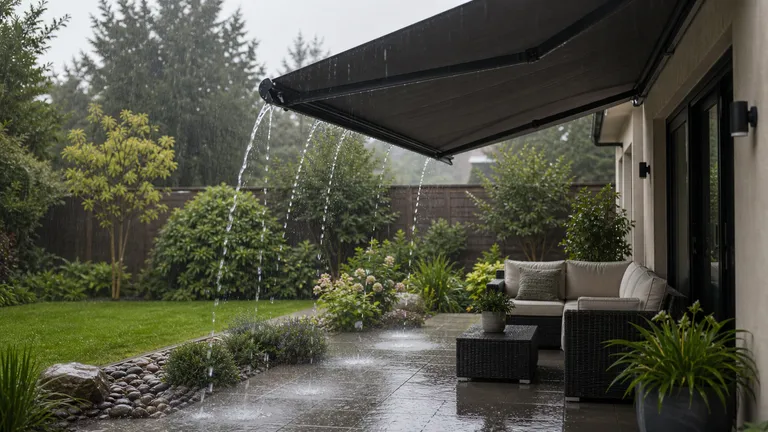
The cover may be shedding water correctly while dumping it onto people, steps or the door.
Rain blows under the cover
Overhead shade cannot keep a patio dry when gusts push water sideways.
Why your patio still gets wet
Start with the wet mark, not the label on the box. If every part of the fabric drips, the material is probably breathable shade or water-resistant mesh. If one pocket fills, the cover is too flat, loose or stretched. If only the edge is wet, the drip line is landing in the wrong place. Those are different repairs.
A rainproof patio shade also has to survive the weather that brings the rain. Wind-driven rain can enter below a good cover, and gusts can lift a pop-up canopy or pull a sail corner. The National Weather Service tells people to secure outdoor objects during wind advisories and before severe thunderstorm winds, so fabric shade should not be left open just because the patio is wet.
Check the posts, wall, soil and permission before you upgrade the cloth. Coolaroo's shade sail instructions call for structurally sound fixing points and tell installers to consider wind region, soil, buried services and existing structures. That is why fascia, siding, balcony rails, old fence posts, trees and rented exteriors are stop signs until a qualified person verifies the load path or gives written approval.
- Drip-through points to breathable fabric or water-resistant wording.
- A center pocket points to missing pitch, loose tension or stretched fabric.
- A wet doorway or walkway points to bad runoff, not necessarily bad cover.
- Side rain points to wind exposure and a bad-weather routine.
- Moving anchors, weak posts or rented walls mean no heavier rain fabric yet.
Waterproof and water-resistant do different jobs
Water-resistant shade can tolerate some rain without keeping the patio dry. Tenshon describes standard knitted HDPE shade-sail fabric as water-resistant rather than waterproof, and its woven structure can let rain pass through. That is useful for airflow and heat, but it is not reliable dry cover for cushions, dining or a doorway.
Waterproof fabric is only the first half of rain cover. A coated sail, awning fabric, pergola canopy or hard patio cover must shed water toward a planned edge. A Home Depot-hosted shade sail manual gives a 20 to 30 degree runoff angle and says to treat the sail as not waterproof unless the manual says otherwise. If the corners are nearly level, waterproof fabric can become a basin.
Use the linked waterproof shade-sail guide for the deeper material trade-off, because this page is about the patio-level rain problem. In short: breathable HDPE suits cooling and partial drizzle; waterproof patio shade suits dry seating only when pitch, tension, anchors and drainage are already solved.
- Breathable mesh is shade first and rain cover second.
- A waterproof label does not solve seams, sag, pitch or wind.
- Dry seating needs water shedding plus a safe place for runoff.
Ranked fixes: from quick checks to real rain cover
Start with small fixes that match the wet mark. Move chairs away from the drip line, confirm the manual wording, dry fabric before storage and remove temporary canopies before storm rain. Those fixes cost little and stop a simple edge problem from becoming a permanent structure.
Use medium repairs when the cover is sound but the water leaves in the wrong place. SunSetter's awning manual says to lower or raise one arm to create enough drop for runoff, and to retract the awning if water still accumulates. For sails, lower one corner, rebuild anchor heights or add proper tensioning space only when the fixing points are sound. Coolaroo says a tensioned sail should be rigid with little or no sag or creases.
Move to higher-cost work when the patio needs reliable dry space in steady rain. That usually means an engineered awning, waterproof pergola canopy, louvered roof or hard patio cover with gutters, posts, footings and a drainage plan. City patio-cover handouts commonly ask for attachment methods, foundation details, roof slope, fasteners and electrical items; treat those as contractor or permit questions, not fabric-shopping.
- Low effort: move furniture, check fabric wording, dry and store temporary covers.
- Medium effort: change pitch, tension, low-corner placement or edge runoff.
- Higher effort: use an engineered awning, pergola cover or hard roof with drainage.
Best patio rain-cover choices by failure mode
Do not rank rain covers as if they all do the same job. A breathable shade sail is cooler but not dry. A waterproof sail can work only when the corners create runoff and the anchors can stay loaded. A retractable awning can be useful near a wall in light rain, but it must be pitched and retracted when pooling or storm risk appears.
Pergola covers and hard patio roofs are better for a dry area you can use again and again. They also bring more decisions: gutter edge, downspout route, posts, house attachment, roof slope, permits and HOA review. Pop-up canopies sit at the other end. They can cover a short event while someone is present, but manuals warn against rain, wind, storms, lightning and unattended use.
Rain Cover Choices
What actually keeps a patio dry
Match the cover to the rain failure you can see. Dryness comes from fabric, slope, drainage and weather routine together.
| Cover type | Dry result | Slope / drainage need | Wind limit | Avoid when |
|---|---|---|---|---|
| Breathable shade sail | Partial drizzle reduction, not dry seating | Less pooling risk than solid fabric, but runoff still matters near doors | Remove or avoid storm exposure when the manual requires it | You need cushions, dining or a doorway to stay dry |
| Waterproof shade sail | Can shed rain when steep, tight and well anchored | Needs a clear low edge and strong fixing points | Higher stakes because solid fabric holds more wind and water | All corners are nearly level or anchors are unverified |
| Retractable awning | Good near a wall in light rain when pitched | Needs arm drop or pitch so water leaves the front edge | Retract for pooling, unattended storm risk or manual limits | The wall, mounting height or retraction routine is uncertain |
| Pop-up canopy | Short event cover while someone is present | Fabric must drain and dry before storage | Manuals warn against rain, wind, storms and lightning | You want permanent or unattended rain shelter |
| Pergola canopy or louvered roof | Drier seating when designed with gutters | Needs planned edge, gutter or downspout route | Open louvers, side gaps and panels still have wind limits | Permits, posts, drainage or HOA approval are unresolved |
| Hard patio cover | Strongest route to a real dry patio | Needs roof slope, gutters and foundation-safe discharge | Must be designed for local loads and attachments | You are not ready for permit, footing, ledger or electrical review |
Drainage decides whether the patio is actually dry
A dry table is not enough if the water lands at the threshold. Follow the drip line all the way to the ground. If the edge pours onto smooth paving, stairs, an outlet, a neighbor's side, a grill area or the foundation, the cover has moved the problem instead of fixing it.
Building America Solution Center recommends roof drainage that discharges to sloping grade at least 5 ft from foundations, or to underground catchment at least 10 ft away. It also lists 1/16 inch per foot as a gutter slope and 20 to 50 ft spacing for downspouts. Purdue Extension gives practical redirection examples such as elbows, extensions and splash guards, with checks for leaks and erosion.
Grade matters around the patio. University of Minnesota Extension identifies level or house-sloping ground as a moisture problem and recommends grade sloping away from the foundation at least 1 inch per foot for 6 ft. That does not turn every patio into a grading project, but it does mean a rain shade should not concentrate water toward the house.
Pooling adds load before anyone notices the danger. USGS lists water at 8.33 lb per gallon, so even a small trapped puddle can add real force to seams, arms, posts and anchors. If water remains after pitch or tension changes, retract, remove or redesign the cover.
- Move furniture out of edge drip before buying a larger cover.
- Do not send runoff toward a door, foundation, stair or smooth walking path.
- Use gutters, splash guards, elbows or extensions when the cover has a hard edge.
- Treat pooled water as load on fabric and anchors, not as cosmetic sag.
What will not fix rain under patio shade
Waterproofing spray will not turn breathable mesh into a dependable patio roof. It can change surface behavior for a while, but it does not create a steep low edge, sealed seams, stronger posts or a safe discharge point. If rain passes through the weave, use the sail as shade or replace it with a cover made to shed water.
A flat tarp over a sail or pergola is another bad shortcut. It may block the first shower, then hold a pocket of water. Heavier waterproof fabric makes weak anchors more dangerous, not safer, because the same wall plate or post now carries more water and wind force.
Weights do not make a pop-up canopy suitable for storm rain. A temporary frame can still lift, twist, collect water or collapse. The right repair is takedown and dry storage, not leaving it open because the legs have bags on them.
The word waterproof also does not solve side rain, seams, gutters, clogged valleys or the place where water lands. If the patio is exposed to gusty rain, overhead cover alone will not keep every edge dry. If lease, condo or HOA rules limit exterior holes, use freestanding or removable shade until written approval is clear.
- Do not spray breathable mesh and call it rainproof patio shade.
- Do not add a flat tarp without a runoff edge.
- Do not hang heavier fabric from the same weak anchors.
- Do not leave a pop-up canopy open for unattended storm rain.
- Do not ignore seams, gutters, side rain, drip lines or written approval.
Wind, attachments, renters, heat and power are stop signs
Wind with rain is the clearest stop sign. The National Weather Service notes that severe thunderstorms can bring winds of 58 mph or higher, and NWS high-wind guidance tells people to bring in unsecured patio and balcony objects before storms. Retract awnings, remove temporary canopies and take down sails when the manual or forecast calls for it.
Heat sources do not belong under many fabric covers. Coolaroo warns not to use a barbecue, grill or fire pit under its shade structure, and SunSetter says not to use a barbecue grill, patio heater or fireplace under its awning. If the dry area is meant for cooking or heating, plan a code-compliant outdoor kitchen or open-air layout instead of trapping heat under fabric.
Power needs the same caution. The U.S. Consumer Product Safety Commission warns that extension cords without required outdoor safety characteristics can create shock or fire risk. CDC/NIOSH also lists rain, slippery materials, cords, wires and clutter among slip, trip and fall hazards. Keep string lights, fans, pumps, extension cords and outlet strips away from drip lines and puddles.
Permanent covers can trigger approvals. City of Lodi's attached patio-cover handout asks permit plans to show foundation details, attachment method, fastener size and spacing, roof slope and electrical items. City of Garland says patio and porch covers require building permits whether attached or freestanding, and it also points to HOA or deed restrictions. For renters, Justia explains that many leases restrict improvements or alterations without written consent, and attached items can become fixtures.
- Retract, remove or secure fabric before storm wind.
- Do not place grills, fire pits, fireplaces or patio heaters under fabric when manuals prohibit it.
- Keep cords, lights, fans and outlets away from water paths.
- Get written landlord, HOA or permit approval before permanent exterior attachments.
- Hire qualified help for ledgers, footings, roofline changes, structural posts or electrical work.
This won't fix it
Do not skip these checks
- Pooling after pitch or tension changes means retract, remove or redesign the cover.
- Runoff toward a door, foundation, stair, smooth walkway, outlet or neighbor area must be fixed before the patio is called dry.
- Fascia, siding, balcony rails, trees, weak posts and rented exteriors are not safe rain-shade anchors unless verified.
- Pop-up canopy weights do not make a temporary frame safe for unattended storm rain.
- Move grills, fire pits, fireplaces, patio heaters, string lights, fans, pumps and extension cords out of wet drip paths.
Read Next
Related fixes
Patio Shade Ideas
Use this when patio shade ideas is closer to the real constraint than the current page.
Pergola for Rain
[object Object]
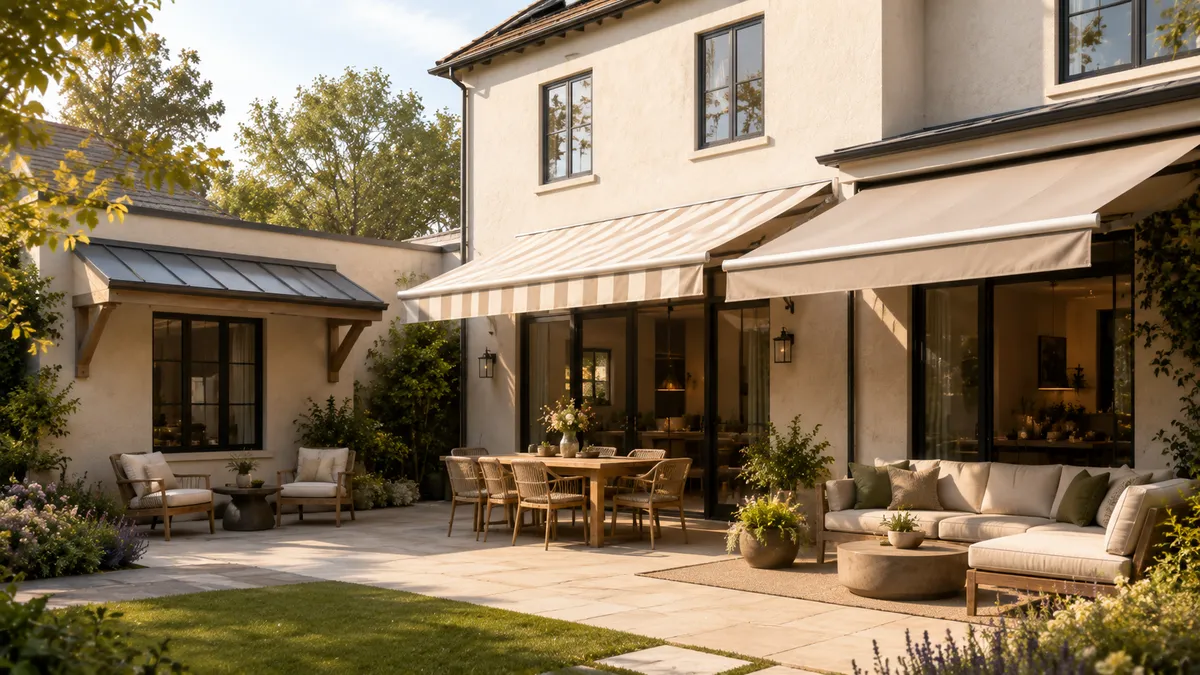
Patio Awning Guide
Use this when patio awning is closer to the real constraint than the current page.
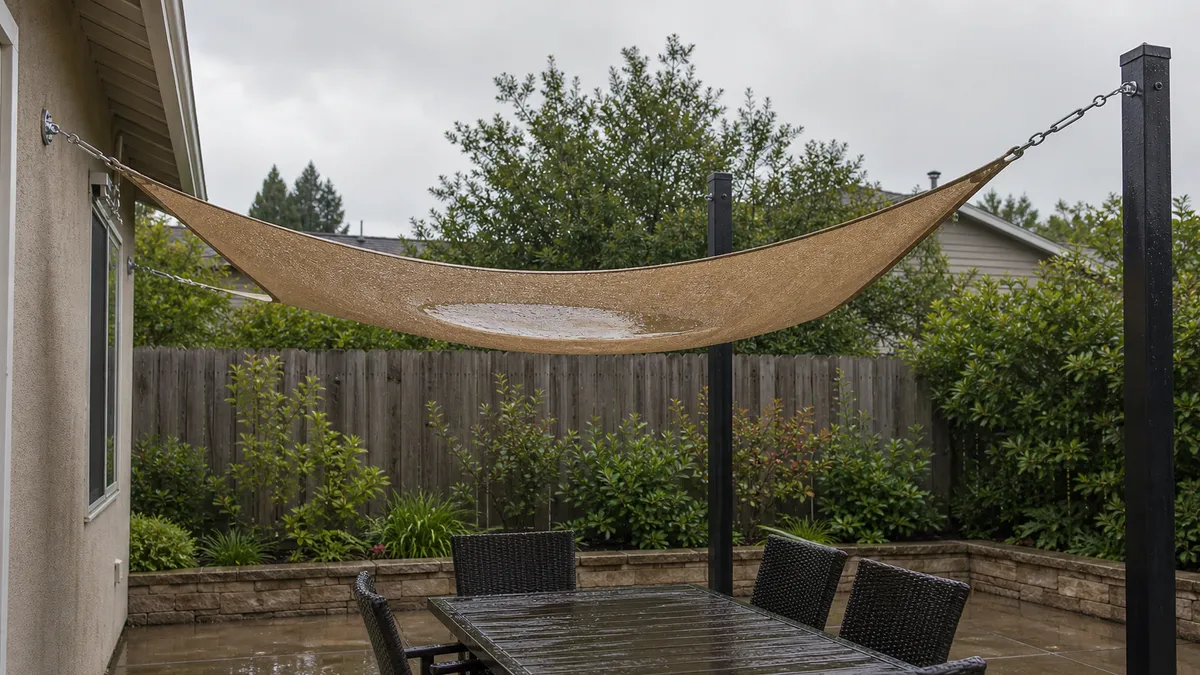
Shade Sail Water Pooling
Use this when shade sail water pooling is closer to the real constraint than the current page.
Questions
FAQ
Will a shade sail keep my patio dry in rain?
Usually not if it is breathable HDPE or shade cloth. It may reduce drizzle, but dry seating needs waterproof fabric, pitch, firm tension and a safe runoff edge. If the sail is flat or the anchors are weak, a waterproof label can make pooling more dangerous.
Is a retractable awning okay to use in rain?
Light rain may be acceptable only when the awning manual allows it and the fabric is pitched so water runs off. SunSetter warns that pooled water can collapse an awning. Retract it if water accumulates, storm weather is possible or nobody is there to watch it.
How much slope does a rain shade need?
Use the product manual first. One shade-sail manual calls for a 20 to 30 degree runoff angle, while attached patio covers may have permit-specific slope requirements. The practical test is simpler: water should leave quickly and land somewhere safe.
Why is water pooling on my patio cover?
The cover is probably too flat, loose, stretched, clogged or draining toward a low point. It may also be a waterproof fabric installed on anchor heights meant for breathable shade. Pooling is a load problem because water weighs 8.33 lb per gallon.
What is better for rain: shade sail, awning or pergola cover?
For real dryness, a pitched awning, drained pergola cover or hard patio cover usually beats breathable sail fabric. A waterproof sail can work only with strong anchors and steep runoff. A pop-up canopy is temporary cover, not unattended storm shelter.