
Quick Answer
South-facing patio shade: the short version
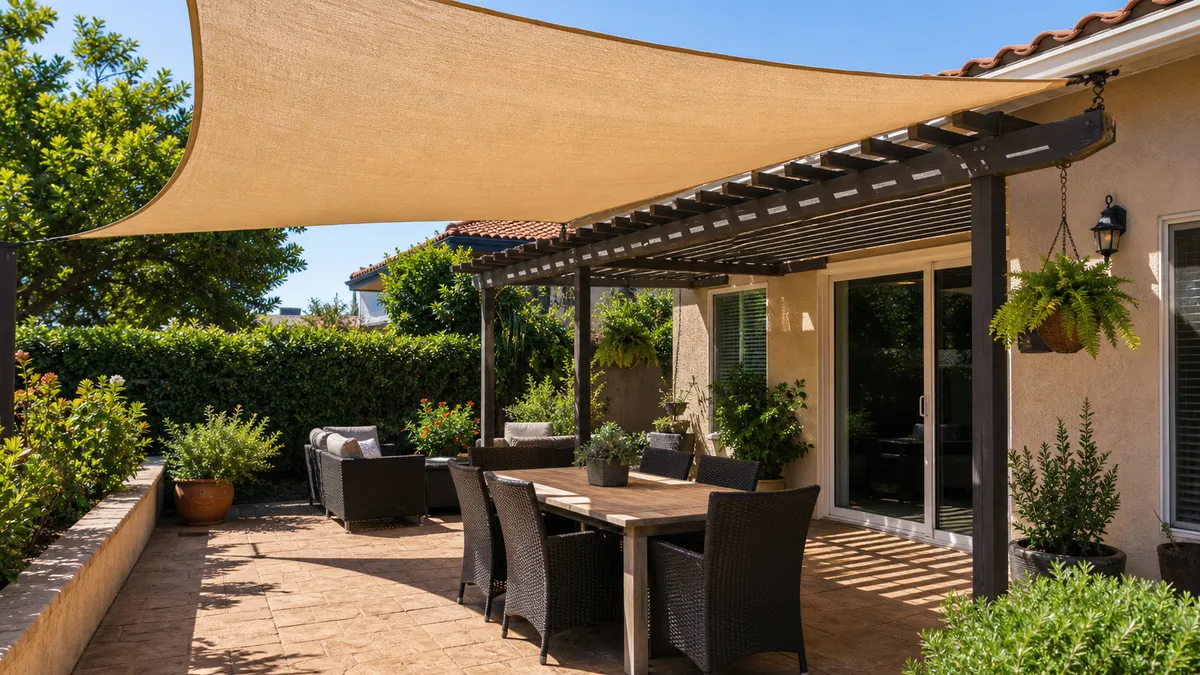
For south-facing patio shade, diagnose the failed hour first. High midday sun usually needs overhead shade with airflow; glare entering under a roof needs side shade. Hot paving, weak anchors and winter-sun concerns change the fix. Shade helps with UV exposure, but EPA guidance still treats it as only one layer of sun protection.
Choose overhead shade when short midday shadows are the problem; add side shade, planting or a different frame only after glare, hot paving and weak supports are ruled out.
Diagnosis
Most common problems
Check whether the failed hour is overhead sun, side glare, hot paving, weak support or seasonal south-side shade before buying fabric.
Short shadows and harsh heat from late morning to mid-afternoon
The sun is high, so curtains alone will miss the main heat and UV window.
Glare enters under a roof in morning or late afternoon
The problem is low side sun, not a roof that needs more depth.
The patio stays hot after the seating area is shaded
Stored heat in paving and walls can keep radiating after the shadow arrives.
A sail, canopy or awning would attach to weak fascia, trim or shallow posts
A larger sail or heavier fabric adds load; it does not make weak supports safe.
Which south-facing sun problem do you have?
Start with the hour that makes the patio unusable. A south-facing patio can look like one big sun problem, but the fix changes when the symptom is overhead heat, low glare, hot paving, weak supports or seasonal sun. Do this check before shopping for an awning, shade sail, umbrella, pergola or tree.
EPA uses short shadows as a warning sign for stronger UV conditions, and it recommends seeking shade from late morning through mid-afternoon when UV levels are moderate to high. That matters on a south-facing patio because the hard period is often the high-sun window, not just a bright evening glare line.
Walk the patio at the bad hour and mark four things: where the sun lands, where the shadow falls, which surfaces stay hot, and which wall, post or frame could carry hardware. If the support is unknown, keep the first fix removable until the attachment can be verified.
- Short shadow near midday: diagnose overhead shade and UV comfort first.
- Sun under a roof edge: test side shade before adding more top cover.
- Hot floor after shade arrives: cool paving, walls and the patio edge.
- Moving fabric or unknown anchors: reduce the shade area and check support.
- Winter light still matters: use retractable, removable or deciduous shade.
Diagnosis
South-facing patio symptoms, causes and first moves
Use this table before buying parts. The symptom decides whether to start with top cover, a side screen, movable shade, stronger anchors or planting.
| What you see | Likely cause | First move | Do not do this |
|---|---|---|---|
| Short shadows and harsh heat from late morning to mid-afternoon | High overhead sun and UV exposure | Test overhead shade that covers the seats and leaves airflow under the fabric | Do not start with only side curtains |
| Glare slips under a roof in the morning or late afternoon | Low side sun or reflection | Hold a temporary side panel at the patio edge and check if glare disappears | Do not add only more roof depth |
| Paving and walls stay hot after the shade arrives | Stored radiant heat from hard surfaces | Add edge planting, lighter surfaces, ground shade and cross-breeze before darker fabric | Do not assume a darker cover will cool the patio |
| Glass doors or windows heat the patio edge | Sun hitting adjacent glazing and masonry | Use exterior shade near the wall, such as an awning or screen, without promising patio air cooling | Do not apply window heat-gain numbers to open-air comfort |
| A sail or canopy moves when wind rises | Weak anchors, loose fabric or exposed fabric area | Choose smaller removable shade or get anchor and post help before tensioned fabric | Do not leave slack fabric open |
| Summer is brutal but winter sun feels useful | Seasonal south-side exposure | Use retractable awnings, removable cloth, adjustable louvers or deciduous planting | Do not build permanent deep shade from one summer visit |
| Plants scorch even when the chairs are shaded | Plant heat, watering and airflow stress | Use plant-specific shade cloth, move containers or shade the paving around them | Do not block all airflow around the plants |
Why south-facing patios usually need overhead shade first
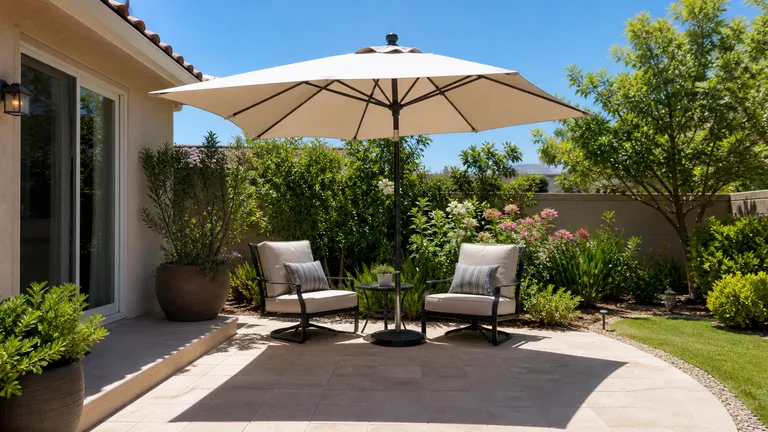
A south-facing patio is different from a west-facing patio because the hardest sun often arrives high above the seating area. YourHome's shading guidance separates high-angle summer sun from low east and west sun: high sun is better handled by horizontal overhead shade, while low sun needs vertical interception.
That does not mean every south-facing patio needs a permanent roof. It means the first test should match the sun angle. If the shadow under a sheet, umbrella or temporary canopy lands on the chairs during the bad hour, overhead shade is doing useful work. If glare still reaches faces under the edge, add side shade only where that side line enters.
NOAA's seasons guidance is a reminder not to judge the patio from one spring or winter visit. The sun reaches its highest noon elevation around the summer solstice in the Northern Hemisphere, and seasonal tilt changes the shadow path. A patio that feels pleasant in March can be exposed for long hours in July.
- Use overhead shade for high-angle sun that falls directly on seats and paving.
- Use side shade only where morning or late-day glare enters below the cover.
- Choose adjustable shade when winter light still warms the house or patio.
- Retest the shadow path after furniture moves, trees leaf out or a new structure is added.
Fixes ranked by effort, cost and permanence
Rank the repair by what it changes on the patio. The least expensive useful step is a movable umbrella or small canopy over one seating zone. It proves whether overhead shade fixes the bad hour, but it will not cover a whole south-facing patio all day and it needs a wind routine.
Medium work makes sense when the failed zone is near a house wall or an existing frame. DOE says awnings can shade outdoor living spaces as well as windows, and its awning guidance favors opaque, tightly woven, light-colored fabric with ventilation. Use the DOE window heat-gain numbers only for adjacent glazing, not as a promise that patio air will cool by the same amount.
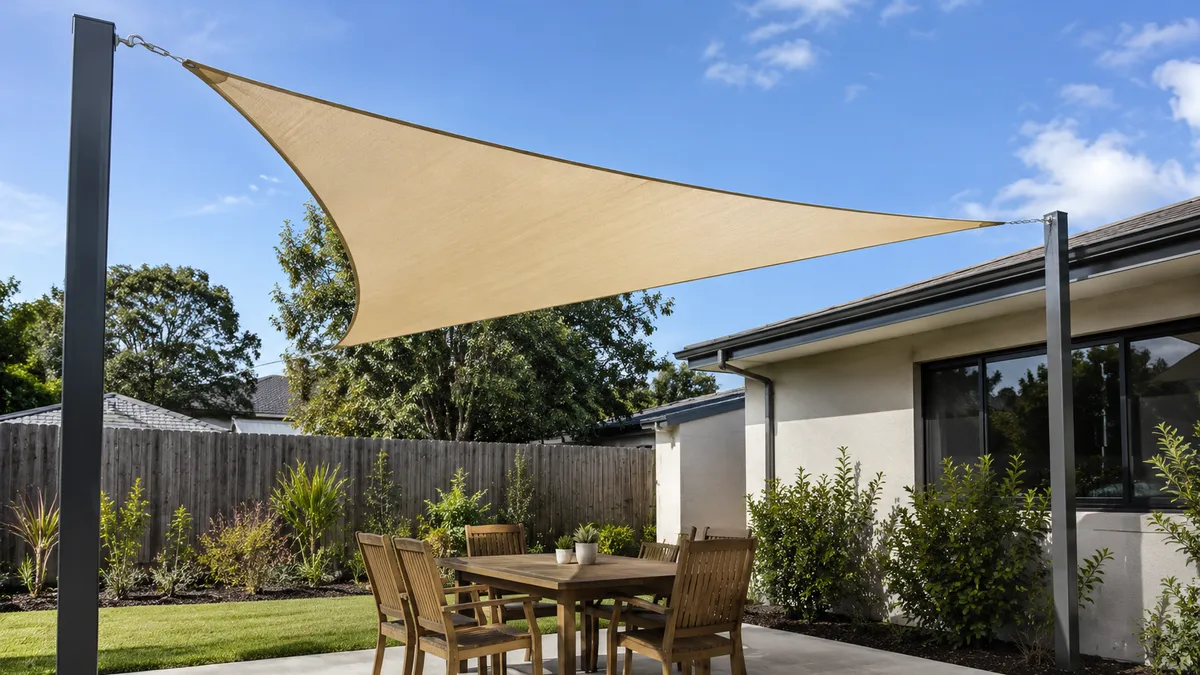
A shade sail is a medium-to-high commitment when the anchors already exist and a high-coverage triangle or rectangle fits the sun path. Mississippi State Extension says a sail needs one anchor point per corner, measured placement, wind-capable posts and concrete-set posts when new posts are needed. If those parts are not credible, read the shade sail guide before buying fabric.
High-effort fixes include a pergola with removable cloth, adjustable louvers, new sail posts, a deciduous tree or a hardscape redesign. They make more sense when the patio will stay in use for years, but they can over-shade winter sun or trap hot air if the frame, fabric and planting block breezes.
Ranked Fixes
South-facing patio fixes by effort and commitment
Match the first repair to the real symptom. Do not jump straight to the most permanent structure.
| Fix | Effort / cost | Best when | Main failure point |
|---|---|---|---|
| Movable umbrella or small canopy | Low | One table or lounge chair needs overhead shade during the bad hour | The shadow moves off the seat and the fabric must be closed or stored in wind |
| Side screen, curtain, hedge or adjustable panel | Low to medium | Glare enters under existing cover from the east, west or a reflective surface | It can block airflow and will not fix high midday sun by itself |
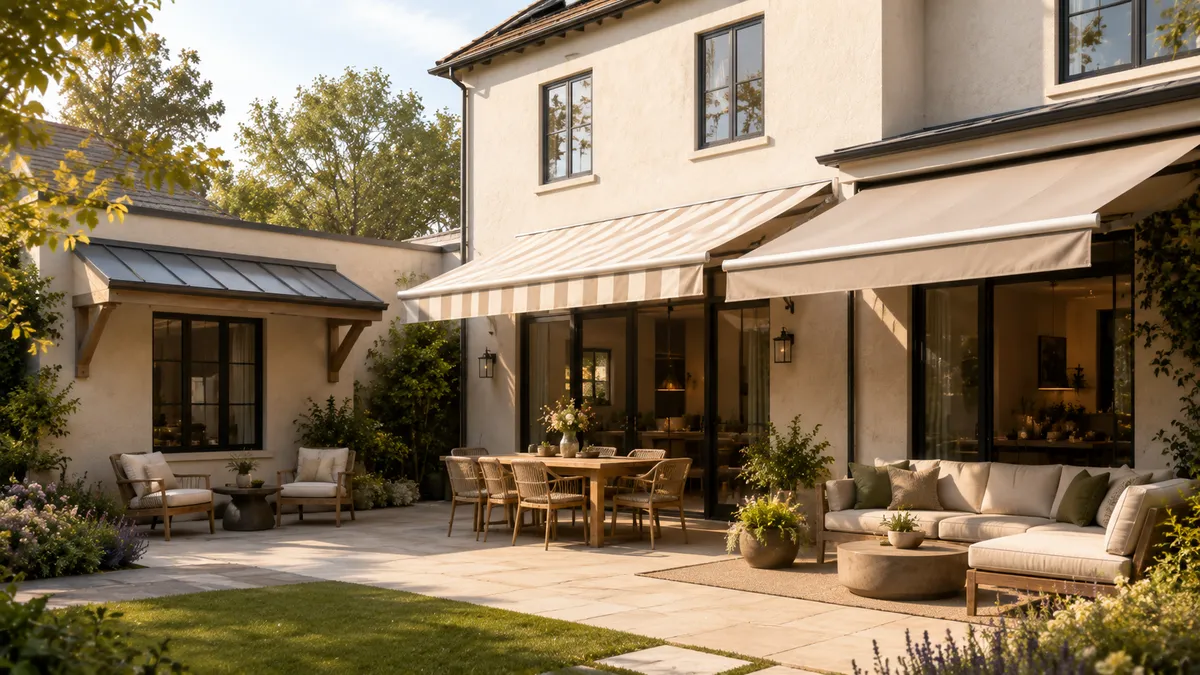
| Retractable awning | Medium to high | The hot zone sits beside a wall that can carry brackets and winter sun still matters | Weak wall attachment, poor ventilation or leaving it open in wind |
| Removable pergola cloth or shade cloth panel | Medium | A pergola or frame already exists and seasonal adjustment is useful | Dense or dark cloth can hold hot air if the sides are closed |
| Shade sail | Medium to high | Strong posts or masonry anchors surround the seating zone | Wrong anchor spacing, slack fabric or exposed wind |
| Pergola, louvers or new structural posts | High | The patio needs long-term overhead cover and the structure can be planned correctly | Permanent shade can block winter light or shift the problem to posts and footings |
| Deciduous tree, trellis and hardscape planting | Long horizon | Radiant heat from paving and walls is part of the problem | Young trees do not fix this season's seating zone unless already well placed |
Best shade options for all-day south sun
The useful fix is the one that matches both sun angle and support. A retractable awning is strongest when the table sits close to a suitable wall and the fabric can be closed during wind or opened in winter. A sail can cover a wider open area, but only if the posts, wall plates, turnbuckles and tension routine are real.
A pergola with removable cloth works when the patio needs a calmer, seasonal shade layer rather than a sealed roof. The cloth can come down when winter sun is useful or when storms make loose fabric a bad idea. Keep the top open enough for warm air to escape, especially near masonry, dark pavers or a grill zone.
Umbrellas and pop-up canopies are not failures; they are small-zone tools. Use them for a movable seat, a temporary test or a rental situation where brackets are not allowed. Treat vertical screens as a second tool, not a complete answer, unless the diagnosis table showed low glare instead of overhead heat.
Options
Best options for all-day south-facing exposure
Use this after the diagnosis table. The right choice changes with wall support, wind, plant goals and winter light.
| Option | Best for | Where it fails | Check before buying |
|---|---|---|---|
| Retractable awning | Dining or seating close to a house wall | Weak wall structure, poor ventilation or exposed wind | Wall substrate, projection, front-bar height, manual limits and winter sun access |
| Shade sail | Open patio zones with strong anchors around the seating area | Fascia-only plans, slack corners, weak posts or gust exposure | One anchor per corner, post strength, concrete footings where needed and a closure routine |
| Pergola with removable cloth | Seasonal overhead shade where a frame already exists or can be built properly | Dense fabric that traps heat or a permanent top that blocks winter light | Cloth density, airflow, fasteners and how easily the cover comes off |
| Cantilever umbrella | One movable lounge, dining table or reading chair | All-day whole-patio coverage and rising wind | Base requirements, tilt range, storage space and whether the shadow reaches chairs |
| Pop-up canopy | Short events, temporary testing or rental-safe shade | Long unattended exposure, high wind and awkward leg placement | Tie-down plan, leg location, surface, takedown time and forecast |
| Vertical screen or curtain | Low side glare under an existing roof, awning or pergola | High midday sun and blocked airflow | Glare line, mesh density, wind movement and door or walkway clearance |
| Deciduous tree or trellis | Long-term cooling of paving, walls and garden edges | Immediate shade needs and unwanted winter shade near south windows | Mature spread, root room, roof clearance, solar panels, watering and winter shadows |
Plants and structures without trapping heat
Plants help because they cool surfaces as well as casting shade. DOE says trees can reduce surrounding air temperatures by as much as 6 F, and air directly under trees can be as much as 25 F cooler than air above nearby blacktop. Treat those as context-specific examples, not a guarantee that every patio drops by that amount.
Living shade feels different from a hard roof because leaves absorb light and release moisture. Utah State Extension explains that trees reduce heat and reflection partly through evaporation from leaf surfaces. That is why a trellis, vine, tree canopy, shrubs or groundcover can help a south-facing patio that stays hot after the seating area is covered by shade.
Do not let planting create a dead-air box. Dense hedges, solid curtains and dark cloth can stop the breeze that makes overhead shade comfortable. Leave gaps for cross-flow, keep vines off hot surfaces that need inspection, and avoid placing evergreens where they block useful winter sun on the south side.
- Use planters and groundcover to shade hot paving edges.
- Use deciduous trees where summer shade and winter sun both matter.
- Keep dense screens away from grill heat, doors and air paths.
- Water and root space decide whether living shade survives the same heat it is meant to reduce.
What will not fix a south-facing patio
More overhead fabric will not stop low side glare. If the sun slips under the roof or awning edge, test a vertical screen, curtain, hedge or valance along the actual glare line. A wider top can darken the table and still leave faces exposed.
Darker fabric will not automatically cool the patio. DOE's awning guidance favors light-colored, opaque, tightly woven fabric and ventilation because trapped hot air near a shaded surface can be part of the discomfort. If air cannot move, a darker cover may feel heavy rather than cooler.
A larger sail will not make weak anchors safe. Mississippi State Extension's installation guidance depends on measured corner placement, strong posts and concrete-set posts where needed. If the proposed anchor is fascia, loose masonry, decorative trim or a shallow post, the repair is support verification or a smaller removable shade.
A young tree will not solve this season's midday seating problem unless it is already mature or perfectly placed. DOE notes that a 6 to 8 foot deciduous tree can begin shading windows in the first year depending on placement, but roof shade may take 5 to 10 years. Patio-seat shade can take just as much patience.
Indoor blinds are not a substitute for exterior patio shade. They can reduce glare indoors, but they do not shade the chair, paver, grill area or threshold outside. If the heat source is outdoors, stop the sun before it hits the outdoor surface.
When to stop and get help
Stop before drilling when the shade has to attach to a house wall, masonry, fascia, roof edge, balcony rail or old post that has not been checked. A wall-mounted awning, tensioned sail or pergola addition needs framing that can carry the load, not only a convenient surface.
Get help when new posts or footings are near utilities, when elevated work is required, when local rules affect the structure, or when motorized awnings need outdoor electrical work. The same pause applies around grills, heaters and fire features. Do not put fabric where heat, smoke or flame clearance is uncertain.
Wind is the other stop sign. If the patio is exposed, fabric moves while open, or nobody can close, retract or remove the shade before weather changes, choose a smaller temporary fix or professional design. The wrong permanent shade is worse than no purchase.
- Do not anchor tensioned fabric to fascia, trim or unverified masonry.
- Do not dig posts until utilities, footing size and local rules are clear.
- Do not add motorized shade without safe outdoor wiring and controls.
- Do not leave fabric open where wind can build and nobody can close it.
This won't fix it
Do not skip these checks
- Shade reduces UV exposure, but EPA guidance still treats shade as only one part of sun protection.
- Awnings, sails and pergola cloth need airflow; dense fabric can keep hot air near paving.
- Weak fascia, decorative trim, shallow posts and moving hardware are stop signs for tensioned fabric.
- Permanent south-side shade can block winter daylight and warmth if it cannot retract or come down.
- Keep fabric shade away from grills, heaters and fire features unless clearances are verified from the actual product instructions.
Read Next
Related fixes
Patio Shade Ideas
Use this after the failed hour is clear and you want broader patio shade choices for overhead sun, side glare, hot paving or rental-safe cover.
Best Patio Shade for Afternoon Sun
Use this when patio shade for afternoon sun is closer to the real constraint than the current page.
Shade Sail Guide
Use this when the south-facing diagnosis points to a sail and you need anchor, fabric, tension and wind planning before ordering.
Patio Awning Guide
Use this when patio awning is closer to the real constraint than the current page.
Questions
FAQ
What is the best shade for a south-facing patio?
Start with the failed hour. If the patio is harsh from late morning to mid-afternoon, overhead shade from an awning, sail, pergola cloth or umbrella usually comes first. If glare enters under a roof, add side shade. If the floor stays hot, treat paving, planting and airflow too.
Why is my south-facing patio still hot after I added shade?
The shade may be covering the chairs while paving, walls or glass still store heat. Dark fabric can also slow airflow. Check the hot surfaces with your hand, then add edge planting, lighter surfaces, exterior window shade or more ventilation before buying a larger cover.
Is a shade sail good for a south-facing patio?
A shade sail can work well when strong anchors surround the seating zone and the sail can be tensioned and managed in wind. It is a poor shortcut when the only attachment points are fascia, loose masonry, decorative posts or shallow bases. Use the shade sail guide before committing to fabric.
Should I use plants or a pergola for south-facing garden shade?
Use both only if they solve different parts of the problem. A pergola or removable cloth can give faster overhead shade. Trees, trellises and planters help with radiant heat from paving and walls. Deciduous planting is often better where summer shade is wanted but winter sun still matters.
Do I need side shade on a south-facing patio?
Only when the symptom points sideways. If glare hits faces under an existing roof or awning in the morning or late afternoon, a screen, curtain, hedge or valance may be needed. If the bad period is short-shadow midday sun, side panels alone will miss the main exposure.