
Quick Answer
shade sail water pooling: the short version
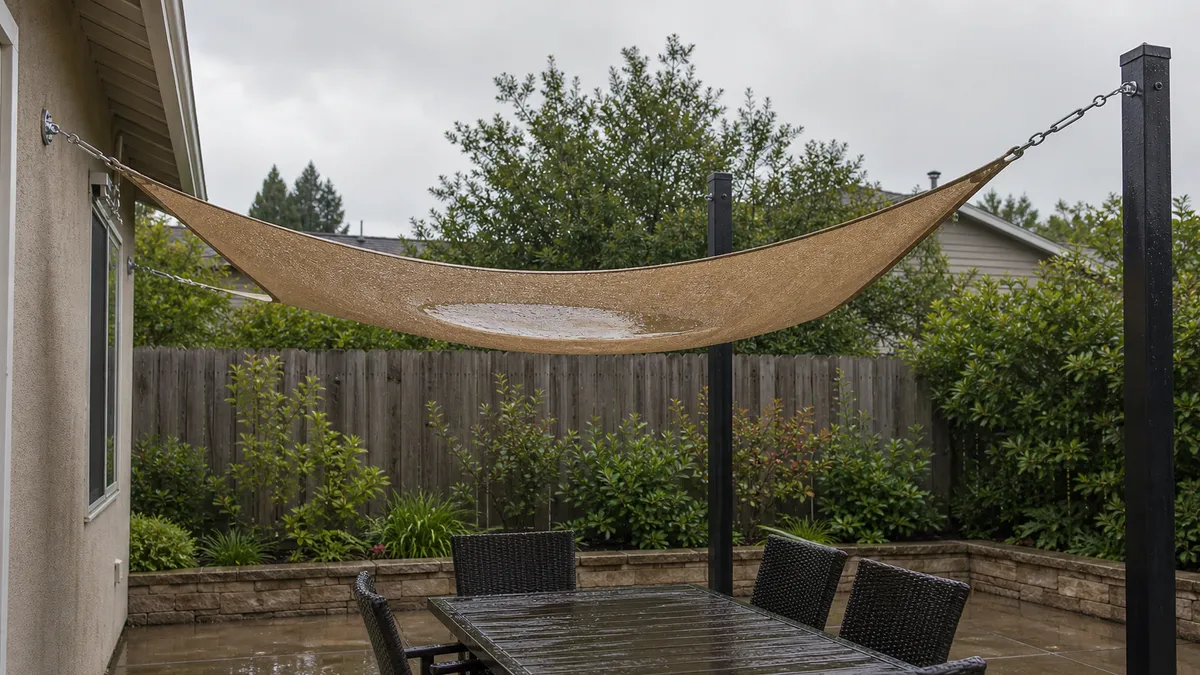
Water pooling means rain cannot leave the sail fast enough. Check slope, low-corner position, fabric sag and runoff direction before adding tension. If every anchor is nearly level, switch to breathable mesh or rebuild the heights before buying another waterproof panel.
Confirm a clear runoff edge before adding tension; use breathable mesh or another shade type when the anchors cannot create slope.
Diagnosis
Most common problems
Check the symptom before buying another shade product.
Water sits in the center after every shower
The fabric has no reliable exit route for rain.
Pooling happens only on a waterproof sail
Solid fabric needs slope more than mesh does.
Sail sags before rain begins
A pre-existing dip becomes a basin during rain.
Runoff would dump onto a door or grill
A drain path must end somewhere safe.
Diagnosis checklist for pooling water
If water collects in the same low pocket every time, the sail is too flat or the low point is in the wrong place. If the pocket shifts with wind, tension and fabric stretch may also be involved. If only a coated sail pools, the fabric may be holding water that the anchors cannot shed.
Inspect the sail after light rain, not during a storm. Mark the lowest point, follow where water should leave and check whether an edge actually leads downhill. Pooling is easier to fix when the water line is visible.
Pooling can stretch fabric and deepen the basin, so early repair matters. A small puddle after the first rain may become a larger pocket after several storms. Treat the first visible pond as a warning sign rather than a normal break-in stage.
Pooling around seams needs special attention. Seams can slow water movement, especially on coated fabric. If the seam line crosses the lowest part of the sail, rotating the sail or changing the anchor heights may be needed.
For example: Water sits in the center after every shower. Lower one corner or raise the opposite corner to form a drain line. The fabric has no reliable exit route for rain. Stop and reassess if the support, mount or weather problem is still visible after the first fix.
Before ordering: Water sits in the center after every shower. Lower one corner or raise the opposite corner to form a drain line. The fabric has no reliable exit route for rain. Stop and reassess if the support, mount or weather problem is still visible after the first fix.
- Same pocket after each rain points to missing slope.
- Center dip before rain points to sag or size trouble.
- Water running toward a wall points to wrong low-corner placement.
- Heavy retained water points to waterproof fabric without runoff.
Fix table
Symptoms, first fixes and stop signs
Start with the symptom you can see before buying parts or adding more shade.
| Symptom | First fix | Why it works | Stop if |
|---|---|---|---|
| Water sits in the center after every shower | Lower one corner or raise the opposite corner to form a drain line. | The fabric has no reliable exit route for rain. | Stored water adds load to the anchors and fabric. |
| Pooling happens only on a waterproof sail | Recheck pitch before blaming the coating. | Solid fabric needs slope more than mesh does. | Runoff should not be directed toward doors, outlets or cooking areas. |
| Sail sags before rain begins | Fix tension or sizing first. | A pre-existing dip becomes a basin during rain. | Improvised center props can damage fabric if they are not manufacturer-approved. |
| Runoff would dump onto a door or grill | Move the low corner or choose a different shade product. | A drain path must end somewhere safe. | Stored water adds load to the anchors and fabric. |
Fixes ranked by effort and cost
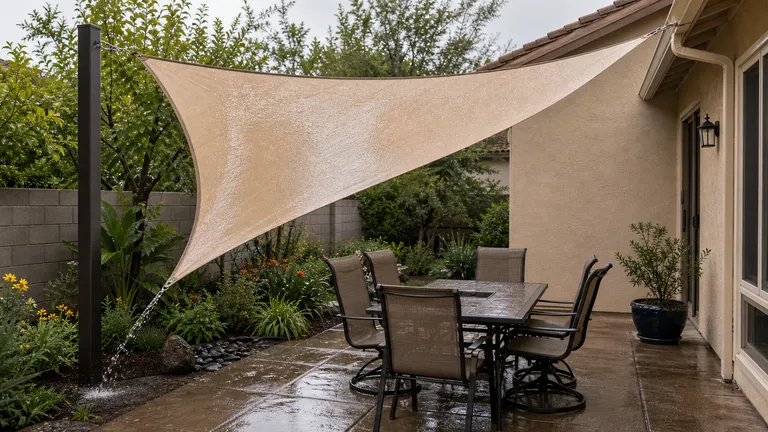
A low-cost fix is retensioning a stable sail; a high-cost fix is changing post height or moving an anchor. Between those repairs, changing hardware length or replacing an oversized panel may solve the dip. Do the low-cost repair only when it directly addresses the visible cause.
According to Home Depot, runoff planning for this kind of sail uses a 20 to 30 degree angle, which shows why small height changes can matter. If the existing posts cannot create slope, switching to breathable fabric or a different product may be cheaper than rebuilding the whole setup.
The low corner should be placed where runoff can fall harmlessly. A drain route over steps, outlets, a grill, a doorway or a neighbor's balcony creates a new problem. Good slope includes a safe landing zone for water.
The surrounding landscape can worsen runoff. A tree above the sail drops leaves into the same low pocket, and a roof edge can pour extra water onto fabric that was sized only for direct rain. Look above the sail before changing only the corners.
In practice: Pooling happens only on a waterproof sail. Recheck pitch before blaming the coating. Solid fabric needs slope more than mesh does. Stop and reassess if the support, mount or weather problem is still visible after the first fix.
- Low effort: rebalance tension if the anchors already create slope.
- Medium effort: change hardware length or replace a stretched panel.
- High effort: raise, lower or move supports to create runoff.
This will not stop pooling
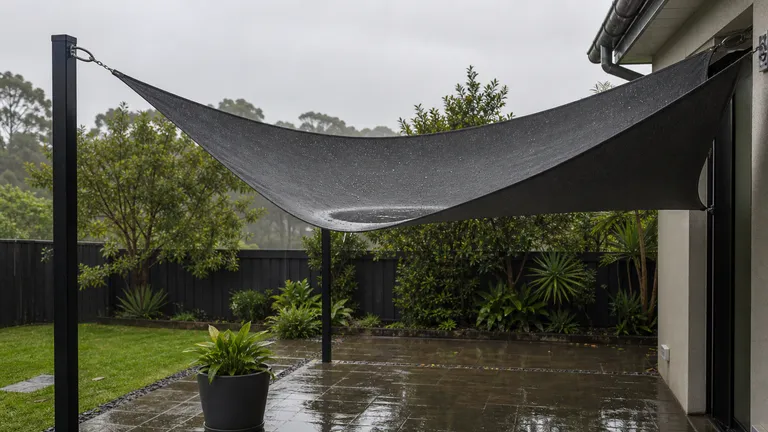
Buying a thicker waterproof sail will not help if the low point remains in the middle. Pulling harder on weak anchors can make the project less safe. Adding a pole under the center may move the water but can also damage fabric or create a new pressure point.
The runoff route must be designed, not improvised. If the only available slope sends runoff into the house, grill or walkway, choose a different shade arrangement.
Mesh sails can still sag when debris clogs the weave or tension is uneven. If leaves gather at one spot, clean the fabric and observe whether water begins to pass again. A maintenance issue can mimic a design issue for a while.
If the sail protects a dining area, test where water falls when people are seated. A corner that drains onto the empty patio may still splash chairs during a meal. The successful fix protects the activity, not just the fabric.
If the sail sags before rain begins, fix tension or sizing first. A pre-existing dip becomes a basin during the first shower.
- Do not rely on fabric coating to overcome level anchors.
- Do not use center props unless the manufacturer allows them.
- Do not keep loading anchors that are already moving.
Prevention before rain season
Check runoff with a hose before leaving the sail installed through wet months. Watch the first gallon, not only the final puddle. Water should leave quickly and predictably away from doors or electrical equipment.
Remove debris from mesh and coated fabric because leaves can create small dams. Seasonal inspection is especially important after wind, because hardware movement can change the slope that worked earlier.
When posts are too short to create slope, adding taller hardware may not be enough. The corner height itself may need to change. That can mean a taller post, a different wall plate or abandoning waterproof fabric for breathable shade.
When runoff would dump onto a door or grill, move the low corner or choose a different shade product. A drain path has to end somewhere safe.
This won't fix it
Do not skip these checks
- Stored water adds load to the anchors and fabric.
- Runoff should not be directed toward doors, outlets or cooking areas.
- Improvised center props can damage fabric if they are not manufacturer-approved.
Read Next
Related fixes
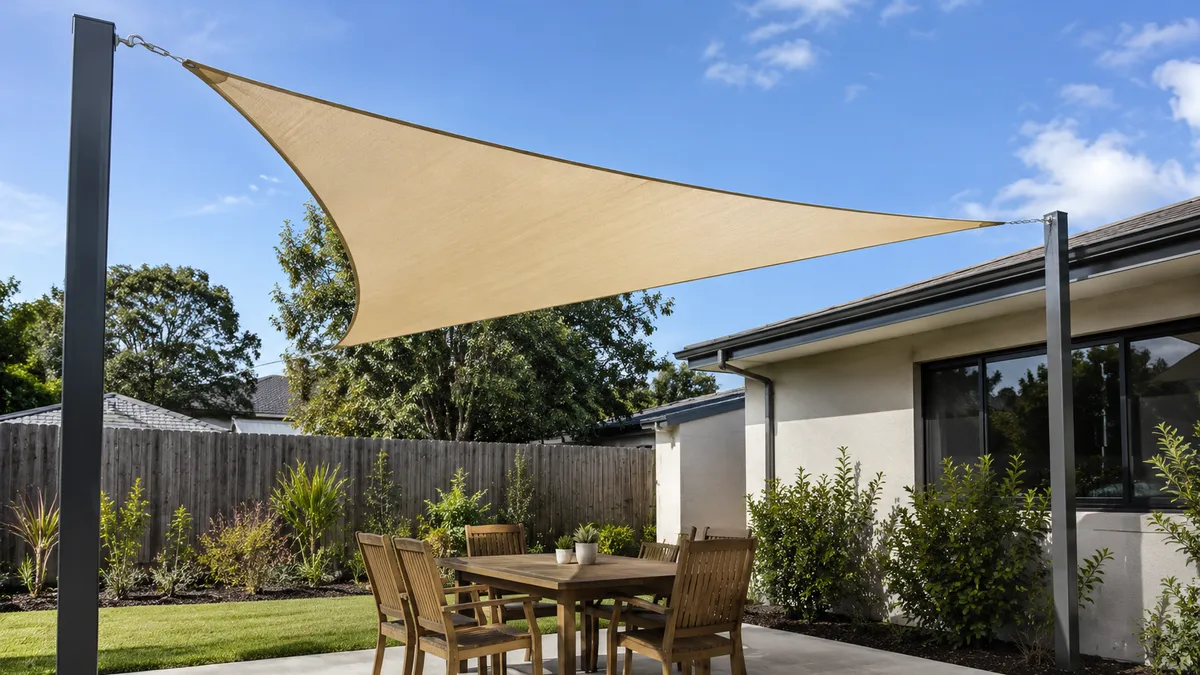
Shade Sail Guide
Use this when shade sail is closer to the real constraint than the current page.
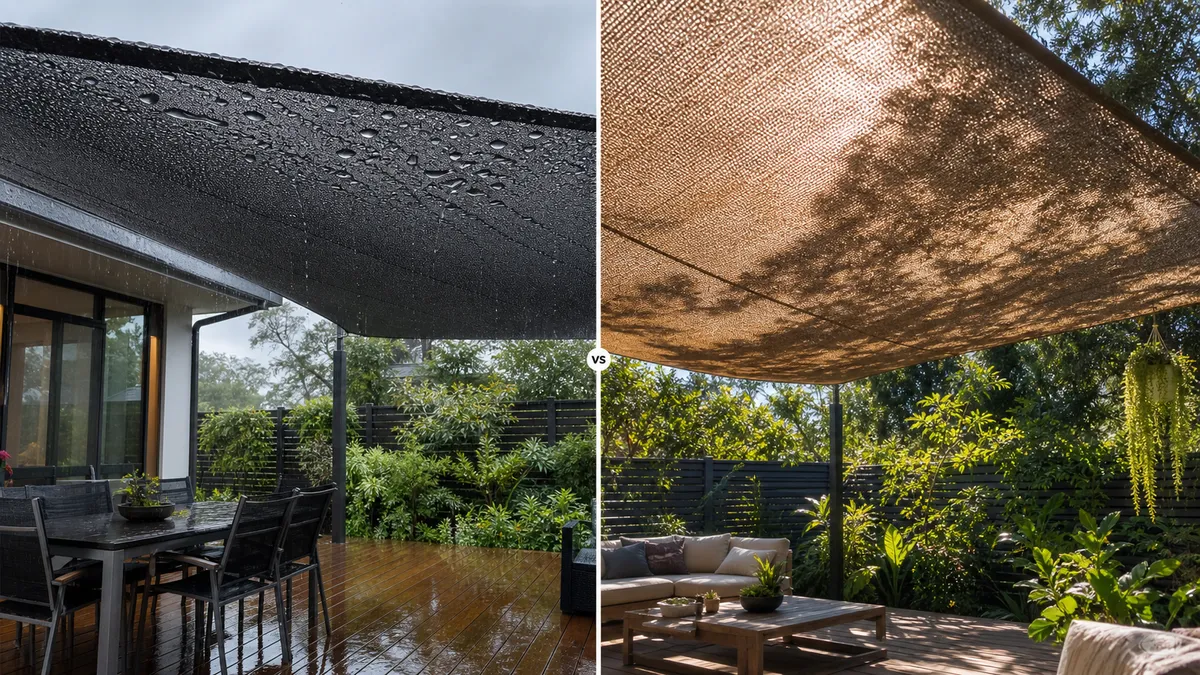
Waterproof vs Breathable Shade Sail
Use this when waterproof vs breathable shade sail is closer to the real constraint than the current page.
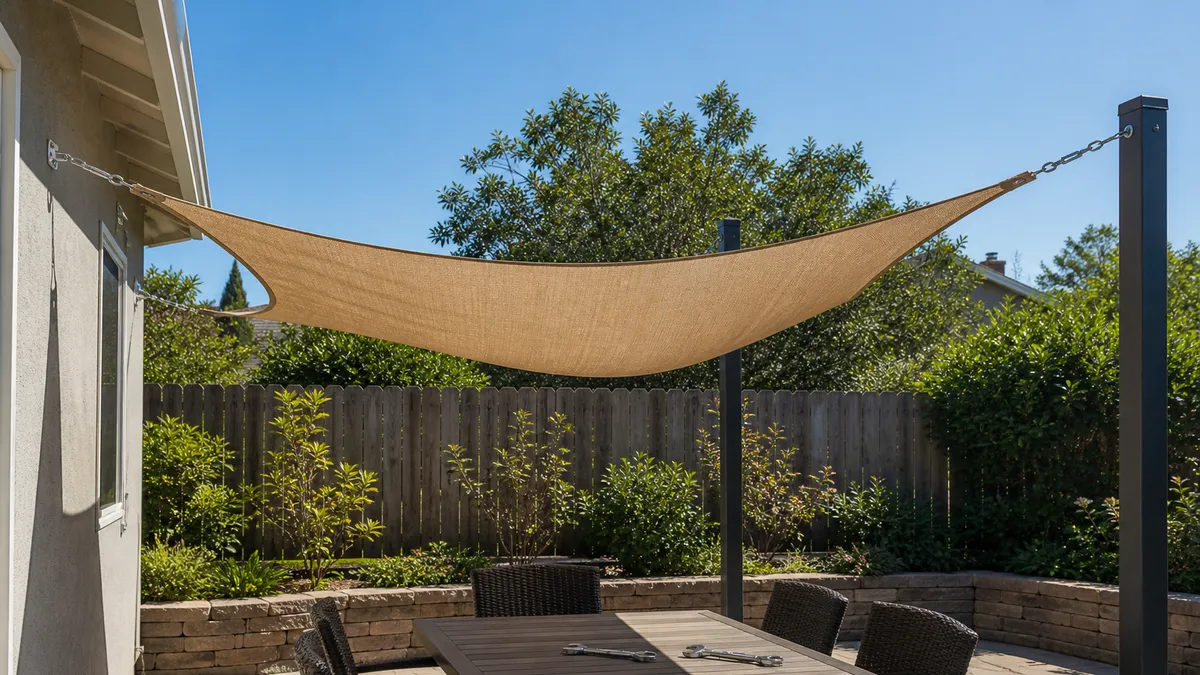
Shade Sail Sagging
Use this when shade sail sagging is closer to the real constraint than the current page.
Questions
FAQ
Why is water pooling on my shade sail?
Pooling usually means the sail is too flat, sagging before rain, or draining toward the wrong point. Waterproof fabric makes the problem more obvious because it holds water instead of letting rain pass through.
Can tightening stop water pooling?
Tightening can help only when the anchors already create slope and the supports stay still. It will not fix level corners, wrong low-corner placement or a sail cut too large for the fixing points.
How much slope does a shade sail need for rain?
The Home Depot shade-sail document gives 20 to 30 degrees as a runoff angle for angled sails. Use that as a warning that small height changes may not be enough for waterproof fabric.