
Quick Answer
30 vs 50 shade cloth: the short version
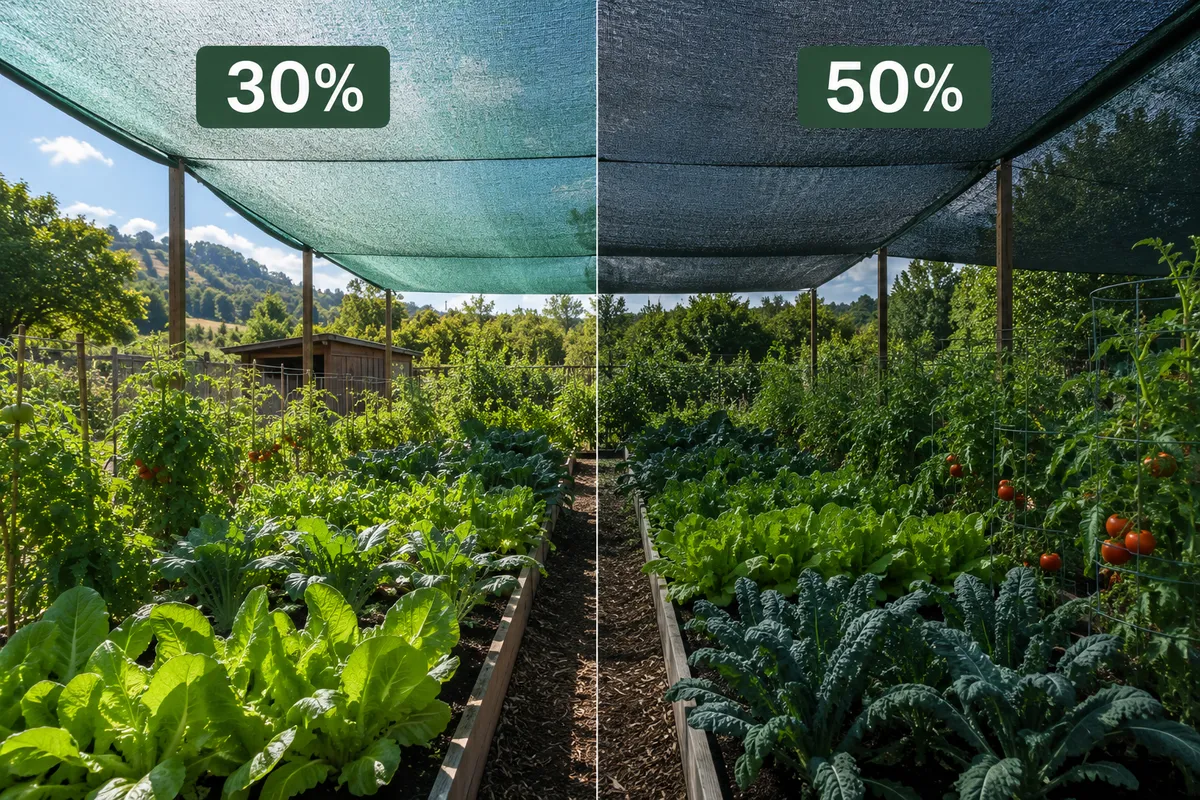
For many fruiting or mixed vegetable beds, 30% shade cloth is the safer starting point; 50% shade cloth is easier to justify for leafy greens, tender transplants and short severe-heat windows. The percentage means incoming light blocked, not guaranteed temperature reduction. If airflow is poor, cloth touches plants or a tunnel is already dim, the label alone will not fix the crop problem.
Choose 30% shade cloth for fruiting or mixed crops that need weeks of cover; choose 50% only for leafy or tender crop zones that can be uncovered when heat breaks.
Side by Side
Fast comparison snapshot
| When this matters | Choose | Why |
|---|---|---|
| Tomatoes or peppers are still flowering during hot afternoons | Start with 30% shade cloth and remove it if ripening or fruit set slows. | The Iowa State pepper work cited by UMN found season-long 50% shade reduced marketable fruit number and weight, while 30% did not show that yield penalty. |
| Lettuce, spinach or other leafy greens are wilting or bolting in July | Use 50% shade cloth temporarily over that leafy crop zone. | Penn State treats leafy greens as stronger shade candidates through summer, and the crop is harvested for leaves rather than fruit ripening. |
| Fall broccoli, cabbage or cauliflower seedlings sit in direct afternoon sun | Use 50% shade cloth or a short shade barrier until the starts establish. | Penn State names fall brassica seedlings as especially heat-susceptible and recommends protection from hot afternoon sun. |
| High-tunnel peppers or cucumbers already grow inside a light-reducing structure | Use 30% shade cloth with open vents or sides before trying season-long 50%. | UMN notes tunnel shade can cool air by about 6-9 F, but the Iowa high-tunnel data also showed the structure plus cloth reduced light more than the package number suggests. |
| One bed mixes tomatoes, peppers, lettuce and young transplants | Split the bed into shade zones; if buying one roll, lean 30% and add separate temporary cover for leafy crops. | USU places most fruits and vegetables around 20%-40% shade, so one all-bed 50% panel can over-shade the fruiting side. |
30% vs 50% shade cloth at a glance
Start the 30 vs 50 shade cloth decision with the crop, not with the roll that looks more protective. UMN Extension defines the number as incoming light blocked: 30% cloth blocks less light, while 50% cloth blocks more. That sounds simple, but crop response is not linear. A fruiting pepper can need heat relief and still lose production when light drops too far.
Penn State Extension gives 30%-50% as a useful vegetable-garden range, so neither number is automatically wrong. The split is duration and crop type. Use the lower number when tomatoes, peppers, cucumbers, squash, berries or mixed beds need relief without losing too much flower, fruit and ripening light. Use the higher number when the crop is leafy, newly transplanted or only needs short cover through the harshest afternoon stretch.
The table below is the buying filter. It separates light, crop fit, greenhouse behavior, airflow and installed parts before any product comparison.
Comparison
30% vs 50% shade cloth side by side
Use this comparison before choosing a roll, finished panel or greenhouse cover.
| Decision point | 30% shade cloth | 50% shade cloth | Before buying |
|---|---|---|---|
| Incoming light | Blocks less incoming light and leaves more usable light for fruiting crops. | Blocks more incoming light for stronger short-term relief. | Do not treat 50% as twice the cooling of 30%. |
| Fruiting vegetables | Safer first move for tomatoes, peppers, cucumbers, squash and mixed edible beds. | Higher over-shade risk if left on through flowering, fruit sizing or ripening. | Watch blossom drop, fruit set, sunscald and delayed ripening together. |
| Leafy crops and seedlings | May help when heat is moderate or shade is used only in the afternoon. | Stronger temporary help for lettuce, leafy greens and fall brassica seedlings. | Remove or roll back when plants establish or the heat window passes. |
| High tunnels and greenhouses | Often enough when vents, doors or sides are open. | Can be too dark for fruiting crops in a structure that already cuts light. | Confirm air temperature, venting and existing shade before increasing percentage. |
| Airflow and plant contact | Still needs hoops, wire or a frame above the canopy. | Still needs open sides because darker shade can trap humid, still air. | Do not drape fabric directly on leaves. |
| Installed parts | Cloth may cost about the same per square foot as 50%, depending on grade. | Support parts are usually similar; larger or darker panels may need more wind control. | Price clips, hoops, wire, anchorage, storage and replacement together. |
Which one fits your crop?
Fruiting vegetables are the first reason to be cautious with 50% shade cloth. Tomatoes, peppers, cucumbers and squash can suffer from heat, but they still need enough light for flowering, pollination, fruit sizing and ripening. UMN's high-tunnel summary of Iowa pepper research is the strongest warning in the source set: 50% shade reduced marketable pepper fruit number by 32% and marketable fruit weight by 29% compared with the control, while 30% did not reduce fruit number or weight versus the control.
Leafy greens ask a different question. Lettuce, spinach, tender salad greens and some herbs are often harvested before fruiting matters, so stronger shade can protect leaf quality during a hard summer window. Penn State frames lettuce and leafy greens as good shade-cloth candidates through summer. For those crops, 50% can be reasonable if it is temporary and the plants are watched for stretching.
Seedlings sit closer to the 50% side when the problem is hot afternoon sun. Penn State specifically calls out fall broccoli, Brussels sprouts, cabbage and cauliflower starts as heat-susceptible. Use the darker cloth to get them established, then reduce shade once roots are working and nights cool down.
Mixed beds are where many bad purchases happen. If tomatoes and lettuce share one long bed, one percentage will serve one crop better than the other. Use two smaller covers if possible. If one panel must cover the whole bed, the USU fruit and vegetable shade guide supports leaning lighter because most fruits and vegetables fit best around 20%-40% shade. Use the vegetable garden shade guide for deeper crop timing across a full garden.
Heat, airflow and greenhouse caveats
Use shade cloth when the symptoms point to heat and radiation, not when the bed simply needs water or airflow. UMN Extension says persistent heat can trigger tomato flower drop above 85 F daytime and 70 F nighttime, bean flower abortion above 95 F when soil is dry, reduced pollination activity above 90 F and cucurbit flowering problems when days exceed 90 F and nights exceed 70 F. Those symptoms justify shade, but they do not automatically justify 50%.
Greenhouses and high tunnels change the math because the covering structure has already changed light and heat. UMN reports that shade cloth in high tunnels can lower temperatures by about 6-9 F and is often installed when tunnel air repeatedly reaches about 80-85 F. The Iowa pepper study cited in the research report also found that an unshaded high tunnel averaged 17% lower light than outdoors, while nominal 30% and 50% cloth produced about 50% and 65% lower light than outdoors in that tunnel setting.
Air movement is the part a percentage label cannot solve. Penn State warns that shade cloth should not touch plants because heat and wind movement can damage them. WSU recommends raising fabric several feet above the canopy and leaving a side open away from direct sun where practical. If the cloth sits on leaves, blocks harvest access or seals humid air around foliage, buy supports and fix the placement before buying darker fabric.
Category research
30% and 50% shade cloth categories to compare
Use category searches after crop type, heat severity and airflow are clear.
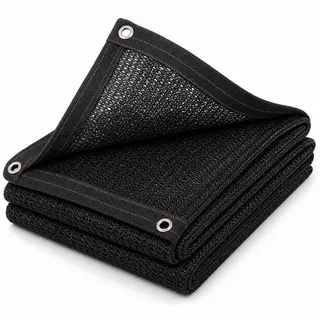
30 percent
30 Percent Shade Cloth
For lighter heat relief where plants still need strong light.
- Fruiting crop starting point
- Lower shade level
Check:Sunscald signs and plant stretch.
Search on Amazon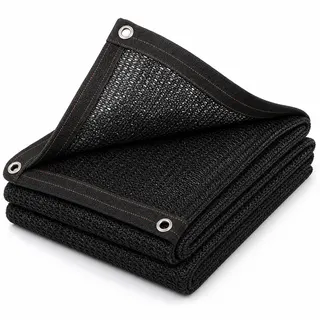
50 percent
50 Percent Shade Cloth
For stronger short-term relief on leafy crops or severe heat.
- More cooling shade
- Can slow light-hungry crops
Check:Crop response after one week.
Search on Amazon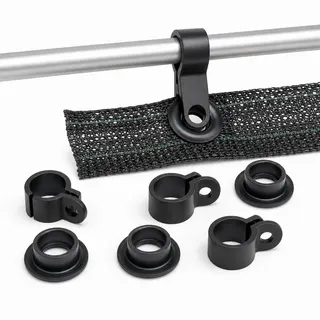
Setup gear
Garden Shade Cloth Clips
For attaching panels to hoops, frames or greenhouse ribs.
- Reusable attachment
- Easy removal
Check:Frame size, wind and harvest access.
Search on AmazonInstalled cost: cloth, clips, hoops and replacement
Do not compare only roll price. USU gives a broad cloth-only range of about $0.10-$0.30 per square foot, but the installed cost includes the pieces that keep the fabric above crops and under control in wind. A small bed may need hoops, clips and a few stakes. A larger tunnel may need edge wire, anti-billowing support, better anchorage and a routine for removal.
UMN gives a useful size reference rather than a home-garden price: shade cloth for a 30 ft by 96 ft high tunnel can run about $400-$600. That number is not a retail quote for a backyard bed. It shows why square footage, structure and removal labor matter more than whether the label says 30% or 50%.
Material matters after the crop percentage is chosen. WSU notes that darker cloth gives darker shade but can absorb more heat, while light-colored cloth can create a brighter, cooler-feeling environment. ShadeClothStore's commercial material guide adds a practical fabric note: woven polypropylene is heavier and can unravel if damaged, while knitted polyethylene is easier to cut without unraveling. Treat that as a durability clue, not as a crop-science shortcut.
Installed cost
Cost pieces that change the real total
The percentage label rarely decides the whole budget. These pieces usually matter more.
| Cost piece | Why it matters | 30% vs 50% impact |
|---|---|---|
| Cloth square footage | USU's cloth-only range is about $0.10-$0.30 per square foot before support parts. | Similar grades may price closely; bigger coverage changes cost faster than percentage. |
| Clips or grommets | Loose edges flap, tear and make removal slower. | Both percentages need enough attachment points for the same bed length. |
| Hoops, frame or wire | Fabric needs air space above leaves and a support that does not collapse into crops. | 50% may stay up for shorter windows, but it still needs the same clearance. |
| Anchorage and wind control | USU warns that poor structures can break poles, rip cloth and damage suspension wire. | Larger panels of either percentage need more care than small temporary pieces. |
| Storage and removal | Temporary shade only works if one person can roll, unclip or store it quickly. | 50% usually needs a clearer removal trigger because over-shade risk is higher. |
| Replacement risk | Draped fabric, rubbing edges and wind billowing shorten the life of the cover. | The cheaper roll is not cheaper if it has to be replaced after a windy week. |
Use the dollar figures as scale context, not as a quote for a specific product.
Tie-breaker when both could work
If both percentages seem plausible, choose 30% when fruiting crops are part of the bed, the cloth will stay up for weeks, the plants are already inside a high tunnel or the crop still needs strong flowering and ripening light. It can reduce hot-hour stress without jumping straight to a deeper light cut.
Choose 50% when the shade can be limited to lettuce, leafy greens, tender transplants or fall brassica seedlings. It can also make sense during a short severe-heat window if the fabric can be removed or rolled back quickly. Write down the removal trigger before installation: cooler nights, new unstressed growth, reduced wilting or the end of the heat advisory.
When the decision is close, buy smaller before buying darker. A narrow panel over the afternoon side of one bed can answer the plant-response question in a few days. A large all-season 50% cover is harder to undo if tomatoes stretch, flowering slows or the bed stays damp.
When neither 30% nor 50% is right
Use less than 30%, partial afternoon shade or shorter duration when fruiting crops only show mild sunscald, the structure is already dim, or the crop is in a cooler planting window. USU notes that plants in high-solar-radiation areas can still receive sufficient sunlight under 20%-30% shade, so a full 50% panel may be too much for a productive vegetable bed.
Use more than 50% only when the crop and setting truly call for deep shade. That usually means shade-loving ornamentals, nursery staging, recovery shade or non-crop shade, not default tomatoes, peppers and squash. For edible crops, darker cloth should usually be temporary unless a crop-specific source says otherwise.
Skip the percentage debate when the real problem is still air, weak supports, fabric touching leaves, dry soil, no mulch, blocked vents or a cover that cannot be removed in wind. Fix those problems first. For a broader 30%, 50%, 70% and 90% comparison, use the shade cloth percentage guide after the crop zone and support plan are clear.
Watch-outs
Before you buy or install
- Do not assume 50% shade cloth gives twice the cooling of 30%; it blocks more incoming light, but airflow and color still matter.
- Do not leave 50% shade on fruiting crops for weeks without checking flowering, fruit set and ripening.
- Do not install cloth where wind can billow it into crops, pull weak supports loose or keep fabric rubbing on leaves.
- Do not use shade cloth as a fix for dry soil, closed greenhouse vents or poor crop timing.
Read Next
Related guides
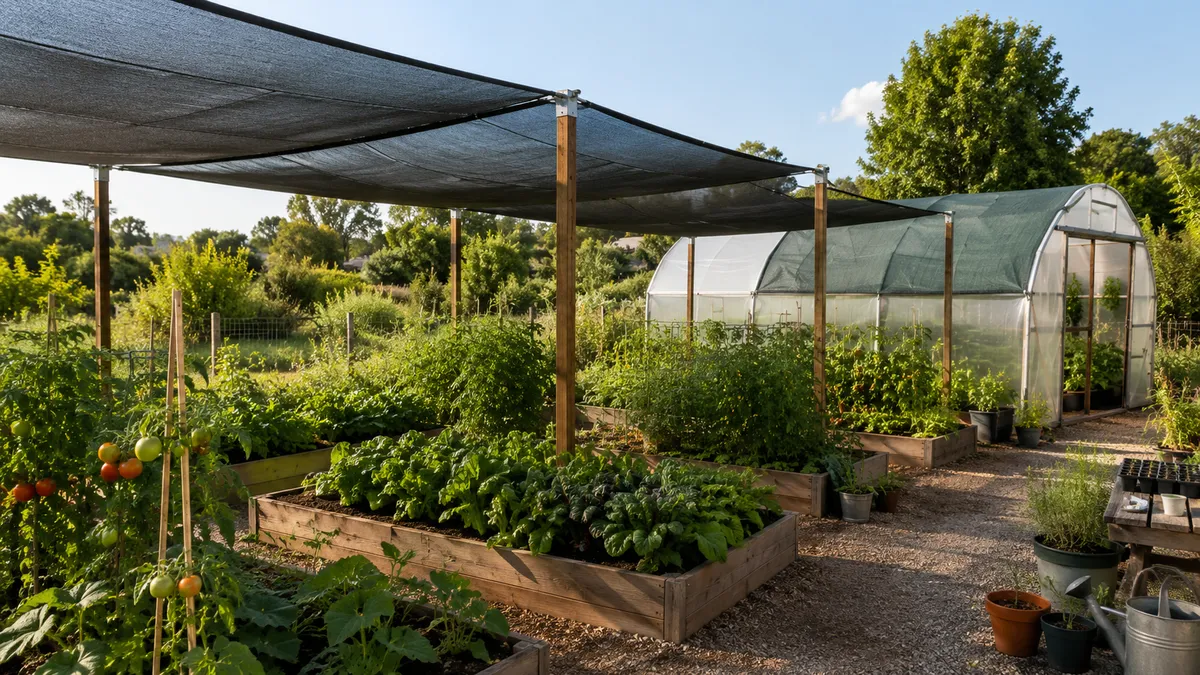
Shade Cloth Guide
Use this when shade cloth is closer to the real constraint than the current page.
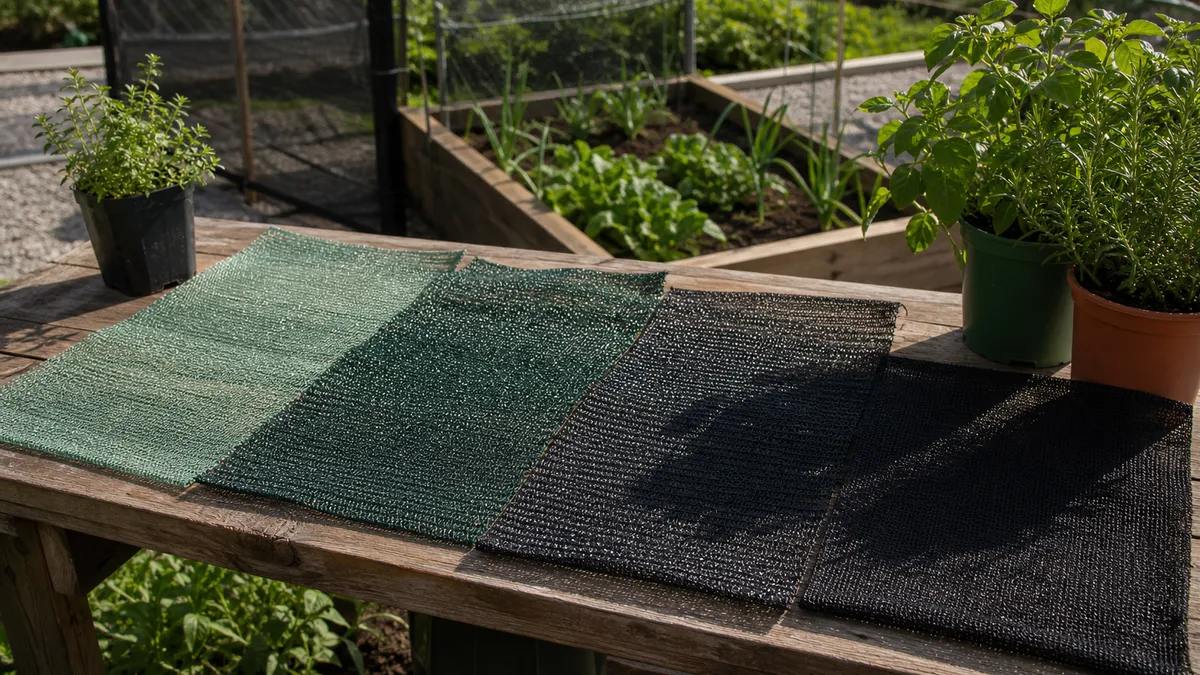
Shade Cloth Percentage Guide
Use this when shade cloth percentage guide is closer to the real constraint than the current page.
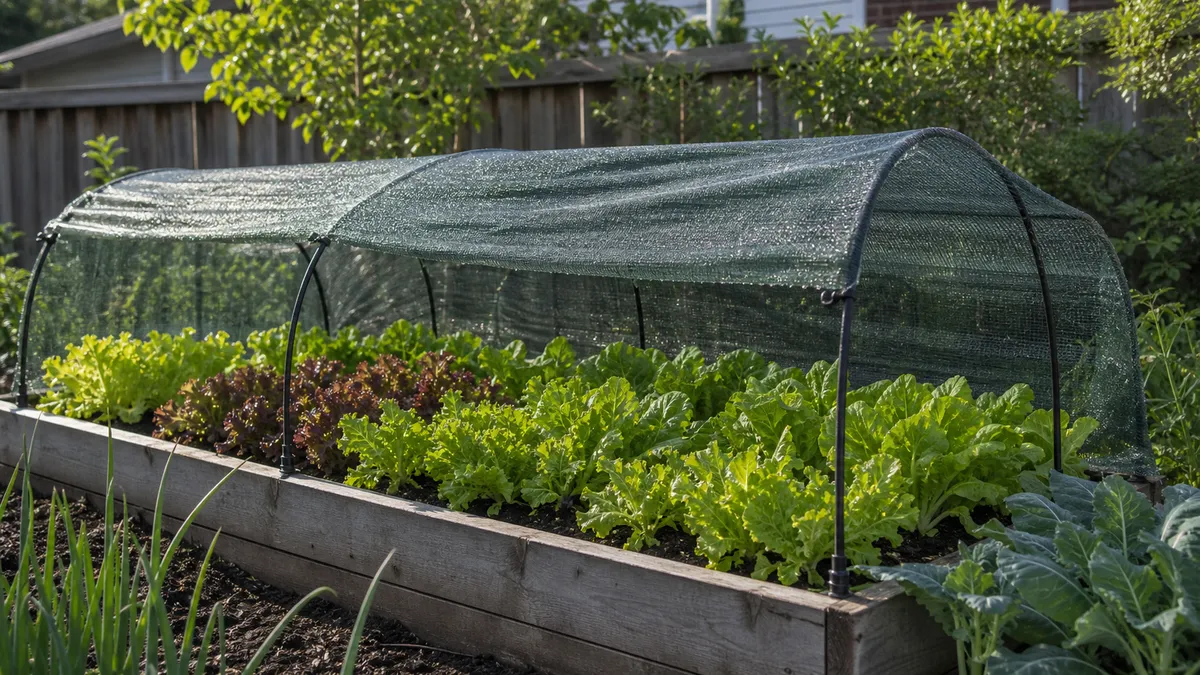
Shade Cloth for Lettuce
Use this when shade cloth for lettuce is closer to the real constraint than the current page.
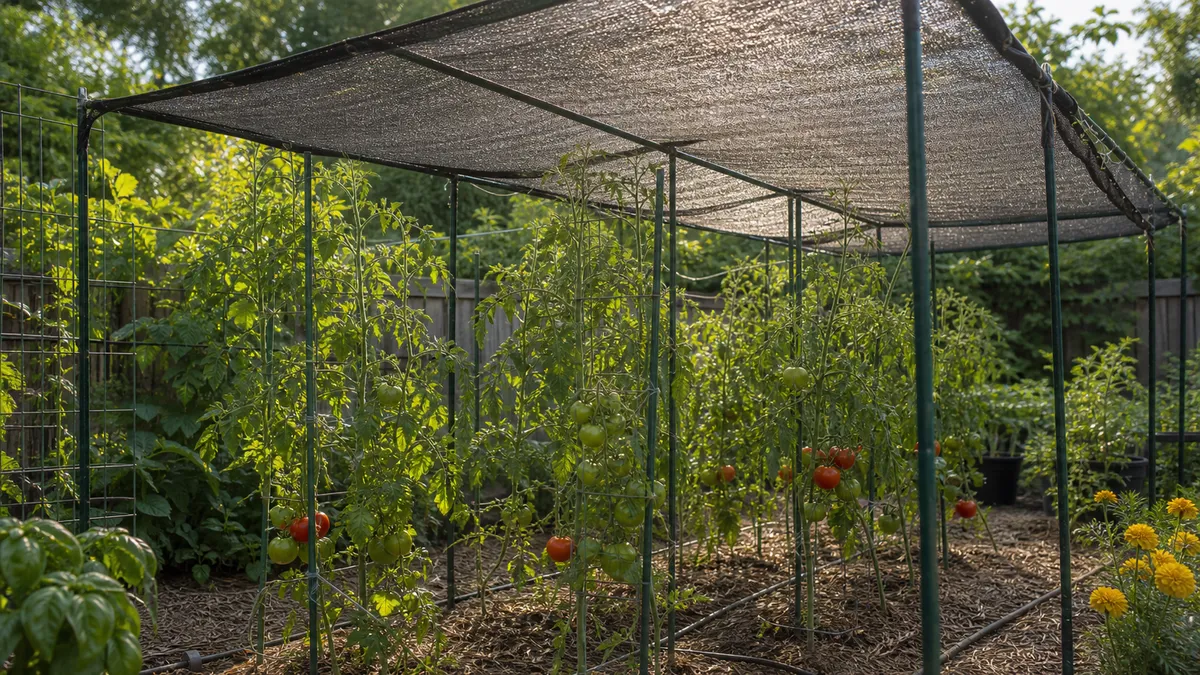
Shade Cloth for Tomatoes
Use this when shade cloth for tomatoes is closer to the real constraint than the current page.
Questions
FAQ
Is 50% shade cloth too much for tomatoes?
It can be too much if it stays on for weeks, especially in a tunnel or greenhouse. Tomatoes need light for flowering and ripening. Start with 30% or partial afternoon cover unless heat symptoms continue after watering, airflow and mulch are already handled.
Is 30% shade cloth enough for vegetables?
Often, yes. Penn State supports a 30%-50% range for many vegetables, and USU places most fruits and vegetables around 20%-40% shade. Leafy greens, tender starts and short severe-heat periods may need 50%, but mixed fruiting beds usually start lighter.
Should shade cloth touch vegetable plants?
No. Penn State warns that cloth should not touch plants because heat and wind movement can damage them. Raise the fabric on hoops, wire, stakes or a frame so leaves have air space and harvest access under the cover.
Does 50% shade cloth cool a greenhouse more than 30%?
It blocks more incoming light, but do not expect twice the cooling. UMN reports shade cloth can lower high-tunnel temperatures by about 6-9 F, yet ventilation still matters. Closed sides, still air and dark cloth can leave plants stressed even under stronger shade.
Which costs more after clips, hoops and supports?
The total is usually decided by square footage, clips, hoops, wire, anchorage, storage and replacement, not by percentage alone. USU gives cloth around $0.10-$0.30 per square foot, but support parts and wind control can exceed the cloth-price difference.
Can I use one percentage for a mixed vegetable bed?
You can, but it is a compromise. If one bed has fruiting crops and leafy greens, split the shade zones when possible. If one roll must cover everything, lean 30% and add temporary extra shade over lettuce, seedlings or the hottest afternoon edge.