
Quick Answer
Quick answer for backyard shade
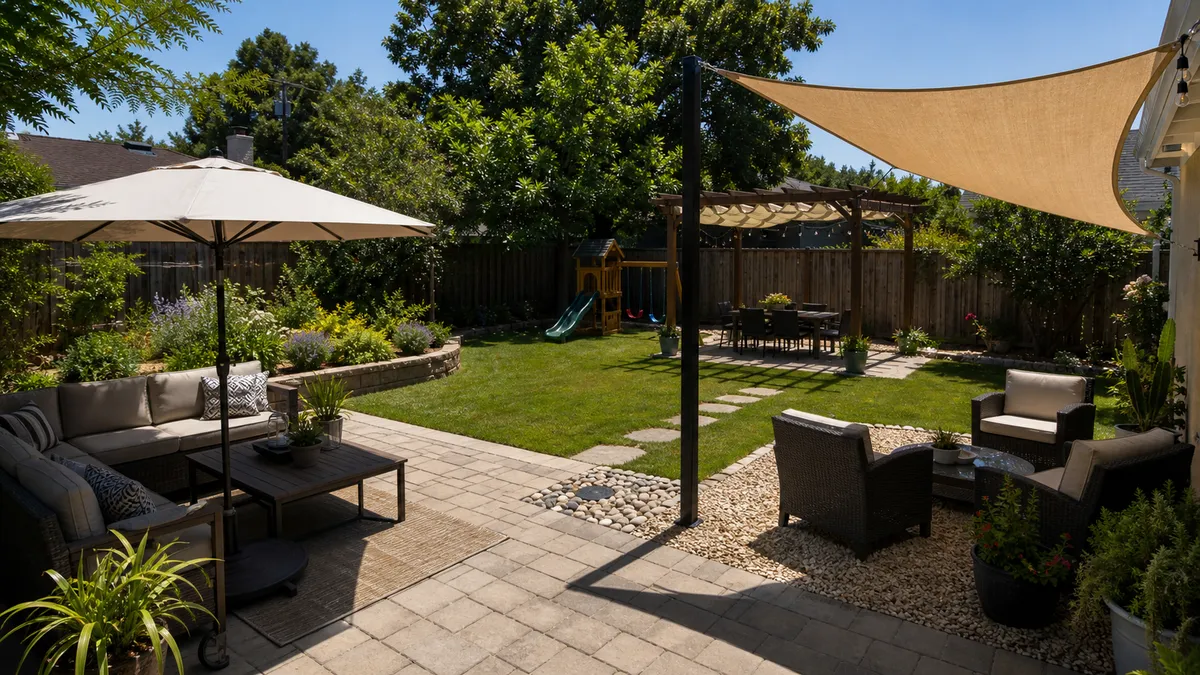
Start with the backyard zone and the hour that fails. Use overhead shade for high sun, vertical or adjustable shade for low afternoon sun and privacy, and movable shade for uncertain areas. Plan for wind, anchors, UV timing and heat breaks before buying.
Choose zone-specific backyard shade when dining, play, pool or privacy needs differ; use one large fixed cover only after anchors, airflow and local rules are clear.
Start by zone
Choose the backyard zone first
Pick the spot that fails first. A dining zone, play area, pool edge, privacy line and open lawn usually need different shade, even when they sit in the same yard.
Dining zone
Use an awning, pergola, umbrella or sail only if the table and chair pullback stay shaded without blocking the door, grill lid or walking path.
Lounge seating
Use a sail, pergola, tree canopy or large umbrella when the seats stay in one place and the wind routine is realistic.
Play area
Shade the activity surface and the supervision seat, then keep bases, guy lines and low anchors away from running paths.
Pool edge
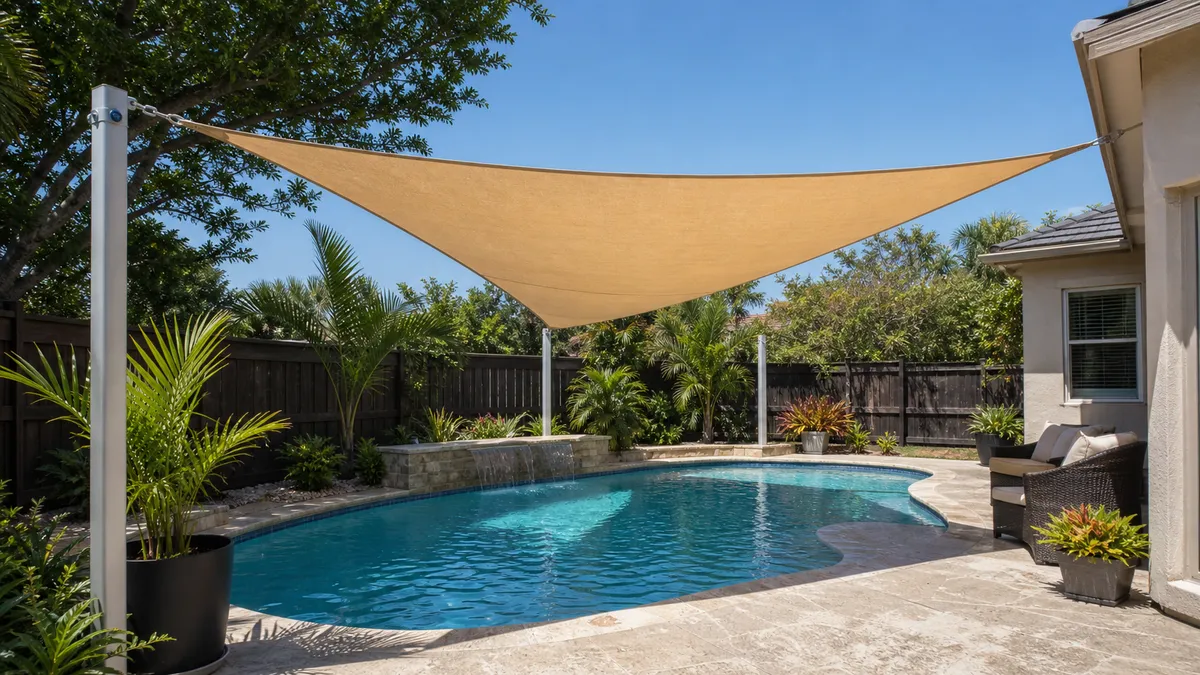
Shade waiting seats and deck edges near the water. The National Weather Service warns that water can reflect UV, so nearby shade is not enough.
Privacy fence line
Use a privacy screen, trellis, shrubs, curtains or louvers when side glare and neighbor sightlines matter more than noon overhead sun.
Open lawn
Use a pop-up canopy, umbrella group or removable shade cloth only with an anchor, takedown and storage routine.
Large-area ideas that do not overpromise
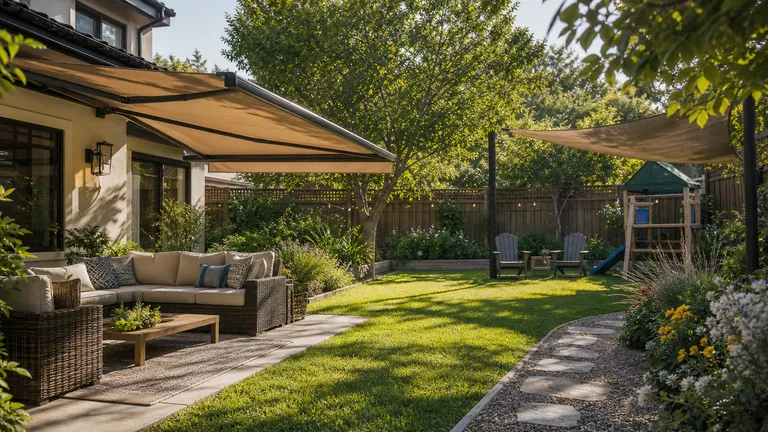
A big backyard does not need one cover stretched over everything. It usually needs two or three smaller shade spots where people actually stop: the table, the lounge seats, the pool edge, the west-facing door or the paved area that stores heat. That keeps the backyard shade useful without forcing every mower path, gate and planting bed around one oversized structure.
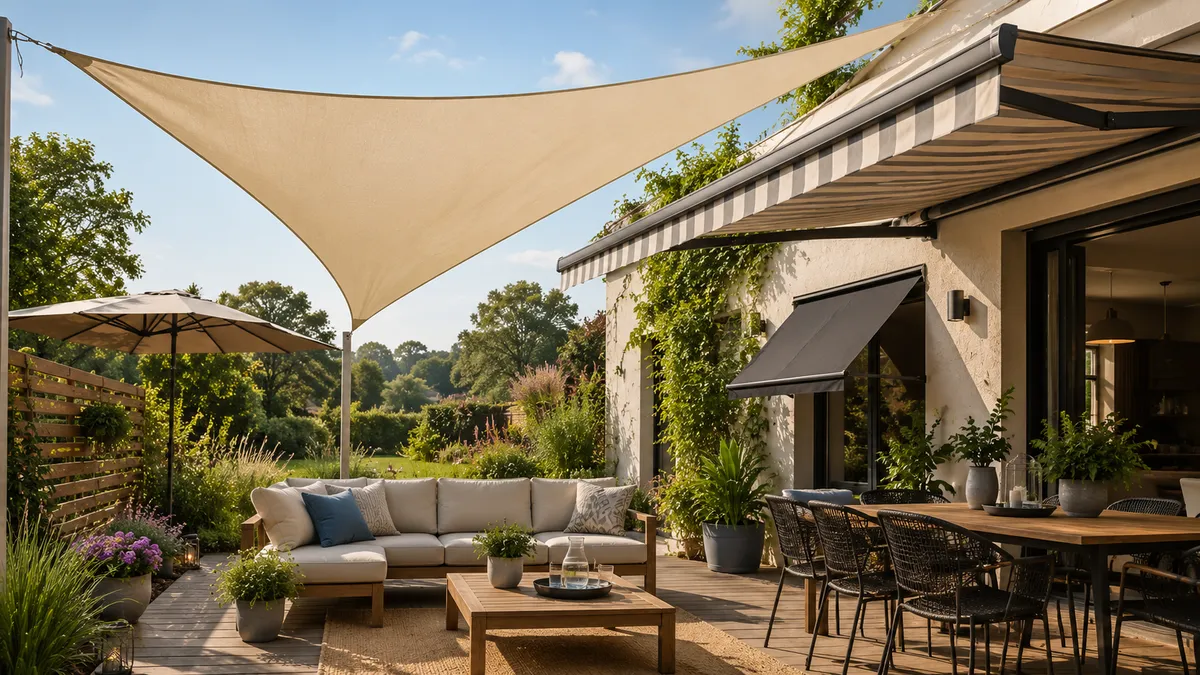
For fixed fabric, start with support before size. Mississippi State University Extension says a shade sail needs one anchor point for each corner, sturdy posts or anchors, turnbuckles and no slack. That makes a sail useful over a broad seating area, but a poor choice when the only possible anchors are a weak fence, fascia, light trim or casual eave.
For portable backyard sun shade, plan the base before canopy size. The CPSC warns that wind-lifted umbrellas can injure people and references a 75 lb upward-force benchmark or secure performance in 30 mph wind for sand-installed beach umbrellas. A patio umbrella or pop-up canopy in a backyard is different from a beach umbrella, but the lesson is the same: loose shade needs anchoring, closure and storage.
Trees and shrubs solve a different problem. Utah State University Extension recommends placing deciduous trees to shade east and west surfaces in the morning and late afternoon, and notes that dark pavement heats the air above it. That makes tree shade strongest over patios, walkways and pool decking, not the middle of a lawn that is already cooler underfoot.
Large areas
Backyard shade ideas by large-area problem
Use this table to avoid buying one product that has to solve too many jobs.
| Backyard problem | Start with | Why it fits | Do not choose it when | Before you commit |
|---|---|---|---|---|
| Broad fixed seating area | Shade sail | It can cover open space without a roof frame when strong posts or structural anchors exist. | The only anchors are fence boards, fascia, gutters or unknown trim. | Each corner needs a real anchor, tension hardware and a drainage slope. |
| Permanent outdoor room | Pergola | It gives a clear dining or lounge footprint and can later take plants, screens or fabric. | Setbacks, easements, HOA rules, utilities or wind rules are unknown. | Confirm local pergola permit, setback and wind-load rules before posts are set. |
| Near-house dining or door heat | Retractable awning | It shades the wall-side seating zone and can close when sun or weather changes. | The table sits far from the wall or winter sun through the window is valuable. | The U.S. Department of Energy reports awnings can reduce summer solar heat gain through windows by up to 65% on south-facing glass and 77% on west-facing glass. |
| Movable table or lounge chairs | Umbrella group | Several umbrellas can follow changing furniture without permanent posts. | Bases would sit in walkways or the yard sees exposed gusts. | Size the umbrella base before choosing canopy diameter. |
| Party, sale or one-weekend project | Pop-up canopy | It covers an open lawn quickly and stores after the event. | It would stay open unattended as permanent backyard shade. | Plan weights, stakes, takedown timing and dry storage. |
| Hot paving, walkway or west side of house | Deciduous trees or large shrubs | Planting can shade pavement and late-day heat while leaving winter sun after leaf drop. | Roots, growth time, leaf drop or maintenance do not fit the yard. | USU Extension cites 10-20 ft spacing from the house for trees expected to mature at 25 ft or taller. |
| Side glare and neighbor sightlines | Privacy screen or trellis | Vertical shade blocks low sun and views that overhead fabric misses. | The screen is solid enough to trap hot still air where people sit. | Prefer louvers, mesh, curtains or plants when airflow is part of comfort. |
| Seasonal test before a build | Shade cloth over a frame | It is a lower-commitment way to test a dining, play or garden edge. | The frame is weak, flat or unable to shed water. | YourHome describes shade cloth over pergolas or sails as flexible and low cost, but the frame still has to manage wind and drainage. |
Low afternoon sun and privacy need side shade
Overhead backyard shade works well when the sun is high. It can fail badly at 4 p.m. if the glare enters from the side and hits eyes, glass doors or the end of a dining table. Building America explains that east and west openings receive low-angle sun, and that vertical shade such as shrubs, trees, trellises, screens, shutters or blinds is often better for those hours.
Adding more overhead cover often fixes the wrong problem. A deeper roof or larger sail may darken the wrong part of the yard while the low beam still cuts under the edge. For a west-facing door, start with a side screen, exterior roller shade, louvered panel, trellis planting or adjustable curtain before expanding the overhead cover.
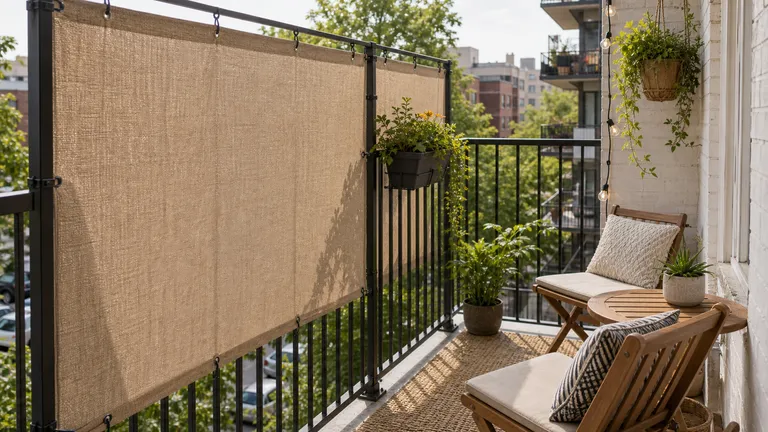
Privacy is related but not identical. A solid fence topper may block a neighbor's view, but it can also stop breeze across a hot patio or pool deck. YourHome recommends adjustable shade for east and west sun, including sliding screens, louvre screens, shutters, retractable awnings and external blinds. In a still yard, breathable mesh, plants or slatted panels can give shade and privacy without turning the seating area into a hot corner.
For a late-day-only problem, route to the low-sun guide. If the area is mainly a patio, use the patio shade guide. Keep this page at the yard-planning level: which side of the yard fails, who uses it and whether the fix should be vertical, overhead or movable.
Category research
Backyard shade categories to compare
Compare categories after choosing the backyard zone and whether shade must move, retract or stay fixed.
Sail
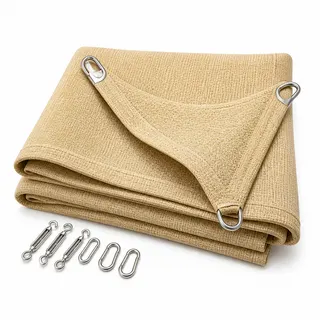
Backyard Shade Sail
For fixed shade over a seating, play or dining zone.
- Wide outdoor shade
- Needs anchors
Check:Sun path, posts and wind.
Search on Amazon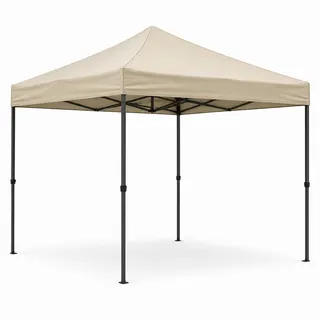
Canopy
Outdoor Canopy
For temporary shade that can move or store.
- Portable shade
- Event-friendly
Check:Tie-downs, legs and storage.
Search on Amazon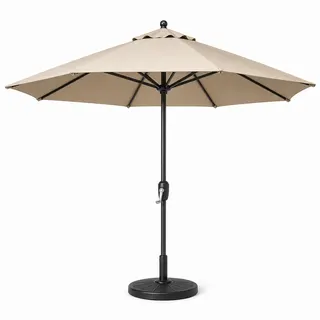
Umbrella
Patio Umbrella
For smaller seating zones where base footprint is manageable.
- Movable shade
- Good first option
Check:Base size, tilt and walking clearance.
Search on AmazonWhere safety changes the idea
Backyard shade improves comfort, but it does not make harsh sun or high heat harmless. The EPA UV Index scale treats 3-7 as a range where shade is needed from late morning through mid-afternoon, and 8+ as a level where extra protection is needed. Its shadow rule is a simple yard test: when your shadow is shorter than you are, UV exposure is higher.
The National Weather Service recommends seeking cover from 10 a.m. to 4 p.m. and warns that children burn more easily and may not recognize UV danger. Babies under 6 months should stay out of direct sun. For a play area or pool edge, shade the surface where children play and the seat where an adult watches, then keep cords, bases and low hardware away from the traffic line.
Heat is separate from sunburn. CDC heat guidance says high HeatRisk days call for as much shade as possible, breaks and outdoor activity during cooler parts of the day. That means a shaded table may still be the wrong place for older adults, babies or heat-sensitive guests at midday.
Permanent structures raise a different safety question. A city pergola summary from Cape Coral is only a local example, but it shows the rules that can apply: permits, setbacks, wind-load compliance and engineered plans. Before posts, roof panels or house attachments are chosen, confirm the rules for the property.
Mistakes that make backyard shade harder to live with
Do not buy from the photo before walking the yard during the failed hour. A beautiful sail may miss the evening glare line. A heavy cantilever umbrella may shade the table but put its base where people walk. A pergola may create a strong outdoor room but block a gate, mower route or winter sun that the house actually uses.
Do not attach large fabric to weak structure. Shade sail anchors, awning brackets and big privacy panels need real support because wind turns fabric into load. If the only available points are a fence panel, hollow trim, gutter, thin fascia or unknown cladding, choose a smaller movable answer or redesign the support before buying fabric.
Do not use dense privacy shade where airflow is the comfort problem. In humid or still yards, a solid side panel can stop the breeze that made the spot usable. Try breathable mesh, staggered slats, plantings or adjustable outdoor curtains before closing the entire fence line.
Do not make a permanent pergola or post plan before confirming setbacks, easements, utilities, HOA rules and local permit triggers. The costliest backyard shade mistake is not the wrong fabric color; it is a fixed structure that has to move after the holes, concrete or brackets are already in place.
Keep grills, fire pits and smokers out from under fabric unless the appliance manual and local rules clearly allow the arrangement. This page is about backyard shade, not fire clearance design. If heat, flame, roof panels or utilities become central, use a more specific pergola or outdoor-kitchen guide before building.
Watch-outs
Before you buy or install
- Do not attach large fabric to fences, fascia, gutters, trim or unknown cladding.
- Close, weight, stake or store portable shade before gusts arrive.
- Shade does not replace UV protection, heat breaks, hydration or cooler timing.
- Keep fabric away from grill, fire pit and smoker heat unless product instructions and local rules clearly allow it.
Read Next
Related ideas
Patio Shade Ideas
Use this when the failed shade zone is mainly a patio, not the full backyard.
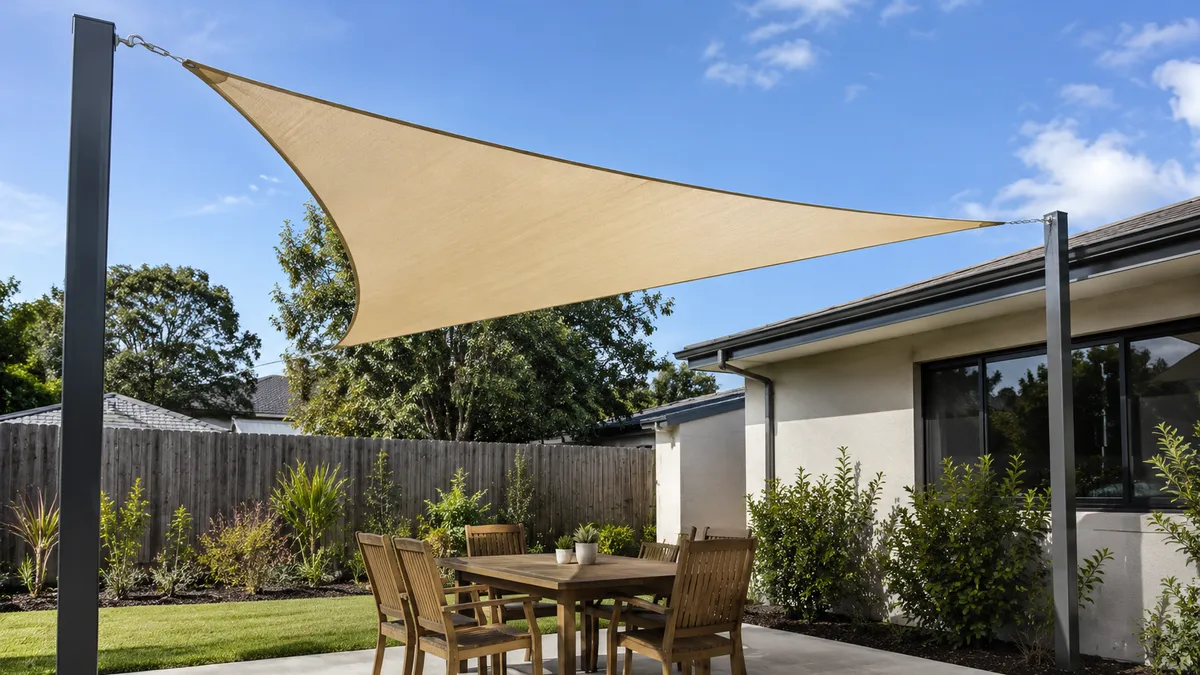
Shade Sail Guide
Use this when the yard has solid posts or anchors and you need sail size, shape, fabric and tension planning before ordering.
Shade Sail for Pool
Use this when shade sail for pool is closer to the real constraint than the current page.
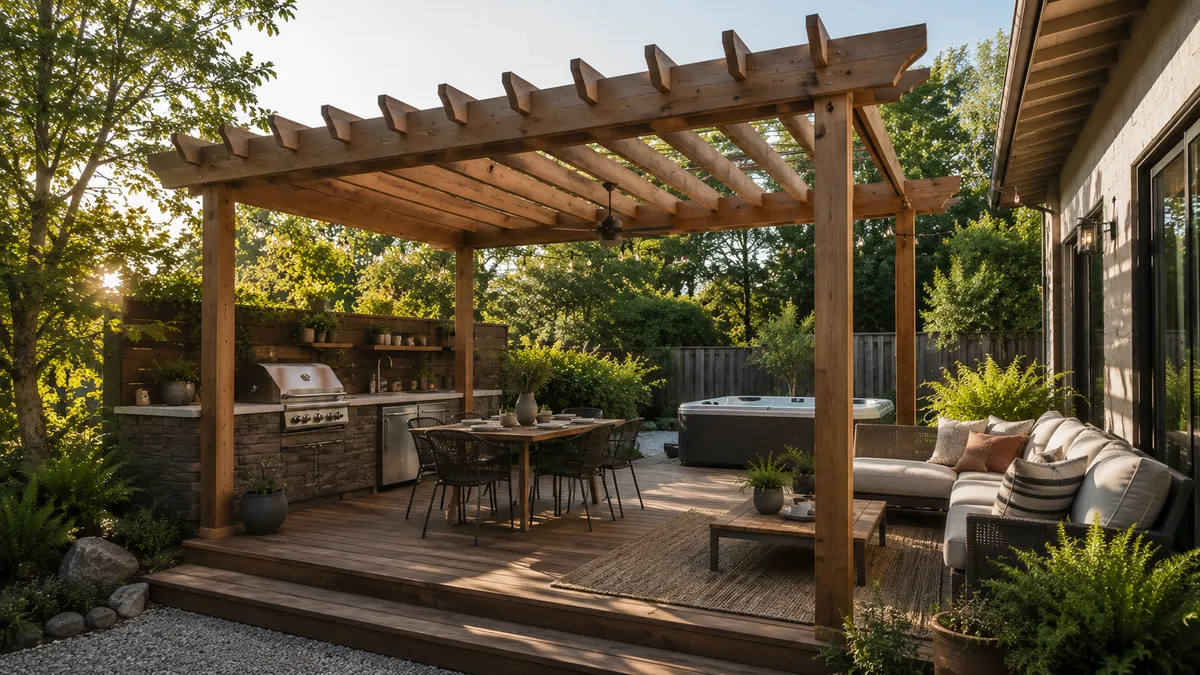
Pergola Guide
Use this when pergola is closer to the real constraint than the current page.
Questions
FAQ
What is the best way to shade a large backyard area?
Split the yard into zones instead of trying to cover everything with one product. Use sails or pergolas for fixed seating, trees for paved heat and west-side exposure, and canopies or umbrella groups for temporary events where storage and wind routines are realistic.
What backyard shade works best for low afternoon sun?
Use vertical or adjustable shade first. Screens, outdoor curtains, trellises, shrubs, louvers and exterior blinds usually block east or west low-angle sun better than a larger overhead cover, because the glare is coming under the roofline rather than straight down.
Are shade sails a good backyard shade idea?
Shade sails work well over broad seating or play-adjacent zones when real posts or structural anchors exist. They are a poor fit when the plan depends on fence boards, gutters, fascia or slack fabric. Each corner needs anchor, slope and tension planning.
What backyard shade is safest around kids or a pool?
Shade the activity zone and the supervision seat, not just a nearby table. Water can reflect UV, and children burn more easily, so pair shade with timing, breaks, sunscreen, protective clothing and clear walking paths without low cords or loose bases.
Do backyard privacy screens also provide shade?
They can, especially for low side sun and neighbor sightlines. The trade-off is airflow. Solid panels may make a hot corner worse, while mesh, louvers, trellises, shrubs or adjustable curtains can reduce glare while leaving some breeze through the seating area.