
Quick Answer
West-facing patio shade: the short version
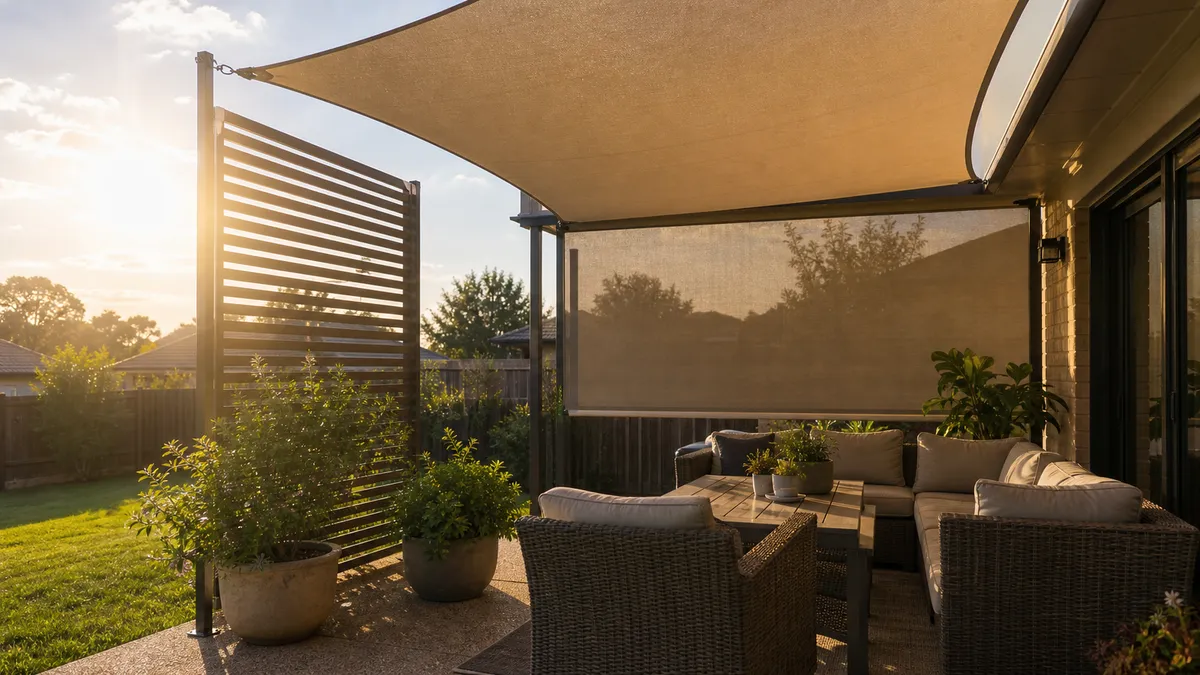
West-facing patio shade usually fails because late sun arrives low from the side, under the roof, sail or awning edge. Mark the failed hour, the west or southwest entry line and the shadow edge first. Use vertical or adjustable shade when overhead cover misses the glare, but stop for wind, door clearance, weak supports or unapproved exterior changes.
Use side shade when the failed hour sends low sun under the cover; use more overhead shade only when the bad hour is still exposed from above.
Diagnosis
Most common problems
Check the symptom before buying another shade product.
Sun comes under a roof, sail or awning after about 4 p.m.
The shade above you is missing the low entry line, so more top fabric may not touch the glare.
A sliding glass door or west window heats the patio edge
The heat starts before sunlight reaches the seating area, especially when glass and paving absorb the sun.
Glare is harsh but the view and breeze still matter
Filtered vertical shade can cut glare while keeping some airflow and visibility.
Renter, condo or HOA rules limit exterior drilling
Permission and shared exterior rules decide the fix before brackets, posts or rail clamps.
Which west-facing patio problem are you actually fixing?
Start at the hour that makes the patio unusable. For many west-facing patios, that is roughly 3:30-7 p.m., but the exact time changes with season, fences, roof depth, trees and nearby walls. Stand where people sit and mark the line where sun reaches eyes, chair backs, the sliding glass door and hot paving.
YourHome's shading guidance separates low east and west sun from high overhead sun, and it calls out adjustable shade such as screens, louvres, shutters, retractable awnings and exterior blinds for those exposures. That is the main diagnosis: if a temporary panel on the west/southwest edge fixes the glare, the first purchase should not be a larger overhead cover. For the broader patio decision path, use the patio shade ideas hub after this west-facing diagnosis.
Cancer Council NSW also emphasizes that shade has to be planned for the place, time of day and season, because shadows move. On a patio, that means the useful shadow must reach faces and chair backs, not only the tabletop.
- Mark the failed hour and the edge where sun enters.
- Check whether the sun is above the cover or below its front edge.
- Note glass, pale paving, water and walls that reflect glare.
- Open doors, pull chairs out and lift grill lids before placing side shade.
- Record wind and permission limits before choosing fixed hardware.
Diagnosis
Symptoms, causes and first moves
Use this before buying shade. A west-facing patio can fail from glare, hot glass, stored heat, wind, approval limits or weak anchors.
| What you see | Likely cause | First move | Do not do this |
|---|---|---|---|
| Sun comes under a roof, sail or awning after about 4 p.m. | Low west sun is below the cover edge | Hold a temporary screen on the west/southwest edge and check the chair line | Do not add only more overhead fabric |
| Sliding glass door or west window heats the house and patio edge | Direct sun is hitting glass before the shade catches it | Compare exterior glass shade, a drop valance or an exterior roller screen | Do not rely on interior blinds as the only fix |
| Paving or a wall stays hot after shade moves | Hard surfaces stored heat during direct sun | Shade the exposed edge and keep airflow moving across the seating area | Do not close all sides with solid fabric |
| The view matters but glare is painful | You need filtered vertical shade, not a solid wall | Test solar screen mesh, louvres, slats or an adjustable panel from the seat | Do not block every sightline if airflow and view still matter |
| No drilling is allowed by lease, condo or HOA rules | Permission is the limiting factor | Use a freestanding screen, weighted tilting umbrella or removable curtain on an existing frame | Do not drill shared exterior surfaces without written approval |
| Loose curtains or screens whip on the west edge | Vertical fabric is catching wind | Choose retractable, removable or tied-back shade with storage before storms | Do not leave a fabric wall open in gusts |
| A shade sail sags, flaps or holds water | Tension, slope, anchor strength or runoff is wrong | Fix anchor credibility and drainage before changing the sail angle | Do not lower one corner on weak posts or fascia |
| Trees would help but the patio fails this season | Planting is a long-term west-edge fix | Use temporary vertical shade now and plan shrubs, trellis or lower-crown trees for later | Do not treat a young tree as this summer's only shade |
Why west-facing patios need side shade late in the day
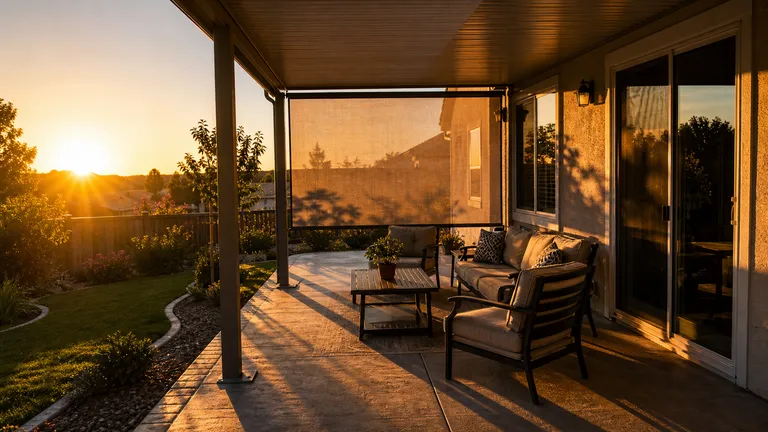
A west-facing patio is not just a brighter version of a south-facing patio. The hard period comes when the sun drops and starts traveling sideways through the opening. A roof beam, pergola top, umbrella canopy or flat sail can be doing useful work overhead while the glare passes below it.
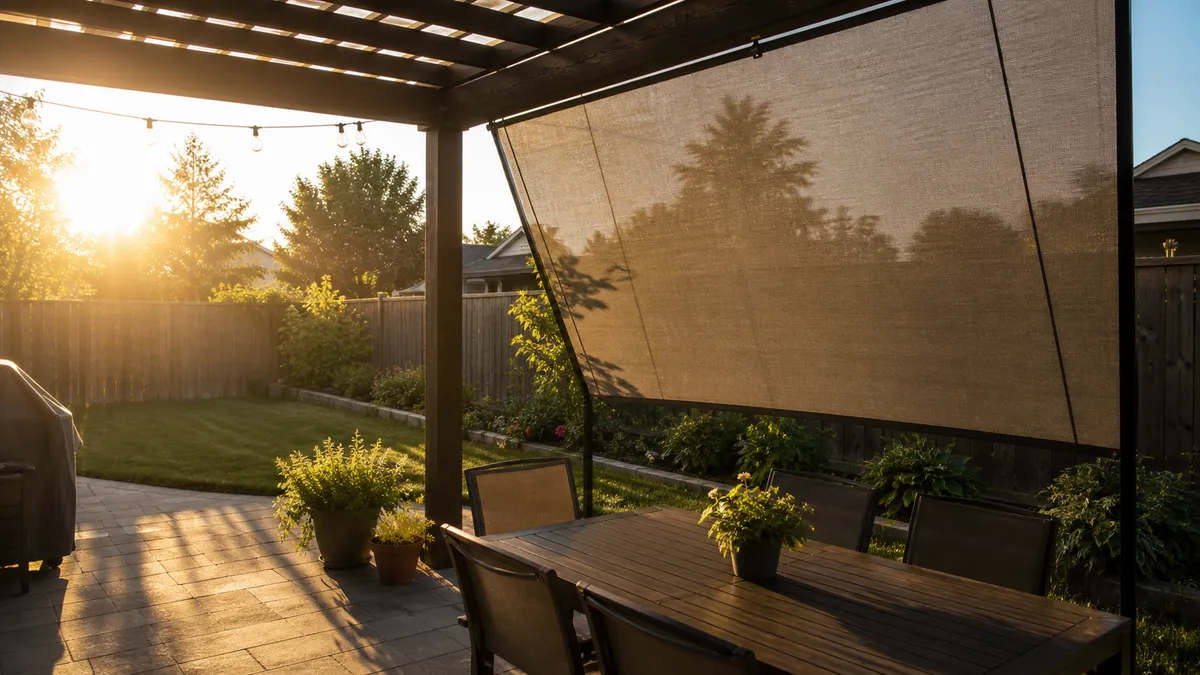
City of Scottsdale shade guidance makes the same point for public spaces: vertical shade elements are effective against low-angle morning and late-afternoon sun, especially on west and southwest exposures. On a patio, the vertical element might be an exterior solar screen, outdoor curtains, a side awning, louvre panel, drop valance or movable privacy screen.
Do not wrap the patio like a box unless you have to. Low side glare often needs one screen line on the entry edge, not fabric on every side. Keeping one open edge helps breeze, keeps the view usable and avoids turning a small patio into a hot room without a ceiling fan.
- Use vertical shade when the sun enters at chair height.
- Use overhead shade when the failed hour still has high direct sun.
- Place side shade on the west or southwest entry line first.
- Keep one airflow path open when heat is already trapped.
Map the failed hour before choosing a product
The time-of-day pattern keeps the fix honest. Midday heat with short shadows points toward overhead shade and airflow. Late-afternoon glare under an existing cover points toward vertical shade. Heat that remains after the sun has moved points toward glass, paving, walls and planting, not only another fabric panel.
Use the times below as common patterns, not universal clock rules. A tall fence, second-story balcony, nearby tree or neighboring wall can shift the bad hour. The important detail is whether the sun line crosses the people, the glass or the hard surface.
Timing
Time pattern, meaning and first test
Check the patio at the bad hour. The same product can be right at 2 p.m. and wrong at 6 p.m.
| Time pattern | What it means | Best first test | What to avoid |
|---|---|---|---|
| Midday heat without side glare | The problem is still mostly overhead sun and hot air | Test an umbrella, sail, awning projection or open pergola cloth over the seat | Do not start with curtains if the sun is still above the seating area |
| About 3:30-5 p.m. glare under existing cover | The sun has dropped below the front edge | Hold a screen or curtain on the west/southwest side | Do not buy a deeper roof until the side line is tested |
| About 5-7 p.m. glare across dining seats | Low sun is crossing faces and chair backs | Try a tilting umbrella, movable screen, curtain or drop valance aimed low | Do not size shade from the tabletop alone |
| Heat remains after direct sun leaves | Paving, masonry, glass or a wall is radiating stored heat | Shade the surface edge and add airflow or planting | Do not add dense side fabric that traps heat |
| The sliding glass door becomes the hot spot | Solar heat gain is starting at the glass | Use exterior glass shade and read the west-facing window awning guide | Do not apply window heat-gain numbers to the whole patio |
Side-shade options that work against low west sun
Side shade is the main west-facing patio shade tool when the test panel works. The exact product depends on whether you need view, privacy, portability, a wall-mounted cassette or a long-term planting edge. Start with the smallest vertical area that blocks the glare line from the seat.
The U.S. Department of Energy says exterior solar screens can reduce solar heat gain, UV damage and glare while allowing some view. A more open mesh keeps more visibility and air, but it blocks less heat and glare. That trade-off matters on a west-facing patio because a solid curtain may fix glare and still make the sitting area feel still.
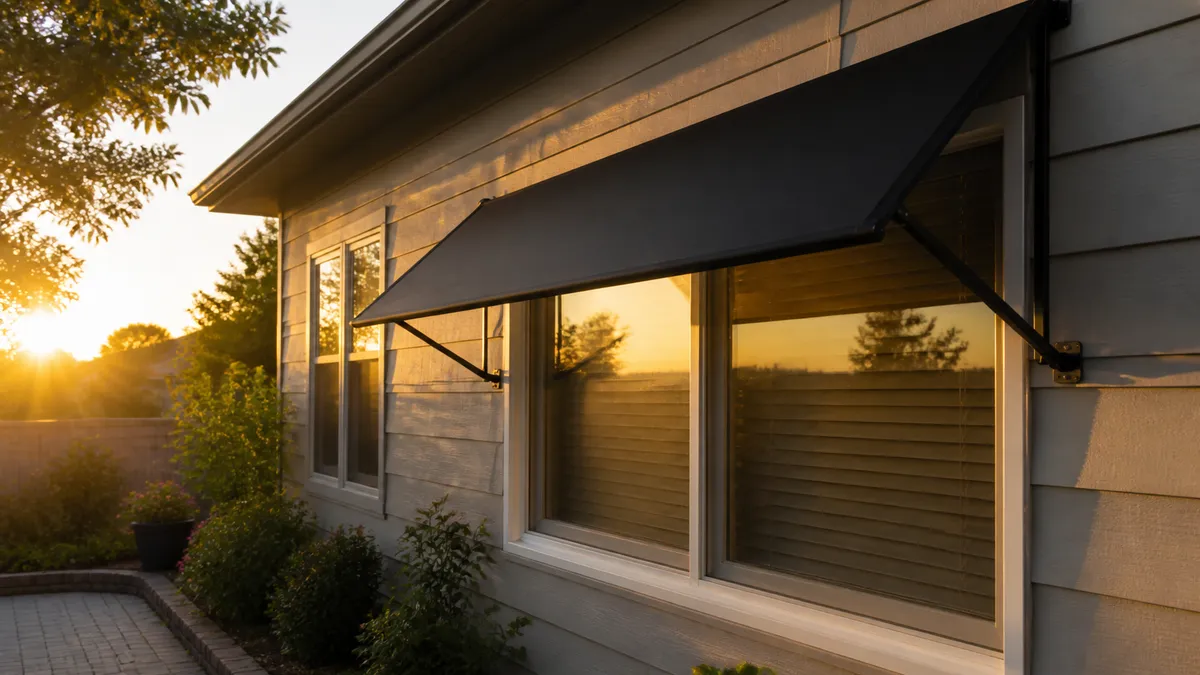
Drop valances are useful when an awning already shades overhead but glare comes below the front bar. Compare the actual valance depth, fabric and wind rules instead of treating the label as a magic fix. They still need a retraction routine, clearance, fabric ventilation and a product manual that fits the exposure.
Side shade
Side-shade choices for west exposure
Pick the side-shade type that matches the failed edge, not the biggest product on the shelf.
| Shade type | Best when | Weak spot | Check before buying |
|---|---|---|---|
| Exterior roller or solar screen | You want glare control with some view through the west edge | Open mesh may not block severe low glare | Mesh openness, mounting surface, side guides and wind rules |
| Outdoor curtain on an existing frame | A pergola, beam or covered patio already gives a track or rod location | Loose fabric can whip, trap heat or block a grill path | Tiebacks, bottom restraint, flame clearance and chair pullback |
| Awning with drop valance | The patio sits near a solid wall and overhead awning shade already helps | The valance can move in wind and may not clear doors or tall people | Manual limits, retraction routine, ventilation and front-bar height |
| Side awning or freestanding movable screen | One exposed edge fails and drilling is limited | The base or case can tip, block a path or look bulky | Weighted base, storage path, lease and HOA rules |
| Tilting umbrella | One small seating zone needs low-angle shade for a short period | It may not reach across a dining table at 6 p.m. | Base weight, tilt range, trip clearance and close-down habit |
| Pergola side panels or louvres | A permanent frame already exists or is planned | Solid panels can reduce airflow and increase heat buildup | Open slats, removable panels, drainage and approvals |
| Trellis, hedge, shrub row or lower-crown tree | You want long-term west-side interception and a softer edge | Plants are slow and site-specific | Mature size, roots, roof clearance, climate and temporary shade while plants grow |
Awnings, sails and overhead shade: where they help and where they fail
Overhead shade still matters on a west-facing patio. It can protect the table earlier in the afternoon, lower direct sun on paving and make the patio usable before the low glare window begins. The mistake is expecting a roof-like product to solve a side-entry problem by itself.
For awnings, look at the front edge. DOE guidance for awnings favors opaque, tightly woven fabric and notes that ventilation matters so hot air is not trapped. The same DOE window guidance gives a strong example for west-facing windows: awnings can reduce summer solar heat gain by up to 77 percent. Keep that number attached to windows, not open-air patio temperature.
For shade sails, lowering a western edge can help only if the anchors, tension and runoff are already credible. Manufacturer guidance commonly calls for strong anchor points, high and low points for drainage, and enough tension to keep fabric from flapping or holding water. Do not use fascia, thin railing, weak fence boards or loose masonry as the shortcut just because the sun angle is annoying.
Fabric also needs a heat-source check. If a grill, fire pit, patio heater or outdoor kitchen sits near the proposed shade line, move the heat source or use a non-fabric layout. Awning manuals commonly warn against intense heat near the fabric.
- Use overhead cover for high sun and hot surfaces.
- Add a drop valance when glare comes below the awning edge.
- Use a lower sail edge only after anchor and drainage checks.
- Keep fabric away from grills, fire pits and heaters.
- Retract or remove fabric when wind, rain or the manual requires it.
Trees, screens and cooler edges without blocking airflow
Planting is the best long-term west-facing garden shade when you have soil, time and room. DOE landscaping guidance notes that trees with lower crowns are more useful on the west because the needed shade comes from lower late-afternoon angles. Hedges, shrub rows, vines and trellises can do the same job on a smaller scale.
Trees can also help the heat problem around the patio edge. DOE notes that tree shade and evapotranspiration can reduce surrounding air temperature by as much as 6 F in some examples, and the air directly under trees can be much cooler than air above nearby blacktop. Use that as a reason to plan planting, not as a guaranteed patio cooling number for every yard.
Planting is not an instant repair unless the tree, hedge or trellis already exists in the right place. Use a removable screen, curtain or umbrella for this season while you plan the permanent edge. Check mature roots, branches, roof clearance, irrigation and local climate before treating a tree as patio hardware.
Screens need the same airflow discipline. Scottsdale guidance for vertical shade discusses openness for visibility and comfort in public settings; on a private patio, that supports the practical point that a fully solid west wall can fix glare while making heat feel worse. Mesh, louvres, slats and partial panels often age better than a full blackout barrier.
- Use lower west planting for late sun, not only tall overhead canopy.
- Shade glass, walls and paving when stored heat is the complaint.
- Pair young planting with temporary shade for the first hot season.
- Use mesh or louvres when a solid panel would trap heat.
- Watch reflected glare from pale paving, walls, water and glass.
What will not fix a west-facing patio
More overhead cloth will not fix sun that enters below the roofline. It may darken the wrong part of the patio and still leave faces, chair backs or the sliding glass door in glare. If the temporary west-edge screen works, the next step is side shade, not a wider roof.
Interior blinds alone will not fix a hot patio edge when glass and paving are heated from outside. They can reduce indoor glare, but exterior shade stops sun earlier in the path. Use the west-facing window guide when the glass is the main heat problem.
A flat or slack shade sail is not a west-sun solution. It needs the right angle, credible anchors, drainage and a removal routine. Lowering one edge without solving load and runoff can create a wind or water problem.
Solid curtains on every side can make the glare disappear and make the patio unpleasant. If the space already lacks breeze, test open-weave screen, louvres or a partial panel before committing to dense fabric. A young tree is the same kind of false shortcut for this season: useful later, not enough now.
Shopping before permission checks is another dead end. Renters, condo rules and HOA rules should settle drilling, exterior appearance, rail clamps, shared walls and permanent screens before buying anything that changes the outside face of the home.
- Do not add only top cover when the sun is entering from the side.
- Do not expect indoor blinds to cool exterior glass and paving.
- Do not hang a low sail edge from weak or unknown anchors.
- Do not close the patio with dense fabric if airflow is already poor.
- Do not drill, clamp or mount permanent shade before approvals are clear.
When to stop and get help
Stop DIY if the fix needs wall brackets, roof-edge attachment, new posts, concrete footings, unknown masonry, unknown timber framing or a motorized awning circuit. The shade may look light, but fabric loads change in wind and rain.
Do not attach shade to fascia, decorative trim, thin fence boards, loose railings, shallow posts or cracked masonry unless the exact product and structure are approved for it. If a post moves by hand or a wall surface is unknown, use movable shade until the load path is verified.
Stop when fabric would sit close to a grill, fire pit, heater or cooking area. Also stop when the shade would block a required door, walkway, stair, drain, neighbor view or shared exterior surface. Those are site problems first and product choices second.
- Get qualified help for new posts, footings, house brackets and motorized awnings.
- Use written landlord, condo or HOA approval before exterior holes or visible permanent shade.
- Retract, tie back, remove or store fabric before wind or rain makes the patio uncomfortable.
- Keep shade clear of doors, walking paths, grill lids, heaters and runoff paths.
This won't fix it
Do not skip these checks
- Wider overhead fabric will not stop low west sun if the glare line passes below the cover edge.
- Loose curtains, drop shades, umbrellas, sails and freestanding panels need a wind closure or removal routine.
- Do not attach sails, awnings or screens to fascia, thin fence boards, weak railings, loose masonry or unknown structure.
- Keep fabric shade away from grills, fire pits, patio heaters and cooking heat.
- Shade reduces exposure, but reflected UV and glare from paving, walls, water and glass can still reach people.
Read Next
Related fixes
Patio Shade Ideas
Use this when patio shade ideas is closer to the real constraint than the current page.
How to Block Low Afternoon Sun on a Patio
Use this when the issue is broader low afternoon sun and you need tactics beyond a west-facing patio diagnosis.
Best Patio Shade for Afternoon Sun
Use this when patio shade for afternoon sun is closer to the real constraint than the current page.
Awning for West-Facing Window
Use this when awning for west facing window is closer to the real constraint than the current page.
Questions
FAQ
What is the best shade for a west-facing patio?
The best shade is usually vertical or adjustable if the patio fails after mid-afternoon. Start with an exterior solar screen, outdoor curtain, side screen, drop valance or tilting umbrella where the low west sun enters. Use more overhead shade only when the bad hour is still exposed from above.
Why does my covered patio still get afternoon sun?
The sun is probably below the roof, sail or awning edge by the time you want to sit outside. The cover can shade the floor while glare crosses chair backs, faces or glass. Test a temporary screen on the west/southwest edge before buying a larger roof or sail.
Do shade sails work for west-facing patios?
A shade sail can help when one lower edge intercepts the low sun path and the anchors, tension and drainage are already solved. A high flat sail may darken the patio without stopping glare. Do not lower a sail edge from weak posts, fascia or unknown masonry.
Are outdoor curtains or screens better for low afternoon sun?
Curtains block more glare and privacy gaps, but they can catch wind and reduce airflow. Exterior solar screens, louvres and mesh panels preserve more view and breeze, but harsh glare may need denser fabric. Choose after testing the actual chair position during the failed hour.
Can trees fix a hot west-facing patio?
Trees, hedges, vines and trellises are strong long-term west shade when they intercept low late sun. They are not an instant fix unless already mature and correctly placed. Use temporary side shade now, then plan planting around mature roots, roof clearance, local climate and irrigation.