
Quick Answer
Quick answer for a west-facing window awning
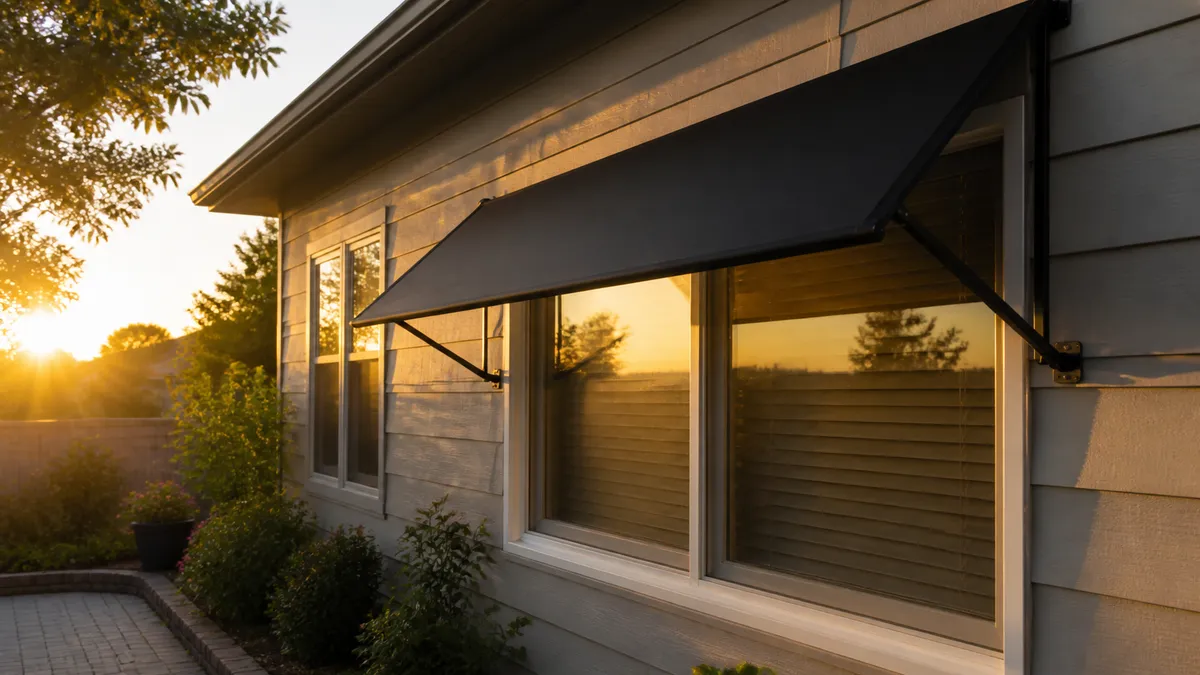
A west-facing window usually overheats because late sun hits the glass low and straight on. Test the worst hour first: if the sun is above the glass, a horizontal awning can work; if it hits face-on or from the side, use a drop shade, exterior solar screen or side return.
Choose a horizontal window awning only when it shades the glass at the bad hour; choose vertical exterior shade when low west sun hits the window face-on.
Diagnosis
Most common problems
Check the symptom before buying another shade product.
Room heats up before late afternoon
The sun is probably still high enough for overhead shade to cut solar heat gain at the glass.
Glare is worst late afternoon or near sunset
Low-angle sun can pass under a shallow awning and strike the window face-on.
A bright strip appears along one side of the glass
Angled west sun can outflank a window-width awning even when the top edge is shaded.
Existing eave helps at noon but fails after 4 p.m.
The overhead shade is already doing its high-sun job; the remaining problem is low sun.
Diagnose the west-window problem before choosing shade
Start outside during the worst hour, not at noon and not from a product photo. A west-facing window can have several different failures: late direct glare, rising room temperature, reflected brightness off pale paving, fading furniture, poor screen visibility or privacy loss. Each points to a different blocker.
Building America explains that direct-beam sun is the part that creates strong glare and surface heating. For east and west glazing, it recommends vertical shade when low sun faces the wall. That is the key diagnosis: decide whether the sun is coming from above the glass, straight into the glass or around one side.
Use the table below as a field test. Tape a small mark on the glass, stand outside at the bad hour and watch where the shadow line falls. If a temporary board or cardboard panel in front of the window stops the problem but a top projection does not, the first fix is vertical or side shade, not more overhead fabric.
- Record the exact hour when heat or direct glare becomes uncomfortable.
- Check whether the sun crosses the top edge, center of glass or one side edge.
- Pause if the fix would cover a bedroom egress opening, window air conditioner or operating sash.
Diagnosis
What the symptom says about the shade you need
Use this before comparing fixed awnings, drop shades or window film.
| What you see | Likely cause | Bad-hour test | First fix to test | Stop if |
|---|---|---|---|---|
| The room heats up before late afternoon | Higher direct sun is striking the glass for several hours. | Check whether a shadow from above reaches the whole pane. | Fixed window awning with enough horizontal projection and width. | The wall structure or ventilation path is unclear. |
| Glare becomes harsh near sunset | Low-angle sun is passing under the awning line. | Hold a vertical panel at the glass line and compare the glare. | Exterior drop shade, exterior solar screen or front valance. | The shade cannot be rolled up before wind. |
| One edge of the window stays bright | Angled sun is bypassing the side of the cover. | Block the exposed side edge with a temporary side panel. | Side return, side fin or wider awning if trim allows it. | Shutters, trim, downspout or property line blocks the extension. |
| The eave works at noon but not after 4 p.m. | Overhead shade is missing the lower west sun path. | Compare a deeper horizontal test with a vertical screen test. | Drop shade or exterior screen before a deeper fixed projection. | A deeper projection would block window operation or winter sun. |
| Fading or UV is the main concern | Glare, UVA through glass and product-specific UV blocking are being mixed together. | Check whether shade solves glare but not the UV concern. | Exterior shade plus verified film or interior backup. | Film would affect the insulated-glass warranty. |
| Window AC, bedroom egress or sash movement is involved | The shade may interfere with required use of the window. | Open, clean, service and escape through the window before marking brackets. | Specialized clearance plan or no fixed awning. | The shade blocks airflow, release from inside or emergency escape. |
Why west-facing windows fail late in the day
A west window is rarely just a brightness problem. Sun reaches the glass late in the day, when the angle is lower and the room may already be warm. YourHome describes the heat path plainly: sun passes through glass, warms indoor surfaces and then re-radiates heat inside.
That is why outside shade is the first heat-control move when the exterior allows it. DOE Energy Saver says exterior shutters and shades are among the most effective window treatments for reducing solar heat gain. Interior curtains can make the room feel darker, but they usually act after sunlight has already crossed the glass.
A horizontal awning helps when the sun is still high enough for the projection to cast shade over the pane. It starts to fail when the sun drops and aims into the window face. Building America notes that east and west walls often need vertical shade in front of the window for low sun, while horizontal overhangs mainly solve higher sun.
That does not make a window awning useless. It means a west-facing window awning has to match the sun angle: projection, mounting height, width past the glass and sometimes a side return or front drop. Without that, the awning may shade the wall above the window while direct glare still lands on the sofa, desk or TV.
- Heat points to solar heat gain at the glass, not just indoor brightness.
- Direct glare points to the sun path and may need vertical shade.
- Side-edge glare points to width, side return or the exposed edge.
Test horizontal projection, side coverage and the bad hour
Do not start with a universal projection number. The useful measurement is whether the shade line covers the glass during your actual bad hour. Building America measures overhang depth horizontally from the glass, not along the slope of the awning, and the mounting height changes where that shadow lands.
Use a temporary test before drilling. Hold a board, scrap fabric on a frame or a rigid panel where the proposed awning edge would sit. If the panel above the window shades the pane, the fixed awning idea is still alive. If only a vertical panel in front of the window solves the glare, test a drop shade or exterior solar screen first.
Side coverage matters on a west wall. Building America notes that a west-facing overhang may need to extend past the window toward the sun-exposed side, depending on orientation. Translate that into a simple check: if a bright strip remains along one edge, test a side return before ordering a wider product.
Measure the things that block the fix. Shutters, trim, downspouts, lights, eaves, gutters, casement sash swing, awning-window hinges and property lines can all make the correct shade shape impossible. A shade that cannot be mounted where the sun test says it belongs is the wrong shade.
- Measure projection horizontally from the glass face.
- Mark the worst-hour shadow line before picking fabric depth.
- Check side glare before assuming a window-width awning is wide enough.
When a horizontal awning works and when it fails
A fixed window awning works best when the bad sun is still above the awning edge, the glass is not wider than the useful shade, and the wall can accept brackets into structure or suitable masonry. It is strongest as a steady summer shade for higher afternoon sun and repeat daily heat on the glass.
It fails when the harshest sun is low and face-on. Adding more horizontal projection may help for part of the afternoon, but very low west sun can still slide beneath the front edge. YourHome warns that even deep exterior structures can admit very low-angle sun, which is why screens, planting or adjustable exterior shade may be needed.
A retractable awning helps when seasonal control matters. DOE Energy Saver notes that fixed awnings can block useful heating-season sun, while adjustable awnings can be opened or removed to admit winter sun. The trade-off is routine: retractable fabric needs a realistic wind and storm habit.
Side returns, drop shades and exterior solar screens should be treated as real fixes. A side return helps when sun bypasses the edge. A drop shade or solar screen helps when sun hits the glass face-on. Denser or darker material may cut more glare, but it can also darken the room, reduce view and hold heat if air cannot escape.
- Use fixed awnings for higher sun when projection and width cover the glass.
- Use drop shade or exterior solar screen when low sun hits face-on.
- Use side return when angled glare enters at one exposed edge.
Fixes ranked by effort, cost and risk
Start with the fix that needs the least drilling and money. A temporary bad-hour panel costs little and answers the main question: horizontal, vertical or side shade. It also prevents the common mistake of buying a larger awning when the glare is actually below the front bar.
A side return or side fin is the next step when the test shows edge bypass. This can be neat on a small window, but only if trim, shutters, cladding and setback allow the piece to sit where the light enters. It is not a decorative add-on; it must block the actual side angle.
Exterior drop shades and solar screens are often the strongest west-sun fix. DOE Energy Saver explains that shade material openness changes the trade-off between view, daylight, heat and glare control. Coolaroo's exterior roller shade instructions also warn that shades should be rolled up in severe or prolonged wind, so only choose one if it will be closed before bad weather.
Window film and interior blinds are useful backups. DOE warns that some absorbing films may damage insulated-glass-unit seals and that warranties may be affected. Skin Cancer Foundation guidance on window film supports product-specific UV claims, but do not treat an awning alone as certified UV protection unless the product data says so.
- Lowest effort: prove the shade line with a temporary panel.
- Medium effort: add side return, exterior drop shade or solar screen.
- Higher risk: drill brackets, add motorized controls or change the facade.
Fix ranking
Which fix to try first
Use this after the diagnosis table identifies the sun path.
| Fix | Effort / cost | Best when | Watch out |
|---|---|---|---|
| Temporary bad-hour panel test | Lowest | You do not know whether the shade needs to be overhead, vertical or on one side. | It is a test, not an exterior product. |
| Side return or side fin | Medium | A bright strip enters from one exposed side of the glass. | Trim, shutters, downspouts or property line may block the side piece. |
| Exterior drop shade or solar screen | Medium | Low west sun hits the glass face-on and creates direct glare. | View, daylight and roll-up routine matter; retract before wind. |
| Fixed window awning | Medium to high | Higher sun heats the glass and the projection covers the pane. | Wrong projection, poor ventilation or weak wall structure can ruin it. |
| Retractable awning or front screen | Higher | Seasonal control matters and someone will close it before bad weather. | Motorized units can add electrical work and wind sensor maintenance. |
| Window film, interior blind or curtain backup | Low to medium | Glare, privacy or UV needs remain after exterior shade is considered. | Film can affect insulated-glass warranties; curtains do less for exterior heat gain. |
What will not fix the west-window problem
More projection alone will not fix low face-on sun if the shadow line still lands above the pane. It can add weight, wall load and approval trouble without stopping the late glare. Test the front edge before assuming a deeper awning is automatically better.
Interior curtains alone are a weak answer when solar heat gain is the complaint. They can reduce glare and make the room usable, but the sun has already entered the room. If exterior shade is possible, use curtains as backup rather than the main heat fix.
Darker fabric can create a new problem if ventilation is poor. DOE Energy Saver warns that awnings need ventilation so hot air is not trapped around the window. A sealed dark pocket around the glass can make the area feel worse even while it looks shaded.
Do not use film as a no-check shortcut. Film can help with glare, solar gain and UV depending on the product and glass, but Energy.gov warns about insulated glass seal risk and warranty issues for some films. DOE window-technology guidance also points to glazing and low-e choices as variables, so the film label and window warranty matter.
Do not mount into trim, gutters, mortar joints, thin siding or unknown cladding. SunPro installation guidance says brackets must fasten into studs, joists, headers or other major structural members, and it treats siding, soffit, roof, brick and fascia as different conditions. That is a stop sign, not an invitation to improvise.
- Do not buy more projection until the bad-hour test proves it works.
- Do not count curtains as the primary heat fix when exterior shade is realistic.
- Do not leave drop shades or retractable fabric open through severe or prolonged wind.
Mounting, wind, egress, AC and approval checks
The shade has to survive the wall, not just the sun. Brackets need verified framing, headers, rafters, suitable masonry or a product-approved mounting condition. SunSetter says wall-mounted retractable awnings work best when brackets install into studs, and roof mounting can damage the roof if done incorrectly.
Wind is a purchase condition. SunPro warns that even moderate wind can create large force on awnings and brackets. Coolaroo's roller shade instructions say tie-downs are for mild to moderate wind and that shades should be rolled up in severe or prolonged wind. If nobody will retract the shade before wind, choose a more sheltered or smaller approach.
Keep rain and heat movement in mind. Awnings need pitch, runoff and ventilation around the window. Water should not be driven behind trim, into a wall penetration or onto an unsafe walkway. Hot air also needs a way out near the top or sides of the shade.
Check egress and window operation before fixed hardware. Boulder County's public guidance on emergency escape and rescue openings says covers and screens over those openings must be removable or releasable from inside without keys or tools. Treat bedroom and basement windows with extra caution, and do not block a casement, awning sash, cleaning path or lock.
A window air conditioner changes the answer. Leave airflow, drainage, service access, cord routing and removal clearance. An awning that traps hot condenser air or prevents the unit from being serviced is not solving the window problem.
Approval rules vary. Portland code treats awnings and their attachment as load-bearing exterior projections under local design requirements, while Kettering's guidance shows that permits can depend on projection, support and manufacturer specs. HOA, condo, landlord and historic-district rules may be stricter than the city rule, so check before drilling.
- Stop when the only attachment path is trim, gutter, weak siding or unknown cladding.
- Use qualified help for roof mounting, permanent wiring or uncertain masonry.
- Keep egress, sash operation, window AC service and inside release clear.
Costs to compare after diagnosis
Compare shade types only after the diagnosis says what shape will work. A fixed window awning, exterior drop shade, exterior solar screen, side return, retractable front screen, window film and interior blind do not solve the same failure. Buying the wrong shade cheaply is still wasted money.
HomeGuide's cost guidance is useful for cost drivers, not for a single quote. Size, projection, manual or motorized controls, fixed versus retractable hardware, material, substrate prep, labor, electrical work, permits, sensors and side or drop additions can all change the real total.
Budget for the work around the shade. A simple awning can become expensive when the wall needs backing, upper-story access, electrician work, roof mounting, HOA drawings or repair access. A drop shade can become the better value when it solves low glare with less wall load, but only if the wind routine is realistic.
Buy in this order: prove the bad-hour shade line, confirm the wall and window conflicts, then compare shade types. That keeps the page tied to the real window instead of unsupported prices, unsupported score claims or loose commerce claims.
- Compare fixed awning only after projection and width pass the sun test.
- Compare drop shade or exterior solar screen when low glare hits face-on.
- Compare film and interior blind as backup for glare, UV or privacy needs.
This won't fix it
Do not skip these checks
- Do not drill brackets until the bad-hour shadow covers the glass and the wall structure is verified.
- Roll exterior screens or drop shades up before severe or prolonged wind, and check view and daylight loss before relying on them.
- Trim, shutters, gutters, downspouts, sash swing or the property line can block the side return exactly where it needs to sit.
- A deeper projection can still miss low face-on sun, block window operation or cut useful winter sun.
- Do not treat an awning as verified UV protection; check film specifications, glass type and insulated-glass warranty language.
- Do not cover a required egress opening, window air conditioner service path or normal sash operation.
Read Next
Related fixes
Door and Window Awnings
Use this when door and window awnings is closer to the real constraint than the current page.
Patio Awning Guide
Use this when patio awning is closer to the real constraint than the current page.
How to Block Low Afternoon Sun on a Patio
Use this when how to block low afternoon sun on patio is closer to the real constraint than the current page.
Questions
FAQ
Will an awning actually work on a west-facing window?
Yes, if the bad sun is still high enough for the awning projection to shade the glass. It may only partly work when the worst glare is low and face-on. Test the bad hour outside before buying so you know whether the blocker needs to be above, in front of or beside the window.
Is a drop shade better than an awning for west sun?
Often, yes. A drop shade or exterior solar screen sits in front of the glass, so it can block low west sun that passes under a horizontal awning. The trade-offs are view, daylight, appearance and wind routine. Choose a roll-up product only if it can be retracted before bad weather.
How far should a west-facing window awning project?
There is no one reliable projection number because latitude, season, mounting height and glass size change the shadow. Measure projection horizontally from the glass and test during the worst hour. If the shadow does not cover the pane then, deeper fabric may still miss late low-angle sun.
Does window film replace an exterior awning or shade?
Film can help with glare, solar gain and UV depending on the product and glass, but it does not change the outside sun path. Energy.gov warns that some films can affect insulated-glass seals and warranties. Use film as a checked backup, not as a quick substitute for exterior shade.
Can I put an awning over a window air conditioner or bedroom window?
Only if airflow, drainage, service access, cord routing, sash operation and emergency escape stay clear. A window air conditioner needs ventilation and maintenance space. A bedroom or basement window may also be a required escape opening, so fixed shade hardware must not trap or block it.