
Quick Answer
Quick answer for garden shade cloth
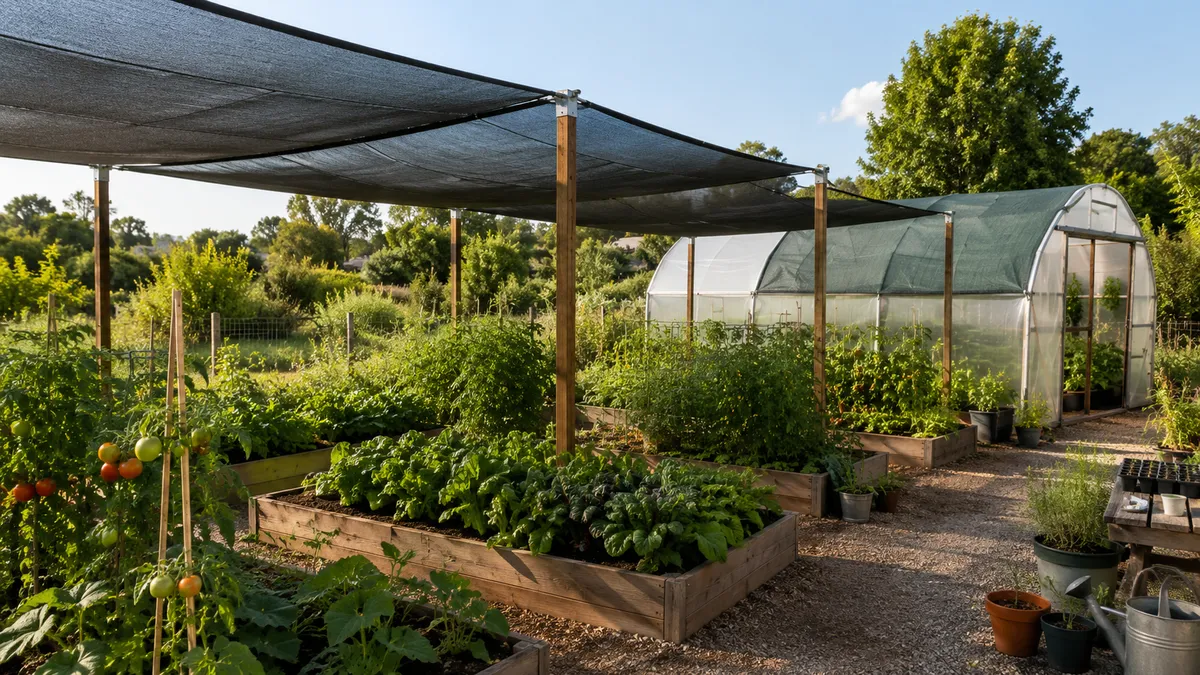
Choose shade cloth by crop group, heat window and airflow before choosing a roll or finished panel. Fruiting crops usually need lighter relief than leafy greens, seedlings or short heat-wave protection. In a greenhouse or high tunnel, cloth still needs working vents, water checks and a clear stop point when plants stretch, pale or flower poorly.
Use shade cloth when heat and sun are damaging crops during a defined window; fix watering, ventilation, planting timing or patio shade instead when dry soil, trapped air, pests or weather cover are the real problem.
Guide Path
Choose the shade cloth route first
Start with the crop or structure that is struggling. Percentage, material and size make sense after that choice is clear.
I need the right percentage
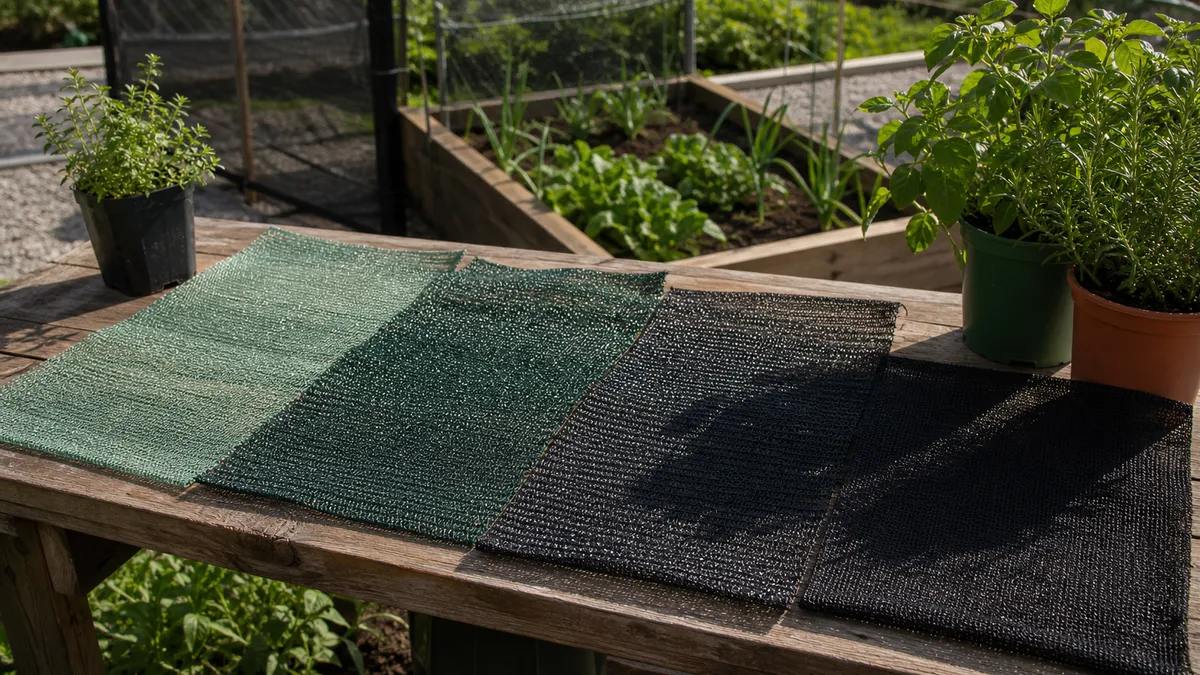
Start here when the open question is 30 percent, 50 percent, 70 percent or 90 percent shade.
This page gives the broad crop signals; the percentage guide handles the deeper 30/50/70/90 split.
Best when:You already know where the cloth will go and need to choose the density.
Check first:Crop light need, heat severity, removal timing and whether one cloth will cover mixed crops.
Watch out:Do not treat the darkest percentage as the safest choice for vegetables.
Read the percentage guide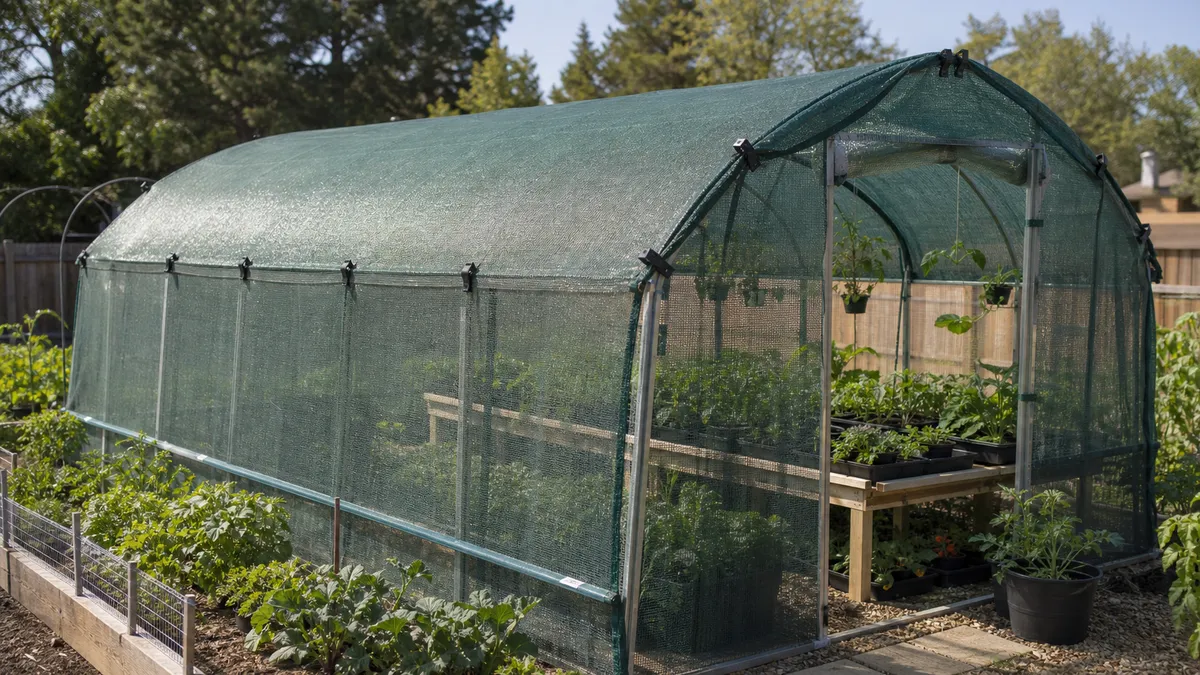
I am shading a greenhouse or high tunnel
Use this route when the structure traps heat after the morning warms up.
USU Extension frames tunnel heat control around doors, roll-up sides, ventilation and water management, not cloth alone.
Best when:The crop is under plastic, glass, polycarbonate or tunnel framing.
Check first:Peak temperature, open sides, vents or fans, irrigation changes, humidity and pollinator access.
Watch out:A darker roof can reduce light while leaving hot air trapped inside.
Open the greenhouse guide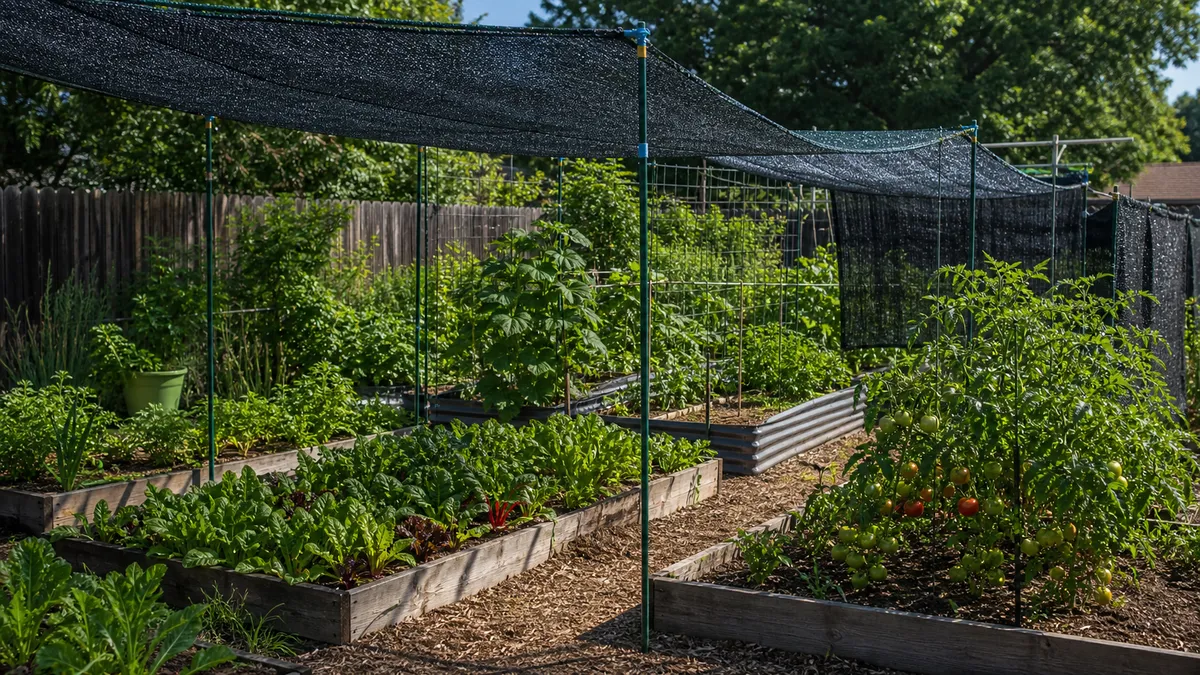
I have a mixed vegetable bed
Mixed beds usually need the lightest percentage that protects the most sun-sensitive crop.
A single dark sheet can help greens while slowing tomatoes, peppers or flowering herbs.
Best when:Tomatoes, peppers, herbs, greens or seedlings share one bed or row cover frame.
Check first:Which crops need fruit, which need leaves, and whether the bed can be split into zones.
Watch out:One cloth over everything often helps one crop while holding another back.
See the vegetable garden guide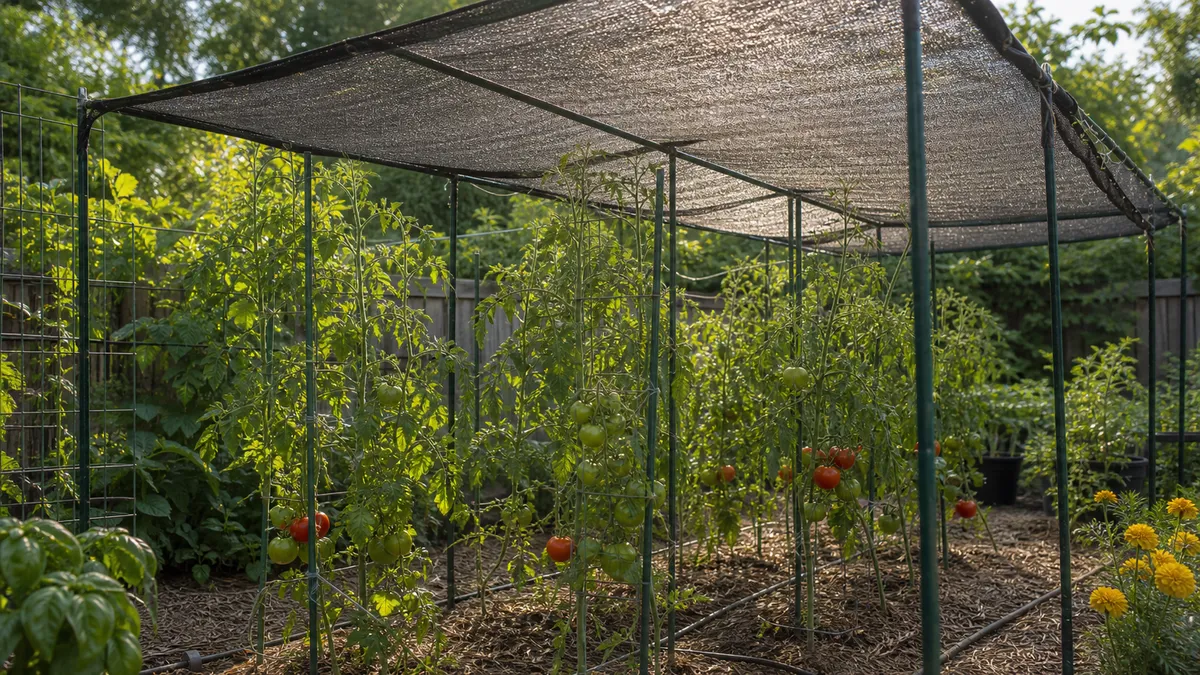
Tomatoes are dropping flowers or scalding
Tomatoes and peppers can need afternoon heat relief, but they still need strong light to flower and fruit.
Arizona Extension tomato guidance warns that too little sun can mean leggy plants and fewer flowers.
Best when:The problem is blossom drop, sunscald or afternoon collapse during severe heat.
Check first:Heat timing, airflow, water consistency and whether the cloth blocks only the harshest hours.
Watch out:Heavy shade left on all day can trade heat stress for weak flowering.
Read the tomato guide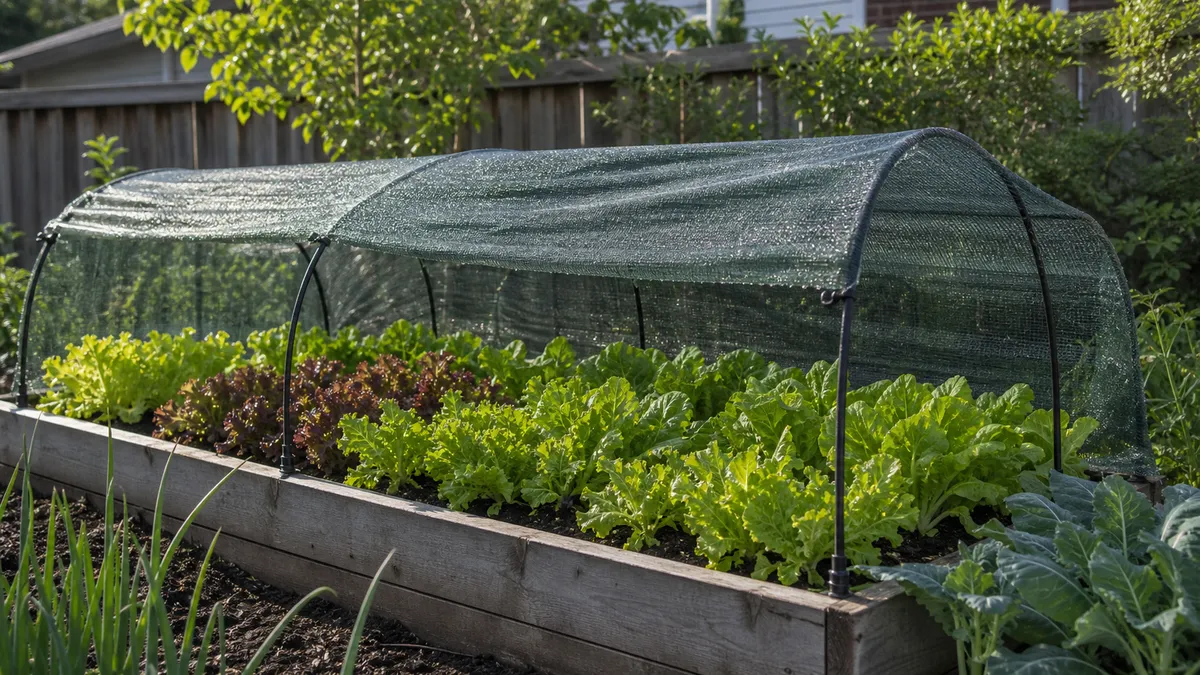
Lettuce or leafy greens are bolting
Leafy greens, herbs, brassicas and seedlings can justify stronger temporary shade when heat is shortening harvest.
UNH Extension connects shade cloth with reducing bolting and protecting tender crops during summer stress.
Best when:The crop is grown for leaves or transplant strength rather than fruit.
Check first:Bolting signs, harvest window, air gap, watering and the date the cloth comes off.
Watch out:Shade can delay stress, but it does not turn a hot month into cool-season weather.
Read the leafy greens guide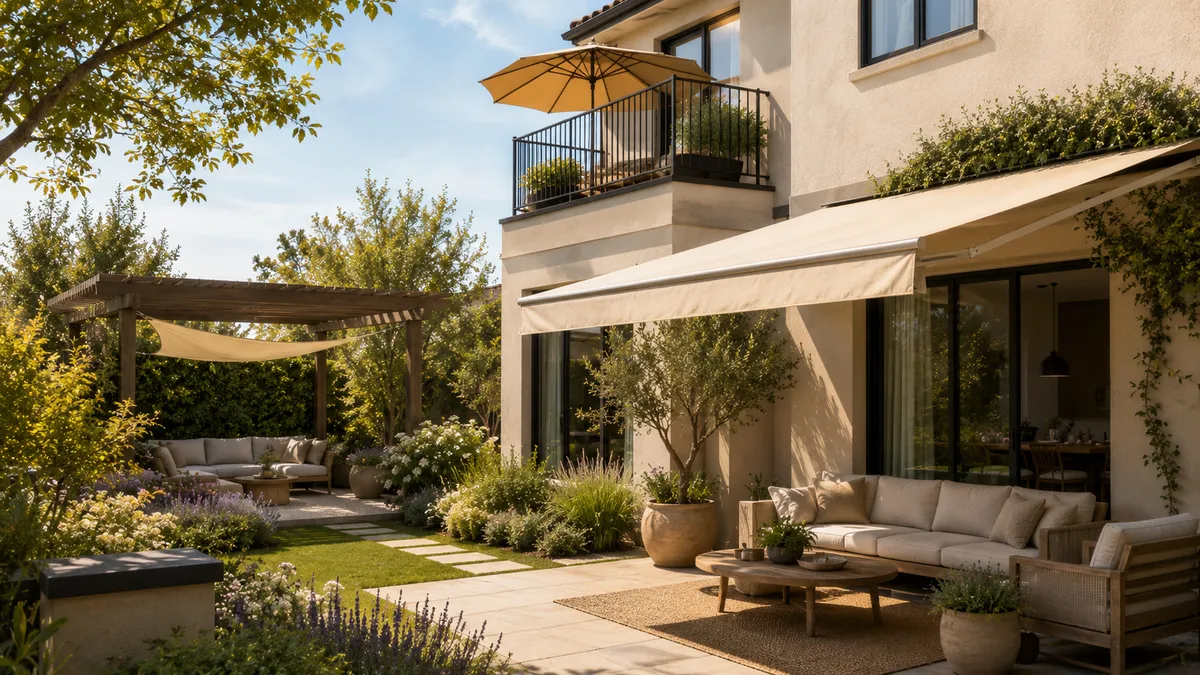
I need patio shade or weather cover
Garden cloth controls plant heat and light; it is not a finished living-space roof.
Use the outdoor shade hub when the goal is seating comfort, rain, privacy or a patio cover.
Best when:The shaded area is furniture, a deck, a patio table, storage or a walkway.
Check first:Weather exposure, support, drainage, appearance rules and whether fabric must handle people underneath.
Watch out:A garden sheet with clips is not the same job as an awning, sail or roof panel.
Compare outdoor shade optionsChoose a starting percentage by crop group
For garden beds, start with crop response, not the darkest fabric on the shelf. University of Maryland Extension describes common garden shade cloth as 30% or 50% cloth, and Illinois Extension cites 30% black shade cloth as a way to cool susceptible vegetable crops while still allowing crop development.
Use those numbers as anchors, not a universal rule. Fruiting vegetables such as tomatoes and peppers usually belong near the lighter end during severe heat because they still need enough light for flowering and fruit set. Arizona Extension's tomato guidance says best production needs 6 to 8 hours of full sun, and too little sun can cause leggy plants and fewer flowers.
Leafy greens, summer seedlings and tender transplants can justify stronger temporary protection. UMD and UNH both connect shade cloth with cool-season harvest extension, seedling protection, bolting reduction and sunscald prevention. That is why lettuce, brassicas and nursery starts route differently from tomatoes.
Mixed beds are the hardest case. If tomatoes, peppers, herbs and lettuce share one cover, the dark cloth that helps lettuce may punish fruiting crops. Split the bed if possible, or start with the lighter shared percentage and give the most heat-sensitive plants a shorter, more focused layer.
Timing matters as much as density. Put cloth up near the beginning of a severe heat window, before leaves scorch or flowers abort. Take it down or reduce it when the forecast cools, new growth stretches, leaves pale, flowering slows or harvest quality stops improving.
Use the detailed percentage guide when the real question is 30 percent shade cloth versus 50, 70 or 90 percent. This page points you to the right next guide; it does not replace a crop-by-crop percentage choice for every climate.
Greenhouse and high-tunnel shade still needs airflow
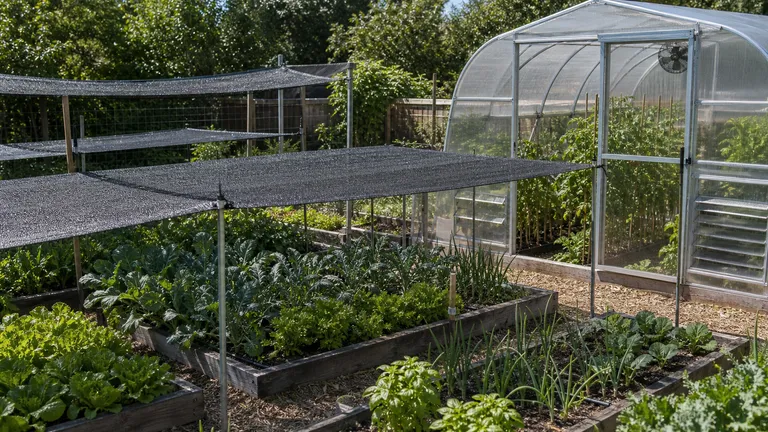
Shade cloth for greenhouse use can reduce solar load, but it does not pump hot air out of the structure. USU Extension says high tunnel heat is managed by opening doors or rolling up sides, and its tunnel guidance recommends 30% shade cloth when warm weather arrives. Cloth works best when those openings still function after the fabric is installed.
Measure the result instead of judging by brightness. USU high-tunnel guidance recommends max-min thermometers, and its season-extension material notes that tunnels can run 10 to 15 F warmer than outside during the day even when well ventilated. A tunnel that looks dim can still be too hot at plant height.
Water also changes after the cover goes up. USU irrigation guidance warns that ventilation and replacing plastic with shade cloth can change water use enough to cause over- or under-irrigation when timers are left alone. Check soil moisture, drip output and mulch before assuming wilted leaves need a darker cloth.
Humidity and disease risk come with greenhouse shade decisions. USU warns that inadequate tunnel ventilation can raise disease pressure, including powdery mildew, bacterial diseases and root rots. If the cloth blocks roll-up sides or keeps the tunnel closed longer, it can make that risk worse.
Pollination needs access as well as temperature control. USU notes that bees may avoid flying into or under tunnels, and its pollinator guidance links high humidity and low light with weaker bee activity and navigation. For cucumbers, squash, tomatoes and peppers, keep side access, morning openings or hand-work access in the plan.
Use the greenhouse guide for placement, color and roof details once the job is clearly structural shade cloth. Stay here if the question is broader: whether cloth, ventilation, water checks or crop timing should come first.
Installation height, clips and access over beds
The support height matters because shade cloth for plants should not lie on the leaves. UNH Extension warns that cloth should be supported with space between fabric and plants because direct contact can injure foliage by heat transfer. Hoops, conduit, tunnel bows, stakes or a light frame should hold fabric above the canopy.
Leave enough side opening for air to move. A cloth clipped tight to the soil on every edge may protect from sun, but it can also trap humid air around leaves. Raised beds usually work better when the top is shaded and the sides remain open enough for heat to escape.
Wind damage often starts small. Loose edges flap into stems, clips pull fabric out of shape, and grommets can tear when one corner carries the whole load. Use clips, lacing, rope, battens or frame attachment that spread tension, and avoid using loose stones or scrap boards as the only hold-down on a windy bed.
Plan access before the fabric is hot and awkward to move. You still need to harvest, prune, check drip lines, look for pests and open flowers to pollinators. A cover that cannot be unclipped quickly may stay closed too long simply because it is annoying to handle.
For flowering crops, keep a path for insects or for hand pollination. Open sides, morning access and removable panels are more useful than a perfect-looking tent that blocks every flower from movement, air and work.
Support height also affects removal. If the frame is simple and repeatable, you are more likely to pull the cloth when the heat breaks. If the setup takes an hour to rebuild, temporary shade often becomes permanent shade by accident.
Sizes, roll widths and coverage planning
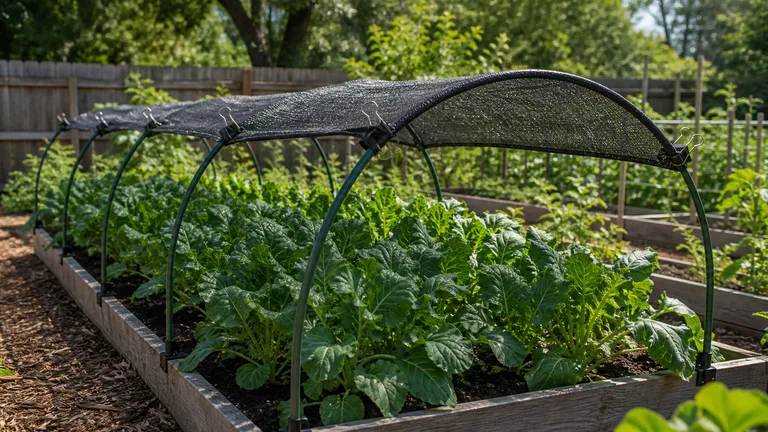
Size planning is different for a raised bed, a row of seedlings and a high tunnel. A small bed may need only a finished panel over hoops with enough overlap for clips. A tunnel roof may need the roll width, ridge length, side openings and lacing path planned before ordering.
Real roll dimensions matter. U.S. Global Resources lists knitted shade material in 6, 10, 12 and 20 ft widths with long roll lengths. USU lists common high tunnels around 14 to 30 ft wide and 50 to 150 ft long. A tunnel roof can therefore need a roll-width plan, not just a percentage choice.
Do not size only by bed surface. Add height over the crop, side drop, clip overlap and access openings. Tall tomatoes, staked peppers and trellised cucumbers need more clearance than a flat lettuce bed, and a panel that fits in May may rub leaves in July.
Coverage can be partial. Many gardens only need afternoon relief on the west or southwest side, especially during a short heat spell. A smaller panel placed for the harshest hour can be easier to secure and remove than a large sheet over the whole bed.
Finished panels with sewn edges and grommets are convenient when the frame size is known. Bulk rolls make more sense when several beds, a nursery bench or a tunnel need custom lengths. Either way, include clips, rope, storage space and replacement pieces in the size plan.
Materials, percentages and durability terms to compare
Material terms help you compare cloth without pretending one generic panel is best for every garden. UNH Extension describes shade cloth as knitted or woven UV-stabilized polyethylene with densities from 10% to above 60%. Density is the percentage choice; material and edge details decide how the cloth handles cutting, clips and seasons.
Knitted polyethylene is common in gardens because the lock-stitch structure resists fraying better when cut. Cherokee Manufacturing describes knitted shade cloth as lighter than woven and easier to cut on site, while woven cloth often uses reinforced seams and grommets for finished panels.
Woven shade cloth can still be useful when you want a finished panel with stronger edges, sewn seams or predictable grommet spacing. It may be less forgiving if you cut it casually. If the panel must be trimmed around vents, hoops or doors, check the cut-edge behavior before ordering.
UV-stabilized material matters because the fabric lives in harsh summer sun. Water permeability matters too: garden shade should not become a tarp that sheds water away from roots unless that is the stated purpose. For crops, breathable shade and irrigation access are usually more useful than a rain-blocking sheet.
Grommets, clips, lacing and tape are not minor accessories. They decide whether the cloth can be pulled tight without tearing and whether it can be removed fast enough when low-light stress appears. Compare the attachment method with the frame, not just the percentage printed on the label.
Cost ranges and accessories that change the order
Shade cloth cost starts with the fabric, but the final bill usually changes with the support system. A small retail panel may solve one raised bed. Several finished panels, a high-tunnel roof, lacing, hoops, clips, grommets, rope, storage bins and replacement pieces can move the project well beyond the first fabric price.
Use retail examples as dated examples, not promises. During research, Home Depot listed a 6.5 ft by 30 ft 50% shade cloth example at $24.99, while Pro Fabric Supply listed larger knitted shade cloth rolls in the hundreds. Prices change, but the small-panel versus roll difference is real enough to budget for.
Finished edges and grommets can cost more up front and save time when the frame is fixed. Bulk roll material can be cheaper per square foot when you are shading several beds, but it may need clips, tape, sewing, hot-knife cutting or extra attachment work.
The cheapest sheet is not cheaper if it tears at the first hot windy week. Pay attention to UV stabilization, edge construction, attachment points and whether the material can be stored dry. A cloth that lasts several summers can be cheaper than a low-grade panel replaced every heat wave.
Do not let price make the first choice. A discounted 70% cloth is still the wrong order for fruiting vegetables that need more light. A small 30% panel can be a better first test when the crop problem is afternoon heat, not all-day shade.
When shade cloth is the wrong fix
Do not use shade cloth when the real problem is dry soil. Arizona Extension's June garden reminders pair 30% to 40% shade, when needed, with daily checks for water stress and sunburn, ample watering during consistent 95 F heat and compost to cool soil and reduce evaporation. If roots are dry, fabric is secondary.
Do not use darker cloth to compensate for a closed tunnel. Open doors, roll up sides, repair vents, check fans where present and measure peak temperature first. A darker roof can make the crop dimmer while the air still stays too hot and humid.
Do not use shade cloth as pest control. If caterpillars, beetles, birds or insects are the problem, row cover, insect netting, exclusion timing or crop-specific pest work belongs ahead of shade density. Shade cloth may hide the damage from view while the pest keeps feeding.
Do not use it to force the wrong season too far. Cloth can stretch lettuce harvest or protect seedlings, but it cannot make midsummer behave like spring. When a crop is planted outside its climate window, variety choice, planting date or fall scheduling may solve more than fabric.
Do not use garden fabric as patio roofing. It is not a finished rain cover, privacy roof or structural shade product for people underneath. Use the outdoor shade guide when the target is furniture, weather cover, appearance rules or a living-space shade structure.
Watch-outs
Before you buy or install
- Darker cloth is not automatically safer for vegetables; fruiting crops can lose flowers and yield under too little light.
- A shaded greenhouse can still overheat if doors, sides, vents or fans do not move hot air out.
- Shade cloth cannot fix dry roots, pest damage, poor crop timing or a patio project that needs weather cover.
Read Next
Related hub
Shade Cloth Percentage Guide
Use this when shade cloth percentage guide is closer to the real constraint than the current page.
Shade Cloth for Greenhouse
Use this when shade cloth for greenhouse is closer to the real constraint than the current page.
Shade Cloth for Vegetable Garden
Use this when shade cloth for vegetable garden is closer to the real constraint than the current page.
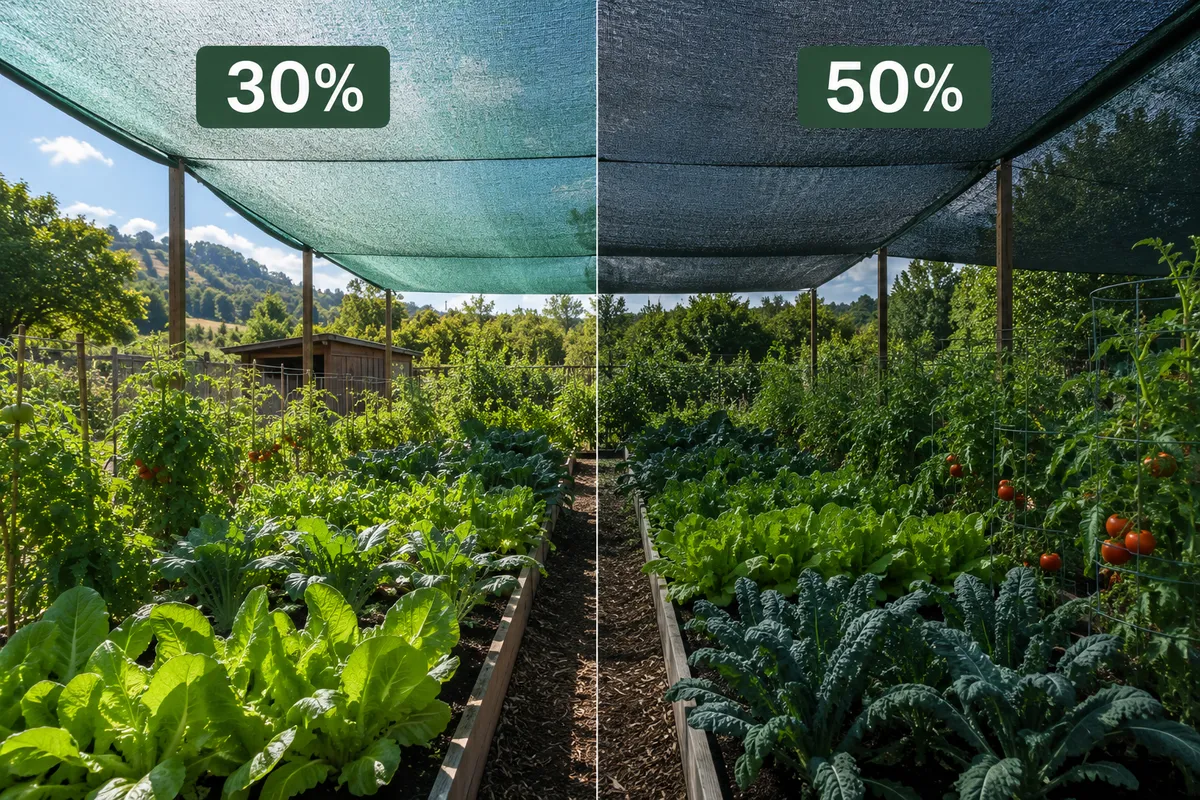
30% vs 50% Shade Cloth
Use this when 30 vs 50 shade cloth is closer to the real constraint than the current page.
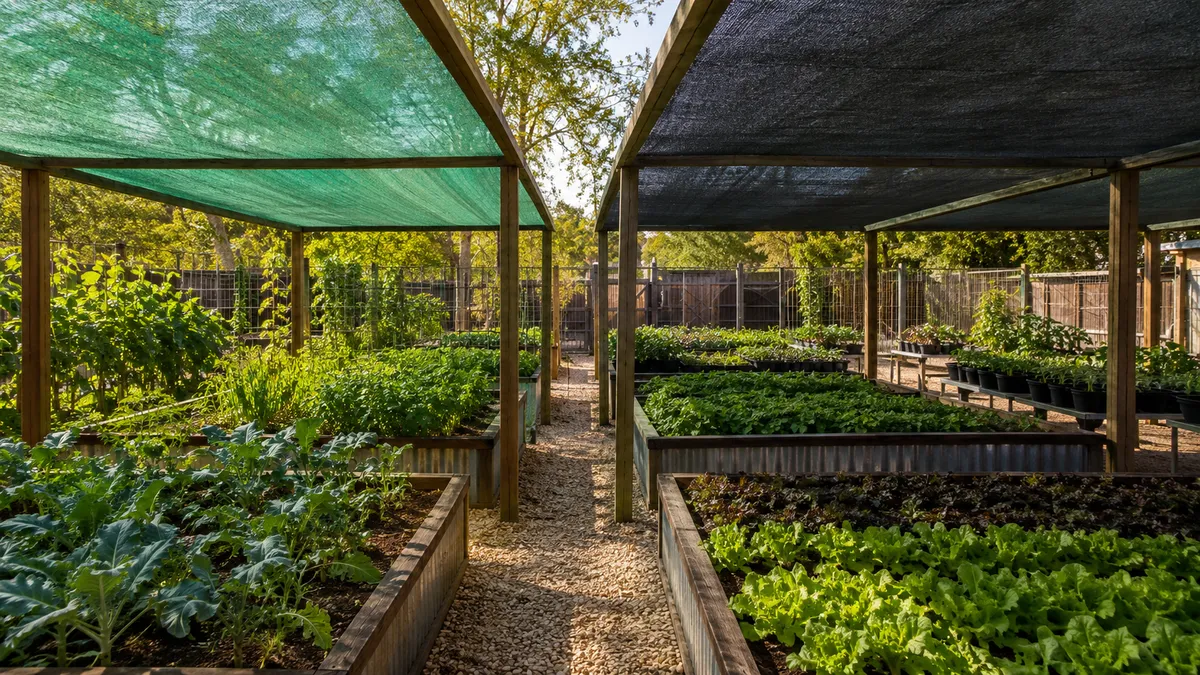
50% vs 70% Shade Cloth
Use this when 50 vs 70 shade cloth is closer to the real constraint than the current page.
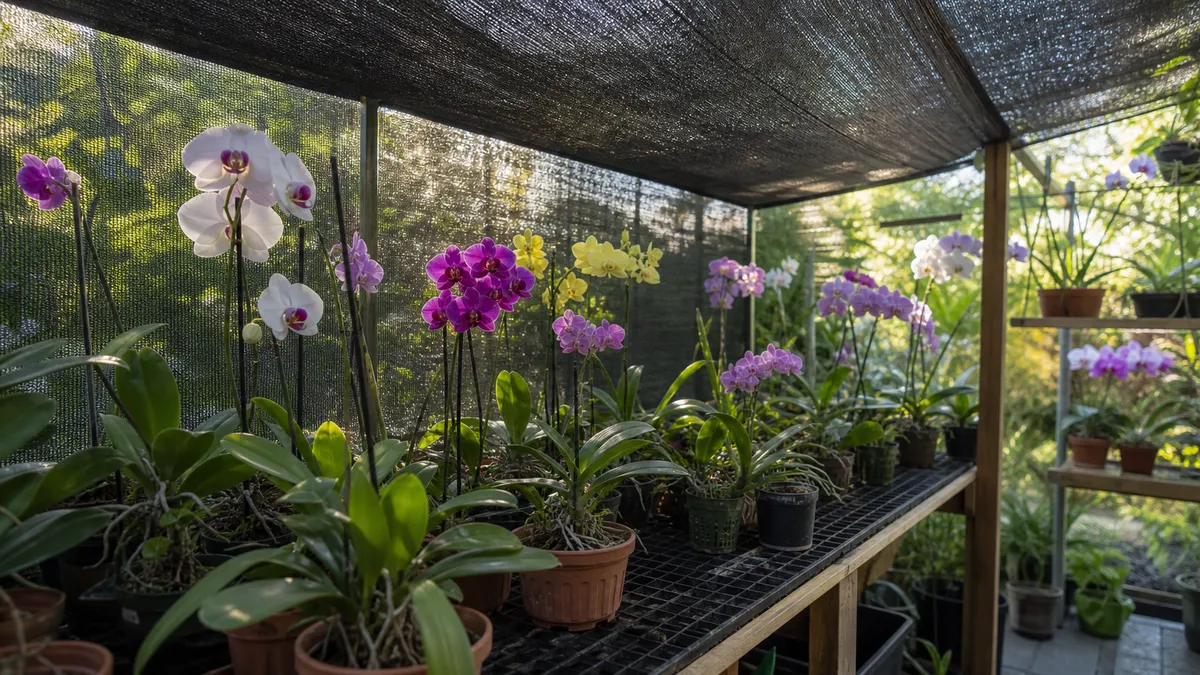
Shade Cloth for Orchids
Use this when shade cloth for orchids is closer to the real constraint than the current page.
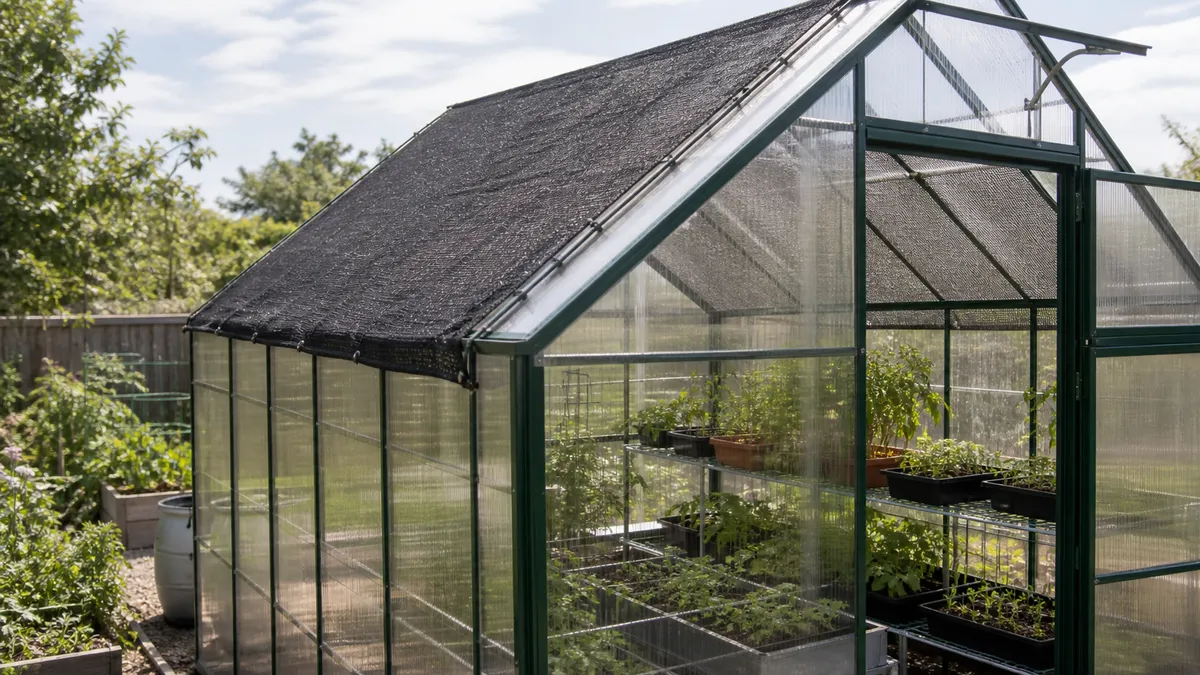
Shade Cloth for Greenhouse Roof
Use this when shade cloth for greenhouse roof is closer to the real constraint than the current page.
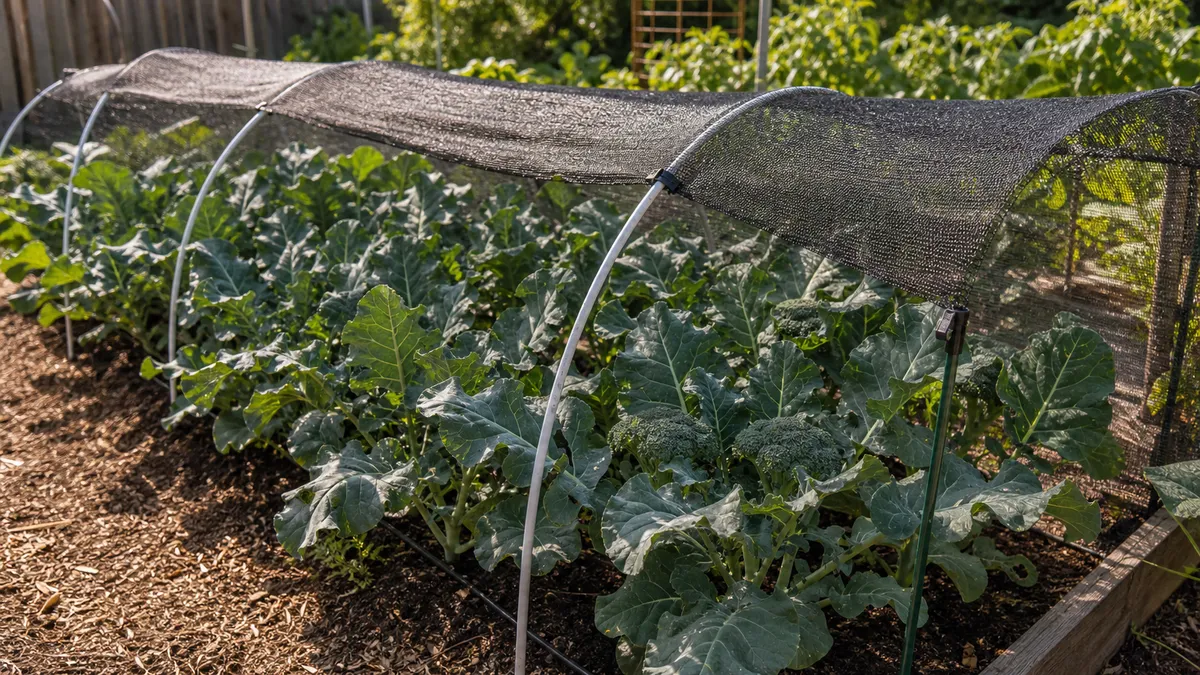
Shade Cloth for Broccoli
Use this when shade cloth for broccoli is closer to the real constraint than the current page.
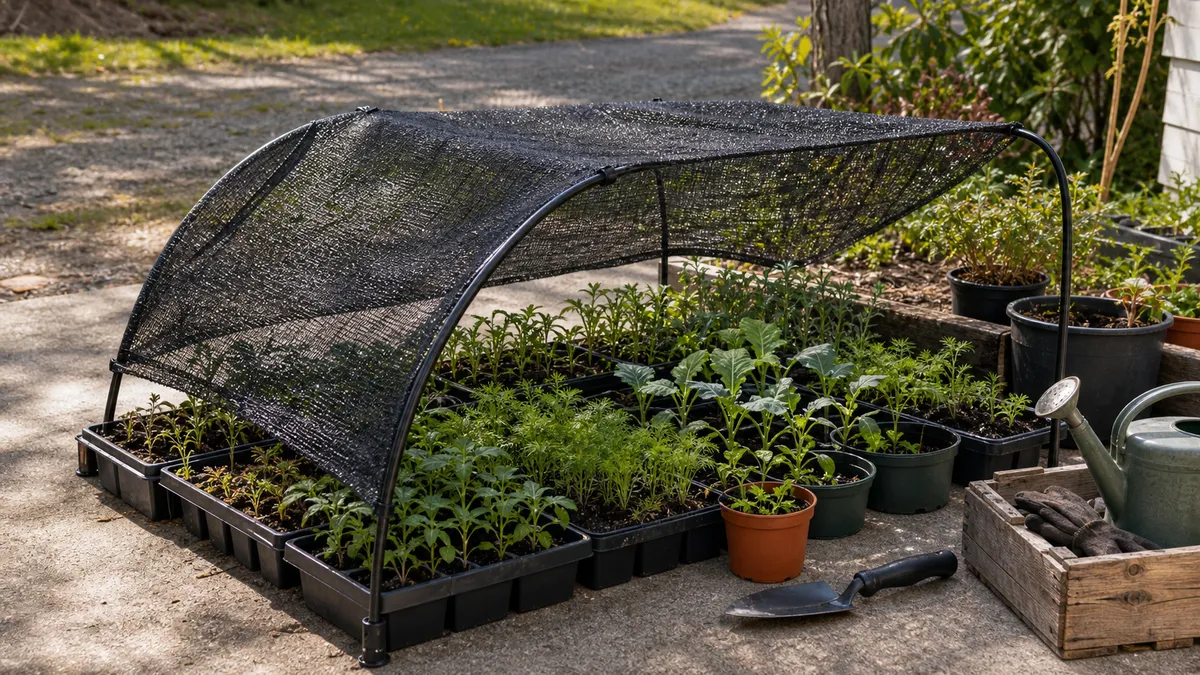
Shade Cloth for Hardening Off Plants
Use this when shade cloth for hardening off plants is closer to the real constraint than the current page.
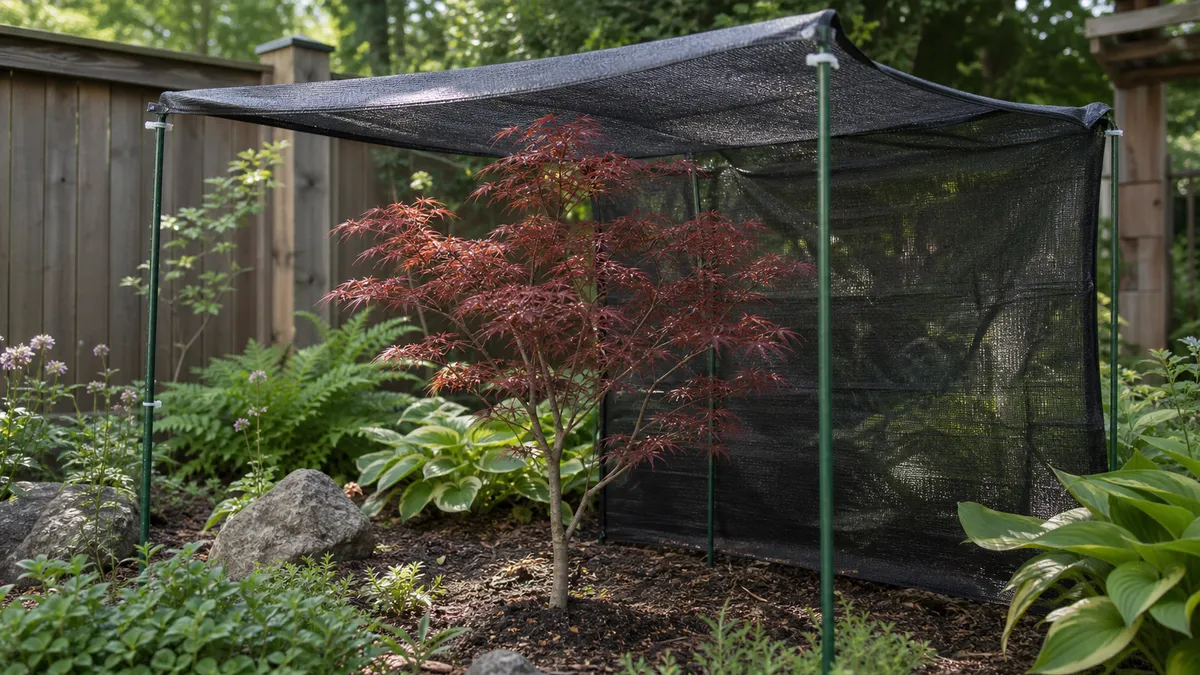
Shade Cloth for Japanese Maple
Use this when shade cloth for japanese maple is closer to the real constraint than the current page.
Questions
FAQ
What percentage shade cloth is best for vegetables?
Many vegetable gardens start with 30 percent shade for fruiting crops during severe heat, then move toward 40 to 50 percent for leafy greens, seedlings or short heat protection. Do not use one percentage for every bed. Match the cloth to crop light needs, heat timing and removal plan.
Can shade cloth make a greenhouse too dark or still too hot?
Yes. A greenhouse can look dim while trapped air stays too hot. Keep vents, doors, fans or roll-up sides working, and use a max-min thermometer to check peak temperature. If plants stretch, pale or flower poorly, reduce the density or shorten the shade period.
Is knitted or woven shade cloth better for garden beds?
Knitted UV-stabilized polyethylene is often easier for garden beds because it resists fraying when cut and works well with clips. Woven shade cloth can work when finished seams and grommets fit the frame. Compare density, edge behavior, attachment method and storage life before buying.
When should shade cloth go up and come down?
Put shade cloth up near the start of a severe heat window, before leaves scorch or flowers abort. Take it down or reduce it when cooler weather returns, harvest quality improves, seedlings establish, plants stretch, leaves pale or fruiting crops slow their flowering.
Can shade cloth replace watering, mulch or ventilation?
No. Shade cloth reduces solar load, but dry soil, hot closed tunnels and stagnant humid air need direct fixes. Check irrigation, mulch, soil moisture, vents, doors, roll-up sides and pollinator access after the cloth goes up. Fabric alone is not a full heat plan.
Can I use garden shade cloth for a patio roof?
Use garden shade cloth for plants, not as a finished patio roof. It is not a rain system, structural cover or outdoor-room product. If the goal is seating shade, weather cover, privacy or a cleaner patio look, compare awnings, sails, umbrellas, screens or pergolas instead.