
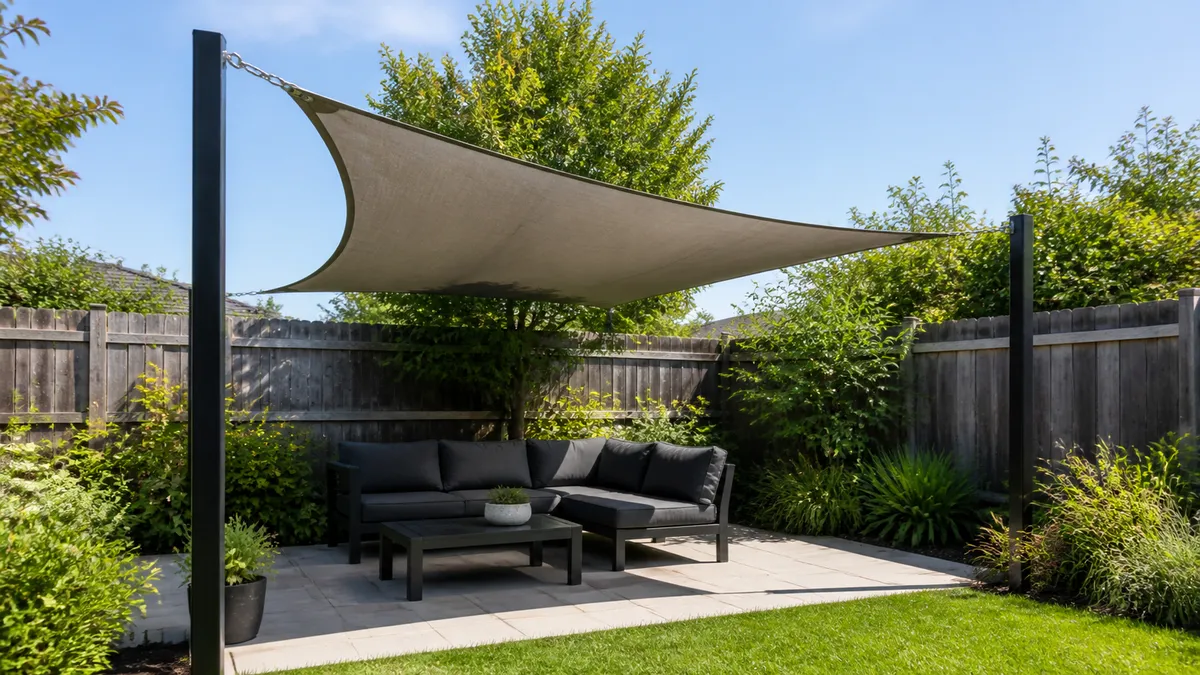
Quick Answer
Shade sail post buying summary
Buy shade sail posts only after the structure, digging area, wind exposure and corner spacing are known. Compare steel, treated timber and temporary kit posts by above-ground height, buried depth, footing, soil, drainage, 811 utility locate rules, permit triggers and hardware gap. Exact footing and load numbers are local or source-specific examples.
Choose embedded steel or treated timber posts only when the footing, soil, 811 ticket, hardware gap and wind exposure are settled; pause the purchase when any corner depends on a weak structure.
Buying Direction
What to buy after the post checks
Use this table after load path, 811, footing, wind, permit and hardware-gap checks are settled.
| Situation | Buy / use this | Why |
|---|---|---|
| Permanent patio or yard sail with posts that can be embedded | Start with galvanized steel post choices. | Confirm corrosion protection, post eye direction, concrete footing plan, 811, and local permit or engineering triggers before ordering. |
| Smaller residential sail where the manual supports timber | Compare treated timber post or durable hardwood choices. | Coolaroo lists H5 treated softwood, durable hardwood and steel as support materials, but buried length and drainage still decide whether it fits. |
| Temporary ready-to-hang shade for seasonal use | Use a light kit post or rope layout only within the product manual. | ShelterLogic describes temporary shade as temporary, securely anchored, and removed before strong wind or severe weather. |
| Fence post, deck railing, fascia, tree or slab base would carry a corner | Do not buy the post or hardware package yet. | Verify a real load path first; tensioned fabric and wind can pull far harder than a quick push on the support suggests. |
| Large sail, multiple sails on one post, high wind, pool, public space or unknown fill | Pause for local structural or permit advice. | ASCE treats wind and other environmental loads as structural design issues, and local examples show shade structures can need engineered plans. |
| Post locations are still guesses because sail size is not known | Set fixing points and hardware gaps before fabric order. | Post-to-post distance is not fabric size; leave room for turnbuckles, shackles, catenary edges and adjustment. |
Choose the post material before you choose the finish
A shade sail with posts starts with the load path, not the color of the powder coat. Coolaroo lists H5 treated softwood, Class 1 durable hardwood and steel posts as support materials, and Mississippi State University Extension lists posts, concrete, turnbuckles, chain and hooks as basic parts of a shade sail install. That does not mean any outdoor post is enough. The post has to resist tension, wind movement, weather and the wet line where concrete meets wood or steel.
Galvanized steel is usually the first permanent post to compare when the sail is open to wind or when one post may sit taller than the others. Shade Sails LLC and Sailrite both give 4 inch schedule 40 steel pipe as a supplier or retailer example, while Shade Sails Online gives square hollow steel examples under its stated normal conditions. Treat those as examples from those sources, not a national safe-size table.
A treated timber post can make sense for a smaller residential sail when the manual supports timber and the footing can drain. Shade Solutions gives a 150 mm wood-post example and Coolaroo names treated softwood or durable hardwood. Appearance should not overrule treatment class, buried depth, drainage crown or the way the post eye pulls toward the sail center.
An aluminum kit post or rope-based temporary support belongs in a different bucket. ShelterLogic's manual describes its shade sail as temporary and says it should be removed before strong wind or severe weather. Do not treat a light seasonal kit as a permanent patio structure just because it stands upright on a calm afternoon.
- Compare steel post, treated timber post and temporary kit post as separate buys.
- Treat every post size in a supplier table as source-specific unless local design confirms it.
- Reject finish-first shopping when the footing, post eye and wind exposure are still unknown.
Post materials
Post choices and what must be confirmed
Use this table to separate permanent post choices from temporary or unverified supports.
| Post choice | Where it can fit | Confirm before buying | Stop if |
|---|---|---|---|
| Galvanized steel post | Permanent exposed patio or yard sail. | Corrosion protection, wall thickness example, footing, post height and eye direction. | Wind load, soil, permit rules or multiple-sail loading are still unknown. |
| Treated timber post | Smaller residential sail where a manual supports treated wood. | Treatment class, durable species, buried length, drainage and concrete line. | The timber will sit in standing water or loose fill is counted as footing depth. |
| Durable hardwood post | Permanent residential work where the source and installer accept hardwood. | Durability class, drilling detail, cap, post eye and drainage crown. | The surface finish hides splits, rot risk or unknown treatment. |
| Aluminum kit post | Temporary or manual-limited seasonal shade. | Manual limit, anchoring method, storm removal and fire/open-flame clearance. | It is being used as a permanent substitute for embedded posts. |
| Existing structure as a corner | Only after a qualified load-path check. | Backing, rafters, masonry, bracket pull direction and fasteners. | The proposed corner is fascia, siding, trim, railing, fence or veneer only. |
Height, lean and placement: what the post has to do
Shade sail post height is not only the visible height above the patio. Coolaroo says post length must include the desired sail height plus the footing depth. That matters before checkout: a post that looks tall enough in a product photo can become too short once a large part of it is buried in concrete.
Start with the clearance you need under the lowest corner, then add slope, hardware gap and buried depth. ShelterLogic gives an 8 ft fixing-height example for its temporary sail, while Shade Sails LLC gives a 25 percent slope example for its mostly waterproof sails. Those are product examples, not universal heights for every patio.
Some sources specify a lean away from the sail. Shade Sails Online uses about 5 degrees away from sail tension, and Sailrite gives a 5 to 10 degree example. The useful point for buying is that a post may not stand perfectly vertical after layout, and the footing must be planned for the direction of pull.
The post eye also matters. Coolaroo and Shade Sails LLC say connections or eyes should face toward the middle of the sail. A post eye set in the wrong direction can twist hardware sideways, reduce adjustment room and make a good post act like a bad corner.
Custom sails should come after fixing points are known. Shade Sails LLC says custom sails are made after fixing points are installed, with eye-to-eye measurements and diagonals for four-sided sails. If the post locations are still moving, use the shade sail size calculator and installation guide before ordering fabric.
- Post length equals above-ground fixing height plus buried depth.
- Plan the low corner, slope and hardware gap before choosing a post length.
- Lean examples are source-specific; do not copy an angle until the footing and manual support it.
- Point the post eye toward the sail center so the turnbuckle pulls cleanly.
Footings, soil and drainage are not a checkout detail
A concrete footing is the part of the purchase that can make cheap posts expensive. Footing depth and width depend on sail area, post height, soil, frost, fill, wind exposure, local code and whether one post carries more than one sail. This page cannot give a universal shade sail post depth, and a product listing should not be trusted if it pretends one number fits every yard.
Use source examples to see the range. Coolaroo gives a 400 mm square by 800 mm deep hole example, with 100 mm gravel under the post in firm ground or a 100 mm concrete pad in soft ground. Shade Solutions repeats the 1/3 buried and 2/3 above-ground idea, and warns that raised beds or landfill should not count toward depth. Shade Sails Online gives deeper height-based examples under its stated conditions.
Loose soil and fill change the purchase. If the patio edge was backfilled, the post sits in a raised bed, or a previous fence post leaned, do not buy from a generic table. A small footing movement can loosen tension, wrinkle the sail and make the next wind event hit the hardware harder.
Drainage belongs in the plan before concrete arrives. Coolaroo and Shade Solutions both tell installers to slope the concrete surface away from posts, and both use a gravel or pad detail in their manuals. Crown the finished concrete away from the post so water does not sit at the steel or timber line.
Be conservative with cure time. Coolaroo and Shade Solutions give 48 hour set examples, Shade Sails Online says at least 5 days before fitting sails, and Quikrete's fast-setting timing is ordinary post-product context. Do not tension a sail from a generic fast-setting concrete time; follow the sail manual, concrete instructions and local professional advice.
Source examples
Footing examples to treat as examples, not rules
These numbers show how widely manuals and suppliers differ. They do not replace local design.
| Source | Example given | What to learn | Caveat |
|---|---|---|---|
| Coolaroo | 400 mm square by 800 mm deep, plus gravel in firm ground or pad in soft ground. | The manual separates firm and soft ground and calls for drainage away from the post. | Use as Coolaroo's example only. |
| Shade Solutions / Kemp Sails | One-third buried guidance, with loose fill or raised beds not counted. | Post length and real ground level both matter. | Local soil, wind and sail size can override it. |
| Shade Sails Online | Height-based footing examples and minimum 20 MPa concrete under stated conditions. | Taller posts often need larger footings. | Its table is not a universal US code table. |
| Shade Sails LLC / Sailrite | 3 to 6 ft deep and 1 to 1.5 ft diameter examples in supplier or retailer guidance. | Large or tall sails can require serious burial and concrete. | Use for context, then confirm local design. |
| Quikrete | General post-setting depth, diameter and fast-setting product timing. | Ordinary post concrete guidance is useful background. | Do not apply fence-post timing to a tensioned shade sail without the sail manual or engineer. |
Category research
Shade sail post categories to compare
Compare post categories after height, footing, soil, slope and wind exposure are known.
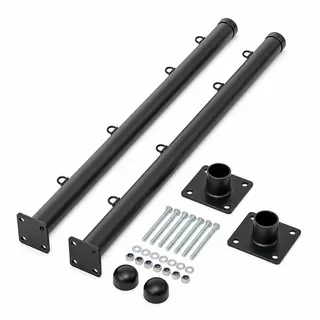
Post kit
Shade Sail Posts
For freestanding corners where no wall anchor exists.
- Independent support
- Needs footing
Check:Height, lean, embedment and soil.
Search on AmazonPole setup
Shade Sail Pole Kit
For smaller seasonal installs where a kit may fit.
- Kit-based setup
- Limited loads
Check:Manual limits and sail size.
Search on Amazon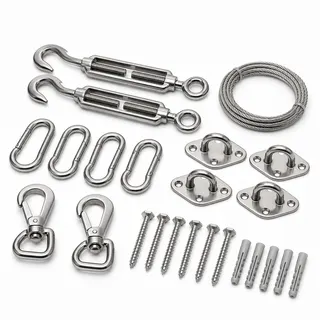
Anchors
Shade Sail Concrete Anchors
For connecting posts or plates into suitable concrete.
- Concrete connection
- Substrate-specific
Check:Concrete thickness, edge distance and fastener type.
Search on Amazon811, permits and engineering triggers before digging
Use 811 before digging any shade sail post holes. The national 811 site points readers to state one-call services, and state pages such as Oregon and Indiana give two-business-day examples. Treat those as state examples, not a national wait-time rule. Follow the local ticket process and do not start holes until utilities are marked.
Permits are local. Galveston's residential shade-structure checklist is one local example where shade structures can require site plans and engineered stamped plans with wind-load information. Scottsdale's shade-structure guidance is another local example for high-wind and monsoon conditions, engineered tension, reinforced anchor points and inspection expectations. Those examples show why the permit question matters; they do not create one rule for every address.
Wind-load sizing is structural work when the sail is large, high, permanent, public, close to a pool or exposed to coastal, desert or open-field wind. ASCE describes ASCE 7 as a nationally adopted load standard covering wind, rain, snow and other loads by reference in building codes. That is the reason a blog footing table cannot certify your posts.
Hire local help before checkout if one post carries multiple sails, the soil is unknown, the site includes fill, the sail is near a property line, children or public traffic use the space, or the only available corner is a house, fascia, deck, pergola or wall detail with an unknown load path.
- Use 811 or the state one-call service before digging.
- Confirm local permit, setback, HOA, pool and easement rules before concrete.
- Ask for engineered plans when wind load, public use, large sails or multiple sails raise the risk.
- Do not quote one safe wind speed, footing size or permit answer for every site.
Spacing and hardware gap before you order the sail
Post-to-post distance is not fabric size. The gap between a sail corner and a post eye has to hold turnbuckles, shackles, eye bolts, chain or low-stretch rope where the manual allows it. If you buy a sail the same size as the post spread, there may be no room left to tension it.
Shade Solutions gives about 240 mm diagonal clearance per corner for a 5 m by 5 m sail example. ShelterLogic gives a minimum 10 percent of sail length between fixing point and corner ring for its turnbuckle example. Shade Sails LLC says measurements for custom sails should be eye-to-eye, including diagonals for four-sided sails. Use the actual manual for the sail in front of you.
Leave adjustment thread. Shade Solutions says M8 or M10 rigging screws or turnbuckles commonly sit between the post eye and shade eye, and that the sail should be tensioned gradually with thread left for later adjustment. A turnbuckle that starts fully closed cannot help after fabric settles.
Do not rescue a bad measurement with long leaders. Shade Sails LLC warns not to add more than 24 inches on more than one corner with cable, rope or chain because long leaders on multiple corners increase movement and shock loading. Move the post, resize the sail or order custom fabric instead.
- Plan a hardware gap at every corner before final fabric size.
- Measure eye-to-eye after fixing points are real.
- Leave turnbuckle thread for later tensioning.
- Avoid long rope, chain or cable leaders on several corners.
When not to buy or install posts
Do not use ordinary fence posts, fence panels, deck railings, pergola trim, gutters, siding, brick veneer or fascia as shade sail posts unless a qualified person verifies the load path. Shade Sails LLC says fascia is generally a bad idea unless reinforced or tied adequately to rafters. Coolaroo recommends independent builder or engineer advice when structural soundness is uncertain.
A tree is not a permanent post just because it is large. ShelterLogic gives a temporary-only tree attachment example with a 10 inch tree diameter for its temporary product. That does not make trees a permanent anchor for a tensioned patio sail, and it does not remove the need to inspect bark, movement, rope damage and storm removal.
Thin slab bolt-down bases deserve the same skepticism. A base plate on a patio slab may look tidy, but the slab edge, thickness, reinforcement and anchor pullout matter. If the post can lean or the slab can crack, the right buy may be a freestanding umbrella, no-drill shade, pergola, awning or professionally designed post footing.
Do not place sail fabric over a barbecue, fire pit, patio heater or open flame. Coolaroo and ShelterLogic both call out barbecue, fire or open-flame cautions in their location guidance. Shade the seating or prep area instead of putting heat under fabric.
Do not buy permanent posts when the site requires removal during storms and no one will remove the sail. Coolaroo ready-to-hang guidance and ShelterLogic both point to taking sails down before strong storms or severe weather. A smaller removable shade may be the safer purchase.
Do not use
Weak post substitutes to reject or verify
These are common reasons to pause the purchase before concrete or hardware.
| Planned support | Why it is risky | What to do instead |
|---|---|---|
| Fence post or fence panel | It may be built for boundary loads, not fabric tension and wind. | Install a verified post or choose non-tension shade. |
| Deck railing | Railings are not automatically designed for sail corner pull. | Use a designed post, verified beam, or another shade type. |
| Fascia, gutter, siding or trim | Decorative or drainage parts are not the structural load path. | Verify rafter or wall framing before any anchor. |
| Brick veneer or unverified masonry | Veneer can hide weak backing and poor pull direction. | Use a masonry specialist or a different corner. |
| Tree | A manual may allow temporary attachment only. | Use temporary shade within the manual or avoid the tree. |
| Surface base on thin slab | Anchor pullout and slab cracking are possible under sail load. | Confirm slab design or use embedded footings. |
Shopping checklist for a safe post purchase
The shopping list is bigger than the posts. Before checkout, write down the post material, above-ground height, buried depth, cap or coating, post eye, turnbuckle, shackle, pad eye or eye bolt where a verified structure is used, concrete, gravel base, temporary bracing, anti-seize or lubricant for threaded hardware, and the 811 ticket number.
Add documents where the site needs them. A permit application, engineered plans, HOA approval or installer drawing is not an accessory, but it may be the piece that decides whether the project can happen. Do not buy steel or timber first and hope paperwork will catch up.
Accessories do not make a weak post safe. A stronger turnbuckle can transfer more force into the same weak corner. A larger shackle can still pull from an unverified fascia board. A taller steel post still needs the footing, lean, drainage and soil plan that matches its height.
Use the installation guide for the full work sequence and the size calculator once fixing points are clear. This page should stop the wrong purchase before concrete is mixed; it is not a replacement for local structural advice.
- Post material, treatment or galvanizing, cap and corrosion exposure.
- Above-ground height, buried depth, lean direction and post eye location.
- Turnbuckles, shackles, eye bolts or pad eyes that match the verified anchor.
- Concrete, gravel base, drainage crown, bracing and cure-time instructions.
- 811 ticket, utility markings, permit requirements and engineered plans if required.
Watch-outs
Before you buy or install
- Do not tension a shade sail from fascia, siding, fence posts, deck rails, trees or slab bases without a verified load path.
- Do not dig post holes before 811 or the local one-call service marks utilities.
- Do not tension a sail from generic fast-setting concrete timing; follow the sail manual, concrete instructions and local design advice.
- Keep barbecues, fire pits, patio heaters and open flame away from sail fabric.
- Remove temporary or ready-to-hang sails before strong storms or severe weather when the manual requires it.
Read Next
Related guides if your situation is different
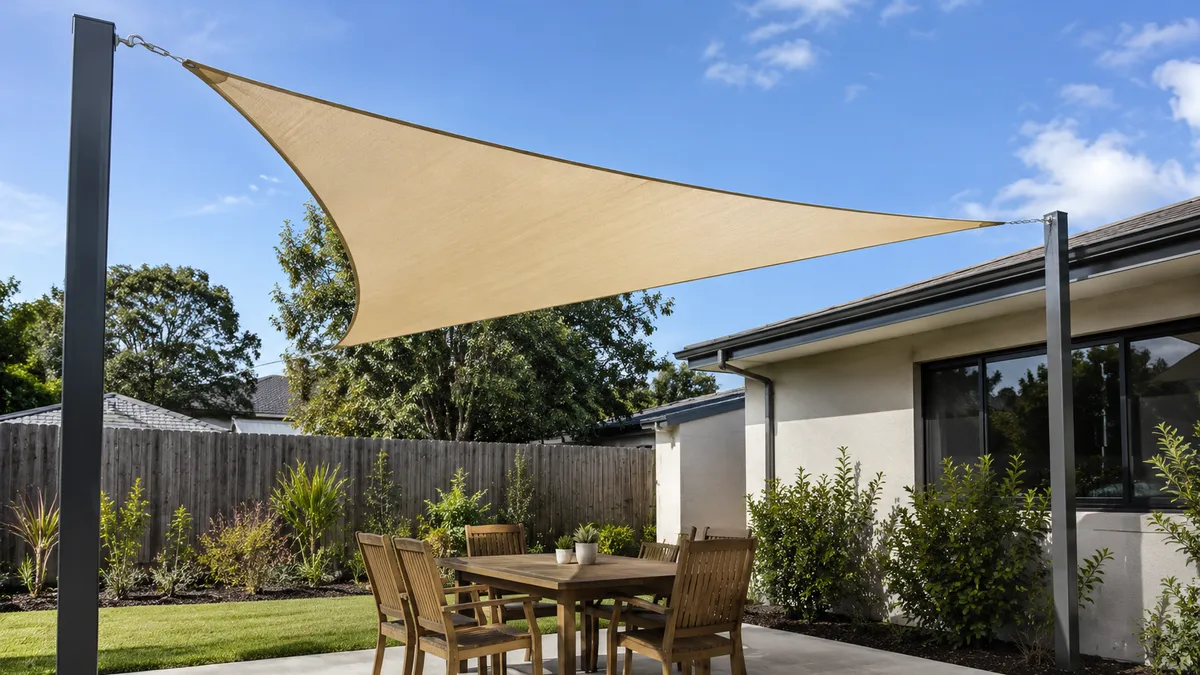
Shade Sail Guide
Use this when shade sail is closer to the real constraint than the current page.
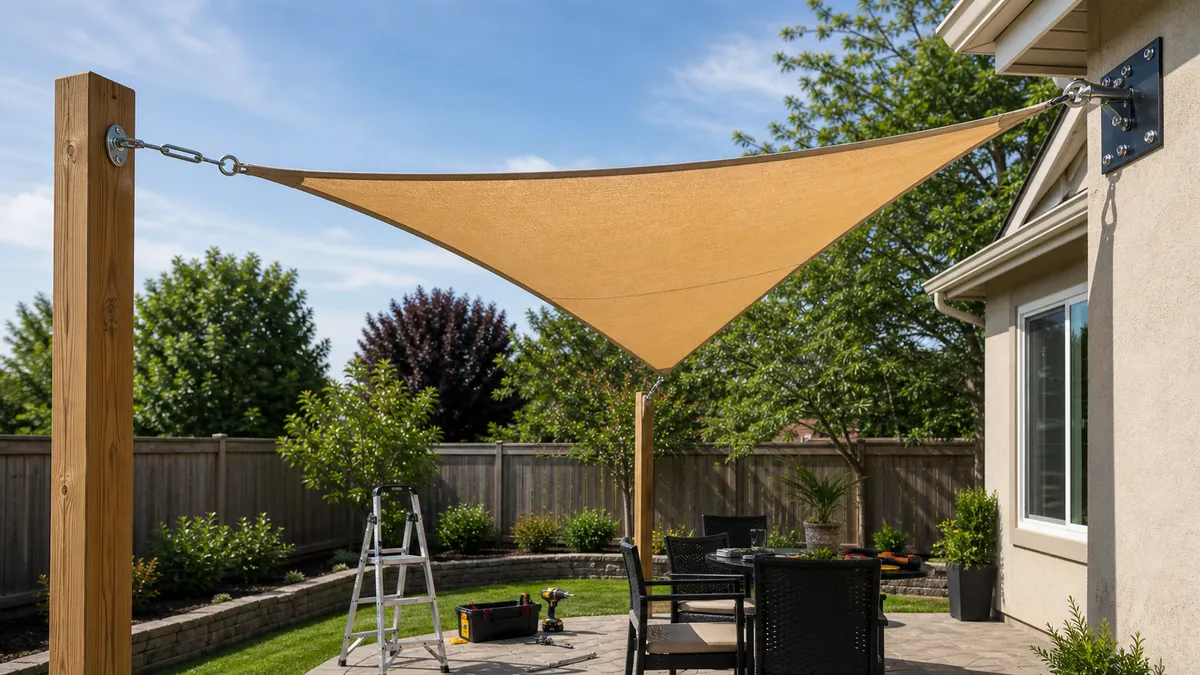
Shade Sail Installation Guide
Use this when shade sail installation is closer to the real constraint than the current page.
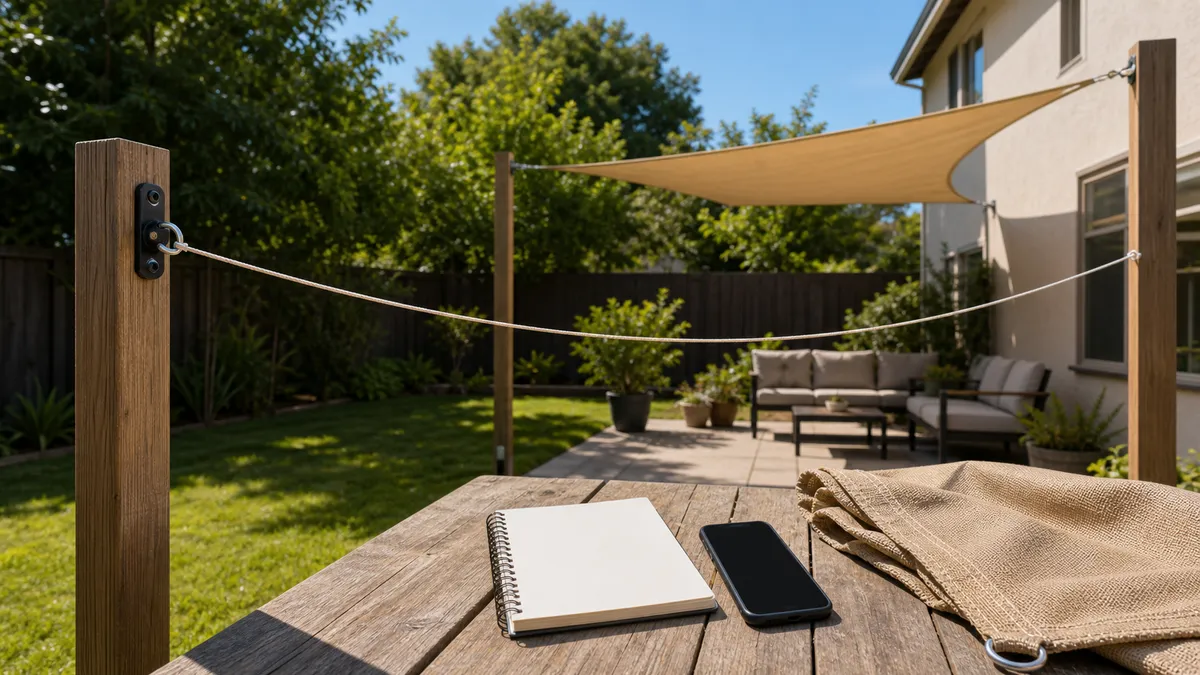
Shade Sail Size Calculator
Use this when shade sail size calculator is closer to the real constraint than the current page.
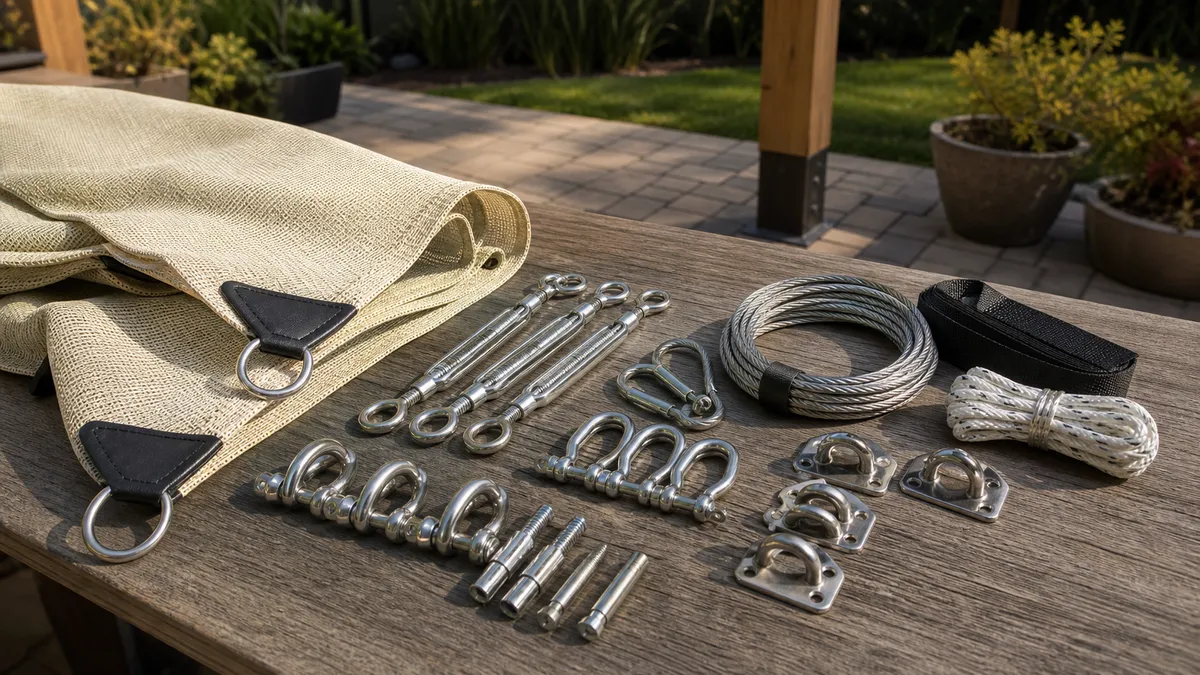
Shade Sail Fixing Kit
Use this when shade sail fixing kit is closer to the real constraint than the current page.
Questions
FAQ
What kind of posts are best for a shade sail?
Embedded galvanized steel posts are usually the first permanent posts to compare for exposed patios and taller corners. Treated timber or durable hardwood can fit smaller residential sails when the manual supports it. Light kit posts belong to temporary shade. Soil, wind, footing and code decide more than appearance.
How high should shade sail posts be?
There is no universal shade sail post height. Start with above-ground fixing height, low-corner clearance, slope, hardware gap and the buried length required by the footing plan. Coolaroo notes that post length includes desired sail height plus footing depth, so the bought post must be longer than the visible height.
Should shade sail posts lean away from the sail?
Some suppliers specify a slight lean away from sail tension. Shade Sails Online gives about 5 degrees, and Sailrite gives a 5 to 10 degree example. Treat those as source-specific examples. The post eye should align with the pull toward the sail center, and the footing must suit that pull.
How deep should shade sail post footings be?
Do not use one universal depth. Source examples vary from Coolaroo's metric hole example to supplier ranges of several feet. Actual footing design depends on sail area, post height, soil or fill, frost, wind exposure, concrete, local code and whether one post carries multiple sails.
Do I need to call 811 before digging shade sail posts?
Yes. Use 811 or the state or local one-call service before digging post holes. State wait times vary; Oregon and Indiana publish two-business-day examples, but your local ticket rules control. Do not start holes until underground utilities have been marked.
Can I use a fence post, deck railing or tree instead of a shade sail post?
Usually no for a permanent tensioned sail unless a qualified person verifies the load path. Fence posts, railings, fascia, trim and veneer are common weak corners. ShelterLogic gives a temporary-only tree example for one manual, but that does not make a tree a permanent post.