
Quick Answer
shade cloth for vegetable garden: the short version
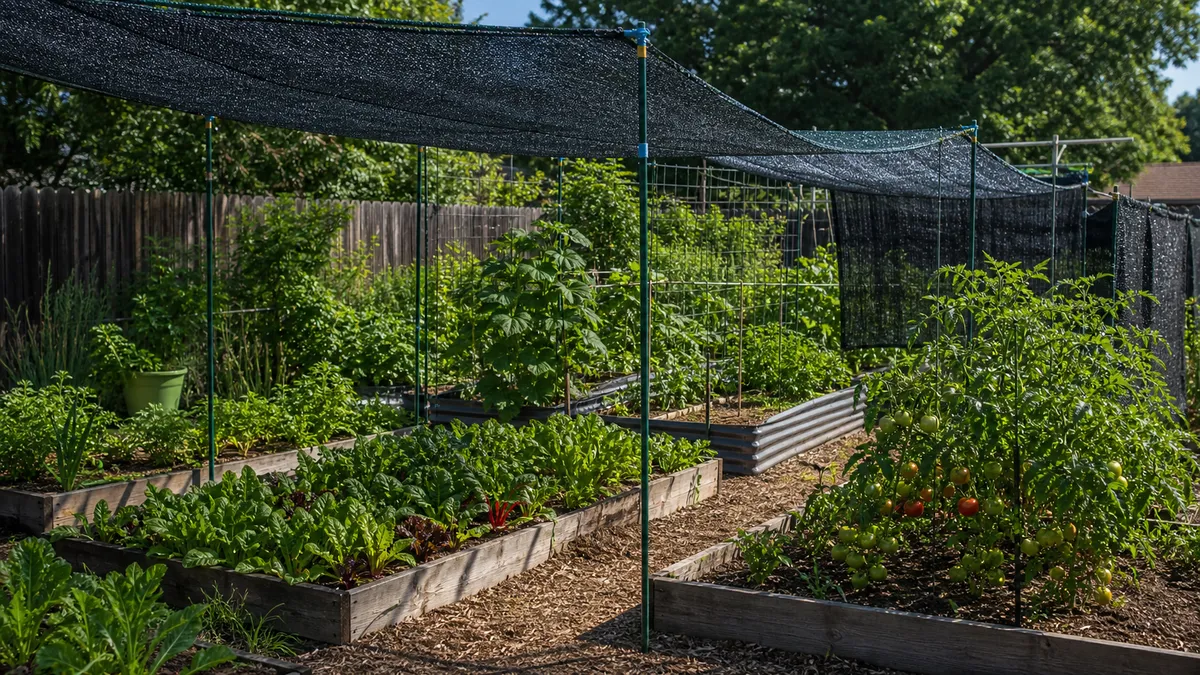
Choose vegetable-garden shade cloth by crop group. Use lighter cloth for fruiting crops, stronger temporary shade for leafy greens and seedlings, and separate pieces when one bed has crops with different light needs for better harvests during repeated summer heat waves.
Use separate shade zones when fruiting crops, leafy greens and seedlings need different light during heat.
Buying Direction
What to buy or use in a vegetable garden
Use this table for the buying direction. The detail below explains limits, costs and edge cases.
| Situation | Buy / use this | Why |
|---|---|---|
| Tomatoes and peppers share one bed | Use light afternoon shade only during heat stress. | Fruiting crops still need strong light. |
| Lettuce, spinach and herbs struggle in heat | Use stronger temporary shade over the leafy zone. | Leaf crops tolerate more cooling shade. |
| Mixed bed has fruiting and leafy crops together | Split the cloth into zones or choose the lighter percentage. | One dark cover can penalize the sun-loving crop. |
| High tunnel vegetable production overheats | Coordinate roof shade with ventilation and irrigation. | Greenhouse heat needs ventilation and water checks. |
| Seedlings are newly transplanted | Use short-term lighter shade and remove it as roots establish. | Short-term stress protection should not become permanent low light. |
Group vegetables before choosing percentage
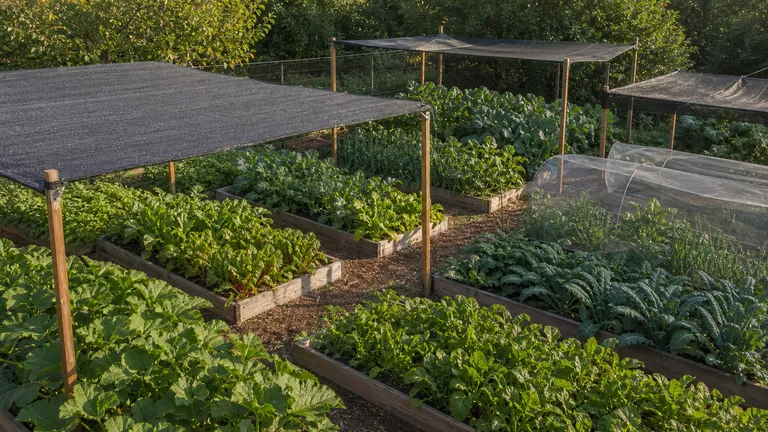
Fruiting vegetables often start around 30 percent shade, while leafy greens may justify 40 to 50 percent during heat. That split is more useful than asking for one best garden percentage. A pepper plant and a lettuce head are solving different stress problems.
Make a quick crop map before buying fabric. Mark fruiting crops, leafy crops, seedlings and empty future beds. The map may show that two smaller cloth pieces are better than one large roll.
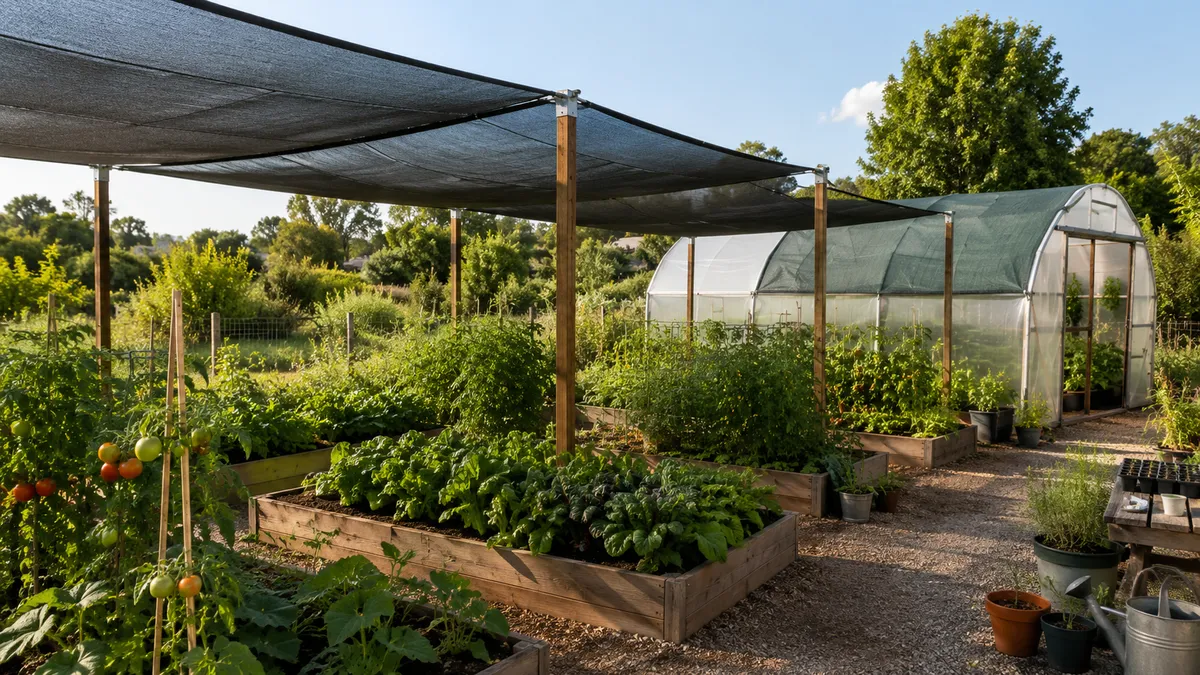
Vegetable shade should be removable by zone. Clips at each bed make it possible to uncover tomatoes while keeping lettuce protected. One continuous sheet over the whole garden makes every crop accept the same compromise.
For very hot weeks, shade may need to work with mulch and irrigation changes. A cloth above dry bare soil will reduce sun but still allow root stress. Treat the bed as a small growing area.
When using drip irrigation, check emitters after cloth is installed. Fabric can hide a clogged line until the plant wilts. A shaded bed still needs the same water audit as an exposed bed.
After the first week, compare shaded and unshaded rows of the same crop. Real garden response should decide whether the cloth stays, moves or comes off.
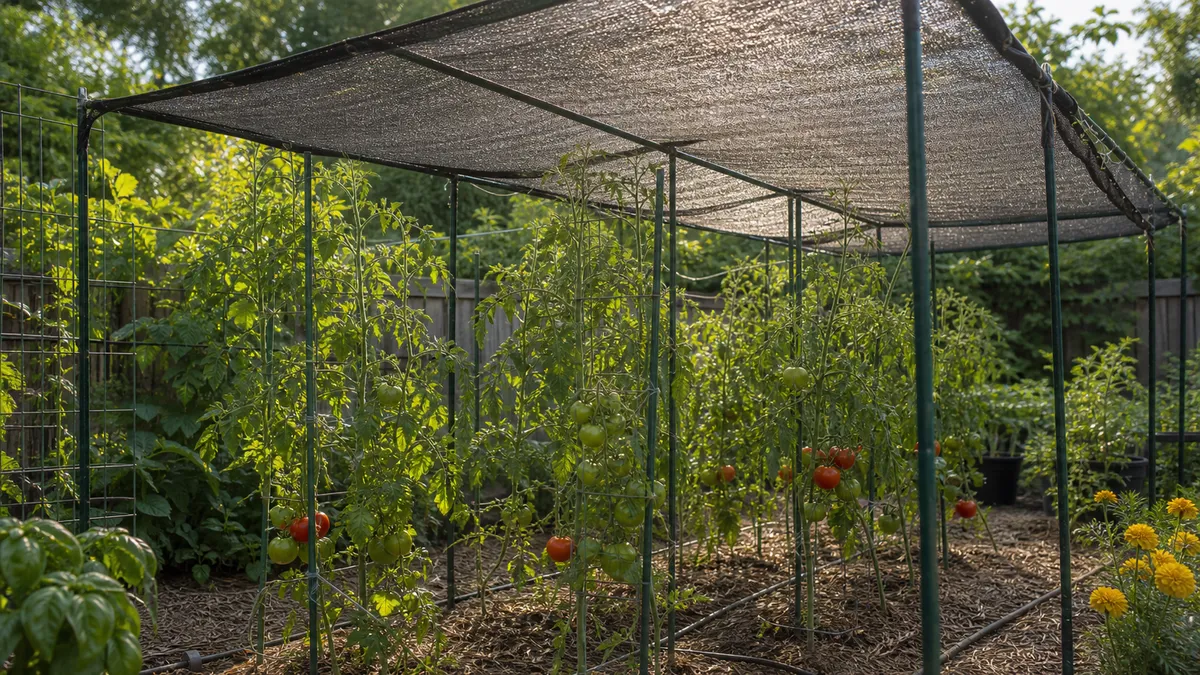
When tomatoes and peppers share one bed, use light afternoon shade only during real heat stress. Fruiting crops still need strong light, so a permanent dark cover can reduce the harvest.
For newly transplanted seedlings, choose a short-term cloth that is easy to remove. The goal is a softer landing while roots establish, not permanent low light over the whole bed.
Buying checks
Buying checks before you order
Use these checks before choosing a darker cloth, bigger awning or heavier kit.
| Check | Why it matters | Practical test |
|---|---|---|
| Map fruiting crops separately from leafy crops. | Fruiting crops still need strong light. | Tomatoes and peppers share one bed |
| Use hoops or frames that keep cloth above foliage. | Leaf crops tolerate more cooling shade. | Lettuce, spinach and herbs struggle in heat |
| Buy separate pieces when one percentage cannot serve the bed. | One dark cover can penalize the sun-loving crop. | Mixed bed has fruiting and leafy crops together |
| Remove shade after the heat event when crops need full light. | Greenhouse heat needs ventilation and water checks. | High tunnel vegetable production overheats |
Buyer guide
Vegetable garden shade categories to compare
Compare garden shade by crop group instead of buying one percentage for every bed.
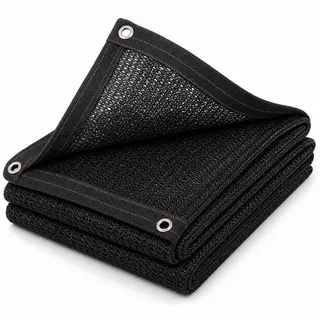
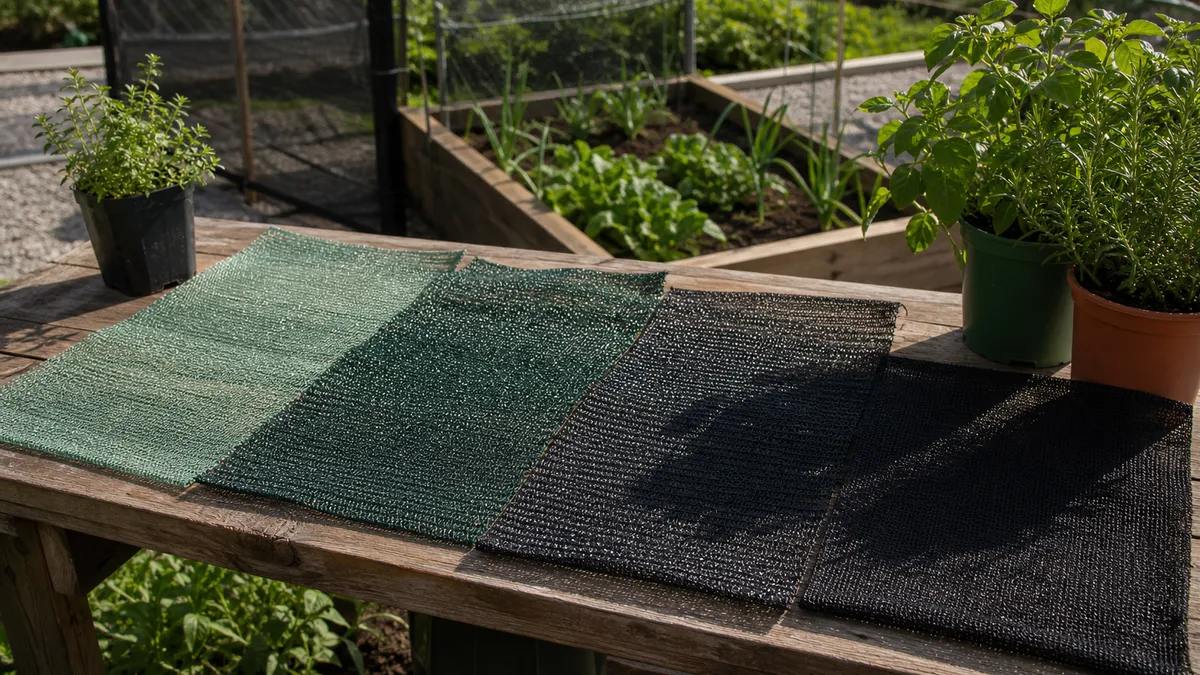
30 percent
30 Percent Shade Cloth Garden
For fruiting crops that still need strong light.
- Tomatoes and peppers
- Light heat relief
- Use during stress
Check:Flowering, ripening and whether water stress is already fixed.
Compare categories
40 percent
40 Percent Shade Cloth Garden
For leafy crops, seedlings and mixed-bed compromise shade.
- Leafy crop cooling
- Seedling transition
- Watch fruiting crops
Check:Crop mix, duration and plant stretch.
Compare categories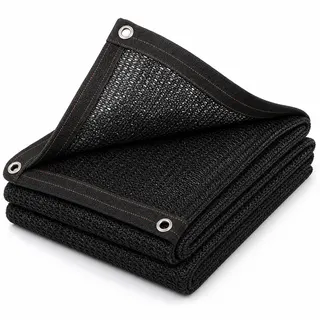
50 percent
50 Percent Shade Cloth Garden
For stronger short-term cooling over leafy zones.
- Leafy green relief
- Hot-window use
- Not universal
Check:Removal trigger, airflow and whether crops still need full sun.
Compare categoriesBed placement for hoops and walkways
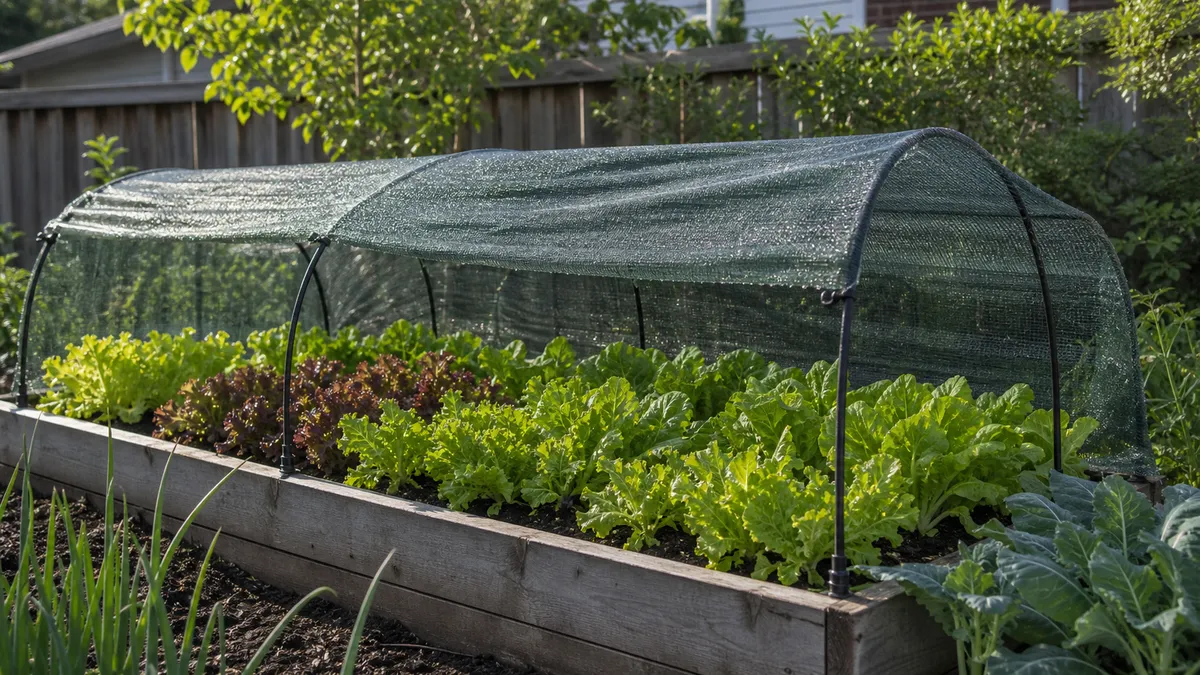
A 4 by 8 ft raised bed can use simple hoops, while multiple 30 ft rows need repeatable supports and walkway access. Keep cloth high enough for airflow and harvest. Low fabric that snags on stakes or cages becomes a daily maintenance problem.
Shade should not block irrigation checks. Drip lines, mulch, soil moisture and ventilation continue to matter after cloth is installed. A shaded but dry bed still fails.
Stakes and cages complicate cloth placement. Tomato cages, bean poles and trellises can tear fabric or create high spots where wind catches. Plan the shade support after the crop support is already drawn.
Gardeners should also consider access for weeding and harvest. A shade setup that is difficult to open will be ignored until weeds, pests or overripe produce appear. Convenience keeps the cloth maintained.
For cucumbers and squash, keep pollinator access open while using shade. A roof-like panel above the trellis can reduce scorch without closing the sides. If flowers are hidden under fabric, fruit set may suffer.
Leafy crops such as lettuce, spinach and tender herbs can take stronger temporary shade than tomatoes. Keep that cover over the leafy zone instead of darkening the entire vegetable bed.
On an exposed tomato and pepper bed, keep the cloth light, tight and temporary. Wind damage from loose fabric can be worse than the heat stress the shade was meant to solve.
Cost and buying decisions
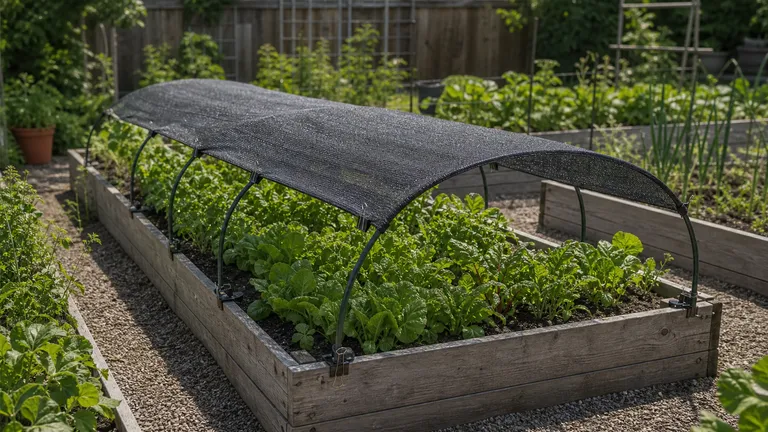
Small finished panels may sit around $20 to $80, while larger garden rolls or custom panels can reach the low hundreds. Buying one large dark roll can be wasteful when the garden needs separate percentages. Finished edges cost more but save time and reduce tearing around clips.
Budget for supports. Hoops, conduit, clamps, rope and storage matter because cloth fails when it flaps or drags across plants. The support frame is what makes shade adjustable.
Use temporary labels on cloth pieces. Mark percentage, bed, date installed and intended removal trigger. A garden with several cloths becomes confusing fast, and unlabeled shade often stays up longer than planned.
Edge height can influence pollinator movement. For flowering vegetables, leave enough side access during bloom periods. A sealed cloth tunnel may cool the bed while reducing visits to the flowers that need them.
For root crops, shade may protect soil moisture but can also slow top growth if overdone. Use lighter cloth or shorter duration unless leaf scorch is obvious. Not every vegetable wants the same summer protection.
A mixed bed with fruiting and leafy crops usually needs zones. Put stronger shade over the lettuce side, or use a lighter shared cloth so the sun-loving crop is not penalized.
When garden shade cloth is the wrong fix
Do not use shade cloth to compensate for dry soil, crowded plants or a crop planted outside a realistic season. Timing matters: install cloth before scorch, then remove it when the heat event ends. Shade can reduce heat load, but it cannot create water, airflow or the right planting calendar. Diagnose those first when the entire bed looks stressed.
Use mulch, irrigation changes, variety selection, planting date shifts or ventilation improvements when those match the cause. Cloth is best when excess sun and heat are the specific stressors.
After installation, judge the garden in the morning and afternoon. Morning stretch may signal too much shade, while afternoon scorch may signal too little. The same bed can show both if the cloth is placed poorly.
For peppers and eggplants, use the tomato logic as a starting point but watch fruit scald and flowering separately. These crops can benefit from relief while still needing substantial sunlight for production.
For gardens with timers, verify irrigation after adding shade because lower evaporation may change watering needs. The correct adjustment may be shorter watering, not more fabric.
In a compact high tunnel, roof shade should work with open vents, sidewalls and watering access. A stronger cloth cannot make up for a tunnel that holds hot air after midday.
Watch-outs
Before you buy or install
- One dark cloth can reduce yield on fruiting vegetables.
- Shade fabric can hide irrigation problems until plants decline.
- Low loose cloth can snag cages and damage leaves.
Read Next
Related guides if your situation is different
Shade Cloth Guide
Use this when shade cloth is closer to the real constraint than the current page.
Shade Cloth Percentage Guide
Use this when shade cloth percentage guide is closer to the real constraint than the current page.
Shade Cloth for Tomatoes
Use this when shade cloth for tomatoes is closer to the real constraint than the current page.
Shade Cloth for Lettuce
Use this when shade cloth for lettuce is closer to the real constraint than the current page.
Questions
FAQ
What shade cloth is best for a vegetable garden?
Most vegetable gardens should start with lighter cloth for fruiting crops and stronger temporary cloth for leafy greens or seedlings. One dark sheet over every bed can reduce yield where crops still need strong light.
Can shade cloth hurt vegetables?
Yes. Too much shade can slow flowering, ripening and sturdy growth. If plants stretch, pale or stop producing, reduce shade percentage, shorten the shaded period or uncover the sun-loving crops.
Should I shade the whole garden or only some beds?
Shade by crop group when possible. Lettuce, seedlings and stressed transplants may need more protection than tomatoes, peppers and cucumbers. Two smaller panels often work better than one dark sheet.
When should garden shade cloth be removed?
Remove shade when the heat event ends, new growth looks unstressed, flowers recover or nights cool down. A written removal trigger prevents temporary shade from becoming accidental season-long shade during summer.