
Quick Answer
Quick answer for balcony awnings
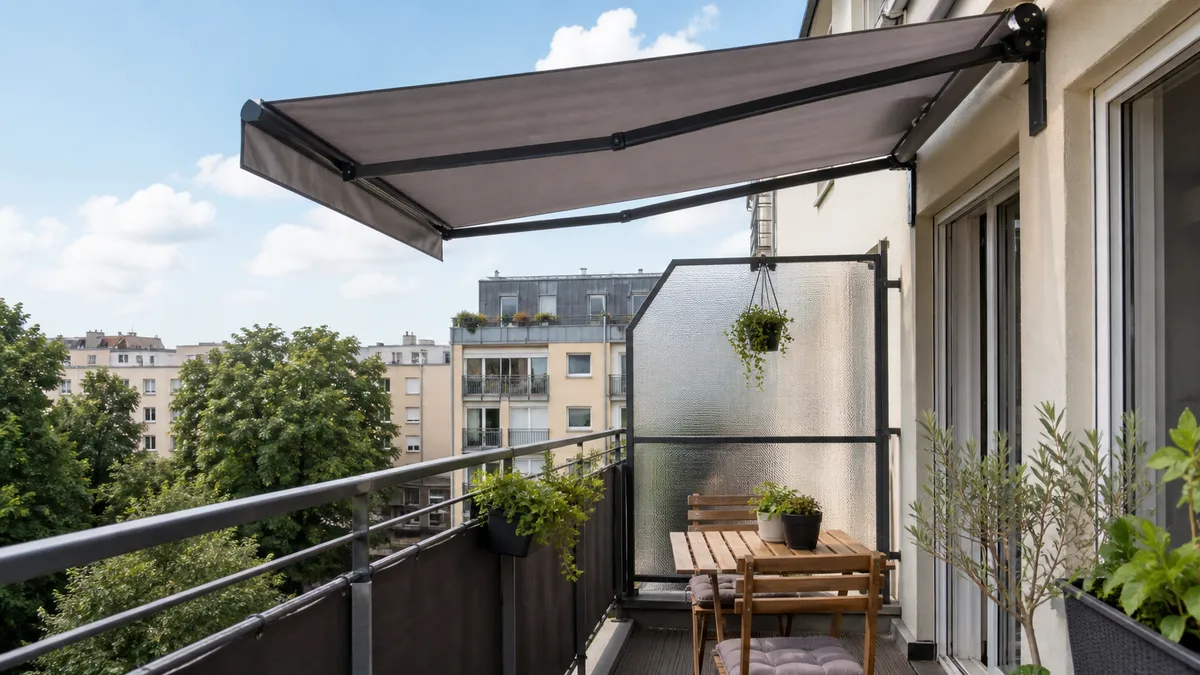
Use a fixed or retractable balcony awning only when rules allow it, the wall or ceiling frame is approved, and the front bar clears doors and rails. Renters, rail-only balconies and exposed upper floors should start with approved no-drill shade, side shade or portable shade.
Choose a mounted awning only with written approval and verified structure; use removable shade when the rail, wall, wind exposure or clearance is uncertain.
Practical routes
Practical balcony awning routes
Start with the shade that matches the balcony rule, structure and failed sun hour before comparing awning fabric or controls.
Fixed wall awning
Use only when the balcony is owned or approved, the wall or ceiling frame is verified, and runoff stays inside the allowed area.
Retractable wall awning
Use when shade should disappear outside the hot hour and the front bar clears doors, rail tops, lights and sprinkler heads.
Approved tension shade
Use only on a covered balcony with surfaces, height range and building rules that match the product documents.
Side screen or roller shade
Use when east or west glare slips under overhead fabric and privacy matters as much as shade.
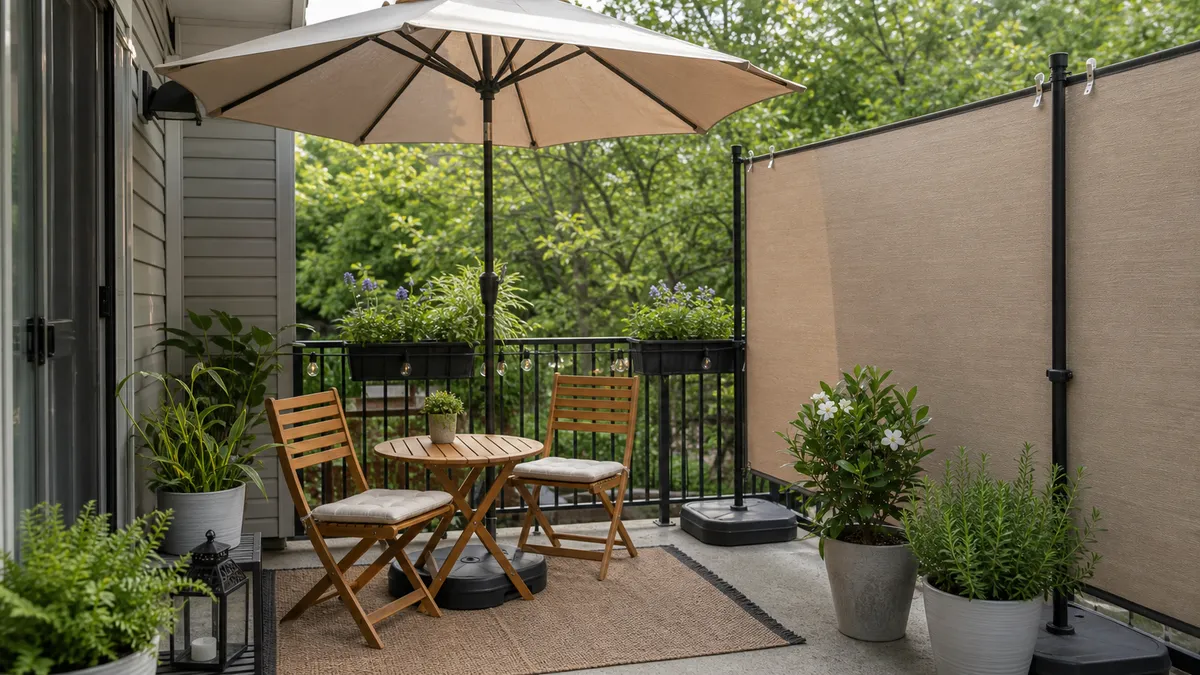
Half umbrella
Use for one chair or a bistro table when the weighted base stays inside the balcony footprint and stores quickly.
No awning
Use this answer when the only available surface is rail, glass, trim, fascia, gutter or unknown cladding.
How to choose balcony shade
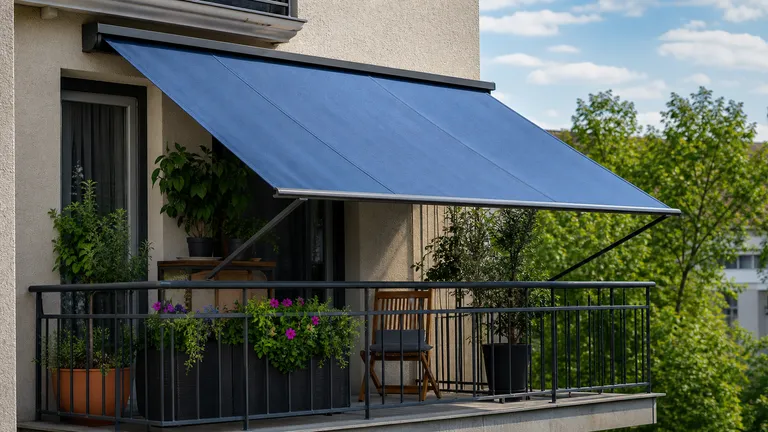
A balcony awning is worth considering only after the space passes the rule, structure and clearance checks. The U.S. Department of Energy says awnings can shade outdoor living spaces and reduce solar heat gain at windows, but that does not prove a balcony wall can take brackets or that a lease allows exterior fabric. Use the broader patio awning guide when the balcony-specific limits are solved and the remaining choice is fixed versus retractable fabric.
Use a fixed wall awning when the balcony is owned or explicitly approved, a masonry wall or structural frame is confirmed, and runoff stays inside the allowed area. Use a retractable awning when shade must disappear outside the hot hour, but the front bar, arms and fabric still need a clear path and a close-before-weather routine.
Use an approved no-drill or tension shade only on a covered balcony with surfaces that match the product limits. Use a side screen or outdoor roller shade when the sun comes from the east or west and slips under overhead fabric. Use a half umbrella or weighted balcony umbrella for one chair or bistro table. Choose no awning when rules, rails, runoff, wind or clearance fail.
- Fixed wall awning: use only with written approval and confirmed structural backing.
- Retractable awning: use when the fabric can close before wind, rain or snow.
- Approved tension shade: use only within the listed height, size and surface limits.
- Side screen or roller shade: use for low sun, privacy gaps and glare under the awning line.
- Half umbrella or weighted umbrella: use for a small seating zone inside the balcony footprint.
- No awning: use this answer when the only available surface is rail, glass, trim, fascia or unknown cladding.
Fixed, retractable and renter-safe balcony shade
A fixed awning is the simplest shape but the least forgiving approval problem. It stays visible, adds bracket loads and can direct water toward lower balconies or walkways. It fits best above a patio door or window where the building confirms a structural wall or ceiling frame and the awning stays inside the permitted projection.
A retractable awning is more flexible, not automatically safer. Plan mounting height, bracket placement and projection before the order instead of assuming the balcony can accept the fabric width. The retractable front bar must miss sliding doors, swing doors, rail tops, lights, sprinkler heads, hanging plants and any chair that moves during normal use.
Renter-safe shade usually means smaller shade, not a secret way around building rules. Justia's tenant-alteration guidance frames changes as lease- and permission-dependent, and one HOA architectural guide lists awnings, sunshades and balcony coverings as items that may need submittal. A removable shade can still be visible, leave marks or violate a rule.
- Owned masonry balcony above a patio door: fixed or retractable may work after written approval and structural confirmation.
- Covered rental balcony with flat floor and ceiling: compare approved tension shade before holes or brackets.
- Rail-only or glass-rail balcony: do not treat the rail as an anchor for wind-loaded fabric.
Category research
Balcony awning categories to compare
Compare categories after lease rules, railing limits, wind exposure and drainage are known.
Balcony cover
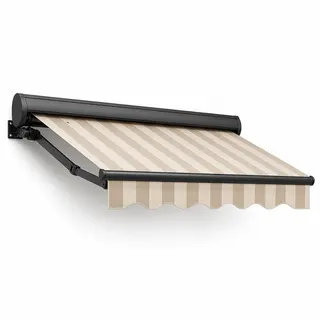
Balcony Awning
For fixed or semi-fixed shade where exterior changes are allowed.
- Balcony-specific shade
- Approval needed
Check:Lease, HOA and mounting surface.
Search on Amazon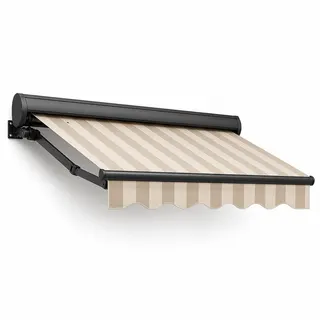
Retractable
Retractable Balcony Awning
For shade that can close when wind rises.
- Adjustable shade
- Compact use
Check:Mounting height and closing routine.
Search on Amazon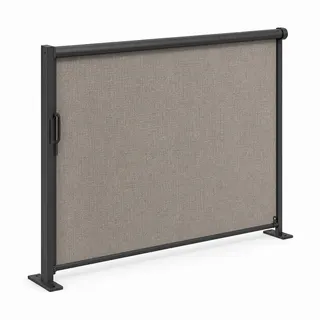
Screen
Balcony Shade Screen
For low sun, privacy and railing-level shade.
- Side shade
- Renter-friendly options
Check:Railing rules, airflow and wind.
Search on AmazonRail, wall and lease limits to check first
The stop sign is a rail-only balcony. OSHA guardrail criteria cover fall-protection forces; they do not turn a guardrail, glass balustrade, planter rail or handrail into an approved awning anchor. If a product needs the rail to carry fabric in wind, ask the building and read the product documents before buying.
Wall and ceiling surfaces need the same caution. Do not drill into stucco, cladding, balcony waterproofing, trim, gutters, fascia, soffits or unknown wall layers without approval and competent installation. California's SB-721 treats multifamily balconies and associated waterproofing as safety-related exterior elevated elements, which supports a conservative approach to holes in balcony assemblies.
If permission is the main problem, use the apartment balcony guide next. This page can help you choose the shade, but lease clauses, condo boards, HOA rules and building managers decide whether a visible awning, compression pole, rail clamp or projection is allowed.
- Ask for written approval before holes, visible exterior fabric, rail contact or projection beyond the balcony edge.
- Use building-approved structural surfaces, not trim, fascia, gutters, glass or decorative rail parts.
- Move to removable shade when the building cannot name a real attachment point.
Wind, rain, projection and clearance cautions
Balcony wind can be harsher than ground-level patio wind, especially on upper floors, open corners and gaps between buildings. The National Weather Service advises securing or bringing in loose patio and balcony items during high wind. Treat clamped fabric, umbrellas, tension poles and screens the same way unless the product manual gives a stricter rule.
Rain is not a free bonus feature. Rollac's retractable awning manual warns about high wind, rain, snow and water weight. A water-resistant canopy should not be used as a balcony roof unless the product instructions and installation slope support that exact use. Also check where water lands: lower balconies, sidewalks and neighbors matter.
Projection decides comfort on small balconies. Mark the front bar path with tape, open the door, move the chairs, stand at the rail and look up for lights, sprinkler heads and window hardware. If the sun problem is low side glare, YourHome's passive shading guidance supports using vertical or adjustable shade rather than simply adding deeper overhead projection.
- Close, remove or store fabric before weather exceeds product instructions or building rules.
- Keep runoff on your own balcony and away from lower units, walkways and shared spaces.
- Leave headroom, rail access, door movement, plant shelves, lights and sprinklers usable.
Constraint guide
Balcony awning routes by constraint
Use this after the first shade choice when one balcony limit clearly decides what can fit.
| Balcony situation | Use this shade | Why | Watch out |
|---|---|---|---|
| Approved masonry wall above a door | Fixed or retractable wall awning | A real structural surface can carry brackets when the building allows the exterior change. | Confirm mounting height, runoff and the full front-bar path before ordering. |
| Rail-only or glass-rail balcony | No mounted awning | The rail is not proof of an approved anchor for fabric loads. | Do not improvise with clamps, planter boxes, suction cups or light-duty clips. |
| Covered rental balcony with flat floor and ceiling | Approved tension-pole shade | A no-drill product may fit if height, surface and rule limits all match. | No-drill can still leave marks, be visible outside or need removal before wind. |
| Low west sun hits faces under the canopy line | Side screen, roller shade or half umbrella | Vertical shade blocks glare that a deeper overhead awning may miss. | Keep the screen inside the balcony and easy to store. |
| Exposed upper-floor balcony | Small removable shade | Less fabric and faster storage reduce wind and falling-object risk. | Do not leave umbrellas, poles or screens unattended in forecast wind. |
Small balcony examples
For a narrow rental balcony with side glare, start with a side screen, outdoor roller shade on an approved frame or half umbrella. A deeper awning usually adds projection without blocking the late sun angle. If rules allow only furniture-like items, keep the shade low, light and stored when wind rises.
For a covered balcony with a flat floor-to-ceiling span, a tension-pole shade may be worth checking. One B&Q / EVRE no-drill example is listed as a 2 x 1.2 m canopy with a 2-3 m floor-to-ceiling range and about 15 kg of product mass. Those are product-specific limits, not a promise that every covered balcony qualifies.
For an owned masonry balcony above a patio door, a retractable awning can make sense if the wall is verified, the mounting height works and the fabric closes before weather. For a glass-rail balcony, skip mounted awnings and use shade that sits on the floor. For a west-facing bistro balcony, a weighted half umbrella may do more than a wide canopy.
- Bistro table for two: use a half umbrella or small side screen if the base can stay clear of the door.
- Glass rail with no wall permission: use portable shade only and store it before wind.
- Owned wall with confirmed structure: compare fixed and retractable awnings after checking runoff.
Mistakes to avoid before buying
Do not buy the larger projection first. A wider or deeper awning can make clearance, wind and runoff worse while still missing low side sun. Test the failed hour on the balcony before choosing the shade type.
Do not treat no-drill as no-risk. A tension product still has height limits, compression surfaces, weight, storage needs and building rules. A removable screen can still become a falling object from an upper balcony.
Do not use retail badges or unsourced product claims as proof that a shade is safe. First check whether the balcony allows the shade, can hold it and can handle weather without harming people below.
- Do not drill before written approval.
- Do not use rail, glass, trim, gutter, fascia or unknown cladding as an assumed anchor.
- Do not buy extra projection for low side glare.
- Do not treat water-resistant fabric as a rain roof.
- Do not leave removable shade open in wind.
- Do not block doors, sprinklers, rail access, headroom or normal chair movement.
- Do not ignore runoff to neighbors or walkways below.
Watch-outs
Before you buy or install
- A balcony rail or glass balustrade is not an automatic awning anchor.
- No-drill shade can still violate rules, leave marks or become a wind hazard.
- Water-resistant canopy fabric should not be treated as a balcony roof.
- Upper-floor shade needs a storage routine before forecast wind.
Read Next
Related ideas
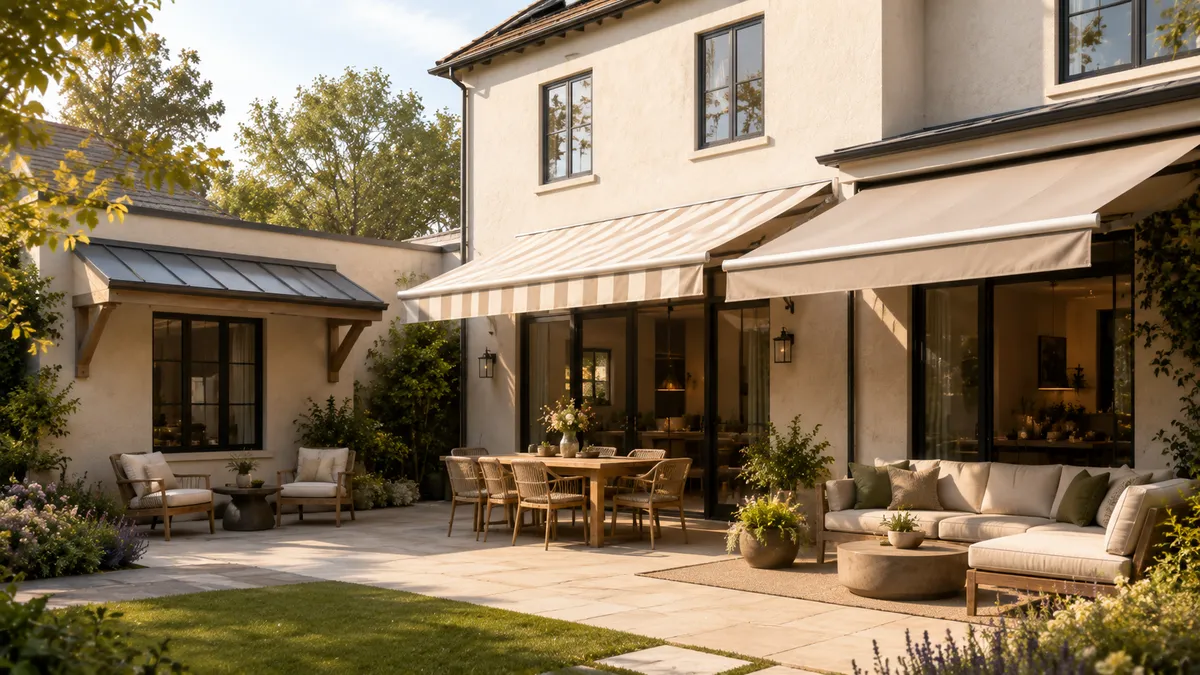
Patio Awning Guide
Use this when patio awning is closer to the real constraint than the current page.
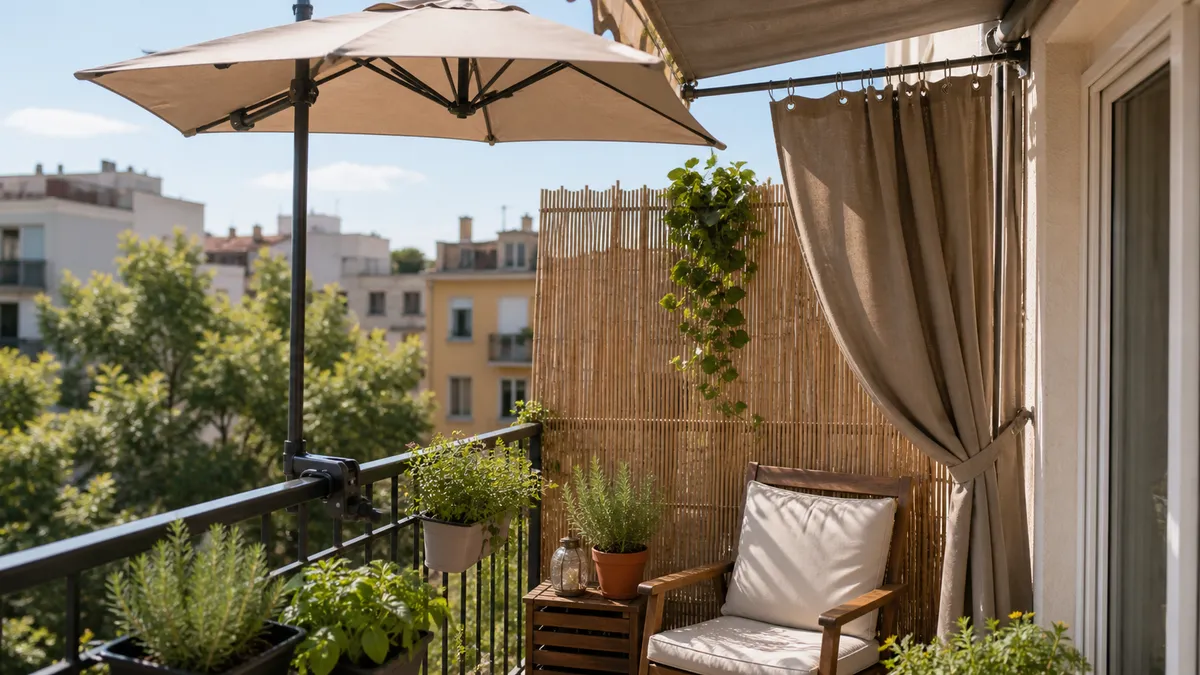
Balcony Shade Ideas for Apartments and Small Spaces
Use this when balcony shade ideas is closer to the real constraint than the current page.
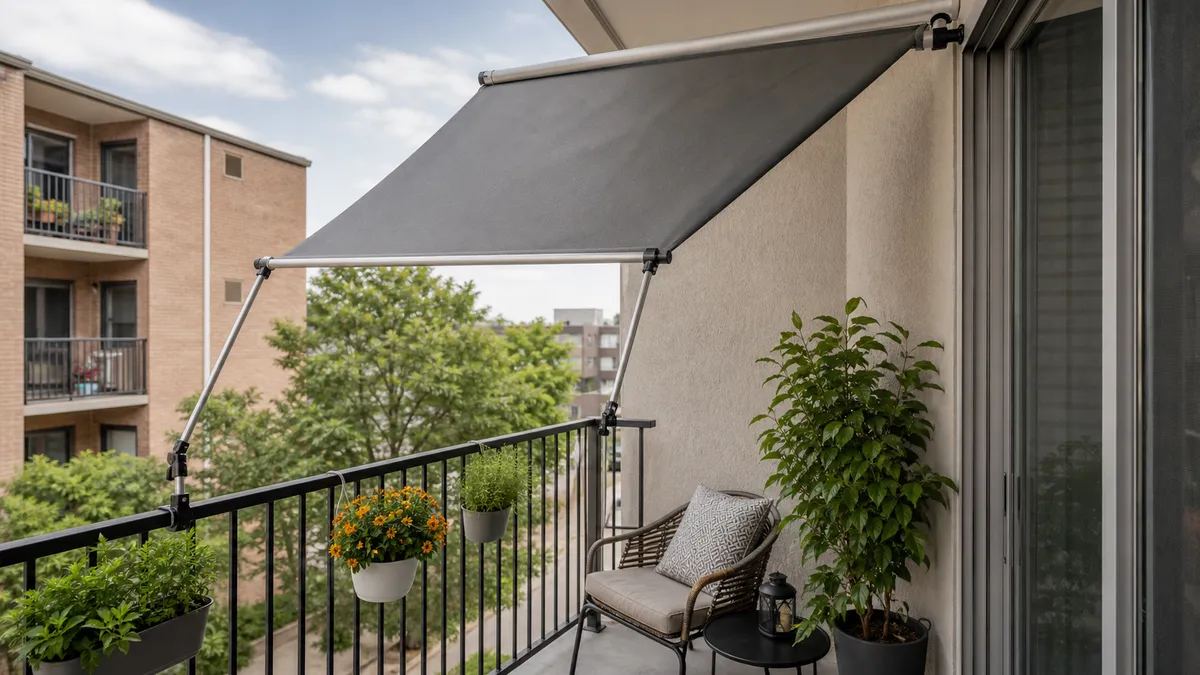
Awning for Apartment Balcony
Use this when awning for apartment balcony is closer to the real constraint than the current page.
Renter-Friendly Patio Shade
Use this when renter friendly patio shade is closer to the real constraint than the current page.
Questions
FAQ
Can you put an awning on a balcony?
Yes, but only when building rules allow it, the mounting surface is verified, and the awning has enough clearance for doors, rails and the front bar. If the only available surface is a rail, glass panel, trim or unknown wall layer, use removable shade instead.
Is a retractable awning better for a balcony than a fixed awning?
A retractable awning is better when the shade must disappear outside the hot hour or close before weather. It still needs the same structural approval as a fixed awning, plus clear arm movement, front-bar clearance and a simple routine before wind or rain.
What balcony shade works without drilling?
Tension-pole shade, a weighted half umbrella, a movable balcony umbrella, a side screen or an approved roller shade can avoid wall holes. Check product height, surface, weight and storage limits first, then check building rules. No-drill does not automatically mean renter-approved.
Can I attach an awning to a balcony railing?
Do not assume that a railing can carry an awning. A guardrail is a safety part of the balcony, not a general shade anchor. Use a rail attachment only when the building and product documents clearly allow it; otherwise keep shade freestanding or removable.
What should I use if the sun comes from the side?
Use vertical shade first: side screen, outdoor roller shade, curtain on an approved frame or half umbrella at the glare line. More overhead projection can miss low east or west sun and may create extra wind, runoff and clearance problems.