
Quick Answer
Quick answer for a retractable patio awning
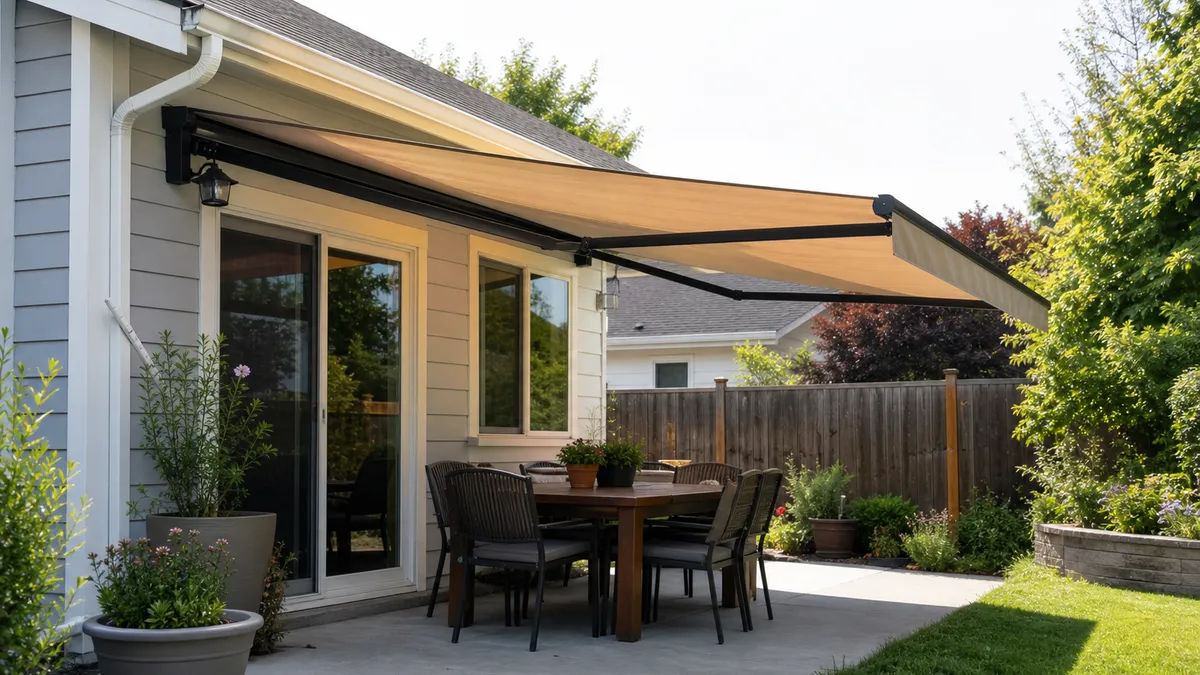
Choose a retractable patio awning by wall support, failed sun hour, projection and front-bar clearance before comparing fabric or controls. Manual fits occasional sheltered use; motorized fits daily use only when outlet access is solved. A full cassette protects closed fabric, but wind, driving rain, snow and weak walls still decide whether to buy.
Choose a retractable patio awning only after the wall, projection, controls and bad-weather routine are clear; use a side screen, freestanding shade or fixed cover when those checks fail.
Buying Direction
What to buy for your patio setup
Use this table for the buying direction before comparing specific awning categories.
| Situation | Buy / use this | Why |
|---|---|---|
| Small sheltered dining patio near a solid wall | Manual awning or basic motorized awning with modest projection | Enough shade for the table without adding extra arm length, cost or wind surface. |
| Wide patio with a load-bearing wall and daily use | Motorized retractable awning, possibly semi-cassette or full cassette | Daily opening and closing is easier when controls, outlet access and service space are planned. |
| West-facing patio with low late-day glare | Retractable awning plus side shade, or a side screen instead | Overhead fabric can miss low side sun even when the projection looks large on paper. |
| Rental, condo or apartment patio | Written approval first, then no-drill or freestanding shade if wall holes are not allowed | Exterior brackets, motors and wiring can violate lease, condo or HOA rules. |
| Exposed windy patio | Smaller retractable awning or a shade type that can be closed faster | Large fabric creates a bigger wind surface and should not be left open in bad weather. |
| No nearby protected outdoor outlet | Manual awning, or plan electrical work before choosing motorized controls | A motorized awning can add outlet, switch, sensor and electrician costs before the fabric is even compared. |
What to buy for a retractable patio awning
Start with the patio, not the catalog photo. A retractable patio awning works best when the sun problem is overhead or high enough for sloped fabric to intercept it. The U.S. Department of Energy notes that awnings can shade outdoor living spaces, but that does not make a fabric awning a rain roof or storm shelter.
For timing, use the EPA shadow rule as a field check: when your shadow is shorter than you, UV exposure is stronger, so test the patio in that short-shadow window and again during late-day glare.
A good purchase starts with four checks. First, the wall or beam must carry the brackets. Second, the projection must shade the seating area without hitting doors, lights, gutters or trim. Third, the controls must match how often the awning will be opened. Fourth, the fabric must be retracted before wind, heavy driving rain, snow or long unattended weather changes.
Manual awnings suit occasional sheltered patios where a crank wand is easy to reach. Motorized awnings suit daily use, wide patios and higher mounts, but only after outlet access is solved. SunSetter describes motorized units as using controls such as a remote or switch, and notes that a nearby protected outlet or electrical help may be needed.
A cassette protects the closed awning; it does not add magic strength. A semi-cassette or full cassette can protect fabric and arms when the awning is closed, especially on exposed walls. It does not remove the need to retract the awning when the weather turns.
- Check the wall and bracket path before projection.
- Choose controls by daily use and outlet access.
- Treat cassette protection as closed-storage protection, not storm protection.
Measure the wall, projection and front-bar path
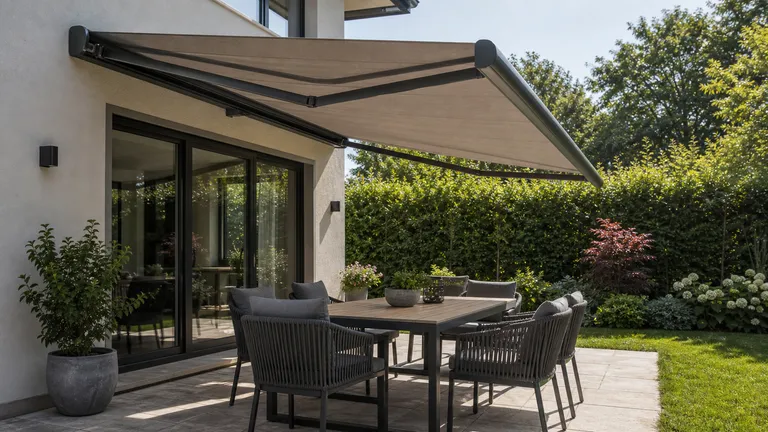
The measuring mistake that causes the most disappointment is treating product width as useful shade width. Rolltec explains that awning width is the outside frame dimension, while the fabric can be about five to six inches narrower. That matters when the goal is to cover the full door, table or sofa line.
Projection also needs care. Rolltec lists common projections such as 5 ft 4 in, 6 ft 9 in, 8 ft 8 in, 10 ft, 11 ft 8 in and 13 ft, but projection is measured along the sloped fabric to the front bar. Their example shows a 10 ft projection at 15 degrees giving about 9 ft 8 in of horizontal coverage. The ground shade is not the same as the printed projection.
Check the wall surface as carefully as the shade area. A retractable awning normally needs a flat, even mounting surface. Lights, downspouts, chimneys, gutter returns, trim boards, window heads and door swing can all interrupt the bracket line. If the only apparent mounting line is fascia, decorative trim, veneer or unknown cladding, stop before ordering a wider unit.
Mounting height affects comfort. The front bar needs enough clearance for people, chairs, door swing and the slope needed to shed light rain. If the wall is too low, a longer projection can leave the front bar too low or too flat. Use the deeper awning size guide after the first wall check, not before it.
- Measure frame width and expected fabric width separately.
- Check projection as sloped fabric, then estimate the horizontal shaded area.
- Photograph obstacles before asking for an installed quote.
Manual, motorized, open arm or cassette
Manual is the cleaner answer for many small patios. It avoids motors, remotes, sensor wiring and outlet planning. It also makes sense when the awning will be opened for weekend meals rather than every afternoon. The trade-off is simple: if the crank is awkward or the awning is wide, it may stay closed when shade is needed.
Motorized controls make more sense when the patio is used daily, the awning is wide, the mount is high or someone in the house cannot comfortably crank it. Plan the electrical side early. SunSetter says a regular plug cord may be used on some motorized units, but strongly recommends a GFCI outlet and notes that an electrician may be needed when no outlet is within reach.
Open-arm awnings leave more fabric and hardware exposed when closed. Semi-cassette and full cassette designs cover more of the closed awning, which can help on walls exposed to sun, debris or weather. Do not treat full cassette as a substitute for retraction discipline. It protects the closed awning; it does not make the extended awning safe in wind.
Keep the full manual-versus-motorized debate on the dedicated comparison page. On this page, decide whether the control style fits the patio routine, outlet location and installed total.
- Choose manual when the crank is easy and use is occasional.
- Choose motorized only after outlet and service access are clear.
- Choose cassette protection for exposed closed storage, not storm use.
Installed cost, accessories and what changes the budget
Compare installed totals, not only the awning box. HomeGuide lists installed manual retractable awnings at about $200-$3,000 and motorized installed awnings at about $1,000-$6,000. For deck, porch and patio examples, their range is about $600-$3,000 for manual and $1,000-$6,000 for motorized. Treat those as market estimates, not fixed quotes.
Labor can change the decision. HomeGuide separates installation labor at about $100-$400 for small manual jobs and $400-$1,000 for larger or motorized units. That difference becomes more important when the wall needs blocking, the bracket line is interrupted or the installer needs to work around lights, downspouts or trim.
Accessories can make a cheap awning expensive. Motor controls, switch placement, GFCI outlet work, wind sensors, sun sensors, rain sensors, cassette housing, upgraded fabric, custom brackets, backing plates and service access all affect the total. Somfy sells wind, rain and sun sensors for awnings, but sensor cost should be compared with the awning and install together.
Width increases both cost and risk. A wider unit costs more, needs more careful mounting and creates more fabric area in wind. If the patio only needs shade over a four-seat dining table, a smaller projection with good placement can beat a wide awning that is hard to close quickly.
- Ask for installed total with brackets, controls and electrical work included.
- Price sensors as convenience aids, not safety guarantees.
- Use the smallest width and projection that solve the failed sun hour.
Cost checks
What changes the real installed cost?
Use the ranges as quote-checking context, not exact local prices.
| Cost item | Why it changes the total | Verification note |
|---|---|---|
| Manual retractable awning | Usually lower complexity when the crank is reachable and the patio is modest. | HomeGuide market examples list lower installed ranges than motorized units. |
| Motorized retractable awning | Adds controls, possible outlet work, sensors and service needs. | Check the outlet and cable path before comparing fabric. |
| Installation labor | Wall access, bracket spacing, height and obstacles can change labor. | Ask whether wall preparation is included. |
| Cassette housing | Protects more of the closed awning on exposed walls. | Useful for storage protection, not for open-awning wind safety. |
| Wind, rain or sun sensors | Adds automation and convenience. | Sensors do not remove sudden-gust or unattended-weather risk. |
Local labor, wall condition, access and product size can move quotes outside broad market examples.
Fabric, color and airflow
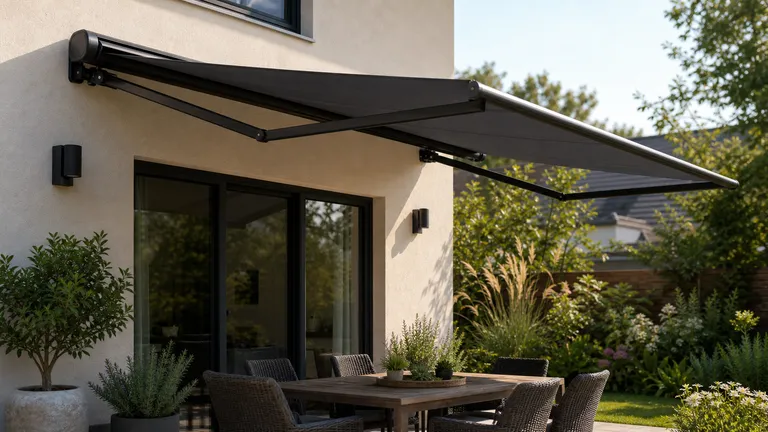
Fabric affects heat, glare, maintenance and closed storage. The Department of Energy describes modern awning fabrics such as synthetic acrylic and polyvinyl laminates, with water-repellent treatment and resistance to mildew and fading. It also notes that opaque, tightly woven fabric blocks sun better and that light colors reflect more sunlight.
That does not mean the lightest fabric is always the right one. A patio with glare off pale paving may need a color that feels calmer under the awning. A hot wall with poor airflow may need ventilation more than darker fabric. DOE also warns that awnings should allow ventilation so hot air does not get trapped near windows.
Side curtains and drop panels can make a patio feel more protected, but they can also trap heat. If the dining area already feels still after midday, leave air gaps or choose a side screen only where the low sun enters. Do not box in a hot patio and expect the fabric percentage alone to fix it.
Closed storage matters when the awning sits under trees or weather. Rainier's owner manual advises letting acrylic fabric air dry before retracting after cleaning and warns against rolling debris into the awning. A full cassette helps when the awning is closed, but wet or dirty fabric still needs care.
- Use fabric vocabulary: acrylic, laminate, opaque weave, water-repellent treatment.
- Do not trap heat with side curtains on a still patio.
- Let wet or cleaned fabric dry before long closed storage when the manual requires it.
Awning research
Retractable patio awning types to compare
Use these checks after the wall, projection, controls and weather routine are clear.
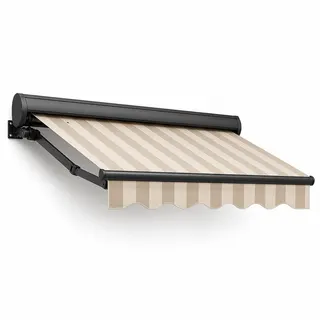
Manual
Manual retractable patio awning
For occasional shade on smaller sheltered patios.
- Lower control complexity
- Best when crank access is easy
Check:Confirm bracket path, mounting height and front-bar clearance.
Compare manual awningsMotorized
Motorized patio awning
For daily use, wide patios or high wall controls.
- Easier daily opening
- Needs outlet planning
Check:Confirm protected outlet, switch route and service access.
Compare motorized awningsCassette
Full-cassette retractable awning
For exposed walls where closed storage matters.
- Covers more closed hardware
- Still retract in bad weather
Check:Compare cassette protection with wall exposure and installed total.
Research cassette awningsWind, rain and sensor limits
Treat a retractable patio awning as sun protection first. Rainier's owner manual says the awning is designed for sun protection and should not be used in high winds or heavy driving rain. It also warns not to leave an extended awning unattended because weather can change quickly.
Rain deserves the same caution as wind. A flat or shallow awning can collect water, and the weight can stress arms, fabric and brackets. Retract before heavy driving rain, snow or any forecast that could load the fabric. If the patio needs frequent dry dining, a pergola or fixed roof may be a better match.
Sensors are helpful, but they are not permission to stop paying attention. Somfy describes wind sensors that can retract an awning when wind picks up. Rainier's manual still warns that wind and rain sensors do not protect against sudden gusts or rain. Treat automation as backup, not as the main weather plan.
Fire and heat need a hard line. Rainier's manual warns against barbecue or open flame under an open awning. Do not grill, use a fire table or place a patio heater under fabric unless the product manual clearly allows that setup and the required clearances are met.
- Retract before high wind, heavy driving rain, snow or unattended weather changes.
- Do not rely on sensors as storm protection.
- Keep grills, open flame and high heat away from fabric unless the manual allows it.
When not to buy a retractable patio awning
Do not buy a bigger awning to solve a side-sun problem. YourHome explains that east and west sun comes in at low angles, and vertical or adjustable shading can be useful. If the patio fails because late sun slips under the fabric line, use a side screen, drop shade or adjustable vertical shade instead of adding projection.
Do not mount into a wall you cannot identify. Fabric Architecture Magazine notes that parent-structure details and wall-surface material affect anchoring. A retractable awning is supported by the building, not by decorative cladding. If the load path is unclear, get installer or contractor input before ordering.
Do not buy one for frequent rain dining. A retractable awning can handle light conditions only when the manual allows it and slope is adequate, but it should be closed for heavy driving rain and snow. If keeping the table dry is the main job, compare pergolas, fixed covers or roofed structures.
Do not force a wall-mounted awning onto a rental, condo or apartment balcony without written permission. A freestanding umbrella, weighted shade, clamp screen or no-drill balcony shade may be less tidy, but it avoids holes, wiring and exterior-rule problems.
- Use side shade for low west sun.
- Use professional help when the wall substrate is unknown.
- Use freestanding or no-drill shade when exterior brackets are not allowed.
Watch-outs
Before you buy or install
- Do not treat a retractable patio awning as a storm roof.
- Do not mount into siding, stucco, veneer, fascia or trim unless the load path reaches structure.
- Do not use grills, fire tables or open flame under fabric unless the awning manual explicitly allows it.
- Do not use a wind or rain sensor as the only weather plan.
Read Next
Related guides if your situation is different
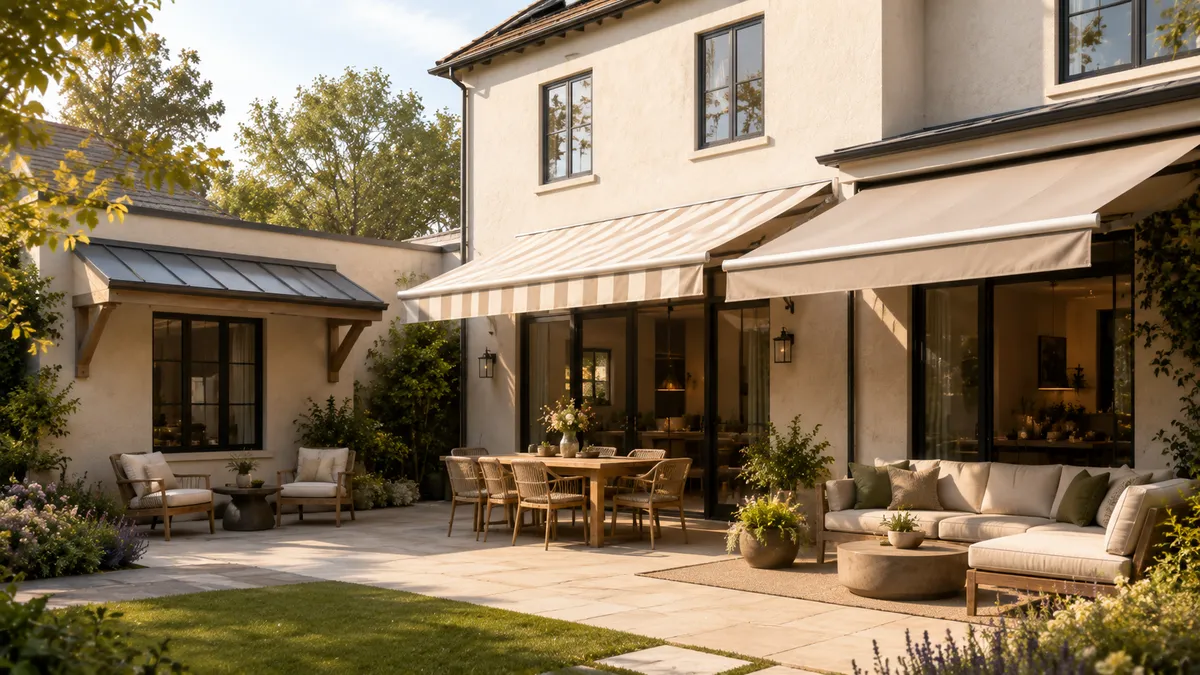
Patio Awning Guide
Use this when patio awning is closer to the real constraint than the current page.
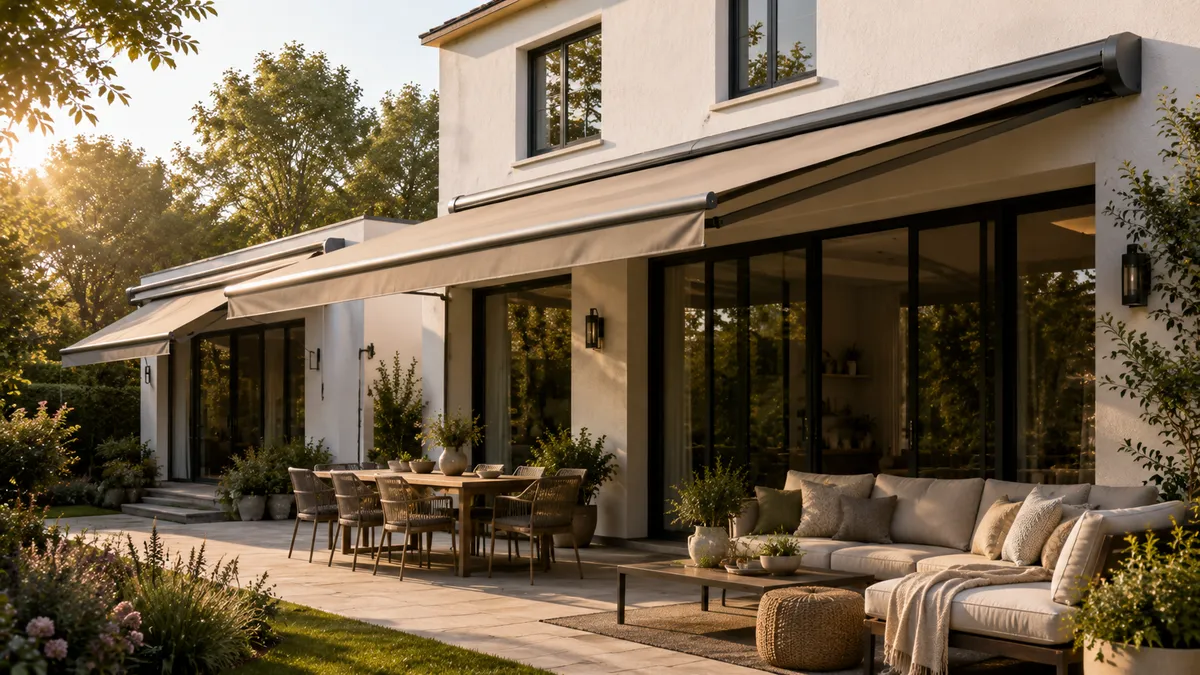
Retractable Awning Guide
Use this when retractable awning is closer to the real constraint than the current page.
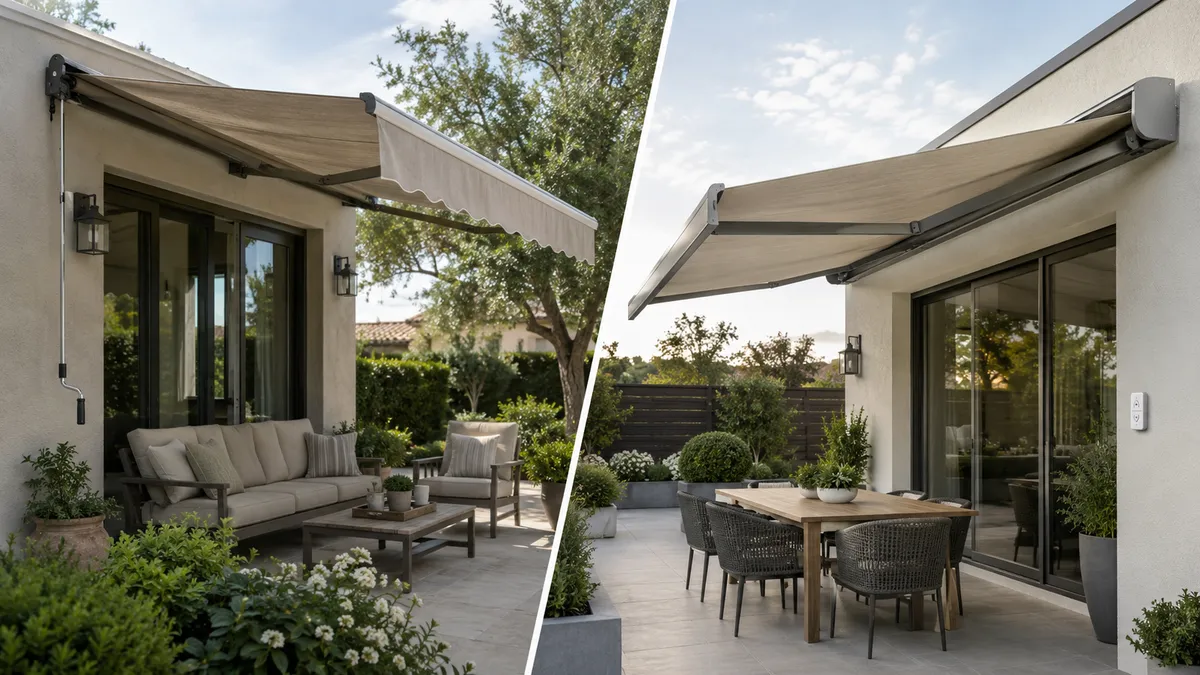
Manual vs Motorized Awning
Use this when manual vs motorized awning is closer to the real constraint than the current page.
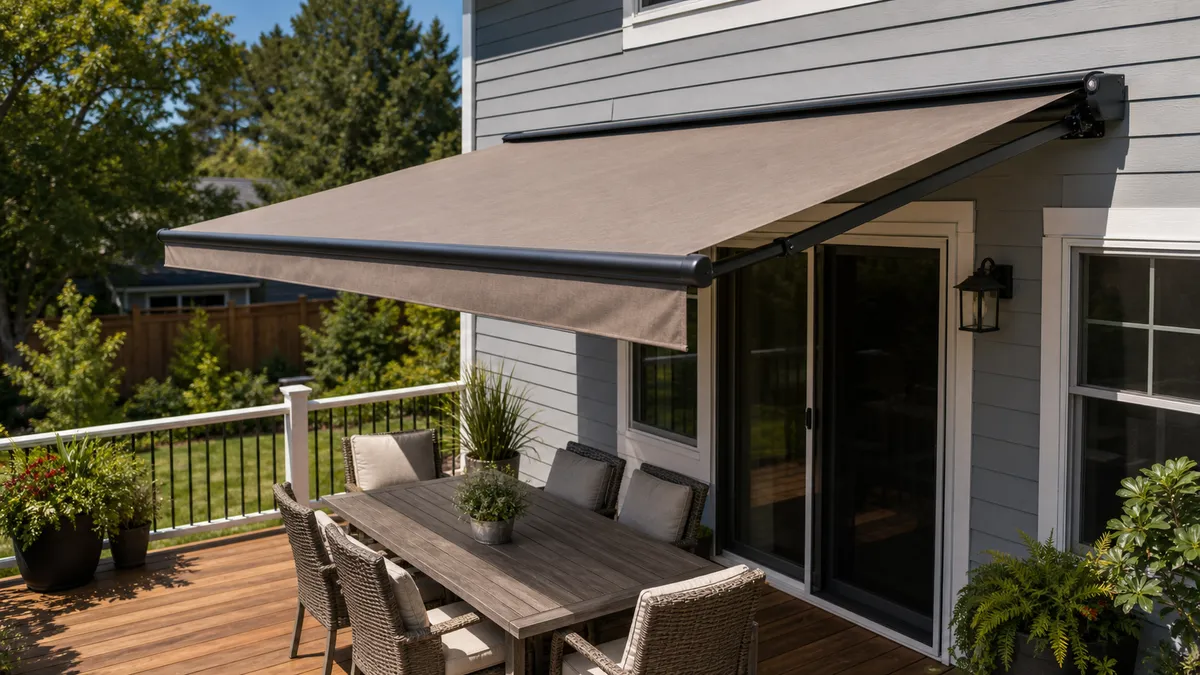
Awning Size Guide
Use this when awning size guide is closer to the real constraint than the current page.
Questions
FAQ
Is a manual or motorized retractable awning better for a patio?
Manual is better for occasional sheltered use when the crank is easy to reach. Motorized is better for daily use, wide awnings or high mounts, but only after outlet access, controls and service access are clear. If electrical work is uncertain, price that before comparing fabric.
What size retractable awning do I need for a patio?
Start with the table or seating zone that fails during the harshest sun hour. Then check mounting width, projection, front-bar path and door clearance. Frame width is not the same as fabric width, and listed projection is measured along the sloped fabric, not flat ground shade.
Can I leave a retractable awning open in rain or wind?
Do not leave it open in high wind, heavy driving rain, snow or unattended weather changes. Some sensors can trigger automatic retraction, but they do not guarantee protection from sudden gusts or water loading. Retract early when the forecast is uncertain.
Is a full cassette awning worth it?
A full cassette is worth considering on exposed walls where closed fabric and arms need more protection from sun, debris and weather. It is not necessary for every sheltered patio, and it does not make the extended awning safe in strong wind or heavy rain.
Can a retractable awning be mounted on siding or stucco?
Do not mount into decorative siding, stucco, veneer or trim alone. The brackets need a load path into structural framing, masonry or another approved support. If the substrate is unclear, get an installer or contractor to check before ordering a wider awning.
What should I choose if my patio gets low west sun?
An overhead retractable awning may miss low late-day glare because the sun comes from the side. Use a side screen, drop shade, adjustable vertical shade or a smaller awning plus side shade. Measure the failed sun hour before buying more projection.