
Quick Answer
Quick answer for deck shade
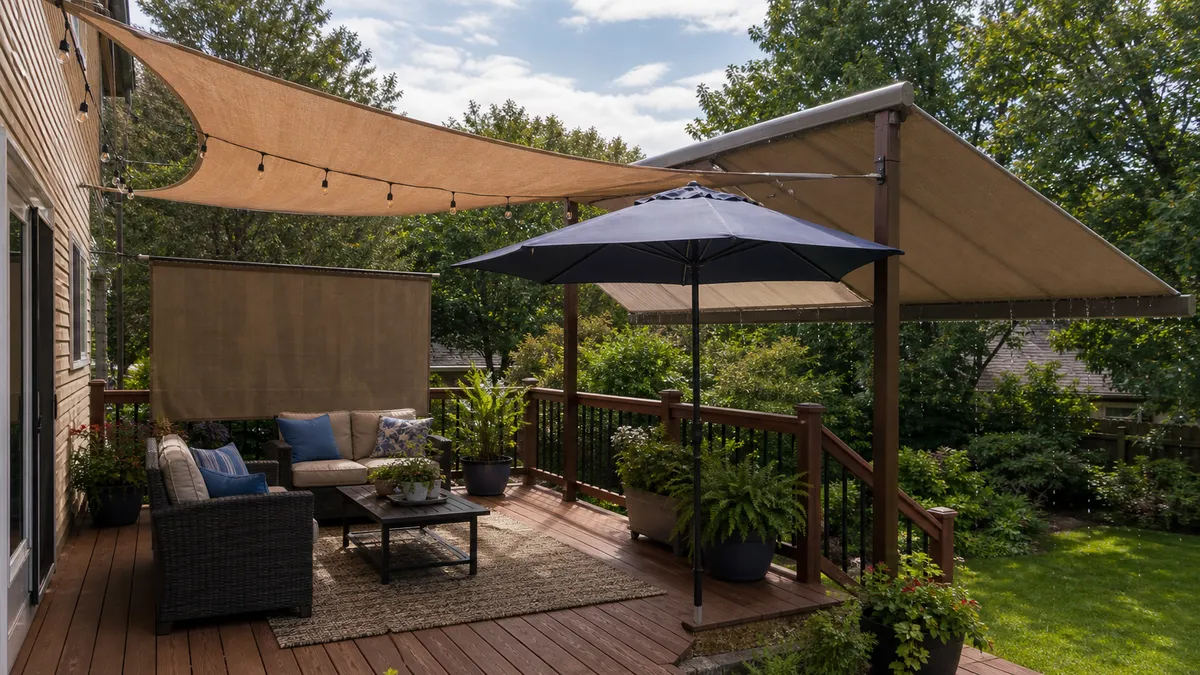
Choose deck shade by the deck problem first: overhead UV, low side sun, safe attachment, elevated wind, rain habits, no-drill limits or grill clearance. If the railing, ledger area, fascia or wall framing is unknown, start with removable shade before buying fixed hardware.
Use removable or freestanding deck shade when structure is uncertain; move to sails, awnings or pergolas only after anchors, wind takedown and local permit questions are clear.
Options
Choose the deck shade route that matches the deck limit
A deck shade idea fails when it ignores the surface under it. Start with structure, wind, sun angle, door clearance and fire clearance, then choose the shade that fits those limits.
Weighted market or table umbrella
Best for one dining table or a small seating zone. Avoid it when the base blocks chair pullback, the door swing or the only walking line. Check base weight, closed storage and whether the deck can accept the concentrated load.
Freestanding cantilever umbrella
Best when the mast must sit away from lounge chairs. Avoid it on a weak or elevated deck until you know the deck can carry the ballast; one manufacturer base calls for up to 400 lb of sand and a fully assembled weight over 500 lb.
Shade sail with real anchors
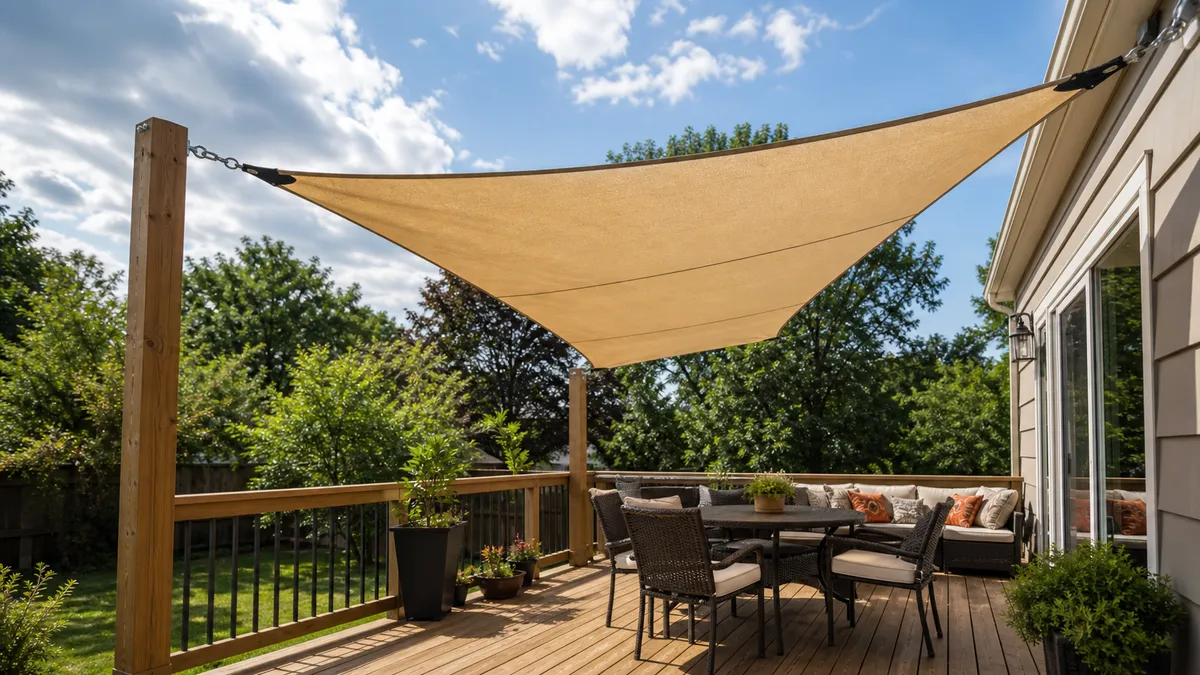
Best for open overhead shade when posts, beams or structural wall points exist. Avoid railing caps, fascia, long loose leaders and unknown framing. Use the deck sail guide before planning corners, slope or tension.
Retractable awning at the house wall
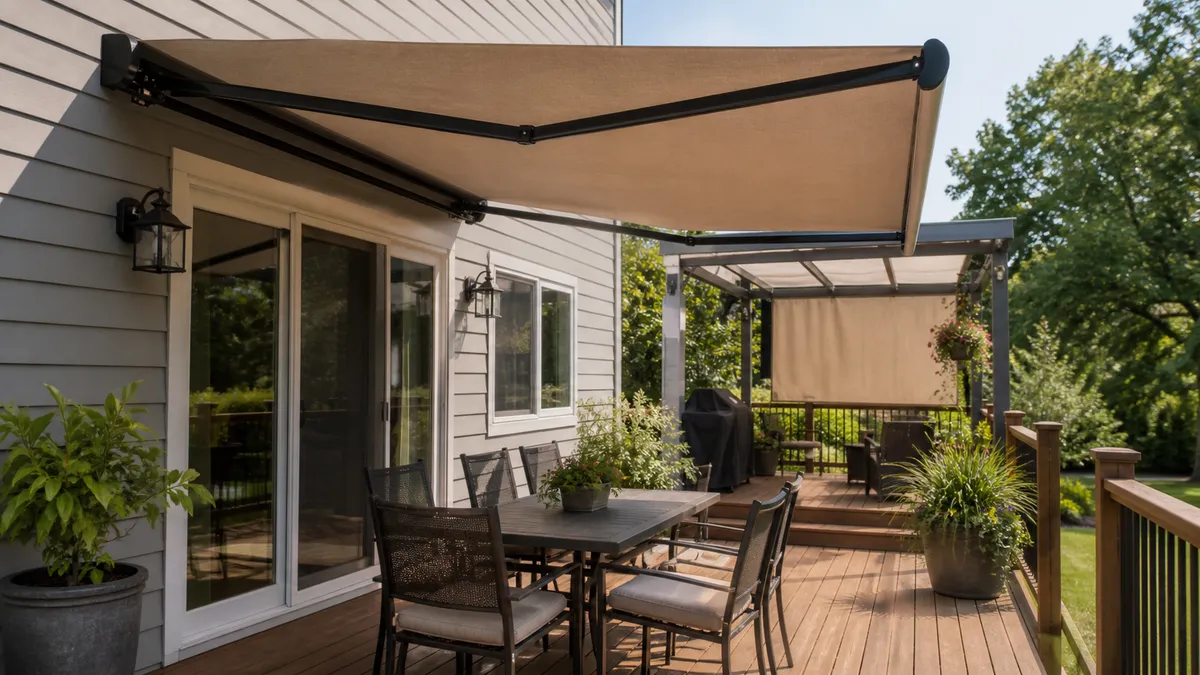
Best near a door or window when a structural wall mount is available. Avoid brick veneer, hollow masonry, fascia and heavy-rain exposure. Use the deck awning guide when brackets, projection and storm closure decide the fit.
Pergola or solid cover
Best for a permanent outdoor-room feel. Avoid it when deck posts, footings, utilities, ledger condition, permit rules or added roof load are unknown. Treat it as structure, not decor.
Roll-down screen, curtain or vertical louvre
Best for low afternoon sun and privacy. Avoid solid sail-like panels on exposed railings; leave airflow and wind load room in the plan.
Temporary canopy
Best for a party or weekend test while someone is present. Avoid leaving it open on an elevated deck, beside railings or in gusts; plan weights, tie-downs, takedown and dry storage.
Planter trellis or movable screen
Best for side shade where drilling is not allowed. Avoid tall opaque panels that lean, catch wind or narrow the stair path; keep planters stable, low and removable.
Do not turn the railing into a shade anchor
A deck railing can feel solid and still be the wrong place for shade loads. Miami County and NC DOI guardrail guidance summarize the familiar 200 lb concentrated load at the top rail, with a 50 psf infill-panel load note, but those figures describe fall protection. They do not mean a guard post, railing cap or baluster panel is approved for a shade sail corner, a cantilever umbrella mast or a solid privacy panel.
The weak point is often the load path below the rail. The Miami County deck guide warns that guard-post and rim joist connections need blocking against rotation, and that nails into end grain can withdraw. Fabric adds pull, twist and vibration in wind, so a post that works as a guard can still be a poor shade support.
House attachment needs the same caution. The American Wood Council notes that its DCA6 residential deck guidance should not be stretched into canopy or awning design, and DCA6 ledger guidance warns against attaching ledgers to exterior veneer, hollow masonry, cantilevered floor overhangs and bay windows. For deck shade, that means structural framing, solid masonry or engineered brackets have to be identified before fixed hardware goes up.
- Do not attach shade to a railing cap, unverified guard post or baluster panel.
- Do not screw brackets into deck boards and call them anchors.
- Do not use fascia, vinyl siding, brick veneer, hollow masonry, sheathing, bay-window framing or a cantilevered overhang as a shade anchor.
- Stop and get qualified help if the deck has wobble, loose rails, rot, missing flashing, water damage or unknown framing.
Attachment warning
Places to reject before choosing fixed shade
Fixed fabric and roofed shade can add pull, uplift, twist and water load. If one of these surfaces is the only planned support, switch to freestanding shade or have the structure verified before buying hardware.
- Railing caps and unverified guard posts: verify the load path through post, blocking, rim joist and footing before any shade load is added.
- Fascia, vinyl siding, brick veneer and hollow masonry: identify structural framing, solid masonry or engineered brackets instead.
- Bay windows, cantilevered floor overhangs and roof edges: do not treat trim or overhang framing as a deck shade anchor.
- Rotted deck boards, loose rails, weak ledger signs and unknown framing: repair or inspect the deck before fixed sails, awnings or pergolas.
Category research
Deck shade categories to compare
Compare categories after deck condition, railing limits, stairs and wind exposure are known.
Sail
Deck Shade Sail
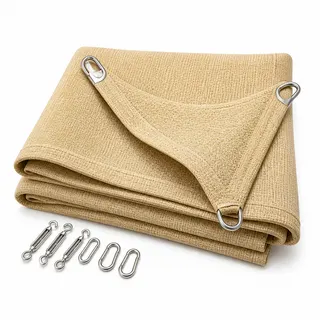
For fixed fabric shade when posts or verified anchors exist.
- Good coverage
- Anchor-dependent
Check:Posts, house attachment and slope.
Search on Amazon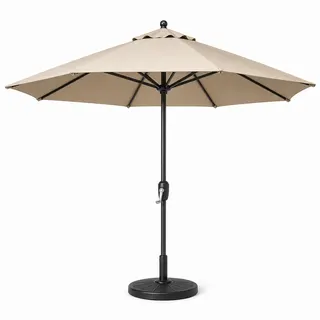
Umbrella
Deck Umbrella
For movable shade on smaller decks.
- Simple setup
- Base footprint
Check:Stairs, rail access and wind.
Search on Amazon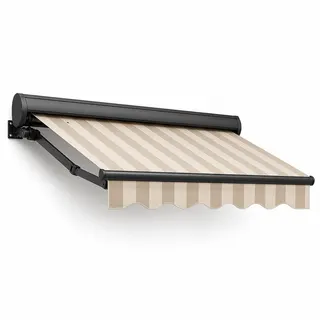
Awning
Retractable Deck Awning
For wall-mounted shade that can close before weather.
- Adjustable cover
- Structure first
Check:Wall strength and front-bar path.
Search on AmazonNo-drill deck shade that still works
No-drill deck shade is not automatically light-duty. A small table umbrella may be simple, while a large cantilever umbrella can put several hundred pounds of ballast in one corner of the deck. Treasure Garden's cantilever base manual gives one deck-relevant warning: some bases use up to 400 lb of sand, the assembled umbrella can exceed 500 lb, and the location should be level and sturdy.
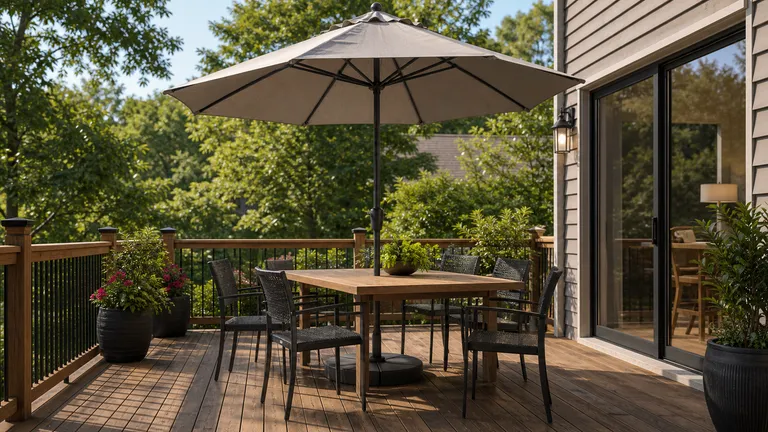
Start with the smallest shade that protects the activity zone. A table umbrella works for dining glare. A weighted market umbrella can shade one chair group if the base does not block the door, stair landing or chair pullback. A low freestanding screen or planter trellis can help with side glare without drilling into the railing.
Temporary canopies belong only while someone is there. Use them for a gathering, not as permanent deck shade. Close, lower or remove movable fabric before gusts, storms or overnight storage. If a no-drill idea needs tall opaque panels, long guy lines or heavy ballast on an elevated deck, simplify it.
No-drill fit
No-drill deck shade by deck problem
Use this table when you cannot verify safe anchors yet.
| Constraint | Try first | Why it fits | Confirm before using |
|---|---|---|---|
| Dining table glare | Table umbrella or market umbrella | It shades one activity zone without wall or railing fasteners. | Base weight, chair movement, door swing and closed storage. |
| No safe anchors | Freestanding screen or lower planter trellis | It avoids house and railing hardware while cutting side glare. | Height, wind exposure, planter stability and trip paths. |
| Off-center lounge seating | Cantilever umbrella after load check | The mast can sit away from the chairs. | Ballast may be several hundred pounds in one deck area. |
| Event-only shade | Temporary canopy while attended | It is removable and cheap to test for one afternoon. | Never leave it open in gusts, storms or overnight weather. |
| Low west sun | Vertical shade, curtain or louvre | It blocks side glare better than a larger overhead cover. | Airflow, fabric flapping and sail-like wind load. |
Wind, rain and low sun change the best idea
Midday UV and low glare are different problems. The EPA UV Index guidance treats shade as important from late morning through mid-afternoon at UV 3-7, and its shadow rule is simple: when your shadow is shorter than you are, UV exposure is higher. Overhead shade helps that window, but it may miss low afternoon sun.
For low east or west sun, vertical shade usually does more than a larger roof. YourHome explains that low-angle sun can still enter under deep verandas and pergolas, and recommends vertical louvres, blades and adjustable shade for those orientations. On a deck, that points to drop screens, roll-down exterior shades, curtains, louvres, planting or a lower trellis instead of an oversized top cover.
Wind favors shade that retracts, folds, lowers or comes down. Lowe's shade-sail guidance calls for sturdy wall studs, beams or solid structures that can handle environmental strain, and says sails should be lowered during extreme weather. Shade Sails LLC gives deck-relevant planning numbers: about 100 lb of pretension at each point, wind loads that can run roughly 5.5-15 lb per square foot of sail, and more movement when long cable or rope leaders are used.
Rain rewards slope and closure discipline. A SunSetter awning manual warns that water pooling can damage or collapse an awning and cause injury, and says awnings should be retracted during snow, heavy rain and heavy winds. A fabric roof that stays flat over a deck is not a rain plan.
When a deck shade idea becomes a permit or fire problem
A shade idea becomes a building question when it changes structure, elevation, utilities or permanent coverage. Local rules vary, so treat published city pages as examples, not national thresholds. Bend, Oregon lists permits for decks more than 30 inches above ground and for pergolas or patio covers over 12 ft high or over 200 sq ft, plus stairs, electrical, plumbing and gas or mechanical work. Naperville says elevated deck structures and structural or safety replacements need permits, and that a deck permit can include an integrated arbor, gazebo, trellis or pergola.
House attachment is another permit and inspection trigger. A retractable awning, shade sail anchor or solid cover at the wall can involve framing, masonry, flashing, weather sealing and sometimes electrical work. If the plan touches the ledger area, rim joist, siding, masonry veneer, roof edge or a raised deck frame, verify the local permit rules before ordering brackets.
Grills narrow the shade choices. Raleigh Fire cites an IFC-based open-flame restriction for combustible balconies or within 10 ft of combustible construction, with listed exceptions, and Miami-Dade Fire Rescue says to keep grills 10 ft from buildings and combustible items such as siding, deck railings, eaves and branches. Those are fire-safety examples, not a substitute for your appliance manual or local code. Do not put fabric, canvas, wood shade or a covered porch condition over a grill unless the manual and local code clearly allow the clearance.
The practical rule is conservative: keep grills, heaters, fire tables and smokers out from under fabric shade, umbrella canopies, low pergola covers and eaves unless the manual says that arrangement is allowed. If shade and cooking must share the deck, separate the cooking zone from the shaded seating zone.
Use a narrower guide when the shade type is clear
Use this page to choose the route, then move to the narrower guide before buying hardware. A sail needs deck-specific anchor position, post placement, slope, tension and unsafe-attachment checks. An awning needs house mounting, projection, door clearance, wind closure and water-pooling decisions. A pergola or solid cover needs post, footing, load and local permit work before it belongs on a deck.
If the main problem is weather, use the weather-specific guides instead of expanding a generic shade list. Wind favors removable, retractable or engineered shade. Rain favors slope, drainage and closure. Low afternoon sun favors vertical interception. Matching the guide to the problem reduces the chance of buying a larger version of the wrong idea.
Deck shade ideas should not copy balcony or backyard answers either. A balcony is ruled by leases, facade rules and tiny clearances. A backyard can often move posts, trees or canopies away from the house. A deck sits on structure that may already carry people, furniture and railings, so attachment and load checks come earlier.
- Read the deck sail guide when the plan involves sail corners, posts, tension, slope or house attachment.
- Read the awning deck guide when a wall-mounted retractable awning, brackets or projection decide the fit.
- Use the wind, rain or afternoon-sun guides when weather is the main reason the deck is unusable.
Watch-outs
Before you buy or install
- A guardrail load number is not shade-anchor approval.
- Retract, lower, close or remove fabric before heavy wind, heavy rain, snow or unattended storms.
- Do not grill under fabric or combustible shade unless the appliance manual and local code clearly allow the clearance.
- Stop before fixed shade if the deck shows rot, wobble, loose rails, water damage, missing flashing or unknown ledger condition.
Read Next
Related ideas
Patio Shade Ideas
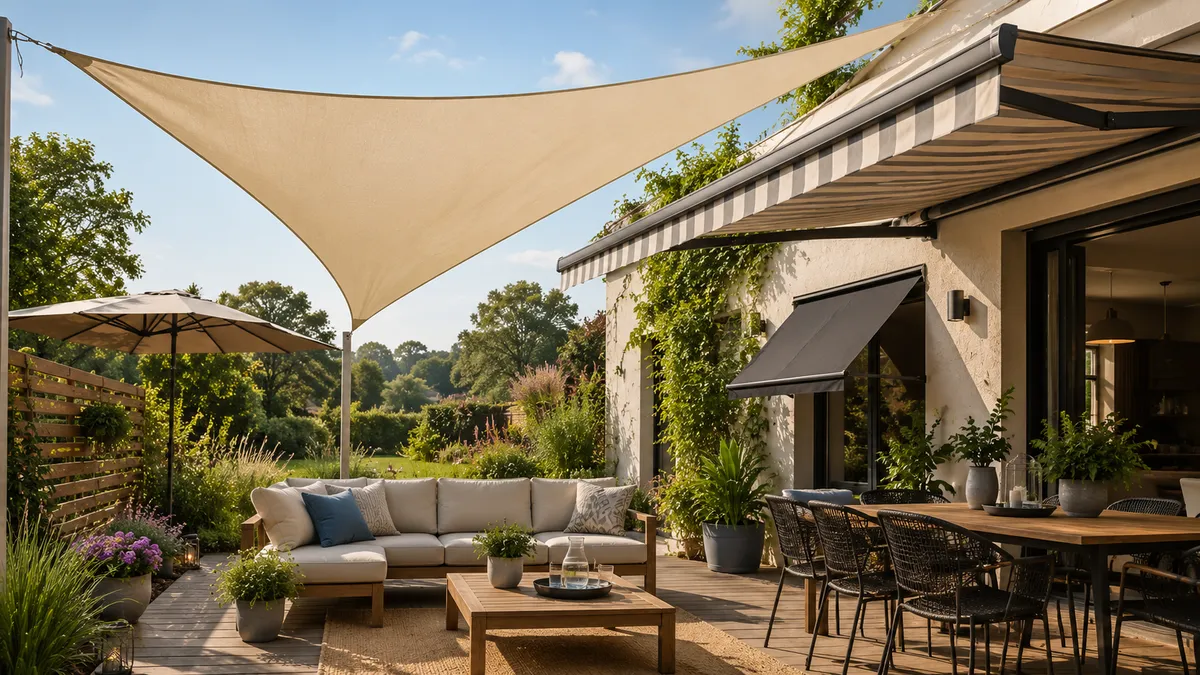
Use this for ground-level patio routing when deck railing, ledger, elevated load and stair clearance are not the main limits.
Awning for Deck
Use this when awning for deck is closer to the real constraint than the current page.
Shade Sail for Deck
Use this when shade sail for deck is closer to the real constraint than the current page.
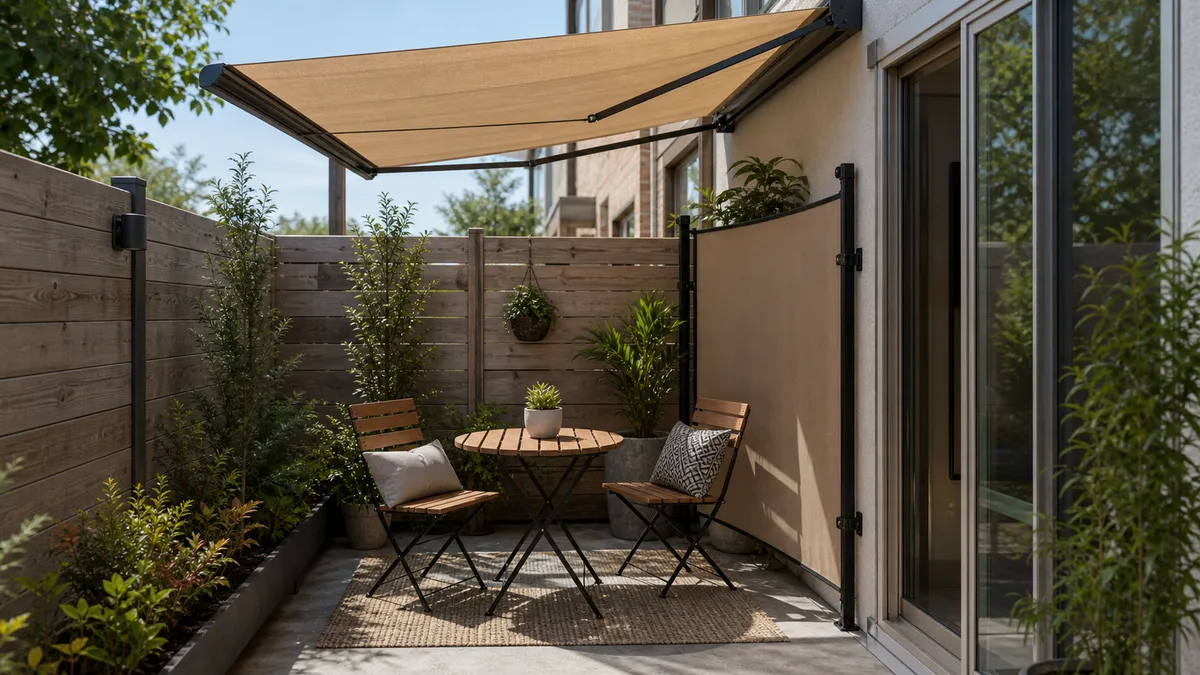
Small Patio Shade Ideas
Use this when compact clearance, furniture movement or base footprint matters more than deck attachment.
Questions
FAQ
Can I attach shade to a deck railing?
Usually no unless a qualified person verifies the load path through the guard post, blocking, rim joist and footings. Guardrail rules are about fall protection, not shade tension or wind load. If the railing is the only possible anchor, use freestanding shade instead.
What is the best no-drill shade for a deck?
Start with a table umbrella, weighted market umbrella, lower freestanding screen or planter trellis. Large cantilever umbrellas can work only after the deck load, level surface, ballast and wind closure plan are checked, because some bases require several hundred pounds.
What works better for low afternoon sun on a deck?
Use vertical shade first. Drop screens, exterior roller shades, side curtains, louvres, planting or a lower trellis block the low beam better than making an overhead cover larger. Keep airflow and wind load in mind before choosing solid privacy fabric.
Can a deck awning or shade sail stay out in rain and wind?
Only if the awning or sail instructions allow that weather and the structure can carry the load. Many retractable awnings must close in heavy wind, heavy rain or snow, and sails need real anchors plus a takedown plan for severe weather. Flat fabric that pools water is a collapse risk.
Can I grill under a deck shade sail, umbrella or pergola cover?
Do not place fabric or combustible shade over a grill unless the grill manual and local code clearly allow the clearance. Fire-safety sources often cite 10 ft examples around combustible construction, railings, eaves and branches, so separate cooking from shaded seating when unsure.