
Quick Answer
Quick answer for fixed or retractable awnings
Choose a fixed awning when the job is steady rain drip protection over a door, window or small entry. Choose a retractable awning when the patio needs adjustable shade, winter light and open sky. If the wall is weak, weather is harsh, or nobody will close fabric before storms, pause the purchase until the structure and weather routine are solved.
Choose a fixed awning for year-round door or window cover; choose retractable when seasonal patio shade and a reliable closing routine matter more than rain cover.
Side by Side
Fast comparison snapshot
| When this matters | Choose | Why |
|---|---|---|
| Door or window needs everyday rain drip protection | Use a fixed metal or polycarbonate canopy after the wall/header check. | It stays in place for routine rain and does not rely on someone extending fabric. |
| Patio seating needs shade only while people are outside | Use a retractable fabric awning with an easy closing routine. | Adjustable fabric gives shade during use and can open the space when it is not needed. |
| Broad patio-awning planning is still unresolved | Read the patio awning guide before comparing products. | The hub separates fixed, manual and motorized paths before the details get expensive. |
| Wall, fascia, veneer brick or cladding support is unclear | Choose neither wall-mounted awning until a real structural support is verified. | Both fixed frames and retractable arms need anchors that match the load and surface. |
| Wind, snow or heavy rain arrives when no one is home | Avoid an extended fabric awning and use an engineered roof or rated cover if cover must remain out. | Manufacturer manuals warn against leaving retractable fabric exposed in severe weather. |
Fixed vs retractable awning: the quick comparison
A fixed vs retractable awning decision is not just permanent versus adjustable. It is a choice between always-there cover and fabric that has to be opened, closed and protected. The U.S. Department of Energy describes awnings as exterior roof-like shelters that may be fixed or retractable, but the two setups behave very differently once rain, wind, wall structure and winter sun enter the decision.
Fixed awnings suit predictable locations: a front door, a window, a narrow entry or a patio edge where year-round cover matters more than adjustability. Retractable awnings suit patios and decks where people want shade during use, but want open sky, winter sun or a cleaner facade at other times. YourHome's shading guidance supports that split: fixed horizontal shade works for high summer sun when designed well, while adjustable shade helps with seasonal control and low-angle east or west sun.
Use the table as a home check, not a product ranking. If the job is rain drip over a small opening, fixed usually starts ahead. If the job is comfort on a patio at changing times of day, retractable usually starts ahead. If the only available mounting line is fascia, veneer, soft brick, deteriorated masonry or unknown cladding, the wall needs inspection before either awning is chosen.
- Start with the place being covered: door, window, patio, deck or entry.
- Separate everyday rain cover from adjustable sun control.
- Check the wall and weather routine before comparing fabric, color or controls.
Side by side
Fixed and retractable awnings compared at home
Use this table before comparing models or asking for quotes.
| Decision point | Fixed awning / stationary awning | Retractable awning | What decides it at home |
|---|---|---|---|
| Everyday rain cover | Usually stronger for a door, window or entry when the canopy is pitched, sealed and mounted correctly. | Usually shade-first; light rain use depends on the exact manual, pitch and pooling limits. | Whether cover must stay available when nobody is operating it. |
| Wind and unattended weather | Stays exposed all year, so the frame and anchors must suit constant load. | Should be closed before wind, storms, snow or heavy rain when the manual requires it. | Whether someone can close fabric before bad weather. |
| Seasonal sun control | Can block useful winter sun if the overhang is poorly matched to orientation. | Can roll away for winter light or open sky. | Whether winter solar gain matters at that wall or glass. |
| Patio depth and projection | Best for smaller, predictable cover zones unless built as a larger permanent canopy. | Better for deeper shade over seating when wall height and arms allow it. | Mounting height, front-bar clearance, furniture depth and pitch. |
| Door/window cover | Often the cleaner fit for threshold drip, window shade and small entries. | Can be oversized for a single opening unless it also shades a patio zone. | Opening size, runoff line, trim, gutters and daily access. |
| Mounting structure | Needs fasteners and brackets matched to wood, masonry, studs, headers or engineered framing. | Needs a verified load path for brackets plus room for arms, roller, hood or cassette. | Studs, rafters, headers, solid masonry, backing plates and surface condition. |
| Installed cost | Small fixed covers often cost less, but custom metal, polycarbonate, labor and reinforcement can change that. | Manual retractables can be moderate; motorized, cassette and sensor setups raise total cost. | Installed quote, not catalog price. |
| Maintenance | Check panels, seams, seals, corrosion, screws, brackets, drainage and wall staining. | Clean fabric, check arms, crank or motor, sensor batteries, limits, cassette/hood and closing routine. | How much moving hardware and exposed material the home can tolerate. |
| Winter light | Stays in the light path unless designed for the sun angle. | Can be rolled or closed to let light reach glass. | Heating season, room brightness and wall orientation. |
| Best next step | Use the door and window awnings guide for small-opening cover. | Use the retractable awning guide for manual, motorized and cassette details. | Use the patio awning guide if the whole awning type is still undecided. |
When a fixed awning wins
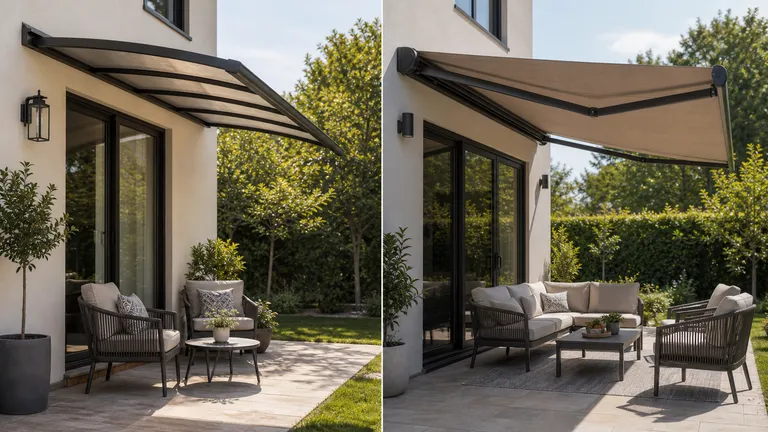
A fixed awning fits best when the covered spot needs protection every day with almost no routine. A door that gets rain runoff, a west-facing window that overheats, or an entry where people stand with groceries needs a small, correctly mounted cover that is already in place, not fabric that depends on someone remembering to extend it.
Material matters because fixed awnings are not all the same product. A fabric fixed canopy can shade a window but still needs cleaning and seam checks. A metal awning can be durable and noisy in hard rain. A polycarbonate canopy can shed rain while letting some light through, but it still depends on brackets, seals and fasteners. Advaning's polycarbonate guidance names solid panels, bracket choices, EPDM seals and stainless hardware, which shows why a fixed canopy is more than a sheet over a door.
Fixed also makes sense when winter sun is less valuable than constant cover. The Department of Energy warns that awnings can increase heating energy use in cold seasons, and YourHome warns that poorly designed fixed shade can block useful winter sun. That is usually less important over a small entry. It matters more over large south-facing glass or a room that relies on winter light.
Do not treat fixed as easy mounting. Awntech fixed-awning guidance says surface hardware varies by material. Canofix instructions distinguish anchor bolts for brick from wood screws into wood walls or studs behind siding, with leveling, panel alignment and exterior caulking. A fixed canopy that looks simple can still fail if it is fastened into trim, mortar joints, thin siding or unknown sheathing.
- Use fixed for small openings that need cover even when no one is home.
- Match fixed material to the job: fabric for shade, metal or polycarbonate for more rain-focused cover.
- Verify structural backing before treating a fixed canopy as a quick weekend install.
When a retractable awning wins
A retractable awning fits best when the patio needs shade some of the time, not cover all year. It can shade a dining table in summer, then roll away for winter light, cleaning, storms or open sky. DOE specifically notes that adjustable or retractable awnings can be opened or rolled up in winter, which is a real advantage near glass that benefits from cold-season sun.
Retractable also helps when the sun problem changes through the day. YourHome says adjustable shading is especially useful on east and west elevations because low-angle sun is hard for fixed shading. An overhead retractable awning still may not stop low glare by itself, but it gives more control than a fixed overhang. A drop valance, side screen or exterior blind may still be needed when glare enters under the front edge.
Manual, motorized, hood and cassette details belong to the retractable guide, but they still affect this comparison. Manual is simpler when the crank is easy and the patio is used occasionally. Motorized helps daily use, high mounts or wider fabric, but it adds power, controls, possible sensors and service checks. A hood or cassette protects the closed awning; it does not make the extended fabric safe in bad weather.
The retractable trade-off is routine. SunSetter, Rolltec and Awntech all warn in different ways that retractable fabric should not be treated as a storm roof. The awning must be closed before conditions exceed the manual, and it should not be left open merely because a sensor exists. If the household will not close it before wind, heavy rain, snow or leaving home, retractable loses.
- Use retractable for patios where shade and open sky are both valuable.
- Choose controls by real daily use, reach, power and service access.
- Do not use cassette or sensors as permission to leave fabric extended in bad weather.
Category research
Fixed and retractable awning categories to compare
Search categories after deciding whether daily flexibility or permanent cover matters more.
Fixed
Fixed Patio Awning
For simple always-present cover where structure and runoff are solved.
- Permanent cover
- Less daily operation
Check:Wall support, rain path and wind exposure.
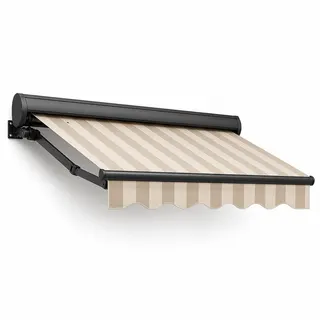
Search on AmazonRetractable
Retractable Patio Awning
For adjustable shade that can close before weather.
- Flexible shade
- Needs routine
Check:Projection, controls and front-bar path.
Search on Amazon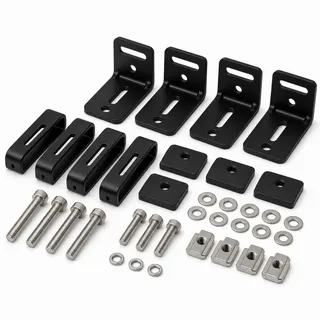
Brackets
Awning Mounting Brackets
For checking install hardware before choosing fabric size.
- Mounting-specific
- Fit-first check
Check:Wall material and fastener requirements.
Search on AmazonRain and wind: the part that changes the answer
Rain is where many wrong purchases start. A fixed metal or polycarbonate canopy can be the better everyday rain answer over a door or window when it is pitched, sealed, drained and mounted correctly. That does not make every fixed awning storm-rated. It only means the cover is not waiting for someone to extend it.
Retractable fabric is different. Rolltec describes retractable fabric as water-repellent rather than waterproof and says light rain use requires at least a 15-degree slope. SunSetter warns that rainwater pooling can damage or collapse an awning, and Awntech retractable guidance says those awnings are not designed to stay extended in rain, high wind, snow or ice even when the fabrics are coated.
Wind does not have one universal number. Advaning says no single wind rating applies across all retractable awning situations because size, projection, installation, weather and care vary. SunSetter warns against leaving an awning extended and unattended in heavy winds. The National Weather Service tells people to secure loose outdoor items during wind watches and advisories; for awnings, that means acting before the gusts arrive.
A wind sensor is a backup, not a babysitter. SunSetter's wind-sensor instructions say the sensor does not prevent rainwater pooling and still requires testing, battery and communication checks. If the awning must protect a space while nobody is home, a fabric retractable is usually the wrong tool unless the manual, controls and weather routine are truly reliable.
- Close retractable fabric before storms, snow, heavy rain or wind when the manual requires it.
- Use light-rain claims only when the exact model, slope and drainage support them.
- Treat fixed canopies as mounted structures that still need anchors suited to year-round exposure.
Installed cost and mounting checks
Compare installed total, not the price on an awning listing. Angi and HomeGuide are useful only as broad cost context, but they point to the same cost drivers: type, size, labor, mounting complexity, electrical work and extras. A small fixed door canopy and a motorized full-cassette patio awning are not equivalent jobs.
A fixed door or window cover is often the lower-cost path when the opening is small and the wall is straightforward. The total can rise when the job needs custom metal, a larger polycarbonate run, unusual brackets, high access, wall repair or professional sealing. Fixed also keeps producing load in wind and rain, so hardware and backing are not optional.
A retractable patio awning can start with a manual model, then climb with width, projection, motor, remote, wind or sun sensor, hood, semi-cassette, full cassette, upgraded fabric and installer labor. Motorized units can also need exterior power. Advaning mentions structural supports such as studs, beams, rafters, headers or solid masonry, and notes GFI outdoor socket planning for motorized units.
Bring in professional help when the surface is veneer brick, soft brick, deteriorated masonry, hollow block, stucco over unknown backing, unknown cladding, fascia-only mounting, roof mounting, multi-story mounting or motorized exterior power. If the quote does not mention brackets, wall plates, backing, fasteners, sealing and access, it is not yet the full installed comparison.
- Ask for installed total with labor, brackets, wall preparation and power separated.
- Do not compare a small door canopy against a full patio retractable as if they cover the same job.
- Stop before purchase when the only mounting surface is decorative, soft, thin or unknown.
Cost check
Installed-cost comparison by job type
Use national cost guides as quote-checking context only. Local wall condition and access can move the total.
| Job type | Usually cheaper side | What can raise the total | Watch-out |
|---|---|---|---|
| Small door/window drip cover | Fixed canopy | Custom width, difficult trim, high entry, sealing or unusual wall surface. | Do not price it against a patio-size retractable. |
| Fixed metal/polycarbonate entry cover | Often fixed, if the structure is clean | Panel length, snow or wind exposure, brackets, corrosion-resistant hardware and professional installation. | Rain shedding is not the same as engineered storm resistance. |
| Manual retractable patio awning | Often retractable's lower-cost path | Wide fabric, long projection, tall mounting height, upgraded fabric and difficult bracket access. | The crank must be reachable enough that people will actually use it. |
| Motorized retractable awning | Usually higher than manual | Motor, controls, outlet work, remote, service access and possible sensors. | Power planning can matter before fabric or color. |
| Full-cassette or sensor-equipped retractable | Usually retractable's premium path | Cassette housing, automation, wind or sun sensors and installer setup. | Closed-storage protection does not remove open-weather limits. |
| Weak or unknown wall needing reinforcement | Neither until inspected | Backing, headers, masonry repair, fastener changes and professional labor. | A cheap awning becomes expensive if the load path is missing. |
Angi and HomeGuide support broad cost drivers, not exact quotes. Use local installers and the product manual for the final decision.
Maintenance and seasonal flexibility
Maintenance differs by material before it differs by brand. Fixed fabric needs cleaning, seam checks, mildew checks and frame or fastener inspection. DOE notes modern acrylic and polyvinyl-laminate awning fabrics can be water-repellent and treated for mildew and fading resistance, but that is not the same as ignoring dirt, trapped moisture or worn stitching.
Fixed metal and polycarbonate covers shift the chores. They need mild cleaning, bracket checks, screw or bolt inspection, seal checks, drainage checks and corrosion watch points. Advaning's polycarbonate guidance mentions panel, bracket, EPDM seal and stainless-hardware details, which are exactly the parts that later need inspection.
Retractable manual awnings add moving parts. The fabric still needs cleaning and drying discipline, but the arms, crank, front bar and tension behavior also need attention. A manual unit that is hard to crank is more likely to stay open during weather or stay closed when shade is needed.
Motorized retractables add convenience and more things to remember. Motors, remotes, limits, manual override, exterior power, sensor batteries, sensor communication, hood or cassette cleanliness and service access all matter. SunSetter's sensor instructions include testing and sensitivity checks; that is maintenance, not a one-time safety guarantee.
Seasonal flexibility is the best reason to accept the extra routine. Fixed shade can block useful winter sun when the overhang is wrong. Retractable shade can roll away when the room needs light, when leaves fall, when snow is forecast or when the patio simply feels better open.
- Fixed fabric: clean fabric, check seams, inspect frame and fasteners.
- Fixed metal/polycarbonate: clean panels, inspect seals, screws, brackets, corrosion and drainage.
- Retractable: clean fabric, inspect arms and controls, test sensors, and keep the closing routine simple.
Scenario fit table: choose fixed, retractable or neither
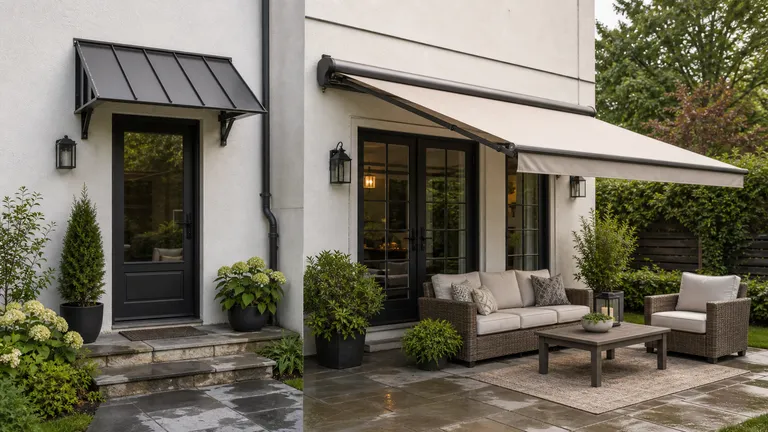
The clearest answer usually appears when the awning is matched to one real scene. Do not average all benefits together. A front door in everyday rain, a west-facing patio used after work, and a condo balcony with attachment rules are different decisions even if all three pages in a catalog say awning.
Use the table to choose the option with fewer likely failures. A fixed awning fails when the structure, drainage or winter-light penalty is ignored. A retractable awning fails when fabric stays out in weather, projection is too low, or the controls are too annoying. Neither is a valid answer when the wall, rules or weather exposure makes both choices weak.
Scenario fit
Choose fixed, retractable or neither by situation
Every recommendation below is tied to a different home condition.
| Situation | Better fit | Why | Next check |
|---|---|---|---|
| Door or window needs everyday rain drip protection | Fixed metal or polycarbonate canopy if structure supports it | It stays deployed for routine rain and can be scaled to the opening. | Confirm header, studs, masonry, runoff and seal line. |
| Patio needs deep shade only while occupied | Retractable fabric awning with reliable closing routine | It shades seating during use and can open the patio when shade is not needed. | Check projection, front-bar clearance and who closes it. |
| West-facing glass or mixed seasonal sun | Retractable shade plus side treatment if glare enters low | Adjustability helps seasonal light, while vertical shade may handle low-angle glare. | Watch the failed hour before choosing projection. |
| Snow, heavy rain, high wind or nobody home during weather | Neither light fixed canopy nor extended fabric unless the cover is rated for that exposure | A fabric retractable should close; a fixed cover still needs engineered support. | Use an engineered patio cover or rated roof when cover must remain out. |
| Rental, HOA or condo restriction on wall attachment | Neither wall-mounted choice until written approval exists | Exterior brackets, facade changes and drainage can violate rules. | Get permission before drilling or ordering custom width. |
| Someone cannot reliably crank or close the awning | Fixed canopy for rain cover, or motorized retractable only with override and sensor checks | The better product is the one people will operate before weather changes. | Test reach, outlet access, manual override and sensor maintenance. |
| Weak wall, veneer brick, soft brick, unknown cladding or fascia-only mount | Neither until structure is verified | Both choices need a load path; appearance is not proof of support. | Ask an installer how each bracket reaches framing or solid masonry. |
| Need a true dry outdoor room | Neither; consider pergola, patio cover or engineered roof | Awnings shade and shed limited water, but they are not room additions. | Plan drainage, load, permits and fire or heat clearance separately. |
The tie-breaker when both could work
When both choices can physically fit, pick fixed if the job is small, predictable and weather-focused. A fixed entry or window canopy asks less from the household each day. It also avoids motor, sensor and crank decisions. The trade-off is that the cover stays in place through winter light, storms and facade changes.
Pick retractable if the job is patio comfort and the household will operate it. Retractable fabric gives shade when people sit outside, then gets out of the way for winter sun, sky view or weather. The extra parts make sense only when closing it is easy enough to become normal.
Use wall strength and routine as the final test. If the wall cannot be verified, neither side wins. If the fabric would remain out when people are tired, away or surprised by weather, retractable loses. If permanent shade would make a winter room darker or block access, fixed loses.
- Fixed wins the tie for small rain cover and low daily effort.
- Retractable wins the tie for adjustable patio shade and winter light.
- Neither wins the tie when support, weather routine or permission is unresolved.
When neither fixed nor retractable is right
Neither is right when the real problem is low side glare. A deeper overhead awning may still let east or west sun hit faces and glass below the front edge. Use an exterior screen, side shade, drop valance, shade cloth panel, planting or exterior blind before assuming more projection will fix the angle.
Neither is right when the structure is not proven. Unknown cladding, soft brick, veneer brick, hollow block, rotted trim, fascia-only mounting and deteriorated masonry should pause the purchase. The same rule applies when the roofline or wall needs alteration that might trigger permits, HOA rules or landlord approval.
Neither is right when the goal is a dry outdoor room, snow-load cover or high-wind shelter. Awnings can improve shade and limited weather comfort, but they are not a substitute for an engineered roof. If the area includes grills, fire pits, heaters or outdoor kitchens, plan heat and clearance separately before putting fabric or combustible parts overhead.
- Use side shade for low glare below an awning edge.
- Use an engineered cover for snow, high wind or true dry-room expectations.
- Resolve rental, HOA, condo, facade, electrical and heat-clearance issues before choosing either type.
Watch-outs
Before you buy or install
- Do not treat water-repellent retractable fabric as a permanent rain roof.
- Do not rely on a wind sensor to solve rain pooling, weak mounting or sudden gust exposure.
- Do not mount either awning type into fascia, trim, veneer, soft masonry or unknown cladding without structural verification.
- Keep grills, heaters, fire pits and outdoor kitchens away from fabric or combustible awning parts unless the appliance and awning clearances are confirmed.
Read Next
Related guides
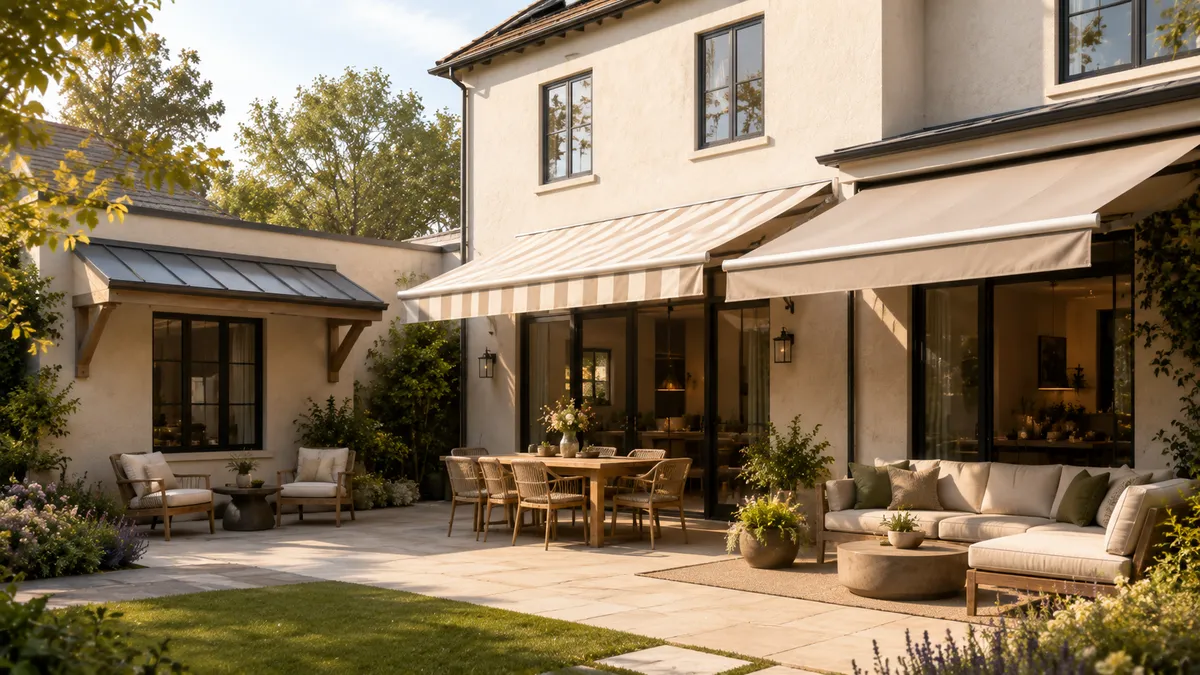
Patio Awning Guide
Use this when patio awning is closer to the real constraint than the current page.
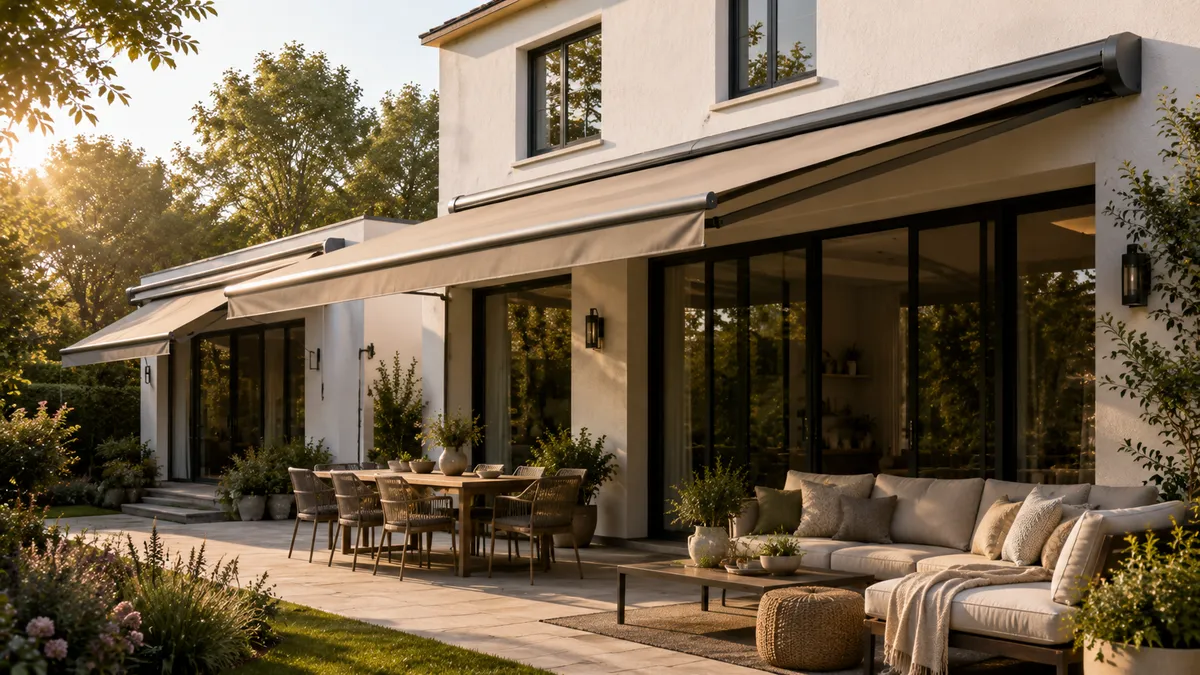
Retractable Awning Guide
Use this when retractable awning is closer to the real constraint than the current page.
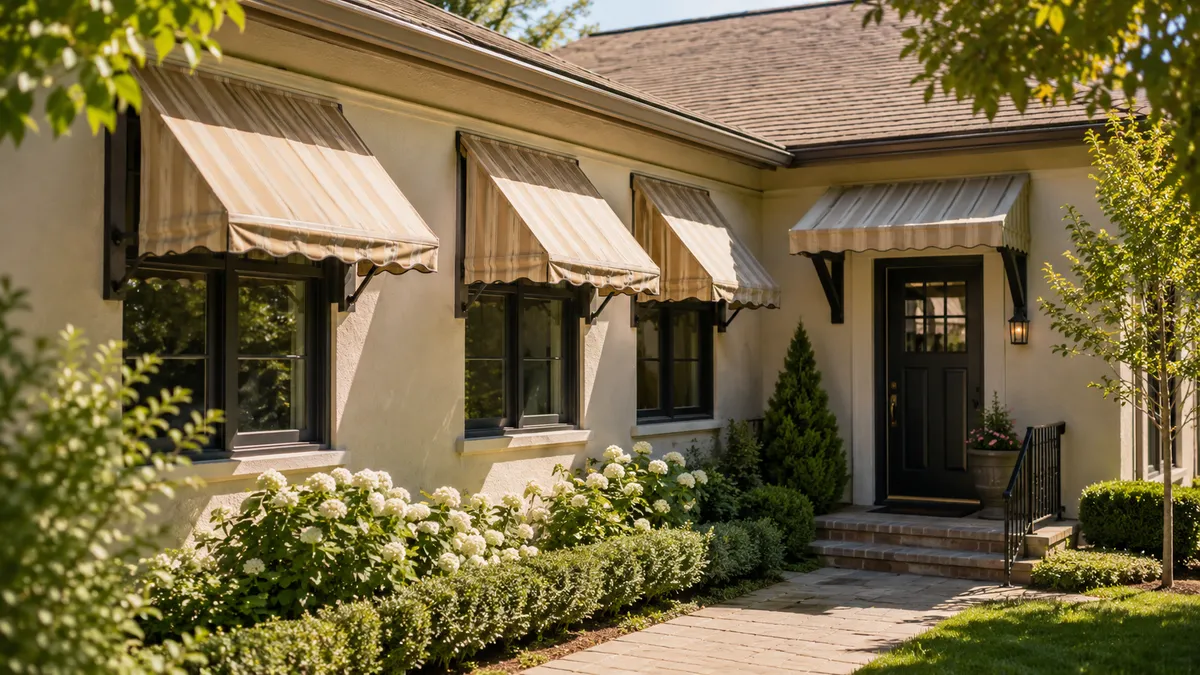
Door and Window Awnings
Use this when door and window awnings is closer to the real constraint than the current page.
Questions
FAQ
Is a fixed awning better than a retractable awning for rain?
Usually yes for a small door, window or entry that needs routine drip protection, if the fixed canopy is pitched, sealed and mounted correctly. A retractable awning may handle light rain only when the exact manual allows it, with enough slope and no pooling.
Can you leave a retractable awning open in wind?
Follow the model manual and close it before strong wind, storms or unattended weather when required. Manufacturer guidance varies by size, projection and installation. Wind sensors can help, but they need testing and do not prevent rain pooling or weak mounting.
Which costs more, a fixed awning or a retractable awning?
Small fixed door or window covers often cost less than patio retractables, but compare installed totals. Width, projection, custom metal, brackets, wall repair, labor, motors, exterior power, sensors, hoods, cassettes and future fabric or seal work can change the final quote.
Is a motorized retractable awning worth it?
It can be worth it when the awning is wide, mounted high or used every day. The trade-off is power, controls, manual override, sensor checks and service access. If the main need is a small rain cover, a fixed canopy may be simpler.
What wall can support either type of awning?
The brackets need real structure such as studs, headers, rafters, beams or solid masonry, depending on the product manual. Be careful with veneer brick, soft brick, hollow block, deteriorated masonry, fascia-only mounts, stucco over unknown backing and unknown cladding.
When should I choose neither fixed nor retractable?
Choose neither when the wall is unverified, low side glare is the main problem, rules forbid exterior attachment, the site needs snow or high-wind cover, or the goal is a true dry outdoor room. A side screen, pergola, patio cover or engineered roof may fit better.