
Quick Answer
Quick answer for a deck awning
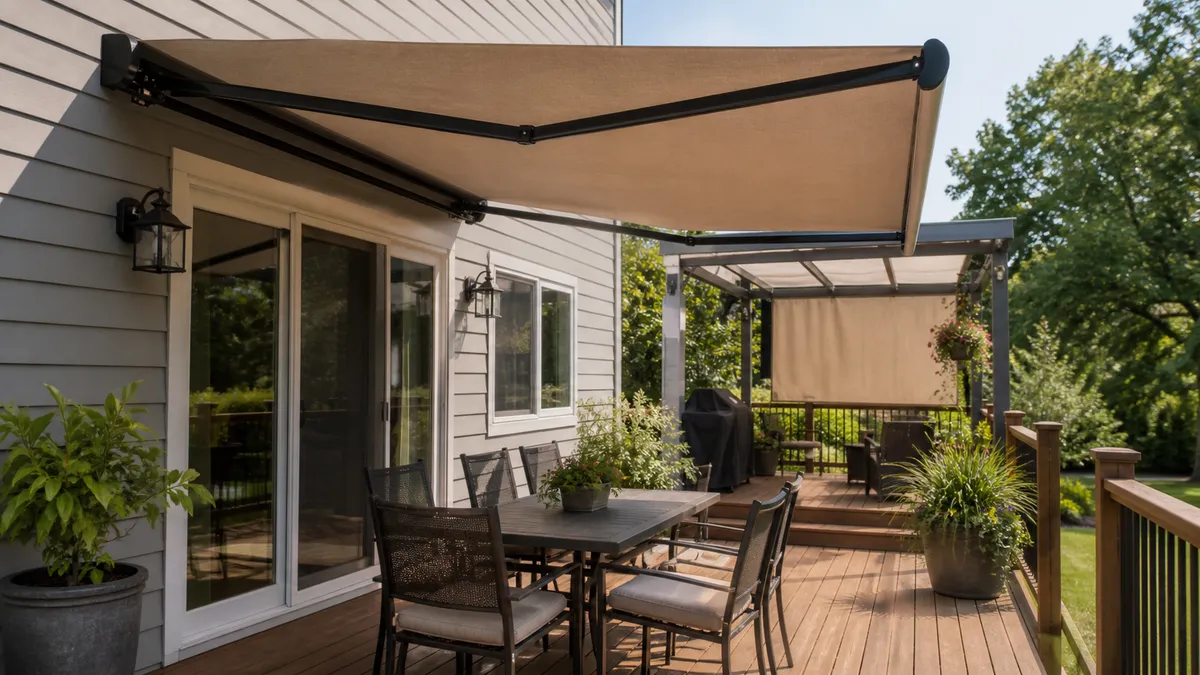
Use a deck awning only when the house has verified structure, enough height and projection clearance, and a close-before-weather routine. Choose freestanding shade, side shade or no awning yet when wall attachment, deck condition, grill placement, runoff or approval is unresolved.
Choose a retractable wall awning only after structure, clearance and weather routines pass; use freestanding or side shade when the deck or house cannot be verified.
Practical routes
Deck awning routes by situation
Start with the route that matches the deck, house wall and the sun hour that makes the space uncomfortable before comparing fabric, motors or brackets.
Retractable wall awning
Use when: the wall framing is verified and shade is needed for meals or afternoon seating. Do not use when: the fabric would stay open during storms. Before buying: confirm the front-bar path, door swing, mounting height and closing routine.
Fixed wall awning
Use when: the wall, flashing, runoff and local rules are already clear. Do not use when: the deck is exposed and the cover would become a permanent weather catch. Before buying: trace drainage away from doors, stairs and the house wall.
Roofline or roof-mounted awning
Use when: a short wall makes normal brackets impossible and roofing work can be handled by a qualified installer. Do not use when: roof penetrations would be casual DIY. Before buying: match the product to roof brackets and waterproofing details.
Pergola or canopy frame
Use when: wall holes are not acceptable and the deck can be evaluated for posts, bases and uplift. Do not use when: an older or elevated deck has bounce, rust or decay. Before buying: review deck condition, post bases, stair clearance and permits.
Umbrella or offset umbrella
Use when: one table, grill-free seating spot or rental deck needs shade without holes. Do not use when: the base blocks stairs or a door. Before buying: plan ballast, chair movement, rail access and indoor storage before gusts.
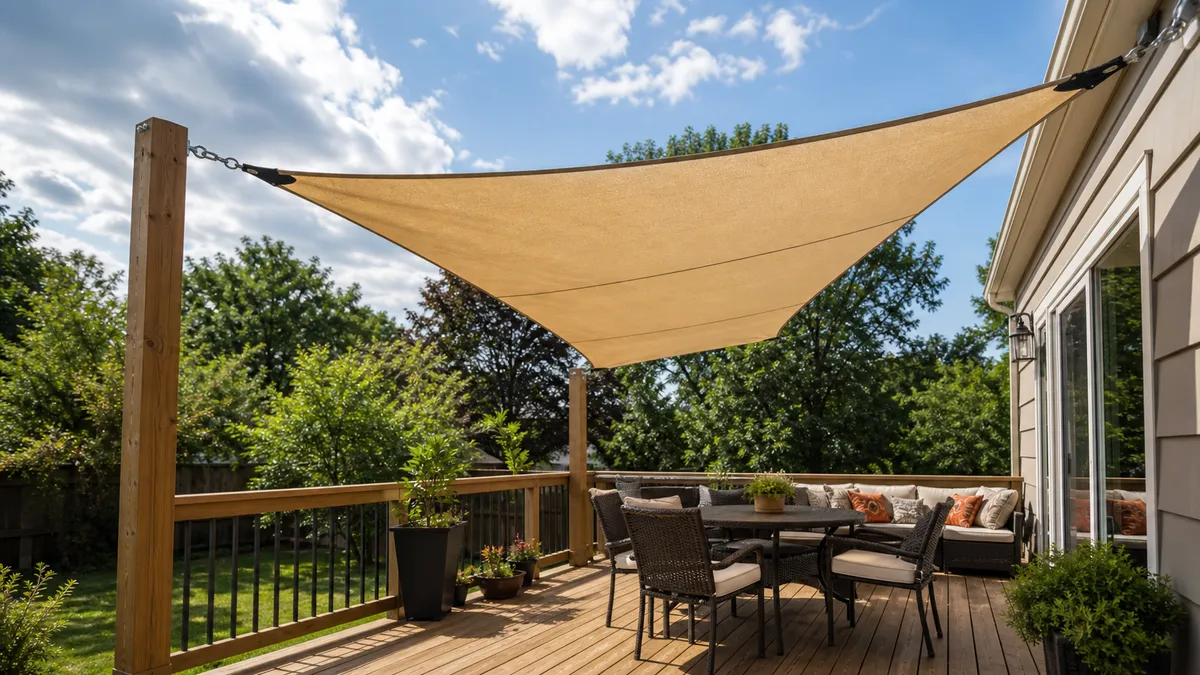
Shade sail or side screen
Use when: low east or west sun hits faces under overhead fabric. Do not use when: the only anchor is a railing or unknown wall. Before buying: confirm independent posts, approved anchors, side glare and privacy needs.
No awning yet
Use when: wall structure, deck condition, grill heat, runoff, wind storage or HOA approval is unresolved. Do not use when: the only reason to move ahead is a sale, deadline or product photo. Before buying: get written rules, inspection needs and a smaller test shade.
When a deck awning attached to the house makes sense
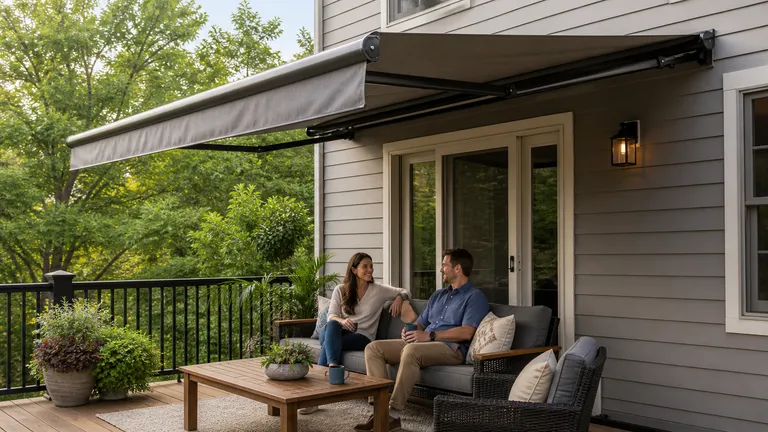
An awning for deck shade works best in a narrow yes case: the awning can fasten to verified studs, structural masonry, structural concrete or a manufacturer-approved backing detail; the front bar clears the deck; and the fabric can close before wind, rain, snow, ice or long unattended periods.
The U.S. Department of Energy says awnings can shade outdoor living spaces and reduce solar heat gain at windows. Keep that claim in its lane. It explains why shade can be valuable on a back deck, but it does not prove the siding, roofline, railing or deck boards can carry brackets.
A retractable awning for deck use is usually the most flexible attached route when the failed hour is predictable. It can cover the dining table at noon, close for evening sky, and disappear for winter sun. Rollac and Awntech manuals both frame retractable awnings as shade products that need weather limits respected, not all-weather deck roofs.
A fixed wall awning is less forgiving. It stays out during storms, keeps directing runoff, and remains visible under HOA or local review. Use it only when a qualified installer confirms the house attachment, waterproofing and drainage, and when the cover will not trap a grill or stair landing under fabric.
A motorized awning adds electrical planning. NuImage's manual warns about outdoor GFI or GFCI-type electrical setup for plug-in units. That is enough for this page to say: plan the outlet, cord route and controls before ordering, and leave product-specific electrical work to the manual and qualified help.
- Green light: verified structural backing, clear front-bar travel, manageable runoff and a simple retraction habit.
- Yellow light: short wall, low mounting height, downspouts, lights, storm doors or unclear outlet access.
- Stop sign: grill heat below the fabric, unknown cladding, railing-only anchors or an exposed deck where shade will be left open.
Mounting, deck condition and waterproofing checks
The deck boards are rarely the awning anchor. For a house-attached awning, the important surface is the wall, roofline, soffit, beam or approved backing behind the finish. NuImage's installation manual is a useful warning because it says plywood sheathing or equivalent will not support that awning and points installers toward structural material such as studs, structural concrete or a ledger-board detail.
Do not convert one manual into universal bracket spacing. Awning weight, arm spacing, lag bolts, pitch and bracket locations are product-specific. NuImage gives product-specific weight and ledger details, while Awntech discusses stud or rafter placement and roof brackets. The safe public advice is to follow the exact manual and use a qualified installer when the framing is unknown.
Waterproofing matters as much as strength. Building Science Corporation describes deck ledgers as attachments that interrupt the water-resistive barrier and need flashing and drainage-plane integration. An awning bracket is not a deck ledger, but wall penetrations and backing blocks deserve the same water-management caution before holes go through siding, stucco, trim or cladding.
Older and elevated decks need a separate look before heavy shade furniture, freestanding posts or a permanent cover are added. The International Code Council warns that nailed-only deck ledgers are dangerous, and its deck-safety guidance treats rust, corrosion, decay, poor flashing and guard problems as warning signs. A bouncy second-story deck or coastal deck with red rust deserves inspection before shade work grows.
Do not use railings, guards, planters or deck boards as default awning anchors. Guards are life-safety parts of the deck, and the American Wood Council notes that its residential deck guide does not apply to canopies or awnings. That boundary matters: deck guidance is not a shortcut for designing a wind-loaded fabric mount.
- Ask what structural member receives the bracket before asking how wide the fabric can be.
- Treat fascia, gutters, trim, siding alone, thin cladding and unknown wall layers as stop signs.
- Use professional help for roof brackets, unknown framing, elevated deck concerns or wall penetrations.
Category research
Deck awning categories to compare
Search categories after wall structure, deck clearance, grill placement and weather routine are clear.
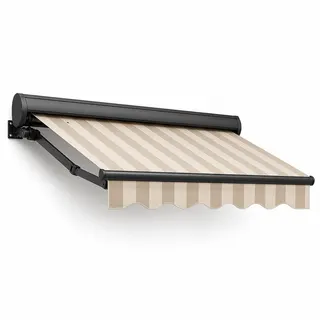
Deck awning
Deck Awning
For attached cover when the house wall and clearance pass.
- Deck-focused shade
- Wall checks first
Check:Door swing, stairs and front-bar path.
Search on AmazonRetractable
Retractable Deck Awning
For adjustable deck shade that can close before weather.
- Flexible shade
- Needs routine
Check:Wind exposure and mounting height.
Search on Amazon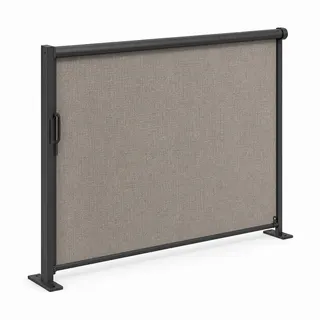
Side shade
Deck Shade Screen
For low sun or privacy when overhead fabric misses the problem.
- Vertical shade
- Smaller footprint
Check:Rail rules, airflow and tie-downs.
Search on AmazonWind, rain, low sun and everyday deck use
Decks are often more exposed than sheltered patios. A second-story back deck open on three sides can catch gusts before the forecast feels severe at ground level. The National Weather Service advises securing or bringing in loose patio and yard items before high wind; for awnings, that supports a conservative habit of closing retractable fabric and storing removable shade before weather arrives.
Rain is not just a comfort issue. Manufacturer manuals for retractable awnings warn against rain, snow, ice or water weight outside product limits. On a deck, runoff can also hit the sliding door track, stairs, lower deck, neighbor's space or the house wall. Do not call a retractable awning a deck roof unless the named product instructions support rain use and slope.
Low sun can defeat a large overhead awning. A west-facing deck may still have glare on faces at dinner because the sun enters below the front bar. YourHome's passive shading guidance supports matching shade to orientation and using vertical or adjustable shade for low-angle east and west sun. Side screens, planting, a sail edge or a furniture shift may do more than extra projection.
Test clearance with the deck in normal use. Open the sliding door and any storm door, pull chairs back from the table, walk to the stairs, stand at the rail and mark where the front bar would travel. A small deck fails quickly if the awning arm crosses the stair path or the front bar drops into headroom.
Grill placement can decide the answer. Rollac warns that intense heat such as a grill under the awning may create a fire hazard. If the grill sits under the planned fabric path, move the grill, move the shade, or choose another deck layout before treating the awning as a cooking cover.
- Close retractable fabric before wind, storms, snow, ice or unattended weather unless the exact manual says otherwise.
- Trace runoff toward doors, stairs, lower decks, neighbors and the house wall.
- Use side shade when late-day glare enters below the awning line.
Better alternatives when an awning fails the deck
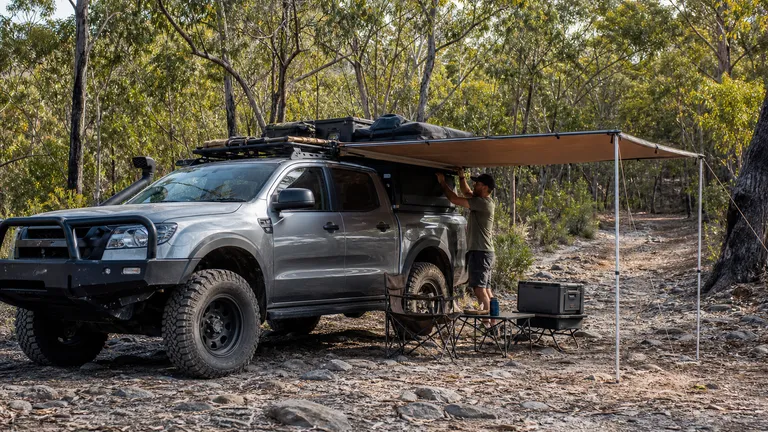
A failed awning route does not mean the deck cannot be shaded. It means the shade should avoid the failed surface, weather habit or daily-use conflict. Use the deck shade ideas guide for the broader menu, then return to a retractable awning only if the wall, clearance and closing routine pass.
A shade sail for deck use can work when it has independent posts or verified anchors. It is not a fix for a weak railing, unknown siding or a deck corner that was never designed for fabric tension. Keep sail-specific anchor geometry on the sail guide rather than improvising from an awning plan.
A pergola or freestanding canopy avoids wall penetrations, but it is not automatically lighter or safer. It adds post bases, uplift, guard and stair clearance, possible deck-load questions and local review. Waco and Tampa permit pages are local examples showing that attached awnings or covered deck work can trigger permits or inspections; Muirfield's association rules show how some communities review awning drawings, dimensions, mounting method, color and material before approval.
For a small deck, an offset umbrella or side screen may be the cleanest first move. The base still has to miss the door and stairs, and the fabric still needs storage before gusts. For low sun, a side screen, roller shade, planting or moving the dining set often solves the real problem without loading the house wall.
- Use freestanding shade when wall penetrations are the blocker, but inspect deck condition first.
- Use side shade when late-day glare is the blocker.
- Use no awning yet when rules, permits, HOA approval or inspection needs are unresolved.
Fallback routes
Deck shade route when the awning does not fit
Use this after the first route cards when one deck condition rules out an attached awning.
| Deck situation | Better route | Why | Watch out |
|---|---|---|---|
| Unverified siding, trim, fascia or gutter line | Freestanding umbrella or side screen | Shade avoids holes in an unknown wall assembly. | Keep bases out of door swing and stair traffic. |
| Low west sun hits faces below the fabric line | Side screen, roller shade or planting | Vertical shade blocks glare that overhead projection may miss. | Do not block airflow on a hot still deck. |
| Exposed elevated deck with frequent gusts | Smaller retractable or removable shade | Less fabric area is easier to close or store before weather. | Do not rely on a wind sensor as permission to leave fabric open. |
| Old, bouncy, rusted or decayed deck | Inspection before permanent shade | Deck condition must be understood before posts, bases or attached shade increase use and loads. | Do not use railings or guards as shade anchors. |
| Grill sits under the planned fabric path | Move the grill or use shade away from heat | Manufacturer guidance warns that intense heat under fabric can create a fire hazard. | Do not treat fabric as a cooking canopy. |
| HOA, permit or rental rules are unresolved | Temporary deck shade only | A movable setup avoids committing to visible exterior work before written approval. | Temporary shade still needs wind storage and neighbor-safe runoff. |
Mistakes to avoid before buying a deck awning
Do not buy projection before confirming mounting height. A deeper awning can push the front bar too low, block a stair path, hit a storm door or shade the wrong part of the deck when the sun is low. Mark the expected front edge with tape or a string line before ordering.
Do not fasten to trim, gutters, fascia, siding alone, thin cladding, plywood sheathing alone or unknown framing. Do not use a deck railing or guard as an awning anchor. If the wall cannot be verified, use freestanding shade while a qualified installer or inspector looks at the structure.
Do not use roof brackets as a casual workaround for a short wall. Awntech's manual points roof-mount work toward professional roofing installation, which is the right tone for this page: roof penetrations need product-specific hardware and waterproofing competence.
Do not leave retractable fabric open for wind, rain, snow or ice unless the exact manual supports the condition. Do not call water-resistant fabric a deck roof. Do not let runoff drain toward a door track, stair tread, lower deck, neighbor's space or the house wall.
Do not put grill heat under the fabric path. Do not assume permit or HOA approval is unnecessary. Do not let a product photo override how the deck is used: chairs move, people walk to the rail, doors swing open, plants need access and shade must close before weather changes.
- Buy after the mounting line, front-bar clearance and runoff path are known.
- Follow the product manual for brackets, pitch, hardware, weather use and motorized controls.
- Use the retractable awning guide next only when the deck passes the wall and weather tests.
Watch-outs
Before you buy or install
- Do not mount an awning to gutters, fascia, trim, siding alone, plywood sheathing alone, railings, guards or unknown framing.
- Do not treat retractable fabric as a rain roof unless the exact product manual supports that use.
- Older, elevated, corroded, decayed or bouncy decks need qualified inspection before permanent shade work grows.
Read Next
Related ideas
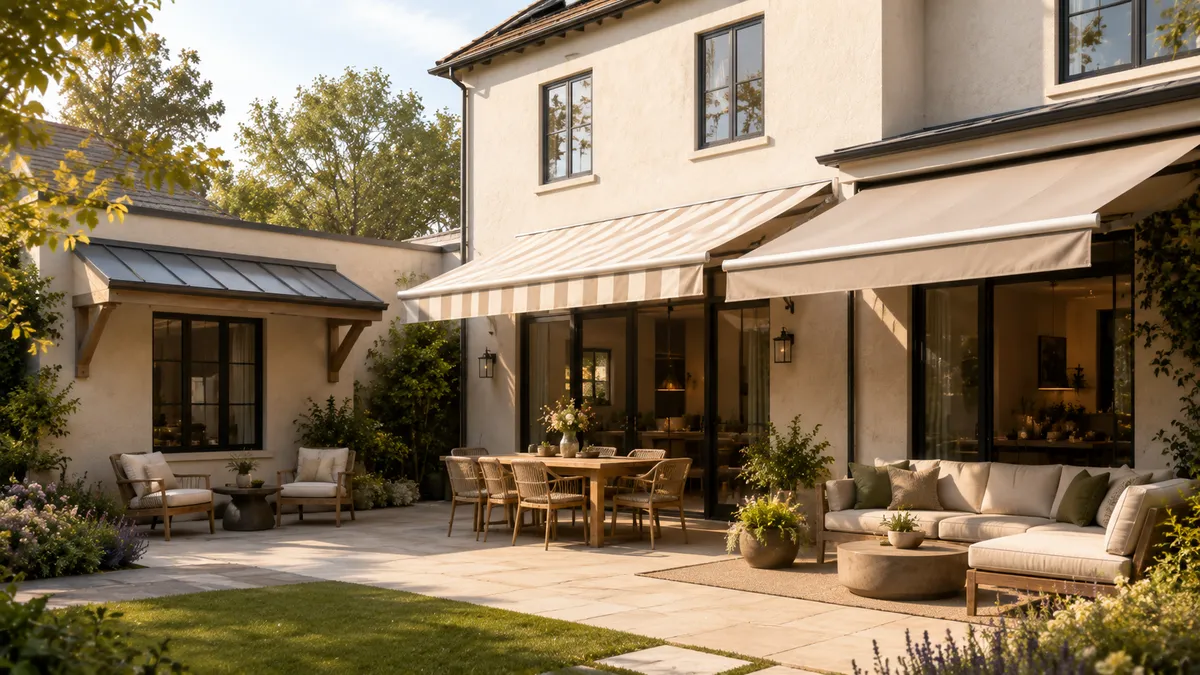
Patio Awning Guide
Use this when patio awning is closer to the real constraint than the current page.
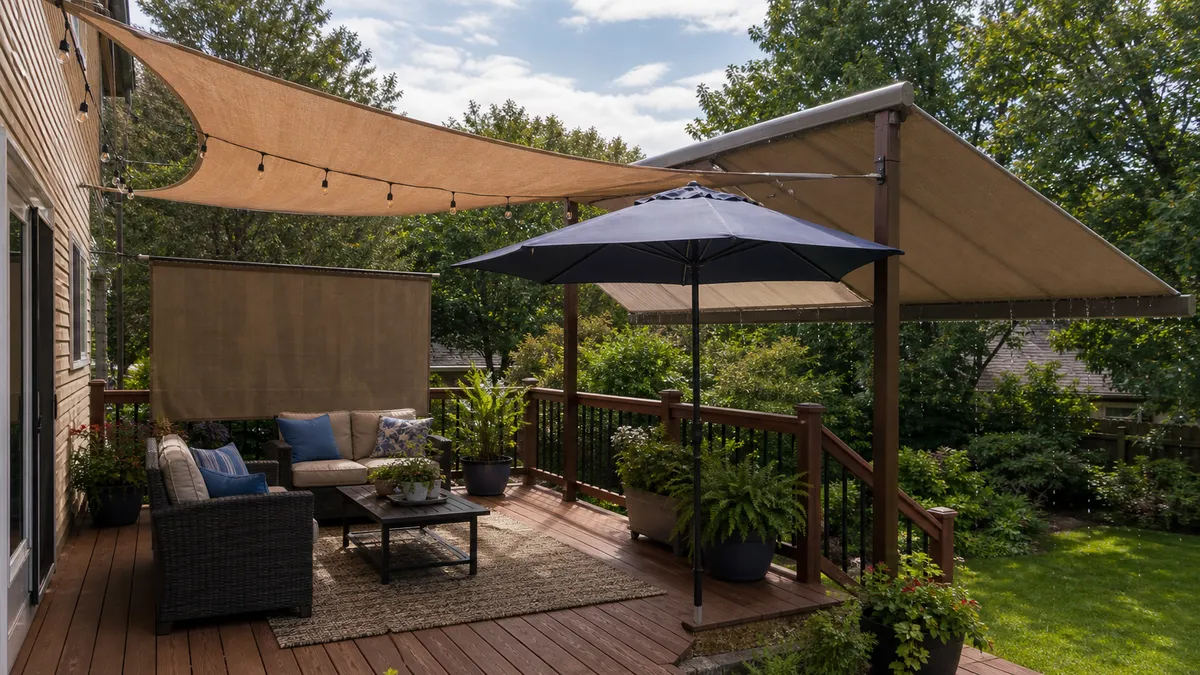
Deck Shade Ideas
Use this when deck shade ideas is closer to the real constraint than the current page.
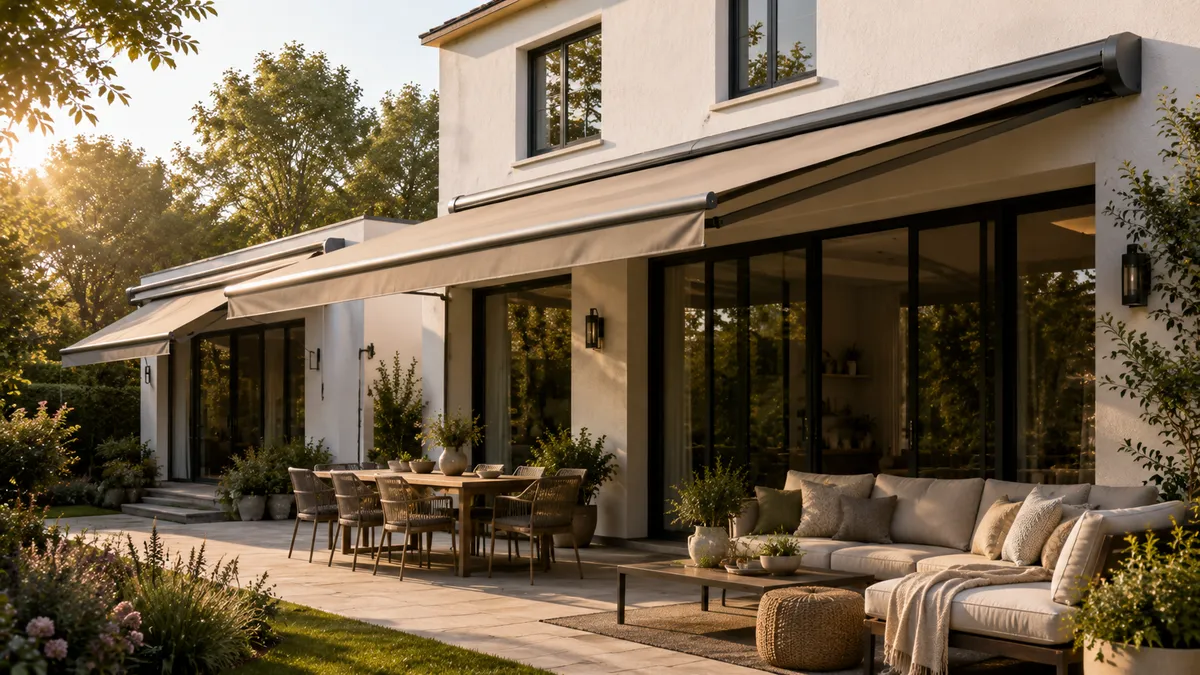
Retractable Awning Guide
Use this when retractable awning is closer to the real constraint than the current page.
Shade Sail for Deck
Use this when shade sail for deck is closer to the real constraint than the current page.
Questions
FAQ
Can you put an awning on a deck?
Yes, when the house wall or approved structure can carry the awning, the front bar clears normal deck use, and the fabric can close before bad weather. If the only possible anchor is railing, trim, siding alone or unknown framing, choose freestanding or side shade instead.
Is a retractable awning better than a fixed awning for a deck?
Often, yes. A retractable awning can close for wind, rain, winter sun and open-sky use. It still needs the same structural mounting review as a fixed awning, plus clear operation, outlet planning for motorized units and a habit of closing it before weather.
Can an awning attach to deck railing or deck boards?
Do not assume it can. Deck boards and railings are not default anchors for wind-loaded fabric, and guards are safety components. Use the product manual and qualified approval before any rail, guard, post or deck-mounted hardware is asked to carry an awning.
What should I use if the deck gets strong wind?
Use smaller fabric, retractable fabric that closes quickly, or shade that stores indoors before gusts. Follow the awning manual rather than a generic wind number. On exposed elevated decks, a side screen, umbrella used only while attended, or no awning yet may be more realistic.
Can I grill under a deck awning?
Keep grills and intense heat away from awning fabric unless the product instructions and fire rules clearly allow the setup. Rollac's manual warns that intense heat such as a grill under an awning may create a fire hazard, so move either the grill or the shade.