
Quick Answer
The short version for windy sites
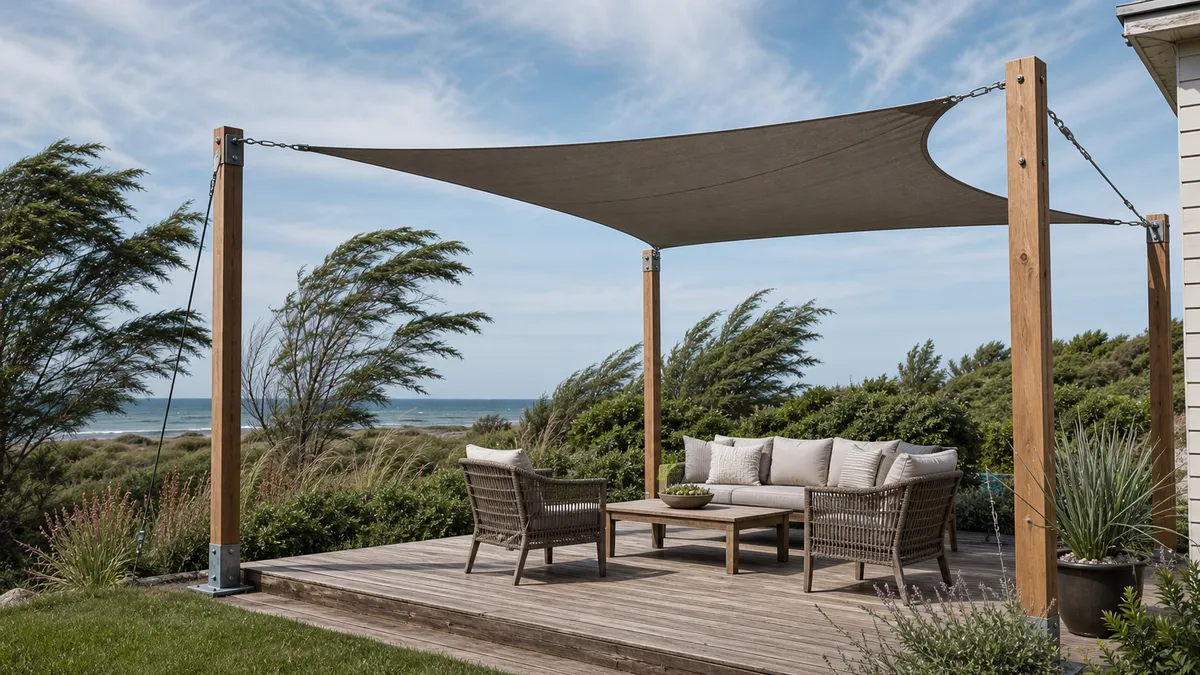
A shade sail in a windy area is a site and anchor check before it is a fabric purchase. Diagnose exposure, moving posts, fascia risk, sail area, turnbuckle travel and takedown access first. Use a smaller removable sail, professional design, or another shade if the anchors or storm routine are not credible.
Use a shade sail in wind only when every corner has a solid anchor, the fabric can stay smaller and taut, and the sail can come down before severe weather.
Diagnosis
Wind checks before fabric shopping
Use these checks before size, color, fabric weight or hardware kits.
Gusts reach the full panel
Open decks, driveways, pool edges and roof corners need a smaller removable sail or another shade before hardware shopping.
One loaded corner can move
A pulling wall plate, leaning post, cracked concrete or bending eye bolt means unload the sail and fix structure first.
The sail cannot come down quickly
If storm removal needs a ladder during a warning, the setup is not practical for windy weather.
Rain or heat adds a second hazard
Flat waterproof fabric can hold water, and grills, fire pits, heaters or hot exhaust do not belong under sail fabric.
Diagnose the windy site before buying a sail
Start with the site, not the catalog photo. A shade sail for windy areas can work in a sheltered courtyard with small fabric, solid anchors and a removal routine. The same sail can be a poor purchase on an open deck, driveway or pool edge where gusts hit the full panel and the anchors are unknown.
Use weather alerts as action triggers. The National Weather Service Raleigh office lists high-wind warning criteria as sustained 40 mph wind for at least one hour, frequent 50 mph gusts, or any 58 mph gust. Those numbers describe weather-warning thresholds, not a promise that a residential sail can stay installed.
Check the fixing points before discussing fabric weight. Mississippi State University Extension says a triangular sail needs three anchors and a rectangular sail needs four, with posts sturdy enough for wind and secured in concrete. If a post, wall plate, eye bolt or masonry joint moves, unload the sail before touching the turnbuckles.
The first inspection should answer one plain question: can the posts, wall plates or masonry keep fabric controlled without forcing a weak part to carry the load? If the answer is uncertain, buy nothing yet.
- Open exposure, roof gaps and side yards can funnel gusts into the sail.
- A moving post, pulling wall plate, cracked concrete or bending eye is a stop sign.
- Fascia, fence posts, deck rails and decorative posts are not proven anchors by default.
- Waterproof fabric needs a real runoff slope; flat fabric can pool and add load.
- No safe access for storm removal means the sail is already the wrong purchase.
Wind Diagnosis
What you see, what it means, and the first move
Use this table before fabric or hardware shopping.
| What you see | What it means | First move | Stop if |
|---|---|---|---|
| Small sheltered patio with masonry, posts or beams already verified | Wind exposure may be manageable if the sail stays small | Plan a breathable sail with one anchor per corner and room for fittings. | Any anchor cannot be inspected or identified. |
| Open deck, driveway, pool edge or corner-lot yard | The fabric may catch gusts from several directions | Reduce area, use removable shade, or compare other windy patio shade. | The sail would cover cars, glass, people or a neighbor's property if it failed. |
| Fascia, fence, rail or decorative post as the anchor | The attachment is not proven for sail tension and wind load | Pause until structural backing, a post plan or professional installation is confirmed. | The plan relies on trim, siding, gutter edge or a thin rail. |
| Post, wall plate, eye bolt or concrete moves under light load | The anchor is already failing or flexing | Unload the sail and repair the support before retensioning. | Cracking, bending, pulling or noisy shock-loading appears. |
| Large rectangle reaches every anchor point with no hardware gap | There may be no room for turnbuckles, shackles, stretch or future adjustment | Measure after fixing points are chosen and leave hardware clearance. | The only way to fit the sail is to fully close every turnbuckle. |
| Waterproof fabric sits nearly flat or already pools | Rain load can add to the wind problem | Add runoff slope or choose breathable mesh for the site. | Water would drain toward doors, outlets, grills or walkways. |
| No safe way to remove the sail before storms or snow | The bad-weather routine is weaker than the sail | Use quick-release removable shade or another shade type. | A warning arrives and the sail cannot be reached safely. |
| Grill, fire pit, heater or hot exhaust sits under the planned sail | Heat and open flame are outside normal shade-sail use | Move the shade or move the heat source. | Open flame or barbecue would remain below the fabric. |
When a shade sail can work in wind, and when it should not
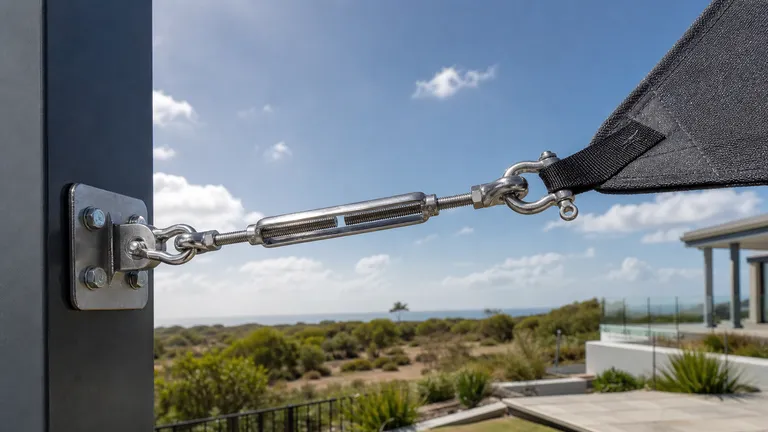
A sail can work when the wind is partly broken by walls, fences or planting, the fabric area stays modest, and each corner pulls from a known structural point. Breathable mesh is usually easier to live with than a flat waterproof panel when wind and rain arrive together. The sail still needs regular inspection and removal before severe weather.
A sail should wait when the only anchor plan is fascia, a fence, a thin rail, unknown masonry or a post with no proper footing. Decks.com warns that fascia alone can detach and that large sails or strong wind can require stronger plates. MightyCovers says fascia screws must reach structural framing or added backing.
Some sites need another shade from the start. A vertical sail used as a wind screen, a large open driveway span, a pool-edge panel with no windbreak, or a grill area under fabric is not a normal fabric-shopping problem. Compare broader windy-patio shade ideas when a fixed sail would stay exposed.
- Can work: small breathable mesh, sheltered exposure, solid anchors, fitting clearance and documented removal.
- Needs professional design: high posts, large spans, house attachments, uncertain soil or unknown framing.
- Do not buy yet: fascia-only, fence-only, rail-only, moving support, heat below the sail or no storm access.
Size, shape and exposure before hardware
Smaller and removable often beats larger and heavier in wind. A larger panel gives gusts more fabric to push, and a heavy waterproof panel can add rain load if the pitch is poor. Shape helps only after the anchors are sound; a smaller triangle is not magic if one corner pulls from fascia or a loose fence post.
Do not buy a sail that exactly fills the measured patio. Decks.com gives 2 to 3 feet as an example of connection space between a sail and post. Shade Sails LLC also says fixing points come before final measuring because hardware, turnbuckles, shackles and fabric stretch change the finished size.
Four-sided sails need more discipline than length by width. Shade Sails LLC says custom four-sided sails need diagonal measurements and that opposite sides should not be assumed equal. Keep the detailed measuring work for the size guide; on this page the wind rule is simpler: choose anchors first, fabric second.
Exposure matters as much as size. A medium sail inside a walled courtyard may behave better than a small sail at a roof corner where gusts roll over the house. Watch the space during the windy hour before choosing the final shape.
- Leave connection room for shackles, turnbuckles and future retensioning.
- Avoid vertical fabric used as a wind screen unless it has been designed for that load.
- Use the shade sail size guide for measurement details after the anchor plan passes.
Buy Or Pause
Can work, needs design, or should stop
| Site condition | Buy direction | Reason | Next action |
|---|---|---|---|
| Small sheltered patio with verified anchors | Proceed cautiously | The sail area and exposure are both controlled. | Plan breathable fabric, fitting clearance and removal. |
| Large open span over a deck, pool or driveway | Get design help first | Wind load, height and failure consequences are higher. | Confirm posts, footings, wall attachments and sail size before ordering. |
| Fascia-only, fence-only or rail-only plan | Do not buy yet | The proposed anchor is the weak point. | Use structural backing, independent posts or another shade. |
| No access for quick removal | Choose removable shade or another shade | The manual may call for removal before storms, snow or wind. | Keep the shade reachable or use retractable or storable shade. |
Anchors, posts, walls and fascia are the real wind test
Every corner needs an anchor that can handle both pretension and gusts. Mississippi State University Extension's one-anchor-per-corner guidance is a useful starting point because a missing or improvised corner changes how the whole panel pulls. Rope around a tree, a thin deck rail or a decorative post is not the same as a designed fixing point.
Concrete-secured posts, verified masonry, structural timber or properly backed wall plates are different from trim and cladding. Decks.com flags fascia as risky without extra support, and MightyCovers says fascia fasteners need structural framing or backing. If you cannot identify what the screw reaches, do not tension fabric from it.
Post and footing design scales with sail size, height, soil and exposure. Shade Sails LLC discusses larger posts for larger or windier installs, but supplier examples are not universal instructions. For a large exposed sail, professional installation is the conservative answer.
Use the installation guide for the full sequence after the wind diagnosis passes. This page is the pre-purchase filter: reject weak anchors before a larger sail, stronger fabric or shiny hardware makes the risk harder to see.
- Stop for a pulling wall plate, cracked masonry, leaning post or bent eye bolt.
- Do not tension from fascia until framing or backing is confirmed.
- Do structural work before ordering a final custom sail.
Hardware, fabric and takedown choices that matter
Turnbuckles, shackles, pad eyes and eye bolts matter, but only after the anchors pass. Mississippi State University Extension recommends turnbuckles and tightening until there is no slack. Shade Sails Online says tension should be applied gradually around all fixing points so the corners share the load instead of shocking one fitting.
Leave turnbuckle travel for later. MightyCovers warns not to fully close turnbuckles because future adjustment is needed. Coolaroo also tells installers to check fixing points and tension accessories regularly because rain, wind and sun can loosen fabric over time.
Match hardware to the actual sail manual. Coolaroo publishes sail-specific accessory limits, which is the point: a universal kit is not automatically adequate for a windy site. Stainless hardware may resist corrosion better, but material alone does not prove the anchor or post is suitable.
Fabric also has to match wind and rain. Breathable mesh can reduce the water-trapping problem, while waterproof fabric needs slope. Coolaroo says weather-proof shade cloth needs a 20 degree angle for runoff; a Home Depot-hosted care manual gives a 20-30 degree runoff range and also calls for removal during severe weather, snow or storms.
A removable sail is not a convenience detail in wind. Coolaroo's ready-to-hang sheet says to avoid leaving that sail installed in windy conditions and to store it when not in use. If you cannot reach the corners quickly and safely, choose a simpler removable shade.
- Use breathable mesh when wind and rain both matter and waterproof runoff cannot be made reliable.
- Keep adjustment travel in every turnbuckle instead of installing at the end of its range.
- Inspect seams, corners, shackles and anchors before reinstalling after storms or winter storage.
Fixes ranked by effort and cost
Start with fixes that reduce load before fixes that add force. A smaller sail, shorter season or removable setup can lower risk without pretending the anchor is stronger. Hardware and tensioning come later, after the post, wall or masonry stays still under inspection.
Cost rises sharply when every corner needs a new post, footing or wall plate. That does not make the structural work optional; it means the right answer may be another shade type. A sail is cheap only when the safe anchor points already exist.
Professional installation belongs on the table for large, high, exposed or house-attached sails. Hire help when a failure could hit people, windows, parked cars or a neighbor's property, or when soil, masonry or framing is unknown.
Ranked Fixes
What to try first, and when to stop DIY
| Rank | Fix | Effort/cost band | Use it when | Do not use it when |
|---|---|---|---|---|
| 1 | Reduce sail area, exposure or season length | Low to medium | The site is gusty but anchors are credible. | The existing support already moves or cracks. |
| 2 | Use breathable removable fabric | Low to medium | Wind and rain combine and waterproof runoff is doubtful. | Heat, flame or barbecue sits under the planned fabric. |
| 3 | Correct hardware and even tension after anchors pass | Medium | Turnbuckles, shackles or eyes are mismatched but supports stay still. | A turnbuckle must be fully closed to make the sail fit. |
| 4 | Upgrade posts, wall backing, plates or footings | High | The shade location is right but the support is not ready. | You cannot verify framing, masonry, soil or how the load reaches solid material. |
| 5 | Hire a pro or use another shade type | High | The span is large, exposed, high, house-attached or risky if it fails. | You are trying to make a weak anchor safe with stronger fabric. |
What will not fix a windy shade sail
Heavier fabric does not fix a weak anchor. It can increase weight and still leave the same fascia, fence post or wall plate carrying the wind load. A cheap universal hardware kit has the same problem: the kit may look stronger than the old parts while the support behind it remains unknown.
Cranking turnbuckles harder is not a structural repair. Shade Sails Online's gradual and even tension guidance matters because shock-loading one corner can move the weakest point first. If a support moves, unload the sail and fix the support.
Waterproof fabric without slope is another false fix. A flat waterproof panel can pool water, then the retained water adds load while gusts keep working the corners. Use the runoff angle guidance, choose breathable mesh, or change the shade plan.
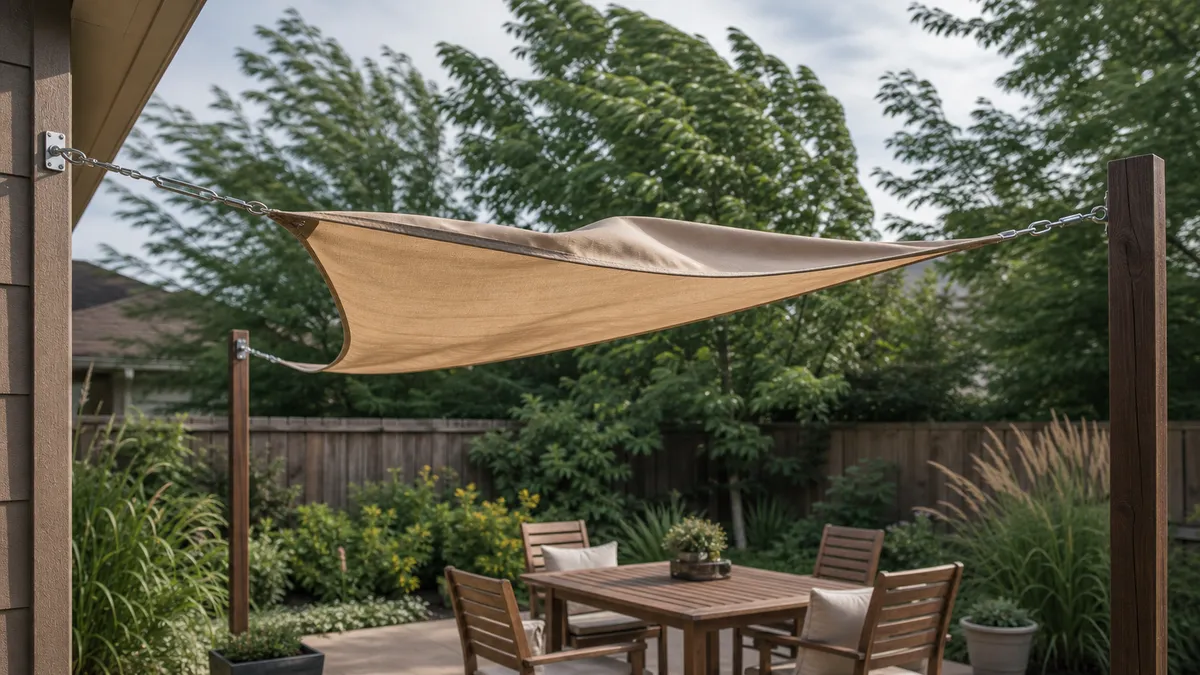
Long rope or chain leaders can make a corner slap and can shift loads in ways the sail was not sized for. Leaving the sail up through high-wind warnings, severe thunderstorm wind, storms or snow also ignores the removal guidance in multiple sail manuals.
Do not place a shade sail above grills, fire pits, heaters or hot exhaust. Coolaroo's ready-to-hang sheet warns against open flame and barbecues under a sail.
- Do not rely on thicker fabric to compensate for weak anchors.
- Do not use fascia screws unless structural framing or backing is confirmed.
- Do not use a flat waterproof sail where rain cannot drain safely.
- Do not leave a sail installed through severe weather because it looks taut.
Stop triggers: take it down or stop the install
Take the sail down before conditions become unsafe, not after fabric starts snapping. Treat high-wind warnings, severe thunderstorm wind alerts, tropical weather, storms and snow as removal triggers. The National Weather Service uses 58 mph or higher as severe thunderstorm wind criteria, but that is a weather threshold, not a shade-sail safe-speed claim.
Stop installation when the structure shows movement: cracked concrete, leaning posts, pulling fascia, loose wall plates, bending eye bolts, torn corner stitching, rattling hardware or seams that open under tension. Do not retension until the loaded part is repaired or replaced.
Stop when safe access is missing. If the only way to remove the sail is from a ladder during a warning, the setup is not practical for wind. Plan reachable corners, quick-release fittings or seasonal removal before fabric is ordered.
Stop when the sail would fail over people, glass, cars, property lines, fire or heat. Another shade may be less attractive in a catalog photo, but it is the better purchase when the site cannot support a tensioned panel.
- Remove before severe weather, high-wind warnings, storms, snow or winter storage periods named by the manual.
- Unload the sail for any moving post, wall plate, eye bolt, fascia board or masonry.
- Choose another shade if the sail cannot be removed before bad weather.
This won't fix it
Do not skip these checks
- No generic shade sail is windproof; follow the specific manual and remove it before severe weather.
- Do not tension from fascia, fence posts, deck rails, trim, gutters or unknown framing.
- Do not use a sail over open flame, barbecues, heaters or hot exhaust.
- NWS wind numbers in this guide are weather-warning criteria, not shade-sail safe-speed guidance.
Read Next
Related fixes
Shade Sail Guide
Use this when shade sail is closer to the real constraint than the current page.
Shade Sail Flapping in Wind
Use this when shade sail flapping in wind is closer to the real constraint than the current page.
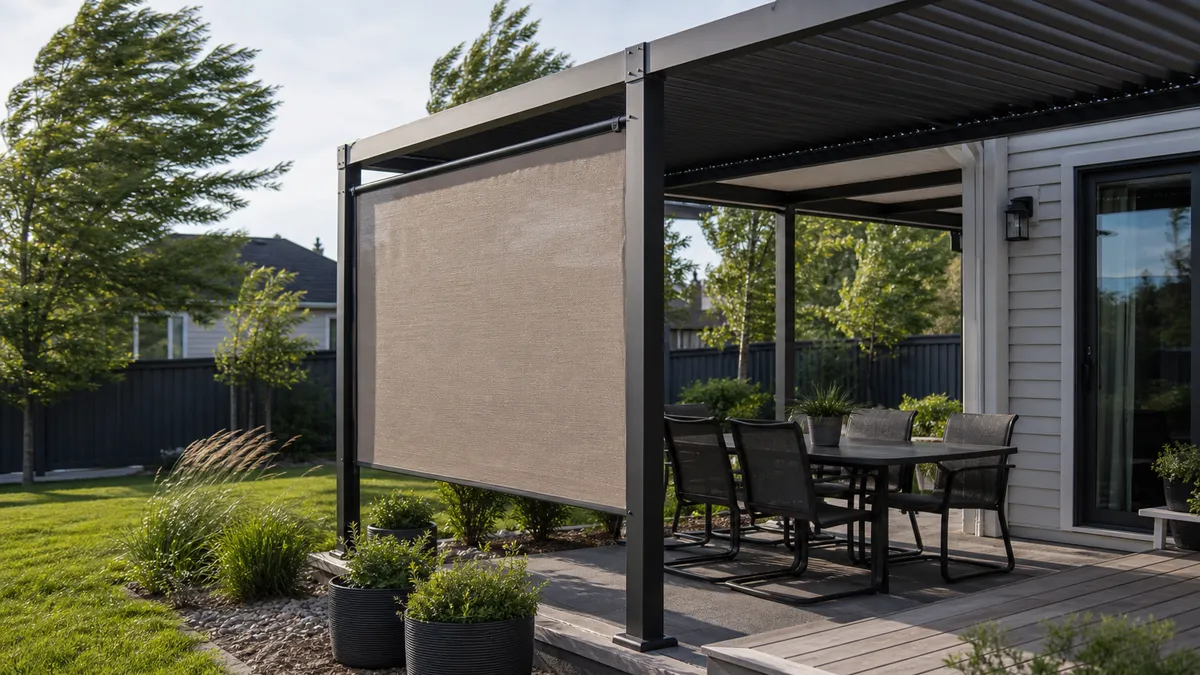
Best Patio Shade for Windy Areas
Use this when patio shade for wind is closer to the real constraint than the current page.
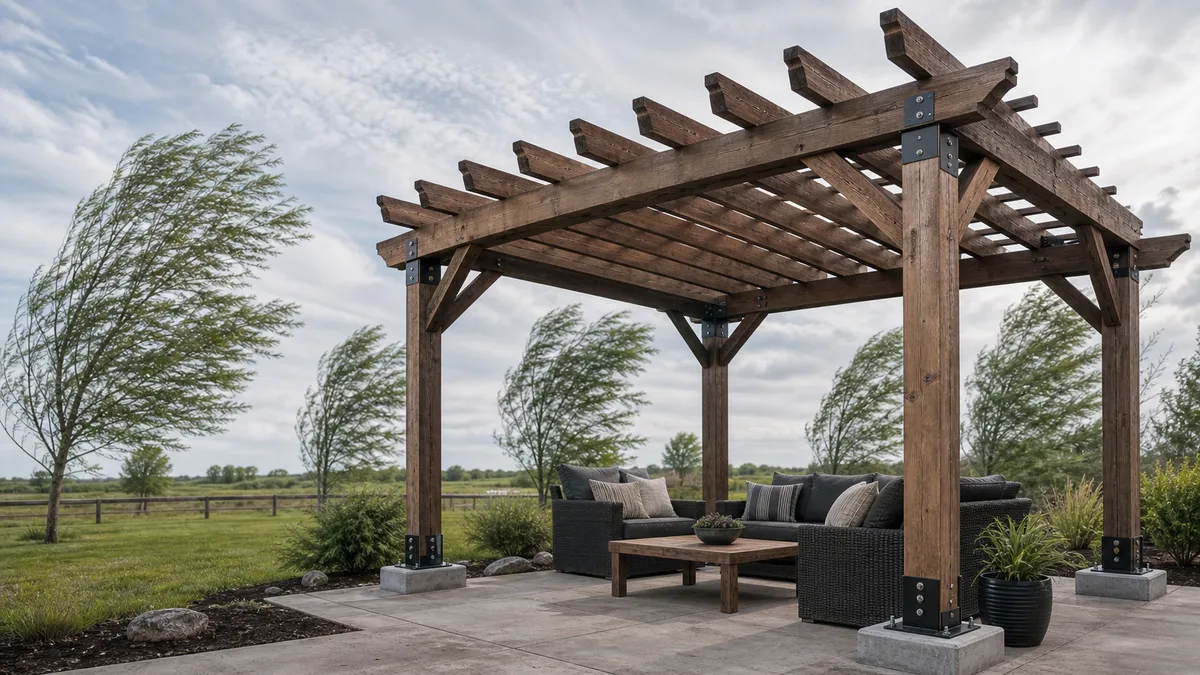
Pergola for High Wind Area
Use this when pergola for high wind area is closer to the real constraint than the current page.
Questions
FAQ
Can I leave a shade sail up during a high-wind warning?
Do not treat a high-wind warning as something a normal residential sail should handle. Follow the sail manual and take the sail down before severe weather when the manual calls for removal. NWS warning numbers describe weather risk, not a safe rating for your fabric, posts or anchors.
Is fascia safe for a shade sail in a windy area?
Fascia alone is a stop trigger. It may need structural backing, through-bolting, a proper wall plate or a different post plan. If you cannot verify what the fasteners reach behind the fascia, do not add sail tension. Use the installation guide before drilling.
Is waterproof shade sail fabric bad in windy places?
It is not automatically bad, but flat waterproof fabric is risky because it can hold water. Coolaroo gives a 20 degree runoff angle for weather-proof shade cloth, and a Home Depot-hosted manual gives a 20-30 degree range. Breathable mesh is often simpler where wind and rain both matter.
Will a stronger hardware kit make a windy shade sail safe?
Only if the anchors, posts and wall attachments are already suitable. Turnbuckles, shackles and pad eyes can help tension a sound install, but they cannot make fascia, a loose fence post or unknown masonry safe. Match hardware to the sail manual and inspect every loaded corner.
When should I hire a pro instead of installing it myself?
Hire help for large spans, high posts, exposed pool or driveway areas, house attachments, fascia questions, unknown framing or masonry, moving supports, uncertain soil and any place where failure could hit people, windows, cars or neighbors.