
Quick Answer
Quick answer for outdoor kitchen shade
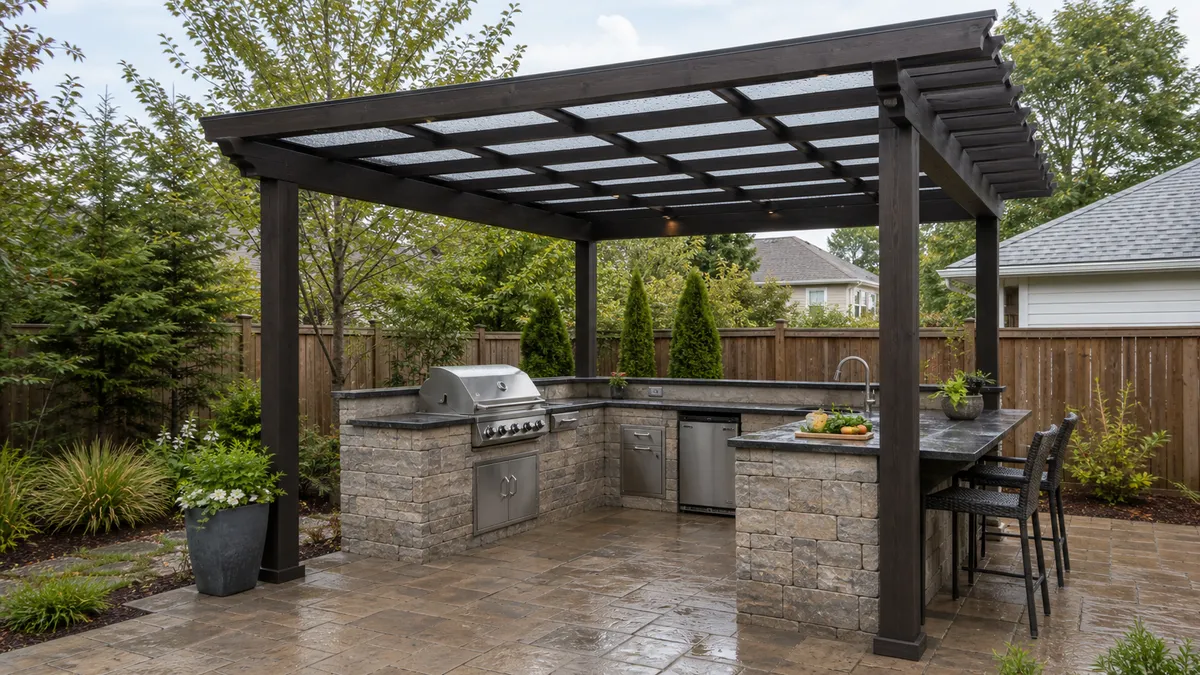
Choose a pergola for outdoor kitchen use only after the grill manual, combustible clearances, smoke path, gas shutoff, GFCI or outdoor electrical plan, roof drainage and post support are clear. When any of those are unresolved, shade the dining or prep zone and keep the grill outside the covered roof.
Choose a covered outdoor-kitchen pergola only when manuals, ventilation, drainage, utilities and structure pass; otherwise shade dining and prep while the grill stays open.
Buying Direction
What to buy or use for an outdoor kitchen pergola
Use this table only after the manual, ventilation, utility, drainage and structure checks above are clear.
| Situation | Buy / use this | Why |
|---|---|---|
| The grill manual or local rule does not allow overhead cover | Buy an open pergola for dining, prep or serving, with the grill outside the roof | Shade still improves the kitchen area without putting heat, grease and exhaust below the cover. |
| The grill can sit near an open edge with clear side, rear and overhead space | Use an open frame or partial shade layout beside the cooking line | The cook stays close to shade while smoke and hot air have a direct escape path. |
| A built-in grill is planned under a fixed or louvered roof | Pause the kit purchase until the hood, enclosure, gas, electrical and permit plan is designed | A roofed built-in station is outdoor-kitchen construction, not a simple shade add-on. |
| Dry dining and serving are the main goals | Put the louvered or fixed roof over seating and prep instead of over the grill | Rain protection is easier when the cooking appliance stays in open air. |
| Side screens, curtains or privacy walls are part of the plan | Use adjustable screening away from grill exhaust and secure it for wind | Screens can improve comfort but can also trap smoke, heat and grease where the grill needs airflow. |
| Attached, deck-mounted or high-wind installation details are unclear | Do not buy yet | Posts, footings, ledgers, connectors and added wind surface need a load path before the roof is chosen. |
Choose the outdoor-kitchen pergola by the cooking risk first
An outdoor kitchen pergola has to work around fire, smoke, rain, utilities and structure before style matters. The first question is not whether wood, aluminum or louvers look best. It is whether the cooking appliance can safely sit under that roof condition at all.
Start with the appliance manual and the local authority before comparing pergola kits. USFA says propane, charcoal and wood-pellet grills are outdoor-only and should be kept away from siding, deck railings, eaves and overhanging branches. CPSC gives a conservative gas-grill safety example of keeping a gas grill at least 10 ft from a house or building and not using it in a garage, breezeway, carport, porch or under a surface that will burn.
That does not mean every outdoor kitchen must be uncovered. It means the covered area has to earn its place. A pergola can shade the prep counter, serving counter and dining table while the grill sits outside the roof line. A grill can sometimes sit near an open edge when its side, rear and overhead clearances pass. A built-in grill under a roofed pergola needs stronger planning: vent hood, non-combustible construction where required, enclosure ventilation, gas shutoff access, outdoor electrical work, drainage and permits.
Use the table as a filter before you price kits or accessories. If a row says pause, pause now rather than buy a roof, screens or lights that later block the grill manual, the gas shutoff, the drainage route or the structural connection.
- Keep the grill manual and local rules ahead of roof style.
- Shade dining and prep when cooking clearance is uncertain.
- Treat a roofed built-in grill as a designed outdoor-kitchen project.
Layout zones: grill, prep, serving, dining and traffic
The pergola should cover the job that benefits most from shade without making the cooking job worse. In many backyards, that means the dining table, prep counter or serving counter belongs under the pergola, while the grill sits at the edge or outside the roof. The cook still works close to guests, but the roof does not become a smoke and grease collector above the hottest appliance.
Plan the grill as a moving, opening object, not a rectangle on a sketch. The lid swings back, doors and drawers open, grease trays slide out, a side burner may throw heat sideways, and the cook needs a place to set hot tools. A roof post that looks fine in a plan can block a refrigerator door, a trash pullout, a sink cabinet or the path from grill to table.
NKBA-derived outdoor kitchen guidance is useful here because it separates social zones from heat, calls for smoke dispersion, uses landing areas around cooking appliances and sinks, and gives 36 in of prep space as a practical planning example when food prep happens outside. Treat that as layout help, not a universal code number. The exact appliance manual, counter depth and site shape still control the final plan.
For a compact patio, a narrow open pergola over the prep and dining side may beat a large covered cooking bay. For a larger kitchen, a U or L shape can put the grill near an open side, the serving counter under shade and the table beyond the heat plume. Keep a straight traffic lane from house door to counter to table so guests do not cross behind the cook while the lid is open.
- Mark grill lid swing, side-burner heat, appliance doors and grease-tray travel before post locations.
- Keep seating out of the main smoke path and away from the cook's hot-tool landing area.
- Shade prep and serving first when roof-over-grill safety is not proven.
Layout checks
Objects to place before the pergola posts
Each check names a real object that can make an otherwise good pergola awkward or unsafe.
| Object or zone | What to check | Why it changes the buy |
|---|---|---|
| Grill exhaust path | Smoke, rear exhaust and hot air have open space to leave. | A side wall or screen can send exhaust into seating or back toward the appliance. |
| Prep counter | Enough usable counter sits near the grill and sink without crossing traffic. | Shade over prep may matter more than a roof directly above the grill. |
| Serving route | Food can move from grill to counter to table without passing behind guests. | Posts and screens should not create a choke point at the hot zone. |
| Dining seating | Chairs stay out of heat, smoke, appliance doors and runoff. | A roof over dining may solve comfort with less cooking risk. |
| Gas shutoff | The shutoff remains visible and reachable after cabinets and screens are installed. | Hidden shutoffs make a gas problem harder to control. |
| Electrical and lighting zone | Outlets, switches, fixtures and powered accessories are rated and reachable. | A later post or screen should not force extension-cord appliance use. |
| Rain runoff | Water exits away from counters, appliance doors, seating and the house wall. | A roofed pergola fails if it drains into the kitchen work area. |
| Cleaning access | Grease tray, hood filters, gutters, roof panels and backsplash can be reached. | A beautiful cover is a poor buy if grease and leaves cannot be cleaned. |
Grill clearances, combustibles and roof height
There is no single pergola height or clearance number that approves every outdoor kitchen grill. Public guidance sets a conservative safety frame, but the grill manual and local code decide the usable layout. USFA's 3-foot safe zone around grills is helpful for keeping children and pets back; it is not a substitute for side, rear and overhead combustible-clearance rules in an appliance manual.
Combustible does not only mean a wood pergola post. It can include wood rafters, fabric canopies, plastic or polycarbonate panels, vinyl trim, nearby siding, painted finishes, plants, storage cabinets and decorative screens. A finish can look tough and still be wrong near heat unless the manual and local rules allow it.
Use manufacturer examples only as examples. The DCS BE1-30 installation guide defines combustible construction broadly, lists an 18 in clearance from combustible surfaces above the cook surface for that model and warns against unprotected overhead combustible surfaces. Blaze's portable grill manual gives a different set of examples, including 36 in side and back clearance to combustibles, a 6 ft cooking-surface-to-overhead example for that manual condition, accessible shutoff and ventilation, plus a vent hood example for specified overhead conditions.
Those numbers teach the same lesson: do not shop from a photo of a roof over a grill. If your appliance manual bans overhead combustible construction, the pergola roof cannot fix that. If the manual requires a hood, enclosure ventilation, non-combustible materials or a clearance that your patio cannot meet, move the pergola over dining or prep instead. For deeper BBQ-only clearance and smoke planning, use the pergola for BBQ grill guide.
- Use public grill safety guidance as a baseline and the appliance manual as the project rule.
- Treat wood, fabric, plastic panels, vinyl trim and nearby plants as possible combustibles.
- Do not turn one manual's 18 in, 36 in, 6 ft or hood example into a universal pergola rule.
Manual examples
Clearance examples are prompts, not universal rules
Use these sources to know what to look for in your own grill, hood and pergola documents.
| Source/manual example | What it teaches | How to use it |
|---|---|---|
| USFA outdoor fire safety | Grills are outdoor-only and need space away from siding, railings, eaves and branches. | Use it as the public fire-safety floor before reading the appliance manual. |
| CPSC gas grill fact sheet | Gas grills should not be used under a surface that will burn; the sheet gives a 10 ft building-distance example. | Treat it as conservative gas-grill placement guidance, not as an approval for closer covered cooking. |
| DCS BE1-30 installation guide | This model guide gives combustible-construction and overhead-clearance examples and calls for enclosure ventilation. | Read your own DCS or other appliance manual before placing rafters, panels or cabinets. |
| Blaze portable grill manual | The manual gives side, back, overhead, shutoff, partial-enclosure and hood examples for that product family. | Use it to see why pergola, hood and gas plans must be appliance-specific. |
| Blaze rear-wind warning | Wind from behind the grill can affect exhaust escape and heat buildup behind the control panel. | Keep screens, backs and privacy walls from blocking the grill's exhaust behavior. |
Smoke, carbon monoxide and ventilation under a pergola
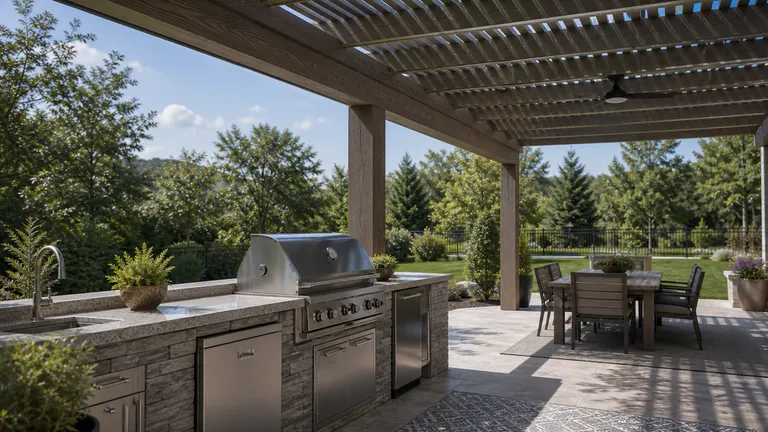
A covered outdoor kitchen is not automatically safe because it is outside. Smoke, combustion gases and hot air still need a path out. CDC states that carbon monoxide is odorless and colorless and can be produced by charcoal grills and fuel-burning equipment. That makes a roofed or semi-enclosed cooking area a ventilation issue, not just a comfort issue.
The risk increases when side screens, privacy walls, solid backs or closed louvers change the airflow. Blaze warns in a model manual that wind entering from the rear can affect exhaust escape and create heat buildup behind the control panel. A screen that blocks low sun at the dining table may be a bad screen behind a grill if it pushes smoke back toward the cook or appliance.
A comfort fan is not a vent hood and does not solve carbon monoxide risk. Fans can help people feel cooler, but they can also push smoke toward seating or back across the grill face. If a built-in grill sits under a roof and the manual or designer calls for a vent hood, plan the hood, duct path, service access and electrical requirements before ordering the pergola roof.
Charcoal and pellet cooking deserve extra caution because embers, ash, pellets and combustion gases keep creating hazards after the food is off the grate. Do not close screens or louvers around active cooking just to escape rain. If bad weather forces the sides closed, stop cooking instead of turning the pergola into a smoky partial enclosure.
- Keep at least one direct exhaust path open around the cooking zone.
- Use side screens for dining privacy, not behind grill exhaust.
- Treat vent hoods as designed mechanical equipment, not as an accessory to add after the roof.
Roof and rain choices for an outdoor kitchen
Rain cover is useful when it protects the people, counters and serving path. It becomes expensive trouble when it drains into the grill cabinet, refrigerator door, house wall, deck ledger or walking route. Before ordering any roofed pergola, trace where water exits during a hard shower and where leaves, grease film and debris will collect.
Open rafters give a shade pattern and trap the least smoke, but they do not keep a dining table dry. A retractable shade canopy can help with sun away from the cooking zone, but fabric near heat and grease needs manual checks and a storage routine. Fixed translucent or metal panels can make the prep area drier but create roof load, cleaning, gutter and smoke questions. Louvered roofs add adjustment, but closed louvers still need drainage and may change the smoke path.
Commercial louvered-pergola articles from Azenco and StruXure are useful as product-feature examples because they discuss gutter runs, water routing and concealed downspouts. Keep that narrow. A generic louvered pergola does not inherit another brand's gutter design, weather limits, evaluation documents or installation details.
Attached outdoor kitchen pergolas need extra drainage caution at the house wall. Water should not dump behind siding, onto a door threshold, into a counter seam or across the path from grill to table. When rain control drives the project, compare roof types in the pergola for rain guide, then come back to the grill manual before placing the roof over cooking heat.
- Send runoff away from appliance doors, counter seams, seating, walking routes and the house wall.
- Do not assume louvers are waterproof or safe above a grill without the product and appliance documents.
- Plan gutter and roof cleaning access before grease smoke and leaves collect overhead.
Roof choices
Pergola roof options near an outdoor kitchen
The right roof depends on whether it covers cooking heat or the lower-risk prep and dining zones.
| Pergola roof type | Best fit | Main risk near cooking | Verify before buying |
|---|---|---|---|
| Open rafters | Shade frame over prep, serving or dining with the grill near open air. | Combustible rafters can still be too close to heat. | Grill manual clearance, roof height and smoke path. |
| Retractable canopy | Seasonal sun control away from the grill. | Fabric can be damaged by heat, sparks, grease and smoke film. | Canopy instructions, wind routine, cleaning and stowage. |
| Louvered aluminum roof | Adjustable shade and rain control over dining or a designed built-in kitchen. | Closed louvers can trap heat or move smoke sideways. | Product gutter details, grill clearance, hood need, wind limits and permits. |
| Fixed or translucent roof | Dry prep or serving area where drainage and structure are designed. | Higher grease, smoke, cleaning and roof-load burden. | Pitch, gutters, load support, manual clearances and cleaning access. |
| Separate grill gazebo or cover | A small cooking shelter only when the manual and local rules allow it. | Can still trap smoke or sit too close to combustibles. | Manual roof allowance, open sides, anchoring and gas access. |
| Roof over dining only | Comfort-first plan when cooking clearances are unresolved. | Less weather protection for the cook. | Table runoff, chair clearance, serving path and grill edge placement. |
Gas, electrical, lighting and fans
Utilities should be planned before posts, screens and roof panels are locked in. A gas shutoff has to remain accessible after cabinets, side screens and decorative panels are installed. LP cylinders need locations that follow the appliance manual and local rules; do not hide a spare cylinder in a hot, enclosed grill island because the pergola plan looks cleaner.
CPSC's gas-grill guidance also matters after the layout is built. It warns to keep hoses away from hot surfaces and grease drip areas, and after a flameout it says to open the lid and wait before relighting because gas can build up. In a covered outdoor kitchen, still air, counters and partial walls can make a rushed relight more serious.
Electrical work around an outdoor kitchen should be handled by a qualified electrician or local-code professional. ESFI says extension cords can deteriorate with continuous use, should not replace permanent wiring, should not run through walls, doors, ceilings or floors, and should be rated for the product and indoor or outdoor use. That rules out permanent refrigerators, hoods, fans, lights or powered louvers on casual cord work.
Use outdoor-rated fixtures that match the actual exposure. ENERGY STAR ceiling fan criteria reference NEC wet-location requirements for outdoor fan and light-kit safety, which reinforces the practical rule: an indoor fan under a pergola is not the shortcut. Use damp- or wet-location-rated fans, lights, outlets and controls where the product instructions and local code require them. If a vent hood, powered louver, fan or light needs GFCI/GFI protection, a dedicated circuit or service access, solve that before the pergola purchase.
- Keep gas shutoffs reachable after counters, screens and doors are installed.
- Do not run permanent outdoor kitchen appliances from extension cords.
- Choose damp- or wet-location-rated fans and lights according to exposure and local code.
Structure, anchoring, wind and added loads
A pergola frame that shades an outdoor kitchen is carrying more than shade. Roof panels, louvers, gutters, privacy screens, fans, lights, heaters, speakers and hanging accessories add weight or wind surface. Cabinets, counters and appliances can also change where posts can actually land. Size the frame for the finished project, not the bare display photo.
Building America Solution Center says exterior components and attachments need continuous load paths, appropriate connectors, corrosion protection and supports designed for loads. That applies to attached pergolas, deck-mounted posts, ledgers and freestanding structures. A ledger into the wrong substrate, a surface base on thin pavers or a deck post that was never sized for a roofed kitchen should stop the purchase.
Simpson Strong-Tie's deck connection guide is a useful vocabulary source because it treats ledgers, joist-to-beam connections, beam-to-post connections, fasteners and connectors as structural details. For an outdoor kitchen pergola, those details affect both safety and the shopping list. Stainless, galvanized or corrosion-resistant hardware may matter in wet, coastal or grill-grease environments, but the exact connector belongs to the engineer, contractor, product manual or local code path.
Side screens affect structure too. A roll-down shade, slatted wall or privacy panel can turn an open pergola into a wind-catching surface. If the site is exposed, attached to the house, built on a deck or located where high winds are common, use a contractor, engineer or local building office before buying heavier roof and screen packages.
- Check the final roof, screen, fan, light and gutter package as the actual load.
- Do not anchor a roofed kitchen pergola into unknown deck boards, thin pavers or unverified siding.
- Treat privacy screens as wind surface, not just comfort fabric.
Grease, cleaning and service access
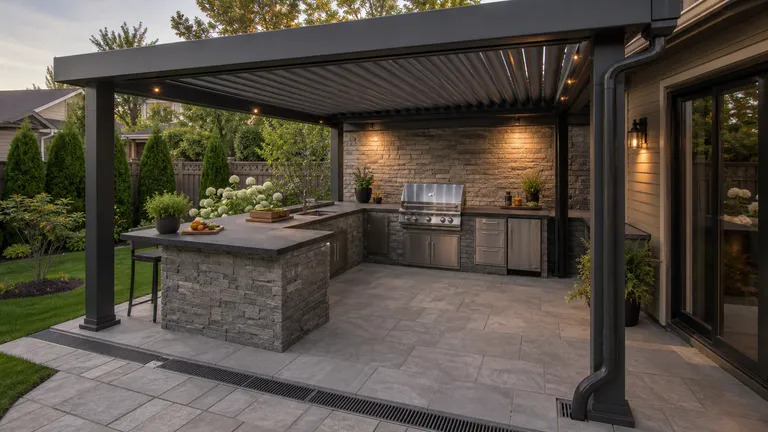
Grease is the quiet reason many covered outdoor kitchen plans fail. A roof that looks clean on installation day can collect smoke film, soot and sticky grease where nobody can safely reach it. The more permanent the roof, the more important cleanable ceiling material, hood filters, grease trays, backsplash surfaces and gutter access become.
Keep service access visible in the layout. Grease trays need to slide out. Hood filters need to come down. Appliance leveling can affect grease flow. Cabinet doors, shutoff valves, fasteners, lighting drivers, fan mounts and roof-panel screws may need future access. A pergola post, fixed screen or masonry side return should not trap those parts behind a finished surface.
Vent hood examples show why service planning belongs before the roof purchase. Blaze's hood manual gives product-specific examples for hood placement, vertical venting where possible, service access and GFI-protected power. Do not copy those numbers to another hood. Use them to ask whether your hood, roof and appliance can be cleaned and serviced without dismantling the pergola.
Cleaning access also includes roof drainage. Gutters near a cooking area may collect leaves and grease film. Post downspouts can clog. Translucent panels can stain. Louvers can need top-side cleaning. If the safest way to clean the roof is standing on the counter beside a grill, the roof choice is wrong.
- Reach grease trays, hood filters and shutoffs without moving screens or removing posts.
- Choose cleanable ceiling, backsplash and counter surfaces near cooking smoke.
- Plan how gutters, louvers and roof panels will be cleaned after a season of grilling.
Cost, accessories and what changes the purchase
Do not compare outdoor kitchen pergolas by kit price alone. The full project can include posts, footings, roof panels, louvers, gutters, screens, non-combustible surfaces, vent hood, fan, lights, outlets, gas line work, permit drawings, structural checks, labor and cleaning access. A cheaper frame can become the wrong purchase if it cannot carry the roof, leave the grill clear or route water away from the kitchen.
Louvered and fixed-roof systems usually add cost because they add moving parts, drainage and structural demand. That added cost may be worthwhile for a dry dining and serving zone. It is harder to justify over the grill unless the appliance manual, hood, gas, electrical and local approval path all fit.
Privacy screens and roll-down shades look like simple accessories, but they can change wind loads and smoke movement. Outdoor-rated fans and lights also sound minor until the electrician has to add approved wiring, controls, GFCI/GFI protection or service access. Gutters and post drains may be small line items, but they decide whether water lands on appliance doors, counter seams or a slippery walkway.
Use affiliate cards as category research, not ranked safety advice. No product card can certify that a pergola is code-approved over a grill. The right product is the one whose manual, installer, utility plan and local approvals match your exact cooking zone.
- Price structure, drainage, gas, electrical, hood, screen and cleaning access together.
- Treat louvered or fixed roofs as higher-scope purchases near cooking heat.
- Do not let product photos replace appliance manuals and local approval.
Category research
Outdoor kitchen pergola categories to compare after the safety checks
Compare these categories only after grill clearance, ventilation, drainage, utilities, structure and permit questions are clear. These are research paths, not tested rankings or safety approvals.
Rain control
Louvered roof for dining or prep
For adjustable shade and rain control when drainage and grill separation are already planned.
- Best when gutters are documented
- Useful over seating and prep
- Still needs grill clearance checks
Check:Verify product drainage, wind limits, manual clearance and local permit path.
Compare louvered pergolas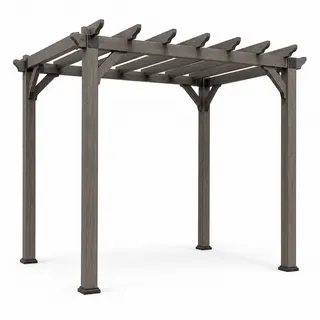
Open frame
Open pergola kit for dining
For shading dining, prep or serving while the grill stays near open air.
- Easier smoke escape
- Less rain protection
- Good for separated cooking layouts
Check:Confirm post locations, footings, lid swing, serving path and grill edge placement.
Compare pergola kits
Shade fabric
Pergola canopy for non-cooking zones
For sun control over serving or seating when fabric stays away from heat and grease.
- Useful away from grill heat
- Needs wind and storage routine
- Can collect smoke film
Check:Read canopy instructions and keep fabric out of the cooking heat path.
Research this categoryWhen not to buy a covered outdoor-kitchen pergola yet
Do not buy a covered pergola yet when the grill manual or clearance path is unresolved. If the manual bans overhead combustible construction, if the roof would be low and fabric-covered, or if a screen would trap smoke behind the grill, move the pergola to dining and prep or choose an open shade frame away from the cooking heat.
Pause when utilities are vague. The gas shutoff, LP cylinder location, appliance enclosure ventilation, gas-line size, electrical outlet location, GFCI/GFI protection, outdoor-rated fixture choice and vent hood power should be known before the roof and screens are ordered. Arvada's residential exterior guidance is one local example showing how detailed gas-line plans can become when appliances are involved.
Wait when drainage is not designed. A roof that drains toward appliance doors, counter seams, a house wall, a deck ledger, seating or the main walking path is not ready. Choose an umbrella, awning over seating, shade sail away from cooking heat or open pergola over prep until the gutter and splash plan is clear.
Stop when structure or approvals are uncertain. Contra Costa County and City of Chico examples show how pergolas, outdoor kitchens, gas, electrical, plumbing, mechanical work, roof work and setbacks can trigger permits or separate trade approvals depending on location. HOA rules, rental terms and insurance concerns can add another layer. An installer, licensed electrician, gas professional, structural engineer, contractor or local building office should answer those questions before the purchase.
The lower-risk alternative is often better: shade the table, prep counter and serving run; keep the grill outside the roof; use a separate grill gazebo only if its manual and local rules allow it; or hire an outdoor-kitchen designer when the project includes a roofed built-in grill, hood, gas, electrical and permanent counters.
- Do not cover a grill when the manual, hood or combustible-clearance question is open.
- Do not add side screens when they block smoke, rear exhaust or shutoff access.
- Do not buy a roofed system when water drains toward appliances, counters, seating or the house wall.
- Do not treat permits, gas work, electrical work, venting or structural support as after-the-fact details.
Watch-outs
Before you buy or install
- Do not assume aluminum, louvers, height or open sides make a pergola automatically safe over a grill.
- Do not use a comfort fan as a vent hood or carbon monoxide solution.
- Do not put permanent outdoor kitchen appliances on extension cords.
- Do not add side screens where they trap smoke, grease or heat around the grill.
- Do not buy a roofed outdoor-kitchen pergola before drainage, anchoring, permits and service access are clear.
Read Next
Related guides if your situation is different
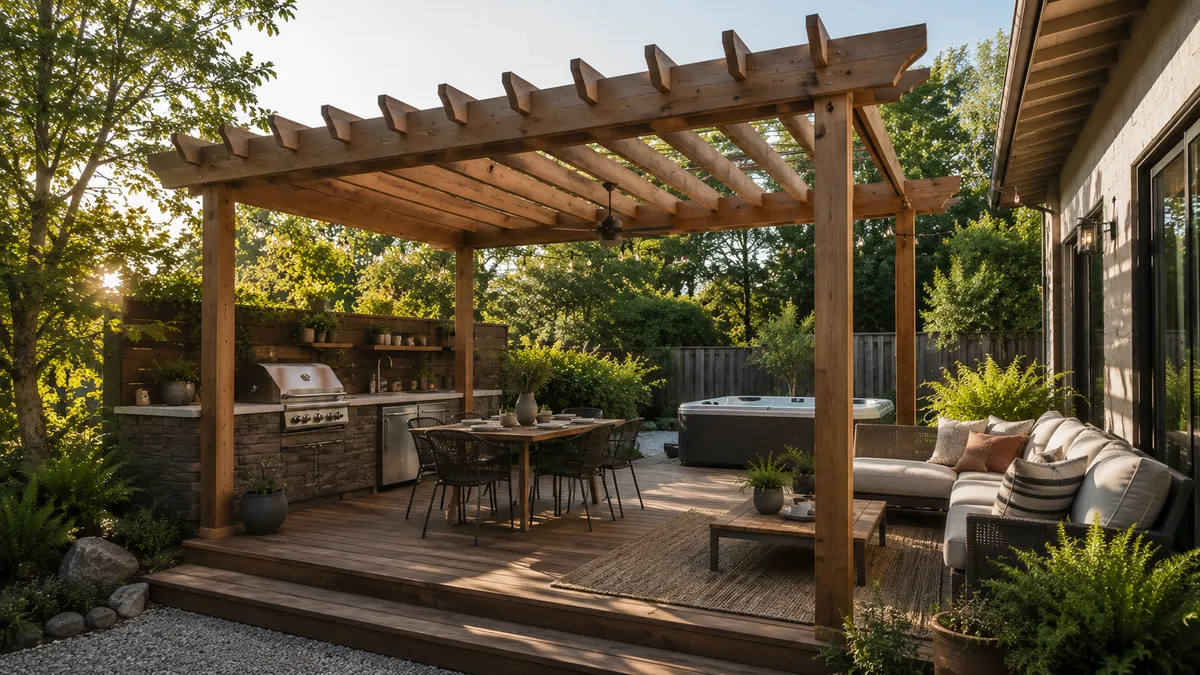
Pergola Guide
Use this when pergola is closer to the real constraint than the current page.
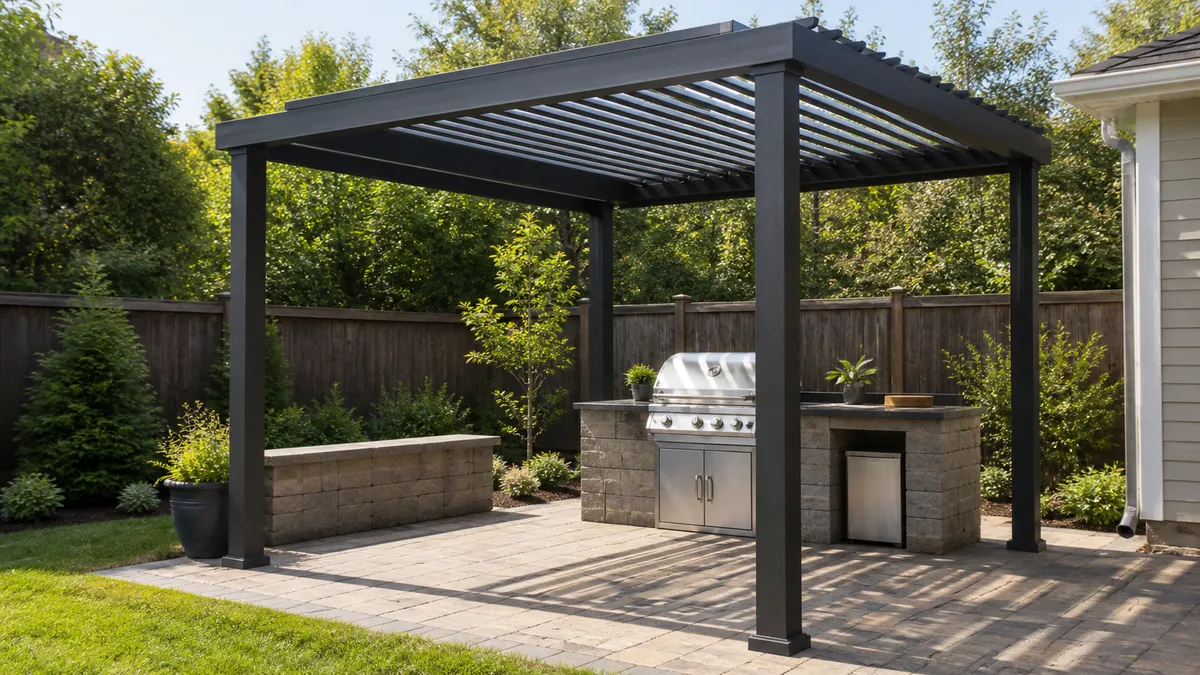
Pergola for BBQ Grill
Use this when pergola for bbq grill is closer to the real constraint than the current page.
Pergola for Rain
[object Object]
Pergola for Privacy
Use this when pergola for privacy is closer to the real constraint than the current page.
Questions
FAQ
Can you put a grill under an outdoor kitchen pergola?
Sometimes, but only when the grill manual, combustible clearance, ventilation, gas and electrical setup, roof material and local rules allow that exact layout. If any of those are unclear, put the pergola over dining or prep and keep the grill outside the roof.
How much clearance does a pergola need over an outdoor kitchen grill?
There is no universal safe number. USFA and CPSC give public safety guidance, while DCS and Blaze manuals show model-specific clearance examples that differ. Use the exact grill and hood manuals plus local code for side, rear and overhead clearance.
Do I need a vent hood under a covered outdoor kitchen pergola?
A roofed built-in grill may need a vent hood, enclosure ventilation, service access and non-combustible construction, depending on the appliance and local rules. A ceiling fan is not a hood and does not solve carbon monoxide or smoke safety by itself.
Is a louvered pergola safe over a grill?
Not automatically. Louvers can help with shade and rain when the product has documented drainage, but grill clearance, exhaust path, hood need, gas shutoff, electrical work, grease cleaning and permit requirements still decide whether it belongs over cooking heat.
Should the grill sit inside the pergola or at the edge?
The edge is often easier because heat and smoke can leave the covered area while prep or dining stays shaded. A grill deeper inside the pergola needs stronger proof from the manual, roof material, ventilation plan, service access and local rules.
Does an outdoor kitchen pergola need a permit?
It may. Pergolas, outdoor kitchens, gas lines, plumbing, electrical work, vent hoods, roof work, setbacks and attached structures can trigger separate permits or inspections depending on jurisdiction. Ask the local building office before buying a permanent roofed setup.