
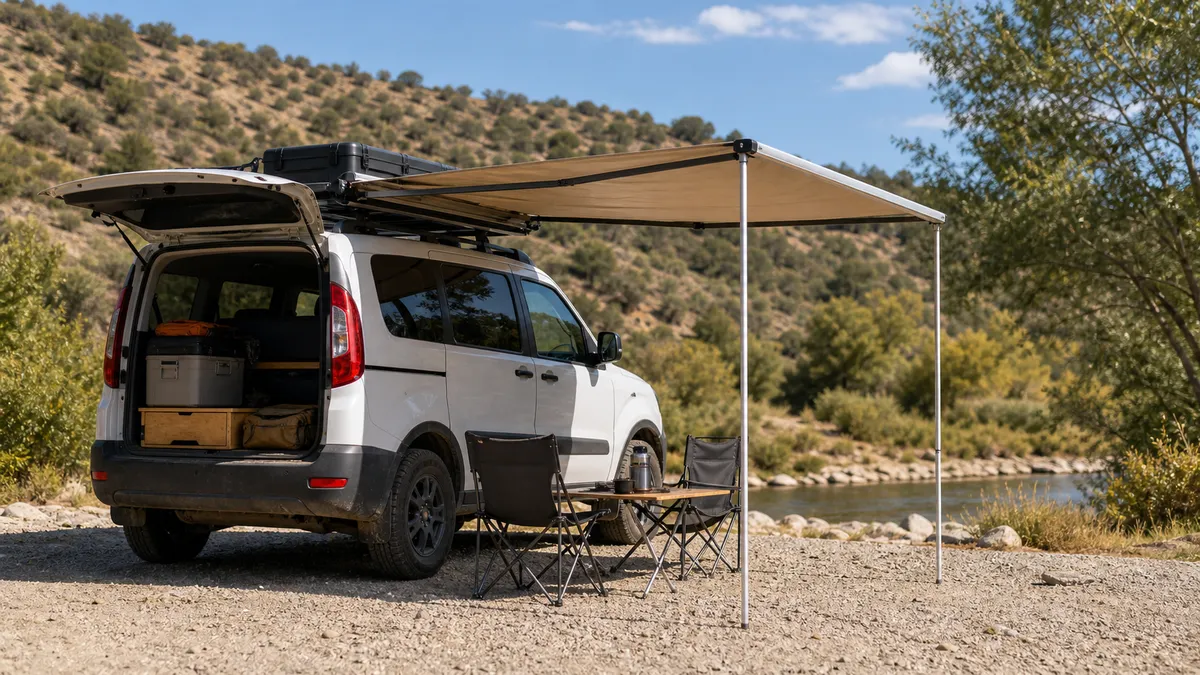
Quick Answer
Short answer: match the attachment first
Choose a car awning by attachment first, not by open fabric size. Use a roof rack awning only after the roof load rating, rack rating, brackets and crossbar spread all check out. Use suction, magnetic or tailgate shade only while parked. Use a tarp or freestanding shelter when the car cannot safely carry or anchor the fabric.
Buy a mounted car awning only when the rated rack, brackets and packed case pass; otherwise choose portable parked shade or a freestanding camp shelter.
Buying Direction
What to buy or use for a car awning setup
Use this table after vehicle shape, attachment method, rack limits and parked-use rules are clear.
| Situation | Buy / use this | Why |
|---|---|---|
| SUV or crossover with rated crossbars | Use a small side roof rack awning after checking roof load rating, rack rating, bracket contact and packed length. | Yakima and Rhino-Rack examples show that bar spacing, packed length and bracket placement decide fit before open shade area. |
| Hatchback or wagon without a strong rack | Use a portable suction cup awning, magnetic awning or hatch shelter while parked. | Temporary anchors can help at camp, but they must come off before driving and still need poles, guy lines and ground anchors. |
| Sedan or trunk car | Use a freestanding canopy, tarp or small portable shelter more often than a vehicle-mounted awning. | Trunk shapes rarely suit tailgate shelters, and forcing fabric onto glass, paint or a weak roof creates a poor fit. |
| Beach day with sand and gusts | Use light parked shade with sand anchors, or choose a beach shelter that packs down fast. | Sand, reflected UV and wind make side shade, anchor strength and fast stowage more important than a large roof case. |
| Car leaves the campsite during the day | Use a tarp or freestanding shelter instead of shade tied to the vehicle. | The shade should stay where the chairs, table or kitchen remain after the car moves. |
| Unknown roof rating, glass roof or weak rack | Do not buy a mounted awning yet; check the vehicle manual and rack limits or use ground shade. | A mounted case becomes road-carried cargo, and NHTSA treats unsecured loads as a serious road hazard. |
Which car awning setup fits your vehicle?
Start with the shape of the car. A crossover with rated crossbars can carry a small side case when the load math passes. A bare-roof hatchback usually works better with a portable awning that clips, straps, suctions or magnets in place only while parked. A sedan often needs a tarp or freestanding shelter because the trunk does not give you a tall hatch to cover.
Do not shop by the biggest square-foot number first. A car awning has to clear doors, hatch swing, bikes, roof boxes, garage height and the side of the parking space. It also has to close and travel without loose fabric, loose brackets or parts that can leave the vehicle.
For an awning for SUV use, separate camp shade from road cargo. A roof-mounted case must be carried safely at speed. A suction cup awning, magnetic awning or tailgate awning is parked camp gear. It can help at a beach or picnic stop, but it is not a highway mount.
Buying Table
Car and SUV buying summary
Use this table before comparing colors, walls, lights or fabric size.
| Vehicle or trip | Shade to use | Check before ordering | Avoid |
|---|---|---|---|
| SUV or crossover with rated crossbars | Small roof-rack side awning | Roof load rating, rack rating, crossbar spread, bracket contact, packed length and road securement | Automatic fit just because the car has rails |
| Hatchback or wagon without a strong rack | Portable suction, magnetic or hatch shade | Paint and glass contact, hatch arc, poles, straps, guy lines and full removal before driving | Permanent road-mounted cargo |
| Sedan or trunk car | Freestanding canopy, tarp or compact portable shelter | Pole space, lines, parking rules and where the shade lands | A hatch shelter forced onto a trunk lid |
| Beach day | Portable shade with sand anchors or a beach shelter | UV, reflected UV, side glare, wind direction, anchor hold and fast pack-down | Leaving fabric open in gusts or while away |
| Camp where the car leaves | Tarp, freestanding shelter or driveaway camp shade | Whether the table, chairs and kitchen need shade after the vehicle moves | The only shade for a basecamp |
| Unknown roof rating, glass roof or weak rack | No mounted awning until the vehicle and rack instructions are checked | Manual limits, clamp points, glass-roof rules and a safe portable backup | Guessing that a light awning is harmless |
Vehicle fit table: sedan, hatchback, crossover or SUV
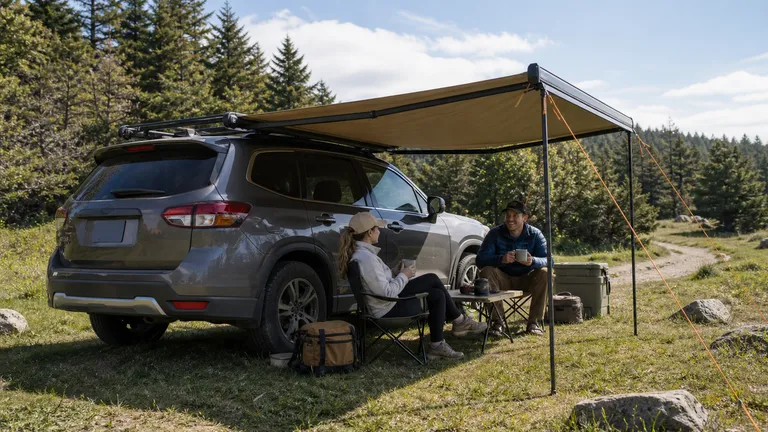
Measure the rack before buying. Yakima support lists a 24 to 70 inch crossbar spread example for the SlimShady, which shows why the distance between bars matters as much as vehicle width. Before ordering any compact roof awning, check the current packed length and case weight against the vehicle, rack and bracket instructions instead of assuming a small awning fits a small car.
Small cars can fail the fit check before anything looks wrong. The bars may be too close together, the case may overhang the hatch, the bracket may not sit fully on the bar, or the garage height may stop working. Factory rails are not enough by themselves. The rack, crossbars, feet, brackets and fasteners all have to suit the awning instructions.
Tailgate products need the rear door shape to match. One tailgate shelter example in the research lists a small 135 x 140 cm canopy and warns that its SUV shape is not compatible with MPVs or hatchbacks. Treat that as a fit warning for hatch shape and rear clearance, not as a universal rule for every brand.
Fit Check
Vehicle shape and attachment limits
Use this table to rule out bad fits before buying an awning for car or SUV travel.
| Vehicle shape | Likely shade fit | Main checks | Stop sign |
|---|---|---|---|
| Sedan or trunk car | Tarp, freestanding canopy or portable shelter | Where poles and lines can stand beside the car | Tailgate shelter needs a tall hatch, not a trunk lid |
| Hatchback | Hatch shelter only if the hatch height and rear shape match | Hatch arc, rear clearance, exhaust area, ventilation and door access | Fabric blocks the only exit or touches a hot exhaust area |
| Wagon or crossover | Portable awning or small mounted side case | Crossbar spread, packed length, door clearance and existing roof cargo | Bars are too close together or the case hits the hatch |
| SUV with rails and crossbars | Small roof rack awning after load checks | Vehicle roof load rating, rack rating, bracket seating and road securement | Decorative rails or partial bracket contact |
| Bare roof | Portable suction or magnetic parked shade | Paint, glass, suction surface, poles, straps and removal before driving | Treating temporary anchors as road mounts |
| Glass or panoramic roof | Ground shade until the manual allows any contact or load | Glass-roof restrictions, clamp points and heat expansion | Suction, clamps or magnets used without checking the vehicle manual |
| Car plus campsite | Tarp or freestanding shelter | Whether shade must stay after the car leaves camp | Vehicle-tied shade used as the only basecamp cover |
Portable vs mounted car awnings
A mounted awning is fastest after installation, but it asks the most from the car. The case, brackets, locks and wall kits ride on the roof every mile. Yakima fitting instructions warn that a loaded roof rack can change handling, side-wind behavior, direction changes and braking, and that the total load includes racks, accessories and cargo.
Portable shade is slower to set up, but it puts less demand on the roof. MoonShade gives one portable example at 9 ft x 7 ft deployed, 28 in x 6 in packed and 8 lb total weight. Its listed kit includes stakes, guy lines, tensioners, a carrying bag, suction cup anchors, poles and tall connect cords. Price portable shade by the whole kit, not only the fabric.
Suction and magnetic anchors are parked-use tools. They can work for lunch stops, beaches, festivals or occasional car camping when wind is mild and the surface is suitable. Remove them before driving. Also remove loose straps, poles, wall panels, magnets and any fabric that can flap, scratch paint or leave the car.
A tailgate awning is narrower than side shade. It can be excellent for changing shoes, sorting a cooler or getting rain off the rear door, but it does not create the same living area as a side case. Check hatch height, rear clearance and exhaust safety before treating the hatch as a sheltered room.
- Choose mounted shade only after vehicle, rack, bracket and road-load checks pass.
- Choose portable shade when the car has a bare roof, uncertain rack, rental limits or occasional trips.
- Choose tailgate shade for rear-door tasks, not broad side seating.
- Choose tarp or freestanding shade when the camp zone sits away from the car.
Category research
Car awning categories to compare
Search categories only after the vehicle roof, rack, packed length and storage routine are realistic.
Small vehicle
Car Awning Roof Rack
For hatchbacks, wagons and compact SUVs with real rack support.
- Compact shade
- Lower packed weight
Check:Rack load, bar spread and roof clearance.
Search on Amazon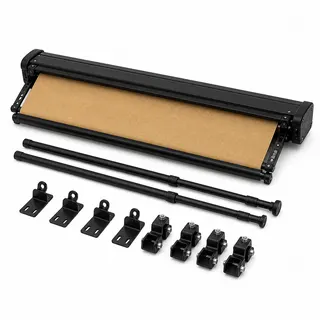
SUV setup
SUV Awning
For crossovers and SUVs used for camping or roadside shade.
- Better camp coverage
- Needs mounting hardware
Check:Side orientation, tailgate path and packed length.
Search on AmazonMounting
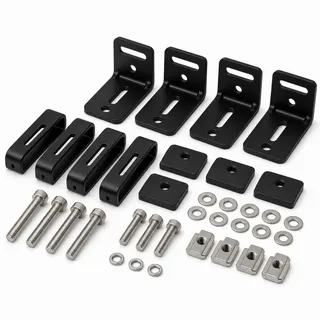
Vehicle Awning Brackets
For connecting an awning case to crossbars or platforms.
- Bracket compatibility
- Hardware-driven fit
Check:Bolt pattern, rack channel and case clearance.
Search on AmazonBeach days and car camping
Beach shade needs more than overhead fabric. EPA says UV Index 3 to 7 calls for shade and protection during late morning through mid-afternoon, and 8 or higher calls for extra protection. EPA also gives the simple shadow rule: if your shadow is shorter than you are, seek shade and protect skin and eyes.
Bright sand and water make a small awning feel less protective. EPA Envirofacts notes that white sand and other bright surfaces can reflect UV and increase exposure. A car awning helps, but reflected UV and low side glare can still reach faces, kids, pets and coolers. Bring side shade, hats, eyewear, sunscreen and a way to move chairs as the sun drops.
Wind decides whether beach fabric stays open. Normal pegs often pull in loose sand, so carry sand anchors or bags that can be filled and buried. Pack down when fabric lifts, poles lean, anchors creep, storm clouds approach or the forecast changes. Do not leave an awning open while swimming or walking away.
At camp, ask whether the car stays put. A car camping awning is convenient for quick cooking, gear sorting and shade beside the door. If the vehicle leaves for hikes, errands or beach access, a tarp or freestanding shelter is better because the shaded table can stay behind.
- Use sand anchors or buried bags instead of ordinary stakes in loose beach sand.
- Dry and shake out sandy fabric before long storage.
- Keep stove heat, grills and hot exhaust away from fabric, straps and hatch shelters.
Rack load, wind, rain and tailgate safety
Treat any mounted awning as road cargo first. NHTSA secure-load guidance says not to overload the vehicle, to tie large objects directly to the vehicle or trailer and to double-check the load. It also reports about 850 deaths and almost 19,000 injuries yearly in crashes involving objects in the road. Loose brackets, a loose case or fabric left outside the bag are not minor problems.
Awnings also need a weather routine while open. Rhino-Rack Sunseeker instructions require pegs and ropes whenever the awning is open, warn to stow it in strong winds and say not to leave it unattended. The same instructions tell installers to place brackets fully over the crossbar or platform tray and to lower the front edge in rain to reduce pooling.
Do not wait for a storm warning to close fabric. National Weather Service high-wind guidance tells people to move inside sturdy buildings during high wind warnings or severe thunderstorm warnings. For a car awning, pack down earlier: lifting fabric, shifting poles, noisy arms, creeping sand anchors, pooling rain or a gust front are enough.
Tailgate shade adds exhaust and carbon monoxide risk. A tailgate tent manual in the research says the engine must be off, the exhaust cooled and ventilation maintained before use. CDC says carbon monoxide is odorless and can kill without warning, and CPSC warns against portable heaters, lanterns and stoves in tents, campers and vehicles. Do not cook with flame or run the engine inside an enclosed hatch setup.
- Remove suction cups, magnets, loose straps, poles and fabric before driving.
- Use pegs, guy lines and tensioners whenever the awning manual requires them.
- Close the awning before strong wind, storm warnings, lifting fabric or rain pooling.
- Keep the engine off, the exhaust cooled and airflow open around any tailgate shelter.
Buying criteria and accessories to price
Do not compare a bare awning price to a ready-to-use kit. A roof rack awning may need crossbars, L-brackets, channel nuts or T-bolts, locking cores, anti-theft hardware, wall kits and a place to store the wet side wall. A portable awning may need spare suction cups, magnets, poles, straps, guy lines, tensioners, stakes and sand anchors.
Packed length matters inside the car as well as on the roof. A case that looks compact online may be awkward on a short hatchback, and poles that fit diagonally in an SUV may not fit a sedan trunk. Measure the closed case, pole bag and storage bag before ordering.
Plan for wet fabric. A dry bag, towel, repair tape and separate stake bag prevent sandy or wet gear from soaking the cargo area. If the awning will be reopened at home to dry, make sure there is space to unroll it without blocking a shared driveway, garage or apartment parking area.
- Roof-rack hardware: rated crossbars, L-brackets, channel nuts or T-bolts, locks and torque checks.
- Portable anchors: suction cups, magnets, straps, poles, guy lines and tensioners.
- Ground anchors: pegs, sand anchors, extra cord and reflective line markers.
- Storage and repair: storage bag, dry bag, repair tape, towel and spare anchor parts.
- Comfort add-ons: one side wall only if low sun or glare justifies the wind surface.
When not to buy a car awning
Do not buy a mounted awning for an unrated rack, unknown roof load, decorative rails, partial bracket contact or a glass roof that has not been cleared by the vehicle manual. Use portable ground shade until you can confirm the roof and rack limits. If the roof-rack details are the blocker, use the roof-rack awning guide before spending money.
Do not buy a tailgate awning just because it looks simple. Skip it when the hatch shape is wrong, the rear door cannot open fully, the shelter blocks ventilation, the engine might run nearby, or cooking would happen under fabric. Use a freestanding shelter instead.
Do not buy a vehicle-tied awning as the only camp shelter when the car leaves camp or when beach wind is the normal condition. A tarp, freestanding canopy or beach shelter can be cheaper, safer and more useful away from the vehicle. Use the camping tarp vs awning guide when low cost, detached shade or campsite flexibility matters most.
Use the broader vehicle awning guide when the answer is no longer a normal car or small-SUV decision. Campervans, 4x4s, RVs and 270-degree awnings bring different rack, wall, hinge and travel checks.
- Skip mounted shade until roof and rack load limits are known.
- Skip suction or magnetic shade when wind will be the normal condition.
- Skip tailgate shade when exhaust, ventilation or hatch fit is uncertain.
- Skip vehicle-tied shade when camp shade must remain after the car leaves.
Watch-outs
Before you buy or install
- Do not treat suction cups or magnets as highway mounts.
- Do not exceed the vehicle roof load rating, rack rating or bracket instructions.
- Do not leave an awning open unattended in wind, rain or soft sand.
- Do not run the engine or cook with flame inside an enclosed tailgate shelter.
- Do not ignore reflected UV at the beach; overhead shade is not complete skin and eye protection.
Read Next
Related guides if your situation is different
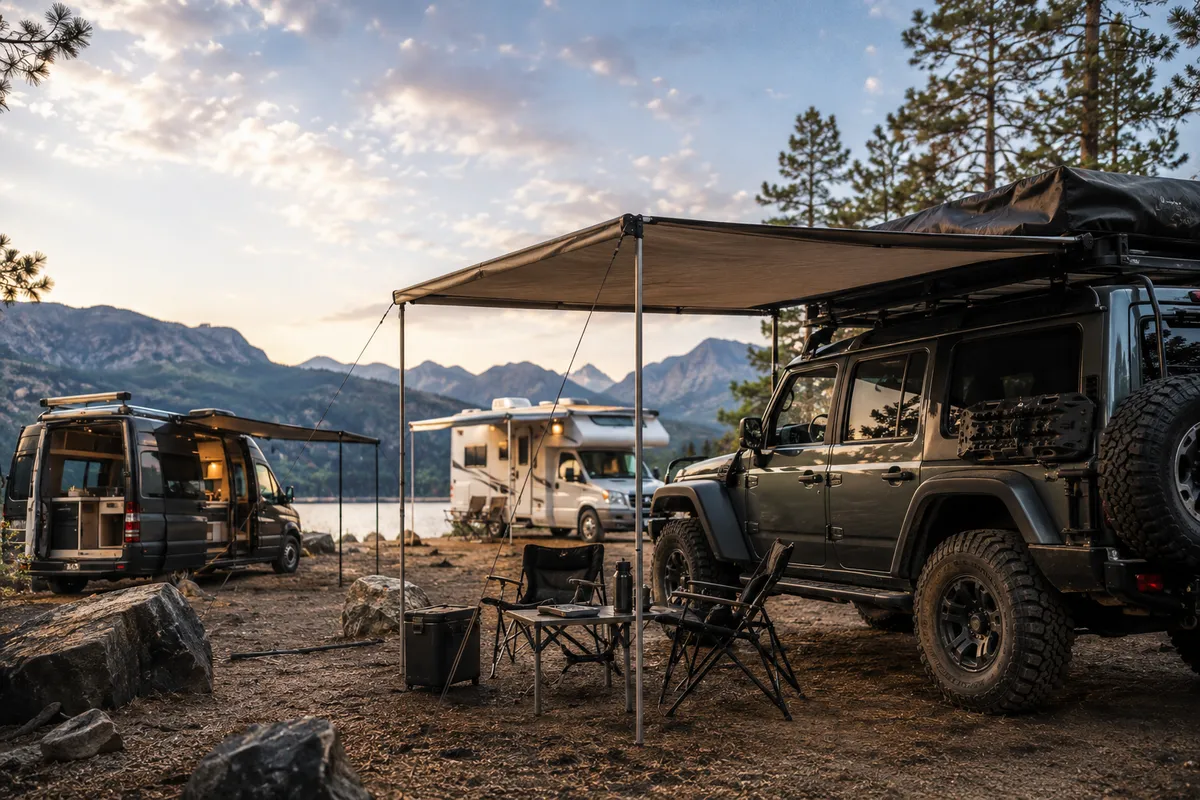
Vehicle Awning Guide
Use this when vehicle awning is closer to the real constraint than the current page.
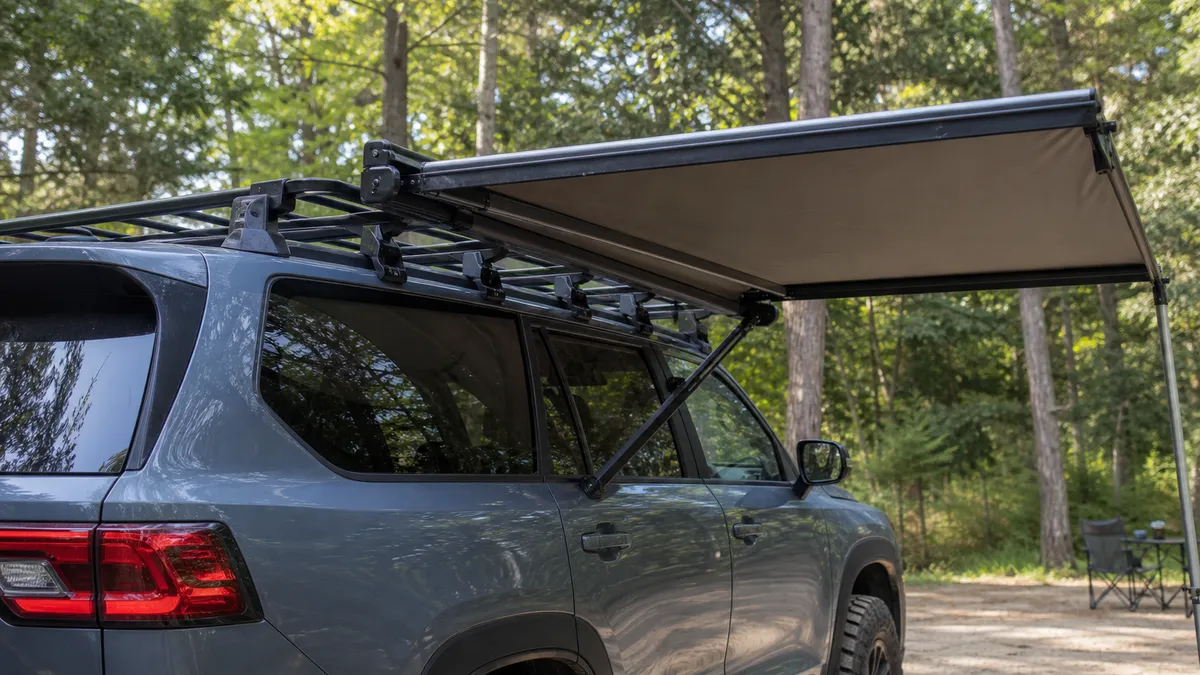
Roof Rack Awning Guide
Use this when roof rack awning is closer to the real constraint than the current page.
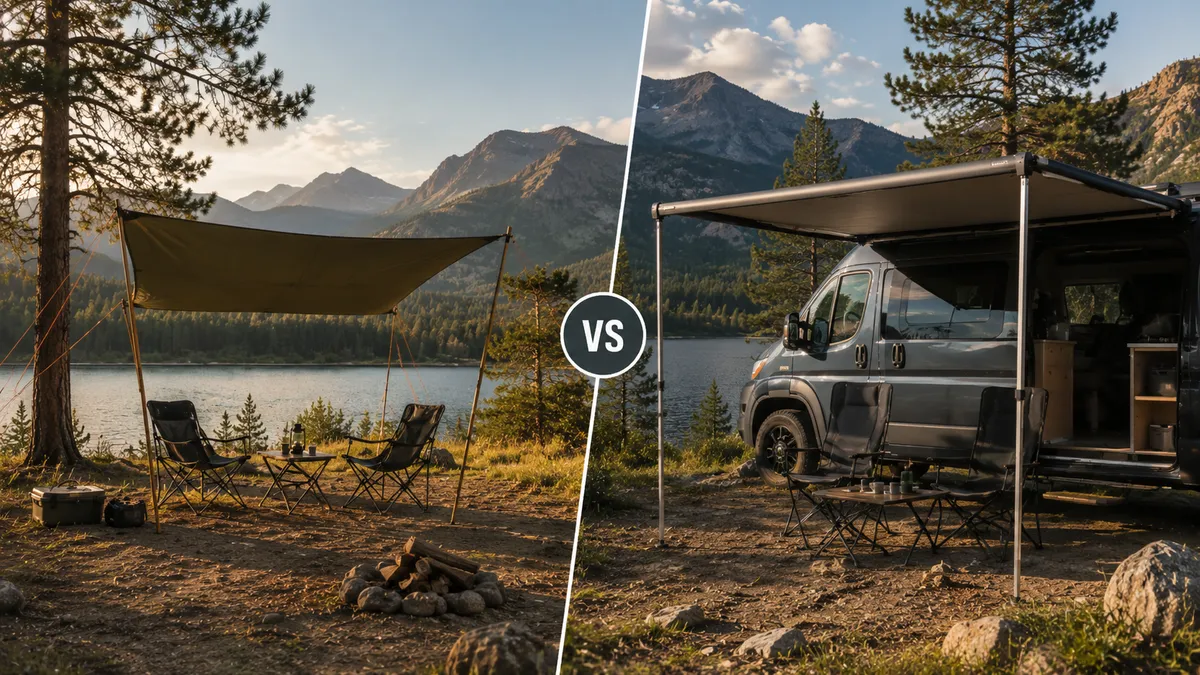
Camping Tarp vs Awning
Use this when camping tarp vs awning is closer to the real constraint than the current page.
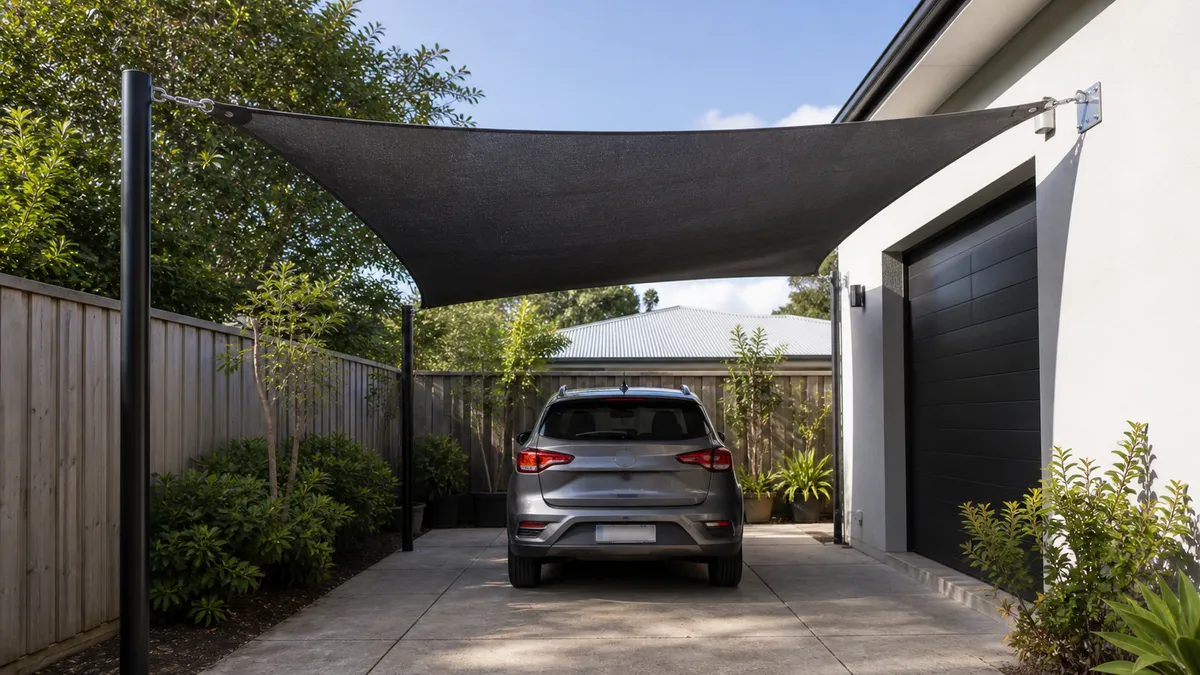
Shade Sail for Driveway
Use this when shade sail for driveway is closer to the real constraint than the current page.
Questions
FAQ
Can I put an awning on a normal car without roof rails?
Usually not as road-mounted cargo. A normal car without a rated rack is better with a portable suction cup awning, magnetic awning, tarp or freestanding shelter while parked. Remove temporary anchors, straps, poles and fabric before driving.
Is a suction-cup or magnetic car awning safe at the beach?
It can be useful for parked shade in mild conditions, but beach wind, soft sand and reflected UV limit it. Use sand anchors, keep guy lines tight, pack down early and add hats, eyewear and sunscreen because overhead shade does not block every angle.
What roof-rack checks matter before buying a mounted car awning?
Check the vehicle roof load rating, rack rating, crossbar spread, bracket contact, case weight, packed length and existing roof cargo. Yakima uses crossbar-spread examples, and NHTSA secure-load guidance is a reminder that loose external cargo can become a road hazard.
Are tailgate awnings good for hatchbacks and small SUVs?
Only when the hatch height, hatch shape, rear clearance and ventilation fit. Some tailgate shelters are SUV-shaped and do not fit every hatchback or MPV. Keep the engine off, the exhaust cooled and airflow open before using rear-door fabric.
Should I choose a car awning or a camping tarp?
Choose a car awning for fast shade tied to a parked vehicle. Choose a tarp or freestanding shelter when the car cannot carry the load, leaves camp during the day, or when lower-cost detached shade matters more. See the camping tarp vs awning guide.
Can I cook or sleep under a tailgate awning?
Do not treat a hatch shelter as an enclosed kitchen or sleeping room. Keep the engine off, the exhaust cooled, windows or vents open and flames or stoves away from fabric. CDC and CPSC warnings around carbon monoxide apply around vehicles, tents and camping heaters.