
Quick Answer
Quick answer for deck shade sails
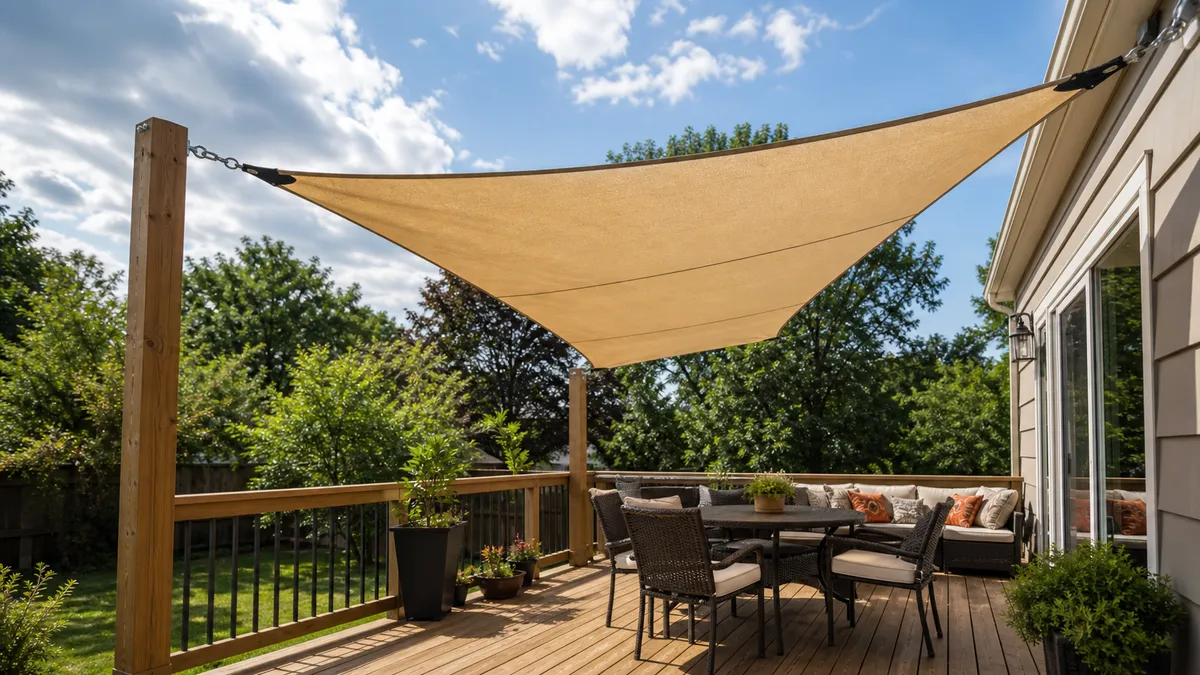
A shade sail for deck works only when every corner has a proven structural anchor, room for a turnbuckle or shackle, slope for runoff and a storm removal plan. Do not tension fabric from deck railing, loose guard posts, fascia, trim, siding, veneer, gutters, bay-window framing, rotted boards or unknown framing. Use freestanding posts, verified house framing plus posts, a small corner triangle, or removable shade when the anchors are uncertain.
Use a deck shade sail only after the anchors, drainage pitch, door clearance and storm takedown are solved; otherwise choose posts, an awning, umbrella or vertical shade.
Deck setup routes
Choose the deck sail setup that fits the anchors
Start with the parts that can hold tension. A deck puts shade where people already sit, but it also adds railings, stairs, doors, elevated wind and tempting house attachment points that are easy to overrate.
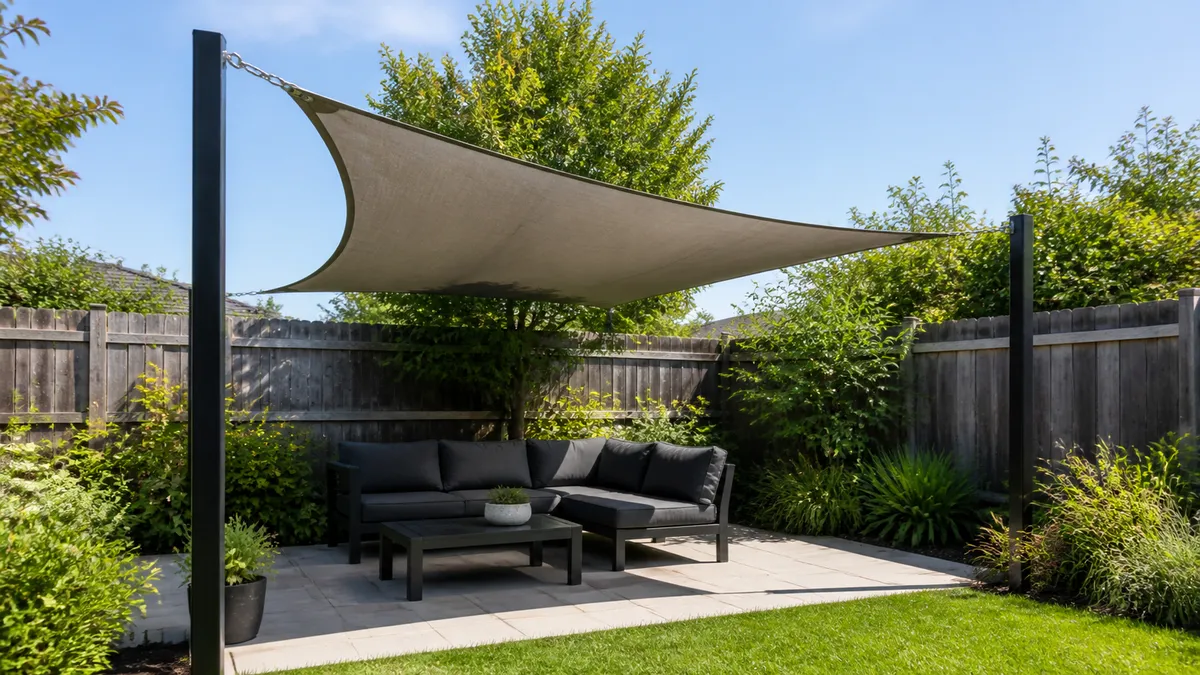
Freestanding posts beside the deck
Choose posts when the deck railing, fascia or house wall is not a verified anchor. Posts still need structural planning, concrete work and bracing, not decorative placement.
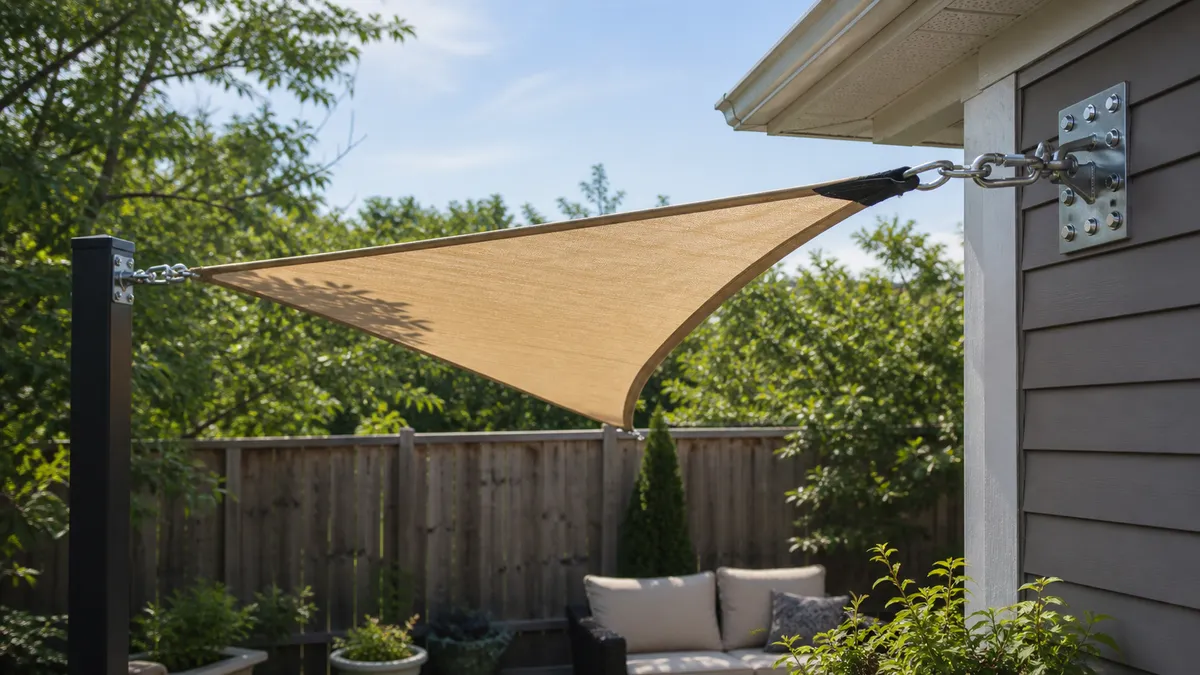
House wall plus independent posts
Use the house side only after framing, solid masonry or an engineered member is identified. Reject fascia, siding, veneer, hollow masonry, bay windows and cantilevered overhangs.
Small triangle over one seating corner
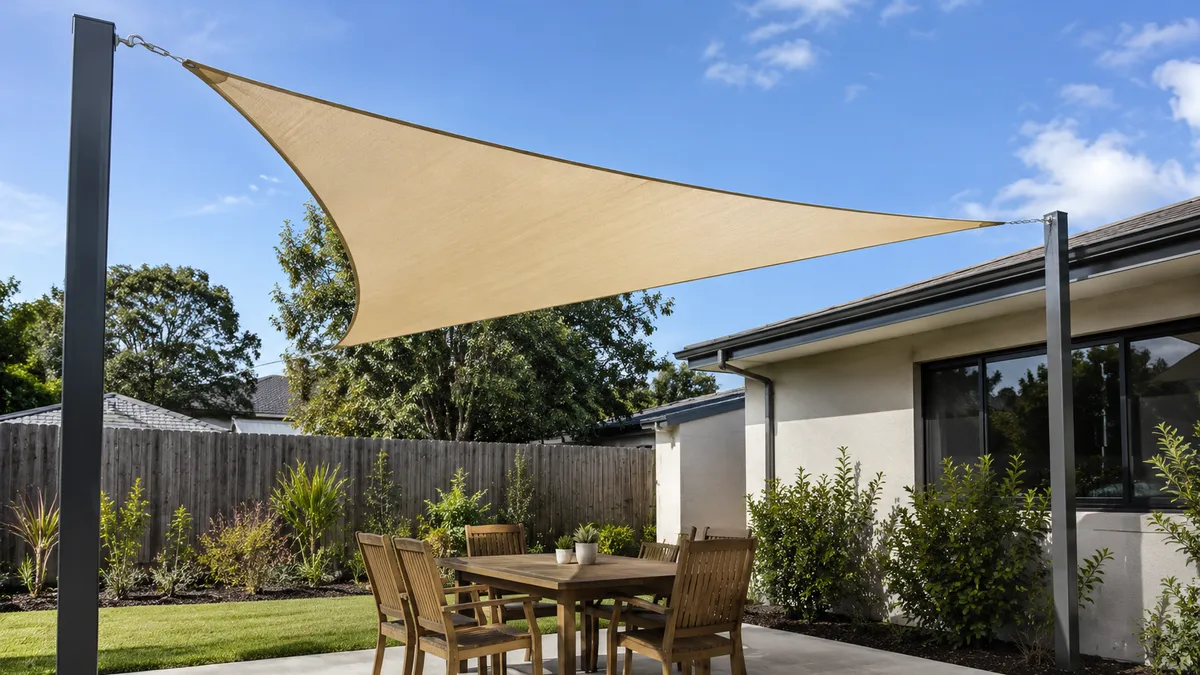
A small triangle can work for a chair pair or lounge corner when three real anchors exist. Curved edges reduce coverage, so do not expect one triangle to shade the whole deck.
Rectangle over a table or sectional
A rectangle needs four real anchors, diagonal measurement, high and low corners, chair pullback room, door swing clearance and a water path away from steps.
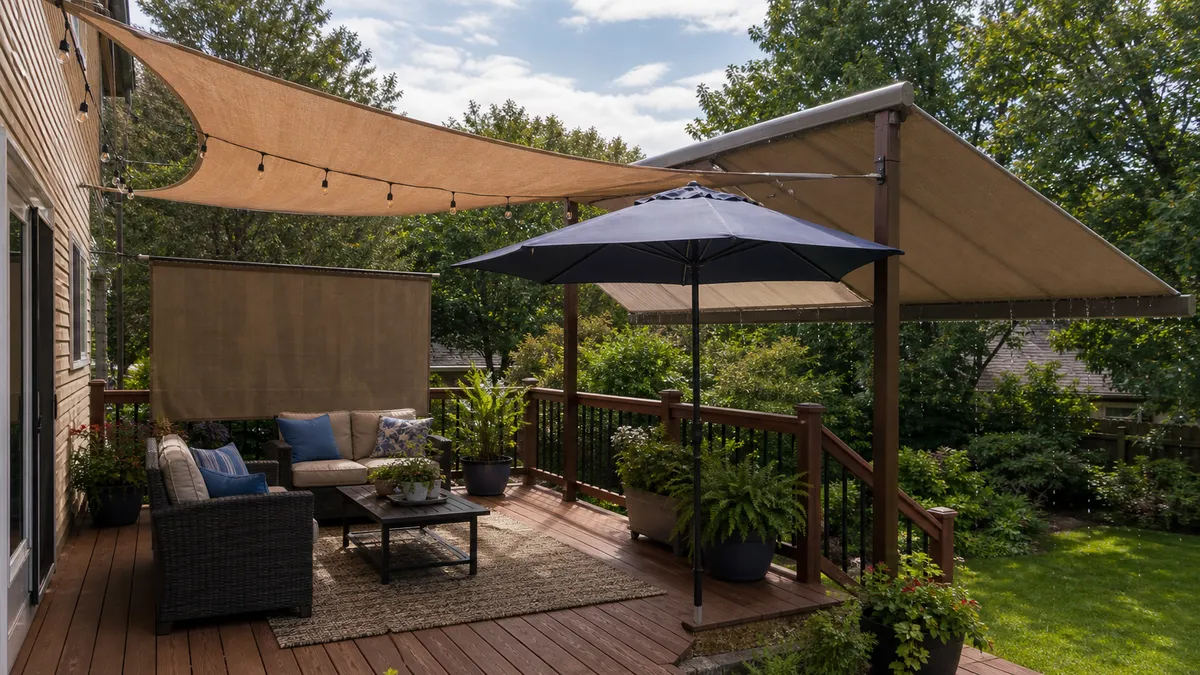
Vertical shade or awning instead
Switch to side shade when low west sun comes under the sail edge. A screen, louvre, curtain or retractable awning can block side glare better than larger overhead fabric.
No fixed sail yet
Stay with removable shade when the only points available are railing caps, balusters, fascia, loose posts, unknown ledger or rim joist framing, or a grill zone under the fabric.
Do not use the railing, fascia or unknown framing as a sail anchor
A deck railing that feels solid is not the same thing as an approved shade sail anchor. Guardrails protect people from falls; they are not automatically built for fabric tension, wind cycling and diagonal pull from a sail corner. A guard post may feel stiff at hand height while the post-to-rim connection, blocking, fasteners or old timber below it cannot take the added load.
House-side attachment needs the same restraint. The American Wood Council deck guide warns against ledger attachment to veneer, hollow masonry, cantilevered overhangs and bay-window areas. That guidance is about deck construction, not a shade-sail recipe, but it shows why trim, siding, veneer and unknown framing should not be treated as anchors.
Fascia is a common trap on decks under eaves. Decks.com warns that house fascia is often nailed to rafter or truss ends and can detach if used for a sail corner without proper reinforcement. If one side of the sail needs the house, use the house-attachment guide before buying wall plates or fabric.
- Reject railing caps, balusters, loose guard posts and decorative posts unless the full load path is verified.
- Reject fascia, gutters, trim, vinyl siding, sheathing, brick veneer, stone veneer and hollow masonry as casual fixing points.
- Reject bay-window framing, cantilevered overhangs, rotted boards and unknown ledger or rim joist framing.
- Use freestanding posts or removable shade when the structure cannot be verified.
Attachment warning
Stop before fixed hardware if these are the only anchors
A deck sail adds pull, twist, uplift and movement. If these parts are the planned fixing points, pause the install and use posts, removable shade or qualified structural help.
- Deck railing, railing caps, balusters and unverified guard posts.
- Fascia, gutters, trim, siding, veneer, hollow masonry and roof-edge boards.
- Bay windows, cantilevered overhangs and any wall area where the framing is unknown.
- Soft or spongy wood, rot, sagging, sway, corroded fasteners, missing flashing or unstable stairs.
Category research
Deck shade sail categories to compare
Search categories after deck anchors, posts, house attachment and slope are verified.
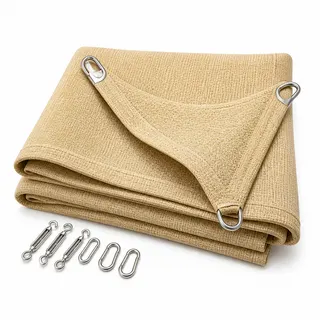
Deck sail
Shade Sail For Deck
For fixed shade where posts or verified anchors exist.
- Deck coverage
- Anchor-dependent
Check:Rail, stair and door clearance.
Search on Amazon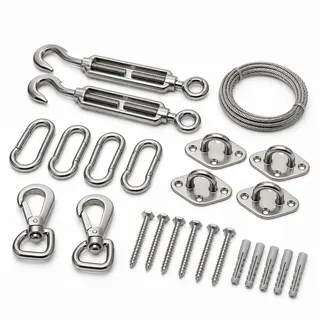
Hardware
Shade Sail Hardware Kit
For tensioning the sail after anchors are confirmed.
- Corner hardware
- Needed for tension
Check:Material grade and fasteners.
Search on Amazon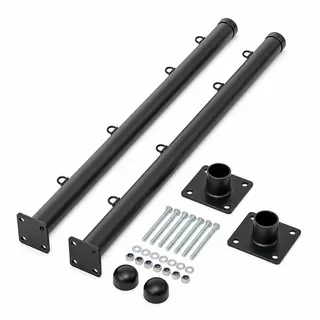
Posts
Deck Shade Sail Posts
For freestanding corners when the house is not a safe anchor.
- Independent support
- Needs footing
Check:Post height and deck structure.
Search on AmazonCheck the deck before buying fabric
Inspect the deck before choosing fabric size. The NADRA deck safety checklist flags ledger condition, support posts, joists, railings, stairs, flashing, loose fasteners, corrosion, sagging, sway, rot and decay. Any of those signs should stop fixed shade planning until the deck is repaired or inspected.
Then walk the deck the way it is used. Open the sliding door or hinged door fully. Stand on the stair landing. Pull chairs back from the table. Walk the normal path from house to grill, table, stairs and railing. A low sail corner, chain or turnbuckle should not sit where someone will hit it or where a hand needs the rail.
Keep grills, heaters, smokers and fire tables out from under fabric unless the appliance manual and local code allow that exact arrangement. NFPA safety messaging says grills should sit well away from siding and deck railings and out from under eaves or overhanging branches according to the manual.
- Check door swing, sliding door travel, stair landing, walking line and chair pullback.
- Keep low corners and hardware away from head height, rail hand clearance and stair movement.
- Separate fabric shade from grills, heaters, smokers and fire tables unless the manual and local rules allow it.
- Stop if the deck moves, sags, feels soft, has loose rails or shows rusted fasteners.
Measure anchors, hardware gap and useful shade
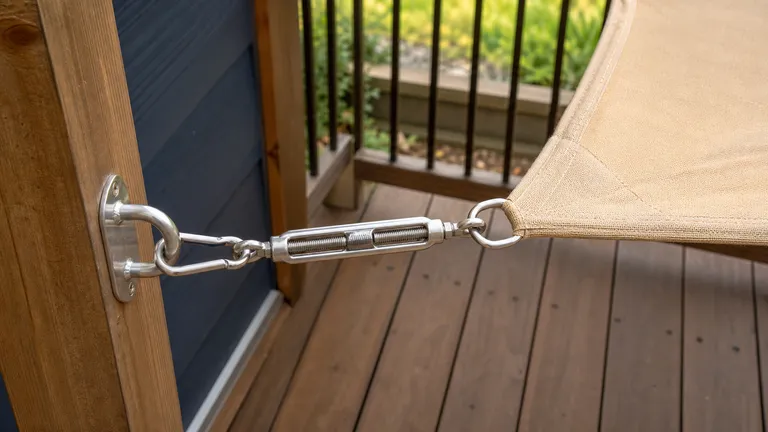
Fixing points come before fabric. Shade Sails LLC says fixing points should be installed first and custom sails measured eye to eye, including diagonals for four-sided sails. On a deck, the house wall, post locations and safe outer corners have to exist before the sail size is chosen.
Leave room for hardware. Decks.com gives a deck-planning example of about 2 to 3 ft for cable or rope between sail and post. One Home Depot-hosted manual gives a different example: 10 to 15 in. on each side for tensioning hardware. Treat both as source examples, then follow the sail and hardware manual in front of you.
Useful shade is smaller than the corner outline. Shade Sails LLC notes that sail edges are curved, with edge deflection reducing the straight-line coverage. That matters over a deck dining table because the shadow can miss the chair line even when the sail corners look wide enough.
Measurement checks
Measure the deck before ordering the sail
Use these checks to avoid ordering fabric that cannot be tensioned, drained or used safely over the deck.
| Check | Use it for | Published example | Do not assume |
|---|---|---|---|
| Anchor-to-anchor measurement | Custom or standard sail sizing | Shade Sails LLC says to measure eye to eye after fixing points are installed, with diagonals for four-sided sails. | Do not order from deck floor size alone. |
| Cable or rope room | Post and corner placement | Decks.com gives about 2 to 3 ft between sail and post as one planning example. | Do not use long leaders to reach weak corners. |
| Turnbuckle and snap-hook room | Hardware set allowance | One Home Depot-hosted manual gives 10 to 15 in. each side for tensioning hardware. | Do not treat one manual as a universal rule. |
| Curved sail edges | Actual shade over furniture | Shade Sails LLC notes curved edges reduce straight-line coverage. | Do not expect a rectangle of full shade from corner to corner. |
| Deck movement clearance | Doors, stairs, chairs and hardware strike zones | NADRA deck checks include railings, stairs, loose parts, sagging and movement. | Do not place low corners, chains or turnbuckles in walking paths. |
Pick the shape by the deck, not the product photo
A triangle can work for a small corner, while a rectangle needs four real anchors and high and low corners. Let the deck layout pick the shape, not the product photo. First mark the seating, dining or door zone that fails in sun, then check whether the needed anchors exist around that zone.
Rectangles and squares can shade a dining set better than a triangle, but they also ask for more anchors, diagonal measurement and a drainage plan. Coolaroo describes high and low corner arrangements for runoff, and a Home Depot-hosted manual also points rectangle or square sails toward alternating high and low corners.
Low west sun is a different problem. YourHome explains that low-angle east and west sun often needs vertical or adjustable shade. If glare comes under the sail edge late in the day, a screen, louvre, curtain or awning may do more than a larger overhead sail.
Shape by deck
Deck layout and sail shape
Use shape only after the anchor points, hardware gaps and clearances are realistic.
| Deck layout | Use this shape or route | Why | Avoid |
|---|---|---|---|
| Small corner lounge | Triangle | Three real anchors can shade one chair zone without covering the whole deck. | Avoid pretending one triangle covers every seat. |
| Dining table or sectional | Rectangle or square | Four anchors can frame furniture when high and low corners, diagonals and runoff are planned. | Avoid flat fabric and ignored chair pullback. |
| Narrow deck beside house | Smaller sail or awning after anchors are proven | Shorter spans can keep doors, railings and wall hardware easier to check. | Avoid fascia, siding and long loose leaders. |
| Elevated or windy deck | Smaller removable sail or no fixed sail | A smaller sail is easier to loosen, remove and inspect after storms. | Avoid oversized fixed fabric. |
| Low west sun | Vertical shade, screen or louvre | Side shade can block glare that passes under overhead fabric. | Avoid buying bigger overhead fabric for a side-sun problem. |
Plan slope, wind removal and deck use
Do not install the sail flat over a deck. Coolaroo recommends at least a 10 degree slope for water runoff, Coolaroo USA mentions 10 to 20 degrees in its install guidance, and Shade Sails LLC gives a 25 percent slope for its mostly waterproof sails. Those are source-specific examples; the product manual controls the final pitch.
Water pooling is more than an annoyance. Coolaroo warns that ponding water can damage the sail and may stress fixing points. Coated or waterproof fabric needs stricter runoff than breathable mesh. Aim runoff away from doors, stair treads, the grill zone, slick walking paths and neighboring property.
Wind needs a routine before the sail goes up. Coolaroo USA says severe-weather or off-season removal may be needed in harsh climates, and product manuals commonly call for removal during extreme weather, heavy storms, snow or hurricanes. Check tension after storms and after the initial stretch period where the manufacturer says to retighten.
When a deck shade sail is the wrong fix
A sail is the wrong fix when the deck cannot provide safe anchors, the sun comes from the side, or the fabric would cover a fire or grill area. Use a weighted umbrella, movable screen or planter trellis when drilling is not allowed or the structure is uncertain.
Use vertical shade for low side glare. Use a retractable awning when a verified wall mount exists and daily closure matters, but do not treat an open awning as storm protection. SunSetter manuals, for example, warn that water pooling, heavy rain, snow and heavy wind require closure discipline.
Use a pergola or solid cover only after structural and permit questions are answered. If the project needs posts through the deck, a modified ledger area, electrical work, gas lines, or a roof-like cover, it is no longer a simple shade sail setup.
- Choose the broader deck shade guide when you are still comparing umbrellas, awnings, screens, sails and pergolas.
- Choose the post guide when freestanding posts are the clean route.
- Choose the house-attachment guide before attaching one side to a house wall.
- Choose no fixed shade when takedown, fire clearance or safe anchors cannot be solved.
Watch-outs
Before you buy or install
- Do not tension a sail from a deck railing, loose guard post, fascia or unknown framing.
- Do not install a flat waterproof or coated sail over a deck where water can collect.
- Do not place low corners, chains or turnbuckles in door, stair or chair movement paths.
- Do not put fabric over a grill or heater unless the appliance manual and local rules allow it.
Read Next
Related ideas
Shade Sail Guide
Use this when shade sail is closer to the real constraint than the current page.
Deck Shade Ideas
Use this when deck shade ideas is closer to the real constraint than the current page.
Shade Sail Posts
Use this when shade sail posts is closer to the real constraint than the current page.
Shade Sail Attached to House
Use this when shade sail attached to house is closer to the real constraint than the current page.
Questions
FAQ
Can I attach a shade sail to a deck railing?
Usually no. A deck railing can feel solid because it is built for fall protection, but that does not approve it for a tensioned sail corner. Use freestanding posts, verified framing or removable shade unless a qualified person checks the full load path.
Can I attach one side of a deck shade sail to the house?
Only after structural framing, solid masonry or an engineered member is verified. Do not attach to fascia, trim, siding, veneer, hollow masonry, bay-window framing or a cantilevered overhang. Use the house-attachment guide before choosing wall plates.
Is a triangle or rectangle shade sail better for a deck?
Use a triangle for one small corner when three real anchors exist. Use a rectangle or square over a dining zone only when four anchors, diagonal measurements, high and low corners, door clearance and drainage all work.
How much space should I leave for shade sail hardware on a deck?
Leave space for the exact turnbuckle, shackle, snap hook, chain or cable in the product manual. Decks.com gives 2 to 3 ft as one cable or rope example, while one Home Depot-hosted manual gives 10 to 15 in. each side for hardware.
When should I choose an awning, umbrella or vertical shade instead?
Choose another shade type when anchors are uncertain, drilling is not allowed, low west sun is the real problem, the deck is exposed to wind, or fabric would sit over a grill or fire area. Awnings also need verified wall structure and closure discipline.