
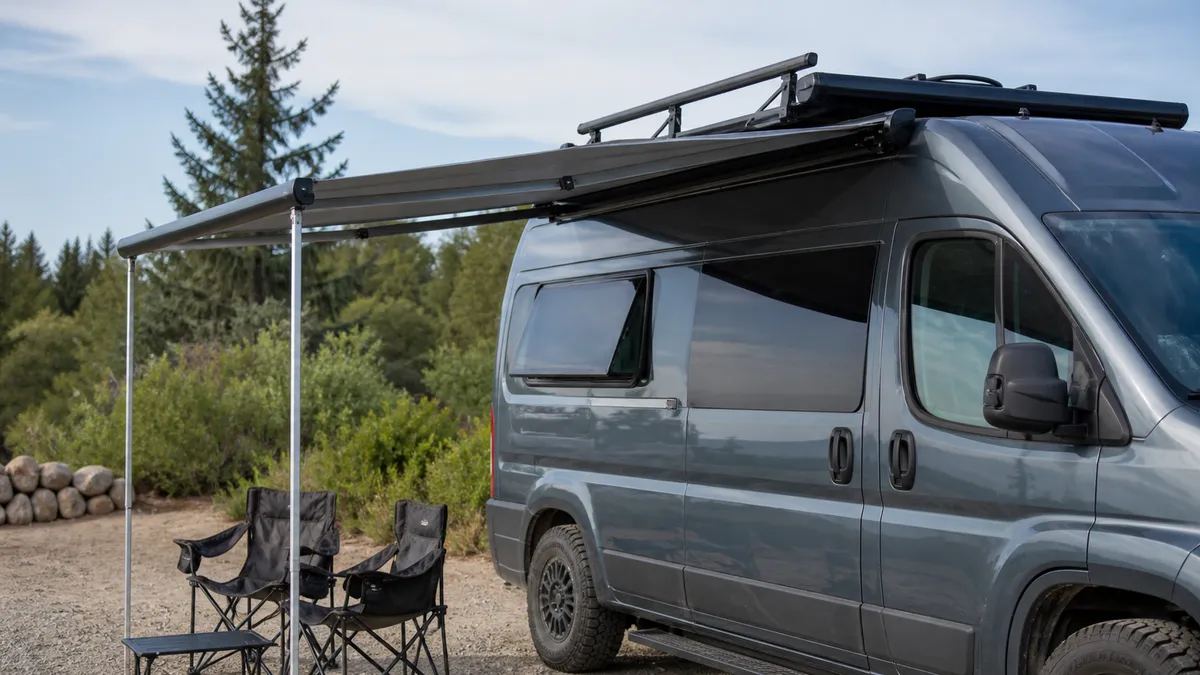
Quick Answer
Short answer: choose the mount before the fabric
Choose a van awning by mount first: rated roof rack, platform rack, approved rail, parked no-rack connector or driveaway shelter. Anything that stays on the van while driving becomes road load. If rack rating, crossbar spread, sliding-door clearance or rail strength is unknown, pause the mounted awning and use parked shade instead.
Buy a mounted van awning only when the rack, rail or bracket mount is rated and the doors clear; otherwise use driveaway or portable shade.
Choose the van awning by mount first
A van awning purchase starts with the part that carries it. A rated roof rack, platform rack or approved rail can carry a packed case when the vehicle, rack and awning instructions agree. A suction connector, magnetic connector, over-roof guy line or pole-and-clamp tunnel is different. Those are parked-camp attachments unless the exact instructions approve road use.
Use the table before comparing width, wall kits, lights or fabric color. Kampa documents driveaway methods such as 6 mm keder rail, over-vehicle guy lines, Velcro loops around roof rails, pole-and-clamp gutter connection, suction and magnetic kits. ARB notes that bracket fit changes by rack, and Yakima gives a 24 to 70 inch SlimShady crossbar-spread example. Those details show why the van edge has to be identified first.
Keep the road-load test strict. NHTSA says cargo that separates from a vehicle is the driver's responsibility. A packed case, bracket, pole bag, loose tunnel strap or temporary connector that remains on the van has to be secured for travel, not merely convenient at camp.
Mounting matrix
Choose the van awning by mount first
Use this table as the first shopping filter. It does not rank brands and it does not assume a parked connector is safe for driving.
| Van setup | Awning to consider | Check before buying | Do not use it when |
|---|---|---|---|
| Rated crossbars or roof rack | Side-mounted roll-out awning with a compatible bracket kit. | Vehicle roof rating, rack rating, crossbar spread, bracket spacing, packed length and road securement. | Rack rating, bracket fit or packed-case movement is unknown. |
| Platform rack or T-slot rack | Rack-specific bracket or rear-channel kit matched to the awning case. | Rack profile, slot hardware, awning rear channel, case overhang and sliding-door swing. | Universal brackets need drilling, partial contact or unsupported rack slots. |
| Factory rail, C-channel or keder rail | Rail-compatible side awning or driveaway connector only when the rail is structural or maker-approved. | Rail height, rail length, fastener backing, water sealing and door edge clearance. | The rail is decorative trim or a short body molding. |
| True gutter with pole-and-clamp tunnel | Parked driveaway attachment when the gutter runs the needed tunnel length. | Continuous gutter length, clamp seating, paint protection and sliding-door clearance. | The clamp lands on a short lip, door seal or sliding-door track. |
| No-rack suction or magnetic connector | Parked-camp driveaway connector on clean suitable bodywork. | Steel bodywork for magnets, smooth clean panel for suction, 6 mm keder fit and removal before driving. | The connector would stay attached on the road or the panel is dirty, curved, hot or non-steel. |
| Driveaway shelter | Freestanding shelter with a removable tunnel when camp should stay behind. | Tunnel height, connector method, sliding-door clearance, guy lines, stakes and wet storage. | The van moves often during setup or the campsite cannot take pegs. |
| Rear hatch or barn-door shade | Rear shelter when side mounting blocks doors or the roof edge cannot carry hardware. | Hatch struts, barn-door swing, rear cooking location, exhaust path and guying. | Rear doors cannot open fully or heat and fumes would enter enclosed fabric. |
| Tarp or freestanding shelter | Portable poles and fabric for rental, leased, overloaded or no-drill vans. | Pole height, stakes, soft-ground anchors, wind exposure and fast pack down. | The fabric must remain attached while driving. |
Check the van before ordering an awning
Measure the van as it is driven, not as a bare brochure photo. Roof vents, solar panels, ladder racks, pipe carriers, cargo baskets and roof boxes can block an awning case or steal the bracket spacing. Add garage height, ferry clearance and parking-lot height bars before choosing a high-roof install.
Height changes the purchase. Kampa lists driveaway attachment heights from 180 cm to 310 cm and says panel-van sliding-door measurement matters. Ford's 2025 Transit specs show why: listed cargo-van exterior heights run from 82.2 inches on low-roof examples to 110.4 inches on high extended examples.
Door openings need a physical test. Open the sliding door, barn doors and rear hatch fully. Mark the intended awning case or rail line with tape. Then check where arms, legs, wall kit fabric and tunnel pads will sit. A van awning that rubs the slider or blocks a barn door will be annoying even if the bracket is strong.
- Measure roof height, rail height, garage height and packed case length with roof accessories fitted.
- Open the sliding door, barn doors and rear hatch before choosing the awning side.
- Check roof vents, solar panels, ladders, pipe tubes and cargo baskets before ordering brackets.
Fit checks
Van parts to check before checkout
Each check can stop the purchase before fabric size, walls or accessories matter.
| Part to check | What to measure | Why it can stop the buy |
|---|---|---|
| Crossbar spread | Distance between installed bars or platform support points. | Some awnings need brand-specific spread; Yakima's SlimShady example uses 24 to 70 inches. |
| Sliding door | Top clearance, door edge, handle path and fabric contact. | A tunnel pad or side case can block daily entry. |
| High roof | Rail height, leg angle, tunnel height and garage clearance. | A high awning can leave short legs, steep fabric or poor driveaway tunnel fit. |
| Rear doors | Barn-door swing, hatch strut arc, rear kitchen and exhaust path. | Rear shade fails if doors hit fabric or fumes enter an enclosed shelter. |
| Roof accessories | Solar service access, vent lids, ladders, pipe carriers and cargo baskets. | Existing roof gear can remove bracket space or overload the roof. |
Roof rack, platform and rail fit
A roof rack van awning is the cleanest shopping lane when the rack is already rated and the crossbar spread works. Measure the installed bars before ordering. Yakima's SlimShady support gives a 24 to 70 inch crossbar-spread example for that awning family, which is useful proof that bar placement matters. It is not a universal spread rule.
Platform racks need the same caution. Match the rack side profile, T-slot hardware, awning rear channel, bracket pitch and tool access. ARB says bracket fit varies by rack and gives a 27 inch awning-overhang example in its universal-bracket install article. Treat that as source-scoped guidance, then check the current manual for the exact awning.
Rails and side brackets need approval from the vehicle or awning maker. Fiamma F45S instructions tell installers to verify reinforced wall points and align brackets with SUPPORT marks or arm fixing points. Rhino-Rack's catalogue separates static and off-road load limits, so do not turn a parked roof number into highway permission.
- Use the roof-rack awning guide when load math, quick-release mounts or bracket hardware are still unresolved.
- Do not treat decorative factory rails, trim or short C-channel sections as road mounts.
- Do not move side-wall brackets away from the support positions named in the awning manual.
Category research
Van awning categories to compare
Compare categories after van height, rail or rack fit, sliding-door clearance and pack-down routine are clear.
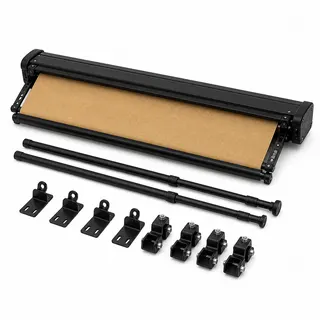
Van awning
Van Awning
For side shade on vans that can support a mounted case.
- Side camp shade
- Vehicle-specific fit
Check:Door path, mount height and case length.
Search on Amazon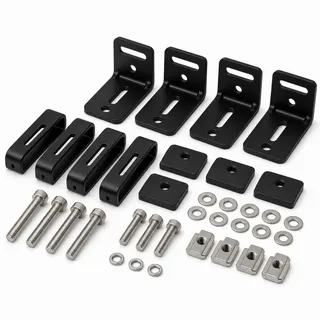
Rack awning
Van Roof Rack Awning
For vans with roof racks or platforms already installed.
- Rack-mounted setup
- Good for camping
Check:Rack load, bracket spacing and roof gear conflicts.
Search on AmazonBrackets
Van Awning Brackets
For matching the case to rails, racks or adapter plates.
- Mounting hardware
- Fit-first category
Check:Rail profile, bolt pattern and corrosion exposure.
Search on AmazonNo-rack choices are parked-camp choices unless instructions say otherwise
A no-rack van can still get shade, but the purchase should stay modest. Suction connectors, magnetic connectors, over-vehicle guy lines, Velcro loops around roof rails, pole-and-clamp gutter tunnels and freestanding tarps solve parked shade. They are not substitutes for a rated rack and brackets while driving.
Dometic's Limpet suction kit is a 3 m, 6 mm keder driveaway accessory supplied with six limpets. Its magnetic driveaway kit is also a 3 m, 6 mm keder accessory and needs suitable steel bodywork. Those details support parked driveaway shade, not a claim that temporary connectors can stay on the road.
Use the awning for van without roof rack guide when the decision is mostly no-drill diagnosis. This page should point you toward parked driveaway shelter, rear hatch shelter, tarp, freestanding shade, or a rail/rack retrofit before a mounted case.
- Remove suction, magnetic, over-roof and loose tunnel connectors before driving unless the exact product instructions approve road use.
- Trust a gutter only when it runs the tunnel length and the clamp seats on a real gutter.
- Choose freestanding shade when the van is rented, leased, overloaded, fiberglass-topped or not allowed to be drilled.
Work van vs camper van
A work van should usually favor quick pack down, clear cargo access and roof-load discipline over large wall kits. Ladders, conduit carriers, pipe tubes, beacons, employer rules and theft risk can make a side case awkward. GOV.UK DVSA guidance for vans and roof racks says roof-rack loads should be clamped or secured to the roof rack with cargo ratchet straps. Treat anything carried above a job van with the same caution.
Keep daily doors usable. If the awning blocks the sliding door, side shelves, tool drawers or ladder removal, it will fight the van's main job. Pick the deployment side from where the van parks at jobsites and roadsides, not from a catalog photo.
A camper van can accept more camp setup if the living area sits beside the sliding door. A driveaway shelter makes sense when chairs, a table or a side kitchen should stay in place while the van leaves. Use the campervan awning guide for broader camping-style routing across roll-out, driveaway and tarp shade.
- Work van: keep ladder access, tool access and road-secured roof load ahead of wall kits.
- Camper van: match the awning to the sliding-door living area and overnight pack-down habit.
- Mixed-use conversion: choose the smaller setup if work gear and camp gear compete for the same roof space.
High roof, sliding door and rear door clearance
High roof vans change more than ladder reach. The awning rail sits higher, legs may need more extension, fabric angle changes and a driveaway tunnel can pull hard against the van side. Pop-tops and fiberglass high tops add another check because the roof or shell may not be a structural awning mount.
Use brand numbers only as examples. Kampa gives static-tent clearance examples of 15 cm between the door top and rail, and at least 25 cm between rail end and door edge. Those are not universal awning rules. They show why rail end, door edge and tunnel fabric need space before buying.
Rear shade has its own clearance test. Rear hatches need struts that hold the hatch with fabric nearby. Barn doors need full swing without hitting poles, tunnel fabric or guy lines. If cooking happens at the rear, keep exhaust, heaters and stove heat away from enclosed fabric and make ventilation the first rule.
- Open the side door fully before finalizing rail height or case location.
- Open rear hatches and barn doors fully before choosing rear shade.
- Keep pop-top hinges, lift fabric, roof vents and solar access clear of brackets and wall kit fabric.
Fixed roll-out, driveaway shelter or portable shade
A fixed roll-out awning is best for fast roadside shade when the rack, rail or brackets are already solved. It suits lunch stops, loading, work breaks and quick camp shade. It is a poor purchase when the van leaves camp for the day and the whole living area needs to stay behind.
A driveaway shelter is better when camp needs to remain standing. Kampa's height range and connector methods show why tunnel height, rail fit and sliding-door clearance matter before fabric size. The trade-off is storage bulk, drying time and a slower pitch.
Use a portable tarp or freestanding shade for rental vans, no-drill conversions, bare roofs and overloaded racks. Front Runner's 1.4 m Easy-Out awning example shows what a small fixed awning can involve: roof-rack mounting, 2.1 m projection, support poles, guy lines, stakes and bracket matching. Do not buy even a small case until those parts fit.
Shade style
Fixed roll-out, driveaway shelter or portable shade
Use this comparison after the mount, doors and road-load checks are clear.
| Shade style | Best fit | Main limit | Buy only after checking |
|---|---|---|---|
| Fixed roll-out awning | Fast shade beside a rated rack, platform or approved rail. | Adds packed road load and needs bracket spacing. | Rack rating, crossbar spread, case length, door clearance and wind pack down. |
| Driveaway shelter | Multi-night camp where the van leaves during the day. | Needs pitch space, tunnel fit and drying storage. | Vehicle height, connector method, sliding door and pegging ground. |
| Rear hatch or barn-door shade | Rear cooking, changing or tailgate use when side mounting fails. | Weak if doors, struts, exhaust or guy lines conflict. | Hatch struts, barn-door swing, ventilation and rear traffic space. |
| Tarp or freestanding shelter | Rental, leased, no-drill, bare-roof or overloaded vans. | Slower setup and more wind discipline. | Poles, guy lines, stakes, sand anchors and pack-down speed. |
Wind, rain, pack-down and when not to buy mounted shade
Open fabric turns into a lever in wind. Use legs, guy lines, stakes, soft-ground anchors or sand anchors when the awning instructions call for them. Wall kits add privacy and low sun control, but they also add wind surface. Pack down early when gusts rise, ground anchors loosen, rain pools or nobody can watch the awning.
Rain is a storage problem as much as a fabric problem. Do not roll wet fabric into long storage if the instructions require drying. Lower a supported edge only when the awning maker allows it and the leg positions stay stable. A driveaway shelter needs the same drying plan, because a wet tunnel stuffed into a van can soak sleeping pads, tools or electrical gear.
Do not buy mounted shade when the vehicle roof rating or installed rack rating is unknown, the only rail is decorative, the awning blocks a sliding door or barn doors, the roof already carries ladders or solar, reinforced wall points are unknown, or the camp routine cannot pack down fast. Also stop when cooking, exhaust or heaters would push heat or fumes into enclosed fabric.
- Do not drive with loose fabric, straps, suction cups, magnetic strips, tunnel pads or unlocked brackets attached.
- Do not use static parked capacity as permission for road travel with a packed awning case.
- Do not drill into a van body until reinforced points, hidden services, sealing and qualified installation are settled.
Watch-outs
Before you buy or install
- Do not mount a driving awning to decorative rails, short trim lips, door seals, sliding-door tracks, suction cups or magnetic strips.
- Do not treat parked static load as approval for highway road load.
- Do not block the sliding door, barn doors, rear hatch, roof vent, solar service access, hood, garage height or ferry clearance.
- Do not drill side-wall brackets until reinforced points, hidden wiring, gas lines, sealing and installer skill are known.
- Do not cook, run heaters or route exhaust into enclosed awning fabric.
Read Next
Related guides if your situation is different
Vehicle Awning Guide
Use this when vehicle awning is closer to the real constraint than the current page.
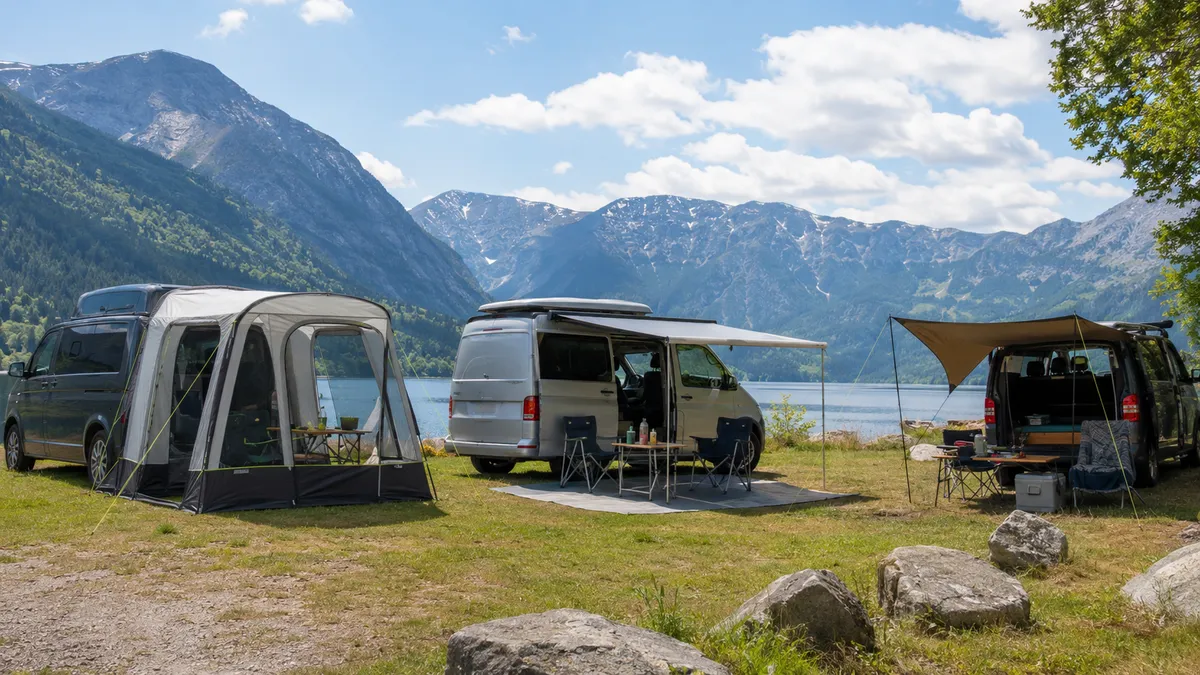
Campervan Awning Guide
Use this when campervan awning is closer to the real constraint than the current page.
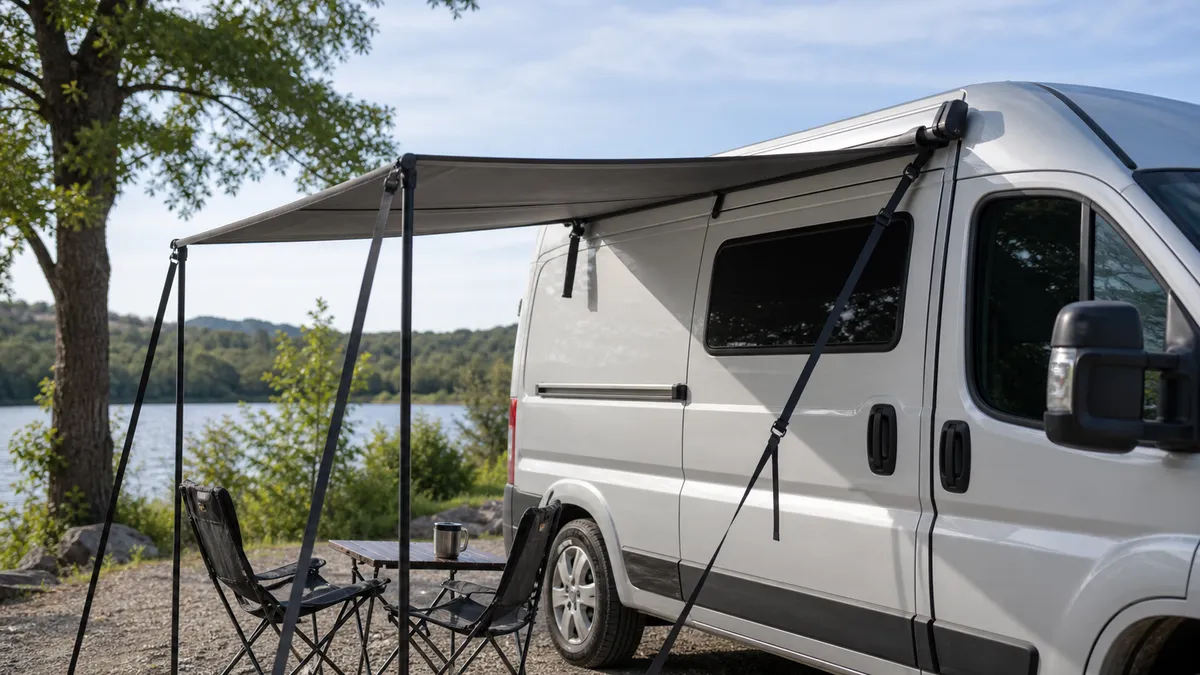
Awning for Van Without Roof Rack
Use this when awning for van without roof rack is closer to the real constraint than the current page.
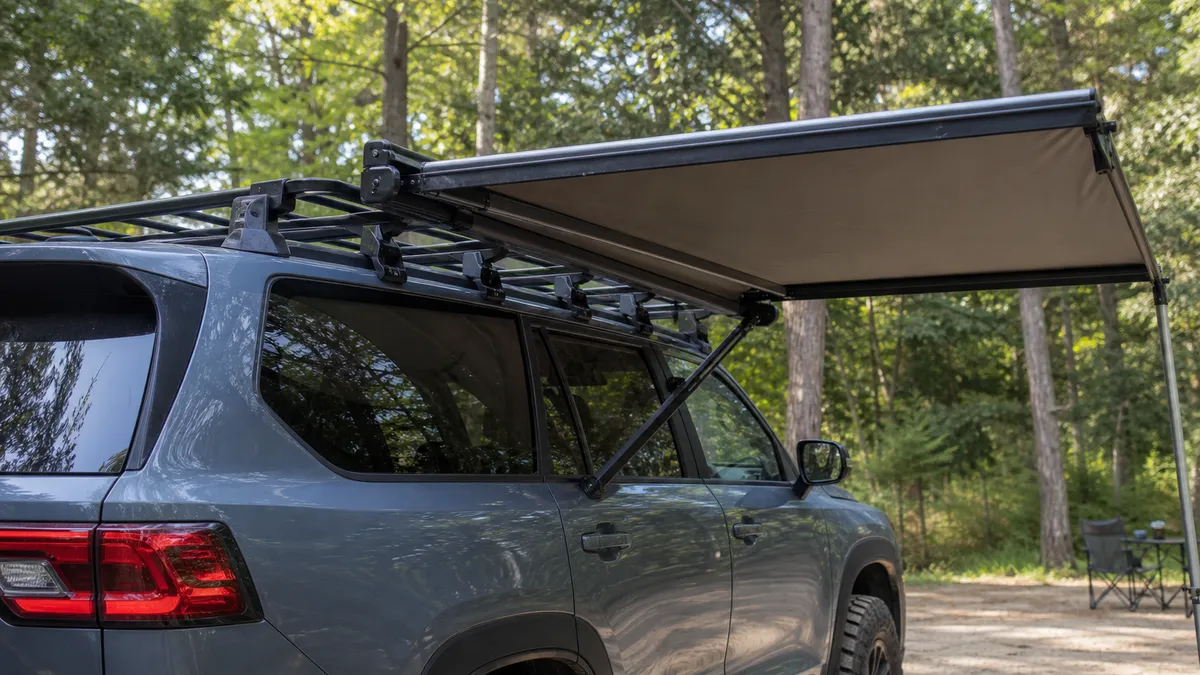
Roof Rack Awning Guide
Use this when roof rack awning is closer to the real constraint than the current page.
Questions
FAQ
Can I put an awning on a van without a roof rack?
Yes for some parked-camp shade, but be strict about the attachment. Suction connectors, magnetic connectors, over-roof straps and pole-and-clamp tunnels are temporary camp methods unless the exact instructions approve road use. For a case that stays fitted while driving, use a rated rack, rail, crossbars or approved brackets.
Is a van awning safe to drive with attached?
Only when the packed case and brackets are mounted to rated hardware and checked as road load. NHTSA treats loose vehicle cargo as a road hazard. Do not drive with loose fabric, tunnel straps, suction cups, magnetic strips, flapping bags or unlocked quick-release hardware.
What should I measure before buying a van awning?
Measure the roof rating, rack rating, crossbar spread, bracket spacing, awning case length, rail or gutter length, van height, sliding-door clearance, barn-door or hatch swing, roof vents, solar panels and garage height. Open every door before buying, not after brackets arrive.
Should a work van choose a different awning than a camper van?
Often yes. A work van needs ladder clearance, pipe tube access, tool doors, employer approval, theft resistance and fast pack down. A camper van can accept a driveaway shelter or side panels when camp stays set. Mixed-use vans should protect cargo access first.
Is a driveaway awning better than a fixed roll-out awning for a van?
Choose a driveaway shelter when the camp should stay behind while the van leaves. Choose a fixed roll-out awning for fast side shade when the rated rack, rail or bracket fit is already solved. The driveaway adds pitch time and storage bulk; the fixed case adds road load.
Can a high-roof van use the same awning as a low-roof van?
Not automatically. A high roof changes rail height, leg extension, tunnel fit, side-door clearance, wind exposure and garage height. Check the awning's vehicle-height range and open the sliding door fully. Pop-tops and fiberglass high tops need extra caution before carrying brackets.