
Quick Answer
Quick answer for pool shade sails
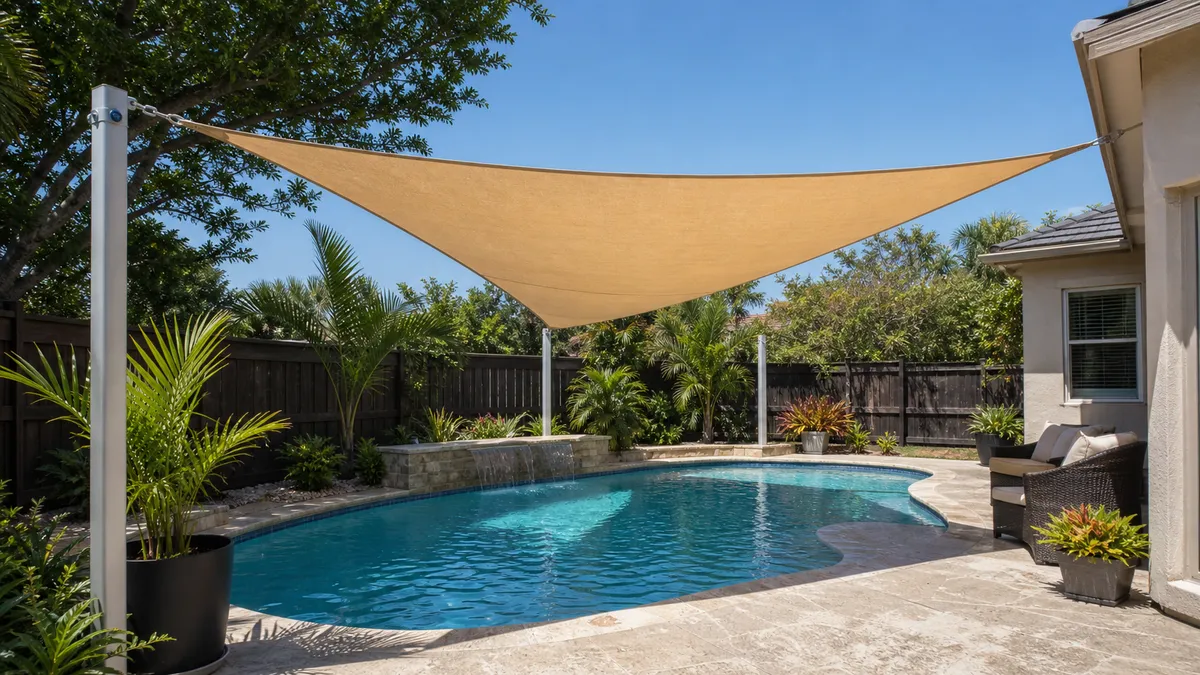
A shade sail for pool areas works best when it shades the deck, lounge chairs or shallow entry before trying to cover the whole water surface. Breathable mesh is usually simpler around pools because rain drains through it and air still moves. A waterproof shade sail needs the slope named in its manual, firm tension, a low corner and runoff that will not cross a wet walking route. Shade can reduce heat and water glare, but reflected UV, dark water and supervision sightlines still matter.
Start with deck or shallow-entry shade when anchors, sightlines, drainage and storm removal can stay clear of the pool fence, gate and wet walking route.
Pool-zone shade routes
Before choosing fabric size, mark where people actually sit, enter the water, watch children and walk around the pool at the hottest swim hour. A pool shade sail that misses the chairs but crosses a gate path has solved the wrong problem.
The table below starts with placement because a pool adds risks that a patio sail does not. Posts, turnbuckles, low corners and runoff must stay clear of wet deck traffic, pool barriers, rescue gear, skimmer access and electrical equipment.
Pool placement
Choose the pool zone before choosing fabric
Use this first. The right sail area is the one that improves shade without making supervision, gates, footing or deck movement worse.
| Pool zone | Use this route | Why it works | Watch out |
|---|---|---|---|
| Lounge chairs or sun beds | Shade the deck edge first. | This is often where people spend the longest time, and anchors can usually sit farther from swimmers. | Low side glare may still need a screen, planting or louvre. |
| Shallow entry, steps or ledge | Use a small partial sail only if the view stays open. | Entry shade helps children, older swimmers and people who pause at the steps. | Do not block handrails, gate movement, skimmer access or cover hardware. |
| Part of the water | Keep the shaded water area partial and easy to see. | Over-water shade can cut glare and hot surface exposure. | Dark water can make a swimmer or object harder to see. |
| Pool-edge walkway | Keep the walking line open and dry. | A clear route matters when feet, tiles and coping are wet. | Do not place posts, turnbuckles, guy lines or runoff across the route. |
| Pump, lights or chemical work area | Avoid casual sail coverage here. | Pool equipment needs access, ventilation, dry work space and electrical caution. | Stop if posts or tools would be near outlets, switches, cords, pumps, pool lights or overhead lines. |
| No safe anchor route | Use another pool shade method. | Umbrellas, pergolas, cabanas or movable shade may avoid tensioned hardware near barriers and swimmers. | Do not pull fabric from a pool fence, self-closing gate, ladder, handrail or movable furniture. |
Shade the pool zone people actually use
Walk the pool at the hour that hurts: late morning for a bright shallow end, mid-afternoon for lounge chairs, or low evening sun across the water. Mark the chair backs, coping, shallow entry, lap-lane edge, dining table, gate path and supervising adult's normal position. The sail should serve those points first, not the center of the pool by default.
For deck and lounge shade, Cancer Council NSW gives a practical rule of thumb: shade that extends at least 1 m beyond the actual use area can reduce direct and indirect UV reaching the people underneath. Use that as a coverage planning clue, not as an anchor-load rule. A larger sail still needs real posts, verified masonry or other structural points.
If the useful shade falls only on water while everyone rests on the pool deck, move the plan. A smaller deck sail can be more useful than a large sail centered over the deep end. If the pool has a self-closing gate, cover roller, skimmer basket or service path, keep those movements visible and reachable after the fabric is tensioned.
- Start with lounge chairs, shallow entry and the supervising adult's view before sizing the whole pool.
- Keep gates, cover reels, skimmers, rescue gear and service panels usable with the sail in place.
- Use the main shade sail guide for broad shape, slope and anchor planning before ordering hardware.
Water glare and supervision change the placement
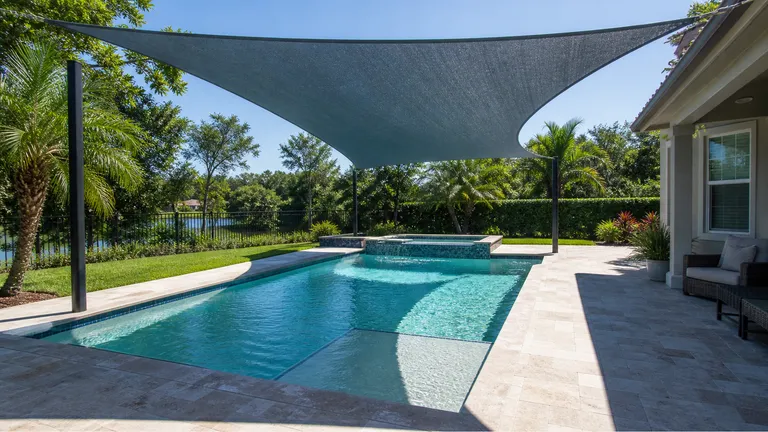
A pool shade sail can lower harsh overhead sun, but shade is not full sun protection. SunSmart NZ and Cancer Council Australia both warn that water and hard nearby surfaces can reflect UV. Concrete coping, pale paving and the water surface can send light under the sail edge, so sunscreen, clothing, hats and sunglasses still belong in the plan.
Glare also affects supervision. Royal Life Saving WA notes that glare on the surface can hide a person or object below the water. Shade can help, but a large dark patch across the pool can also make the water harder to read. Place the sail so adults can still see the shallow entry, deep end, steps and any play area from normal watch positions.
Low side glare is not fixed by making the overhead sail bigger. Cancer Council NSW recommends side screening, planting, trellises or louvres where indirect UV and low-angle sun are the problem. Around a pool, side shade often works best outside the splash zone, with no cords or loose fabric crossing the deck.
- Keep supervision sightlines open across the shallow entry, steps and deeper water.
- Treat reflected UV from water and hard pool deck surfaces as part of the sun plan.
- Use side shade for low glare when overhead fabric misses the angle.
Category research
Pool shade sail categories to compare
Compare categories after pool edge clearance, anchor setbacks and water runoff are clear.
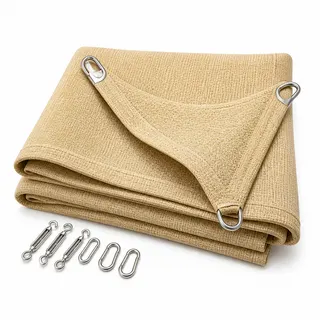
Pool sail
Pool Shade Sail
For shading water or deck zones with verified anchors.
- Poolside shade
- Needs setback
Check:Anchor location and splash exposure.
Search on Amazon
Waterproof
Waterproof Shade Sail
For rain shedding only where slope and drainage are safe.
- Rain-focused fabric
- Pooling risk
Check:Runoff away from walking areas.
Search on Amazon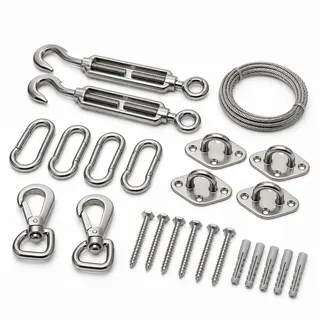
Hardware
Shade Sail Hardware Kit
For corrosion-aware poolside tensioning.
- Corner hardware
- Outdoor exposure
Check:Stainless grade and anchor strength.
Search on AmazonWhere pool shade sail anchors should not go
Do not use a pool fence, self-closing gate, latch post, ladder, handrail, diving-board frame, equipment frame, movable furniture or storage box as a sail anchor. Those parts already have a job: controlling access, helping entry, supporting equipment or keeping the deck usable. Added sail tension can also create a climb aid near the pool barrier.
Weak fascia, trim, siding, unknown masonry and cracked posts are no better around a pool than they are on a patio. Coolaroo says fixing points must be structurally sound and advises independent builder or engineer help when unsure. Polyfab also frames permanent tension-shade hardware as work for qualified installation and local code compliance.
Place posts and wall plates outside splash and trip zones. A turnbuckle at shoulder height beside a chair may be annoying on a patio; beside a pool it can become a wet-deck strike point. Keep rescue rings, reaching poles, pump access, covers and gate swing clear after the sail is tightened, not just before the parts arrive.
- Reject pool fence posts, gates, latches, ladders, handrails and diving structures as casual anchors.
- Reject movable furniture, storage benches, equipment pads and any point that helps a child climb a barrier.
- Stop if the plan blocks rescue gear, pump access, cover movement, gate swing or the clear deck route.
- Use a structural professional when posts, wall plates, masonry or house framing are uncertain.
Pool caution
Stop if the shade plan touches pool electrical work
CPSC lists pool-area electrical hazards such as underwater lights, pool equipment, cords, outlets, switches, electrical products and overhead power lines. Wet skin and wet deck surfaces raise the consequence of a mistake.
- Do not route metal poles, tools, removable wet fabric or hardware near pool lights, pumps, outlets, switches, extension cords or overhead lines.
- Do not move, bond, ground or modify pool electrical equipment as part of a shade sail project.
- Use a licensed electrician and local code office when clearance, bonding, grounding, permits or barrier rules are unclear.
Breathable mesh is usually easier than waterproof over a pool
A breathable shade sail is usually easier around a pool when the goal is UV comfort, cooler deck furniture and less glare. HDPE mesh lets air move and water pass through the fabric, so it needs less runoff planning than a coated sail. Still check the product's UV or UPF label; do not assume every mesh sail blocks the same amount of UV.
A waterproof shade sail belongs over a pool only when rain shelter is truly part of the job. The fabric needs the slope required by its manual, firm tension, a low corner and a safe place for runoff to land. If runoff crosses the wet walking route, dumps onto steps or lands near a gate, pump, outlet or smooth coping, choose mesh or a different shade structure.
Pool chemicals add another check. Coolaroo warns against exposing shade fabric to harsh cleaners or chemicals such as chlorine. Keep chemical storage and splash-heavy cleaning away from the sail. For hardware, Polyfab lists stainless hardware used in tension shade structures, while the British Stainless Steel Association warns that pool atmospheres can stain or corrode stainless and may need specific material advice for load-bearing parts.
Fabric choice
Breathable vs waterproof around a pool
Use this as pool-specific direction, then read the full waterproof vs breathable guide before buying fabric for rain cover.
| Fabric route | Use it when | Check before ordering | Avoid when |
|---|---|---|---|
| Breathable HDPE mesh | The goal is sun comfort, airflow and simpler drainage. | Product UV or UPF label, edge reinforcement, hardware material and removal instructions. | Rain shelter is the main reason for the sail. |
| Waterproof or coated fabric | Rain cover is intentional and the slope/runoff plan is proven. | Manual-supported pitch, low corner, tensioning room, runoff landing area and storm takedown. | Water would drain across steps, gates, smooth coping or electrical areas. |
| Removable seasonal sail | The yard is exposed, storms are common or pool season is short. | Whether adults can safely remove, dry, store and reinstall the sail. | The sail will be left up through strong wind because takedown is too hard. |
| No sail yet | Anchors, barriers, sightlines or electrical questions are unresolved. | Structural help, electrician input or a different shade method. | You are trying to solve uncertainty by buying larger fabric. |
Runoff, wind and corrosion need a routine
Pool decks are already wet. Do not add low lines, loose tails, turnbuckles, posts or runoff channels where bare feet move between water, chairs, gates and steps. OSHA walking-surface guidance is not pool-design code, but it supports the plain rule: keep wet routes clear, uncluttered and in good repair.
Head clearance matters too. Cancer Council NSW gives about 2 m of head clearance as a practical shade reference and says adults should be able to view and access shaded areas. Around pools, low corners over swimmers, steps or walkways deserve a hard stop. If a low corner is needed to drain a waterproof sail, move the runoff route away from the pool deck traffic.
Plan wind removal before ordering. Coolaroo warns against leaving sails installed during strong winds, and its ready-to-hang instructions tell people to take down the sail before strong storms or when not in use. A removable pool shade sail is often easier to live with than a larger permanent sail that nobody wants to untension.
Inspect hardware in the splash zone. Brown staining, pitting, cracked fittings, loose anchors or chemical damage should lead to replacement or professional advice, not tighter turnbuckles. BSSA notes that pool atmospheres can be aggressive for stainless parts, and safety-critical load-bearing stainless may need specific grade advice.
- Keep runoff away from steps, gates, smooth coping, pump access and walking routes.
- Keep low corners, chains and turnbuckles out of head and shoulder contact zones.
- Remove or untension the sail before strong wind when the product manual calls for it.
- Rinse and inspect hardware after splash, salt or chemical exposure.
Before buying
Pool-specific safety checklist before buying
- The shaded water, steps and lounge area stay visible from normal supervision positions.
- The sail does not create dark water that hides swimmers, toys or the pool floor.
- Posts and hardware stay outside the wet walking route, chair pullback area and gate swing.
- The pool fence, self-closing gate, latch, ladder, handrail and diving structure are not used as anchors.
- Rescue gear, skimmers, covers, pump access and service panels remain visible and reachable.
- Runoff from waterproof fabric lands away from steps, smooth coping, gates, outlets, pumps and cords.
- Pool lights, pumps, outlets, switches, extension cords, electrical products and overhead lines are not part of the DIY work area.
- Fabric and hardware are protected from chlorine storage, harsh cleaners, corrosion, staining and cracked fittings.
- Adults can remove or untension the sail before strong wind or storms without standing in a dangerous wet area.
Watch-outs
Before you buy or install
- Shade does not replace supervision, sunscreen, clothing, hats or sunglasses near reflected UV.
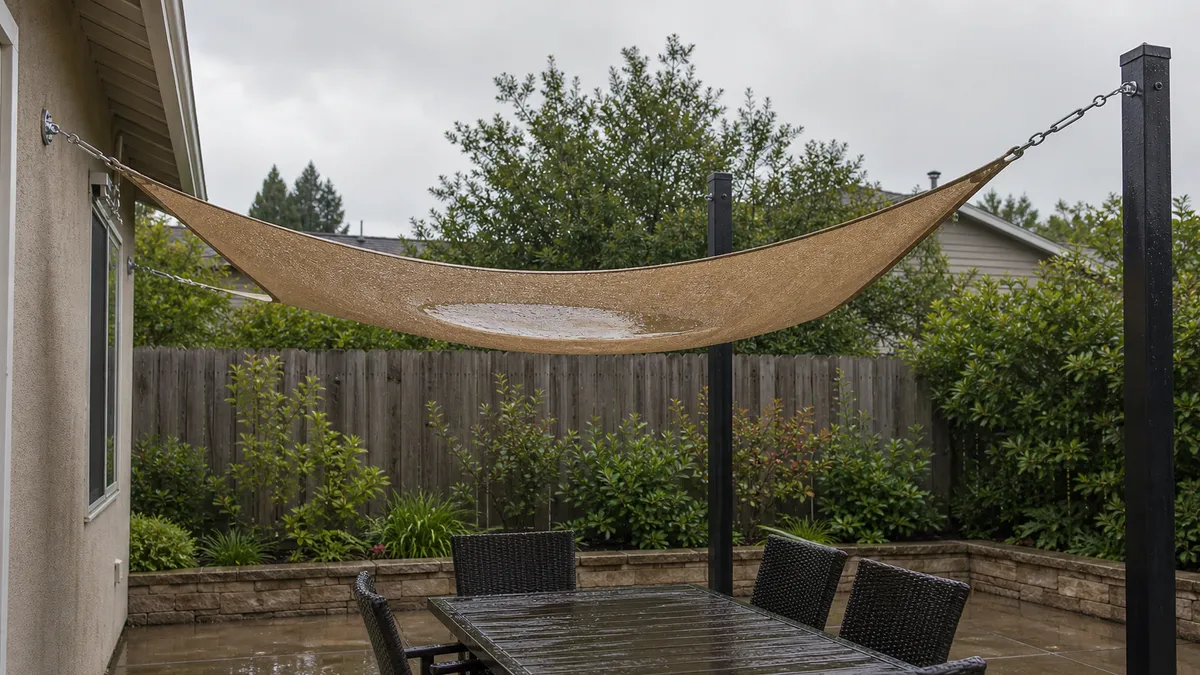
- Waterproof fabric needs slope and a safe runoff path; flat coated fabric can collect water.
- Chlorine, salt air, staining, pitting or cracked fittings can make fabric and hardware unsafe to keep tensioned.
Read Next
Related ideas
Shade Sail Guide
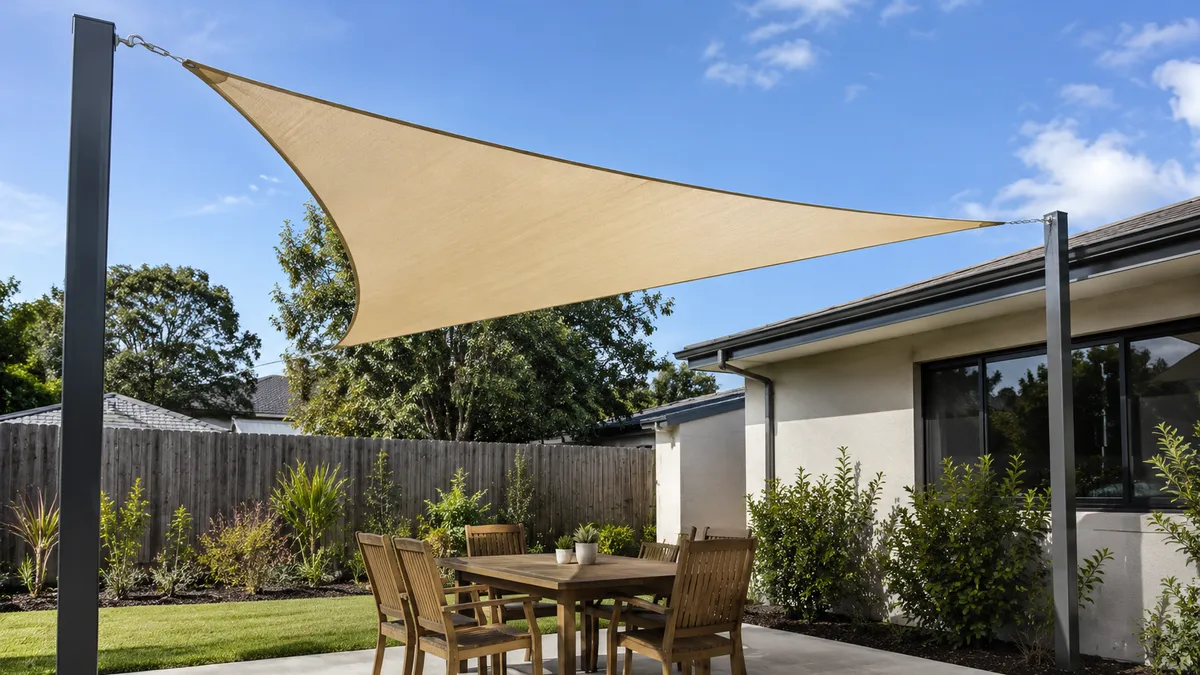
Use this after the pool zone is clear and the remaining work is sail shape, slope, anchor spacing, fabric tension and wind removal.
Backyard Shade Ideas That Actually Work
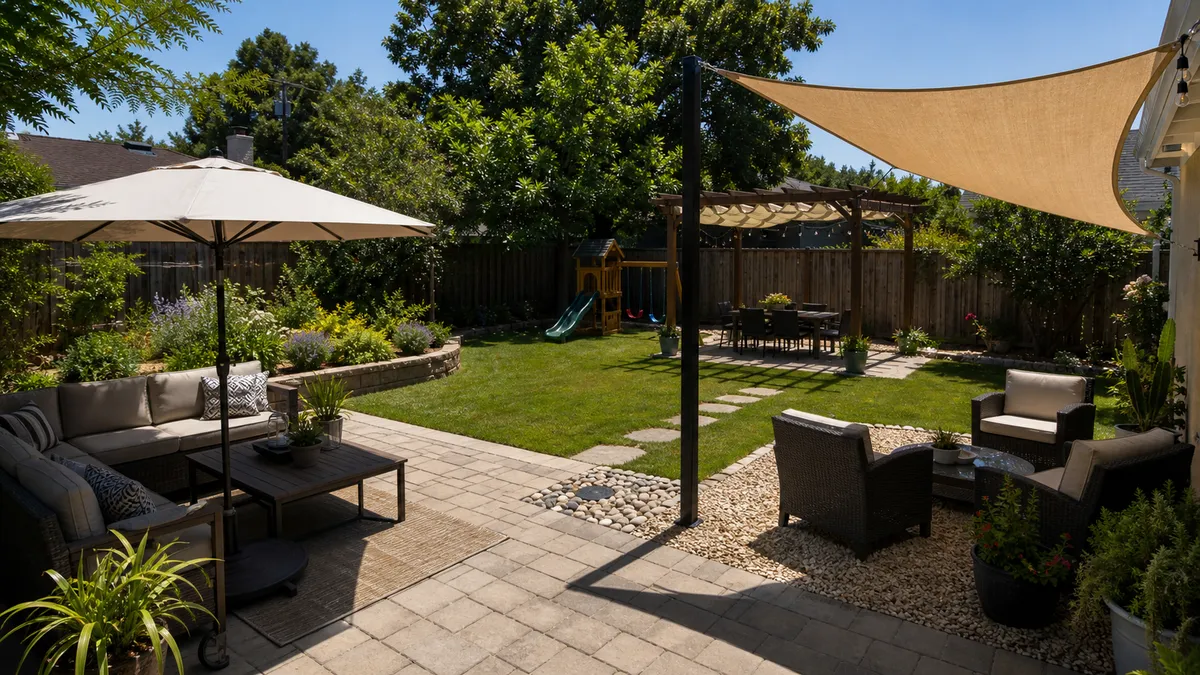
Use this when backyard shade ideas is closer to the real constraint than the current page.
Waterproof vs Breathable Shade Sail
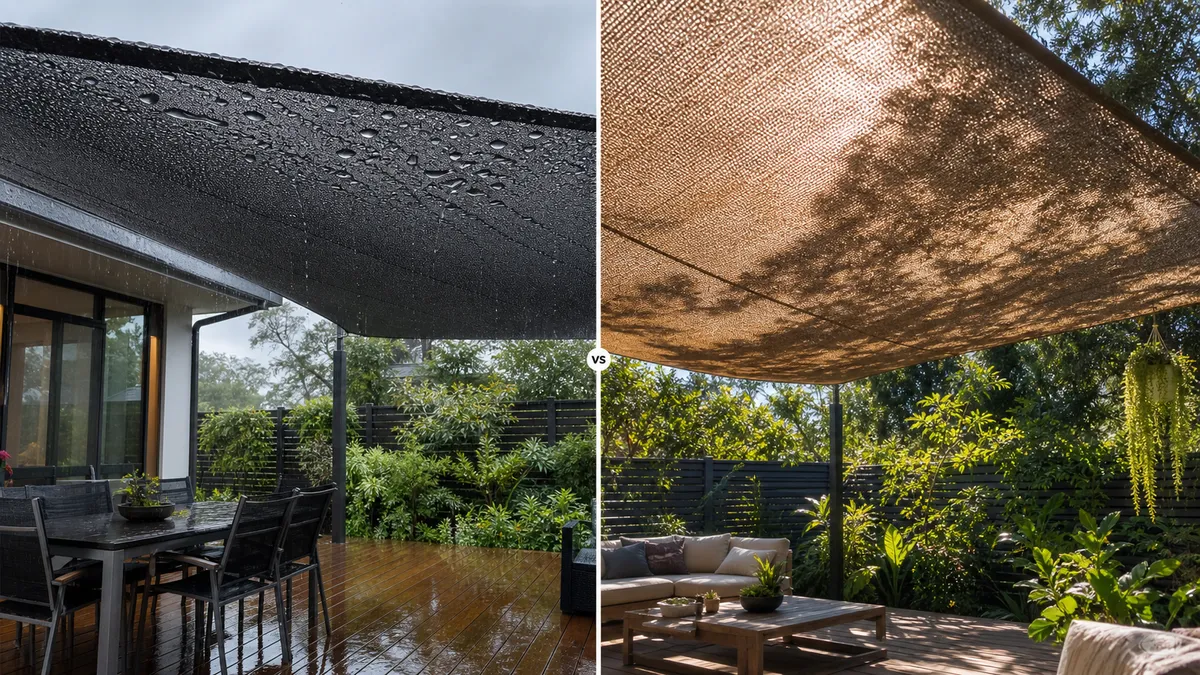
Use this when the pool decision is still about breathable mesh versus waterproof fabric, rain runoff, heat, airflow or water pooling.
Shade Sail Water Pooling
Use this when coated fabric is sagging, holding water or sending runoff toward steps, coping, gates or pool equipment.
Questions
FAQ
Is it better to put a shade sail over the pool or over the deck chairs?
Start with the zone people use longest. Deck and lounge shade is often easier to supervise and easier to anchor away from swimmers. Over-water shade can help with glare, but keep it partial and visible so it does not create dark water or low fabric over swimmers.
Should a pool shade sail be waterproof or breathable?
Breathable mesh is usually simpler for pool shade because rain drains through the fabric and heat can vent. Waterproof fabric makes sense only when rain shelter is intentional and the manual-required slope, low corner, runoff landing area, tensioning room and storm removal plan are all clear.
Can I attach a shade sail to a pool fence or gate post?
Do not assume a pool fence or gate post can anchor a sail. Barriers and self-closing gates are part of access control, and added tension can create structural, latch, climbing or safety problems. Use verified structural posts, masonry or professional shade-sail installation help instead.
What safety checks matter most before buying a pool shade sail?
Check supervision sightlines, gate and barrier access, rescue gear, wet walking routes, low corners, runoff, electrical hazards, wind removal, corrosion and chlorine exposure. If the plan touches pool lights, pumps, outlets, cords, bonding, grounding or local barrier rules, stop and get qualified help.
Can a shade sail make a pool safer for children?
It can reduce sun and glare, but it does not make water safe by itself. Keep active supervision, barriers, self-closing gates and rescue gear clear. Avoid posts, furniture or hardware that help a child climb near the pool fence or make swimmers harder to see.