Quick Answer
small patio shade ideas: the short version
On a small patio, shade the chair, table edge or glare line instead of covering the whole slab. Use half umbrellas, narrow screens, compact bases or approved clamps so doors, chair pullback and walkways still work.
Use compact shade when it protects the seat without blocking door swing, chair movement or the only walkway.
Options
Practical options for a small patio
Start with the option that protects the seat or glare line without stealing the walkway.
Half umbrella
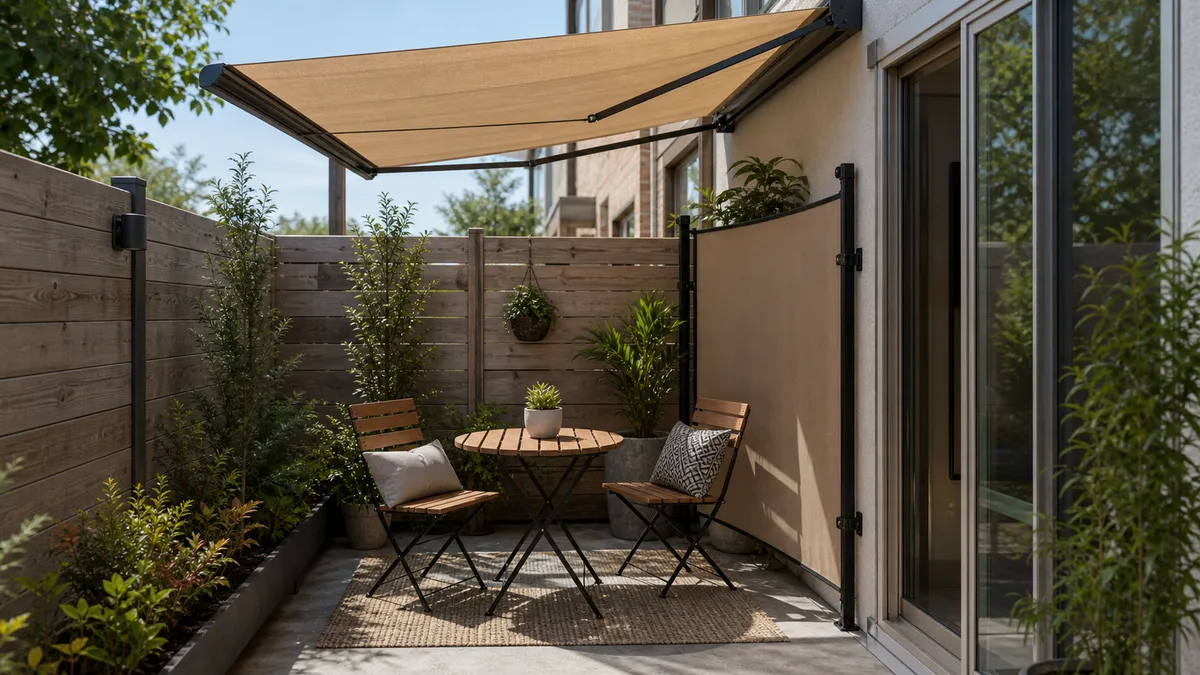
A half umbrella can sit against a wall and shade a bistro table without putting a wide base in the middle of the floor.
Slim vertical screen
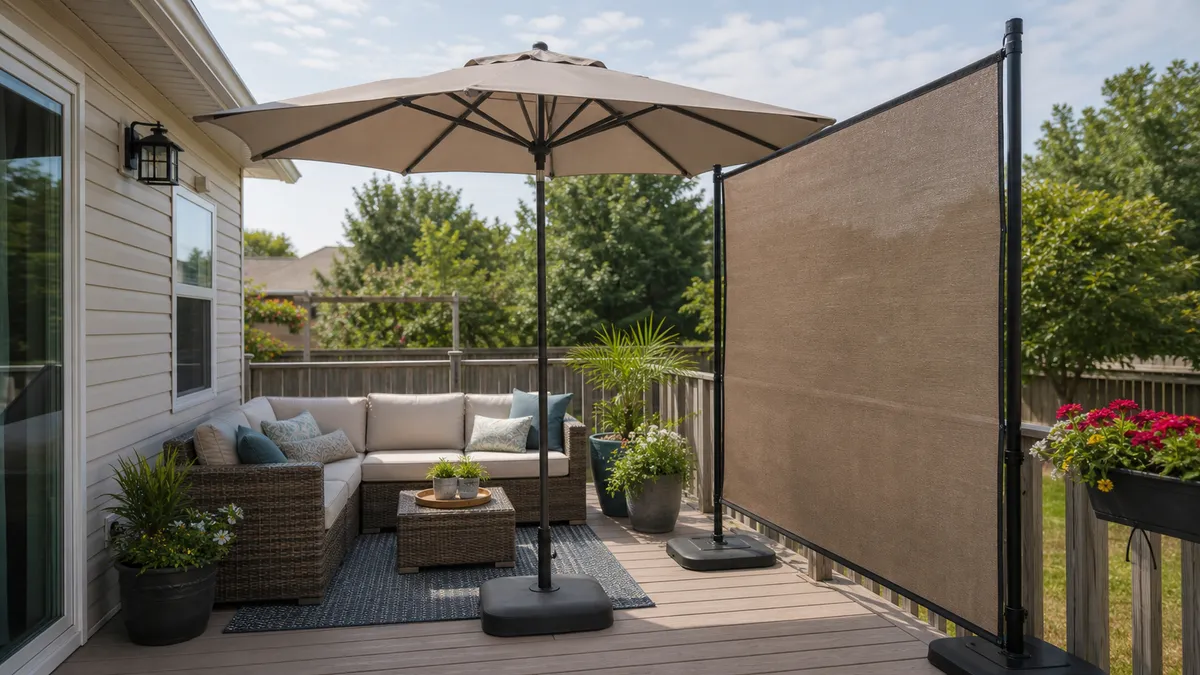
A narrow screen works when low sun hits one chair from the side and overhead shade would cover the wrong area.
Compact weighted base
A small weighted base can support targeted shade when drilling is not allowed, but it still has to leave door swing and chair pullback clear.
Clamp or freestanding screen if allowed
An approved clamp or freestanding screen can solve glare on a tight balcony, but the rule and surface limit matter more than the fabric size.
Plan around the floor space
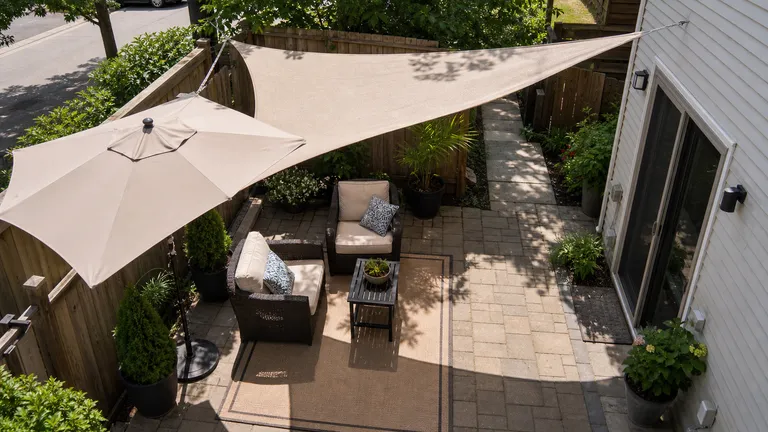
A 6 ft wide patio can lose too much circulation to a large cantilever base. Small patios fail when the shade hardware consumes the same space people need for chairs, doors and planters. Measure the base and legs before trusting the fabric coverage.
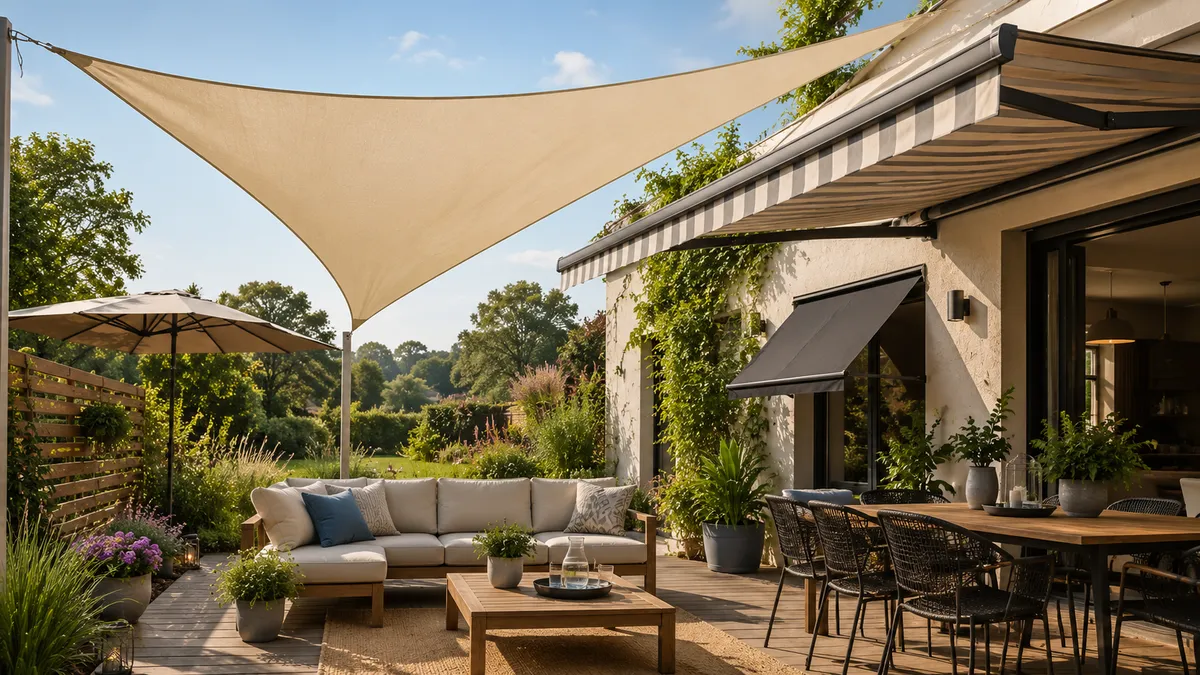
Compact shade often means one targeted piece: a half umbrella against a wall, a narrow side screen, a clamp-approved balcony shade or a small sail only where proper anchors already exist.
A small patio often benefits from movable shade because the use changes through the day. Morning coffee, afternoon reading and evening meals may happen in different corners. A product on wheels or a light folding screen can outperform a fixed cover in that situation.
Light colors can help small patios feel open. A dark screen close to the seating area may reduce glare but make the space feel boxed in. Test fabric color with the furniture before committing to a large visual surface.
For example: Bistro table sits against one wall. Use a half umbrella or narrow wall-side screen. The shade can hug the wall instead of filling the floor. Keep the setup small enough to move, clean and store without taking over the usable space.
Option fit
What fits a small patio best
Favor shade that solves one bad edge without taking over the floor.
| Small-space problem | Try first | Why it works |
|---|---|---|
| Bistro table sits against one wall | Use a half umbrella or narrow wall-side screen. | The shade can hug the wall instead of filling the floor. |
| Low west sun hits one chair | Use a slim vertical blocker at that side. | A full canopy would solve the wrong dimension. |
| No drilling is allowed | Choose a weighted compact base or freestanding screen. | Permanent brackets are off the table. |
Compact options
Small patio shade categories to compare
Compare compact categories only after the walking path, door swing and base footprint are clear.
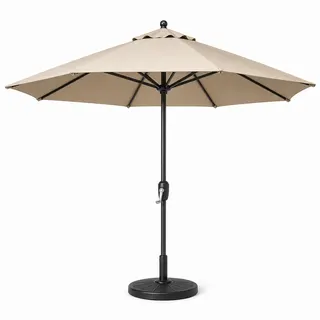
Half umbrella
Half Patio Umbrella for Balcony
For shade against a wall without a full round canopy.
- Wall-side shade
- Smaller footprint
- Good for bistro sets
Check:Base size, wall clearance and wind routine.
Compare categories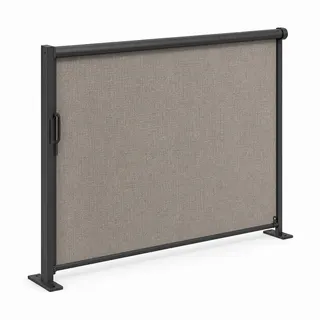
Screen
Slim Outdoor Privacy Screen
For low side glare without covering the whole patio.
- Side glare control
- Narrow profile
- Check wind exposure
Check:Lease rules, base footprint and walking path.
Compare categoriesClamp
Clamp Patio Umbrella
For approved rails or tables where a base would waste floor space.
- No floor base
- Small seating zones
- Needs approved clamp point
Check:Rail strength, clamp permission and wind limits.
Compare categoriesMatch shade to the one bad edge
If only one chair gets evening glare, a vertical screen can beat a full overhead canopy. If the table bakes at noon, an adjustable umbrella may be enough. If the whole slab stores heat, light-colored surfaces and airflow may matter alongside shade.
Draw the patio as a traffic map. Door swing, chair pullback and grill clearance should stay open after shade is installed. A smaller product that preserves movement is usually better than maximum coverage.
Vertical storage is valuable. A folding screen, roll-up shade or slim umbrella can live against the wall when not in use. A canopy frame or giant base may fit on paper but leave the patio feeling like storage rather than living space.
If storage is nearly zero, favor shade that folds flat or stays outside as furniture. A product that needs an indoor closet may be abandoned on the patio, where weather shortens its life.
In practice: Low west sun hits one chair. Use a slim vertical blocker at that side. A full canopy would solve the wrong dimension. Keep the setup small enough to move, clean and store without taking over the usable space.
When to choose a different idea
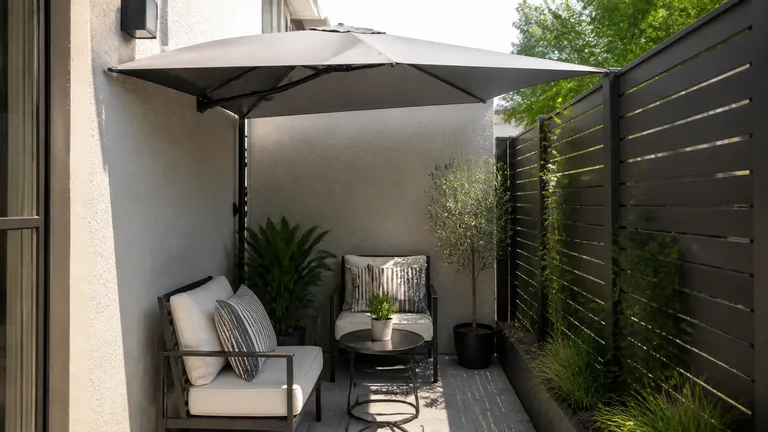
Skip large pop-up canopies when the legs would sit in the walkway. Avoid deep cantilever umbrellas when the base would dominate the slab. Do not choose a sail if the only anchors land on weak trim or a rental wall.
Move to the no-drill guide when permission is the problem. Move to the low-sun guide when glare enters from the side. A small patio needs precision more than variety.
Choose furniture and shade together when the space is tight. A round table, armless chairs and wall bench can reduce the amount of shade needed. Buying a large shade product to compensate for bulky furniture is usually the expensive order.
When drilling is not allowed, use a weighted compact base or freestanding screen. The shade has to move, clean and store easily instead of becoming a permanent fixture by accident.
Watch-outs
Before you buy or install
- Oversized bases can create trip hazards on compact patios.
- Small sails still require real anchors.
- Tall side panels need wind management even when narrow.
Read Next