
Quick Answer
Windy patio shade: the short version
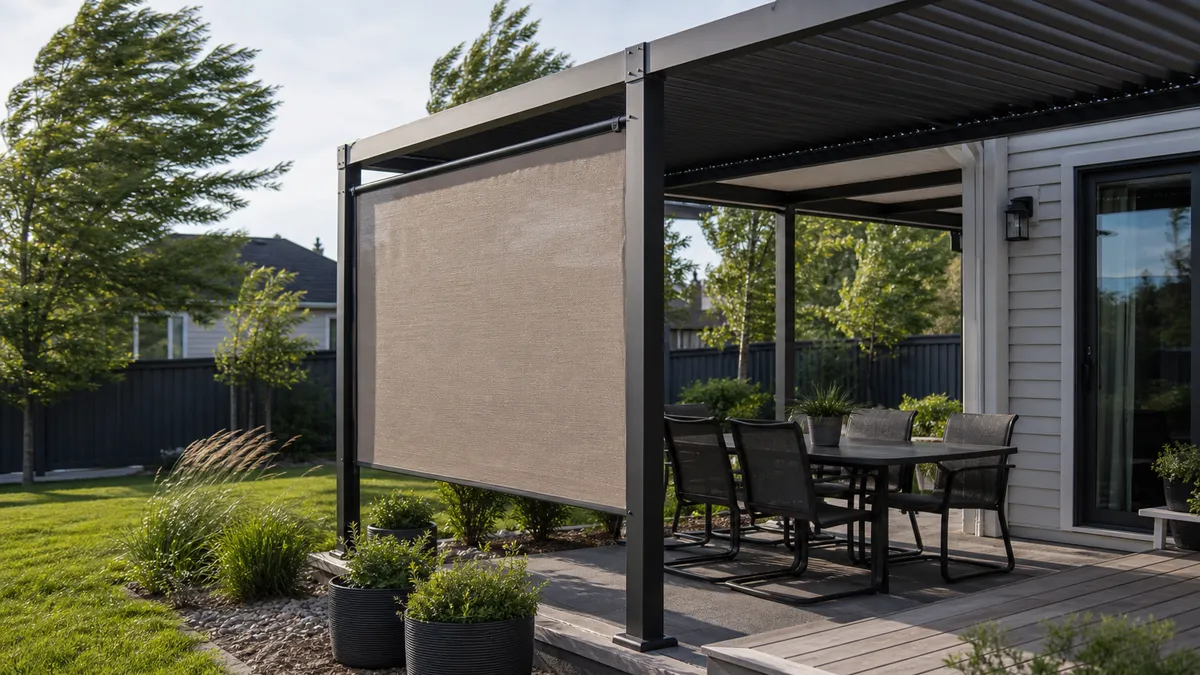
Patio shade for wind usually fails because exposure, fabric area, weak attachment or a late close-down routine has been misread. Diagnose the gust cue, support strength and product manual before buying. Stop for uncertain anchors, fascia-only plans, severe weather, or shade that cannot close, retract, remove or store quickly.
Use removable shade for exposed gusty patios; move to an awning, sail or pergola only when the manual, anchors and load path are proven.
Diagnosis
Most common problems
Check the symptom before buying another shade product.
Umbrella or canopy moves even with weight
The problem is exposure plus fabric lift, not just a base that needs one more bag.
Sail fabric flaps or a corner wrinkles
Loose fabric wears faster, but extra tension can overload weak posts or wall plates.
Awning fabric billows or arms sway
Manufacturer notices treat billowing fabric and arm movement as wind warning signs.
The proposed anchor is fascia, siding, mortar or an unknown wall
The attachment has to carry pull from fabric and gusts, not just hold hardware in place.
Diagnose the wind before choosing shade
Do not start with a product list. Start outside when the patio actually feels risky. Windy can mean light movement in the trees, repeated gusts around a corner, fabric that snaps every few minutes, or storm weather that should have every temporary shade piece indoors. Those are different conditions.
NOAA's Beaufort land cues are useful because they translate forecast numbers into what you can see. Small branches move around 13 to 18 mph, small trees sway around 19 to 24 mph, large branches move and umbrellas are difficult to use around 25 to 31 mph, and whole trees move with difficult walking around 32 to 38 mph. Use gusts and visible movement, not a vague windy label.
The first diagnosis is whether the shade can disappear before the wind gets serious. Umbrellas and pop-up canopies are safer when they are attended and stored. Sails, awnings and pergolas can be better only when their anchors, brackets, posts or wall structure are designed for the load and checked after wind.
- Use forecast gusts, tree movement and fabric movement together.
- Treat any moving bracket, post, pole or base as a stop sign.
- Choose a close-down routine before choosing more fabric.
- Bring loose patio objects inside when severe weather is possible.
Wind Diagnosis
Wind cues, patio risk and first action
Use this before comparing umbrellas, canopies, sails, awnings or pergolas. The visible cue decides whether the first move is caution, closure, removal or professional help.
| Visible cue or symptom | Likely patio risk | First action | Close, remove or stop trigger |
|---|---|---|---|
| Small branches move, roughly the 13 to 18 mph NOAA band | Loose fabric may start fluttering and light umbrellas need attention | Use removable shade only while someone can close or store it | Close fabric if gusts rise, bases slide or a corner starts snapping |
| Small trees sway, roughly the 19 to 24 mph NOAA band | Temporary canopies and unattended umbrellas become poor bets | Prepare to lower, fold or store temporary shade | Do not leave pop-up frames, sidewalls or umbrellas open unattended |
| Umbrellas are difficult to handle, roughly the 25 to 31 mph NOAA band | Open umbrellas, canopies, loose sails and awnings can become unsafe | Remove temporary shade and stop using open fabric as normal patio cover | Store umbrellas and canopies; retract awnings unless the exact manual says otherwise |
| Whole trees move or walking is difficult, roughly the 32 to 38 mph NOAA band | The patio is in severe exposure territory for retail shade products | Keep fabric shade closed, removed or professionally designed | Do not test a new shade product during this weather |
| Awning fabric billows or arms sway | The awning is acting like a wind catcher instead of shade | Retract immediately and inspect brackets, arms and fabric | Stop using it open until the manual, wall structure and bracket movement are checked |
| Shade sail flaps, corners wrinkle or hardware moves | Tension, angle, anchor strength or weather routine is failing | De-tension or remove if weather is building; inspect anchors before reuse | Stop if a post, wall plate, turnbuckle, shackle pin or masonry joint moves |
Which patio shade options survive wind best?
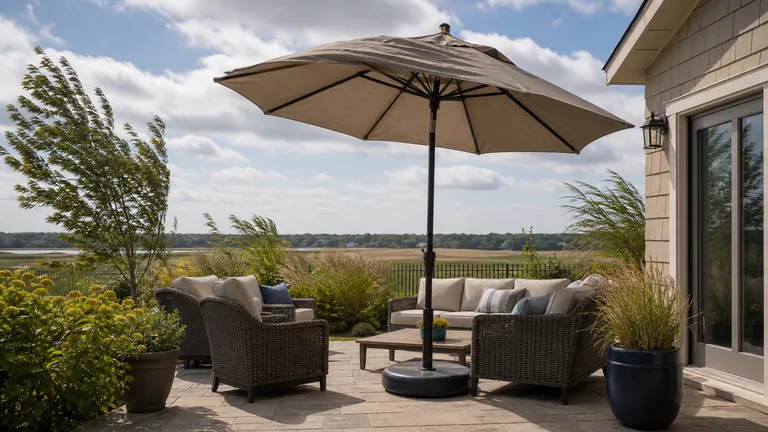
For a small movable seating area, an umbrella can be the right first answer only when the base matches the exact umbrella manual, the surface is level and the umbrella is closed before wind. Treasure Garden's cantilever base manual gives one large example that uses 400 lb of sand and still says to close or store the umbrella in windy conditions and storms. Weight helps only inside the product's rules.
A pop-up canopy is event shade, not a permanent windy-patio roof. One canopy manual calls the product temporary, says it is not for high winds over 15 to 20 mph, and warns that sudden gusts can turn an unsecured canopy into a dangerous projectile. Sandbags and stakes at all four corners help only for attended use within the manual limits.
A shade sail can work on a windy patio only when the fabric is taut, the angle and anchors are sound, and there is a severe-weather removal or de-tension plan. ShelterLogic warns that an insecure sail can fly away and cause damage. A Home Depot-hosted shade sail manual calls for secure walls, poles or posts and a 20 to 30 degree angle for runoff. Use the dedicated shade sail wind guide when the diagnosis points that way.
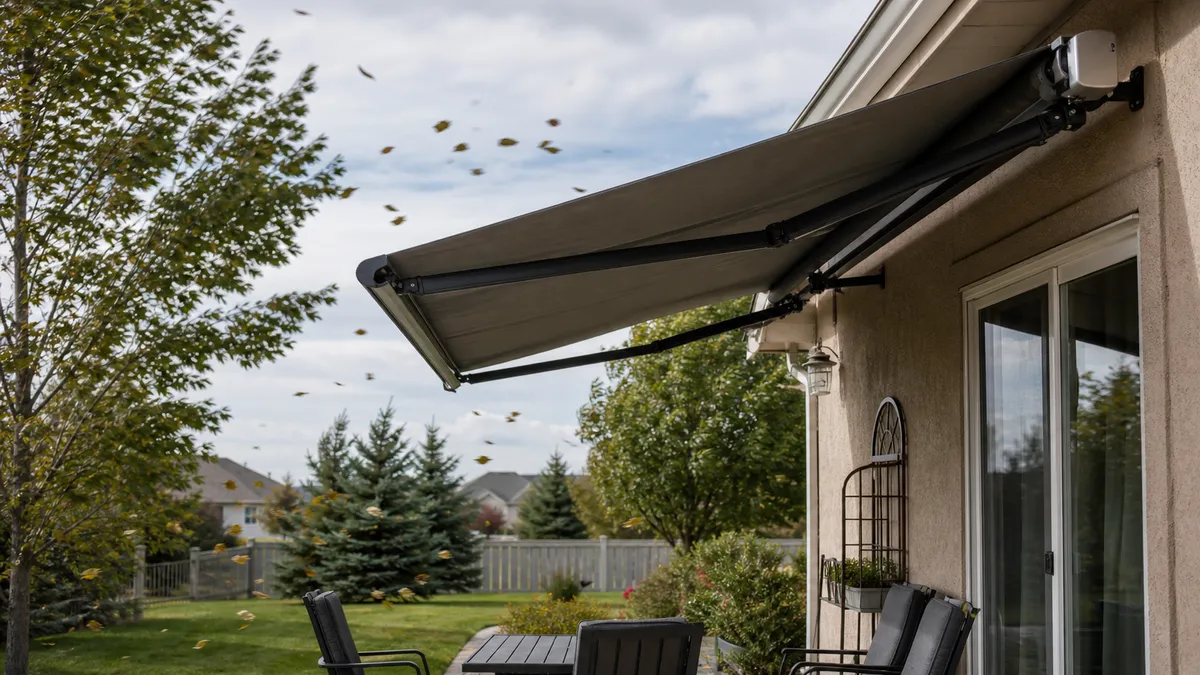
Retractable awnings are useful near a solid wall because they can disappear before gusts, but that only helps if someone closes them. Advaning says there is no single wind rating for every retractable awning because size, projection, installation, weather and maintenance change the risk. Its notice recommends closing when gusts exceed 15 mph and when fabric billows or arms sway. Check the awning wind rating guide before buying or leaving one open.
Pergolas and attached patio covers feel safer because they are rigid, but rigidity shifts the problem into posts, footings, fasteners and the host structure. ICC-ES notes that attached patio-cover loads resisted by the host structure may require a registered design professional when required by the jurisdiction. Use the pergola high-wind guide if the answer needs permanent framed shade.
- Umbrella: small, attended, manual-matched base, closed before wind.
- Pop-up canopy: temporary use only, anchored at all corners and stored before high wind.
- Shade sail: taut fabric, structural anchors and a removal or de-tension routine.
- Awning: solid bracket attachment plus a conservative retract routine.
- Pergola or patio cover: structural load path, local rules and professional help when needed.
Fixes ranked by effort and cost
Rank the fix by how much commitment it adds. The cheapest useful repair is often a smaller shade area and a stricter storage routine. That may sound less satisfying than buying a larger product, but less fabric means less lift, fewer moving parts and a simpler way to get the patio safe before a storm.
Medium repairs make sense when the product family is right but the setup is wrong. That includes matching an umbrella to the specified base, checking canopy anchors at all four corners, retensioning a sail only after anchors are sound, or moving awning brackets so they hit the structure named in the manual.
High-cost fixes belong to permanent shade. Posts, wall brackets, steel plates, footings, ledgers and framed covers can work, but they need a real load path. If the site is coastal, open to valley gusts, above grade, attached to a house, or repeatedly moving hardware, no permanent fabric shade is a valid decision until the structure is checked.
Ranked Fixes
Wind fixes by effort, cost and stop sign
This is not a product ranking. Match the symptom to the least risky first repair.
| Symptom | Likely cause | First fix | Effort / cost | Stop or escalate if |
|---|---|---|---|---|
| Umbrella or canopy shifts even when weighted | Too much fabric lift for the base, anchors or exposure | Downsize the shade area and use it only when attended | Low | A gust can move the base, lift a leg or twist the frame |
| Windy but sheltered corner needs occasional shade | Small zone problem rather than whole-patio problem | Use a manual-matched umbrella, small screen or movable shade that stores fast | Low to medium | The base blocks a door or the screen acts like a sail |
| Sail flaps, wrinkles or hardware moves | Loose fabric, poor angle or weak anchor path | Inspect anchors, set firm tension and reduce area before adding stronger hardware | Medium | A wall plate, post, shackle, turnbuckle or masonry joint moves |
| Awning billows or arms sway | Open fabric is beyond the current wind routine or bracket confidence | Retract, check manual limits and inspect bracket attachment | Medium | The manual limit conflicts with your normal gusts or wall structure is unknown |
| The desired shade is permanent overhead cover | The patio needs a structural solution, not loose fabric | Plan engineered posts, approved brackets, pergola framing or a patio cover | High | Local code, attachment loads, footing size or professional design is unclear |
| Open exposure, storm warnings or repeated moving hardware | The site is beyond casual patio shade | Use no permanent open fabric until design and removal rules are settled | No-purchase first step | Shade would need to stay open when nobody can close, retract or remove it |
What not to buy or trust on a windy patio
Do not buy a larger canopy because the small one moved. More roof area gives the wind more fabric to grab. Sidewalls can make this worse by turning a temporary frame into a broad vertical surface. The safe fix for a pop-up canopy in building wind is takedown, not extra panels.
Do not treat spike anchors as permanent anchors. Clarke's pop-up canopy manual describes the product as temporary, not wind-load rated and not recommended as a permanent structure. It also warns that temporary spike anchors are not designed for permanent installation and that the canopy should not be left unattended.
Do not attach shade to fascia, siding, decorative trim or mortar because the location looks convenient. Lippert's retractable awning manual requires brackets to hit studs, supports or rafters when not installed on brick; on brick, fasteners go into brick, not mortar. Decks.com warns that fascia-only sail attachment can detach fascia and that larger sails or strong-wind sites may need structural checks or steel plates.
Do not crank a loose sail tighter to hide a weak anchor. Decks.com notes that shade sails can need more than 100 lb of tension for a clean shape, but over-tensioning can tear fabric. If a post, wall plate or corner hardware is moving, the repair is structural verification, a smaller sail, or removal before weather.
Do not trust a broad wind label without the exact manual. Advaning's wind notice is blunt that awning wind behavior changes with size, projection, installation, weather and maintenance. The same logic applies to umbrellas, sails and canopies: a product-family claim does not override the installation in front of you.
- Bigger fabric does not fix gust exposure.
- Sandbags do not make a pop-up canopy permanent.
- Spike anchors are temporary, not structural footings.
- Fascia-only attachment is a red flag for shade sails and awnings.
- Brick is not the same as mortar, siding, trim or unknown wall structure.
- Loose fabric needs diagnosis, not blind extra tension.
Secure installation checklist before leaving shade outside
For wall-mounted shade, find the structure before the bracket pattern. Lippert says bracket locations should be adjusted first to hit studs, rafters, supports or brick, then spaced evenly. That means visual symmetry comes after the load path. If the manual says brick, do not substitute mortar because it is easier to drill.
For shade sails, each corner needs a sound wall, pole or post and hardware that remains tight after wind. ShelterLogic says mounting points must be structurally sound and anchors should be checked periodically. Broxap advises de-tensioning and removing non-braced knitted shade sail fabric during weather warnings and checking shackle connection pins after high winds.
For umbrellas and canopies, installation is mostly about not pretending they are permanent. Use the manual-specified base, level surface, all required corner anchors, and a storage path that one person can use before weather arrives. FEMA warns that lawn furniture, potted plants and children's toys can become wind-carried hazards, so loose shade parts and nearby patio items belong in the same pre-storm routine.
Stop and get qualified help when the shade attaches to a house, spans a large area, sits above grade, shows repeated movement, has cracked masonry nearby, or belongs to a coastal or open high-wind site. A code-style example from California treats awning structural parts and wind pressure as regulated design issues, and ICC-ES points to professional load determination for some attached patio-cover conditions.
- Match every bracket to studs, rafters, structural supports or brick.
- Do not use mortar, siding, trim or fascia as the only load path.
- Check posts, footings and deck framing before sail tension or pergola loads.
- Confirm the exact manual's gust, closure, removal and maintenance rules.
- Make sure one person can close, retract, remove or store the shade fast.
- Inspect sail hardware, awning brackets, umbrella bases and canopy joints after wind.
When to close, remove or call for help
Everyday breeze management is different from severe-weather preparation. A mild afternoon may only require closing an umbrella between uses. Building gusts, weather warnings or visible movement call for action before the product is under full load. Forecast gusts matter more than the day's average wind speed.
Close or store umbrellas when wind or storms approach, and never leave them open unattended. Disassemble or store pop-up canopies before severe weather, especially when sidewalls are attached or the frame has to remain outside overnight. An anchored canopy can still twist, lift or shed parts if the wind exceeds the manual.
Retract awnings when the manual says to, when gusts exceed the product notice limit, or when fabric billows and arms sway. Rolltec describes retractable fabric awnings as shade and light-rain products and says they should be retracted during heavy rain, snow or severe wind. That is a use rule, not a defect.
Remove or de-tension shade sails when strong wind, storms, snow or severe weather are forecast unless the exact engineered installation says otherwise. After wind, inspect shackle pins, turnbuckles, corners, seams and posts before pulling the sail tight again. If the hardware has moved once, do not reset it and hope the next gust is kinder.
Call for help when attachment is uncertain, when a wall or post moves, when fascia-only attachment is the plan, when a large sail or framed cover is desired, or when local wind exposure is beyond what product manuals discuss. In those cases, the safest purchase may be no purchase until the structure is verified.
- Close, retract, remove or store shade before severe weather.
- Use the manual's limit for the exact product, size and installation.
- Treat billowing fabric, swaying arms and moving posts as stop signs.
- Inspect hardware before reuse after a wind event.
- Get qualified help for house attachment, large spans and permanent framed shade.
This won't fix it
Do not skip these checks
- Do not leave umbrellas, pop-up canopies or loose sidewalls open unattended in building wind.
- Fascia, siding, decorative trim, mortar-only masonry and unknown wall structure are stop signs.
- Sandbags and spike anchors help temporary use; they do not create permanent wind-rated shade.
- Billowing fabric, swaying awning arms, moving posts or loose sail hardware mean close or remove shade now.
- Large fixed shade, attached patio covers and high-wind sites need structural checks before purchase.
Read Next
Related fixes
Patio Shade Ideas
Use this when patio shade ideas is closer to the real constraint than the current page.
Awning Wind Rating
Use this when awning wind rating is closer to the real constraint than the current page.
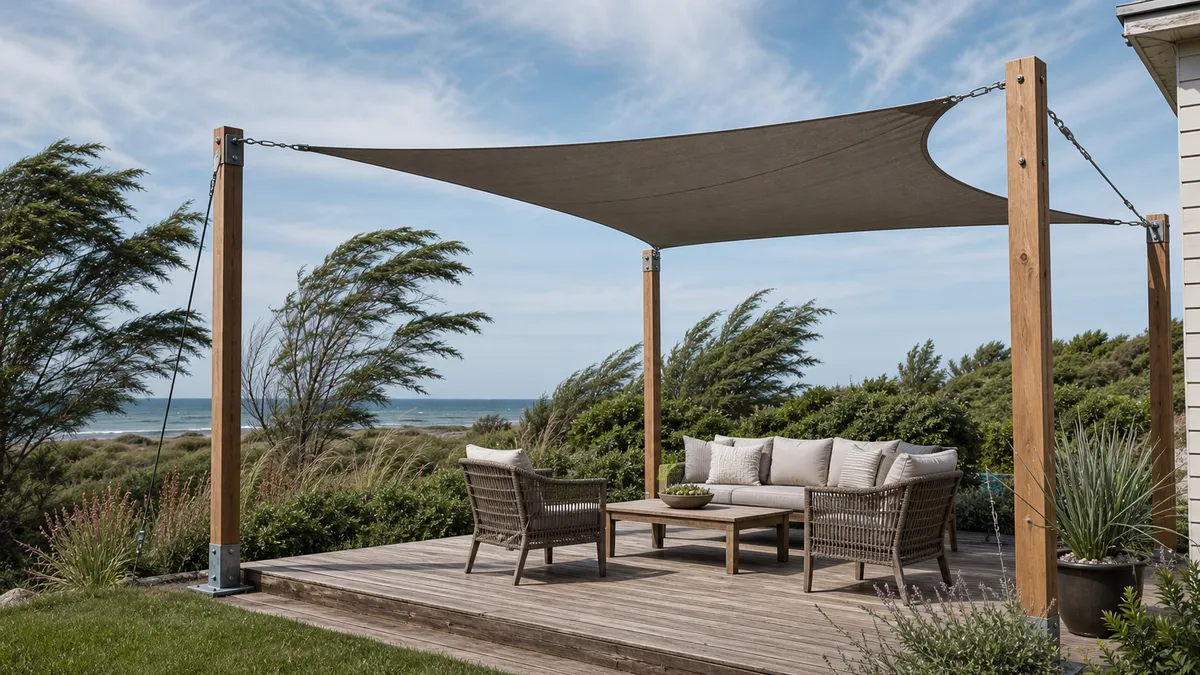
Shade Sail for Windy Areas
Use this when shade sail for windy areas is closer to the real constraint than the current page.
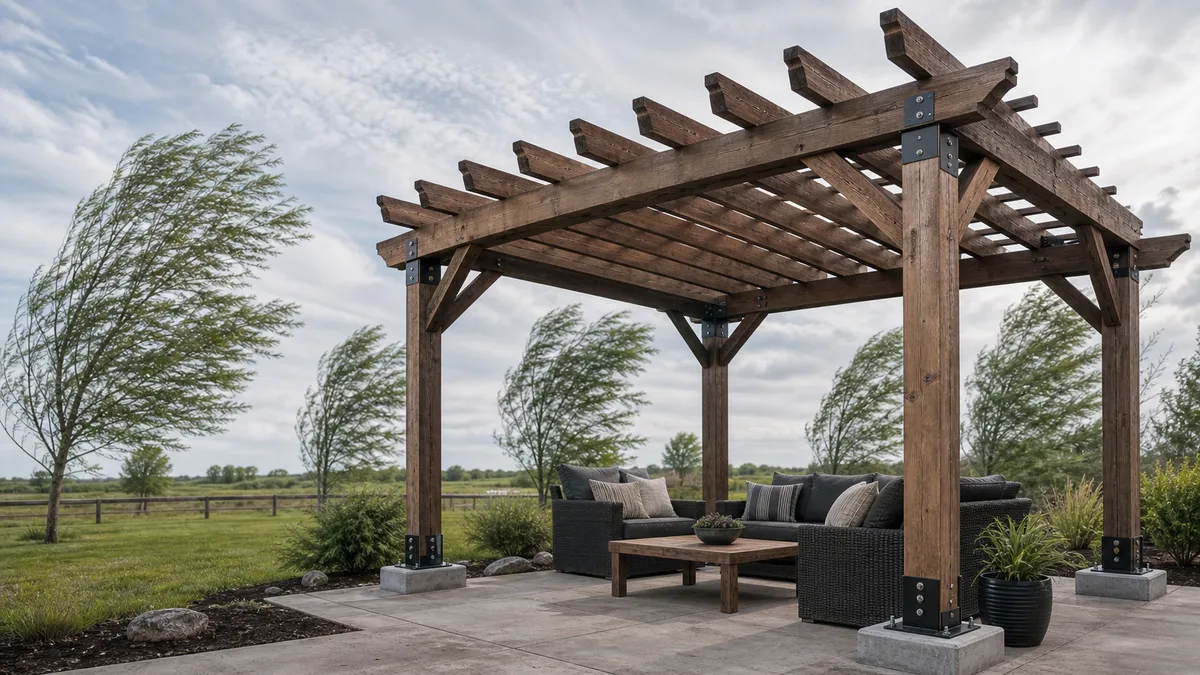
Pergola for High Wind Area
Use this when pergola for high wind area is closer to the real constraint than the current page.
Questions
FAQ
What wind speed is too high for a patio umbrella?
Use the umbrella manual first, then watch the patio. NOAA's Beaufort cues say umbrellas are difficult to use around the 25 to 31 mph band. Close or store the umbrella before storms, when handling becomes difficult, or when the base, pole or canopy starts moving.
Are pop-up canopies safe on a windy patio?
Only for attended temporary use inside the manual limits. One canopy manual says not to use the canopy in high winds over 15 to 20 mph and warns that a sudden gust can turn an unsecured canopy into a dangerous projectile. Sandbags do not make it permanent.
Can I leave a shade sail up in wind?
Only if the exact sail, anchors and installation allow it. Manuals commonly call for taut fabric, structurally sound mounting points and removal or de-tensioning before severe weather. After high wind, inspect shackles, pins, turnbuckles, corners and posts before using the sail again.
Is a pergola better than a shade sail in wind?
A pergola can be better only when posts, footings, fasteners and attachments are designed for local loads. It is not automatically safer because it is rigid. If the patio is exposed or the cover attaches to the house, treat it as a structural project before buying.
Can I attach patio shade to fascia?
Treat fascia-only attachment as a red flag. Shade and awning loads need a real path into studs, rafters, structural supports, brick, posts or engineered framing. If the plan depends on fascia, siding, trim, mortar or unknown wall construction, stop and get qualified help.