
Quick Answer
The fast percentage answer
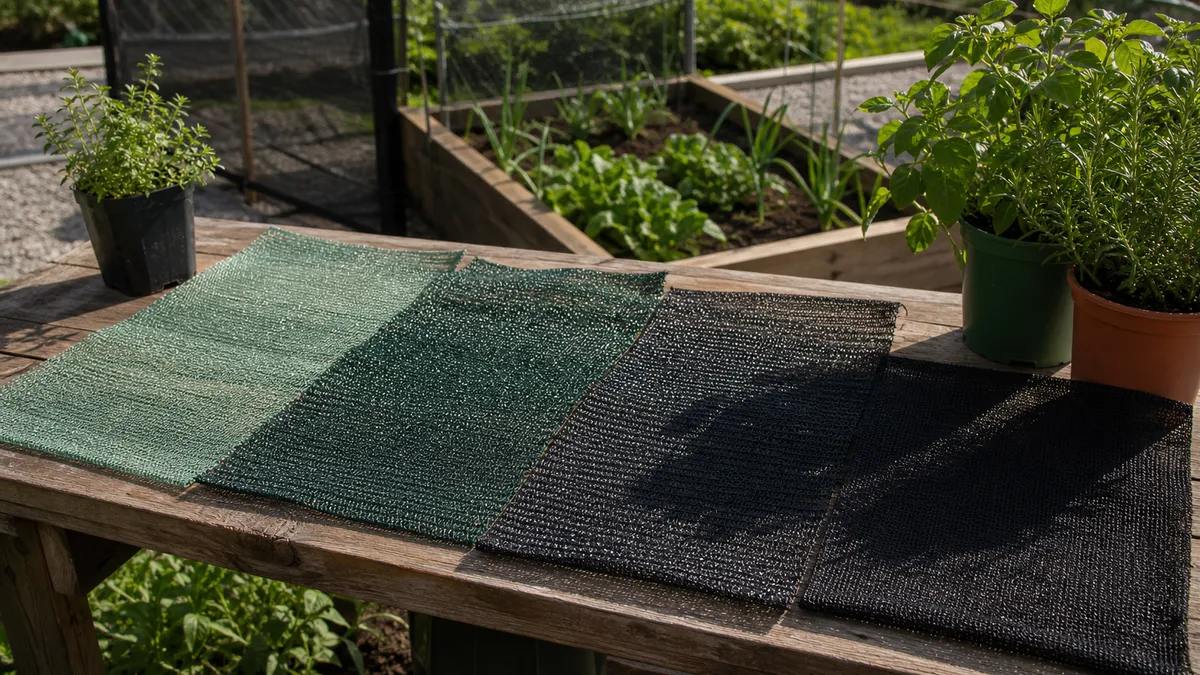
Buy shade cloth by crop and goal: 30 percent shade cloth is the safer start for many fruiting vegetables, 40 to 50 percent fits leafy greens or seedlings in short heat, and 70 or 90 percent is usually deep shade or non-crop shade. Darker cloth is not automatically better, especially in a greenhouse without ventilation.
Choose 30% first for fruiting vegetables; move to 40-50% for greens, seedlings or ventilated high-tunnel heat, and reserve 70-90% for deep-shade or non-crop jobs.
Buying Direction
Which shade cloth percentage to buy
Use this table for the buying direction. The detail below explains limits, costs and edge cases.
| Situation | Buy / use this | Why |
|---|---|---|
| 30% fruiting vegetables and general garden heat relief | Buy 30 percent shade cloth when tomatoes, peppers, cucumbers or mixed summer beds need afternoon relief but still need flowers, fruit set and ripening. | Johnny's and University of Maryland describe 30% as a common garden shade level, and Arizona Extension puts tomatoes in a light-shade range during hot sun. |
| 40% seedlings, leafy crops and hot-climate mixed beds | Use 40% as an intermediate panel when seedlings or leafy greens need more help than 30%, but one dark sheet would hurt fruiting vegetables. | It bridges the 30-50% vegetable range without treating every crop as a lettuce crop. |
| 50% leafy greens, seedlings or ventilated greenhouse heat | Buy 50 percent shade cloth for lettuce, tender transplants or short high-tunnel heat windows only when airflow and removal timing are planned. | UGA supports 30-50% for summer lettuce, while UMN and Purdue caution that stronger shade can reduce light for some fruiting tunnel crops. |
| 70% ornamentals, nursery holding or temporary rescue shade | Treat 70 percent shade cloth as specialty deep shade for ferns, orchids, nursery staging or brief recovery shade, not a normal vegetable-bed purchase. | Commercial percentage charts put 70% in deep-shade uses, and the American Orchid Society warns that low light can weaken flowering. |
| 90% privacy, livestock, patio, storage or work-area shade | Buy 90 percent shade cloth for people, animals, privacy screens or storage shade rather than food-crop production. | At this density the job is blocking sun and view, not keeping vegetables productive. |
What shade cloth percentage actually means
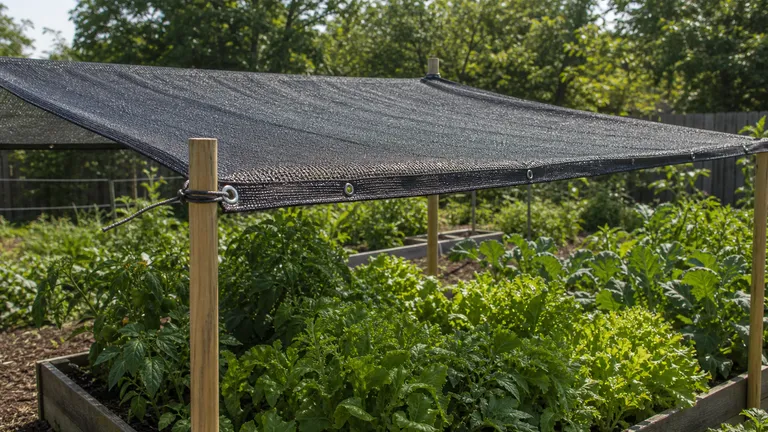
Shade cloth percentage is blocked-light math, not product strength. A 30% cloth blocks about 30% of incoming light and leaves roughly 70% transmission; a 50% cloth blocks about half. University of Maryland Extension describes 30% and 50% as common garden shade cloth levels, and Johnny's explains the same transmission logic in its cloth categories.
The number does not tell you whether the fabric is UV-stabilized, knitted polyethylene, woven, finished with taped edges, or fitted with grommets. A cheap dark sheet can be weaker than a lighter finished panel. Compare percentage, fabric construction, edge finish, clip method and size before assuming the darker roll is a better buy.
Use this shade cloth percentage guide to pick the first panel, then return to the broader shade cloth buying guide if fabric type, edge finish or fastening is still undecided. Fruiting vegetables usually need stronger light than leafy greens. If the crop starts stretching, pales, flowers less, or ripens slowly after shade goes up, the cloth may be too dark or left on too long.
Before you order
Compare shade cloth types after choosing the percentage
Use these checks to compare cloth types after the percentage choice is clear. Confirm the fabric, edge finish and panel size before ordering.
30-40%
Light garden shade cloth
For fruiting vegetables, mixed beds and moderate heat relief.
- Check airflow above the crop
- Buy enough clips for removable shade
- Keep flowering and ripening visible
Check:Look for UV-stabilized knitted polyethylene if the panel will be clipped and stored each season.
Compare light cloth40-50%
Leafy-green and seedling shade
For lettuce, tender transplants and short severe heat windows.
- Plan a removal date
- Keep harvest access open
- Watch for stretched growth
Check:Finished edges and quick clips help if the cloth must move on and off during heat waves.
Compare medium cloth
70-90%
Deep shade and non-crop cloth
For ornamentals, nursery holding, privacy, animal shade or storage shade.
- Check wind exposure
- Do not block vents
- Avoid fruiting vegetables
Check:Higher-density cloth catches more wind and needs secure edges without trapping hot air around plants.
Compare deep shadeMatch the percentage to the crop problem
Match the percentage to the crop symptom in front of you. Arizona Cooperative Extension says tomatoes need 6 to 8 hours of full sun for best production and warns that too little sun can make plants leggy and reduce flowering. That supports light shade for fruiting vegetables instead of jumping straight to 50%, 70% or 90%.
Leafy greens and seedlings can justify stronger temporary shade because the goal is cooler leaves or transplant recovery. UGA Extension reports 30-50% shade cloth as suitable for summer lettuce in its north Georgia high-tunnel work, but it also says the shade should come off by mid- to late September so low autumn light does not slow growth.
High tunnel and greenhouse decisions need ventilation before higher percentage. UMN Extension lists hot-tunnel problems such as flower abortion, pollen issues, bolting, bitterness, ripening disorders and sunscald. It also reports 6-9 F cooling from shade cloth and notes that 50% shade may reduce yields in some settings. USU Extension points to doors, roll-up sides and 30% shade cloth as part of warm-weather tunnel management.
Crop match
Crop and symptom percentage checks
Use this table after the top percentage choice is clear. It keeps the crop notes short so the tomato, lettuce and greenhouse guides can handle the details.
| Situation | Percentage to compare | Why | Next check |
|---|---|---|---|
| Tomatoes, peppers, cucumbers or squash still flowering | 30% | Fruiting vegetables need heat relief without deep light loss. | Watch flowers, fruit set and ripening; use the tomato guide for crop detail. |
| Lettuce, spinach, brassicas or other leafy greens in a heat wave | 40-50% | Leaf quality can benefit from stronger short-term cooling. | Remove when the hot spell or low-light season changes; use the lettuce guide for timing. |
| New seedlings or transplants wilting after planting | 40-50% short term | Young plants may need recovery shade before roots catch up. | Harden off gradually and remove shade once new growth looks firm. |
| Greenhouse or high tunnel overheats | 30-50% with ventilation | Shade helps only if hot air, humidity and irrigation are also managed. | Keep doors, vents, fans and roll-up sides working; use the greenhouse guide for placement. |
| Orchids, ferns, shade-house plants or nursery holding | 60-70% | These are deep-shade or specialty plant uses, not general vegetable production. | Confirm the plant group can flower or grow at that light level. |
| Privacy screen, livestock shade, kennel, patio, storage or work area | 80-90% | The cloth is blocking sun, view or heat from people, animals and stored materials rather than growing food. | Check wind exposure, attachment and access before buying a large panel. |
When darker cloth is the wrong purchase
Do not buy darker cloth until water, airflow and timing are checked. Arizona's Pima County garden guidance pairs 30-40% shade with daily checks for water stress and sunburn, and it still stresses ample watering when temperatures are consistently above 95 F. If the soil is dry below mulch, fabric is hiding the problem rather than solving it.
Closed vents and still air are another reason to pause. USU Extension links inadequate tunnel ventilation with higher disease pressure, including powdery mildew, bacterial diseases and root rots. UGA also warns that shade can raise humidity inside high tunnels. A darker roof cloth can make crops dimmer while damp, hot air remains trapped around leaves.
Access matters. USU notes pollination problems near tunnel centers when bees avoid flying into or under tunnel covers. UNH Extension says covers over insect-pollinated crops should be removed when female flowers bloom. For shade cloth, keep pruning, hand-pollination, harvest, scouting and irrigation checks easy; a sealed tunnel-like cover can block the work that keeps crops producing.
Use the right material for the real job. University of Maryland warns that summer row covers can raise temperatures and cause heat stress or flower and fruit drop in hot weather. If pest exclusion is the goal, insect netting may fit better than shade cloth or frost row cover. If the crop is simply past its season, a cooler planting window may beat any darker panel.
Material, size, edge finish and cost before you order
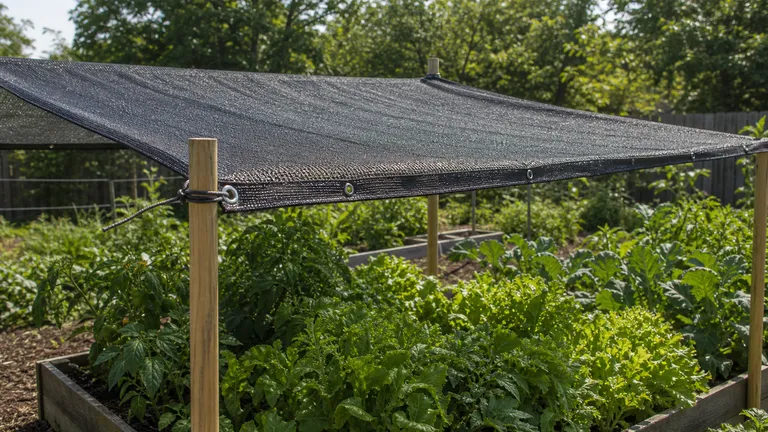
Percentage is only one line on the order. UNH Extension describes garden shade cloth as knitted or woven UV-stabilized polyethylene in densities from 10% to above 60%. Johnny's says knitted UV-stabilized black polyethylene has better ventilation and water permeability than woven cloth, can be cut without unraveling, and may last 5-7 years if stored out of the sun when not in use.
Finished edges, grommets and clips decide whether the panel is easy to remove. Pro Fabric Supply lists finished panels with taped edges and grommets every 2 ft, plus roll widths from 6 ft to 50 ft. A small bed may only need a finished removable panel. A high tunnel, kennel, livestock run or privacy screen may need a larger custom size and more attachment points.
Color and reflectivity can matter in enclosed growing spaces. UGA notes that reflective shade cloth can reduce tunnel temperature more than black cloth in its lettuce work, and it also warns about humidity. For an open vegetable row, black knitted cloth may be fine. For a hot tunnel, compare color, ventilation, panel position and removal routine before raising the shade percentage.
Treat cost as size, finish and lifespan rather than darker-is-better. UGA's lettuce tunnel example described a shade-cloth cost near $600 for one tunnel and estimated long life if removed and stored out of the elements. That is a project example, not a universal price. For home beds, avoid exact price assumptions and compare panel size, edge finish, UV treatment, clips, storage and whether the cloth can be reused next season.
Buying specs
What to check besides percentage
These checks keep the purchase practical once the percentage is chosen.
| Spec | Why it changes the buy | Check before ordering |
|---|---|---|
| Material and weave | Knitted polyethylene is often easier to cut, clip, ventilate and store than woven cloth. | Is the fabric UV-stabilized and suitable for repeated outdoor use? |
| Panel or roll size | A small removable panel may beat a wide roll when only one crop zone needs shade. | Does the width cover the bed without sagging onto plants? |
| Edges and grommets | Finished edges reduce tearing and make repeated removal easier. | Are grommets, clips or fasteners included or bought separately? |
| Support height | UNH warns that direct contact can transfer heat and reduce airflow around foliage. | Can the cloth sit above the canopy with room for watering and harvest? |
| Storage plan | UV and weather exposure shorten fabric life when cloth stays out after it is no longer needed. | Can it be unclipped, dried, labeled and stored after the heat window? |
Temporary shade and removal triggers
Write the removal trigger before installing high-percentage cloth. For fruiting vegetables, remove or reduce shade when flowers slow, fruit color lags, plants stretch, leaves pale, or the severe heat breaks. Purdue's pepper summary found that 30% and 50% shade reduced sunscald, but 50% had the lowest yield and delayed pepper harvest by about a week in the cited work.
For leafy greens, the trigger is different. The cloth can stay through the hot harvest window, but it should not become all-season darkness. UGA's lettuce publication says shade should be removed by mid- to late September in its north Georgia context because leaving it into early October can reduce growth from inadequate light.
For seedlings and rescue shade, keep the timeline short. Use higher shade for transplant recovery, then reduce it as new growth firms up. A 70% panel may make sense for a few days over a stressed tray or nursery holding area, but it should not become a permanent vegetable-bed roof.
Mixed beds often need two smaller panels. Tomatoes, lettuce, seedlings and walkways do not need the same shade percentage for the same length of time. If one sheet must cover everything, choose the lighter shared cloth and add local afternoon shade for the tender crop rather than darkening the whole bed.
After you choose the percentage
After the broad percentage choice is made, use the crop guide for timing and removal details. For fruiting-crop timing, removal and sunscald detail, read the shade cloth for tomatoes guide at /shade-cloth-for-tomatoes/. It goes deeper on blossom drop, fruit set and tomato-specific removal timing.
For leafy greens, read /shade-cloth-for-lettuce/ after choosing the 40-50% range. That page handles bolting, leaf quality, harvest timing and when shade will not save a crop that is already too far gone.
For enclosed growing spaces, read /shade-cloth-for-greenhouse/ before buying a wider or darker tunnel panel. Greenhouse shade cloth has to work with vents, fans, roll-up sides, irrigation and humidity, not just the number printed on the fabric.
Watch-outs
Before you buy or install
- Darker cloth can reduce flowering, fruit set, ripening and color in light-hungry crops.
- Greenhouse shade does not replace open vents, roll-up sides, fans, irrigation and humidity control.
- A shade panel that blocks bees, hand-pollination, pruning or scouting can create a new crop problem.
- Shade cloth is not a substitute for watering, mulch, insect netting or a better planting window.
Read Next
Related guides if your situation is different
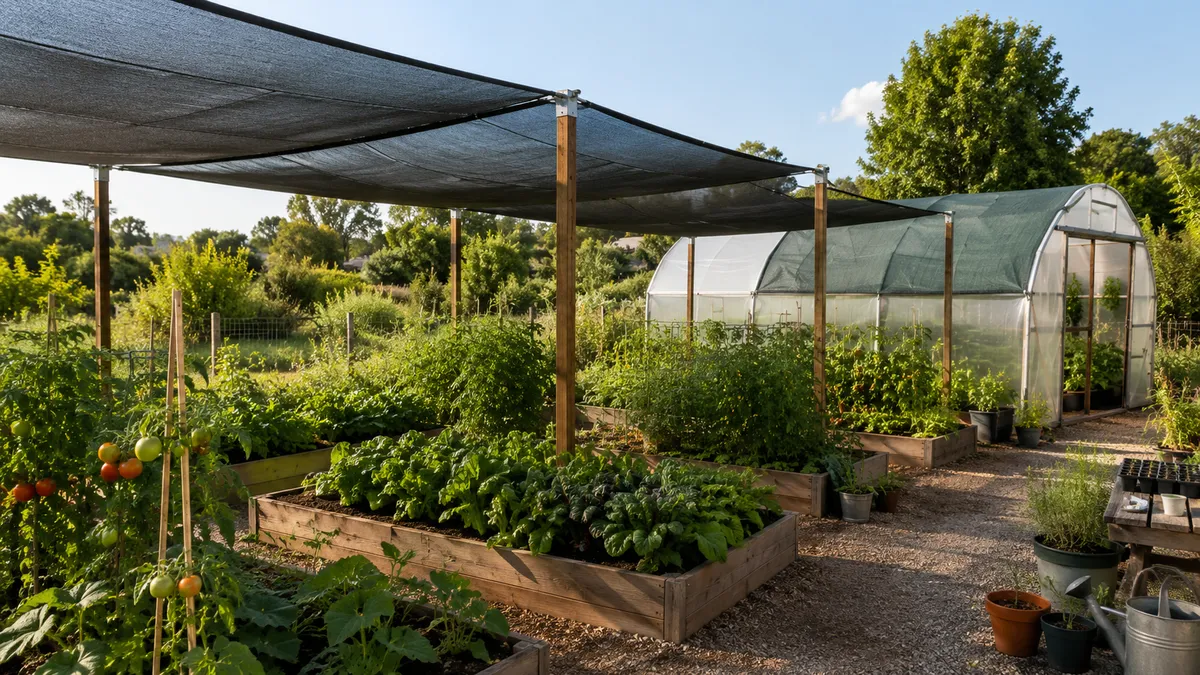
Shade Cloth Guide
Use this when shade cloth is closer to the real constraint than the current page.
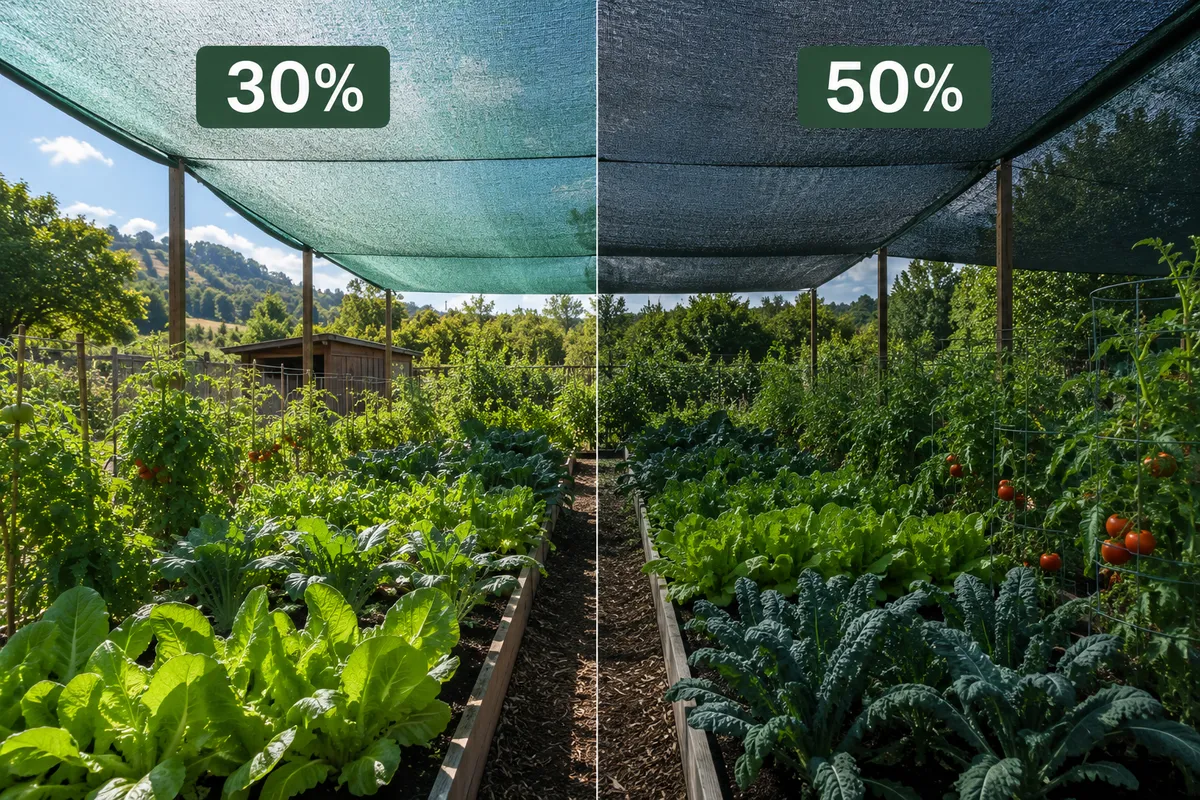
30% vs 50% Shade Cloth
Use this when 30 vs 50 shade cloth is closer to the real constraint than the current page.
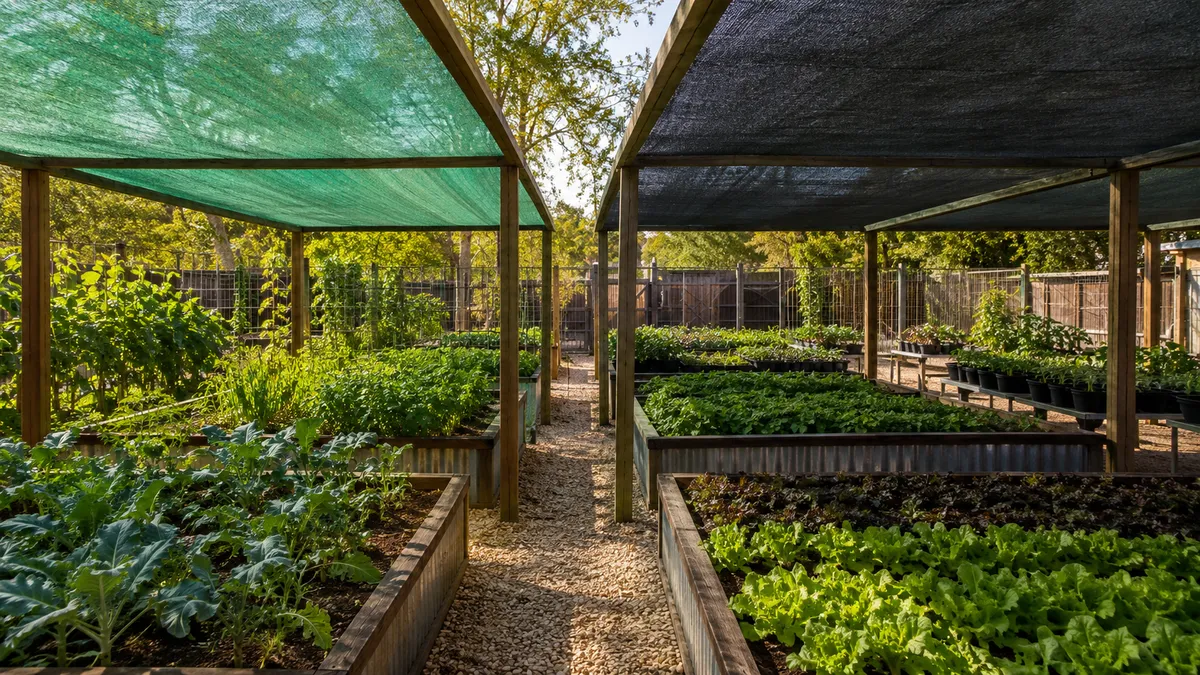
50% vs 70% Shade Cloth
Use this when 50 vs 70 shade cloth is closer to the real constraint than the current page.
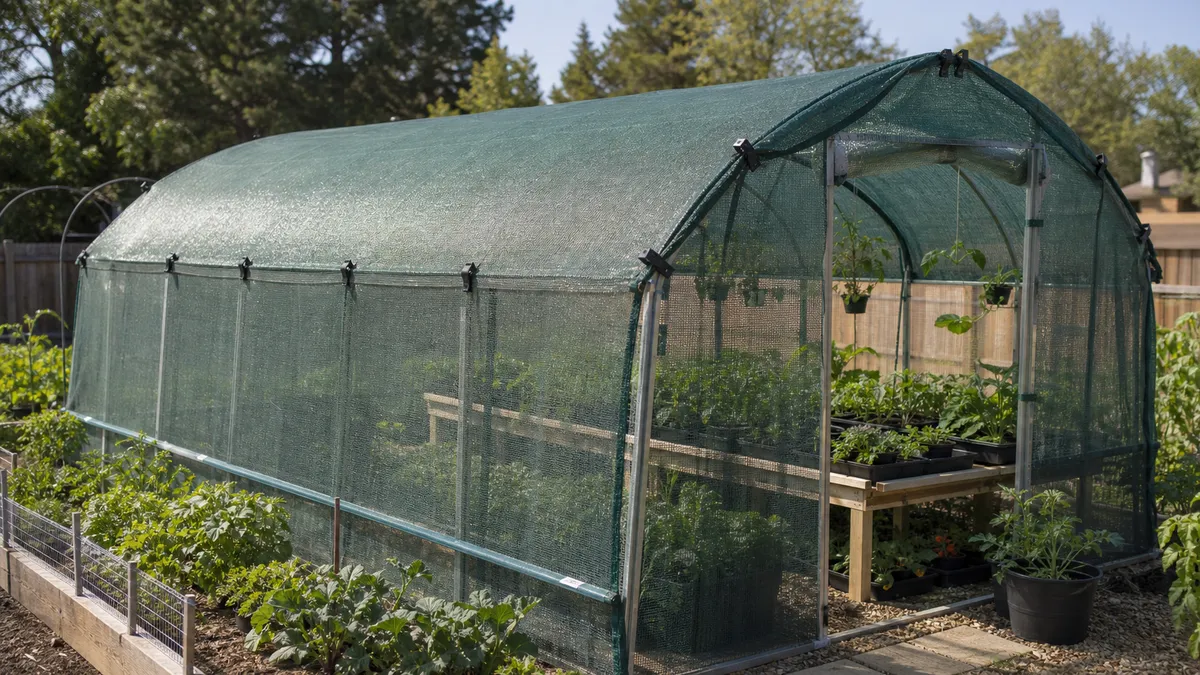
Shade Cloth for Greenhouse
Use this after choosing a percentage when placement, ventilation and humidity control decide how the cloth should work in a greenhouse.
Questions
FAQ
What percentage shade cloth is best for a vegetable garden?
Start around 30% for many fruiting vegetables, then use 40-50% for leafy greens, seedlings or short severe heat. Mixed beds often need separate panels because tomatoes and lettuce do not want the same light reduction for the whole season.
Should I buy 30 percent or 50 percent shade cloth?
Buy 30 percent shade cloth when fruiting vegetables still need flowers, fruit set and ripening. Buy 50 percent shade cloth for leafy greens, tender seedlings or ventilated greenhouse heat where stronger temporary cooling is worth the light tradeoff.
Is 70 percent shade cloth too much for vegetables?
Usually yes for normal vegetable production. Use 70 percent shade cloth for ornamentals, nursery holding, orchids, ferns or brief rescue shade. If tomatoes, peppers or cucumbers need to keep flowering and ripening, 70% is usually too dark.
What is 90 percent shade cloth used for?
Use 90 percent shade cloth for privacy screens, livestock shade, kennels, patios, storage or work areas. It is generally not a food-crop cloth because it removes too much useful light for vegetables that still need growth and production.
Can one shade cloth percentage cover tomatoes, lettuce and seedlings together?
Often no. Use two smaller panels if crop quality matters: lighter shade over tomatoes and stronger temporary shade over lettuce or seedlings. If one panel must cover the bed, start lighter and add local afternoon shade where tender crops fail first.