
Quick Answer
triangle vs rectangle shade sail: the short version
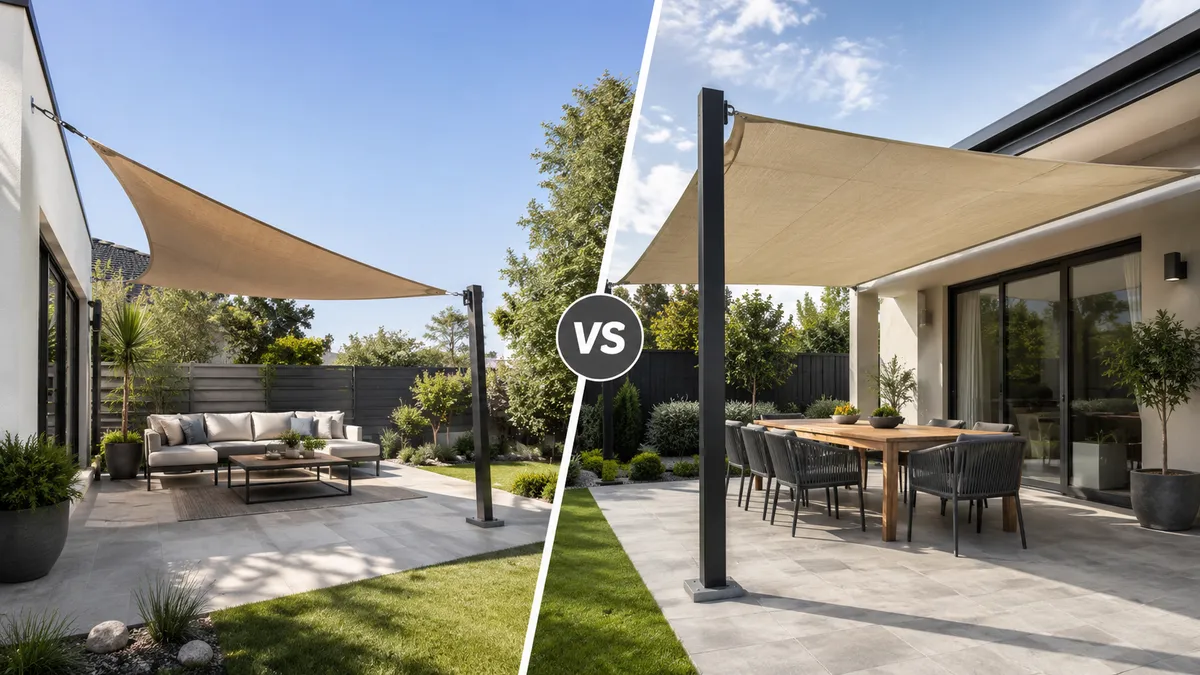
Choose a triangle shade sail when three strong anchors match a corner lounge or small seating area. Choose a rectangle when a dining table, pulled-out chairs or a larger patio need fuller shade and four strong fixing points are realistic. This avoids exposed seats and wasted hardware.
Choose a triangle for a small corner when three strong anchors fit; choose a rectangle when the furniture area needs fuller shade.
Side by Side
Fast comparison snapshot
| When this matters | Choose | Why |
|---|---|---|
| Three strong corners already exist around a small seating spot | Choose a triangle sail with one deliberately lower corner. | The site matches the shape without forcing a fourth anchor. |
| Rectangular dining table needs shade over pulled-out chairs | Choose a rectangle or square sail sized from anchor points. | Furniture coverage is rectangular even if the sail photo looks cleaner. |
| Large patio has one weak corner | Use two smaller triangles or rebuild the missing support. | A rectangle with one bad anchor is not a stable compromise. |
| Layered shade is wanted over a lounge corner | Use offset triangles only if each sail has independent tension space. | Layering looks simple but multiplies hardware conflicts. |
| Rain shedding matters more than appearance | Choose the shape that creates the clearest high-low drainage edge. | Drainage beats shape preference. |
Coverage shape should follow furniture shape
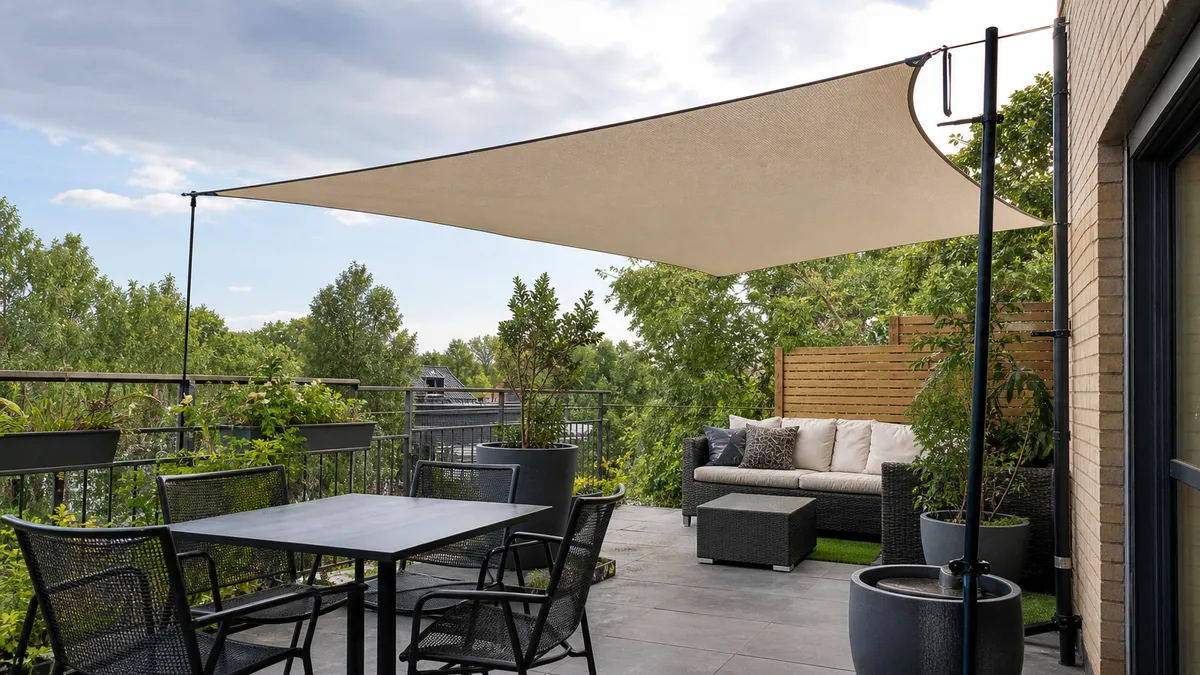
A rectangular table usually needs a larger shaded size than one triangle can cover at the chair corners. That is the practical difference hidden by product photos. A triangle can look elegant and still miss the seat that matters. A rectangle can look plain and still make the patio usable.
Start by drawing the furniture area, then draw the shadow needed at the bad hour. If shade is needed for a small corner lounge, a triangle may be enough. If shade is needed for a full dining setting, a four-corner sail usually earns its extra hardware.
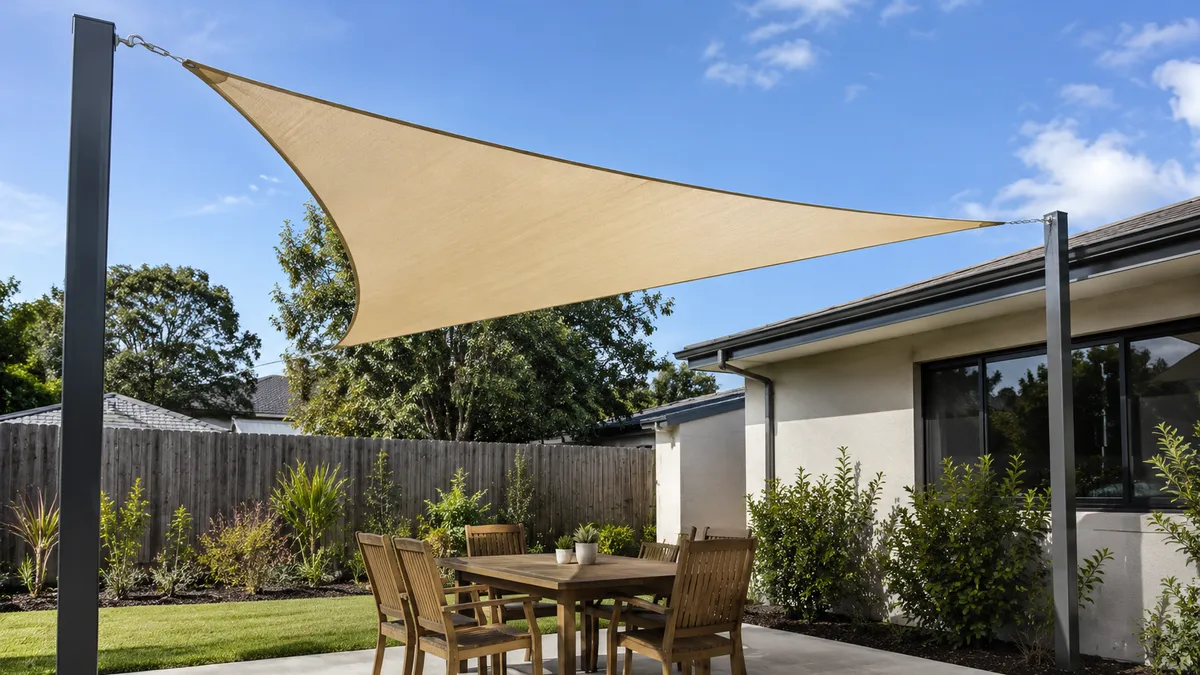
A triangle can be the cleanest shape for a corner conversation area, especially when the third point already lands on a post or wall. The same triangle can be awkward over a dining table because chair positions extend beyond the strongest part of the shade.
For budget, count supports rather than fabric area. A rectangle with four new posts may cost more than two smaller triangles that use existing structure. The cheaper shape is the one with fewer new structural changes.
For narrow side yards, rectangles can create a tunnel effect if the low edge runs too close to the fence. A triangle may keep the view more open while still protecting the small seating pocket.
For example: Three strong corners already exist around a small seating spot. Choose a triangle sail with one deliberately lower corner. The site matches the shape without forcing a fourth anchor. If both choices need the same missing support, solve that support problem before comparing fabric or price.
Anchor count, span and hardware space
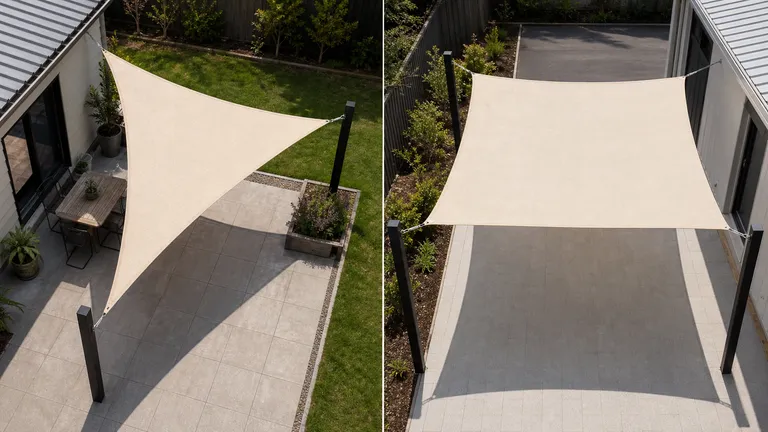
A triangle needs three fixing points, while a rectangle needs four points plus span room for turnbuckles at every corner. That one extra point can mean a new post, a footing, a wall plate or a different post plan. The shape decision is therefore a structure decision, not a style decision.
Many small patios can accept a 10 to 13 ft triangular sail more easily than a wide rectangle. Larger rectangles around dining or lounge zones need better spacing and stronger diagonals because the fabric is pulling in more directions.
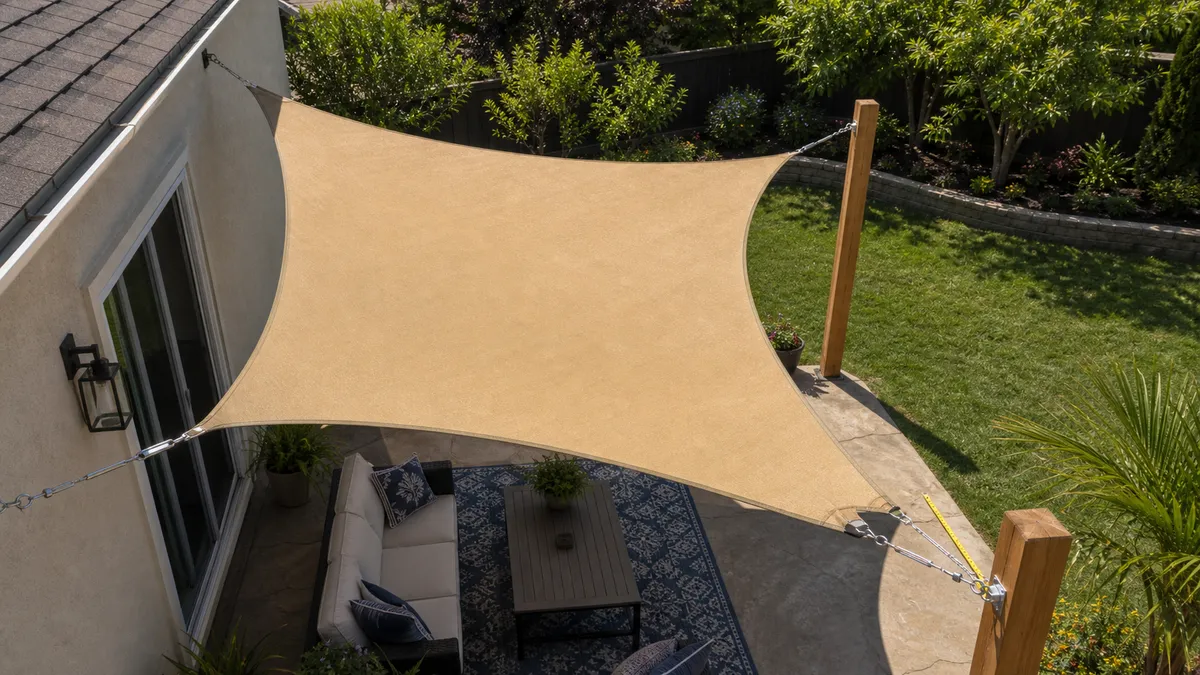
Rectangles reward careful measuring. The useful shadow usually sits inside the curved edges, not at the outer anchor outline. If a table needs full coverage at noon and partial side cover later, one rectangle may need help from a vertical screen.
Shadow testing is especially useful for triangles. Their strongest visual line is often not where the furniture needs shade. A temporary rope outline can show whether the open corner will annoy people before any custom order is placed.
For final ordering, label each corner and measure diagonals as well as sides. Diagonal measurements reveal skew that a simple width and length can hide.
In practice: Rectangular dining table needs shade over pulled-out chairs. Choose a rectangle or square sail sized from anchor points. Furniture coverage is rectangular even if the sail photo looks cleaner. If both choices need the same missing support, solve that support problem before comparing fabric or price.
Water, sag and edge behavior
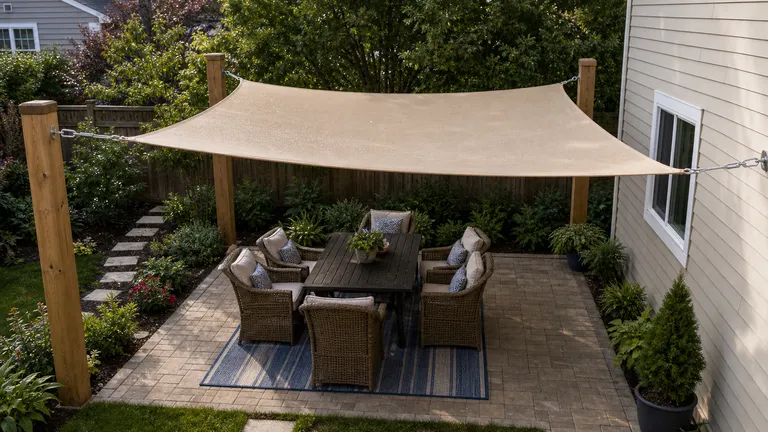
A rectangle installed flat can sag across the middle, while a triangle with one low corner can shed water more predictably. Shape does not solve poor installation, but it can make good installation easier. Twisted rectangles can drain well when high and low corners are planned.
Curved sail edges also matter. The shaded shape is smaller than the anchor outline, especially on triangles. If every inch of furniture coverage matters, test the shadow with string or a temporary tarp before ordering the final size.
Two triangles can solve a yard that refuses one rectangle. Separate panels can create a twisted high-low slope, avoid a weak corner and add visual depth. The trade-off is more hardware and more edges to tension.
Rectangles need better planning around twist. A flat rectangle may sag, but a twisted rectangle can look intentional and shed water. That twist requires anchor heights that are chosen together, not improvised after the posts are in.
A large patio with one weak corner is usually better served by two smaller triangles or a rebuilt support. A rectangle with one bad anchor is not a stable compromise.
Tie-breaker for awkward yards
Choose two smaller sails instead of one large rectangle when one corner would land on a weak wall or fence. Splitting the job can reduce span, improve slope and avoid a support that should not be used. It also gives more control over where shade appears.
If the yard cannot provide safe corners, choose another shade family. An umbrella, awning or canopy can be less elegant and still safer than a badly anchored sail.
For waterproof fabric, shape should follow drainage. A triangle naturally creates a strong low point when installed with one corner down. A rectangle can drain well too, but it needs diagonally opposed heights or a planned twist.
For small budgets, the cheapest shape may be the one that uses existing strong points. If three reliable points exist, a triangle can avoid a new footing. If four points already exist around a deck, a rectangle may cost less than forcing triangles into the space.
For layered shade over a lounge corner, use offset triangles only if each sail has its own tension space. Layering looks simple, but it multiplies hardware conflicts on a small patio.
Path guide
Shape categories to compare after measuring anchors
Use these after the furniture shape, anchor count and tensioning room point to a triangle or rectangle.
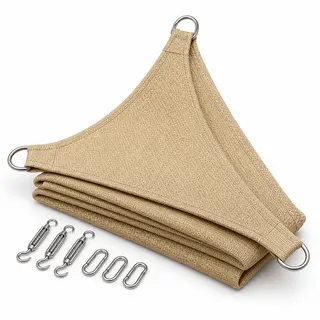
Triangle
Triangle Shade Sail
For corner seating and simpler three-point anchor plans.
- Three anchor points
- Good for corners
- Less table coverage
Check:Low corner, usable shade footprint and hardware gap.
Compare categories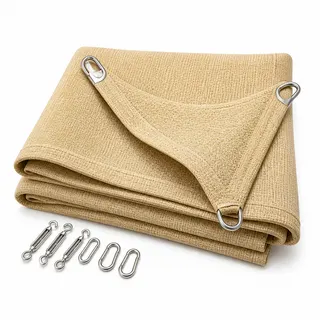
Rectangle
Rectangle Shade Sail
For dining tables, lounge zones and fuller furniture coverage.
- Four anchor points
- Better table coverage
- Needs stronger layout
Check:Four reliable anchors, diagonal height change and span.
Compare categories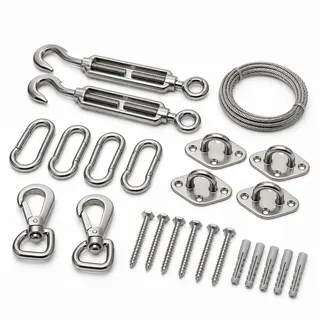
Hardware
Shade Sail Hardware Kit
For tensioning only after the anchor shape is settled.
- Turnbuckles and plates
- Outdoor connectors
- Match sail load
Check:Anchor material, corner access and tensioning space.
Compare categoriesWatch-outs
Before you buy or install
- A triangle often creates less usable shade than its anchor outline suggests.
- A rectangle with one weak corner should be redesigned before hardware is bought.
- Layered sails need separate clearance for every tensioning point.
Read Next
Related guides
Shade Sail Guide
Use this when shade sail is closer to the real constraint than the current page.
Shade Sail Size Guide
Use this when shade sail size guide is closer to the real constraint than the current page.
Best Shade Sail for Patio
Use this when best shade sail for patio is closer to the real constraint than the current page.
Questions
FAQ
Is a triangle or rectangle shade sail better?
A triangle is better for smaller corner shade and simpler anchor plans. A rectangle is better for dining tables and lounge areas that need more complete coverage. The stronger shape is the one your anchors can support safely.
Which shade sail shape gives more shade?
A rectangle or square usually gives more usable shade for furniture because it follows table and seating shapes better. A triangle can look cleaner but often leaves corner chairs exposed.
Which shade sail shape is easier to install?
A triangle can be easier because it needs three fixing points instead of four. That only helps when all three points are strong and can create slope. A weak third point is not easier; it is a redesign.
Which shape drains rain better?
Either shape can drain when high and low corners are planned. A triangle often makes one low corner easier to see. A flat rectangle can pool unless the posts or anchors create a clear twist and runoff edge.