
Quick Answer
shade sail vs awning: the short version
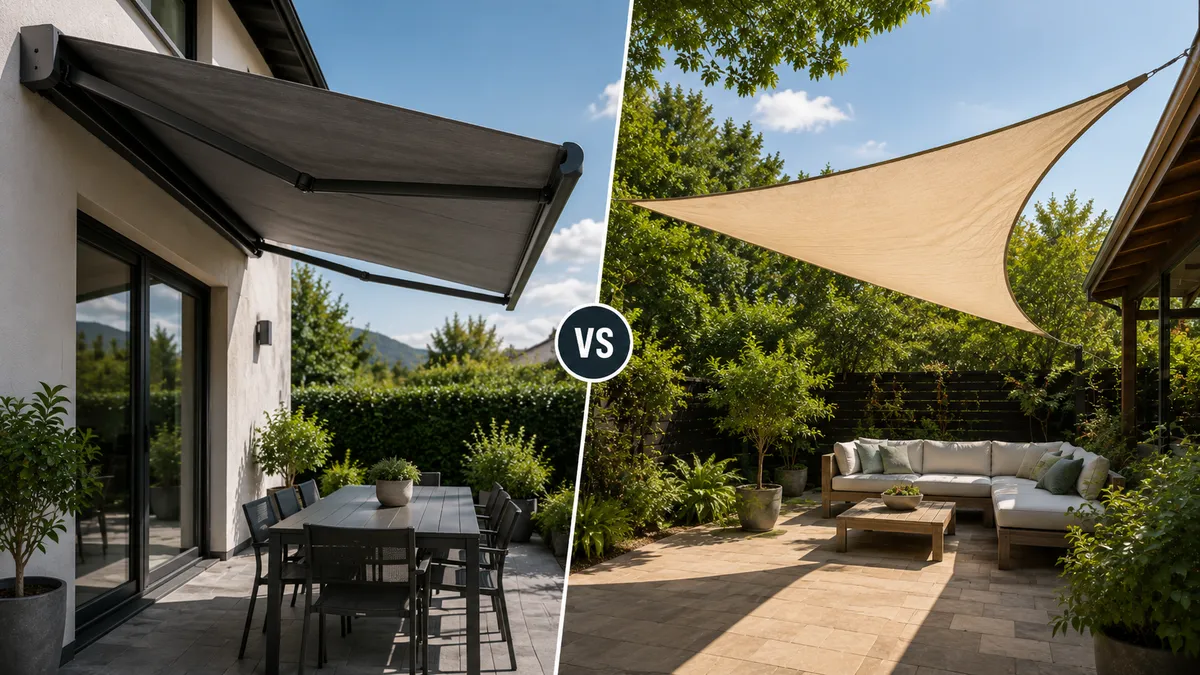
Choose a patio awning when the shaded seating is within about 3 m of a load-bearing wall and daily retraction matters. Choose a shade sail when the target area sits away from the house and posts or engineered anchors are acceptable. Use no-drill shade if lease or structure is uncertain.
Choose a patio awning within about 3 m of a strong wall; choose a shade sail for open fixed coverage with real posts or anchors.
Side by Side
Fast comparison snapshot
| When this matters | Choose | Why |
|---|---|---|
| Seating sits directly outside a sliding door | Choose a patio awning with enough projection for the table. | The wall is useful, and retraction protects the doorway zone. |
| Outdoor lounge is centered in an open yard | Choose a shade sail if posts and footings are acceptable. | The seating area is too far from the house for an awning. |
| Lease or HOA makes permanent brackets risky | Choose neither; use no-drill patio shade until permission is written. | Both products can create disputes when structure is altered. |
| Low west sun enters under the roofline | Choose an awning only if it includes a drop valance; otherwise use side shade. | The issue is vertical glare rather than overhead heat. |
| Winter sun should reach the patio again | Choose the awning if the wall can carry it. | Retraction is the built-in advantage. |
Start with brackets, posts and wall anchors
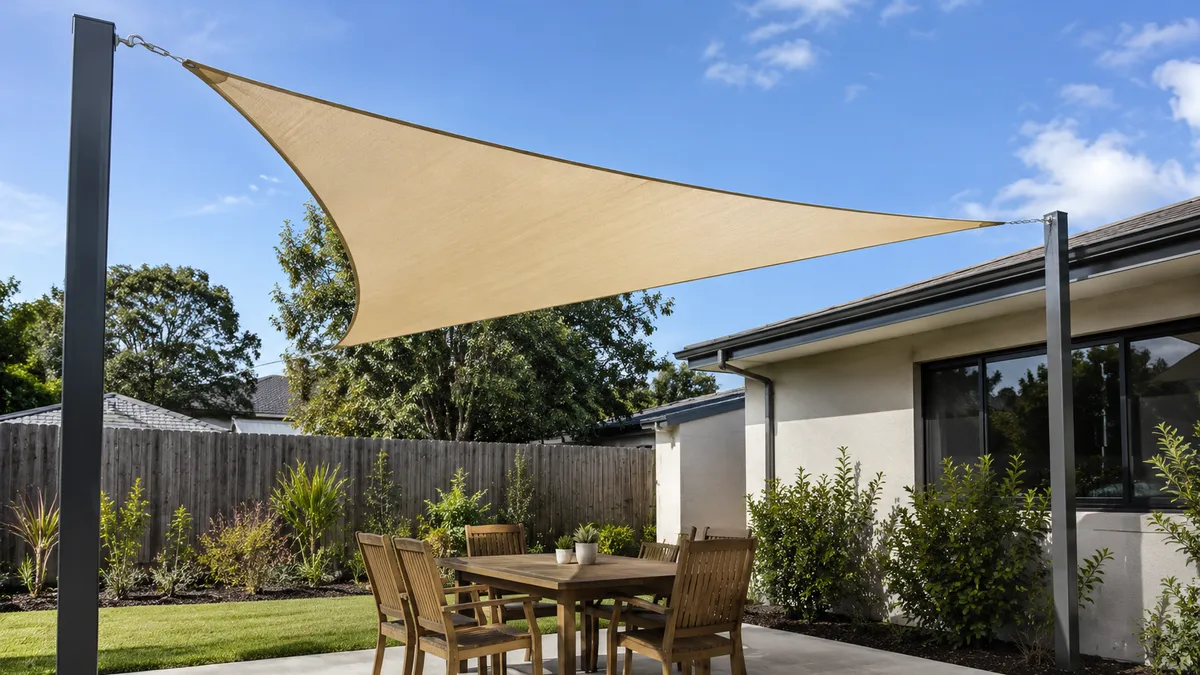
A shade sail stretches fabric between several anchors, while an awning mounts fabric from one wall rail. That difference changes the job more than the color, brand or advertised square footage. A sail wants posts, masonry or engineered timber. An awning wants a sound wall and enough height for pitch and head clearance.
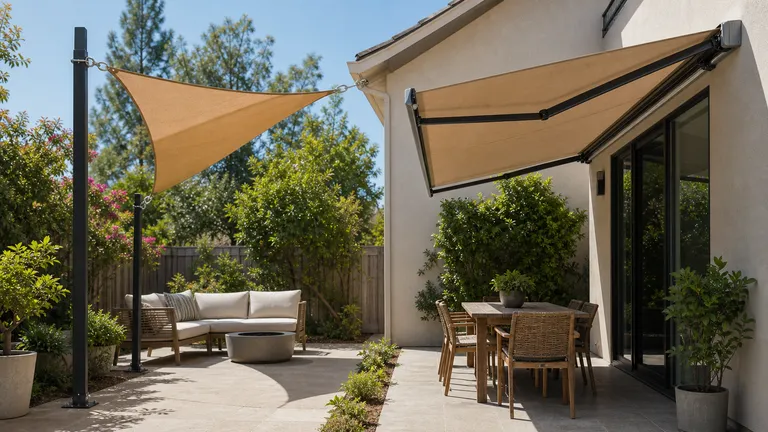
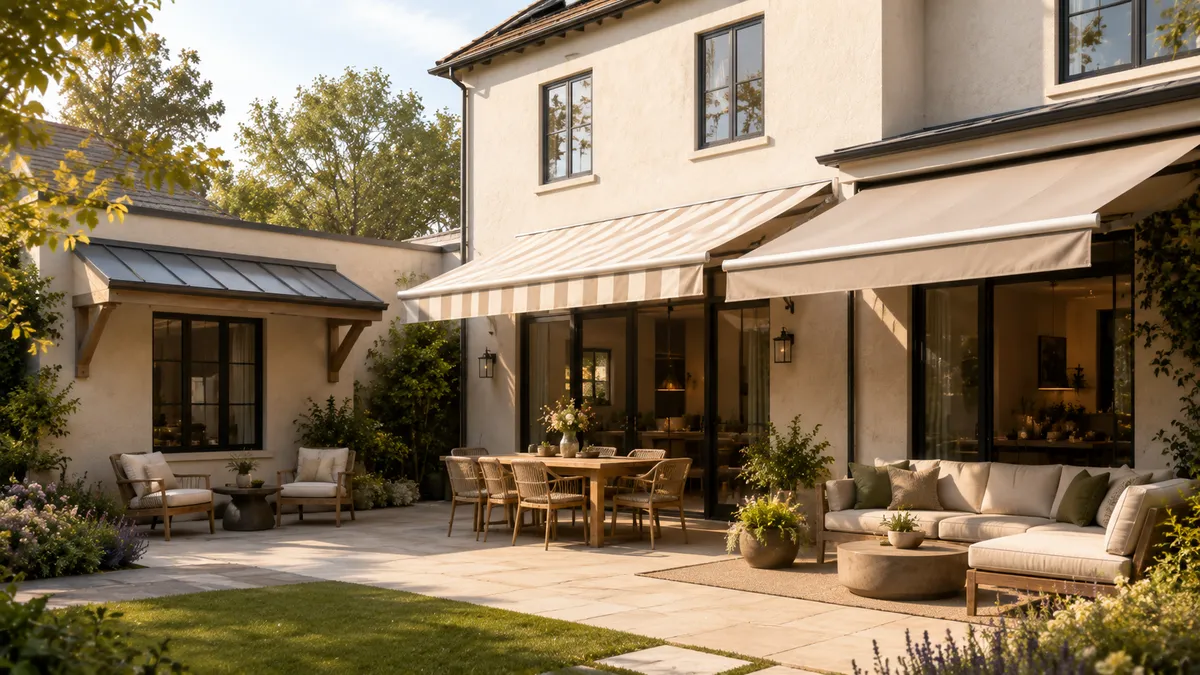
If the patio sits beside the house, the awning starts with an advantage because the structure is already where the shade begins. If the furniture zone sits out in the yard, the sail starts with an advantage because it can span open space. Trouble usually starts when either product is forced onto weak supports.
A patio beside a house wall should first test the awning mount because one strong rail may shade the area without posts. That advantage disappears when the table sits beyond normal projection. At that point a sail or freestanding shade may cover the real seating zone with fewer compromises.
For resale and exterior appearance rules, awnings and sails can trigger different objections. A cassette awning reads like house hardware. A sail with tall posts reads like a yard structure. Check HOA language before assuming one is less visible than the other.
For example: Seating sits directly outside a sliding door. Choose a patio awning with enough projection for the table. The wall is useful, and retraction protects the doorway zone. If both choices need the same missing support, solve that support problem before comparing fabric or price.
Fully installed cost comparison
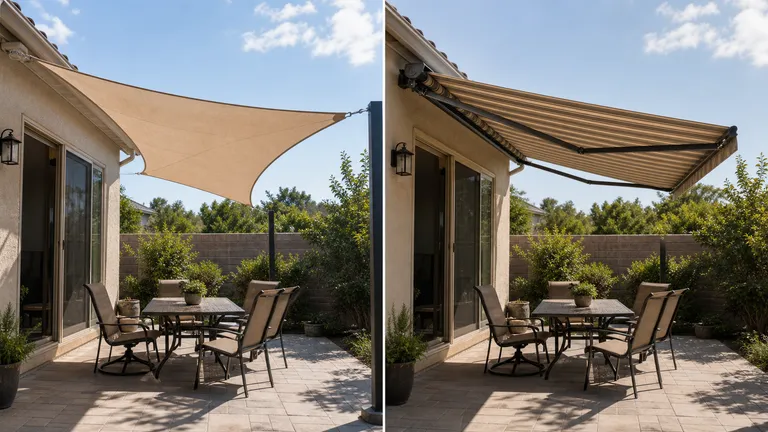
HomeGuide places many retractable awning installations around $1,000 to $7,000, while shade-sail projects can range from a few hundred dollars to several thousand when posts and concrete are included. Product-only prices mislead because both jobs often require support work. A cheap sail with four new posts is not cheap. A bargain awning on an unsuitable wall is not installed shade.
List the product, support work and likely rework as separate budget lines. Awning cost rises with width, bracket count, cassette, motor and electrical work. Sail cost rises with post height, footing size, anchor spacing and whether the wall plate must be engineered.
A sail can be cheaper when strong anchors already exist and fixed summer shade is fine. It gets expensive when every corner needs a post, footing or engineered plate. Count the wall plates, posts and concrete before comparing the sail to an awning.
If you want less maintenance, the awning can be easier because one installer can handle the fabric, arms and motor. For awkward yards, a sail can fit around posts and odd corners. Choose the awning if you want one wall-mounted product. Choose the sail if you are willing to build posts, footings and anchors around the patio.
In practice: Outdoor lounge is centered in an open yard. Choose a shade sail if posts and footings are acceptable. The seating area is too far from the house for an awning. If both choices need the same missing support, solve that support problem before comparing fabric or price.
Weather behavior and daily use
The Home Depot PDF lists 20 to 30 degrees as a runoff angle, and awning manuals commonly call for retracting fabric in wind or storms. A breathable sail can be calmer in hot weather but fixed in place. A retractable awning can disappear before weather arrives but depends on somebody closing it.
For rain, neither product should be treated as a universal roof. A waterproof sail needs obvious slope. An awning needs pitch and a manual that allows the conditions. For wind, choose the shade that someone will close, remove or secure before gusts arrive.
An awning can feel more controlled because it retracts. That control only matters when somebody will close it before wind or when a sensor is installed and maintained. A manual awning left open in storms loses its main advantage.
Privacy can break a tie. Sails usually shade from above and leave side views open. Awnings with valances or side screens can add privacy near a house. If privacy is equal to shade in the brief, the comparison should include side accessories.
If a lease or HOA makes permanent brackets risky, choose neither product until permission is written. A no-drill patio shade setup is safer than turning a shade choice into a dispute.
Tie-breaker after both mounts check out
Choose the awning when you will retract it before wind, and choose the sail when posts can stay loaded all summer. Appearance should come after that. A flat sail or weak bracket can look clean in a rendering and fail at the first gust, rain pocket or wall inspection.
If daily opening and closing matters, use the awning. If the patio needs fixed summer shade and posts are acceptable, use the sail. If you cannot drill, both lose to a renter-safe product.
Product photos can mislead. Sails look light and casual, but the hidden structure is serious. Awnings look mechanical and expensive, but the support may be simpler when the house wall is sound.
If both shade choices would work, check who can service them near you. Local awning service is valuable for motors and arms; local metal or concrete help is valuable for sail posts.
When low west sun enters under the roofline, choose an awning only if it includes a drop valance. Otherwise, use side shade because the problem is vertical glare, not overhead heat.
Path guide
Categories to compare after choosing a path
Use these only after the wall, post and weather-routine decision points toward a sail or an awning.
Sail path
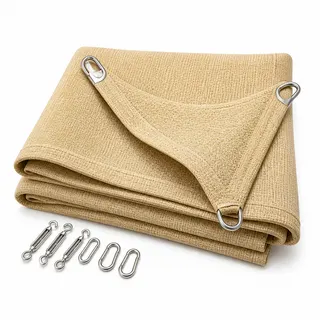
Patio Shade Sail
For fixed open-yard shade when real anchors or posts are available.
- Open patio coverage
- Needs anchors
- Plan slope first
Check:Posts, masonry, hardware room and wind exposure.
Compare categories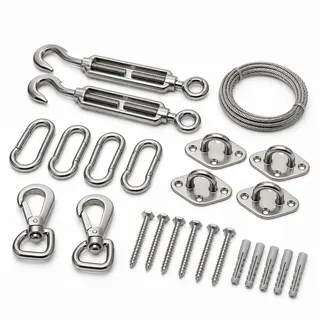
Sail hardware
Shade Sail Hardware Kit
For tensioning a sail after the structure is confirmed.
- Turnbuckles and plates
- Outdoor hardware
- Structure still decides
Check:Anchor material, sail size and tensioning gap.
Compare categories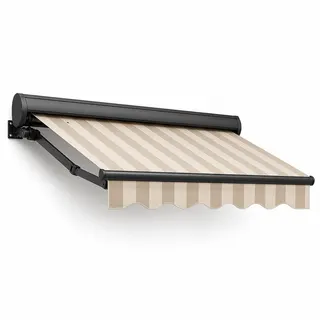
Awning path
Manual Retractable Patio Awning
For wall-adjacent shade when retraction matters.
- Wall-mounted shade
- Retracts when needed
- Check bracket substrate
Check:Projection, wall strength and front-bar height.
Compare categoriesWatch-outs
Before you buy or install
- Do not compare fabric price to installed awning price.
- A sail over a wall-adjacent dining zone may add posts that an awning avoids.
- An awning over a detached seating zone can become an overextended compromise.
Read Next
Related guides
Shade Sail Guide
Use this when shade sail is closer to the real constraint than the current page.
Patio Awning Guide
Use this when patio awning is closer to the real constraint than the current page.
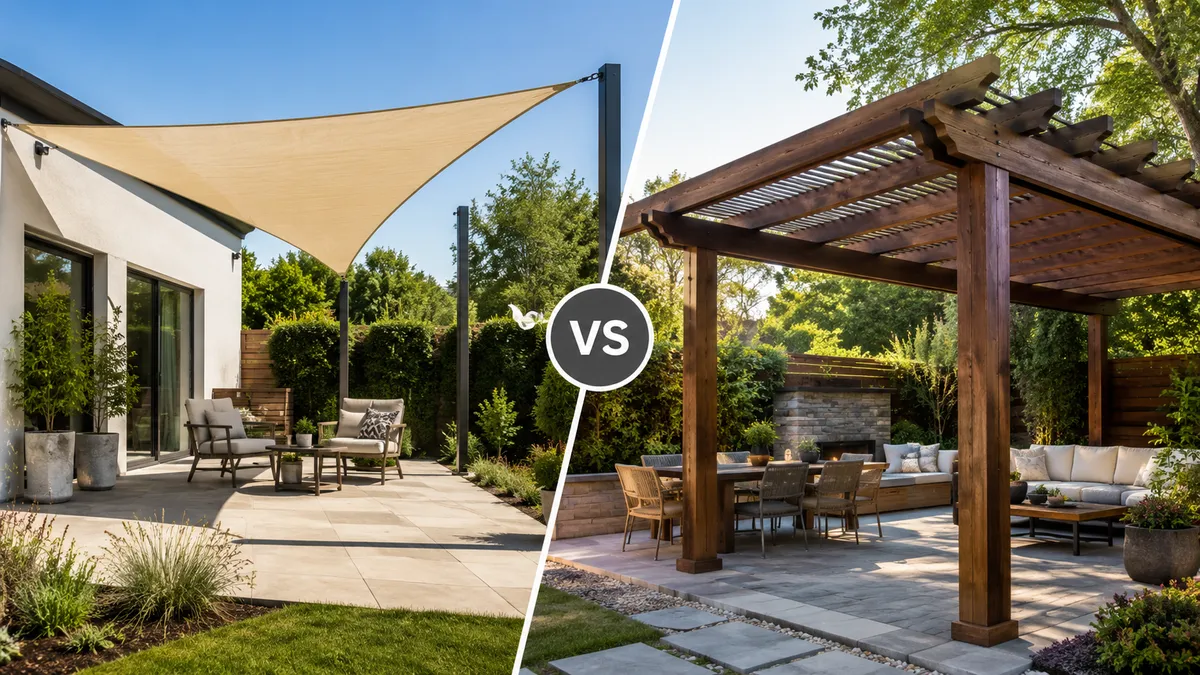
Shade Sail vs Pergola
Use this when shade sail vs pergola is closer to the real constraint than the current page.
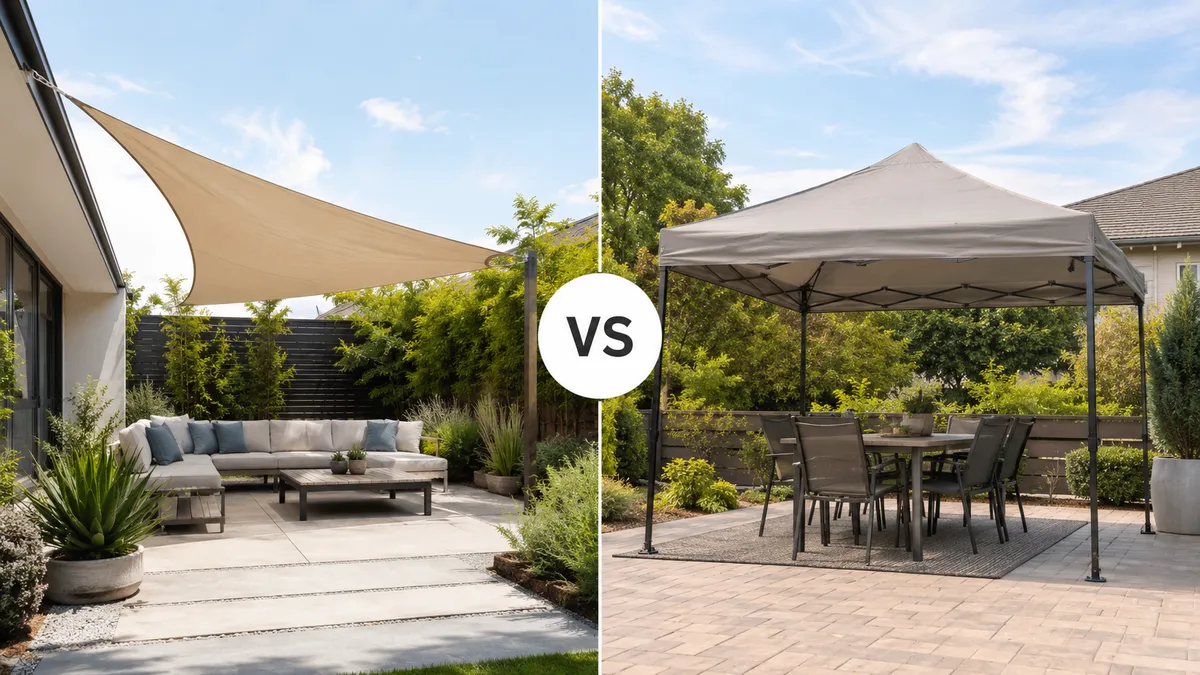
Shade Sail vs Canopy
Use this when shade sail vs canopy is closer to the real constraint than the current page.
Questions
FAQ
Is a shade sail cheaper than an awning?
It can be cheaper when strong anchors already exist and the sail only needs fabric and hardware. It can be more expensive when every corner needs posts, concrete, or engineered wall plates. Compare the installed awning with the installed sail, not product price against product price.
Which lasts longer, a shade sail or an awning?
Longevity depends more on exposure, structure, fabric care, and weather habits than the product name. An awning that is retracted before storms can last well. A sail on strong posts can also last well, but an exposed sail left up through severe weather has a harder life.
Which is better in wind or rain?
For changing weather, an awning has the advantage if it can be retracted quickly. For fixed summer shade, a breathable sail can work well, but rain needs planned slope and wind needs serious anchors. Neither product should be treated as a storm shelter.
Which is better for renters or no-drill patios?
Usually neither should come first. Awnings need a wall mount, and shade sails need anchors or posts. Renters should start with weighted umbrellas, approved clamp screens, freestanding canopies, or other removable shade unless written permission allows permanent hardware.