
Quick Answer
patio shade without drilling: the short version
Choose no-drill patio shade by support method first: ballast, freestanding legs, approved clamps or tension between surfaces that can take pressure. Skip tensioned sails, wall brackets and rail attachments unless written rules allow them outdoors.
Use no-drill shade only when the base, clamp or freestanding frame can handle wind without holes, marks or rule problems.
Diagnosis
Most common problems
Check the symptom before buying another shade product.
Concrete patio allows weights but no wall holes
Ballast can replace anchors when sized for exposure.
Balcony rail rules are unclear
A clamp is not renter-friendly if it violates building rules.
Low west sun enters from one side
The problem is vertical, not overhead.
Small patio has little room for bases
Large bases can consume the usable floor.
Diagnosis checklist for no-drill limits
If the patio cannot accept holes, the first question is where weight, pressure or freestanding legs can safely go. Fabric comes later. Check the lease, HOA rule, balcony handbook and product manual before assuming clamps are acceptable.
Identify the surface: concrete slab, paver patio, timber deck, balcony tile or narrow walkway. Each surface changes the base. A heavy base that works on concrete may crack tile or block drainage on a balcony.
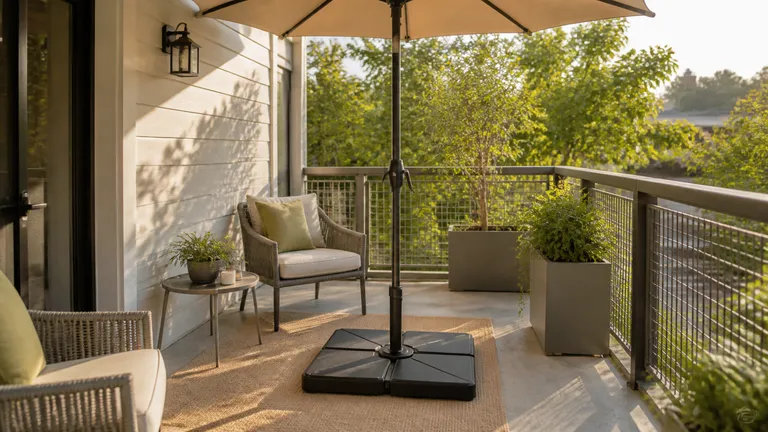
Ballast should be chosen for the product and exposure, not guessed from whatever pavers are nearby. A base that feels heavy indoors can still slide, tip or scuff outside. If the manual gives a base requirement, treat it as part of the product price.
For paver patios, heavy bases can settle unevenly or rock after rain. Check stability after the first week, not only on installation day. A base that tilts can make a tall umbrella more vulnerable to gusts.
For shared patios, keep the shade base inside the private area. A base or screen that creeps into a shared walkway can create a rule problem even when the product itself is removable.
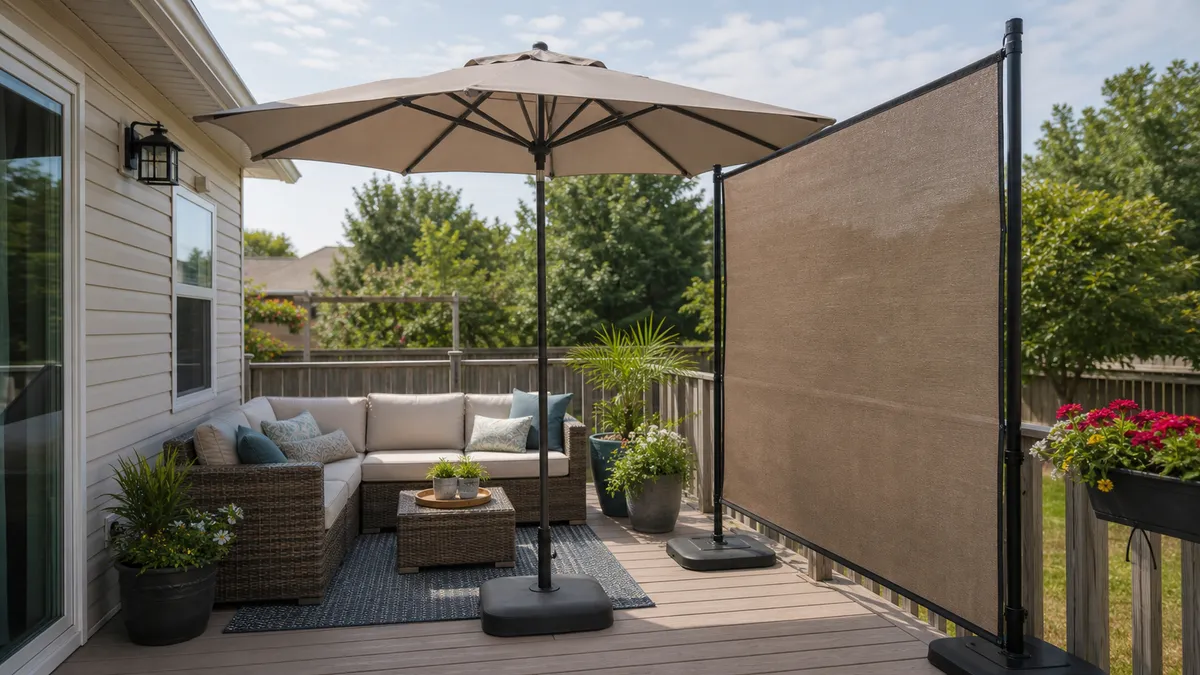
For example: Concrete patio allows weights but no wall holes. Use a weighted cantilever umbrella or freestanding canopy. Ballast can replace anchors when sized for exposure. Stop and reassess if the support, mount or weather problem is still visible after the first fix.
Before ordering: Concrete patio allows weights but no wall holes. Use a weighted cantilever umbrella or freestanding canopy. Ballast can replace anchors when sized for exposure. Stop and reassess if the support, mount or weather problem is still visible after the first fix.
- No holes allowed points to ballast or freestanding frames.
- No rail clamps allowed points to floor-supported shade.
- Narrow floor area points to vertical screens or half umbrellas.
- Wind exposure points to removable shade that can be packed quickly.
Fix table
Symptoms, first fixes and stop signs
Start with the symptom you can see before buying parts or adding more shade.
| Symptom | First fix | Why it works | Stop if |
|---|---|---|---|
| Concrete patio allows weights but no wall holes | Use a weighted cantilever umbrella or freestanding canopy. | Ballast can replace anchors when sized for exposure. | No-drill does not mean no-load. |
| Balcony rail rules are unclear | Use freestanding shade until written permission is available. | A clamp is not renter-friendly if it violates building rules. | Balcony rail attachments can violate building rules even when no holes are drilled. |
| Low west sun enters from one side | Use a weighted side screen or outdoor curtain frame. | The problem is vertical, not overhead. | Portable shade left open can still damage property in wind. |
| Small patio has little room for bases | Use a half umbrella or narrow screen instead of a canopy. | Large bases can consume the usable floor. | No-drill does not mean no-load. |
Fixes ranked by effort and cost
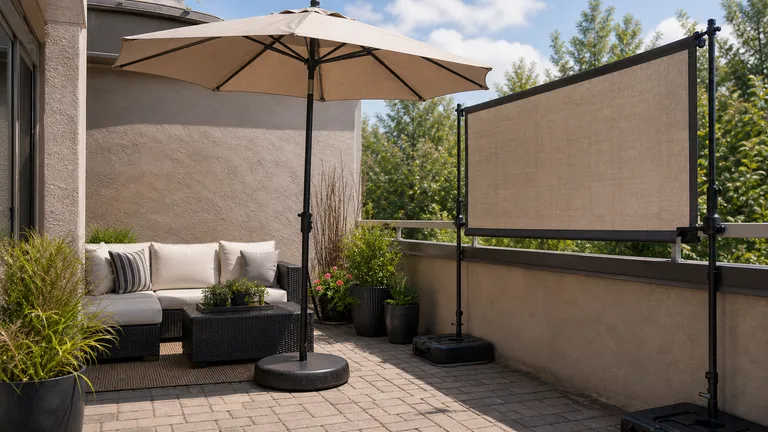
A clamp screen can be a low-cost test, while a heavy cantilever umbrella with base can cost several hundred dollars. The cheapest no-drill shade is often a temporary panel used at the exact glare line. The most comfortable setup may be a freestanding awning frame or canopy that needs storage and ballast.
Rank the setups by how they resist movement: weighted base, tension between approved surfaces, freestanding legs, or clamp allowed by the building. If that resistance is vague, the product should not stay open unattended.
Tension-pole shade can work on some balconies, but only when surfaces can accept pressure. Soft soffits, fragile tile edges and decorative trim should not be used as compression points. If pressure damage would cost the deposit, choose floor-supported shade.
If the patio is shared with children, avoid solutions that rely on long guy lines or low tension cords. No-drill shade should be easy to live around, not a web of temporary hazards.
In practice: Balcony rail rules are unclear. Use freestanding shade until written permission is available. A clamp is not renter-friendly if it violates building rules. Stop and reassess if the support, mount or weather problem is still visible after the first fix.
- Low effort: test the glare line with a movable privacy screen.
- Medium effort: add a weighted umbrella, clamp shade or tension-pole fabric.
- High effort: buy a freestanding frame with proper ballast and storage.
This will not make no-drill shade safe
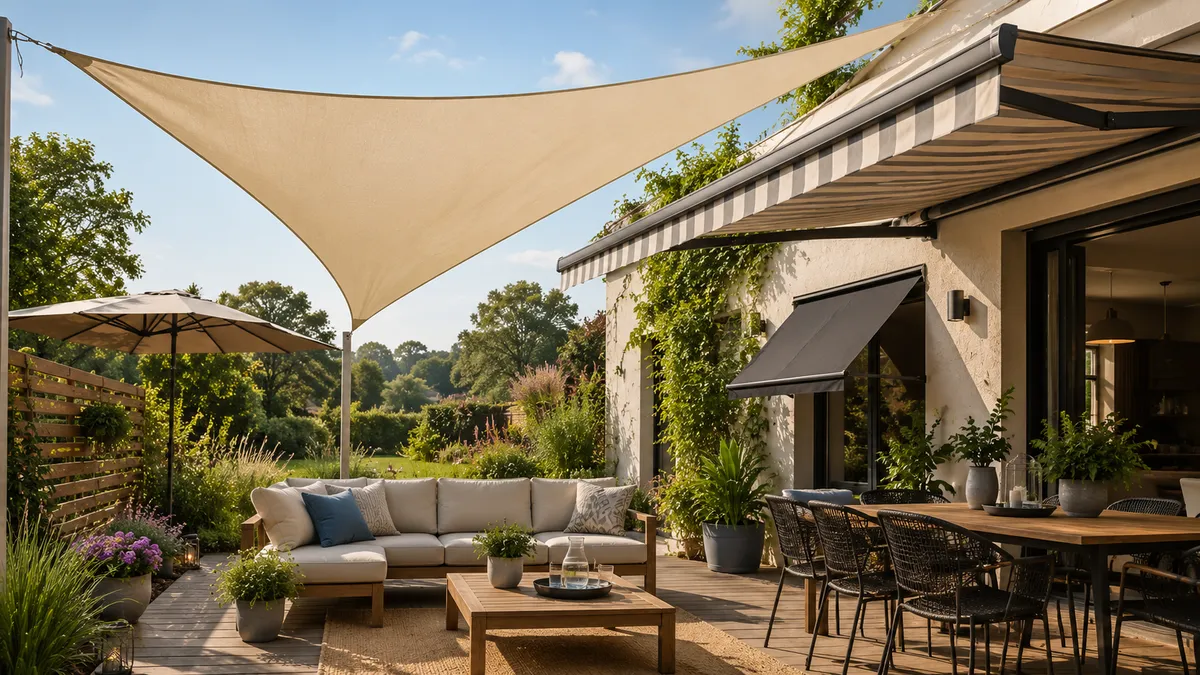
A large sail is not no-drill shade when it still needs tensioned anchors. A light canopy is not wind-ready because weights are sitting nearby. A rail clamp is not permission if the building bans rail attachments.
Avoid improvised fixes that depend on furniture weight, small planters or decorative rails. The support method must be designed for shade loads and easy removal.
Freestanding canopies need storage and drying space. A wet folded canopy can stain, smell or mildew quickly. Renters often underestimate the indoor space needed to keep removable shade in good condition.
For hot concrete slabs, a base can become too hot to touch or move. Choose handles, wheels or placement that allows safe repositioning. Shade hardware should not create a heat hazard of its own.
When low west sun enters from one side, use a weighted side screen or outdoor curtain frame. The problem is vertical glare, not missing overhead shade.
- Do not tie shade to chairs or lightweight planters.
- Do not clamp to rails that the building rules protect.
- Do not leave portable shade open when leaving home.
Preventing damage and disputes
Photograph the setup before and after use so move-out damage questions are easier to answer. Keep pads under bases where surfaces scratch. Store fabric dry so mildew does not become a landlord dispute or replacement cost.
If the shade needs to stay up all season, ask whether written approval is available. Sometimes the better no-drill answer is a smaller daily-use shade rather than a permanent-looking temporary structure.
No-drill shade also needs a neighbor test. Fabric that flaps, blocks shared views or drops water onto another balcony can create complaints even when no holes are drilled. A smaller quieter product may be more sustainable in dense housing.
A no-drill solution should have a fast bad-weather mode. If the only way to secure it is a long disassembly, it will probably stay exposed too long. Choose products that close, fold or roll quickly.
On a small patio with little room for bases, use a half umbrella or narrow screen instead of a canopy. Large bases can consume the same floor area the shade was meant to improve.
This won't fix it
Do not skip these checks
- No-drill does not mean no-load.
- Balcony rail attachments can violate building rules even when no holes are drilled.
- Portable shade left open can still damage property in wind.
Read Next
Related fixes
Patio Shade Ideas
Use this when patio shade ideas is closer to the real constraint than the current page.
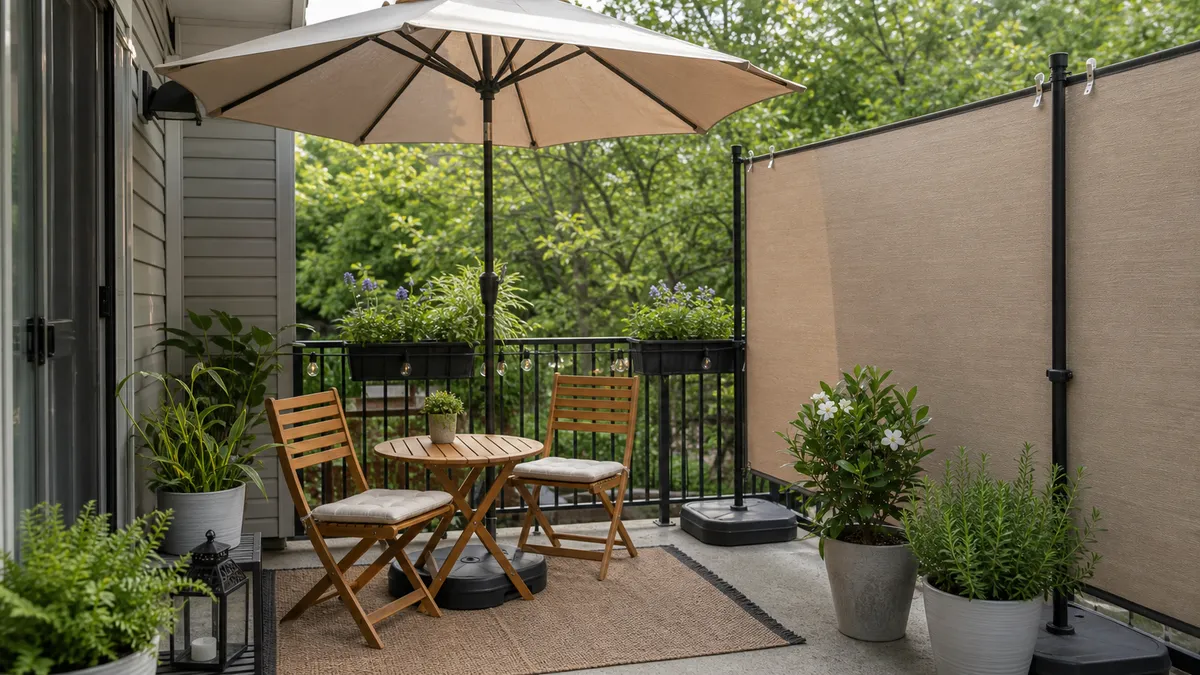
Renter-Friendly Patio Shade
Use this when renter friendly patio shade is closer to the real constraint than the current page.
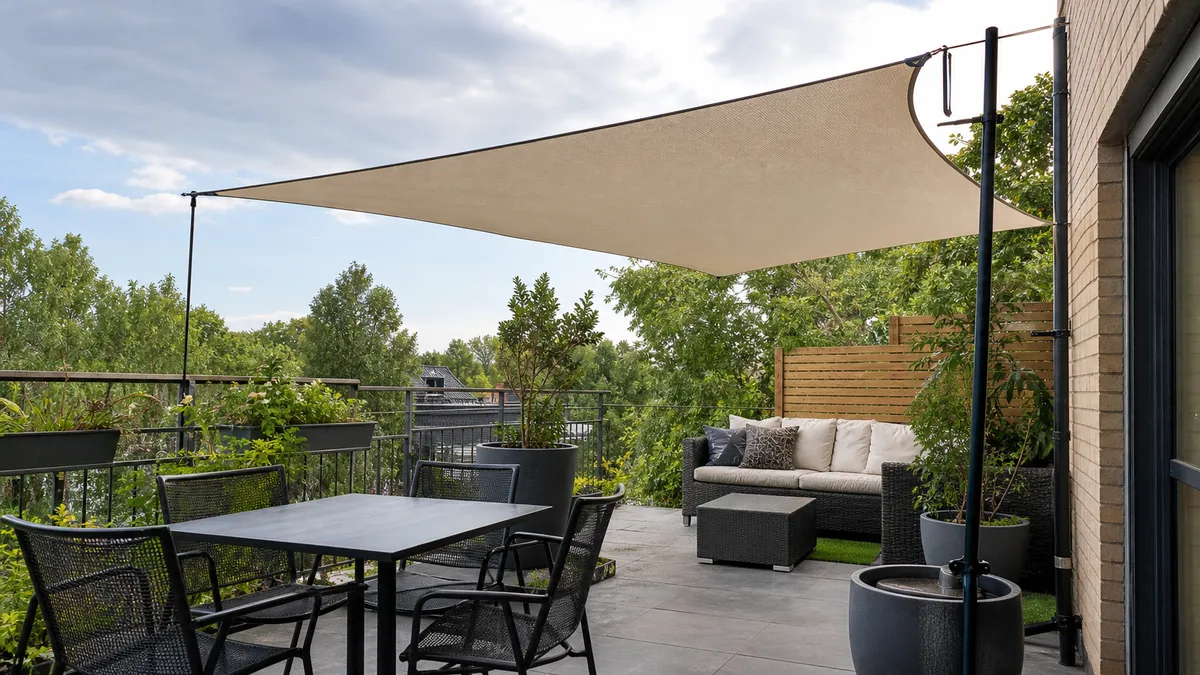
Shade Sail Without Drilling
Use this when shade sail without drilling is closer to the real constraint than the current page.
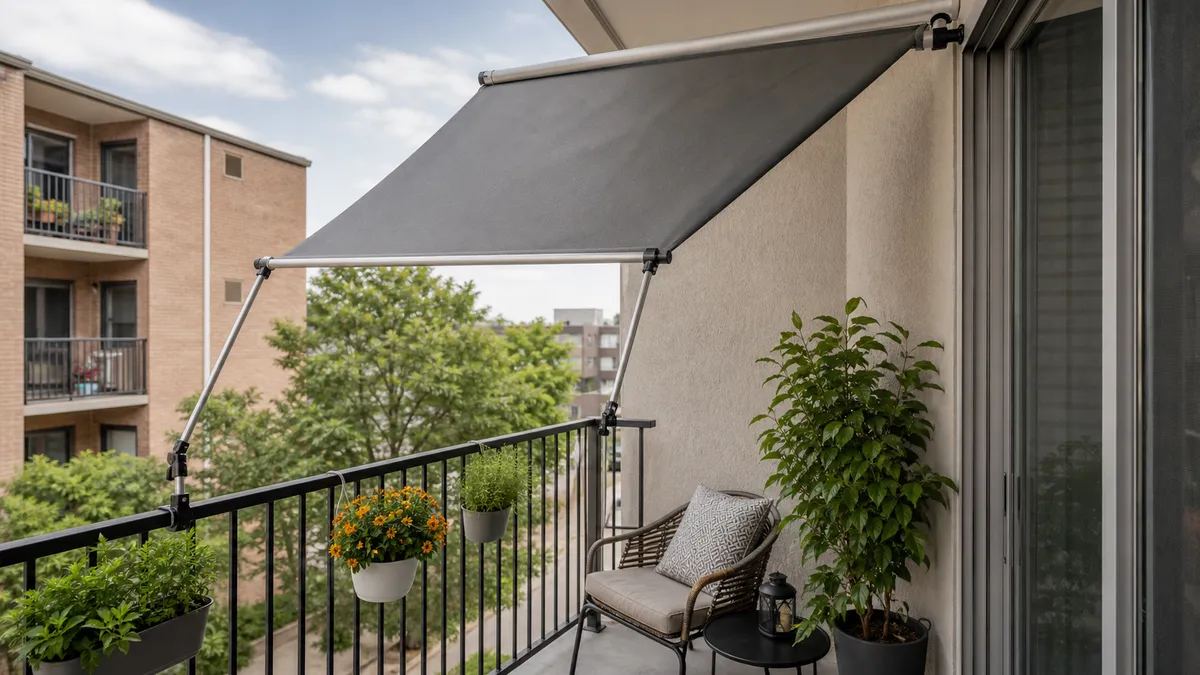
Awning for Apartment Balcony
Use this when awning for apartment balcony is closer to the real constraint than the current page.
Questions
FAQ
Can you shade a patio without drilling?
Yes. Use weighted umbrellas, freestanding canopies, folding screens, tension poles where surfaces allow pressure, or approved clamp shades. No-drill does not mean no-load, so the base or support still has to resist wind.
Is a shade sail no-drill?
Usually no. A shade sail still needs tensioned anchors, posts or wall plates. If those supports are not already approved and strong, a sail is not a no-drill solution. Use an umbrella or freestanding frame instead.
What no-drill shade is safest for balconies?
A compact weighted umbrella, folding screen or building-approved clamp product is usually safer than improvised fabric. Check rail rules, floor loading, wind exposure and drainage before placing heavy bases on balcony surfaces.