
Quick Answer
awning wind rating: the short version
An awning wind rating is a model, manual and installation limit, not a universal mph promise. Check the exact manual, mounting, projection, exposure and gust behavior before trusting it. Retractable awnings should close before risky wind, and moving brackets or damaged arms need inspection before reuse.
Retract the awning when the manual, gusts or mounting symptoms are uncertain; choose a smaller or engineered shade when the site cannot be managed open.
Diagnosis
Most common problems
Check the symptom before buying another shade product.
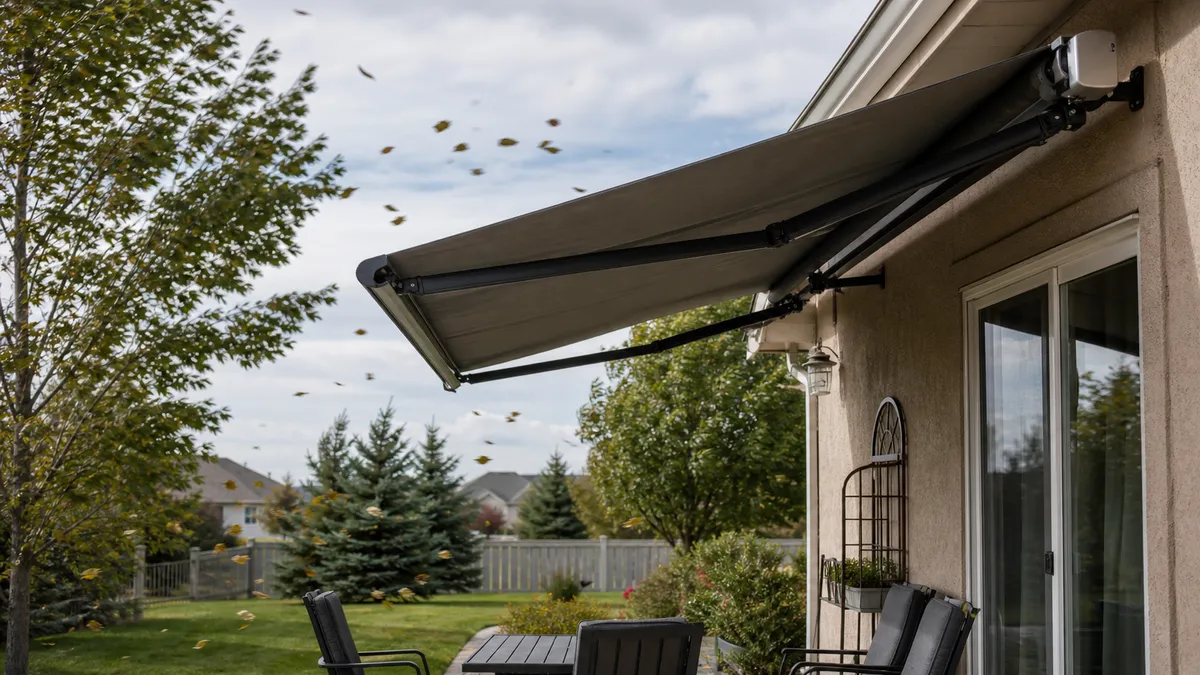
Front bar lifts, bounces or the fabric snaps in gusts
The projection and folding arms are catching moving air before the manual limit can be trusted.
Brackets, fasteners or the wall show movement
The installed class depends on the fixture, surface and load path, not only the fabric label.
The wind sensor closes late or cycles repeatedly
Some sensors detect awning movement, and heavy gusts can arrive faster than automatic closing.
The patio is open, elevated, coastal, corner-facing or between buildings
Exposure can turn the same product class into a much harsher real-world load.
Diagnose the wind risk before you trust the rating
Start with the failure you can see. A calm patio with a wall-mounted cassette behaves very differently from an upper deck, coastal corner or side yard that funnels gusts between buildings. First decide whether to close the awning, inspect it or replace it with a different shade instead of shopping for more fabric.
Check five things before comparing product claims: the exact manual, the installed class or limit, the wall or beam that carries the brackets, the projection and width, and whether someone can close the awning before weather changes. Markilux and Weinor both tie wind class to correct fixtures or installed conditions, so a class label without mounting proof is incomplete.
Do not test an awning by leaving it open in strong wind. Use calm-weather checks, manual instructions and installer documentation. If the front bar lifts, arms twist, fabric snaps, brackets shift or the wall moves, close it and stop using it until the cause is known.
- Find the product manual and installed wind class before using any class chart.
- Compare forecast gusts and visible tree or furniture movement, not only average wind.
- Treat unknown masonry, siding, fascia or trim attachment as a stop sign.
- Confirm the sensor works, has power and can retract the awning without obstruction.
Diagnosis
Symptoms, causes and first actions
Use this table before adding accessories or shopping for another awning.
| Symptom | Likely cause to check | First action | Stop-use trigger |
|---|---|---|---|
| Front bar lifts or bounces | Gusts are getting under the projection or folding arms. | Retract earlier and check the model manual for the open-use limit. | Bent arms, repeated lifting or any new scraping noise. |
| Fabric snaps or drums loudly | Turbulence, loose fabric tension or sudden crosswind is loading the cloth. | Close the awning and inspect seams, front bar and arm joints in calm weather. | Tears, stretched stitching or fabric pulling from the roller. |
| Brackets or wall move | The substrate, fasteners or bracket spacing may not match the installed load. | Stop use and call the installer or a qualified pro. | Cracked masonry, pulled fasteners, loose siding or visible wall movement. |
| Sensor retracts late | Sensitivity, pairing, battery, motor direction or vibration detection may be wrong. | Test and service the sensor only as the manual describes. | Any failed automatic close when gusts are present. |
| Awning closes repeatedly on mild days | The site may be exposed, or the sensor may be set too sensitive. | Adjust only within manual guidance; do not disable safety behavior to keep shade open. | Repeated nuisance closure on an exposed corner or upper floor. |
What an awning wind rating can and cannot tell you
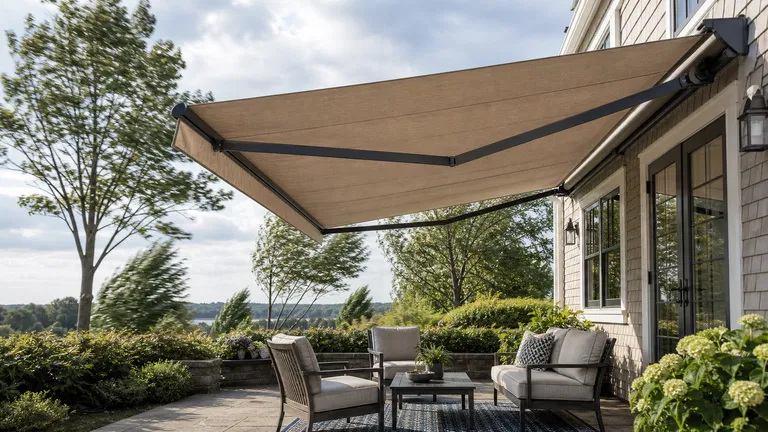
Where a product cites EN 13561, the label belongs to external blinds and awnings under that standard's performance and safety rules. It helps describe a tested product class, but it does not turn every installation into the same real patio. EUR-Lex also notes that wind-load class treatment has changed for some products, which is another reason to read the current manual instead of a generic chart.
Some manuals give class examples. One Woundwo/Trendline jointed-arm awning manual maps Class 1, Class 2 and Class 3 to Beaufort-style ranges, but that is manual context, not a universal field guarantee. Markilux says its folding-arm awnings generally meet wind resistance class 2, while other Markilux product families can vary by model and size.
A brand-specific speed is also not a rule for every awning. One Weinor N 2000 manual says to retract at 39 km/h or more, starting from Beaufort 6, and also says the achieved wind class after assembly depends greatly on the fixing and attachment surface. That number matters because it shows how manuals set operating limits; it is not permission to apply the same limit to another product.
The practical reading is simple: find the exact model manual, find the installer-documented class or limit, then close before that limit when the site is gusty, exposed or unattended. The EN 13561 sample material also warns that static test pressure does not define building anchoring, because real wind has dynamic and turbulent effects.
- Use class labels only with the exact manual that explains them.
- Do not convert one brand's km/h or Beaufort statement into a universal awning limit.
- Treat gusts, turbulence and installation quality as part of the safe-use decision.
Why the same rating behaves differently on different patios
Mounting is part of the wind answer. A bracket fixed into structural framing or suitable masonry is not the same as a bracket attached through trim, thin cladding, weak fascia or unknown backing. The page cannot give fastener sizes because those belong to the product manual, installer and local structure, but it can say when to pause: if the mounting surface is unknown, do not leave the awning open in wind.
Projection and width matter because the front bar and fabric create leverage on the arms and brackets. A wider or deeper awning may shade more patio, but it also gives wind more surface to lift and shake. Fabric condition matters too; stretched cloth, torn seams or loose front-bar tension can make a rated product behave worse than it did when new.
Exposure changes the answer even when the product is unchanged. Upper floors, open decks, coastal or hill sites, building corners and gaps between houses can all produce gusts that feel stronger than the general forecast. A sheltered ground-floor patio beside a solid wall is a different problem from a balcony that catches crosswind.
If an awning repeatedly reacts to mild weather, do not solve it by ignoring the sensor or adding straps. The patio may need a shorter projection, a different wall location, a smaller retractable awning, an engineered fixed cover or a different patio shade for wind.
- Ask the installer what surface, brackets and fixing pattern determine the installed class.
- Reduce projection before assuming heavier fabric will solve wind movement.
- Route exposed patios to broader wind shade planning when an awning cannot be managed safely.
Retractable vs fixed awnings in wind
Retractable folding-arm awnings usually survive bad weather by being closed before it, not by staying open through it. The arms, roller, front bar and fabric are built for controllable shade. Rollac describes retractable awnings as solar-shading products and says to retract them in windy or high-wind conditions.
A fixed awning is different, but not automatically safer. Because it cannot retract away from the load, the frame, cover, wall attachment and local exposure need design-load logic. BH Awning's design-load overview discusses wind speed, exposure, gusts, lift and drag for commercial awning and canopy work; that is the right type of thinking for fixed covers.
Do not reduce the comparison to fixed versus retractable. A small, well-mounted retractable awning with a strict closing routine may be safer than a large fixed cover installed without engineering. A fixed cover may be better when it is designed for the load, mounted to the right structure and approved for the exposure.
If the patio is too exposed for a large retractable awning, do not keep shopping for the strongest ad claim. Compare a shorter projection, a different placement, a pergola or a broader wind-rated patio shade plan before buying more fabric.
- Use retractable awnings for shade that can close before gusts arrive.
- Use fixed awnings only when the frame and attachment are designed for the weather load.
- Do not treat a fixed cover as safer just because it has no moving arms.
What wind sensors help with, and what they cannot promise
A wind sensor is a backup control, not a storm guarantee. Some awning sensors are anemometer-style devices that respond to wind movement at the sensor. Others, including Somfy Eolis 3D-style sensors, detect vibration or movement of the awning caused by wind. Those are different behaviors, so do not assume every sensor measures actual wind speed.
Setup details matter. Somfy installation guidance points to correct motor direction, testing and rigid mounting. Dometic manuals discuss sensitivity or threshold behavior, and SunSetter's wireless sensor closes the awning when wind shakes it up and down. Batteries, pairing, communication and an obstructed retraction path can all stop the intended response.
The manuals draw a hard line around automation. Somfy's Eolis 3D instructions warn that the sensor will not protect the awning against heavy gusts. SunSetter warns that a strong unexpected gust can tip a freestanding Oasis awning before a sensor reacts. Dometic says not to rely on the wind sensor to prevent damage and to close the awning when unattended or when strong rain or wind is expected.
Use the sensor to reduce forgetfulness, not to justify leaving the awning open while away. If sensor retraction fails once in gusty weather, close the awning manually and service the control before relying on it again.
- Know whether the sensor reads wind at the sensor or movement at the awning.
- Keep manual control available even with automation.
- Never disable retraction behavior simply to keep shade open.
Fixes, ranked from routine changes to replacement
Low effort starts with reading the manual, closing sooner, checking gust forecasts and inspecting fabric, arms and brackets after wind. These habits cost little and prevent the common mistake: leaving a retractable awning open after the patio stops being calm.
Medium effort is service work, not improvised reinforcement. Replace a weak sensor battery, adjust sensitivity only within the manual, confirm motor direction, service worn arms and have the installer document the mounted class. If the awning is always half-open because the full projection feels unstable, ask whether a smaller projection is the real fix.
High effort means changing the shade, the mounting or the structure. That may mean professional remounting, a shorter awning, an engineered fixed canopy, a pergola or another shade type. Move to this level when the wall moves, the site is exposed or the product manual cannot support the way the patio is used.
Fixes
Ranked wind fixes
Start with the cheapest action that actually changes risk.
| Effort / cost | Use this fix | Why it helps | Watch out |
|---|---|---|---|
| Low | Close earlier, follow the manual, check gust forecasts and inspect after wind. | It reduces open time before the awning sees the harshest gusts. | Do not wait for visible damage before changing the routine. |
| Medium | Service arms and controls, test the sensor in calm conditions and confirm the installed class. | It fixes worn or mis-set parts without pretending the awning is storm-proof. | Do not adjust beyond the manual or ignore repeated sensor closure. |
| High | Remount professionally, reduce projection or choose a smaller awning. | It changes leverage and attachment risk instead of only changing fabric. | Do not reuse suspect fasteners or weak wall locations. |
| Replacement | Switch to an engineered fixed cover, pergola or wind-tolerant patio shade alternative. | It fits sites where a retractable awning cannot be managed open. | Do not assume fixed means safe without design-load and mounting review. |
What will not make an awning wind-safe
Generic "wind resistant" marketing will not fix a missing manual. If the listing does not name the class, product manual, mounting requirements and retraction rules, it is not enough for a wind-risk purchase.
A larger awning or heavier fabric does not repair a weak wall. Extra area can increase lift, shaking and bracket load. If the support is uncertain, reduce the load or change the shade before adding more cloth.
Tie-downs, straps, weights or altered brackets do not make a retractable patio awning safe unless the exact manufacturer allows that use. Adding restraint to folding arms can move load into parts that were not designed for it.
NWS wind alerts are public safety context, not awning operating limits. The National Weather Service tells people to secure outdoor items and seek shelter during high-wind warnings. Use that as a close-and-secure signal, not as a number to operate against.
One brand's class, km/h statement or sensor manual does not become a rule for all awnings. If the manual is missing, damaged, contradicted by the installer or impossible to follow at the site, close the awning, inspect it or choose another shade.
- Do not add restraint hardware unless the awning manual permits it.
- Do not use weather-warning thresholds as awning survival thresholds.
- Do not turn off automatic retraction because the patio is still sunny.
When to close, remove, or inspect
Close before the manual limit, before forecast storms, when the awning will be unattended in risky weather, and whenever visible gust effects begin. If local NWS alerts tell people to secure loose outdoor items, the awning should already be retracted or secured according to its manual.
Remove parts only when the product is designed to be removed. Do not dismantle a structural awning during weather, and do not remove brackets from a wall as a quick storm response. For retractable fabric, the normal safety move is closing it into the case or roller before the gust front arrives.
Inspect after bent arms, torn fabric, pulled fasteners, cracked masonry, bracket movement, motor failure, control failure, repeated sensor failure or water pooling after wind-driven rain. If the symptom involves the wall or brackets, stop using the awning until the installer or a qualified professional has checked it.
After the inspection, decide whether the original awning still fits the patio. Some sites only need a better closing routine. Others need shorter projection, repaired mounting, a different control setup or a different shade plan for wind.
- Close before bad weather, not after the awning starts fighting the wind.
- Inspect any mount or arm movement before reopening.
- Change the shade type when the site keeps exceeding the manual routine.
This won't fix it
Do not skip these checks
- Stop using the awning if brackets move, masonry cracks or fasteners pull.
- Do not add tie-downs, weights or altered brackets unless the exact manual permits them.
- Do not use NWS high-wind alerts as awning operating limits; close and secure outdoor items before that point.
- Do not rely on a sensor after any failed automatic close in gusty weather.
Read Next
Related fixes

Patio Awning Guide
Use this when patio awning is closer to the real constraint than the current page.
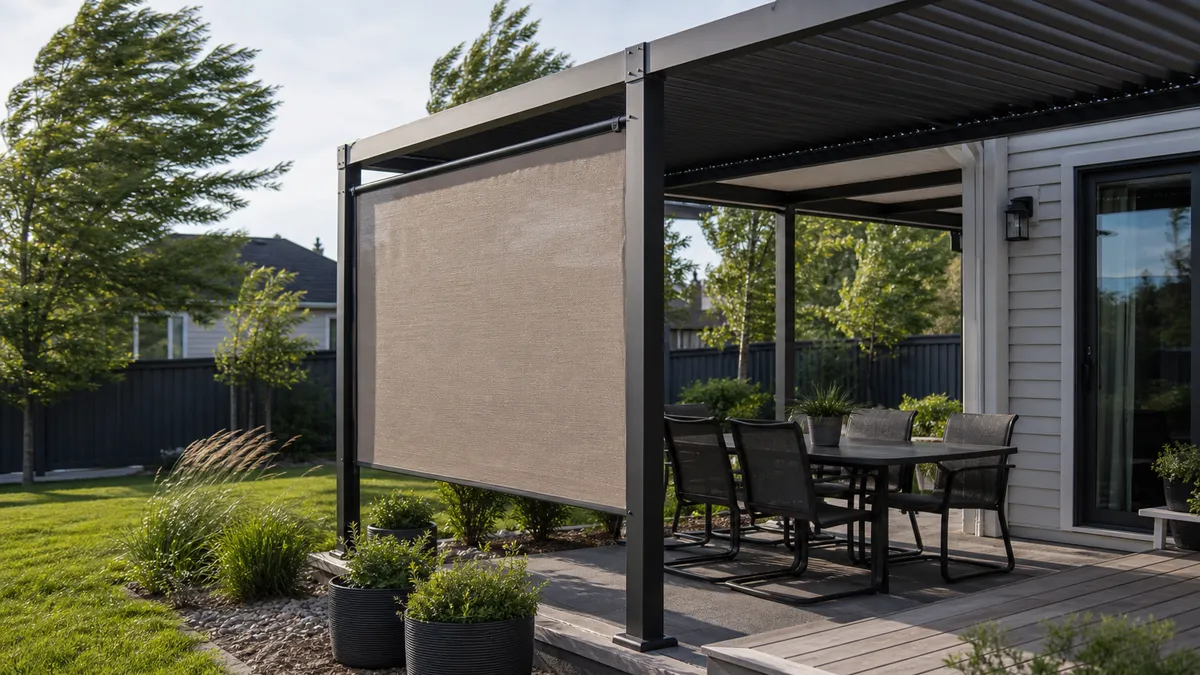
Best Patio Shade for Windy Areas
Use this when patio shade for wind is closer to the real constraint than the current page.
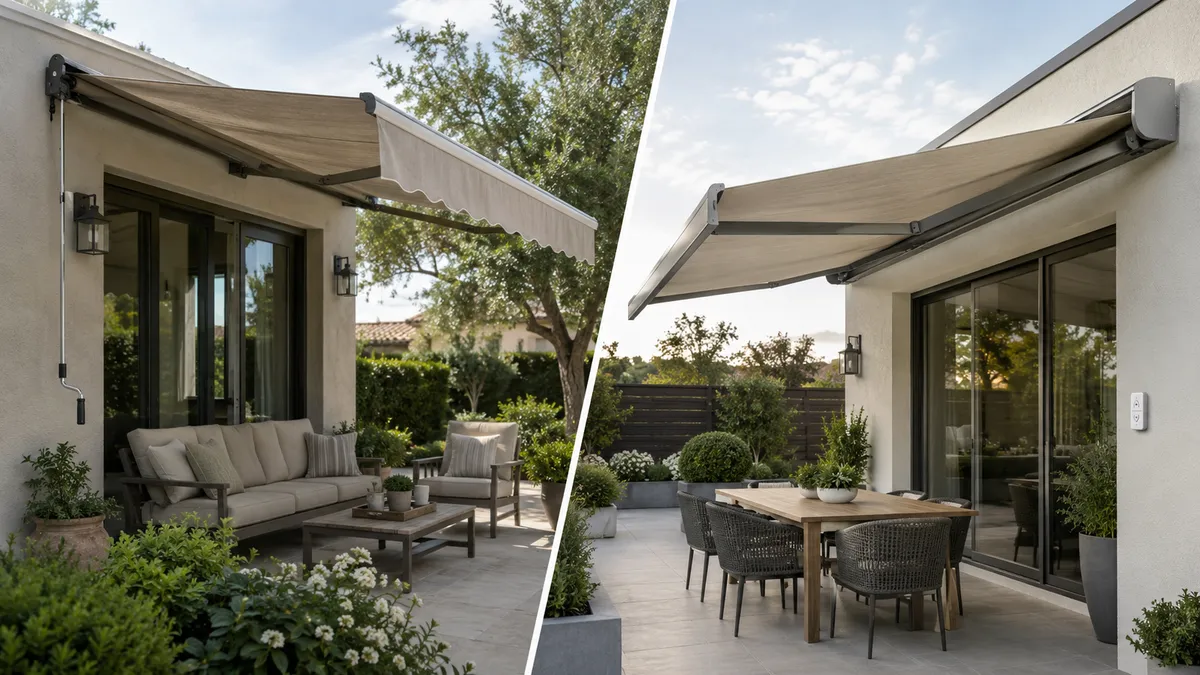
Manual vs Motorized Awning
Use this when manual vs motorized awning is closer to the real constraint than the current page.

Retractable Awning Guide
Use this when retractable awning is closer to the real constraint than the current page.
Questions
FAQ
What does an awning wind rating mean?
It is a product and installation limit explained by the manufacturer manual or installer, not a universal permission to leave the awning open. The class, mounting surface, projection, exposure and closing routine all affect whether the rating is useful at your patio.
How much wind is too much for a retractable awning?
Use the exact manual, not a generic mph chart. Some manuals give class or Beaufort examples, but those apply to that product and installation context. Close before the stated limit, before gusty storms, when unattended, or when the awning starts lifting, snapping or shaking.
Does a wind sensor protect an awning from gusts?
A sensor helps when someone forgets to close the awning, but it is not storm protection. Some sensors detect vibration rather than actual wind speed, and several manuals warn that heavy gusts can arrive before the awning reacts. Manual closing still matters.
Is a fixed awning better than a retractable awning in wind?
Not automatically. A retractable awning survives risky weather by closing; a fixed awning must resist the load all the time. Fixed covers need suitable design loads, attachment and exposure checks. A poorly mounted fixed awning can be worse than a smaller retractable one.
Should I inspect an awning after strong wind?
Yes if anything moved, bent, tore, cracked, pulled loose or failed to retract. Close the awning, inspect in calm weather and stop use when the wall, brackets, arms, fabric or controls show damage. Mounting movement needs installer or professional review.