
Quick Answer
Orchid shade cloth: the short version
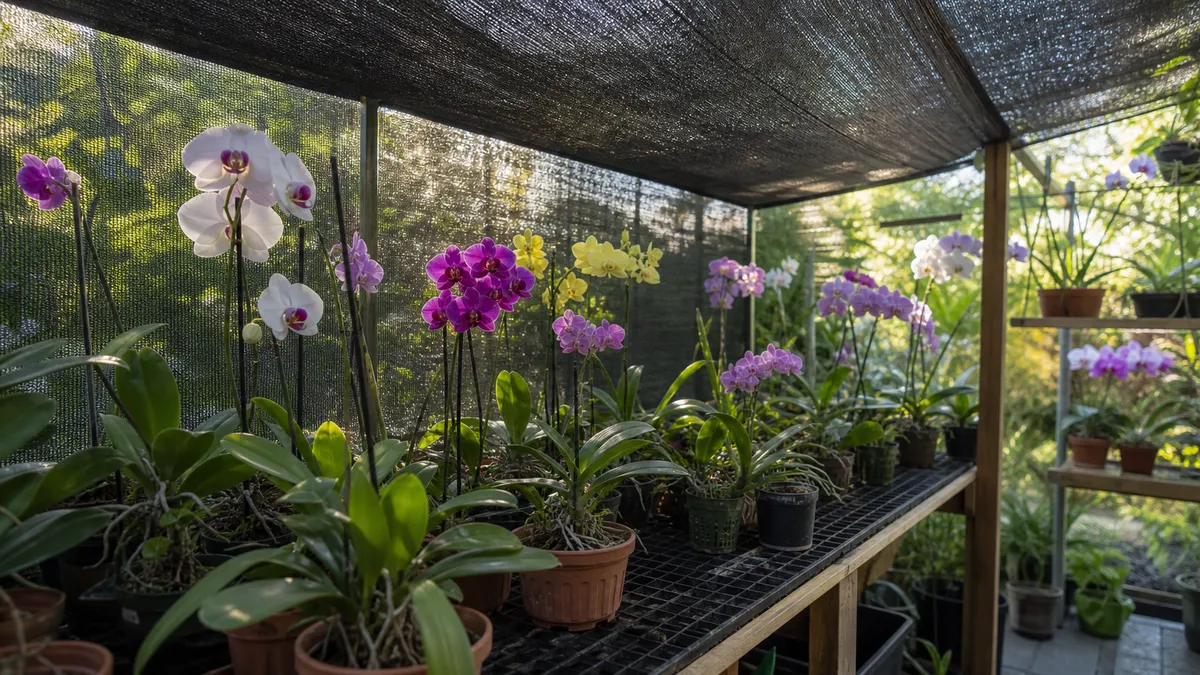
There is no universal shade cloth for orchids percentage. Start by identifying the orchid group, then match the cloth to the exposure: deeper shade for Phalaenopsis and Paphiopedilum, moderate shade for many mixed collections, and lighter cloth for Vanda or high-light Dendrobium areas. Airflow, window direction and heat control matter before buying darker fabric.
Start around 50% only for mixed common orchids; use lighter cloth for high-light Vanda or Dendrobium areas, deeper shade for Phalaenopsis or Paphiopedilum, and skip cloth when the plant already lacks light or airflow.
Buying Direction
What to buy or use for orchid shade
Use this table after orchid group, exposure, airflow and seasonal removal are clear.
| Situation | Buy / use this | Why |
|---|---|---|
| Phalaenopsis in a bright greenhouse or strong south or west window | Use 70% to 85% only for Phalaenopsis greenhouse shade, then keep air moving around leaves and roots. | AOS Phalaenopsis guidance supports 70% to 85% greenhouse shade, while Missouri Botanical Garden points Phalaenopsis toward bright light with little direct sun. |
| Paphiopedilum or another lower-light orchid bench in bright filtered light | Use deeper removable shade only after leaf heat, scorch or growth signs confirm excess light; do not assign a fixed percentage from the Phalaenopsis range. | AOS light guidance treats Paphiopedilum as lower-light, but the rendered source list does not give an exact shade-cloth percentage for the genus. |
| Mixed common orchid collection with Cattleya, many Dendrobiums, Oncidium types and lower-light plants | Start the comparison around 50%, then split benches if one group scorches or another stops blooming. | University of Hawaii notes many common orchids do well under 50% shade, but some groups need higher or lower light. |
| Vanda or acclimated high-light Dendrobium in strong greenhouse light | Start Vanda comparisons with 25% to 35% shade before buying deeper cloth, and check Dendrobium separately by type. | AOS Vanda guidance supports 25% to 35% shade cloth in southern climates, while Den-phal Dendrobiums can need direct filtered sun. |
| Hot orchid house where leaves feel hot but the orchids still need bright light | Test white, reflective or aluminized cloth outside the roof or side before simply choosing darker black cloth. | Alabama Extension separates light reduction from heat reduction and notes exterior shade usually cools better than interior shade. |
| Unknown orchid ID, dark green no-bloom growth, north exposure, wet roots or poor air movement | Do not buy shade cloth yet; identify the orchid and fix light, root drying or ventilation first. | AOS starts orchid care with orchid identity and warns that low light can produce healthy-looking growth without flowers. |
Choose the cloth by orchid type first
Choose orchid shade cloth by genus and placement before roll width or clip style. The American Orchid Society says orchid identity controls culture, and its light guidance gives different maximum-light anchors for Phalaenopsis, Paphiopedilum, Cattleya, Dendrobium and Oncidium. University of Hawaii gives similar foot-candle anchors and warns that excess light can cause sunburn or abnormal growth.
Use those numbers as guardrails, not as a promise that one cloth percentage solves every collection. A Phalaenopsis bench in a bright orchid house can justify much deeper shade than a Vanda line under the same roof. A mixed collection may need two smaller panels or a movable bench cover instead of one dark layer over every plant.
The first purchase check is exposure. East light is often easier for orchids. South and west windows or greenhouse sides may need a removable shade panel. North exposure, winter cloud cover or a plant that is already dark green and not flowering may need more light, not more shade.
30%, 50% or 70% shade cloth for orchids
Treat percentage ranges as orchid-group and exposure ranges, not universal orchid numbers. AOS Phalaenopsis guidance supports about 70% to 85% greenhouse shade or roughly 1,000 to 1,500 foot-candles. AOS Vanda guidance is nearly the opposite for many plants: in southern climates, 25% to 35% shade cloth may be enough because many Vandas want very bright conditions.
Cattleya and Dendrobium need careful wording. AOS Cattleya guidance places many Cattleyas around bright greenhouse light, and Missouri Botanical Garden warns that dark green Cattleya leaves can mean too little light. Dendrobium is a wide genus, so a fixed percentage is risky; AOS Den-phal and semi-antelope guidance uses a broad 30% to 70% midday shade range and still calls for direct filtered sun.
If you want a broader non-orchid comparison after reading the orchid ranges, use the shade cloth percentage guide. This page stays narrower: it is about preventing orchid scorch without darkening plants that need stronger light for flowering.
Percentage guide
Orchid shade cloth percentage ranges
Treat these as starting ranges. Climate, season, roof height, cloth color and plant acclimation can shift the right answer.
| Percentage range | Best orchid fit | Works best when | Do not use when |
|---|---|---|---|
| 25% to 35% | Vanda and very bright high-light greenhouse zones | The goal is filtering harsh sun while keeping high light and strong airflow; Dendrobium needs a separate type check | Phalaenopsis, Paphiopedilum or lower-light benches are scorching |
| Around 50% | Mixed common orchid house, many Cattleya, Dendrobium and Oncidium-type setups | You need a middle range and can separate lower-light plants if they still scorch | Vandas need more light or Phalaenopsis still gets hot, yellow or bleached |
| 70% to 85% | Phalaenopsis in bright greenhouse conditions | The cloth is removable, ventilated and matched to Phalaenopsis that prefer shaded bright light | Cattleya, Vanda or many Dendrobium plants get dark green, weak or fail to flower |
| No cloth, retractable cloth or seasonal removal | Winter, north exposure, cloudy periods, unknown orchid ID or wet-root problems | The plant already lacks light or the growing area needs air and root recovery first | Direct sun is heating leaves or causing visible scorch |
Greenhouse, orchid-house and window placement
For an orchid house or greenhouse, exterior roof or side shade usually handles heat better than an interior curtain. Alabama Extension explains that interior shade can still allow heat energy into the greenhouse, while exterior shade blocks more of it before it enters. That does not remove the need for vents or fans. Shade over still, humid orchids can slow drying and raise disease pressure.
Inside shade still has a place. Use an interior bench frame or side panel when only one bench has Phalaenopsis, Paphiopedilum or recently moved plants. WSU Extension recommends keeping shade fabric above the leaf canopy and leaving an open side away from direct sun. For orchids, that means clips, pipe hoops, cable, bench frames or greenhouse rails should hold fabric off leaves and flower spikes.
Windows need a different test. University of Hawaii says east-facing light is often easier, south and west exposures may need modification, and north exposures may need supplemental light. AOS notes that direct unshaded glass can be several thousand foot-candles while a spot just off the same window can be far dimmer. A removable panel in the bright part of a south or west window is better than dark cloth left over the whole room.
Category research
Orchid shade categories to compare
Use these searches after orchid type, light level, ventilation and mounting location are known.
Orchid shade
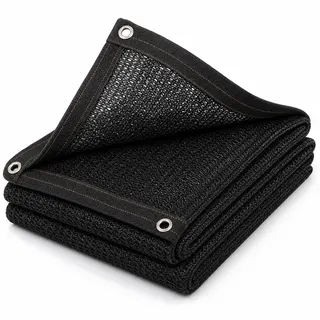
Orchid Shade Cloth
For orchid benches, patios or greenhouse zones that need filtered light.
- Filtered light
- Plant-specific use
Check:Orchid type, leaf color and airflow.
Search on Amazon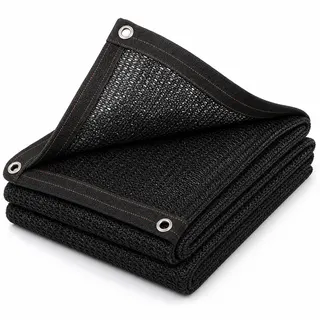
Medium shade
50 Percent Shade Cloth
For stronger filtering when leaf scorch or excessive light is clear.
- More sun reduction
- Watch for low light
Check:Blooming response and seasonal adjustment.
Search on Amazon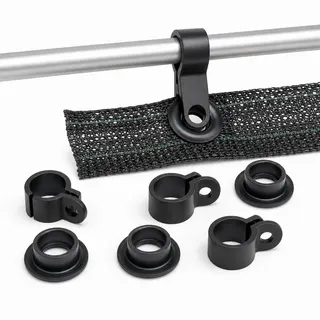
Greenhouse clips
Greenhouse Shade Cloth Clips
For attaching cloth without blocking vents or doors.
- Simple attachment
- Easy seasonal removal
Check:Frame type, vent clearance and wind.
Search on AmazonColor and material choices for orchid shade
Black or dark green shade cloth is common, durable and easy to find. It can be fine when the problem is too much light and the orchid area already has moving air. The drawback is heat: Alabama Extension notes black cloth can absorb heat, so it may not be the best first comparison for a hot orchid house where leaf temperature is already the problem.
White or reflective shade cloth is worth comparing when the goal is heat moderation with bright, even light. WSU Extension separates light reduction from heat reduction, and Alabama Extension makes the same caution: a percentage label is not a temperature-reduction promise. Use white or reflective cloth with ventilation, not as a substitute for vents, fans or side openings.
Aluminized or retractable shade belongs in higher-spec greenhouse or orchid-house setups. AOS discusses aluminized shade curtains for more uniform light, and retractable cloth lets you uncover orchids during cloudy spells or low-light seasons. That matters for mixed collections because permanent heavy shade can protect Phalaenopsis while quietly weakening Cattleya, Vanda or Dendrobium flowering.
- Use black or dark green cloth when light reduction is the main job and airflow is already good.
- Compare white or reflective cloth when leaves feel hot and the greenhouse needs brighter, cooler-feeling shade.
- Compare aluminized or retractable cloth when the orchid house needs seasonal adjustment instead of one fixed shade level.
Signs the shade level is wrong
Check orchids again after two to six weeks, not only on the day the cloth goes up. University of Hawaii says leaf color often tells more after several weeks in a location. Light to medium green is often healthier for many orchids, while very dark green can mean low light; Phalaenopsis is an exception because it can stay darker green even when healthy.
Too much light shows up faster when heat is involved. AOS says leaves that feel hot to the hand may be above the mid-90s F and can damage quickly. It also describes sunburn as yellowing that can progress to white and then dry brown or sunken areas. Those marks do not reverse, so the goal is to stop new damage.
Too little light is quieter. Missouri Botanical Garden links insufficient light with very dark green foliage, weak spindly growth and reduced or absent flowering. AOS also notes that low light can produce lush-looking growth without blooms. If those signs appear after adding cloth, reduce shade or move the plant brighter gradually.
Diagnosis
What orchid leaves and growth are telling you
Use symptoms with orchid identity. A Phalaenopsis leaf and a Vanda leaf should not be judged by the same shade rule.
| Sign | Likely direction | What to change |
|---|---|---|
| Leaves feel hot to the hand | Too much light, too much heat or too little air movement | Add temporary shade, improve airflow and keep cloth above the leaf canopy |
| Yellow, white, brown or sunken scorch marks | Direct light has crossed the plant's tolerance | Move out of direct sun and prevent new scorch; old burn marks will not turn green again |
| Dark green leaves and few or no flowers | Often too little light, especially after cloth is added | Reduce shade or move brighter after confirming the orchid group |
| Weak, stretched or spindly growth | Too much shade or a window position that is dimmer than expected | Use a brighter exposure or a lighter percentage, then acclimate slowly |
| Media stays wet and roots decline after cloth goes up | Shade slowed drying or airflow is poor | Increase air movement, check watering and avoid solving wet roots with darker cloth |
When not to buy orchid shade cloth yet
Do not buy shade cloth if you do not know the orchid group. A no-name orchid can be a lower-light Phalaenopsis, a brighter Cattleya alliance plant or a high-light Vanda type, and those plants do not want the same cloth. Identify the plant or at least sort it into a low, medium or high light group before ordering fabric.
Skip cloth when the location is already dim. North exposure, winter cloud cover, a plant set away from the window or dark green no-bloom growth all point toward a light shortage. A darker panel can make the leaves look protected while bloom energy disappears. In that case, move the orchid brighter gradually or use a grow light rather than shade.
Also pause when roots, media or air movement are failing. Missouri Botanical Garden warns Phalaenopsis needs good air movement and should not sit with water in the crown. AOS general care stresses moving air and proper root drying. Shade cloth can slow evaporation, so it can make a wet-root problem worse unless ventilation and watering change with it.
- Skip cloth until the orchid is identified or sorted into a low, medium or high light group.
- Do not add shade to a north window, winter window or dark green no-bloom plant without confirming excess light.
- Fix wet media, poor roots, crown water and still air before adding darker cloth.
- Avoid one permanent heavy panel over a mixed collection with Vanda, Cattleya or Dendrobium plants.
- Use removable or retractable shade when seasonal light swings are large.
Watch-outs
Before you buy or install
- Do not use deep shade for every orchid in a mixed collection.
- Shade percentage describes light blocked; it is not a guaranteed temperature reduction.
- Keep airflow under cloth because shade can slow media and root drying.
- Acclimate orchids gradually when moving them from indoor light to brighter greenhouse sun.
- Remove, retract or lighten shade during cloudy or low-light seasons when growth gets dark and bloomless.
Read Next
Related guides if your situation is different
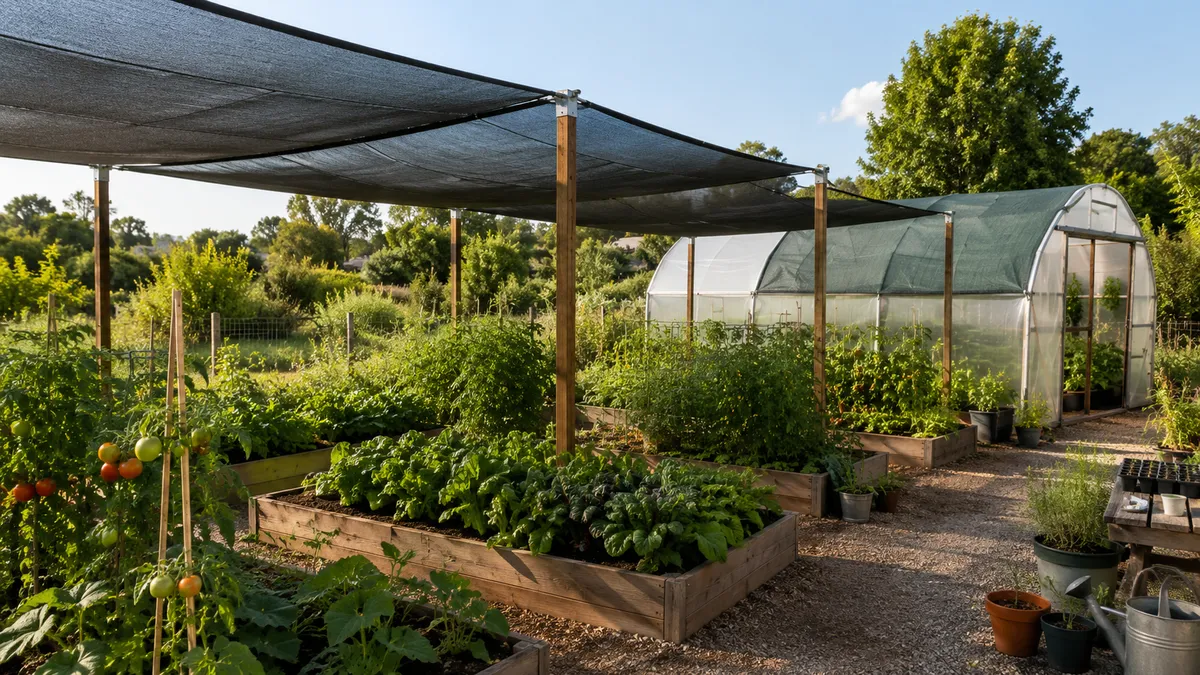
Shade Cloth Guide
Use this when shade cloth is closer to the real constraint than the current page.
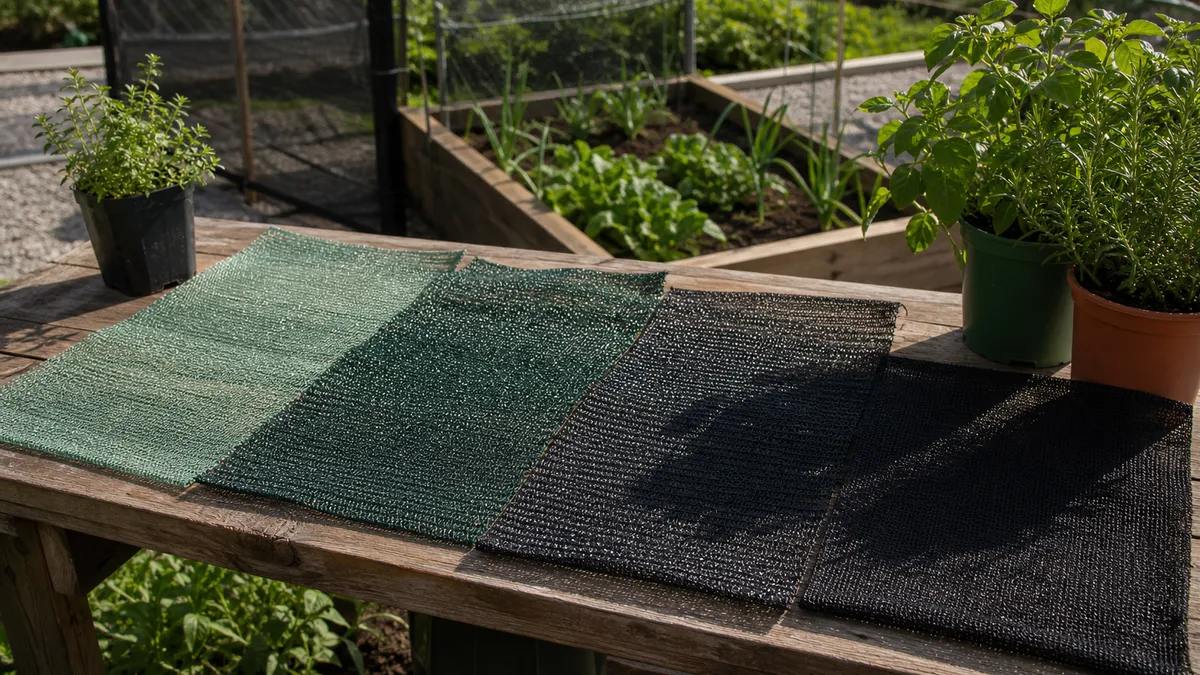
Shade Cloth Percentage Guide
Use this when the orchid group is clear and you want the broader 30%, 50%, 70% and 90% shade-cloth comparison.
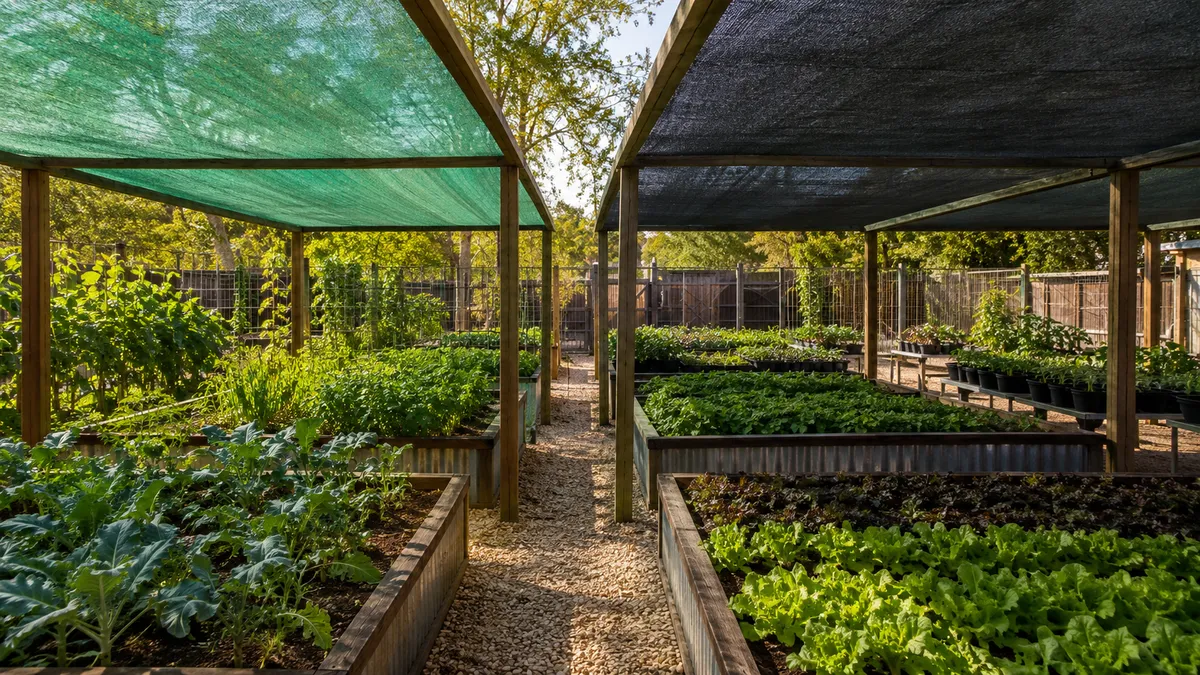
50% vs 70% Shade Cloth
Use this when 50 vs 70 shade cloth is closer to the real constraint than the current page.
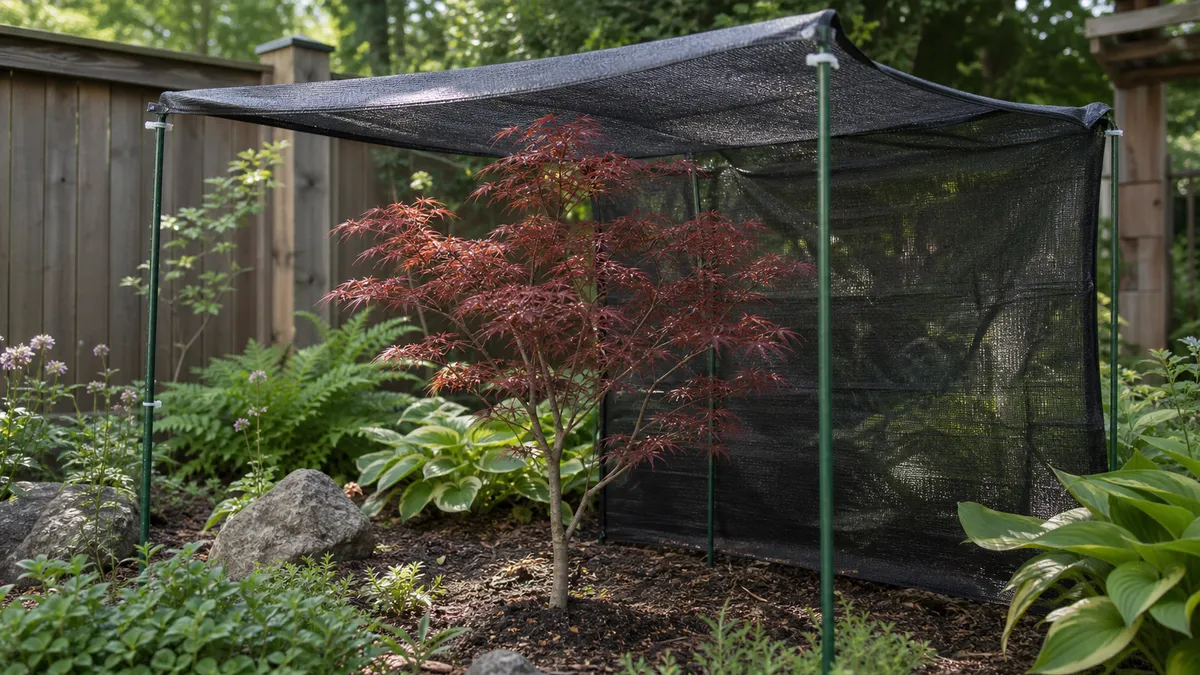
Shade Cloth for Japanese Maple
Use this when shade cloth for japanese maple is closer to the real constraint than the current page.
Questions
FAQ
What percentage shade cloth is best for Phalaenopsis orchids?
For greenhouse Phalaenopsis, AOS guidance supports about 70% to 85% shade or roughly 1,000 to 1,500 foot-candles. At a window, use bright light with little direct sun instead of treating 70% as automatic. Air movement still matters because Phalaenopsis roots and crowns can suffer when conditions stay wet.
Is 50% shade cloth enough for orchids?
50% can be a useful starting point for a mixed common orchid house, especially when Cattleya, many Dendrobiums and Oncidium-type plants share space with lower-light orchids. It is not universal. Vanda may need lighter shade, while Phalaenopsis in very bright heat may need a deeper, better-ventilated zone.
Is 70% shade cloth too much for orchids?
70% can be too much for high-light orchids, especially Vanda, many Cattleya setups and some Dendrobiums. It can make leaves dark green, stretch new growth or reduce flowering. It is more reasonable for Phalaenopsis greenhouse conditions; Paphiopedilum and other lower-light benches still need monitoring rather than an automatic percentage.
Should orchid shade cloth go inside or outside the greenhouse?
Exterior shade is usually better when greenhouse heat is the problem because it blocks more heat before it enters. Interior shade can still work for bench zoning or lower-light orchids. Either way, leave clearance above plants and keep vents or fans working so humidity and wet media do not build up.
Is black or white shade cloth better for orchids?
Black cloth is common, durable and fine when the main job is reducing light in a ventilated area. White or reflective cloth is worth comparing in a hot orchid house because it can keep light more even and reduce heat load better than dark fabric. Do not expect any color to replace ventilation.
How do I know if my orchid has too much or too little shade?
Too much light often shows as hot leaves, yellowing, red or yellow-green stress color, then white or brown scorch. Too much shade is quieter: dark green leaves, weak growth and few flowers. Use the hand-shadow test and leaf color only after checking the orchid type, because low-light and high-light orchids read differently.