
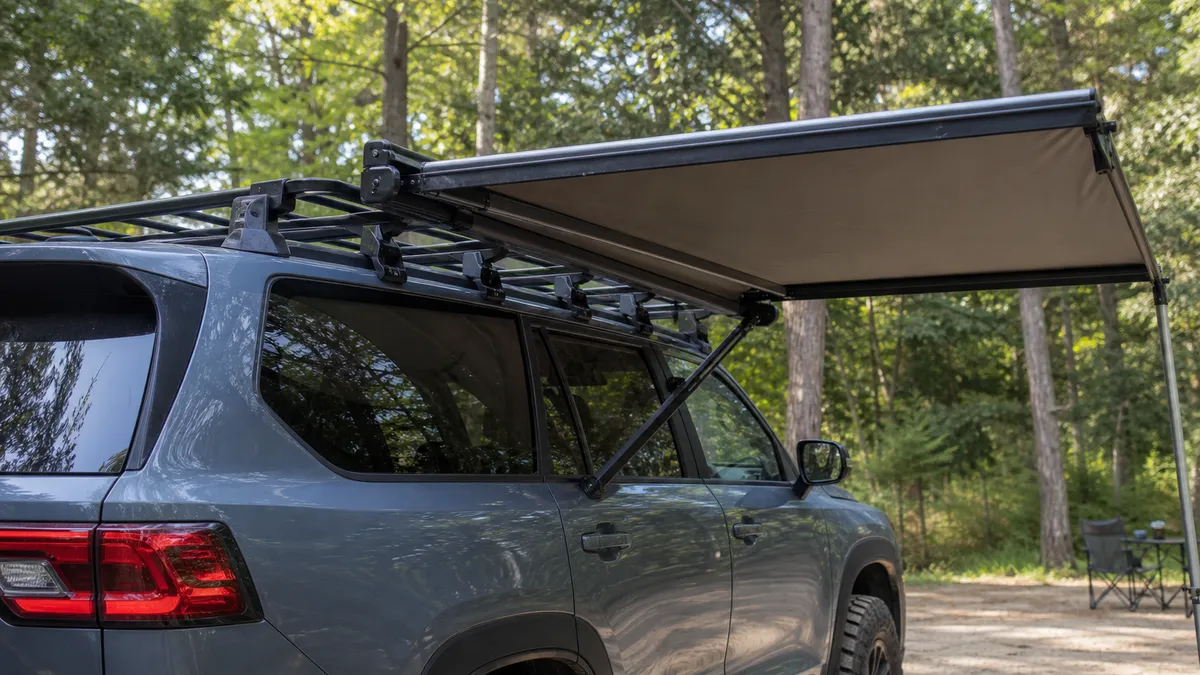
Quick Answer
Short answer: check the rack before shade size
Buy a rack-mounted side awning only after the vehicle roof rating, rack dynamic rating, awning case weight, bracket weight, crossbar spread, clearance and packed-case movement all check out. A high parked-camp rating does not approve highway use, and quick-release mounts still need exact rack and awning compatibility.
Buy a rack-mounted side awning only when the rated rack, bracket spacing, awning case weight and clearance pass before road travel.
Can this roof rack carry the awning?
Start with the load path, not the shade photo. A side awning rides as road cargo when packed, so the first test is whether the vehicle roof rating, installed rack rating, brackets and awning instructions all allow the same setup. Rhino-Rack separates on-road, static and off-road rated limits; use that split instead of treating a high parked camp number as permission to drive with a heavy case.
The rack also has to carry everything already mounted. Add crossbars or platform weight, awning brackets, quick-release hardware, the awning case, wall-kit bag, roof tent, solar panel, roof box, recovery boards and any other cargo. If the remaining rack dynamic rating is unclear, pause the purchase before comparing awning width.
Finish the fit check with movement and clearance. Yakima EasyOff instructions require the awning to show no front-to-back movement or side-to-side movement after tightening. ARB tells installers to check door, tailgate and hood clearance before final tightening. Run those checks with the rack loaded as it will travel.
Compatibility
Can this roof rack carry this awning?
Use this table before choosing fabric size, wall kits or brand photos.
| Rack situation | What to do | Hardware to check | Stop trigger |
|---|---|---|---|
| Rated crossbars with enough spread | Buy a straight side awning only after case weight, bracket weight and spread match the instructions. | Vehicle roof rating, rack dynamic rating, awning case weight, bracket clamps and crossbar spread. | Static rating is the only number you can find. |
| Platform rack with side or T-slot channels | Use platform-specific brackets or channel hardware when the side profile and bracket pitch match. | T-slot size, channel nuts, T-bolts, side-profile height, bracket pitch and access for retightening. | The bracket lands on a channel opening or cannot seat flat. |
| Rack already carries tent, solar, box or recovery gear | Add all roof cargo first; buy only if capacity remains for the case and brackets. | Roof tent ladder side, solar service access, box length, cargo straps and remaining off-road rating. | A roof accessory must strap to the awning case. |
| Unknown factory rails, decorative rails, bare roof or glass roof | Do not buy a highway roof-rack awning until the manual and rack maker approve a rated load path. | Vehicle manual, rack feet, clamp points, glass-roof restrictions and rail construction. | The mount depends on trim, suction, magnets or a temporary parked connector. |
| Quick-release convenience | Consider it only when the exact kit fits the rack profile and awning rear channel. | Latch closure, lock, bracket pitch, M8 or channel hardware, added weight and inspection access. | The quick-release maker supports a different rack profile only. |
| Long or heavy awning case | Use the maker's bracket spacing instructions, shorten the case or add the required support. | Overhang, bracket distance, case length, awning weight and whether a third bracket is specified. | The case can twist, bounce or move after tightening. |
Numbers to collect before ordering
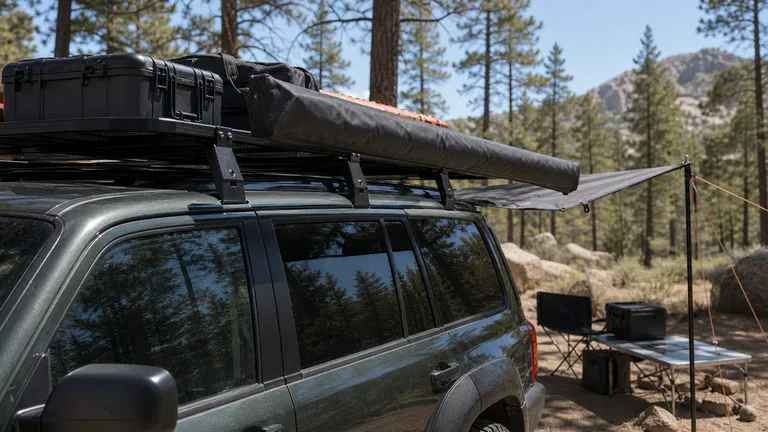
Collect the vehicle manual roof rating first, then the installed rack rating for the exact bars, feet, platform or side rails. Next separate the rack dynamic rating from the static rating. Dynamic or on-road rating applies while the vehicle is moving. Static rating describes a parked vehicle. If the rack maker publishes an off-road rating for unsealed roads, use that lower travel number for washboard, corrugations and trail vibration.
Then weigh the roof stack. The awning case weight, awning brackets, quick-release mount, locks, wall bag, platform, crossbars, roof box, solar panel and roof tent all count. Rhino-Rack's load-rating guidance treats accessory and holder weight as part of the carried load. That means a lighter awning can be the better purchase when the roof is already busy.
Use current awning specs only as examples, not universal fit promises. Rhino-Rack lists one Sunseeker 2.5 m awning example at a 98 in case length, 78 in projection, about 53 sq ft of coverage and 11.9 kg product weight. Add the brackets and any release kit before comparing that weight with the rack allowance.
- Record vehicle roof rating, rack dynamic rating, static rating and off-road rating if published.
- Add awning case weight, bracket weight, quick-release hardware and every roof accessory.
- Measure packed length, crossbar spread, door clearance and hatch clearance before checkout.
Bracket and mounting options
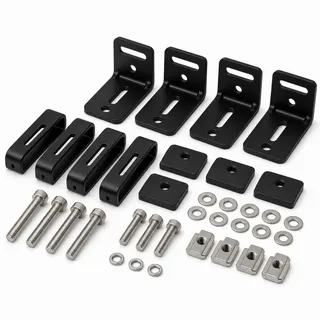
Treat awning brackets as the purchase, not a loose accessory. A simple L bracket can work on a light straight awning when the rack and awning maker allow that hardware. A gusseted or universal bracket gives more stiffness for some side cases, but the holes, bolts, rear awning channel and bar shape still have to line up.
Platform racks need the same close check. Some brackets fasten to a side profile. Others use T-slot or channel nuts through a platform slat. ARB notes that many crossbar racks have mounting channels, while non-ARB racks may need sourced T-bolts. Rhino-Rack Sunseeker instructions include platform and crossbar fitting, warn against placing platform brackets on channel openings and call for close to equal awning overhang where the instructions require it.
Quick-release mounts are for removal and storage, not for skipping compatibility. Yakima EasyOff instructions call for measured bracket spacing and evenly seated clamp jaws. Front Runner says its quick-release awning bracket is designed around its Slimline II side profile with 50 mm height and an M8 accessory channel. If the rack side profile, T-slot, bracket pitch or awning rear channel is different, confirm the exact fit before buying.
Hardware
Awning bracket types to compare
Compare bracket categories by rack shape, hole pattern and inspection access, not by generic rankings.
| Mounting hardware | Good fit when | Check before buying | Avoid when |
|---|---|---|---|
| Simple L brackets | A light straight awning and rated crossbars both accept the bracket style. | Bar shape, bolt diameter, awning rear channel and full bracket seating. | The bar is narrow, rounded or unsupported by the awning instructions. |
| Gusseted or universal brackets | The awning case needs stiffer side support and the hole pattern lines up. | Bracket thickness, hole spacing, hardware grade and tool access after install. | Universal means drilling, loose spacing or partial contact. |
| Platform side-profile brackets | The platform has a supported side profile made for awning brackets. | Side-profile height, channel position, bracket pitch and rack-maker guidance. | The bracket lands on unsupported trim or a channel opening. |
| T-slot or channel hardware | The crossbar or platform slot accepts the correct T-bolt or channel nut. | Slot size, bolt head, washer stack, locknut, retightening access and corrosion exposure. | The hardware can slide, rotate or cannot be inspected. |
| Awning-brand bracket kit | The same brand supports the awning case and rack family together. | Current instructions, included hardware, load notes and replacement fasteners. | The kit assumes a rack family you do not have. |
| Quick-release mount | The awning comes off between trips and the exact rack profile is supported. | Latch, lock, bracket pitch, added weight, wall storage and no movement after tightening. | Convenience is being used to solve an unrated rack. |
Category research
Roof-rack awning categories to compare
Use these searches after rack load, bracket spacing and awning case length are confirmed.
Rack awning
Roof Rack Awning
For vehicles with crossbars or platform racks that can take the case.
- Side shade at camp
- Rack-dependent fit
Check:Dynamic load, bar spread and side orientation.
Search on AmazonBracket kit
Awning Brackets Roof Rack
For matching the awning case to rack channels or crossbars.
- Mounting-specific
- Prevents bad fit
Check:Bolt pattern, case depth and liftgate clearance.
Search on AmazonMounting kit
Vehicle Awning Mounting Kit
For hardware searches when the rack system is already chosen.
- Hardware bundle
- Case-to-rack fit
Check:Material, corrosion exposure and fastener size.
Search on AmazonCrossbar spread, platform fit and overhang
Support spacing matters because the awning case becomes a lever. A long case mounted on close-together bars can bounce at the ends even when the total weight looks small. Yakima EasyOff instructions use a 61 cm / 24 in minimum crossbar spread for that kit and tell installers to set the brackets to match the measured bars. Yakima's older SlimShady fit table lists a 24 to 77 in crossbar spread range for that awning family, but that is Yakima-specific guidance, not a universal rack-mounted awning rule.
ARB's universal-bracket installation gives a source-scoped overhang example: the awning overhang should not exceed 27 in, with the overhang calculated from awning length and bracket distance. Use that idea even when the exact number comes from another brand: the farther the unsupported case extends beyond the brackets, the more leverage road vibration and wind can put into the mount.
Platform racks still need spacing discipline. Do not assume a full platform means every slat or side channel can take an awning. Match the bracket to supported rack locations, keep the awning close to equal front and rear overhang when the fitting instructions require it, and leave room to retighten the hardware after the first trips.
Clearance and roof-cargo conflicts
Open the vehicle before final tightening. Check side doors, sliding door clearance, rear hatch, tailgate clearance, hood lift, mirror swing and garage height. A closed case can look fine until the awning arms, legs or wall panels move through the same path as a hatch or sliding door.
Roof cargo can block the purchase even when rack load remains. A roof tent ladder may need the same side as the awning. A solar panel may be shaded by open fabric or blocked from cleaning once brackets are tightened. A roof box can steal bracket spacing or leave no room for the case. Recovery boards and cargo straps must attach to the rack or platform, not to the awning case.
Choose the vehicle side deliberately. A right-side mount may work at camp but open toward traffic during roadside stops in some countries or routes. A van may need the awning by the sliding door, while a 4x4 tailgate kitchen may need a different side or a separate 270-degree awning. Use the van awning guide when van rails, conversion hardware or no-rack van mounting block the install.
- Check side doors, sliding doors, hatch, tailgate, hood and garage height with the case in place.
- Map roof tent ladder, solar panel service access, roof box length and cargo straps before ordering.
- Choose the awning side from door use, camp setup and safe roadside deployment.
Wind, vibration and secure-load checks
A packed side awning on the rack is a secure-load issue. NHTSA says drivers are responsible for cargo that can separate from a vehicle and asks whether a load could fall, blow out, shift under braking or endanger a vehicle behind. For an awning, that means no loose fabric, loose zipper, loose case, loose clamp, unlocked quick-release latch, loose T-slot hardware or visible case movement before driving.
Road vibration is not a one-time install problem. ARB says awning mounts and nuts should be tightened after 1,000 miles and periodically afterward. Yakima rack maintenance guidance recommends a monthly shake test and hardware check, with extra attention after road salt exposure. Treat beach sand, salt, heavy rain, washboard roads and long highway runs as reasons to inspect sooner.
The open awning needs its own weather rule. Rhino-Rack Sunseeker instructions warn to use guy ropes whenever deployed, stow the awning in strong wind, avoid windy setup and never leave it unattended while open. The same instructions say not to put weight on the awning or strap loads to it. The roof brackets hold the packed case and connection; they do not make the open fabric safe in gusts without legs, ropes and a fast pack-down habit.
- Do not drive with front-to-back movement, side-to-side movement or loose packed fabric.
- Use legs, guy ropes, stakes or sand anchors when the awning instructions require them.
- Pack down before strong wind, rapidly changing weather, rain pooling or unattended camp.
When not to buy a roof rack awning
Do not buy when the rated load path is unknown. Decorative rails, unsupported trim, bare roof skin, glass or panoramic roof restrictions, clamp-only temporary mounts and suction or magnetic parked shade do not become highway awning mounts because the awning is light. If the vehicle manual, rack maker and awning instructions do not all support the combination, fix the rack first.
Do not buy when the roof is already full. A roof tent, solar panel, roof box, water container or recovery boards can leave too little dynamic or off-road capacity for the awning case and brackets. It can also remove the bracket spacing or access needed to install the mount correctly.
Do not buy when clearance or weather habits fail. Stop if the case blocks the sliding door, rear hatch, tailgate, hood, garage, roof tent ladder or safe roadside opening side. Stop if the awning must stay open unattended in wind, or if the hardware cannot be inspected after trips. Use the 270-degree awning guide only when the real purchase is heavier side-and-rear coverage with hinge and tailgate checks.
Accessory checklist before checkout
Price the awning with all mounting parts included. The checkout list may include the awning case, bracket set, T-bolts or channel nuts, compatible locknuts, thread-lock only where the instructions support it, quick-release mount, locks, wall storage brackets, guy ropes, stakes, sand anchors, wall kit, ladder access, torque tool, spare fasteners and a separate bag for wet or sandy fabric.
Every accessory adds load or inspection work. A quick-release kit adds convenience, but it also adds weight, latches and lock points. Wall kits add shade and privacy, but they add packed bulk and wind surface. Guy ropes and stakes are not optional if the awning instructions require them, and sand anchors may be needed where normal stakes pull out.
Keep a maintenance kit in the vehicle: the correct wrench, spare nuts or T-bolts, zipper lubricant if the case uses a zipper bag, a small brush for sand, a dry towel and the rack and awning instructions. Clean salt and sand from exposed hardware, dry fabric before long storage and repeat the shake check after rough-road or highway travel.
- Load numbers: vehicle roof rating, rack dynamic rating, static rating, off-road rating and all roof accessory weight.
- Mounting hardware: awning brackets, T-bolts, channel nuts, locknuts, locks and tool access.
- Deployment support: legs, guy ropes, stakes, sand anchors and fast pack-down plan.
- Maintenance gear: wrench, spare fasteners, cleaning brush, towel and printed instructions.
Watch-outs
Before you buy or install
- Do not use static parked capacity as permission for highway or off-road travel.
- Do not mount a driving awning to decorative rails, bare roof skin, glass roof, unsupported trim, suction mounts or magnetic mounts.
- Do not drive if the case, zipper, fabric, clamp, latch, bolt or T-slot hardware is loose.
- Do not leave the awning open unattended, in strong wind or without required legs and guy ropes.
- Do not strap cargo to the awning case or arms; secure cargo to the rack or platform instead.
Read Next
Related guides if your situation is different
Vehicle Awning Guide
Use this when the setup needs broader vehicle-awning routing across vans, 4x4s, cars, RVs, racks and parked-only shade.
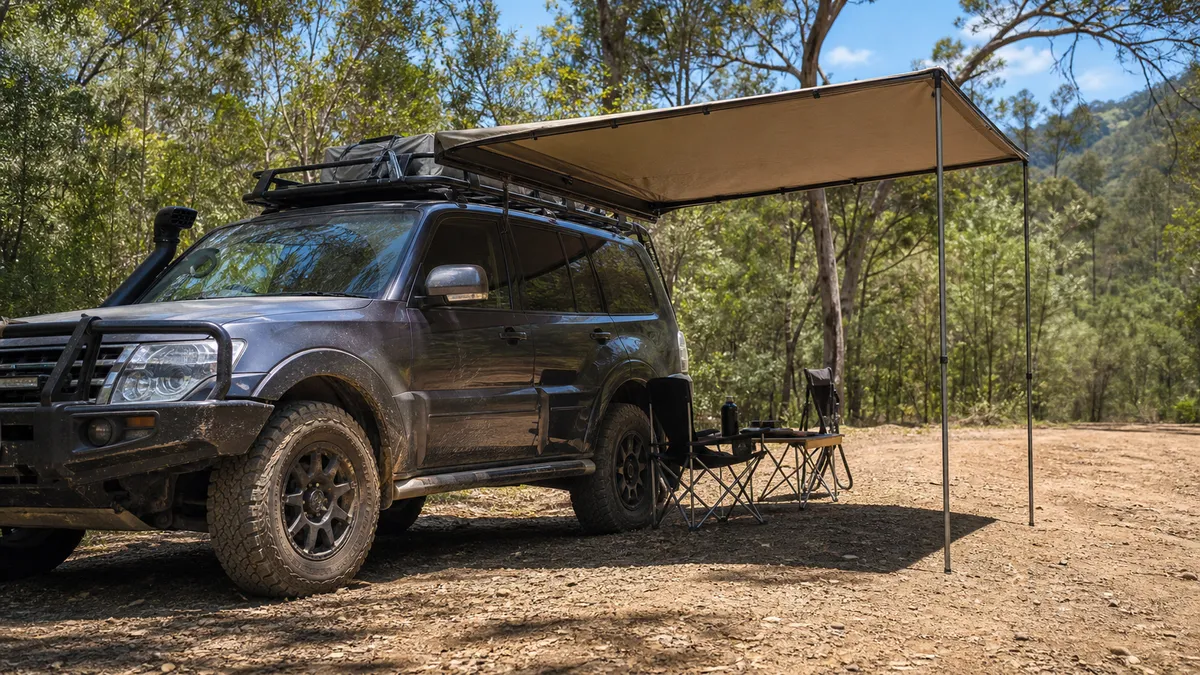
4x4 Awning Guide
Use this when 4x4 awning is closer to the real constraint than the current page.
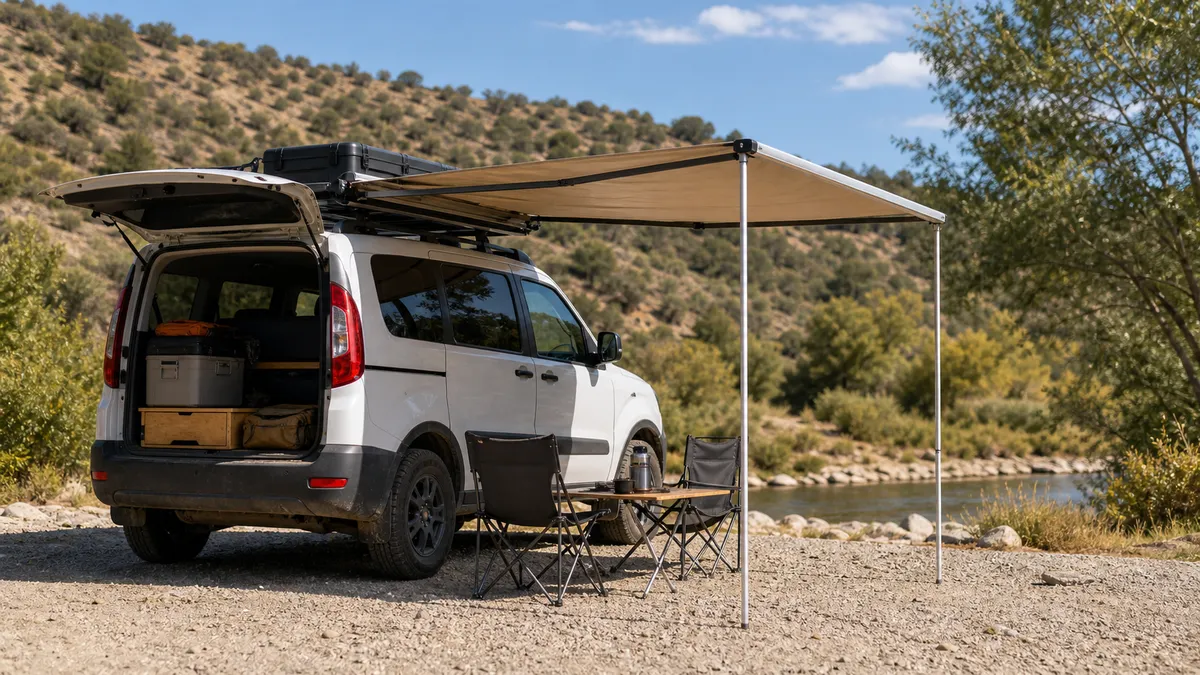
Car Awning Guide
Use this when car awning is closer to the real constraint than the current page.
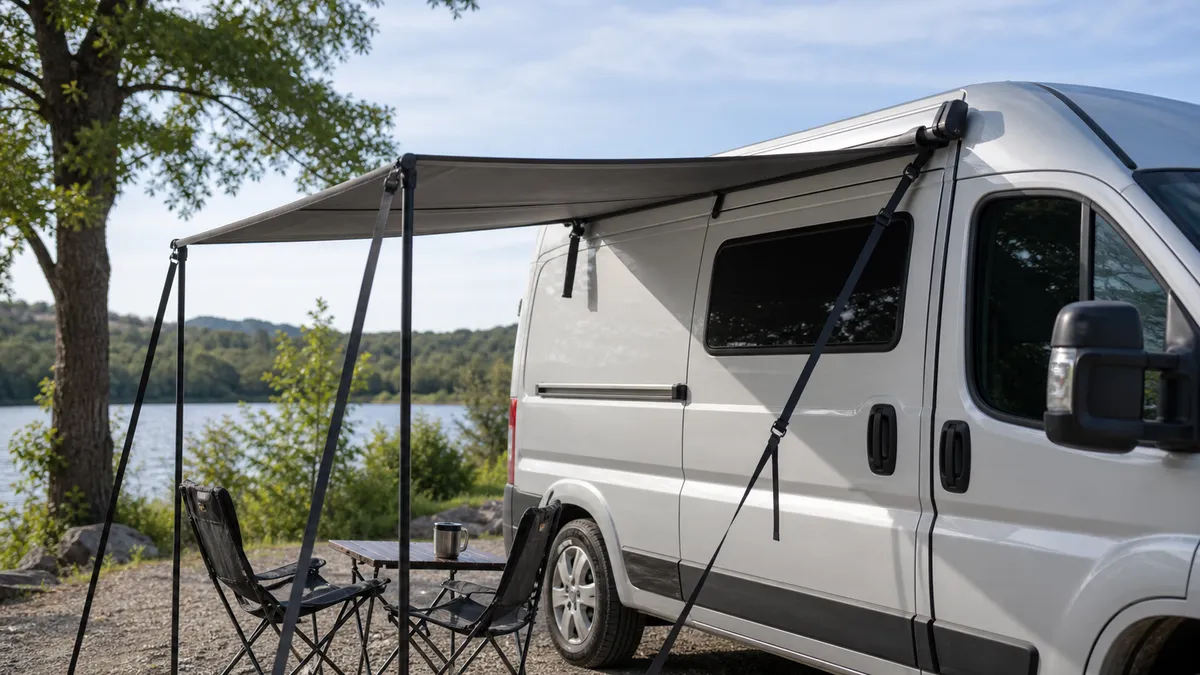
Awning for Van Without Roof Rack
Use this when awning for van without roof rack is closer to the real constraint than the current page.
Questions
FAQ
Can my existing roof rack carry an awning while driving?
Only if the vehicle manual, installed rack and awning bracket instructions all allow it. Use the lowest relevant published number: vehicle roof rating, rack dynamic rating and off-road rating if you drive unsealed roads. Rhino-Rack separates static parked capacity from travel rated limits, so do not use static capacity as the driving limit.
How much crossbar spread does a rack-mounted awning need?
Follow the awning and bracket instructions for your exact kit. Yakima EasyOff instructions use a 61 cm / 24 in minimum crossbar spread, and older Yakima SlimShady fit guidance lists a Yakima-specific 24 to 77 in range. Other brands can differ, so treat those as examples.
Are quick-release awning brackets universal?
No. Quick-release brackets must match the rack profile, channel or T-slot, awning rear channel, bracket pitch and latch or lock design. Front Runner, for example, describes a quick-release bracket made for a Slimline II side profile with 50 mm height and an M8 accessory channel.
Can I mount an awning beside a roof tent, solar panel or roof box?
Yes, but only after the combined roof load, bracket access and clearance checks pass. Count the tent, solar panel, roof box, brackets and awning together. Check ladder side, solar service access, cargo straps, door swing and hatch travel before tightening the awning.
Do I need two awning brackets or three?
Follow the awning and rack maker. ARB says at least two brackets are required for ARB awnings and three are highly recommended for some 2500 mm ARB aluminum and PVC bag awnings. Use that as an ARB-specific example, not a rule for every case.
What should I check before driving after installation?
Shake the case and inspect fabric, zipper, clamps, bolts, T-slot hardware and any quick-release latch. Yakima requires no front-to-back or side-to-side movement after tightening. NHTSA secure-load guidance asks whether cargo could fall, shift or endanger traffic behind you.