
Quick Answer
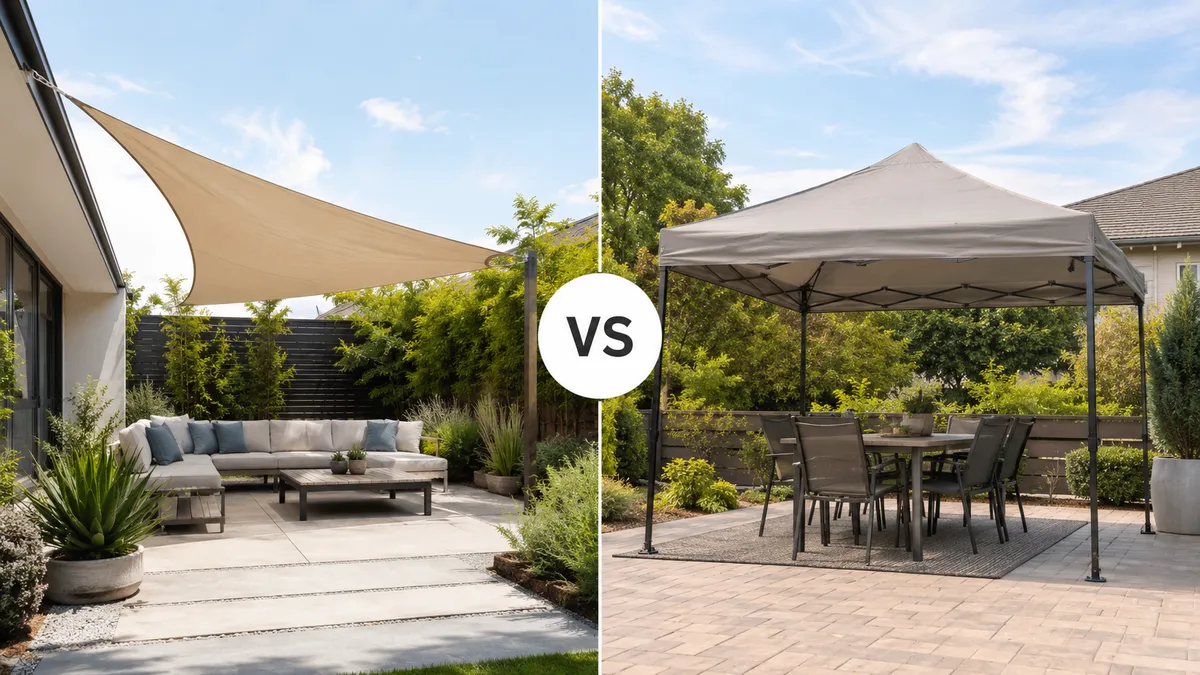
shade sail vs canopy: the short version
Choose a shade sail when the patio or pool area stays in the same place and real anchors can be built. Choose a canopy when shade must move for renters, parties, sports or changing furniture. For wind, pick the product you will remove, close or secure before gusts arrive.
Choose a shade sail for fixed shade with real anchors; choose a canopy when removal, storage and movable shade matter more.
Side by Side
Fast comparison snapshot
| When this matters | Choose | Why |
|---|---|---|
| Patio is used every weekend with the same furniture setup | Choose a shade sail if real anchor points can be built. | Repeated use rewards a fixed installation with cleaner circulation. |
| Family needs shade for two summer parties | Choose a canopy that can be packed after the event. | Short-term use does not justify posts and tensioned corners. |
| Rental yard cannot be drilled or excavated | Choose a weighted canopy or umbrella setup. | The removable support method is the real requirement. |
| Wind is common and shade will be left unattended | Choose neither unless the product is rated for that exposure and closure plan. | Both fabric products become liabilities without weather management. |
| Small patio has no storage space | Choose a compact fixed sail or a half umbrella, not a large pop-up canopy. | Canopy frames need storage volume after use. |
Fixed shade versus movable shade
A shade sail works best when the seating zone, anchor points and season are predictable. It becomes part of the patio structure. A canopy works best when shade must move with people, events or changing furniture. Start by asking whether the shaded place stays put.
A canopy can be the better tool for renters, weekend sports, parties and driveway work. A sail can be the better tool over a pool edge, lounge zone or outdoor dining area that returns to the same place every week; use the shade sail planning guide when anchors, slope and seasonal removal are still open.
A canopy is the better answer when shade must follow changing events. It can move from patio to driveway to lawn, then disappear into storage. A sail is the better answer when the same seating area needs a cleaner everyday solution and the anchors can be built once.
For renters, a canopy can still be too much if weights mark surfaces or block shared walkways. Removable shade must be removable and considerate, not just free of drilled holes.
For seasonal homeowners, the removal calendar can decide the answer. A canopy is removed after each use, while a sail may stay up for months and then need a planned takedown day before storms or winter.
For example: Patio is used every weekend with the same furniture setup. Choose a shade sail if real anchor points can be built. Repeated use rewards a fixed installation with cleaner circulation. If both choices need the same missing support, solve that support problem before comparing fabric or price.
Before ordering: Small patio has no storage space. Choose a compact fixed sail or a half umbrella, not a large pop-up canopy. Canopy frames need storage volume after use. If both choices need the same missing support, solve that support problem before comparing fabric or price.
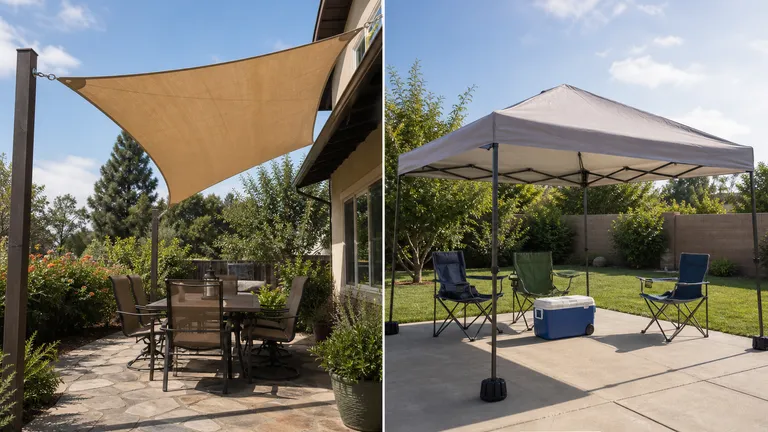
Wind, water and setup behavior
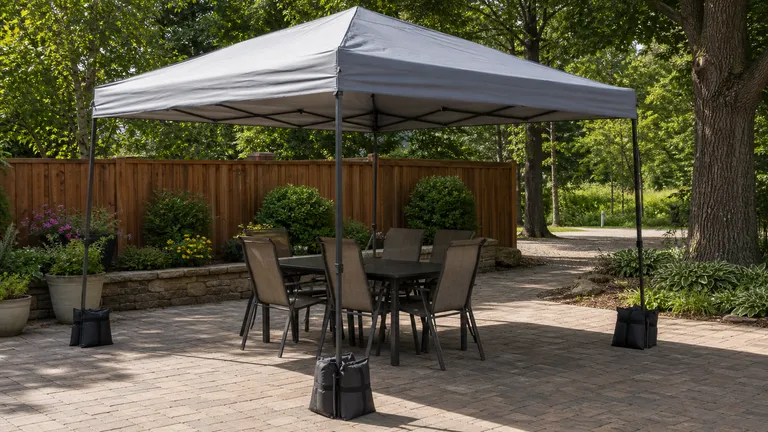
A canopy frame can rack or lift when legs are under-ballasted, while a sail can flap or overload anchors when tension and slope are wrong. Canopies usually fail at legs, joints or fabric tops. Sails usually fail at anchors, tension or water drainage.
For rain, a canopy may shed water better because it has a roof form, but cheap models can still pond or collapse. A sail needs planned high and low corners. For wind, use the product that can be secured, closed or removed before conditions exceed the manual.
For exposed sites, compare how each product ends the day. A canopy should be lowered, dried and stored. A sail should be tensioned, inspected and sometimes removed seasonally. If nobody will do either task, use an umbrella that closes in seconds.
For storage-limited apartments, a canopy may lose despite being temporary. The frame, cover and weights need somewhere dry to live. A compact umbrella or approved side screen can be less capable and still more realistic.
In a rental yard where drilling or excavation is off limits, choose a weighted canopy or umbrella setup. Removable support is the real requirement, not the fabric style.
Tie-breaker when both cover the same area
Pick the canopy when removal and storage are benefits; pick the sail when clear floor space and a cleaner permanent look matter more. If a canopy would stay up all season in a windy yard, it is being used against its strength. If a sail would need weak anchors to avoid posts, it is being forced into a bad site.
When both products could cover the same chairs, choose the one whose worst day is easier to manage. A canopy's worst day should end with packing it away. A sail's worst day should be planned through slope, tension and seasonal removal.
Canopies often include legs inside the usable area. That matters around pools, grills and compact patios where traffic is tight. A sail can leave the floor open, but only by moving loads into posts and anchors.
For long-term appearance, sails usually integrate better with a designed yard. Canopies tend to read as event equipment. That visual difference matters on patios that are visible from kitchens, neighbors or shared spaces every day.
Where wind is common and shade may be left unattended, neither a sail nor a canopy is automatically safe. The closure plan and anchor strength matter more than the shape of the fabric.
Path guide
Categories to compare after choosing a path
Use these after deciding whether fixed anchors or movable shade fit the site.
Fixed
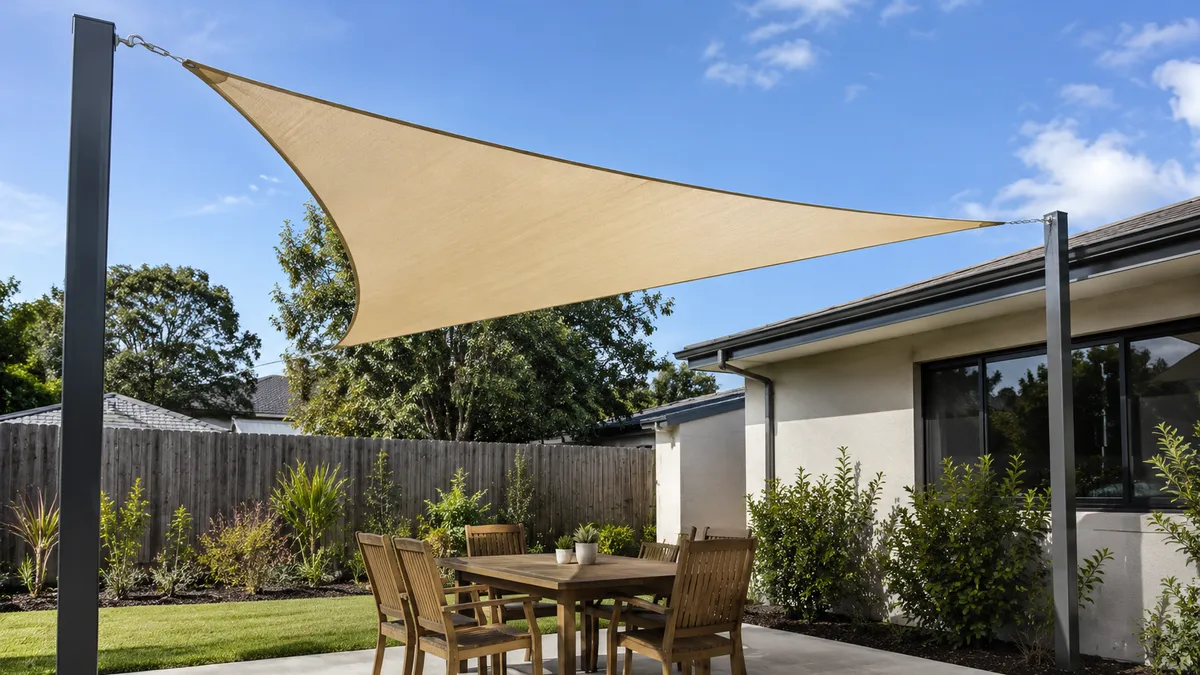
Patio Shade Sail
For fixed patio shade where anchors or posts can stay in place.
- Fixed shade area
- Clear floor space
- Needs real anchors
Check:Post locations, drainage slope and wind exposure.
Compare categories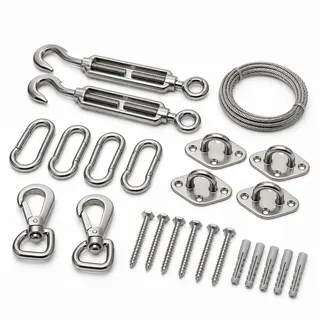
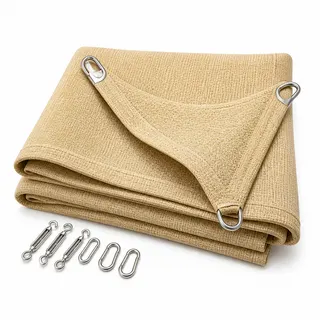
Hardware
Shade Sail Hardware Kit
For tensioned shade only after anchor strength is clear.
- Turnbuckles and plates
- Tension adjustment
- Not a weak-post fix
Check:Anchor material, sail size and hardware spacing.
Compare categories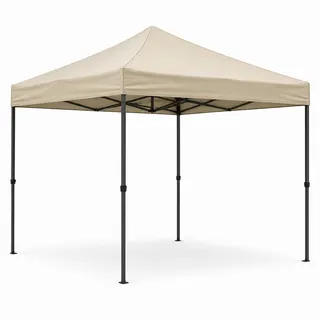
Portable
Pop Up Canopy Outdoor
For events, renters and shade that moves by season or task.
- Movable shade
- Needs storage
- Use ballast
Check:Weight bags, storage space and pack-down routine.
Compare categoriesWatch-outs
Before you buy or install
- Pop-up canopies are not automatically safe as permanent patio roofs.
- Shade sails are not renter-friendly unless the anchor path is already approved.
- Ballast requirements can make a portable canopy less portable than expected.
Read Next
Related guides
Shade Sail Guide
Use this when shade sail is closer to the real constraint than the current page.
Shade Sail vs Awning
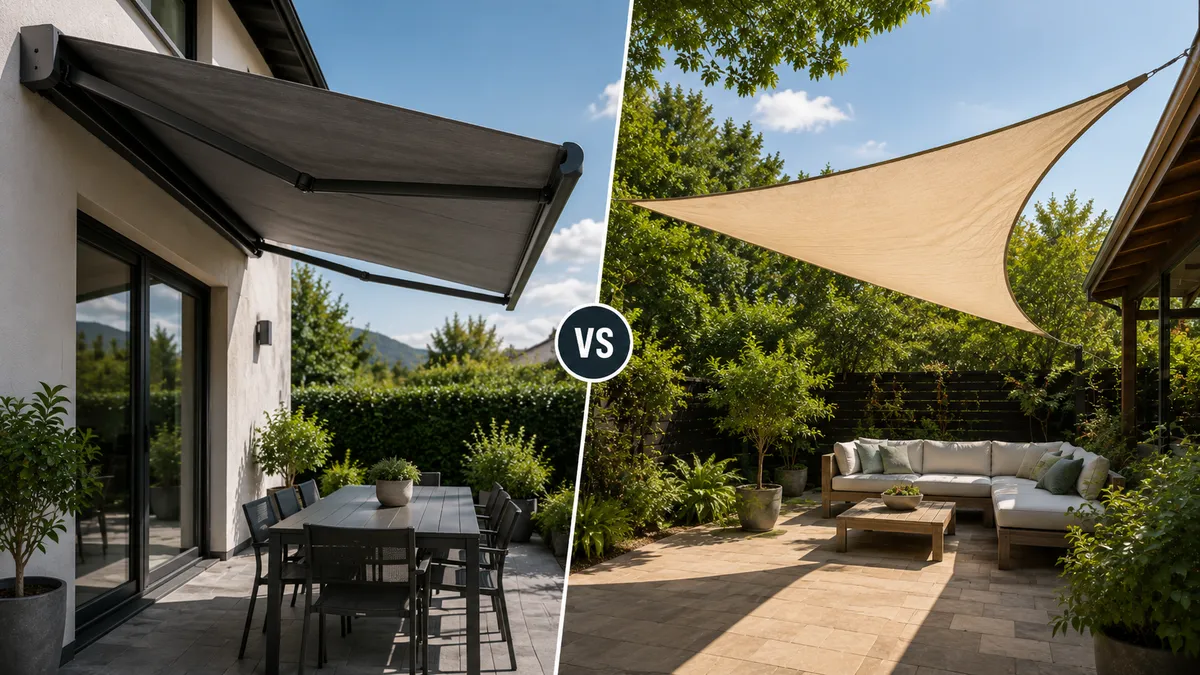
Use this when shade sail vs awning is closer to the real constraint than the current page.
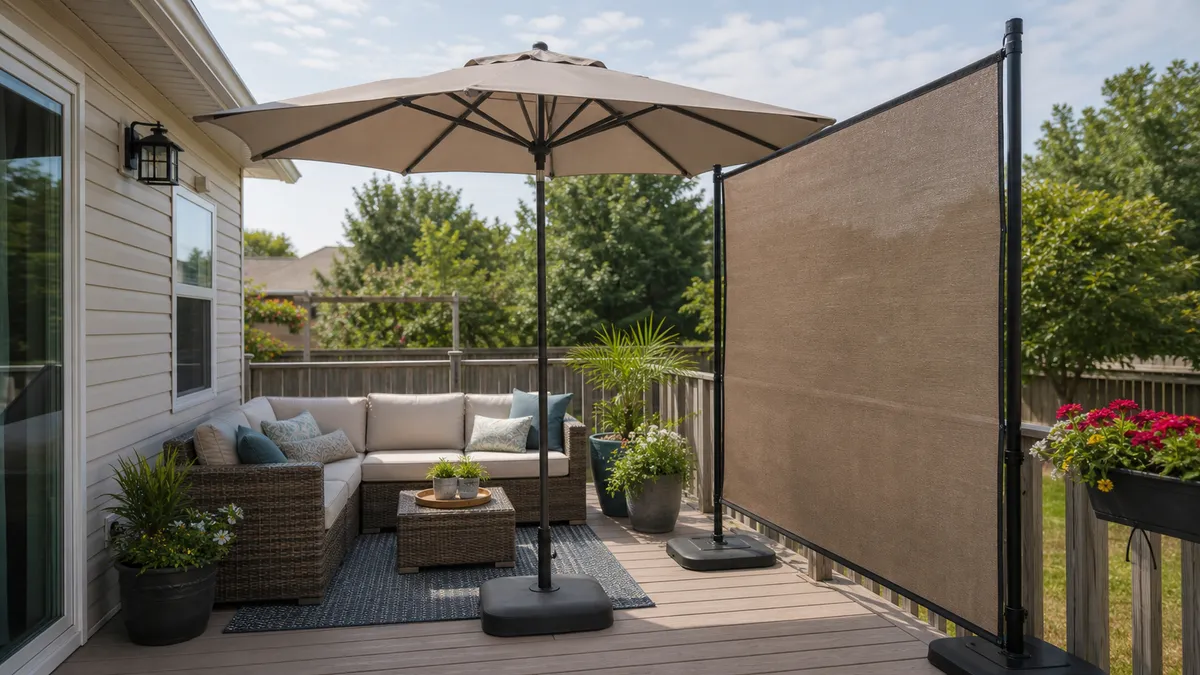
Patio Shade Without Drilling
Use this when patio shade without drilling is closer to the real constraint than the current page.
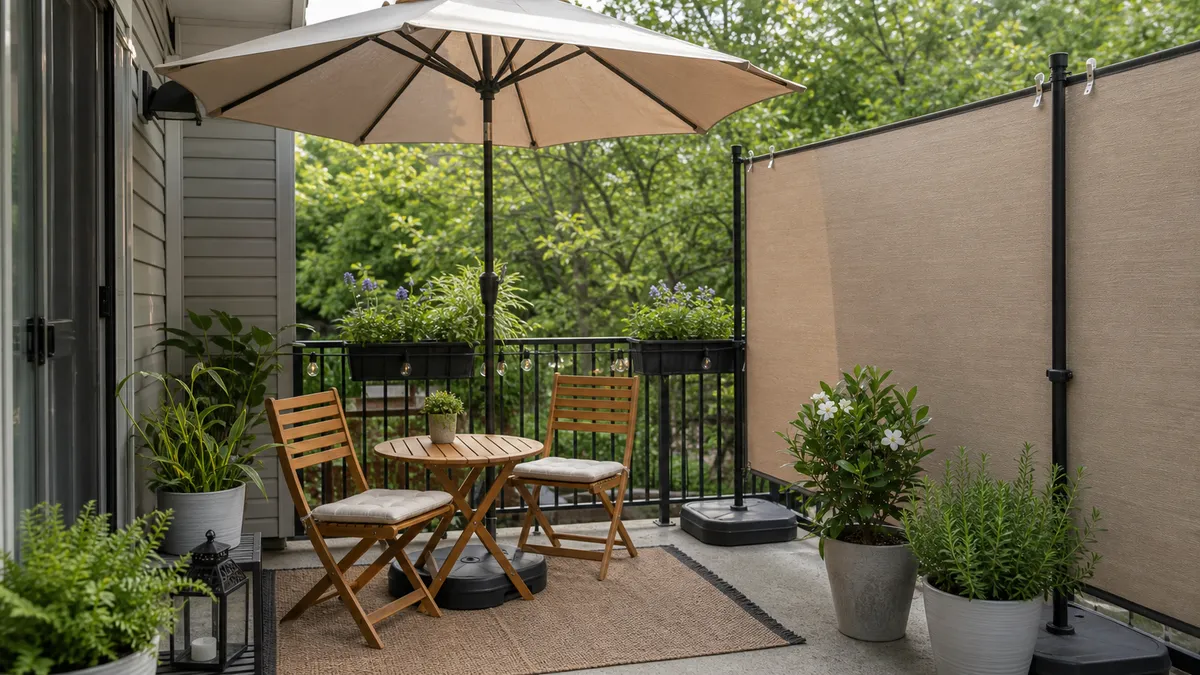
Renter-Friendly Patio Shade
Use this when renter friendly patio shade is closer to the real constraint than the current page.
Questions
FAQ
Is a shade sail better than a canopy?
A shade sail is better for a planned permanent shade area with strong anchors. A canopy is better for events, renters, driveways, sports and patios that change. The stronger answer depends on whether the shaded place stays put.
Which costs more, a shade sail or a canopy?
A pop-up canopy can cost less at purchase, but ballast, replacement tops and broken frames add up. A shade sail can cost more when posts, concrete and wall plates are needed. Compare five years of real use, not the box price.
Which handles wind better?
Neither should be treated as storm-proof. A canopy should be lowered or packed before unsafe wind. A sail needs strong anchors, slope, tension and sometimes seasonal removal. Choose the one with a weather routine you will actually follow.
Which is better for renters?
A canopy is usually better for renters because it can be removed without posts or wall plates. It still needs safe ballast and storage. A shade sail is renter-friendly only when approved anchors already exist.