
Quick Answer
shade sail for carport: the short version
A shade sail for carport parking is worth buying for seasonal sun reduction only when the posts or wall anchors are structurally proven, the car has door and hatch clearance, and the sail can come down before strong wind. Do not buy one as a cheap roofed carport for hail, snow, security, year-round rain protection or unattended storm coverage.
Buy a carport shade sail only for seasonal sun control over proven posts or wall anchors; choose a real carport, garage or engineered canopy when weather protection is the job.
Buying Direction
What to buy for the carport bay
Use this table after anchor, clearance, wind and runoff checks pass.
| Situation | Buy / use this | Why |
|---|---|---|
| One car needs seasonal roof and windshield shade, with verified posts or a structural wall available | Use a rectangle mesh sail with corrosion-resistant hardware and clear tensioning space. | A four-point mesh sail gives broader car coverage and simpler drainage than a small triangle or flat coated fabric. |
| The only possible anchors are gutters, decorative trim, weak fence posts or unverified fascia | Do not buy the sail first; get the structure checked or use a freestanding car shade. | Coolaroo installation guidance says fixing points must be structurally sound and uncertain points need builder or engineer advice. |
| Rain shedding is part of the purchase reason | Use waterproof fabric only when the manual's slope, low corner and runoff path all work. | Flat coated fabric can hold water above the vehicle and add load to posts, wall plates and turnbuckles. |
| The bay must protect the car during hail, snow, high wind or long absences | Choose a real carport, metal canopy, garage or engineered driveway cover instead. | A fabric sail is not roofed vehicle protection, and local code may treat carports and large sails as structural work. |
| Posts would block doors, trunk access, garage travel, trailer paths or turning radius | Move the posts or skip permanent posts before ordering fabric. | A shaded car bay is still a bad buy if the doors, trunk or garage path no longer work. |
What to buy for a carport shade sail
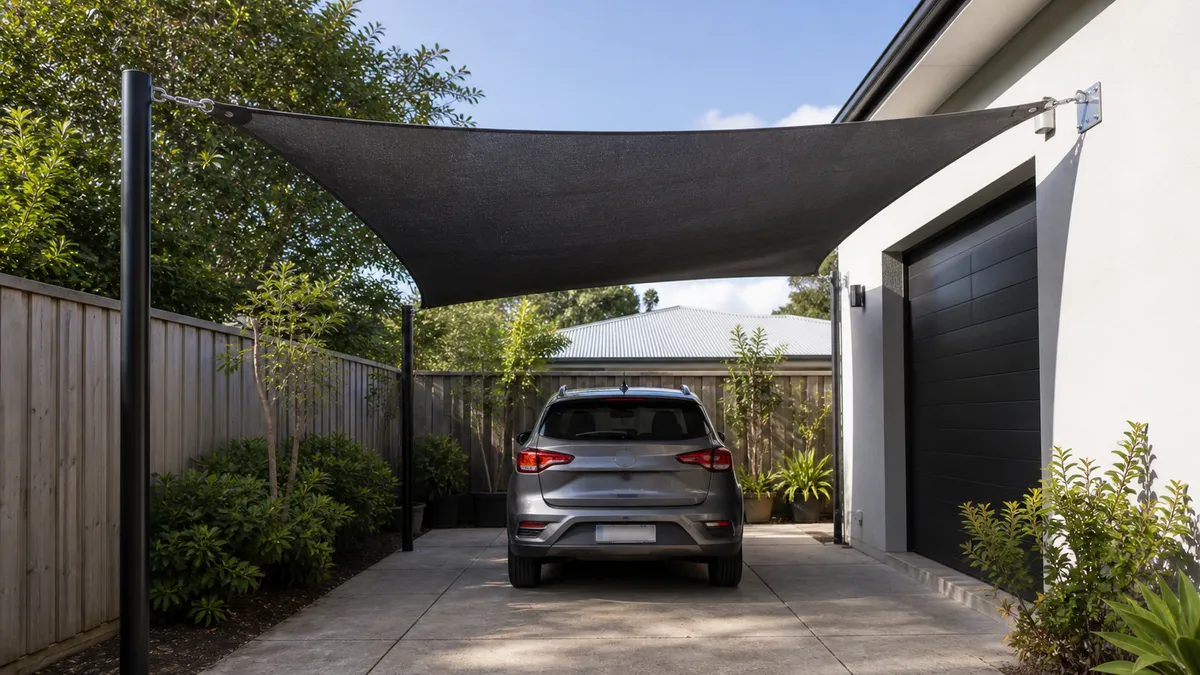
A rectangle mesh sail is the simplest buy when the goal is seasonal sun over one parked car and the anchors are already proven. The carport bay needs four usable corners, enough height for the vehicle, and open space around the sail corners for turnbuckles, shackles and eye hardware.
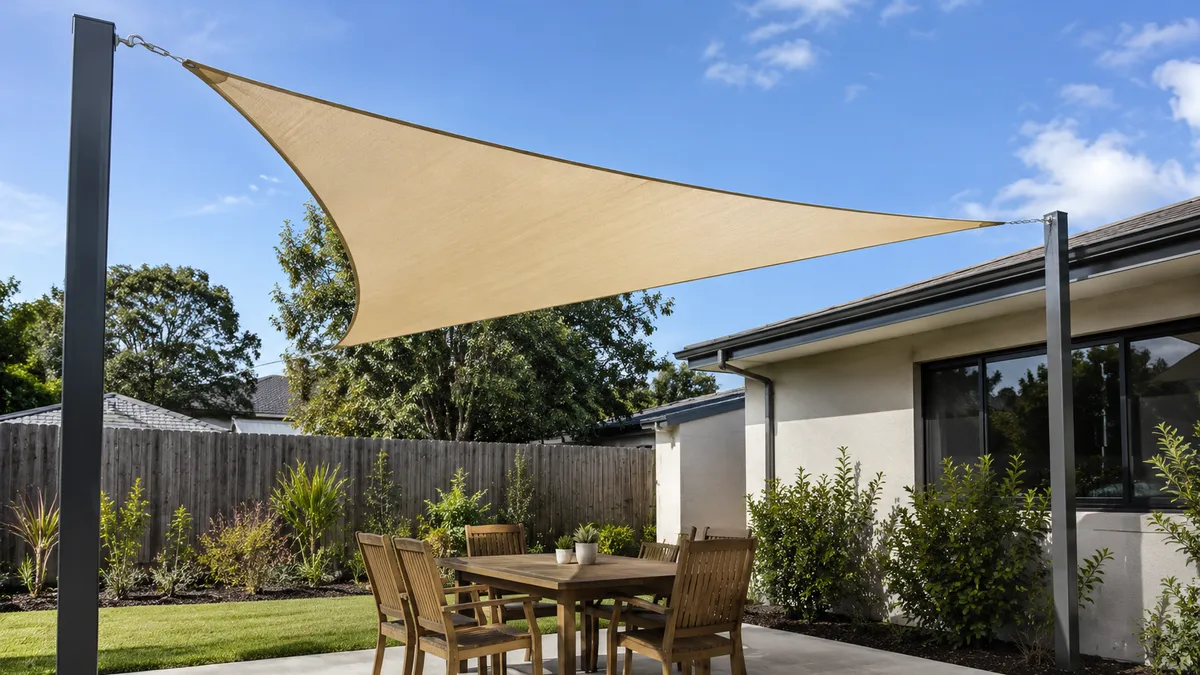
A triangle sail can help with a narrow side-sun problem, but it is usually a poor full-car cover. The missing corners often leave the hood, windshield or door panels exposed, and making the triangle larger can add wind surface without shading the whole car.
A waterproof or water-resistant sail is a narrower purchase. Coolaroo USA gives a 10 to 20 degree runoff example, one Home Depot hosted manual gives 20 to 30 degrees, and Shade Sails LLC gives a 25 percent slope note for its waterproof custom context. Treat those as manual examples, then follow the sail you buy instead of forcing one number onto every driveway.
Do not treat an existing carport fascia or garage trim as an anchor by default. Coolaroo's installation material says fixing points must be structurally sound and recommends independent builder or engineer advice when the strength is uncertain.
- Best first buy: rectangle mesh sail plus turnbuckles, D shackles, pad eyes or eye bolts, sized with a hardware gap.
- Partial-shade buy: small triangle sail only for one low-sun angle, not for complete car coverage.
- Rain-focused buy: waterproof fabric only when slope, drainage direction and tension maintenance are solved.
- Stop-buy signal: weak anchors, no removal routine, or any need for hail, snow or permanent roof protection.
Fit, coverage and car clearance
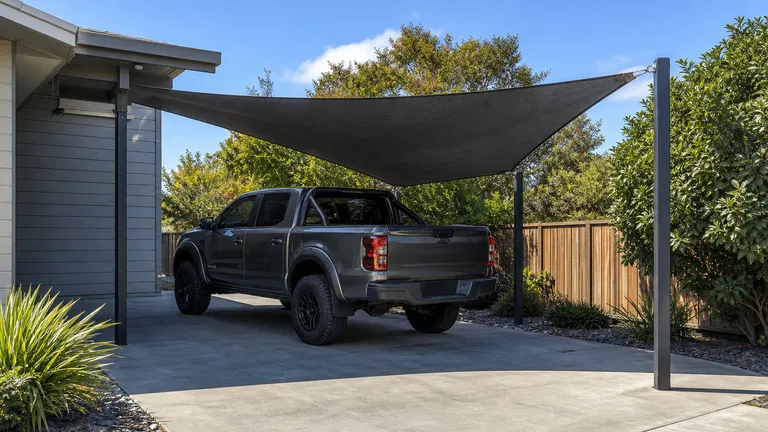
Measure shade from the parked car, not from the driveway slab. The roof, windshield, hood and driver-side door are the usual targets, but low morning or afternoon sun can still hit side panels even when the roof is shaded at noon. EPA UV guidance uses shadow length as a practical clue, so check the bay when shadows are short and again when the failed side-sun hour arrives.
The sail cannot fill the anchor opening edge to edge. Coolaroo USA uses a 10 to 12 inch corner-to-fixing gap example, and Shade Sails LLC says custom sizing must allow for turnbuckles, shackles, stretch and curved edges. Shade Sails LLC also notes that curved edges can reduce useful straight-line coverage, which matters when the car corners need shade.
Clearance is a car-specific deal breaker. Open all doors, the trunk or liftgate, the hood if maintenance happens in the bay, and any roof rack, cargo box, antenna or ladder rack before choosing post height. Also check walking room beside the car, garage door travel, gate swing, bins, mower access, trailer paths and snow clearing.
- Mark where shade lands on the roof, windshield, hood and driver-side door at the worst hour.
- Size from fixing eye to fixing eye, then subtract the hardware and fabric edge allowance.
- Open doors and liftgates under the proposed low corner before buying posts or fabric.
- Keep posts out of the turning path, garage threshold, trash-bin route and trailer access.
Category research
Carport shade sail categories to compare
Compare these categories only after the anchor, clearance, wind and runoff checks above pass. These are not ranked picks.
Broad sun
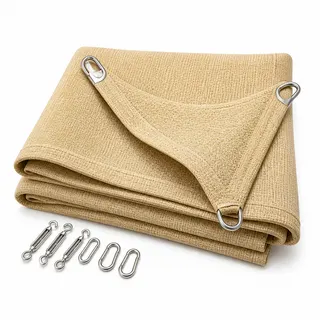
Rectangle mesh shade sail
Best fit for one-car seasonal sun when four verified fixing points exist.
- Covers more car area than a triangle
- Breathes and drains through fabric
- Still needs a storm routine
Check:Anchor strength, hardware gap, curved-edge coverage and vehicle clearance.
Research category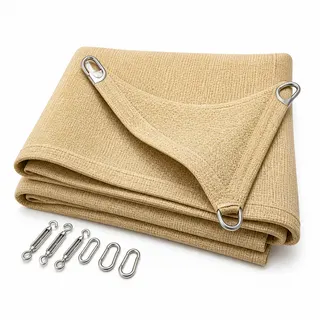
Rain caveat
Waterproof shade sail
Only where the manual's slope and runoff path are realistic.
- Needs high and low corners
- Can pool when flat or loose
- Runoff must miss walkways
Check:Manual slope, drainage direction, low corner and water path away from the vehicle.
Research category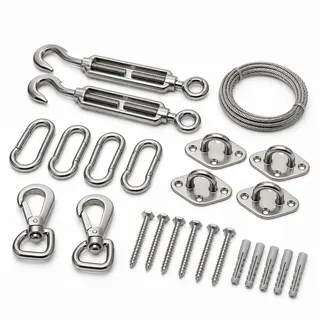
Hardware
Shade sail fixing kit
Compare after the wall plates, eye bolts and turnbuckles match real fixing points.
- Turnbuckles set tension
- Pad eyes need structure
- Hardware does not fix weak posts
Check:Material grade, fastener compatibility, wall or post structure and corrosion exposure.
Research categoryAnchors, posts and wind routine
The strongest fabric cannot compensate for weak fixing points. Better anchor candidates include properly designed posts, suitable masonry, verified structural framing or engineered steel members. Bad candidates include gutters, thin fence rails, rotten timber, decorative trim, hollow masonry and any fascia or existing carport member that has not been checked for the actual tension path.
Mississippi State University Extension says each sail corner needs an anchor, posts should be set in concrete, and posts must be sturdy enough for wind. Coolaroo planning guidance adds that local regulations and site wind conditions should be checked before installation. For a carport bay, that matters because a failed corner can drop hardware or fabric onto the vehicle.
Wind has to be solved before buying. Coolaroo's planning guide says not to leave the shade sail installed during periods of strong wind and to remove it if windy conditions are expected. If the car is often parked while nobody is home, buy only if one person can lower or remove the sail before bad weather.
Do not enlarge the sail to fix poor shade without revisiting anchors. More fabric gives wind more surface, and over a parked car the consequence is not only torn cloth; it can be damaged paint, broken glass, pulled masonry or a bent post.
- Use structural posts, verified framing, suitable masonry or engineered members as fixing points.
- Reject gutters, trim, weak fences, rotten timber and unchecked fascia as casual anchors.
- Ask a builder or engineer when the load path is unclear.
- Plan who removes or loosens the sail before strong wind, snow or long absences.
Mesh vs waterproof over a car
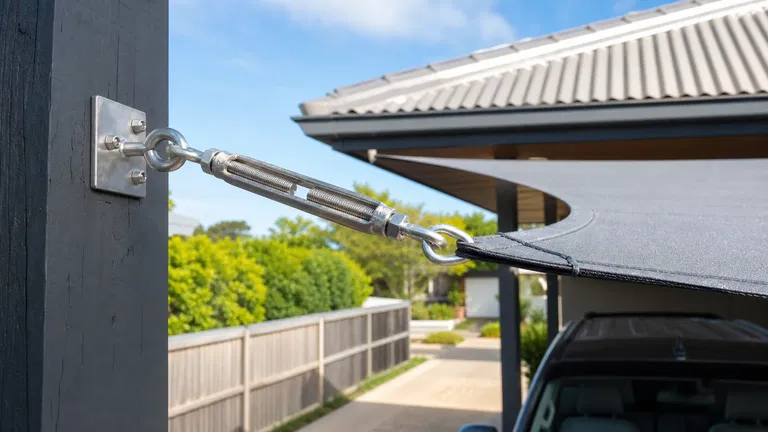
Mesh is usually the easier carport shade buy when the main problem is heat and UV exposure. It lets some air and water through, so it is less likely to create a heavy water pocket above the car. The trade-off is simple: the car still gets wet, and wind-driven rain can still reach the sides.
Waterproof fabric can make sense only when the product is designed for it and the install has enough fall. Coolaroo USA warns against flat installation and water pooling, while product manuals give different runoff examples. Use the exact product manual, then aim water away from the garage threshold, the vehicle roof, walking paths, a neighbor's property and slick driveway zones.
Paint and interior protection claims need restraint. Progressive's vehicle-care guidance supports the broad point that heat and UV exposure can contribute to paint, clear-coat, upholstery and dashboard wear over time, but this page cannot promise an exact paint-life gain or cabin-temperature drop. The sail reduces direct sun where its shadow actually lands.
A shade sail is also not a parked-car safety device. NHTSA's heatstroke guidance says parking in shade does little to change interior temperature for child-safety purposes. Never use shade over a car as permission to leave children, pets or vulnerable adults inside.
- Choose mesh for simpler drainage when rain protection is not the goal.
- Choose waterproof fabric only with manual-approved slope, tension and runoff.
- Do not route water onto the car, across a walkway or into the garage.
- Do not claim occupant safety, exact temperature reduction or guaranteed paint protection.
Fabric choice
Mesh or waterproof above a vehicle
Pick fabric by the problem you can manage, not by the strongest product promise.
| Fabric | Better for | Main limit | Before buying |
|---|---|---|---|
| Breathable mesh | Seasonal sun reduction and easier drainage. | Does not keep the car dry. | Check UV rating, shade coverage and anchor strength. |
| Waterproof or water-resistant coated sail | Some rain shedding when the manual allows slope and tension. | Can pool water if flat, loose or undersloped. | Confirm runoff angle, low corner and drainage destination. |
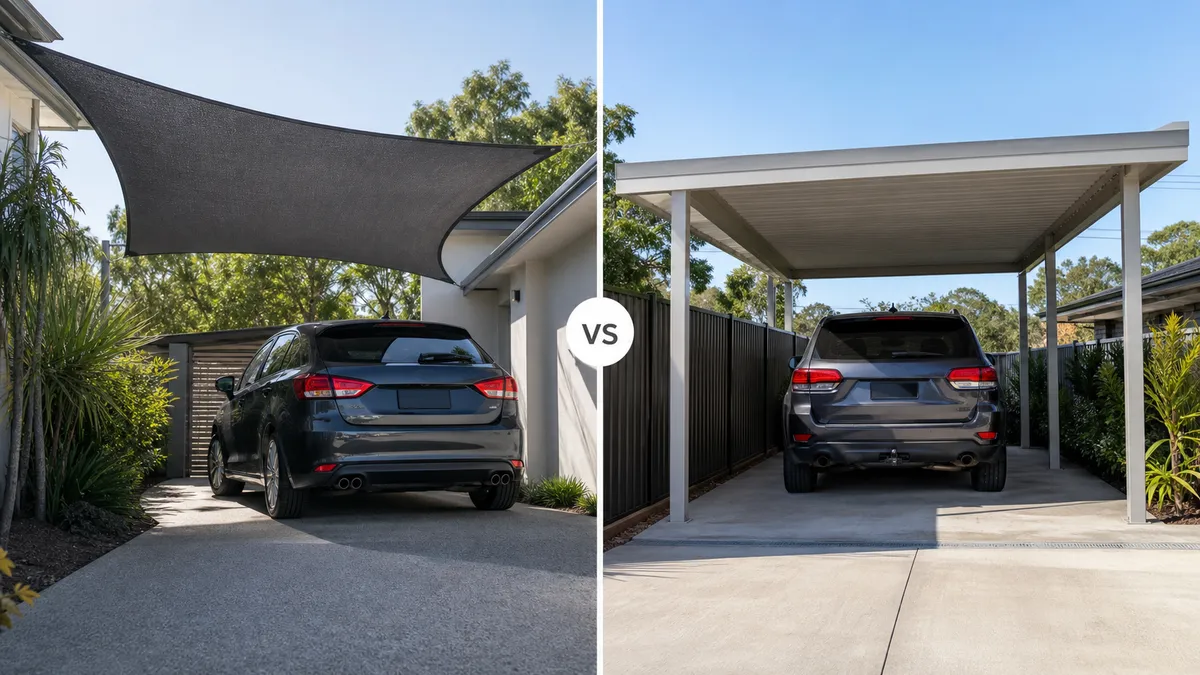
| Real carport roof | Rain, hail, snow or permanent vehicle weather protection. | Higher permit, cost, setback and structure requirements. | Check local code, HOA rules and engineered load requirements. |
Installed cost, hardware and permits
Do not compare a shade sail kit with a carport by fabric price alone. Total cost includes fabric, posts, footings, wall plates, eye bolts, turnbuckles, shackles, labor and possible checks before the sail is safe over a car. If the bay needs new posts in concrete and structural review, the cheap-sail argument gets weaker.
Common hardware lists from product manuals include turnbuckles, pad eyes or eye bolts, snap hooks or carabiners, ropes or tensioning cords. Shade Sails LLC also recommends installing fixing eyes before final custom measurements so the sail is sized around the actual hardware, not an imagined rectangle.
Permits and HOA rules are not the same everywhere. Local authorities can treat shade sails and carports differently depending on attachment, size, height, location and structural review. Kirkland's carport page is one example showing that real carports can be regulated parking structures needing permit review.
Check the building department, HOA or CC&Rs, lease, easements and property-line rules before drilling into a wall or setting permanent posts. A renter or HOA-restricted driveway may be better served by a removable vehicle shade, a garage routine or no permanent installation.
- Price fabric, corner hardware, wall plates, posts, concrete, labor and structural checks together.
- Ask whether local rules change when the sail is attached to the house or near a property line.
- Treat a real carport as a different project, not the expensive version of the same fabric purchase.
- Do not buy permanent posts if lease, HOA or setback rules are unresolved.
Installed total
Cost items to include before comparing with a carport
Use this as an item list, not as a universal price estimate.
| Cost item | Why it matters | Skip or reduce only when |
|---|---|---|
| Sail fabric | Shape, fabric type and size decide basic coverage. | The existing shade problem is only a narrow side-sun angle. |
| Turnbuckles, D shackles, pad eyes or eye bolts | Hardware sets tension and consumes space at each corner. | The product kit already includes compatible hardware for the fixing points. |
| Posts, footings and concrete | Freestanding corners need real support before tensioning fabric. | Verified structural walls or engineered existing posts already work. |
| Labor or structural advice | Uncertain anchors over a vehicle carry property-damage risk. | A qualified person has already confirmed the load path. |
| Permit, HOA or lease work | Permanent exterior structures can trigger local approval. | Rules clearly allow the exact attachment and post locations. |
No dollar range is shown here because the approved research did not provide a reliable installed-cost source for this specific carport sail setup.
When a shade sail is the wrong carport buy
Choose a real carport, garage, metal canopy or engineered driveway cover when the car needs roofed weather protection instead of seasonal sun shade. That includes hail risk, snow load, falling branches, year-round rain coverage, insurer expectations, security, or a parking space that must be protected while nobody is home.
Skip the sail when water has nowhere safe to go. Runoff that dumps onto the vehicle, freezes on the driveway, crosses a walking route, enters the garage or lands on a neighbor's side is not a small inconvenience. A breathable mesh sail, different post positions or a real roof may be the cleaner answer.
Do not buy fabric to hide a structural problem. If the only anchor candidates are thin fence posts, hollow masonry, unverified fascia, gutters or decorative trim, the first purchase is advice or a different shade type, not a bigger sail.
Use the deeper side-by-side guide when the decision is really shade sail versus carport. Use the driveway sail guide when the problem is broader post placement, vehicle turning and open-driveway exposure rather than a carport-style bay.
- Choose a real carport when hail, snow, year-round rain or code-compliant vehicle protection is required.
- Choose a garage or metal canopy when security, falling debris or unattended weather matters.
- Move the posts when they block doors, liftgate travel, trailers or the garage path.
- Choose no permanent install when HOA, lease, easement or setback rules are unresolved.
Watch-outs
Before you buy or install
- Do not attach car shade fabric to gutters, decorative trim, weak fence posts or unchecked fascia.
- Do not leave a sail over the car when the product manual or forecast calls for removal.
- Do not use waterproof fabric above a vehicle without slope, tension and a safe runoff path.
- Do not treat shade as permission to leave children, pets or vulnerable adults inside a parked car.
Read Next
Related guides if your situation is different
Shade Sail Guide
Use this when shade sail is closer to the real constraint than the current page.
Shade Sail vs Carport
Use this when shade sail vs carport is closer to the real constraint than the current page.
Shade Sail for Driveway
Use this when shade sail for driveway is closer to the real constraint than the current page.
Questions
FAQ
Is a shade sail a good substitute for a carport?
It is a partial substitute for sun shade, not for a roofed carport. Buy one when seasonal sun reduction is the goal and the anchors, clearance and wind routine are solved. Choose a carport, garage or engineered canopy for hail, snow, permanent rain protection, security or unattended weather.
Can I attach a shade sail to an existing carport or garage fascia?
Only after the fixing point is structurally verified. Gutters, trim, weak fence posts and unchecked fascia are not casual anchors over a vehicle. Coolaroo installation guidance says uncertain fixing points should be assessed by a builder or engineer, and fascia attachment may need proper support.
Is mesh or waterproof fabric better over a car?
Mesh is usually simpler for sun reduction because it breathes and drains, but it will not keep the car dry. Waterproof fabric belongs only where the product manual's slope, tension and drainage path work, because flat or sagging coated fabric can pool water above the vehicle.
How much smaller should the sail be than the opening?
Leave room for hardware and fabric behavior. Coolaroo USA gives a 10 to 12 inch corner gap example, while Shade Sails LLC sizes custom sails around turnbuckles, shackles, stretch and curved edges. Measure fixing eye to fixing eye before ordering custom fabric.
Will a shade sail keep my car safe for children or pets?
No. A sail can reduce direct sun on parts of the vehicle, but it is not a parked-car safety measure. NHTSA heatstroke guidance says parking in shade does little for child-safety temperature risk, so never leave children, pets or vulnerable adults in a parked car.
Do shade sails over cars need permits?
Maybe. Rules can depend on attachment, area, height, setbacks, wind or snow engineering, HOA terms and lease restrictions. Treat the local building department, HOA or lease as the authority before drilling into a wall or setting posts.