
Quick Answer
renter friendly patio shade: the short version
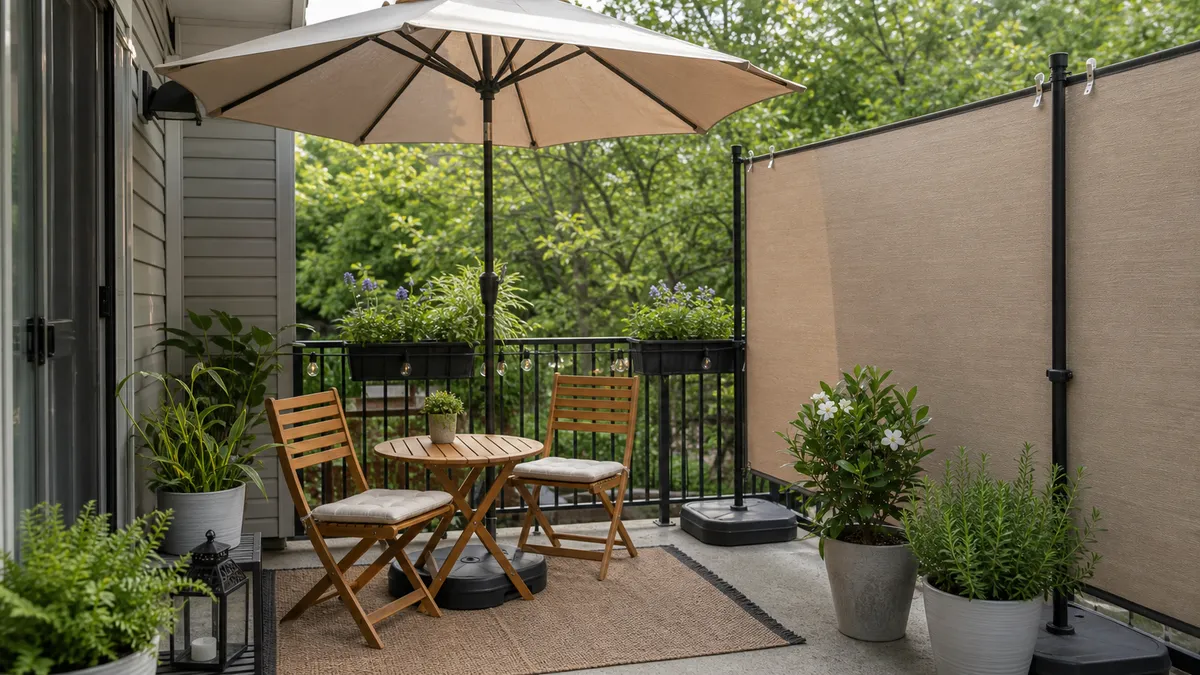
Use renter-friendly patio shade that can be removed cleanly, stored dry and explained under the lease. Start with freestanding umbrellas, folding screens or approved clamps, and avoid anything that leaves holes, stains, bent rails or adhesive marks.
Choose removable shade when the lease, building rules and surface protection all allow it without drilling or permanent marks.
Diagnosis
Most common problems
Check the symptom before buying another shade product.
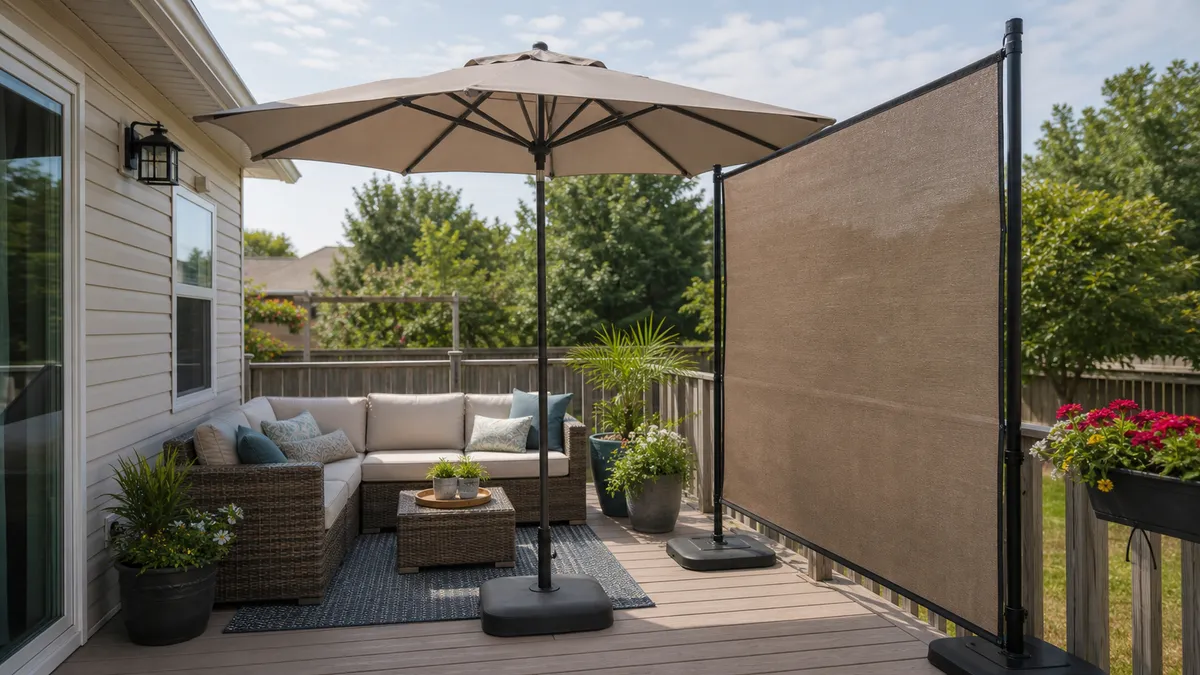
Apartment balcony allows furniture but no rail attachments
The rail rule removes clamps from the shortlist.
Patio has low afternoon glare
Side shade solves the glare without permanent brackets.
Small slab cannot hold a large base
Renter shade still has to leave usable space.
Written approval may allow a semi-permanent fixture
The approval is part of the product.
Diagnosis checklist for renter shade
If a shade product needs a hole, bracket, rail clamp or adhesive pad, treat it as permission-dependent. Renter-friendly means removable without damage and defensible under the lease. A product advertised as temporary can still leave marks, bend a rail or violate exterior appearance rules.
Check three documents before shopping: lease, building rules and balcony or deck guidelines. If they disagree, follow the strictest rule until you have written clarification.
Move-out thinking should guide the purchase. If the product leaves compression marks, rust rings, adhesive residue or faded rectangles, it may cost more than a permanent-looking approved fixture. Removable shade should be reversible in practice, not just in packaging language.
Documentation can also help with good products. Save the manual page showing that the item is freestanding or removable. If questions arise, the answer is stronger when it points to a product document rather than a verbal promise.
If the patio surface is delicate, choose broad pads under bases and move them occasionally. Preventing marks is easier than arguing about whether a stain existed before move-in.
For example: Apartment balcony allows furniture but no rail attachments. Use a weighted half umbrella or floor screen. The rail rule removes clamps from the shortlist. Stop and reassess if the support, mount or weather problem is still visible after the first fix.
Before ordering: Apartment balcony allows furniture but no rail attachments. Use a weighted half umbrella or floor screen. The rail rule removes clamps from the shortlist. Stop and reassess if the support, mount or weather problem is still visible after the first fix.
- Hole required means written permission first.
- Rail clamp required means building rule check first.
- Heavy base required means floor and drainage check first.
- Exterior visibility rule means color and height may matter.
Fix table
Symptoms, first fixes and stop signs
Start with the symptom you can see before buying parts or adding more shade.
| Symptom | First fix | Why it works | Stop if |
|---|---|---|---|
| Apartment balcony allows furniture but no rail attachments | Use a weighted half umbrella or floor screen. | The rail rule removes clamps from the shortlist. | Removable shade can still cause chargeable damage. |
| Patio has low afternoon glare | Use a movable side panel or curtain frame. | Side shade solves the glare without permanent brackets. | Shared railings may have stricter rules than private patios. |
| Small slab cannot hold a large base | Choose a narrow screen or compact umbrella. | Renter shade still has to leave usable space. | Wind can turn renter shade into a neighbor or property problem. |
| Written approval may allow a semi-permanent fixture | Get approval in writing before buying hardware. | The approval is part of the product. | Removable shade can still cause chargeable damage. |
Fixes ranked by effort and cost
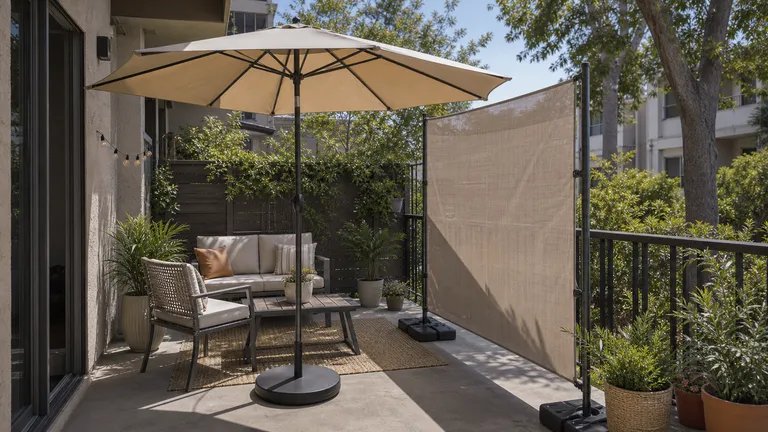
A movable screen can be a low-cost test, while a quality umbrella with a heavy base can cost a few hundred dollars. The first purchase should answer the worst hour, not decorate the whole patio. Many renters need one vertical blocker more than a full roof.
Start with a reversible test: screen, half umbrella, clamp only if allowed, or tension pole only where the surfaces can accept pressure. Move to larger freestanding shade only when storage, ballast and wind routine are manageable.
Shared buildings often regulate exterior appearance. A bright tarp, tall privacy wall or rail cover can violate rules even when it is harmless structurally. Choose neutral, low-profile products when the patio is visible from shared spaces.
When in doubt, choose the setup that looks like furniture. Umbrellas, folding screens and planters are easier to defend than hardware attached to the building envelope. The shade may be less dramatic, but the risk is lower.
Keep the shade lower than rail height when building rules mention exterior appearance. Small visual details can prevent complaints.
In practice: Patio has low afternoon glare. Use a movable side panel or curtain frame. Side shade solves the glare without permanent brackets. Stop and reassess if the support, mount or weather problem is still visible after the first fix.
- Low effort: use a folding screen at the exact glare edge.
- Medium effort: add a half umbrella or approved clamp shade.
- High effort: buy a freestanding canopy that can be stored off-season.
This will not protect your deposit
A no-drill claim will not help if the product scratches tile, stains decking or bends a railing. Adhesives, pressure poles and clamps can still leave evidence. A landlord dispute is usually about damage or rule breach, not the marketing label.
Do not rely on furniture weight to secure fabric. Do not add zip ties to shared railings. Do not choose a product so tall or bright that it violates exterior appearance rules.
Wind etiquette matters for renters because failure can affect neighbors. A shade product that blows into a shared courtyard or another balcony becomes a building issue. Favor products that close fast and store compactly.
If the building allows planters, a planter-based screen can combine shade, privacy and a furniture-like appearance. Use enough soil mass and a stable frame; a narrow decorative planter is not a wind base.
If a small slab cannot hold a large base, choose a narrow screen or compact umbrella. Renter shade still has to leave enough room to sit, walk and move furniture.
- Do not clamp before confirming rail rules.
- Do not use adhesives on surfaces you must return unchanged.
- Do not leave bases where water needs to drain.
Move-out and seasonal routine
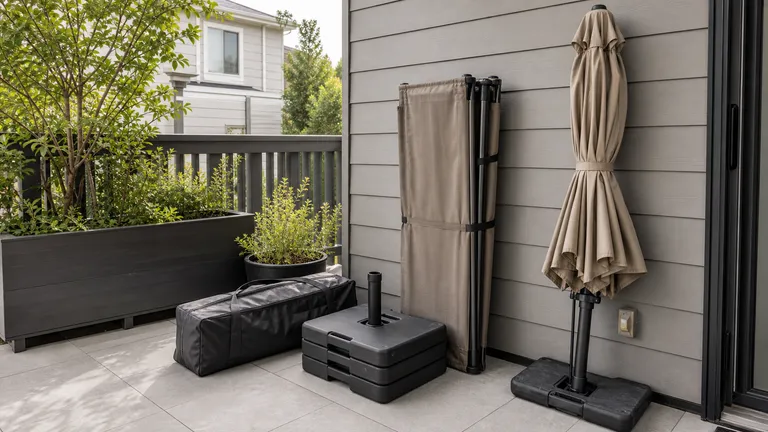
Keep the box, pads and setup photos so the shade can leave as cleanly as it arrived. Use rubber or felt protection under bases where appropriate. Dry fabric before storage so mildew does not mark walls or floors.
A renter setup should be easy to undo in an hour. If removal requires tools, patching or argument, it is drifting toward permanent installation.
If written approval is possible, keep the request specific. Ask about the exact product, fixing method, color and removal plan. A vague approval for "shade" may not protect a bracket, clamp or tall screen later.
For long leases, durability still matters. A flimsy removable shade replaced every summer can cost more than a better freestanding product that remains within the rules.
When written approval allows a semi-permanent fixture, get that approval before buying hardware. The permission is part of the setup, not an afterthought.
This won't fix it
Do not skip these checks
- Removable shade can still cause chargeable damage.
- Shared railings may have stricter rules than private patios.
- Wind can turn renter shade into a neighbor or property problem.
Read Next
Related fixes
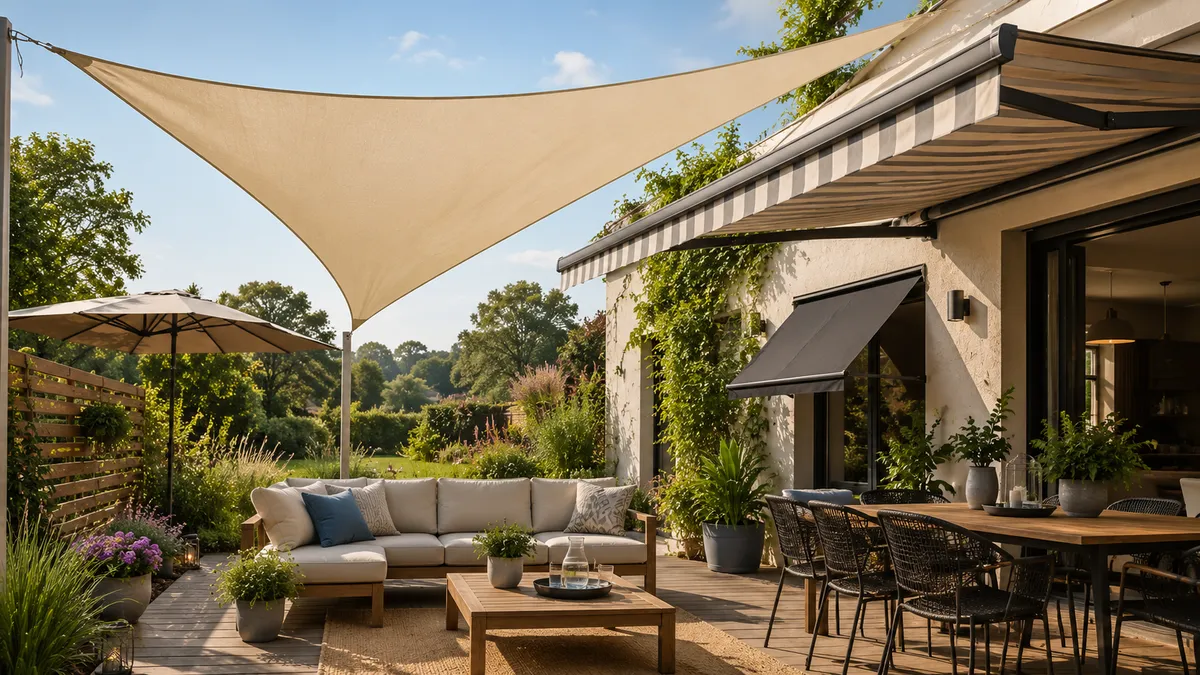
Patio Shade Ideas
Use this when patio shade ideas is closer to the real constraint than the current page.
Patio Shade Without Drilling
Use this when patio shade without drilling is closer to the real constraint than the current page.
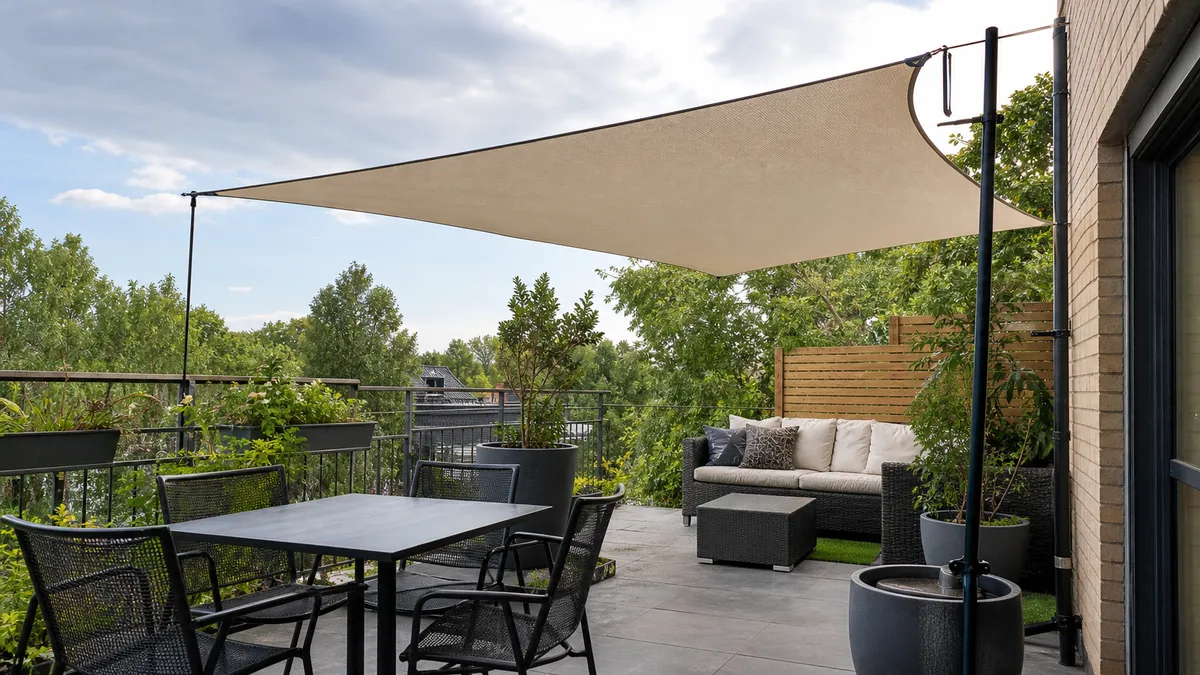
Shade Sail Without Drilling
Use this when shade sail without drilling is closer to the real constraint than the current page.
Questions
FAQ
What patio shade is best for renters?
Use shade that behaves like outdoor furniture: a weighted umbrella, folding screen, freestanding canopy or approved clamp shade. It should be easy to remove, dry before storage and leave no holes, residue or pressure marks.
Can renters use clamp-on balcony shade?
Only when the lease and building rules allow rail attachments. A clamp can still bend a rail or violate exterior appearance rules. If permission is unclear, use floor-supported shade until written approval is available.
How do I protect my deposit with patio shade?
Use pads under bases, keep setup photos, store the manual and avoid adhesives or rail ties. Choose neutral, removable products that can leave in an hour. Preventing marks is easier than disputing them at move-out.