
Quick Answer
Quick answer for balcony shade
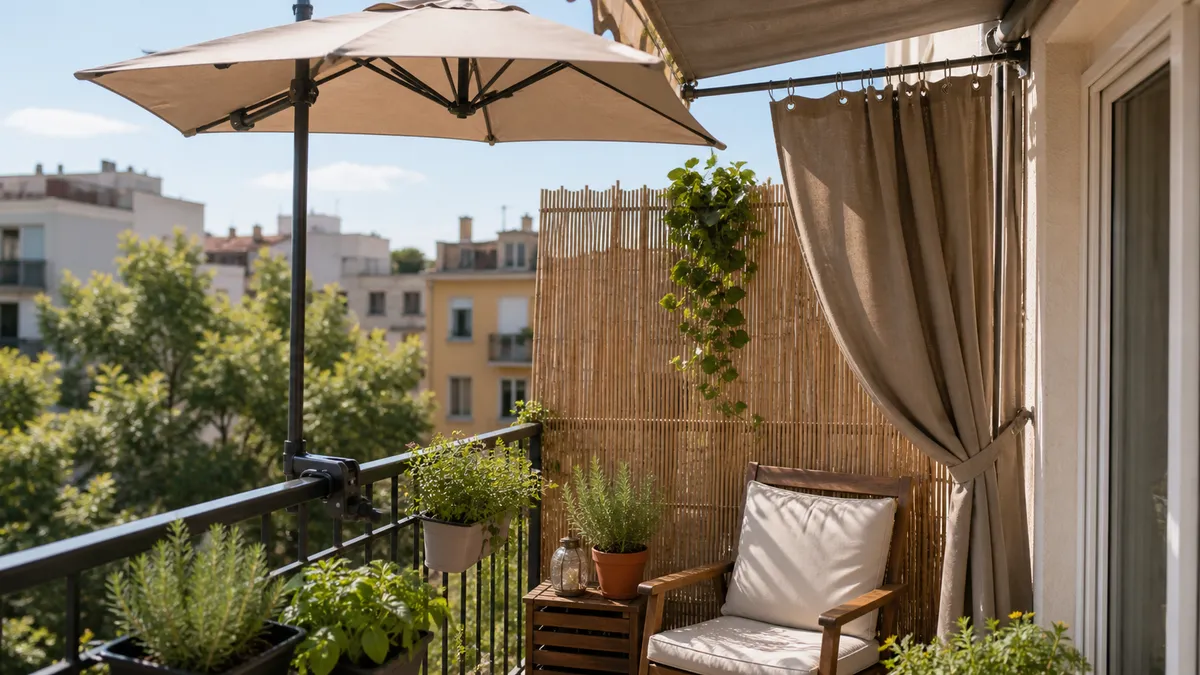
Start with the hour that makes the balcony unusable and the building rules. Use vertical shade for low east or west sun, overhead or movable shade for midday heat, and avoid drilled brackets, rail loads or visible exterior fabric unless written rules allow them. Close or remove loose shade before gusty weather.
Choose removable vertical shade when low sun or rental rules dominate; use overhead shade only when clearance, approval and wind storage are already solved.
Options
Start with the balcony limit you cannot change
Pick the card that matches the problem before comparing fabric, color or hardware.
West or east low sun
Use a vertical screen, roll-down shade, side curtain or louver. YourHome notes that low east and west sun is harder to block with overhead cover alone.
Overhead heat at lunch
Use a half umbrella, small movable canopy, approved awning or breathable overhead cloth on a permitted frame. Keep the base and front edge clear of the door.
Strict apartment rules
Start with a freestanding privacy screen, indoor-side window shade or tension hardware only where the frame fits and the lease allows it.
Covered balcony with side walls
Tension rod or cable curtains may work when there are two side points, overhead support and permission for temporary outdoor fabric.
Fully open balcony
Use a freestanding screen, planter-supported shade or indoor-side shade. Do not assume curtains or a sail can be tensioned without real anchors.
Sliding door or tight walkway
Choose a half umbrella, side screen or window shade. Keep the door swing, threshold, drainage path and walking line open.
Windy corner or upper floor
Use shade that folds, rolls or comes inside quickly. Avoid rail fabric, loose panels and unattended umbrellas where gusts hit the corner first.
Check first
Check the lease, railing and exterior rules before shade hardware
No-drill balcony shade is still a building-rule question. Washington's condominium alteration statute is one example of exterior appearance and common-element changes needing permission, and an HOA balcony handbook can require approval details such as placement, dimensions and photos before exterior items are used.
Treat these as checks, not universal legal advice. Your own lease, condo documents, HOA rules, building handbook and local fire rules decide whether visible fabric, a balcony railing clamp, facade contact, ceiling pressure, drainage changes or outdoor cooking are allowed.
- Ask before drilling into walls, ceilings, balcony waterproofing or shared exterior surfaces.
- Ask before clamping shade to a balcony railing, glass guard, handrail or visible common element.
- Check whether exterior appearance rules ban fabric colors, roll-down screens or items above the rail line.
- Read grill, propane, charcoal, fire escape, drainage and floor-covering rules before adding shade and furniture together.
No-drill balcony shade ideas compared
A no-drill balcony shade still has to fit the balcony shape and the building rules. TheHues' renter curtain guidance separates covered openings, metal frames, sliding-door areas and fully open balconies because the support points change. Use that same screen before buying anything.
For a covered balcony with side walls, a tension rod or cable curtain can be realistic if the surfaces can take pressure and the fabric is allowed outside. For a fully open balcony, start with freestanding shade, a planter-supported screen or an indoor window shade because there may be no safe place to tension fabric.
A removable privacy screen or breathable mesh panel can solve glare and privacy together, but dense fabric can trap heat and reduce airflow on a small balcony. Choose mesh or partial coverage when the space already feels hot and still.
A half umbrella or compact freestanding umbrella can work for one chair or a bistro table when the base stays out of the walking path. Do not treat a clamp as renter-safe by default. Railings can be common elements, and the rail may not be approved for fabric wind load.
No-drill fit
No-drill options by balcony condition
Use this table after the rule check, not as permission to attach hardware.
| Balcony condition | Use this direction | Why it fits | Avoid when | Wind or storage routine |
|---|---|---|---|---|
| Covered opening with side walls | Tension rod or cable curtains | The fabric can span between nearby side points without floor bases. | Surfaces flex, marks would cost the deposit or exterior fabric is banned. | Slide open, tie flat or remove before gusty weather. |
| Open rail with no ceiling | Freestanding privacy screen | The shade does not depend on a ceiling, facade or rail clamp. | The base narrows the walkway or can roll toward the rail. | Fold and store inside before wind advisories. |
| Privacy needed but air already feels still | Breathable mesh panel | Mesh cuts glare and view lines while leaving some airflow. | The fabric is dark, solid or allowed to flap against neighbors' space. | Keep it taut, then remove if it starts snapping or leaning. |
| One chair or bistro table overheats | Half umbrella or compact umbrella | Small overhead shade can protect the seat without covering the whole balcony. | The base blocks the door swing, threshold, drain or only walking line. | Close when unattended, unstable, rainy or gusty. |
| Planters already sit at the rail | Planter-supported trellis or screen | A low screen can add shade and privacy without exterior brackets. | The planter is light, top-heavy or drains onto a lower balcony. | Move light panels inside before storms. |
| Exterior fabric is not allowed | Indoor window shade | The shade stays inside the unit and avoids exterior appearance rules. | The heat problem is outdoor seating rather than indoor glare. | No outdoor wind routine, but keep the balcony exit clear. |
| Written approval is available | Small awning or sail only within the approval | Permanent or tensioned fabric belongs in the narrow case where rules and structure are named. | Approval does not identify the wall, ceiling, posts or rated hardware. | Follow the product close, removal and weather instructions. |
Category research
Balcony shade categories to compare
Use category searches after checking lease rules, railing clearance and wind exposure.
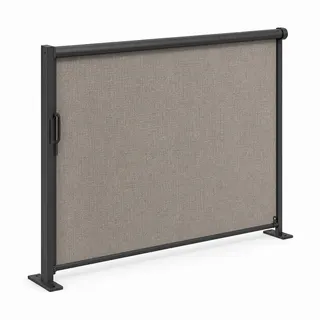
Screen
Balcony Shade Screen
For low sun, privacy and renter-friendly side shade.
- Vertical shade
- Compact footprint
Check:Railing rules and wind.
Search on Amazon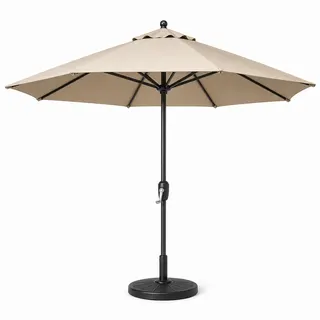
Umbrella
Balcony Umbrella
For small seating shade when a base can fit safely.
- Movable option
- No drilling
Check:Base footprint and tilt range.
Search on AmazonPrivacy
Outdoor Privacy Screen
For side views and low-angle sun on narrow balconies.
- Side coverage
- Privacy help
Check:Attachment rules and airflow.
Search on AmazonMatch the shade to sun angle, privacy and airflow
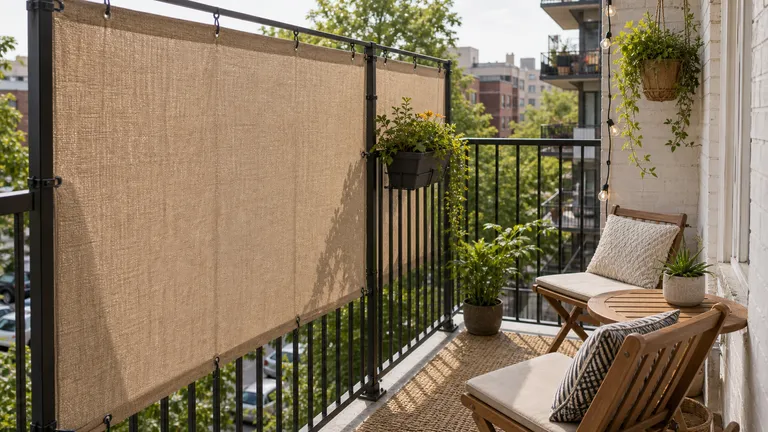
Low afternoon sun is a side problem. YourHome explains that east and west openings need a different approach because low morning and afternoon sun is harder to shade, with adjustable vertical shade often the better fit. On a balcony, that points to roll-down screens, curtains, louvers, shutters or mesh at the rail line.
Midday heat is different. EPA's UV Index guidance treats 3-7 as a level where shade helps during late morning through mid-afternoon, and 8 or higher calls for extra protection. For that window, a half umbrella, small approved awning or movable overhead panel may do more than a privacy screen.
Deep balconies can still admit low-angle summer sun. If the glare enters under the roof or around one side wall, buying a deeper top canopy may leave the hot hour unchanged. Stand where you sit at that exact time and mark the line where the shade must intercept the sun.
Privacy fabric can make a small balcony worse if it blocks the breeze. Use breathable mesh, partial panels or adjustable shade when the goal is privacy plus airflow. Solid dark fabric close to the chair can reduce glare but increase trapped heat.
- Use vertical shade for low afternoon sun that slips under the balcony above.
- Use overhead or movable shade for late morning through mid-afternoon UV and heat.
- Use partial mesh when privacy matters but airflow is already weak.
- Use indoor-side shade when exterior fabric is banned by the building.
Wind, fire and exit rules that stop an idea
Wind planning belongs in the purchase decision, not after the first storm. The National Weather Service high wind warning threshold is sustained winds of 40 mph or gusts to 58 mph, and its safety guidance tells people to bring unsecured patio and balcony objects inside. Loose balcony fabric, umbrellas and light screens belong in that group.
Balcony wind is uneven. A high-rise balcony study by Murakami and colleagues found stronger winds mainly at balcony corners. Treat an upper-floor corner seat as a tougher location than the doorway wall, especially if the shade would flap from the railing.
Umbrellas need extra caution on balconies. One patio umbrella manual describes the product as sun protection, not wind protection, and gives model-specific examples such as closing when unattended or in gusts, a 5 mph operating warning and base weights of 22 lb through a table or 64 lb freestanding. Those numbers are one manual example, not a rule for every umbrella.
Fire and exits can remove an idea completely. NYC Buildings gives local examples: charcoal is not legal on balconies or roofs, standard 20 lb propane barbecues are illegal to store on balconies in multiple dwellings, and barbecues should stay at least 10 ft from combustibles. Seattle Fire also stresses having two ways out and not waiting on a balcony during a fire alarm.
Do not put fabric shade on a fire escape, in front of a required exit, or beside grills, heaters, candles or fire pits. Keep the balcony door, threshold, drainage route and path to the stairs usable even after bases, planters and screens are in place.
Mistakes that make a balcony harder to use
A balcony is too small for a shade idea that almost works. The mistakes below usually show up after delivery: the base blocks the door, the screen traps heat, the curtain has nowhere to tension, or the fabric must be removed every time the wind rises.
Do not buy from the listing photo alone. Buy for the bad hour, written rule, attachment point, clearance and storage routine. If any one of those fails, choose a smaller removable fix before moving to a mounted awning or tensioned sail.
- Do not buy a top-only canopy for low side glare; add vertical shade at the rail or outer edge.
- Do not assume a balcony railing can accept clamps; ask whether the rail is a common element or protected exterior feature.
- Do not use dense privacy fabric where airflow is the comfort problem; switch to mesh, partial panels or adjustable shade.
- Do not block drainage, the door swing, the threshold or the only walkway with bases and planter boxes.
- Do not leave curtains, screens or umbrellas open when no one is home to close them.
- Do not place shade on a fire escape or where it narrows an exit path.
- Do not use a permanent awning or sail as a shortcut around written approval.
Watch-outs
Before you buy or install
- No-drill shade can still violate exterior appearance, railing or common-element rules.
- Loose balcony fabric and umbrellas should come inside before high-wind warnings or gusty storms.
- Do not place fabric shade near grills, heaters, candles, fire pits, fire escapes or required exit paths.
Read Next
Related ideas
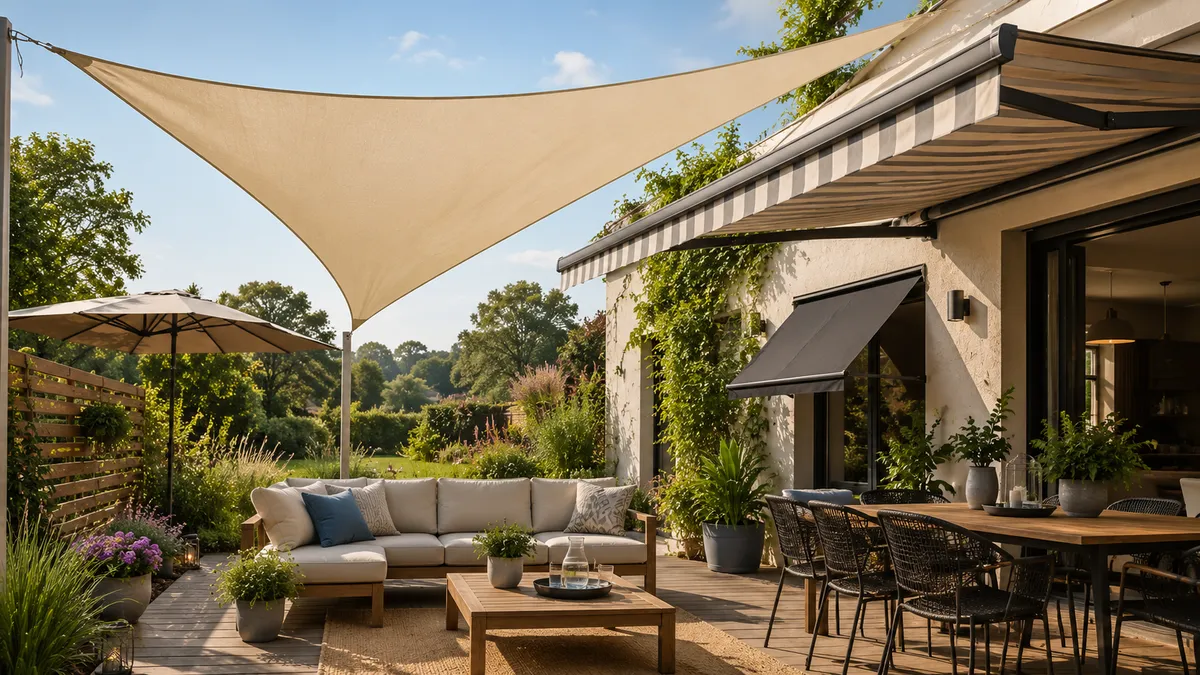
Patio Shade Ideas
Use this when patio shade ideas is closer to the real constraint than the current page.
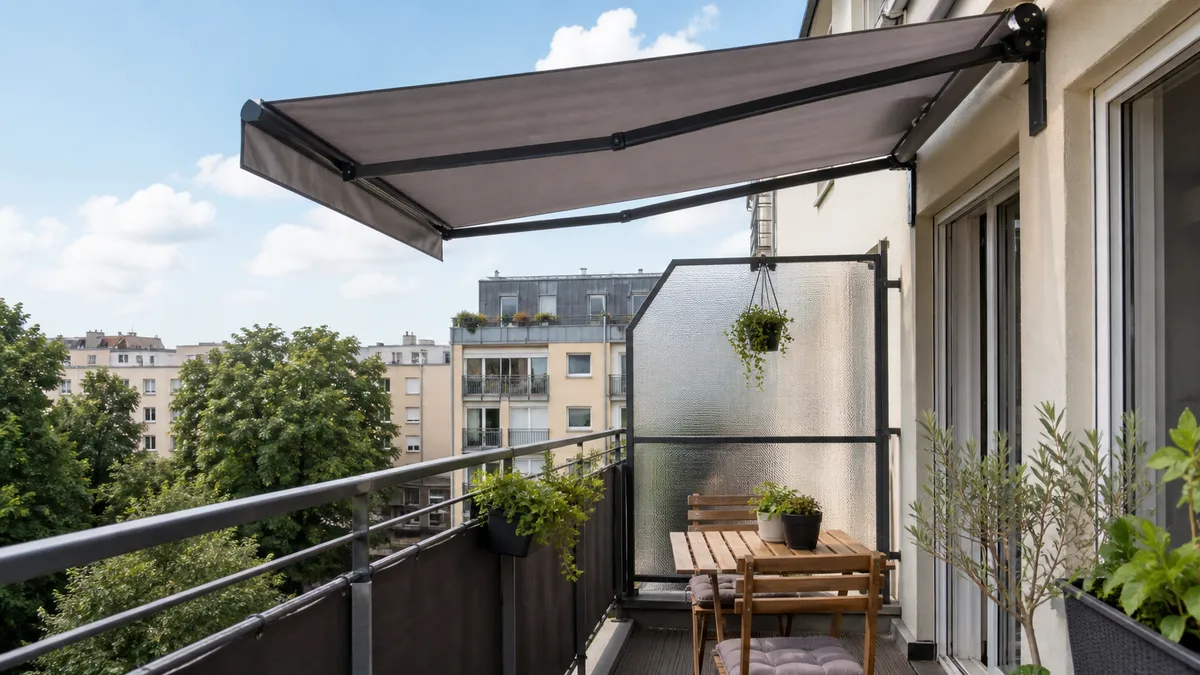
Awning for Balcony
Use this when awning for balcony is closer to the real constraint than the current page.
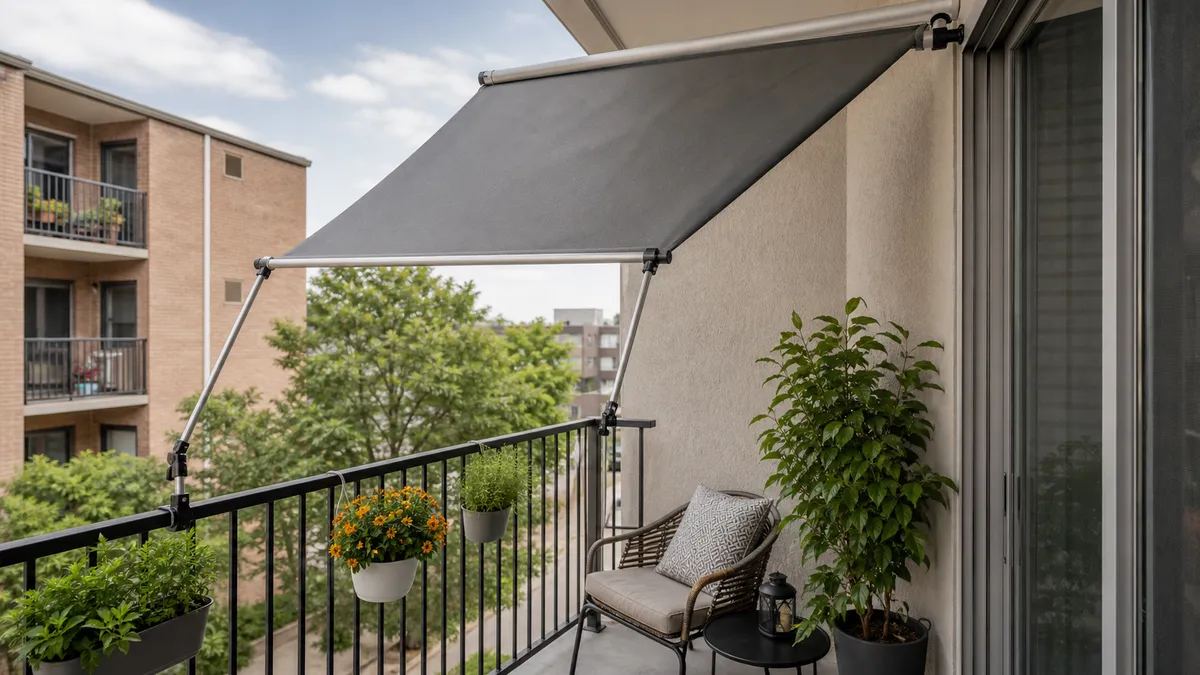
Awning for Apartment Balcony
Use this when awning for apartment balcony is closer to the real constraint than the current page.
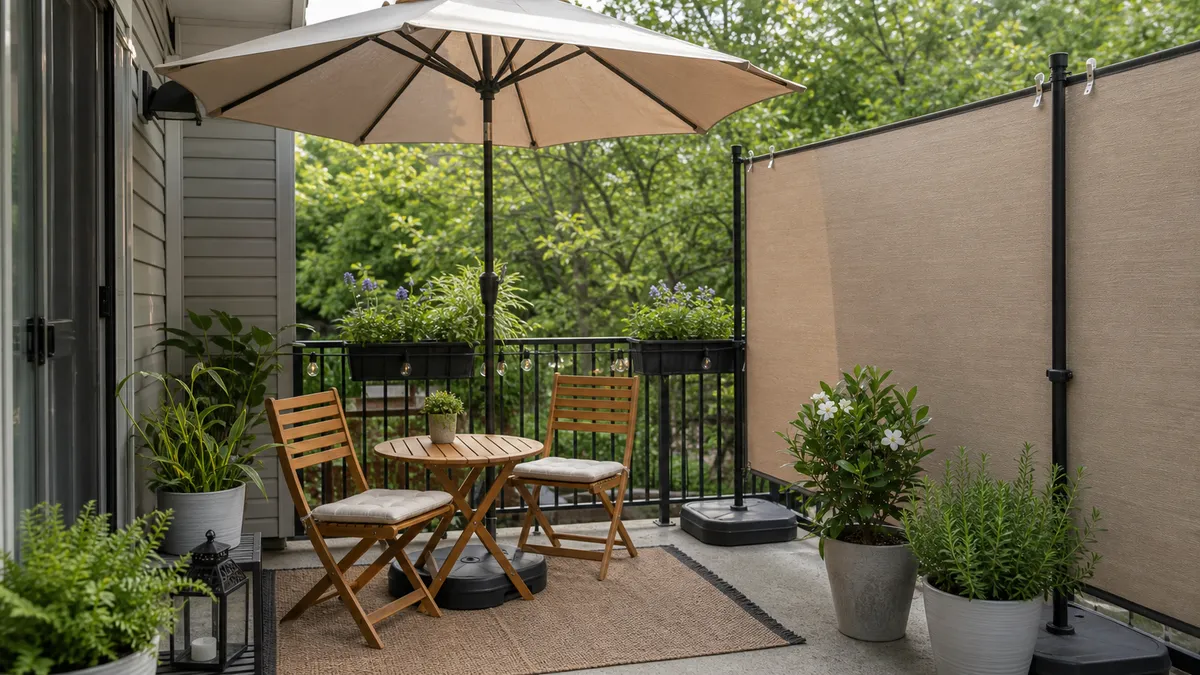
Renter-Friendly Patio Shade
Use this when renter friendly patio shade is closer to the real constraint than the current page.
Questions
FAQ
Can I put up balcony shade without drilling?
Sometimes. A covered balcony may accept a tension rod or cable curtain if the surfaces and building rules allow it. A fully open balcony usually needs freestanding shade, a planter-supported screen or an indoor-side shade. No-drill still needs permission when it changes exterior appearance.
What shade works best for a west-facing balcony?
Start with vertical or adjustable side shade. Low afternoon sun often slips under overhead fabric, so a roll-down shade, side curtain, louver, shutter or breathable privacy screen usually hits the glare better than a deeper top canopy.
Is a patio umbrella safe on a balcony?
Only when the base, clearance and wind routine fit the balcony. The umbrella should not block the door, drain or walking path, and it should close when unattended, unstable, rainy or gusty. Treat manual wind and base numbers as model-specific, not universal.
What should I remove before wind or storms?
Bring in loose curtains, unsecured privacy screens, light panels, umbrellas and anything that flaps, leans or could leave the balcony. The National Weather Service specifically warns about unsecured patio and balcony objects during high-wind conditions.