
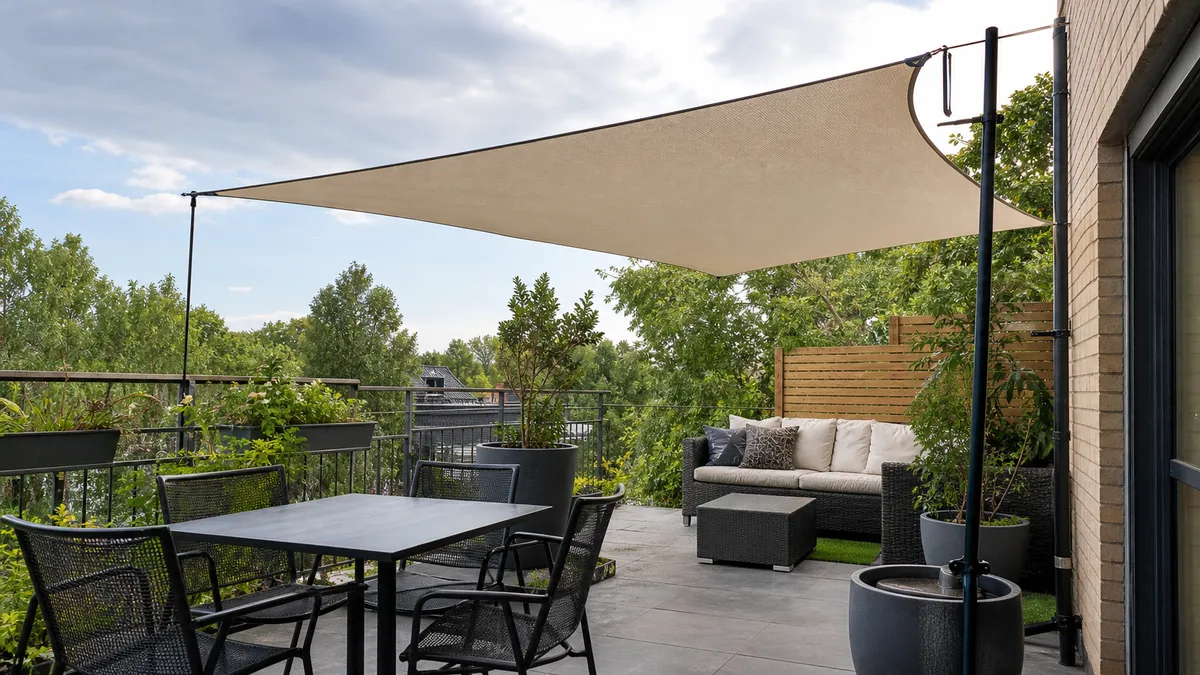
Quick Answer
shade sail without drilling: the short version
A no-drill shade sail can work only when it still has safe independent anchor points, slope, tensioning room, permission and a fast takedown routine. Skipping holes often removes the strongest load path. If the only anchors are railings, fascia, gutters, siding, furniture or unknown trim, use freestanding shade instead.
Use a shade sail without drilling only for small, removable setups with verified supports, clear permission and a storm takedown plan.
Diagnosis
Most common problems
Check the symptom before buying another shade product.
Three or four strong independent points are available
Mississippi State Extension notes that each sail corner needs its own anchor point.
Only railing, fascia, gutter, siding or furniture is available
Those parts are not proven shade-sail anchors and may bend, leak, move or violate rules.
Rental, condo, HOA or shared balcony rules are unclear
Justia notes that many rental alterations need consent, and removable parts can still create fixture disputes.
The sail would stay up through wind or heavy rain
Manuals call for secure points, slope, firm tension and removal during severe weather.
Check why the no-drill setup would fail
Start with the failure test, not the fabric color. A triangular sail needs three independent points, and a rectangular sail needs four. Mississippi State Extension also describes normal installs with sturdy supports and turnbuckles, which is the first clue: a no-drill sail still needs a real load path.
No drilling can be useful for a rental patio, but it does not lower the wind load on the cloth. It usually removes the wall plate, post footing or masonry fixing that would have carried the pull. If the remaining points are a balcony railing, fascia board, gutter, vinyl siding, light fence panel or patio chair, do not use a sail there.
Renter permission is part of the diagnosis. Justia explains that many rental improvements or alterations need written consent, and attached items can create fixture disputes. A removable clamp can still break a rule, mark a finish or change the outside appearance of a shared building.
- Count corners first: three points for a triangle, four for a rectangle.
- Reject unknown trim, gutters, vinyl siding and furniture as shade-sail anchors.
- Leave room for a turnbuckle, shackle or other tensioner at every corner.
- Plan a low edge for runoff before using coated or waterproof fabric.
- Get written approval before attaching to rental or shared exterior parts.
Diagnosis
Can this no-drill sail work here?
Run these checks before buying fabric or hardware.
| Check | Failure signal | Next action | Why it matters |
|---|---|---|---|
| Anchor count | Fewer than one independent point per corner | Do not install a normal sail; reduce the plan or use freestanding shade. | Mississippi State Extension describes one anchor point for each sail corner. |
| Support strength | Only railing, fascia, gutter, vinyl siding, furniture or unknown trim | Reject the anchor unless a qualified review and written approval confirm it. | ShelterLogic says fixing points must be structurally sound. |
| Tensioning room | Fabric nearly fills the opening | Buy a smaller sail or change the layout before adding hardware. | ShelterLogic recommends leaving about 10% of sail length for the tensioning gap. |
| Wind exposure | Open yard, upper balcony, corner gusts or unattended setup | Use a removable setup that comes down before bad weather. | Building Performance New Zealand says significant wind loading should be considered. |
| Slope and drainage | Flat coated fabric with no low edge | Add runoff angle or choose another shade type. | A shade sail care manual calls for a 20 to 30 degree runoff angle. |
| Lease or building approval | Rental, HOA, condo or shared balcony rules are unclear | Ask for written approval before attaching anything. | Justia notes many alterations need landlord consent. |
| Takedown routine | The sail cannot be removed quickly before storms, snow or severe weather | Use an umbrella, canopy or frame that packs away faster. | The care manual says to remove sails during severe weather, snow or storms. |
Why no-drill shade sails fail in wind
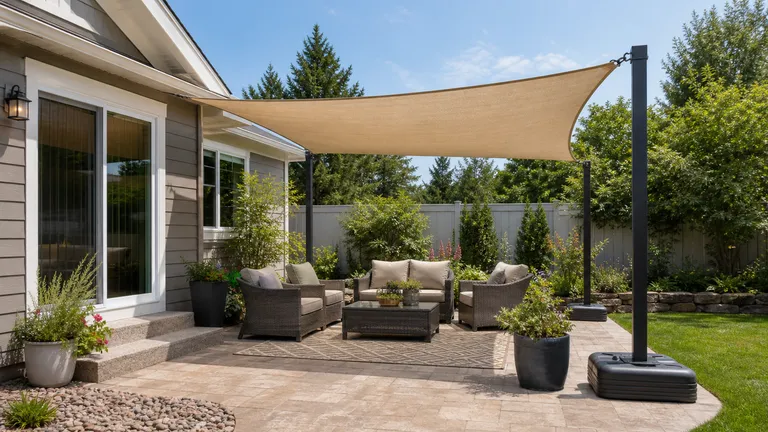
Wind exposes weak no-drill shortcuts quickly. A weighted base creeps across pavers, a clamp slides a few millimeters, a railing flexes, or the fabric starts to flap. Once movement starts, the sail can twist and hit the same point repeatedly instead of sitting in steady tension.
Shade Sails LLC gives installer guidance of 100 lb pretension per point before wind is considered, and also cites wind load ranges of 5.5 to 15 lb per square foot. Treat those numbers as a warning, not a DIY design formula. Bigger fabric multiplies the problem, especially when the anchor is a planter post or clamp rather than a buried post or engineered bracket.
Long ropes and cables make temporary rigs worse when more than one corner depends on them. Shade Sails LLC warns against extending several corners with long leaders because movement and shock loads increase in wind. If a no-drill setup needs long paracord lines to reach furniture, trees or balcony rails, the layout is wrong.
Railings need special caution. ICC guard and handrail material discusses loads for fall-protection assemblies, but that does not mean a balcony railing is rated to pull a shade sail. The safe assumption is simple: a railing is a guard first, not a sail anchor, unless the clamp, rail, building rules and landlord approval all say otherwise.
- Sliding base: stop and reduce fabric before adding more weight.
- Clamp creep: unload the sail and check product documentation.
- Railing flex: remove the fabric and use freestanding shade.
- Fabric flap: improve tension only if the supports are already proven.
- Water pooling: add slope or stop using that temporary layout.
No-drill shade sail options ranked from realistic to risky
Rank no-drill methods by how clearly they carry load. A purpose-built freestanding frame is easiest to judge because its legs, ballast and fabric are designed together. A small temporary sail on known strong points can work in sheltered use. A large sail tied between improvised points is not the same product.
Tree straps are conditional, not a universal answer. ShelterLogic treats tree attachment as temporary and gives a 10 inch tree diameter recommendation. Even then, the tree, bark protection, sail size, weather routine and local rules still matter. Small limbs and young trees should not be used.
Weighted post and planter post setups belong in the narrow middle: possible for small removable shade in a sheltered spot, poor for a normal tensioned sail. Weight alone does not create the same resistance as a post set in concrete. If the post can rock by hand, the sail will move more in wind.
Ranked routes
No-drill routes from realistic to reject
Use the highest route that fits the space, rules and weather routine.
| Rank | Route | Use when | Reject when |
|---|---|---|---|
| 1 | Purpose-built freestanding shade frame | The frame fits the patio and can be weighted or secured exactly as its instructions require. | The footprint blocks doors, drains, shared walkways or quick removal. |
| 2 | Manufacturer-rated removable pole or frame kit | The documented sail size, height, base and weather limits match the patio. | The kit needs holes, concrete, permanent anchors or guessed ballast. |
| 3 | Small temporary sail on verified strong points | Each corner has a known strong point, a tensioning gap, slope and a takedown routine. | Any corner depends on trim, a railing, light fence, furniture or unknown backing. |
| 4 | Mature tree straps | The tree is large, healthy and protected, and the sail is temporary. | The only point is a limb, young trunk or tree that could be damaged. |
| 5 | Weighted post or planter post setup | The shade is small, sheltered, removable and designed for that base. | The post rocks, the planter is decorative, or the sail would stay up unattended. |
| 6 | Railing or beam clamps | The clamp is rated, the building surface allows it, and written approval exists. | Any one of clamp documentation, rail suitability or permission is missing. |
| 7 | Gutters, fascia, vinyl siding, furniture, zip ties, magnets or long ropes | Do not use these as shade-sail anchors. | They are not reliable load paths for a tensioned outdoor sail. |
Renter and no-damage checks before buying
Check the lease, balcony handbook, HOA rules and landlord instructions before ordering. Removable is not the same as approved. A clamp, strap or weighted base can still scratch paint, stain tile, bend a rail, block drainage or change the exterior look of the building.
Get written approval for anything that touches railings, exterior walls, shared posts, balcony ceilings or common structures. Justia's rental-property guidance is useful here because disputes can involve physical attachment, appearance changes and consent, not only holes. Keep product manuals and approval notes with the lease file.
Look at where water and wind go after installation. A low edge that dumps runoff onto a neighbor's balcony or a base that creeps into a shared walkway can create a dispute even if the sail never damages the building. The setup has to come down cleanly and avoid causing problems while it is up.
- Ask before clamping to a balcony railing or shared post.
- Avoid adhesives and pressure marks on surfaces you must return unchanged.
- Store the sail dry so removable shade does not create mildew or stains.
- Photograph surfaces before and after the season if deposit risk matters.
Sizing, slope and hardware limits for temporary sails
Do not buy fabric the exact size of the opening. ShelterLogic recommends leaving at least 10% of sail length between each fixing point and corner ring for the tensioning device, with examples around 14.5 inches for a 12 foot sail and 19.25 inches for a 16 foot sail. That gap matters more when every anchor is temporary.
Slope is just as important as size. A Home Depot-hosted care manual calls for a 20 to 30 degree runoff angle, secure mounting points and firm tension. A flat coated sail can hold water, sag, pull harder on weak points and become much harder to remove during a storm.
Mesh and coated fabric do not behave the same in rain. Mesh may pass some water while coated fabric sheds it toward a low edge. That does not make either one safe on a flat no-drill layout. Choose smaller fabric, less exposure and easier removal before choosing heavier material.
- Leave a tensioning gap instead of filling the whole opening.
- Avoid multiple long rope or cable extensions between sail and anchor.
- Use a clear low edge for runoff before any rain exposure.
- Take the sail down when severe weather, snow or storms are expected.
Fixes ranked by effort, cost and risk
Fix the load path before fixing the look. A smaller sail can reduce exposed fabric, but it does not make a weak railing or gutter safe. A freestanding frame, umbrella or canopy can solve the same shade problem with less property risk when attachment rules are unclear.
Ask for qualified help when the shade you want still needs an exterior anchor. ShelterLogic says to get independent advice from a technician or engineer if fixing-point strength is uncertain. For a renter, that advice also needs permission from the building or landlord before any attachment goes up.
Fix rank
Fixes by effort, cost and stop point
Use the lowest-risk fix that actually removes the failure.
| Fix route | Effort/cost | Use when | Stop if |
|---|---|---|---|
| Shrink the sail and keep it removable | Low effort and usually lower cost | Strong points already exist and the bad-weather routine is simple. | The same weak railing, fascia or furniture point still carries the load. |
| Switch to freestanding frame, umbrella or canopy | Low to medium effort | Attachment is blocked by lease rules, weak supports or shared surfaces. | The base would block a door, drain, walkway or emergency access. |
| Use manufacturer-rated removable poles or frame | Medium effort and product-dependent cost | The documented limits fit the sail size, exposure and floor area. | The instructions require permanent holes, concrete or unlisted ballast. |
| Ask for approved anchors or qualified review | Medium to high effort | A permanent-looking exterior attachment is the only way to get the shade wanted. | Permission, structural backing or weathertight detailing is uncertain. |
| Abandon the sail and use side screen or tension-pole shade | Required when the failure is structural or rule-based | Wind, railings, gutters, drainage or permission make a sail a poor fit. | The substitute also needs pressure against fragile surfaces or unsafe guy lines. |
What will not fix a no-drill shade sail
Bigger fabric does not create safe anchors. Heavier fabric can increase the force on the same weak point. Tight zip ties, paracord, magnets or extra rope length do not replace rated hardware, documented supports and a short load path.
Do not tie a sail to furniture, gutters, fascia, light railings or unknown fence posts and then call it temporary. The problem is not whether the knot can be untied. The problem is whether the part can safely accept fabric tension, movement, rain and wind.
Waterproof fabric does not make a flat temporary sail safe in rain. It can make pooling worse because water has to leave somewhere. If the no-drill setup cannot hold a 20 to 30 degree runoff angle, choose a breathable shade, umbrella, canopy or frame that can be packed away.
Do not let the word removable override permission. A part can come off later and still violate a lease, scratch a finish, bend a railing or change the exterior appearance. For rented or shared space, approval and clean removal are both required.
- Do not add more rope to reach a bad anchor.
- Do not increase fabric size to cover a weak layout.
- Do not rely on zip ties for a tensioned outdoor sail.
- Do not hang lights, planters or decorations from the sail.
Use freestanding shade instead when these stop signs appear
Use freestanding shade instead when the only available anchors are gutter, fascia, vinyl siding, trim, a glass panel, a light fence, a balcony railing or furniture. Do not solve that with a larger sail. Use a weighted umbrella, half umbrella, pop-up canopy, freestanding frame, tension-pole shade, outdoor side screen or privacy screen.
Stop when wind exposure is open and the sail would be left up unattended. Stop when water cannot drain without dumping into a neighbor's area or public walkway. Stop when there is no room for a freestanding footprint, no space for tensioning hardware, or no practical way to remove fabric quickly.
Keep temporary fabric away from grills, heaters, fire pits, hot exhaust and open flames. The shade sail care manual says sails are not designed to support weight, should not have objects hung from them and should not be installed near open flames or heat sources. If heat is part of the patio, shade it with a product designed for that setting.
- Use the broader no-drill patio shade guide when a sail fails the anchor checks.
- Use the renter-friendly patio shade guide when permission and deposit risk matter most.
- Use a freestanding frame when overhead shade is still needed but exterior attachment is not allowed.
- Use a side screen when the real problem is low glare, privacy or wind from one side.
This won't fix it
Do not skip these checks
- No drilling does not mean no load; the wind still pulls on every corner.
- A balcony railing is a guard, not an assumed shade-sail anchor.
- Do not hang lights, planters or decorations from a temporary sail.
- Keep shade fabric away from grills, heaters, fire pits, hot exhaust and open flames.
Read Next
Related fixes
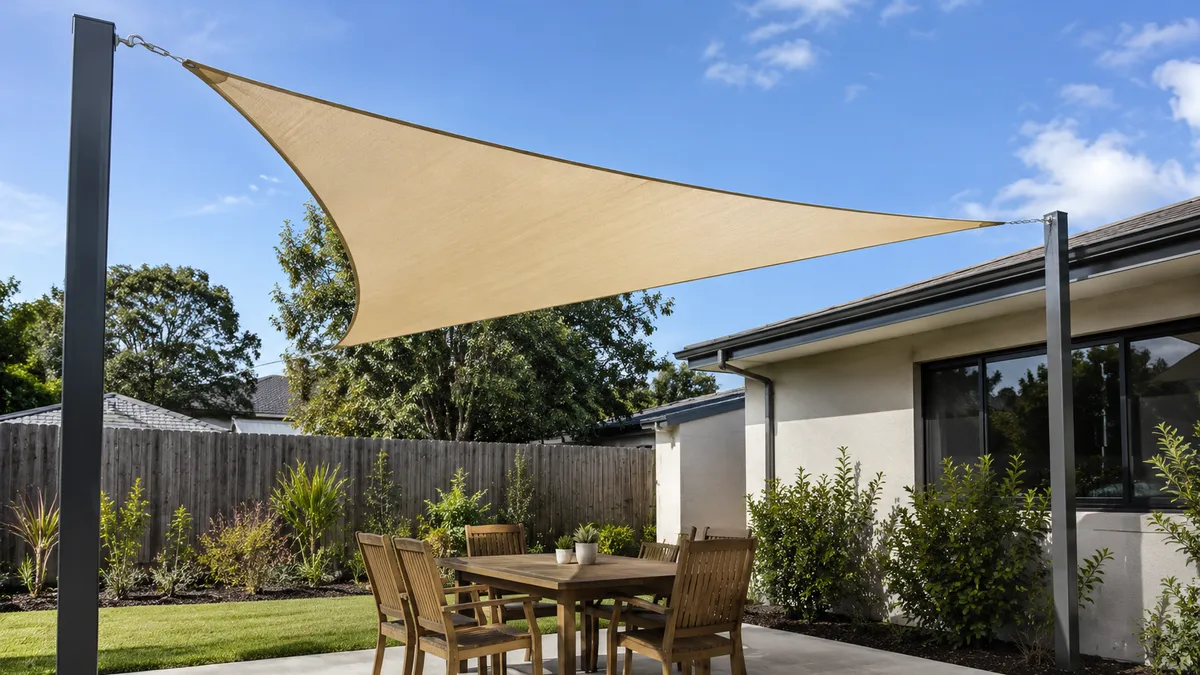
Shade Sail Guide
Use this when shade sail is closer to the real constraint than the current page.
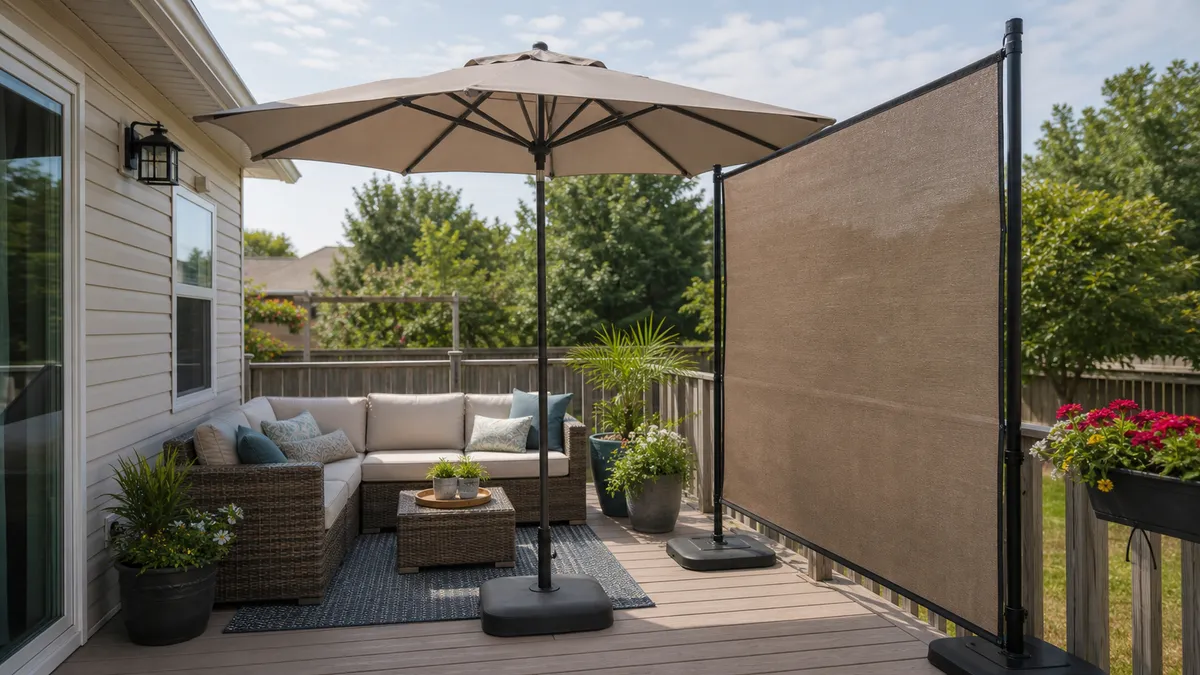
Patio Shade Without Drilling
Use this when patio shade without drilling is closer to the real constraint than the current page.
Renter-Friendly Patio Shade
Use this when renter friendly patio shade is closer to the real constraint than the current page.
Questions
FAQ
Can you install a shade sail without drilling?
Yes, but only in limited temporary or freestanding setups. The sail still needs enough independent points, a tensioning gap, slope, wind plan and permission. If those checks fail, use an umbrella, canopy, frame or side screen instead.
Can I tie a shade sail to a balcony railing?
Do not assume a balcony railing can take sail loads. It is there for fall protection, not shade-sail tension. Any clamp needs product documentation, building approval and landlord permission. Without all three, choose floor-supported shade.
Are weighted planter posts safe for a shade sail?
They can be reasonable only for small, removable shade in a sheltered spot when the product is designed for that use. A decorative planter or wobbly post does not replace an engineered anchor for a normal tensioned sail.
How small should a temporary no-drill shade sail be?
There is no universal square-foot limit. It should be small enough to leave hardware space, slope, stable supports and quick removal before bad weather. Support strength, wind exposure and the product manual decide more than fabric size alone.
Do renters need written permission for a no-drill shade sail?
Get written permission if the setup attaches to exterior surfaces, railings, shared structures or changes the building's appearance. A removable part can still mark a surface or break a rule, so keep approval and product instructions together.