
Quick Answer
Quick answer for broccoli shade
Use shade cloth for broccoli as a short-term heat and transplant tool, not as a way to turn broccoli into a reliable summer crop. Start with 30-40% shade for hot afternoons, use temporary 50% shade only for tender starts or severe heat, keep the cloth above the leaves with open sides, and pair it with steady water and mulch.
Use raised, temporary 30-40% shade when broccoli faces hot afternoon sun; change timing or crop plans when warm nights, buttoning or no crown are already driving the problem.
Ideas
Practical options to compare
Use temporary afternoon shade over the bed.
Penn State lists fall broccoli seedlings among heat-susceptible crops; shade helps most while small plants are establishing in July or late-summer heat.
Give short shade, wind protection and open airflow.
Minnesota Extension recommends gradual exposure to sun and wind; cloth should taper as plants stop wilting and push new growth.
Combine moderate shade with deep water and mulch.
USU ties broccoli head quality problems to heat and low moisture, so cloth alone is weaker than shade plus steady soil moisture.
Do not solve this by adding darker cloth.
USU and Minnesota Extension both connect poor crowns and small heads to timing, warm nights, transplant stress, water, fertility, insects and disease.
When broccoli actually needs shade cloth
Broccoli is a cool-season brassica, so shade cloth is most useful during a narrow stress window: late-summer fall starts, recent transplants, or a short heat spike during early head formation. It is less useful when the crop was planted so late that every day and night stay warm.
USU Extension describes broccoli as a cool-season crop and says plants grow best around 60-70 F mean daily temperatures. Its brassica guidance warns that temperatures above 85 F slow growth and reduce broccoli and cauliflower head quality. Minnesota Extension gives a similar warning for hot days around the mid-80s paired with warm nights: broccoli may fail to form a crown until cooler weather returns.
Temporary shade can help for a short stretch, but it is not a guarantee. Use it to soften direct afternoon sun while a fall crop roots in, or while an established plant gets through several hot days. If the plant has already buttoned, formed a tiny head, or stopped making a crown, shade may protect remaining growth but it cannot reliably reverse the earlier stress trigger.
- Best fit: fall broccoli starts in hot afternoon sun.
- Good short use: broccoli transplants that wilt while roots establish.
- Weak fit: prolonged hot nights, late planting, or buttoning that has already started.
What percentage to use over broccoli
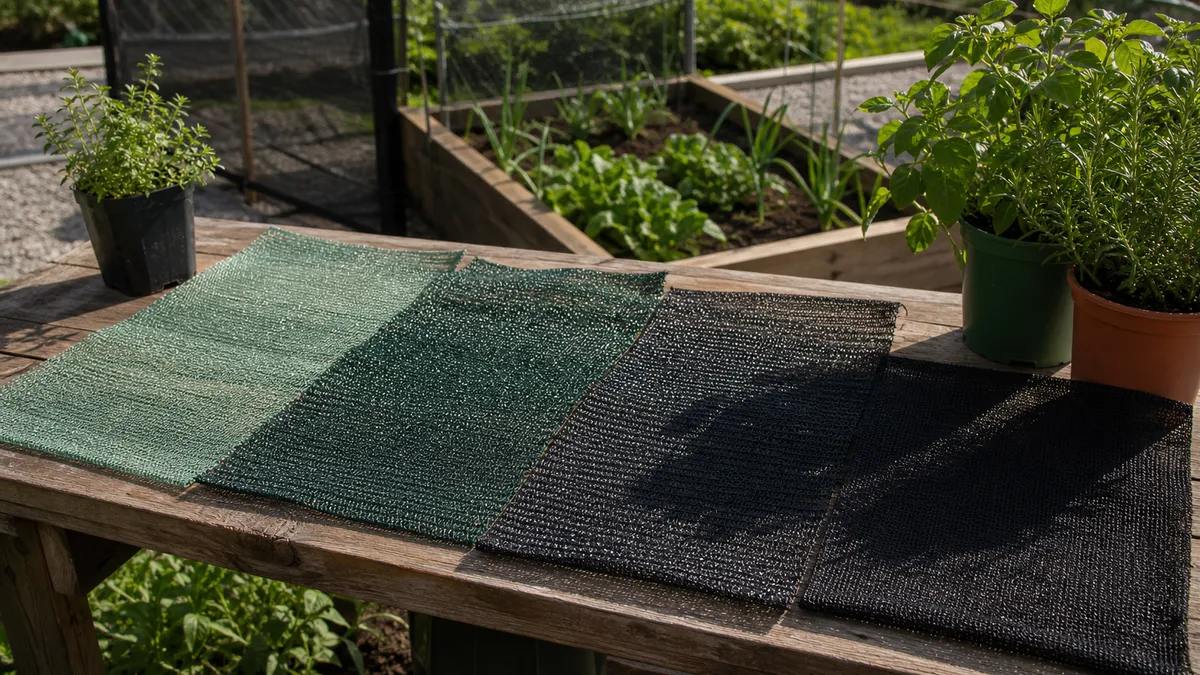
Start with 30-40% shade for broccoli. That range fits the vegetable research better than jumping straight to dark fabric. USU shade guidance puts most fruits and vegetables in the 20-40% range, and UConn discusses 30% shade cloth in vegetable climate-adaptation work. Penn State gives a 30-50% range for most vegetables, which supports 50% only when the plant is tender or the afternoon heat is severe.
Use temporary 50% shade for newly set broccoli transplants, late-summer seedlings, or a harsh afternoon exposure that is burning through lighter cloth. Then reduce the shade, roll it back, or remove it when plants are rooted, the heat wave breaks, or growth starts to look pale and stretched. The extension guidance used here supports moderate vegetable shade, not permanent 70% or 90% cloth over broccoli.
If the bed includes tomatoes, peppers, lettuce or herbs, check the vegetable garden guide before covering everything with one piece. Broccoli sits between full-sun fruiting crops and leafy greens: the kale guide covers leaf-quality questions, while the percentage guide covers the wider 30%, 50%, 70% and 90% comparison.
- Normal starting point: 30-40% shade during hot afternoons.
- Temporary stronger use: 50% shade for tender starts or severe heat.
- Avoid for broccoli: permanent 70-90% shade that makes plants stretch or pale.
How to support the cloth without trapping heat
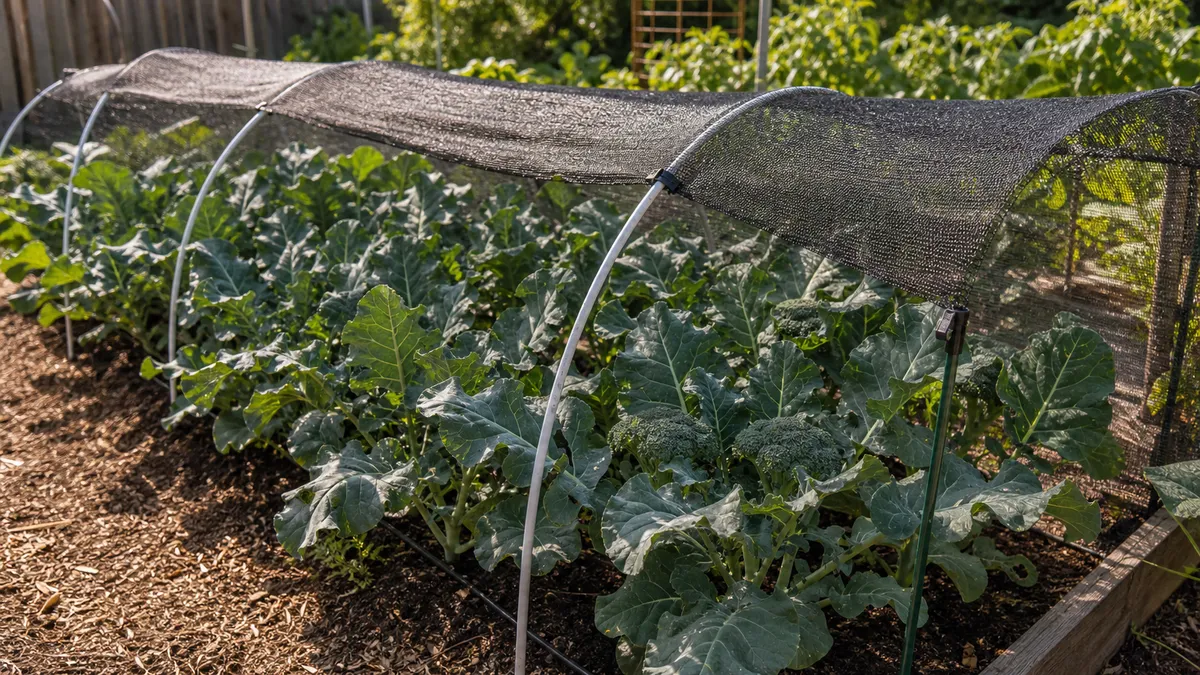
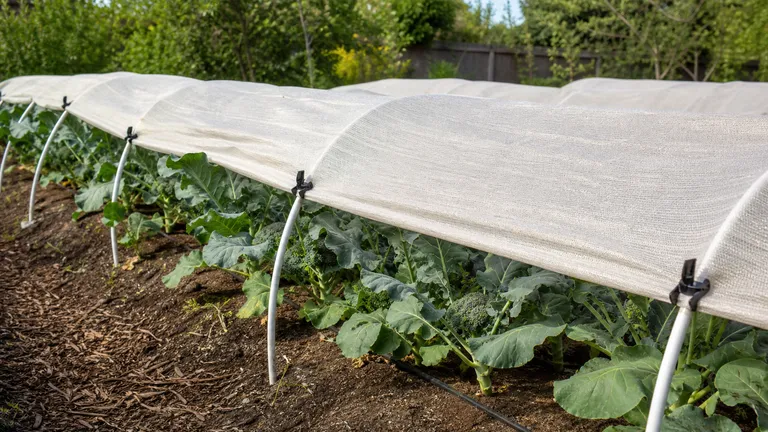
Keep the cloth above broccoli leaves and developing heads. Penn State warns that cloth touching plants can transfer heat and cause wind rubbing damage. A simple low tunnel, stake frame, wire hoop row, or crossbar setup works better than laying fabric on the crop.
Maryland Extension gives row-cover frame examples of 15-30 inches high with bows spaced 2-4 feet apart. Treat those numbers as a starting frame, then allow for mature broccoli. USU lists broccoli spacing at 12-18 inches in rows 2-3 feet apart, so a frame sized only for seedlings may crowd the crop once leaves widen and heads rise.
Do not confuse row cover with summer shade cloth. Maryland Extension notes that row covers can raise temperatures 5-15 F and that summer use can increase disease pressure through humidity and reduced air movement. For hot weather, leave sides open, secure the cloth so it does not flap, and shade the top or west side instead of sealing the whole bed.
- Raise cloth on hoops, stakes, wire, or a low tunnel.
- Leave open sides unless wind direction demands a short afternoon side panel.
- Secure clips and edges so fabric does not rub leaves or developing heads.
Category research
Broccoli shade categories to compare
Compare shade cloth categories after heat timing, plant spacing and row access are clear.
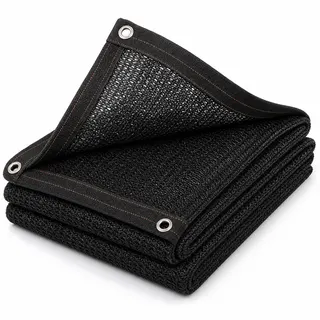
Medium shade
40 Percent Shade Cloth
For hot spells where broccoli needs heat relief without deep shade.
- Seasonal relief
- Crop-specific shade
Check:Head formation and plant stretch.
Search on Amazon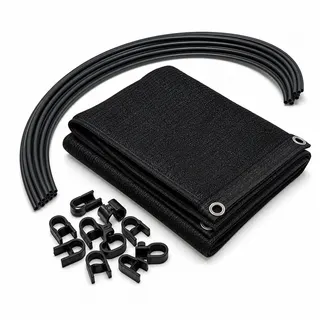
Hoop setup
Garden Shade Cloth Hoops
For holding cloth above brassica leaves.
- Keeps airflow
- Easy row access
Check:Hoop height and harvest access.
Search on Amazon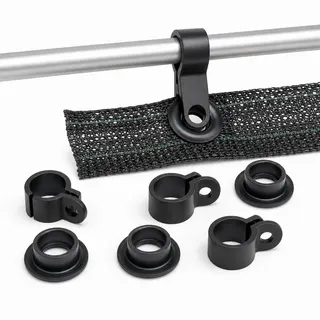
Clips
Shade Cloth Clips
For attaching cloth to hoops or frames.
- Simple fastening
- Reusable gear
Check:Wind, tension and removal.
Search on AmazonWater, mulch and airflow under shaded broccoli
Shade reduces sun load, but broccoli still needs consistent soil moisture. USU recommends roughly 1-2 inches of water weekly and even moisture for good broccoli growth. Minnesota Extension says to soak thoroughly at least once per week if rain or irrigation is below 1 inch, and to water more often in sandy soil.
Mulch matters because shade cloth does not cool dry bare soil by itself. USU recommends applying organic mulches when temperatures rise above 80 F, with materials such as straw, grass clippings, or shredded newspaper to conserve moisture and reduce weed pressure. Put mulch down before the worst heat if the bed dries quickly.
Check the soil instead of watering by calendar only. WSU Extension notes that shade structures can reduce evaporation enough that irrigation may need adjustment. During extreme heat, brief afternoon watering can cool soil, but wet leaves should dry before night. That matters for broccoli because USU disease guidance links bacterial soft rot in brassicas with warmth, humidity and excess moisture.
- Check moisture under the mulch, not just leaf wilt at midday.
- Prefer drip, soaker hose, or careful base watering to wet foliage trapped under cloth.
- Open the sides if the bed smells damp, leaves stay wet, or heads sit in still humid air.
When shade cloth will not save the crop
Shade cloth cannot fix every broccoli failure. USU ties buttoning to cold, water, nutrient, heat, disease, insect and transplant stress, with older or larger transplants more susceptible. Minnesota Extension also links small heads to nutrient deficiency, low moisture and bad transplant timing.
If repeated hot days and warm nights are in the forecast, plant timing may matter more than cloth. USU says fall-maturing broccoli should use early cultivars planted 50-75 days before expected maturity. When the calendar misses that window, a darker cover may keep leaves alive but still leave the plant without enough cool weather to make a good head.
Avoid the common fixes that make the problem worse: draping fabric directly on plants, sealing the sides, using 70-90% shade as a permanent roof, leaving cloth up after the heat passes, treating warming row cover as summer shade, and ignoring water, mulch, pests or disease. Ask what is limiting the crop this week: direct sun, dry soil, warm nights, planting date, pests or disease.
- Tiny heads after stress: diagnose buttoning instead of adding darker cloth.
- No crown during hot nights: wait for cooler weather or adjust the fall planting window.
- Pale, stretched plants: reduce shade percentage, raise the cloth, or remove it sooner.
Option Fit
What works best
Use this as a quick fit check after reviewing the practical options above.
| Situation | Practical option | Why |
|---|---|---|
| Late-summer fall broccoli starts take direct afternoon sun | Use temporary afternoon shade over the bed. | Penn State lists fall broccoli seedlings among heat-susceptible crops; shade helps most while small plants are establishing in July or late-summer heat. |
| Broccoli transplants wilt after hardening off | Give short shade, wind protection and open airflow. | Minnesota Extension recommends gradual exposure to sun and wind; cloth should taper as plants stop wilting and push new growth. |
| Early head formation overlaps with a short heat spike | Combine moderate shade with deep water and mulch. | USU ties broccoli head quality problems to heat and low moisture, so cloth alone is weaker than shade plus steady soil moisture. |
| The forecast stays hot with warm nights or plants already show buttoning | Do not solve this by adding darker cloth. | USU and Minnesota Extension both connect poor crowns and small heads to timing, warm nights, transplant stress, water, fertility, insects and disease. |
Watch-outs
Before you buy or install
- Treat shade cloth as heat relief, not as a promise against bolting, buttoning, or no-crown problems.
- Do not leave row cover on as summer shade; it can warm the bed and trap humidity.
- Do not use dense permanent shade when planting date, warm nights, water stress, pests, or disease are the real issue.
Read Next
Related ideas
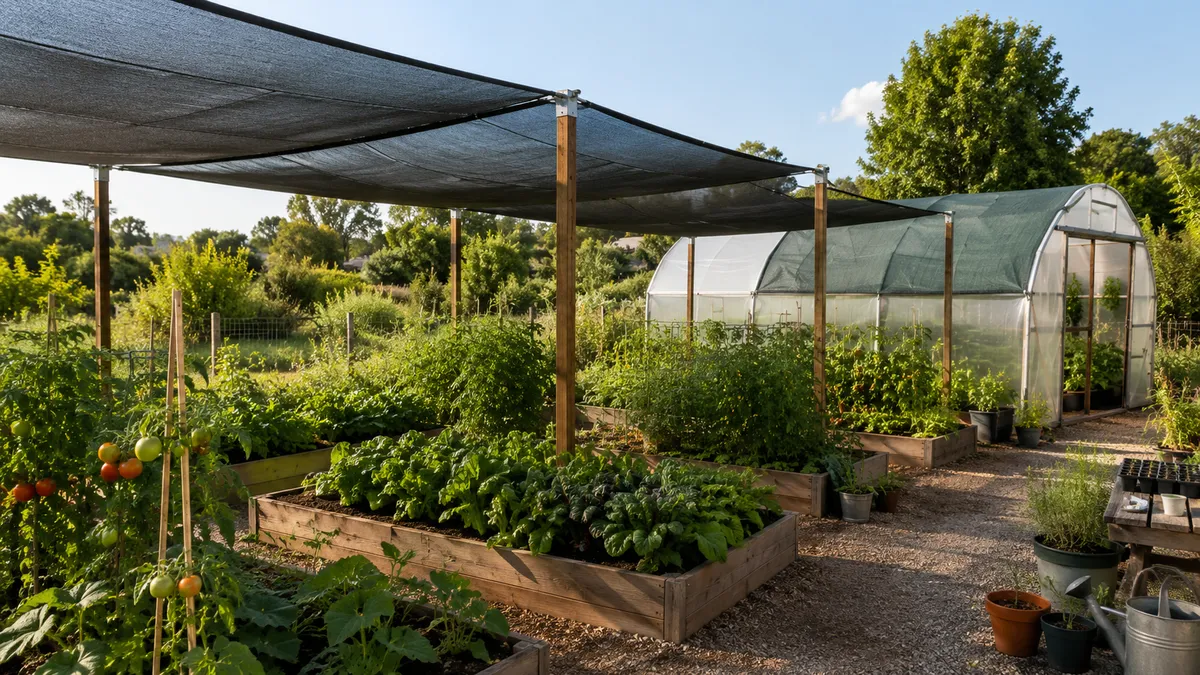
Shade Cloth Guide
Use this when shade cloth is closer to the real constraint than the current page.
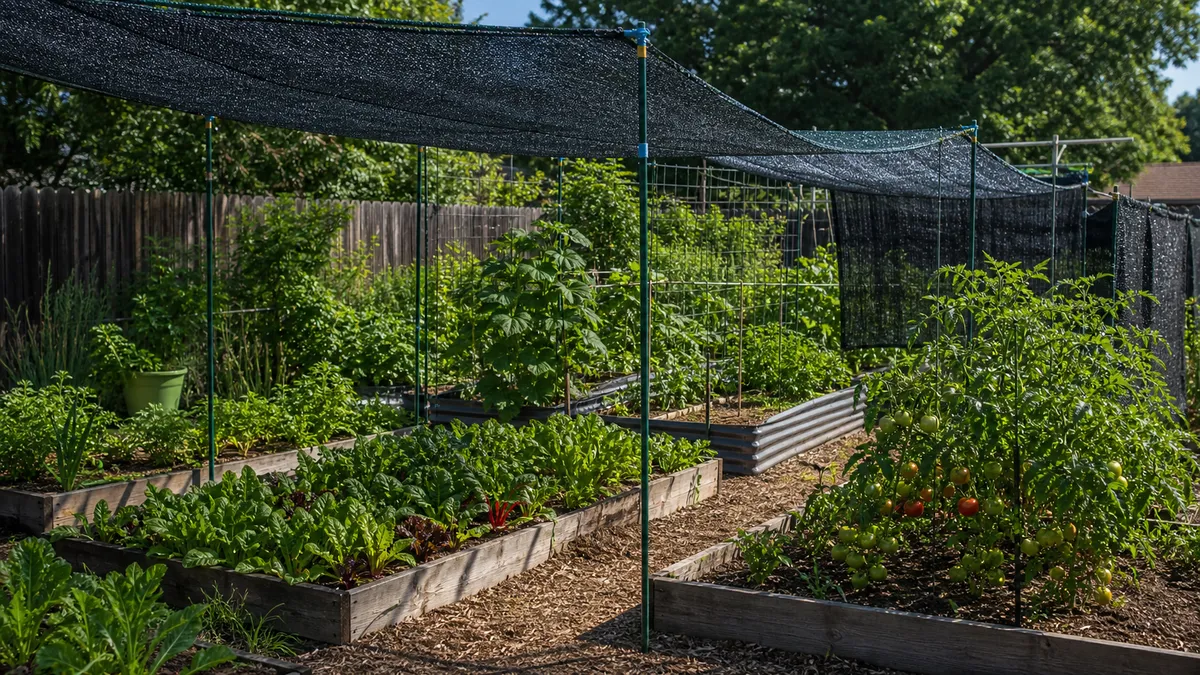
Shade Cloth for Vegetable Garden
Use this when broccoli shares one shade setup with tomatoes, peppers, lettuce, herbs or mixed seedlings.
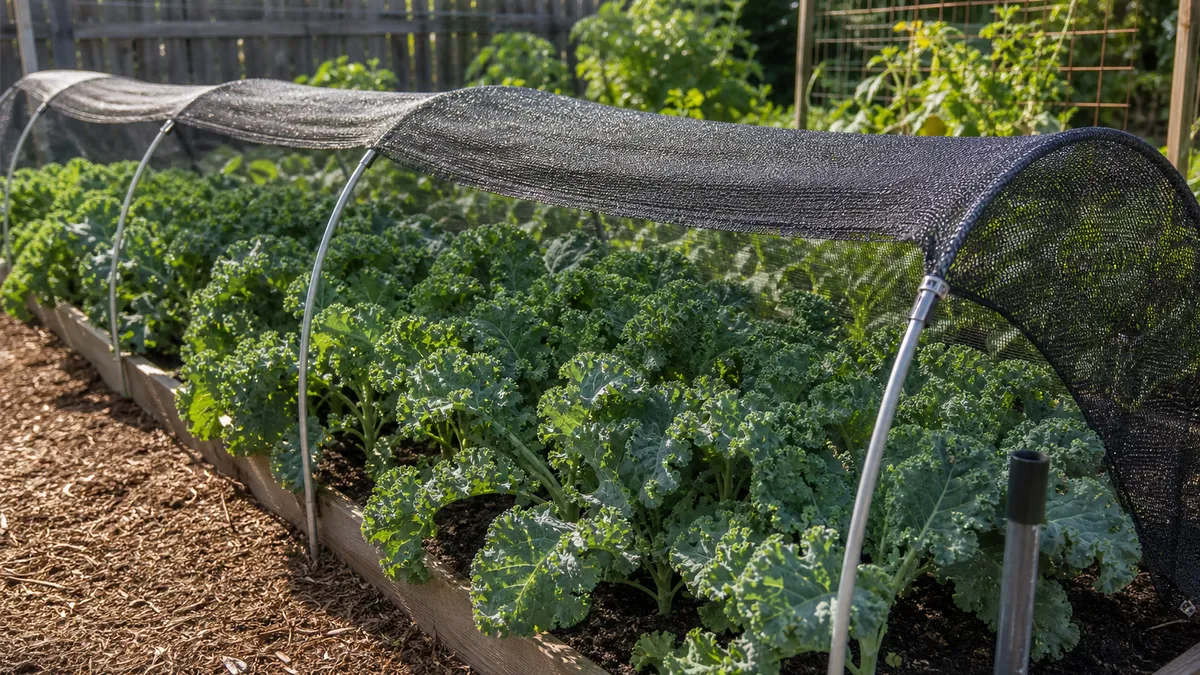
Shade Cloth for Kale
Use this for leafy brassica leaf-quality guidance, not broccoli head formation.
Shade Cloth Percentage Guide
Use this for the broader 30%, 50%, 70% and 90% decision after the broccoli range is clear.
Questions
FAQ
Can shade cloth stop broccoli from bolting or buttoning?
It can reduce heat and direct sun stress during a short window, but it cannot guarantee normal heads. Buttoning and no-crown problems can also come from warm nights, transplant stress, cold shock, dry soil, fertility problems, insects and disease.
Is 50% shade cloth too much for broccoli?
Not always, but use it as temporary protection for tender starts or severe afternoon heat. Start with 30-40% when possible, then watch for pale leaves, stretched growth or slow head development. Those signs mean the cover is too dark or left up too long.
How long should broccoli transplants stay under shade cloth?
Keep transplant shade short and taper it as plants root in. Remove or reduce the cover when plants stop wilting, push new growth and the forecast cools. If the cloth stays up indefinitely, it can reduce light after the plant no longer needs protection.
Should broccoli shade cloth cover the sides or only the top?
Top shade with open sides is usually safer for heat relief. A short west-side panel can help in direct afternoon sun, but a sealed tent can trap warm humid air around leaves and heads, which raises disease risk.
Why did my broccoli make tiny heads even with shade cloth?
Tiny heads often point to buttoning or earlier stress rather than a shade percentage problem. Check transplant age, planting date, warm nights, soil moisture, fertility, insects and disease. Shade may have arrived too late or reduced only one stressor.