
Quick Answer
Quick answer for a front-door awning
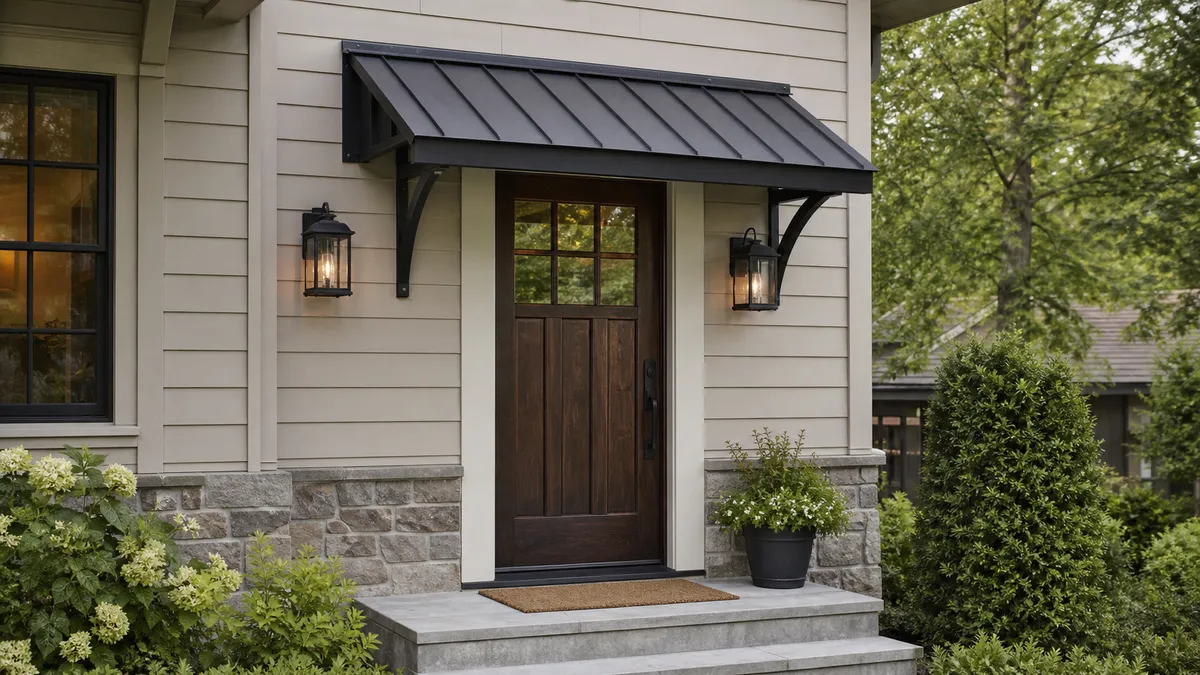
For everyday front-door rain, start with a fixed metal or polycarbonate entry canopy. Retractable fabric usually makes sense only when the front door opens into a larger adjustable porch or patio shade area. Check the wet landing, projection, door swing, wall substrate, runoff, wind or snow exposure, and facade approval before ordering.
Choose a fixed metal or polycarbonate door canopy when the wall can take the brackets and the projection covers the wet landing; do not order yet if door swing, runoff or approval is unresolved.
Buying Direction
What to buy for the front-door entry
Use this table after checking door swing, wall support, runoff and approval.
| Situation | Buy / use this | Why |
|---|---|---|
| Wet threshold, lock, mat or small landing | Fixed aluminum or metal door canopy with planned runoff | It stays in place for daily rain and can include gutter or channel details. |
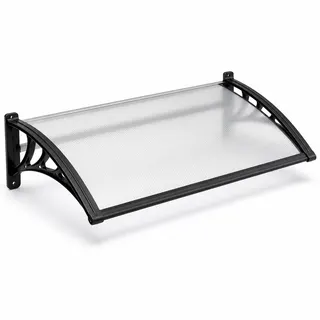
| Dark entry where daylight still matters | Polycarbonate entry canopy with gasket and rain-channel details | It sheds rain while keeping the doorway lighter than an opaque cover. |
| Traditional facade or softer color needed | Fixed fabric door awning only on a sheltered entry | Fabric can look warmer, but it needs more cleaning and weather care. |
| Large covered porch or patio-door zone | Retractable fabric awning only with height, wall band and closing routine | Retractable manuals commonly limit use in wind, heavy rain, snow or unattended weather. |
| Historic facade, HOA, condo, rental or public-facing entry | Get approval before buying the kit | Street-facing awnings may need dimensions, support details, material, color and elevation review. |
| Unknown wall, weak cladding, blocked swing or gutter conflict | Do not buy yet | A standard canopy is the wrong purchase until the mounting and clearance problem is solved. |
Front-door awning buying summary
Start with what gets wet, not with the product photo. A front-door awning has to protect the threshold, lockset, doormat, landing and the person standing with keys or packages. If it only shades the top of the door slab while rain still lands on the mat and first step, it has missed the job.
For most front doors, compare fixed metal and polycarbonate canopies first. NuImage sells aluminum door canopies with a built-in front gutter, and Canopia describes polycarbonate door awnings with a front gutter and wall gasket. Those details matter because rain behavior is the front-door problem, not only sun shade.
Retractable fabric awnings are the exception here. Rollac and Eclipse/Rainier manuals both warn against leaving retractable awnings open in bad weather such as high wind, heavy driving rain, snow or frost risk. That makes retractable fabric a poor default for a small entry that needs unattended rain cover.
Use the parent guide to compare broader door and window awnings, but keep this decision narrow: fixed entry canopy first, retractable only for a larger porch or patio zone, and no purchase until the wall, door swing and runoff path are known.
- Choose fixed metal or polycarbonate first when the job is daily rain at the front step.
- Treat fabric as a style and shade choice that needs a realistic weather routine.
- Pause the order when the bracket line, door swing or runoff path is uncertain.
Rain landing zone: what the awning must cover
The important measurement is where rain lands, not only how wide the canopy looks online. Stand at the door and mark the wet parts after rain: threshold, handle side, lock, mat, landing, porch step and the place where someone waits while the door opens. A narrow canopy can look tidy and still leave the useful standing spot wet.
Projection matters because rain falls off the front edge. If the front edge sits over the first step, a drip line can make that step slick. If side runoff falls near the lock side, you may still get wet while unlocking the door. A planter under the runoff can splash mud back onto the entry.
Product details can help, but only when they match the entry. NuImage describes a built-in front rain gutter on one aluminum door-canopy line. General Awnings describes a polycarbonate door canopy with a rain channel, and Canopia describes a front gutter and wall gasket on its Aquila line. Those are examples of the kind of drainage features to inspect, not universal guarantees.
Driving rain is the limit. An awning over a front door can reduce direct overhead rain, but side-blown rain can still reach the landing. If the entry is exposed to wind between buildings or at an open corner, buy less on appearance and more on manual-rated weather behavior.
- Check threshold, lock side, mat, landing and first step after real rain.
- Keep runoff away from steps, walkways, the lock side and splash-prone planting beds.
- Inspect gutter, rain channel, gasket, pitch and side-edge details before color.
Width, projection and door swing clearance
A front-door canopy should be sized around the full entry, not only the door slab. Include trim, sidelights, transom edges, doorbell location and the standing zone. A canopy that barely spans the slab can leave the lock side wet; one that extends far beyond the trim can look pasted onto the facade.
General Awnings' traditional awning instructions say the canopy should exceed the door width and allow clearance for doors that open outward. Use that as a buying principle, not as a universal number. Outswing doors, storm doors and screen doors can hit a low front bar or side bracket even when the product width looks correct.
Projection is useful only if it covers the threshold and landing while keeping head clearance, light fixtures, trim and gutters clear. General Awnings notes on one polycarbonate line that width is measured outside the brackets, and that outswing doors need clearance above the door so the door does not hit the canopy. Bracket space can therefore matter as much as the panel width.
Tight entries are often poor candidates for patio-scale retractables. SunSetter measuring guidance for retractable awnings asks for mounting height and a clear wall area for brackets. That type of wall band is often interrupted near a front door by trim, gutters, lights, transoms or roof returns.
- Measure door slab, trim, sidelights, transom, bracket space and standing spot.
- Open storm, screen and outswing doors through their full path before ordering.
- Check projection as a wet-landing question, not only as a catalog depth.
Fixed metal, polycarbonate, fabric or retractable
Fixed aluminum or metal makes sense when the front door needs a permanent, low-routine rain cover. It can look durable and architectural, especially on brick, traditional siding or a simple entry. The trade-offs are visual weight, finish matching and possible rain noise. A metal canopy that is too wide or too deep can overpower a small door.
Polycarbonate makes sense when the entry is dark or the door has sidelights. Canopia describes UV-protected polycarbonate panels, and Advaning describes solid polycarbonate panels with aluminum bars and rubber strips. The panel is only part of the purchase; bracket strength, wall seal, side runoff and cleaning access decide whether it works at the entry.
Fixed fabric can look softer and can help with sun on a glazed door. Energy.gov notes that modern awning fabrics often use acrylic or polyvinyl laminates with water-repellent treatment and mildew or fading resistance. That does not make fabric the best unattended rain cover. Fabric needs more cleaning, drying and weather awareness than a rigid canopy.
A custom architectural canopy belongs on the list when curb appeal is the main reason for the purchase. Wood-look brackets, metal standing-seam shapes or shop-built canopies can fit the house better than a kit. They also raise the need for structural design, permits, color approval and repair access.
Retractable fabric belongs only when this is really a larger adjustable shade area. If the front door opens onto a seating porch, a deeper comparison with fixed versus retractable awnings can make sense. For a small exposed entry, a retractable awning usually asks for the wrong routine.
- Use metal when permanent rain cover and a solid look matter most.
- Use polycarbonate when daylight at the entry matters and drainage details are strong.
- Use retractable fabric only when the space is a larger adjustable shade area.
Wall substrate, brackets and water at the fasteners
The wall decides whether a kit is enough or whether professional help comes first. Good mounting usually means structural framing, a header, studs, solid masonry or another support accepted by the product instructions. Decorative trim, fascia, gutters, thin siding and unknown cladding are not a load path.
Be careful with brick, stucco and veneer. SunSetter's installation manual for one awning line warns that supplied masonry fasteners are for the body of brick, not brick joints, and not for hollow cinder block, deteriorated surfaces or stucco. That is not a door-canopy rule for every product; it is proof that wall material and fastener instructions are product-specific.
Advaning's polycarbonate awning information separates standard lag screws from a separate masonry expansion-bolt part for solid masonry. The practical lesson is simple: do not turn one box of hardware into a universal wall solution. If the wall is veneer brick, deteriorated masonry, hollow block, stucco-only, thin siding or unknown cladding, pause and get the substrate checked.
Water can also fail behind the bracket. Journal of Light Construction's weather-barrier guide discusses flashing and water control around exterior doors, ledgers and other wall penetrations. For a door awning, do not improvise a flashing recipe from an article; make sure the installer manages penetrations so water does not get behind siding, trim or masonry.
- Stop when the only obvious attachment is trim, fascia, gutter, veneer, stucco-only or unknown cladding.
- Follow the exact product manual for substrate, anchors and brackets.
- Use qualified help when water management or structure is unclear.
Gutters, lights, cameras, trim and front-door hardware
A front-door awning fails when it collides with the parts that make the entry work. Check porch lights, cameras, doorbells, smart locks, address numbers, security sensors, decorative molding, transoms, sidelights, shutters, gutters, downspouts and trim before choosing a kit.
Check both the bracket line and the runoff line. A light may clear the bracket but sit directly under a drip edge. A camera may clear the panel but lose its view to the front bar. A downspout may leave enough mounting room but dump water exactly where the awning runoff lands.
Raleigh's awning permit guidance asks for front and side facade photos or sketches showing finished height and nearby building features such as exterior lighting and signs. Even when no permit is needed, that is a useful pre-buy habit: photograph the entry straight on and from the side, then mark every fixture before ordering.
Do not move wiring, cameras or sensors as a casual awning step. If a light, doorbell, camera or security device must move, use qualified help where needed. If the awning blocks normal door operation, emergency access or a required entry route, choose a different size or do not buy that kit.
- Photograph the entry straight on and from the side before ordering.
- Check both the bracket line and the water line around every fixture.
- Do not let an awning block door operation, camera view or required access.
Wind, snow, ice and unattended weather
A front-door awning adds surface area to the facade. It may be small, but wind can still lift it, snow can load it, and freeze-thaw weather can make runoff dangerous on steps. Portland's awning code treats awnings and their anchorages as load-bearing exterior projections that must address conditions such as wind, snow, drift and dead load.
Fixed does not mean storm-proof. A fixed metal or polycarbonate canopy still has to match the product manual, anchors, wall and local exposure. Open corners, hills, coastal streets, upper floors and narrow gaps between buildings can all make wind more severe than a sheltered porch.
Fabric Architecture Magazine explains that wind, snow, ponding and drift affect awnings and can damage anchorages when loads are wrong. Use that as a caution, not as a do-it-yourself engineering guide. If the entry sees heavy snow, ice dams, wind tunnels or public steps below the awning, get installer or contractor input before buying.
Retractable fabric needs the clearest warning. Rollac says retractable awnings are intended for solar shading and light winds, and Eclipse/Rainier warns against high winds, heavy driving rain and relying on sensors for sudden weather. Close fabric before bad weather when the manual requires it.
- Do not treat a small door canopy as automatically safe in wind or snow.
- Check runoff for ice risk on steps and walkways.
- Retract fabric before bad weather when the manual requires it.
Curb appeal, HOA, permits and front-elevation approval
Curb appeal starts with proportion. The canopy should look related to the door, trim, sidelights and facade rhythm. Metal can look permanent, polycarbonate can look lighter, fabric can look softer, and a custom canopy can look integrated when a kit would look added later.
Check visual weight before color. A deep canopy over a narrow door can look like a small roof hung in the wrong place. A clear canopy can disappear on some facades and look too modern on others. Side panels, bracket shape, pitch and finish can decide whether the awning looks intentional.
Approval can matter because the front door is public-facing. DC's permit guidance defines an awning as an architectural projection supported by the attached building and asks for plans when erecting, repairing, replacing or modifying one. Raleigh asks for awning dimensions, materials, framing, colors and facade information in its guidance.
Rules vary by jurisdiction and property type. Ypsilanti's guidance shows that permit treatment can change by awning depth and exterior-work category. HOA, condo, landlord, historic-district and streetscape rules may be stricter than city rules. Get approval before drilling when the front elevation is controlled.
- Match width, pitch, bracket style and finish to the doorway and facade.
- Ask about HOA, condo, landlord, historic or local approval before drilling.
- Be ready to provide dimensions, finished height, support details, material and color.
Cost drivers and when not to buy
Do not compare only kit price. The real cost drivers are width, projection, material, bracket count, connected units, masonry hardware, structural repair, water-management work, labor, permits, custom color, motor controls, sensors and future repair access. A small fixed canopy and a full retractable patio awning are not the same purchase.
Connected units need caution. Some manufacturers describe connectable or multi-width canopy systems, but that does not mean you can safely join units without checking center brackets, wall backing, water routing and the exact manual. More width can also change the look of the front elevation.
Do not buy yet if the wall is unknown, the door hits the canopy, runoff lands on steps, the gutter or light conflict remains, approval is uncertain, or wind and snow exposure exceed what the product instructions address. A better-looking kit will not fix those failures.
Spend money on the hard check first when the entry is uncertain. A contractor visit, installer quote, HOA sketch, facade photo set or substrate check can prevent buying a canopy that cannot be mounted, approved or drained safely.
- Price structure, brackets, water management and approval work with the canopy.
- Do not use one manufacturer's example dimensions as universal fit rules.
- Skip the purchase when clearance, runoff, substrate or approval remains unresolved.
Category research
Front-door awning categories to compare
Use these as category checks, not ranked product picks.
Fixed
Fixed aluminum door canopy
Daily rain cover for a small front entry.
- Inspect gutter or drip-edge details
- Check side panels and finish color
Check:Best when the wall can take brackets and runoff can leave the step safely.
Research fixed canopiesLight
Polycarbonate entry canopy
Rain cover where the doorway still needs daylight.
- Keeps the entry brighter
- Inspect seals and bracket design
Check:Best when gasket, bracket and rain-channel details match the wall and entry width.
Research polycarbonate canopiesFabric
Fixed fabric door awning
Traditional look or softer color on a sheltered entry.
- Softer visual finish
- More cleaning and drying care
Check:Best when style matters and the weather exposure is moderate.
Check fabric guidanceWatch-outs
Before you buy or install
- Do not mount a door canopy into thin siding, trim, fascia, gutters, veneer, deteriorated masonry, hollow block, stucco-only or unknown cladding without verified support.
- Do not treat a retractable fabric awning as unattended rain, snow or wind cover.
- Do not order a kit that blocks normal door swing, required entry access, lights, cameras or safe step drainage.
- Do not assume one product's projection, bracket or fastener details apply to every front door.
Read Next
Related guides if your situation is different
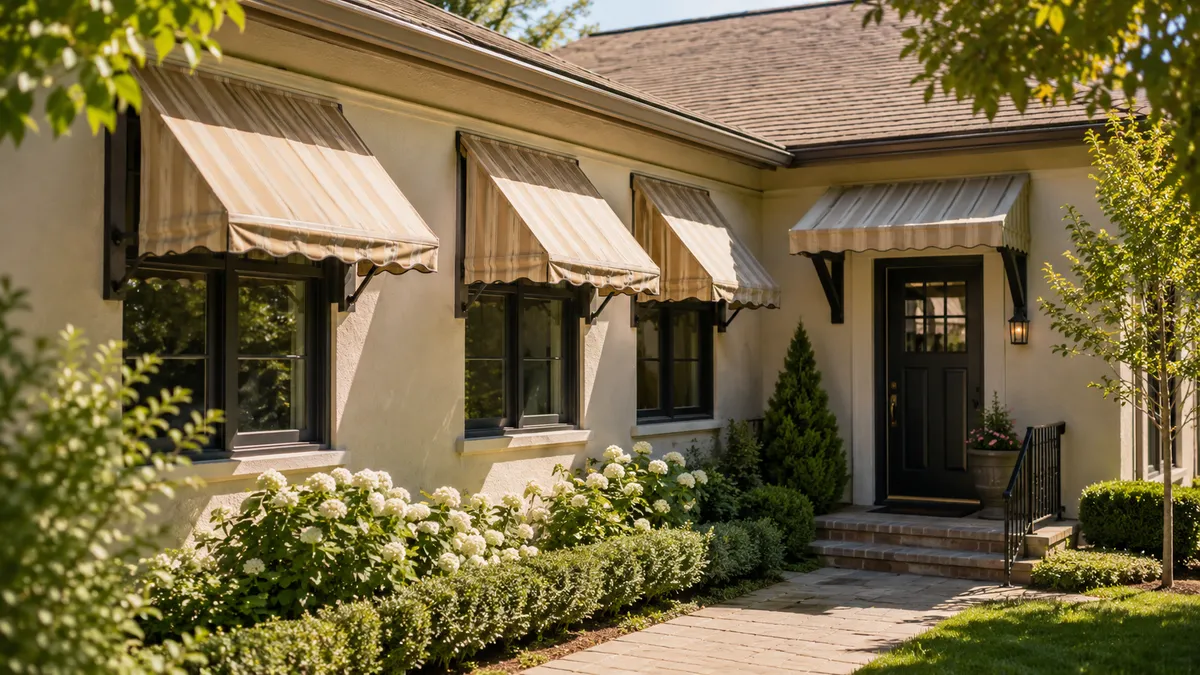
Door and Window Awnings
Use this when door and window awnings is closer to the real constraint than the current page.
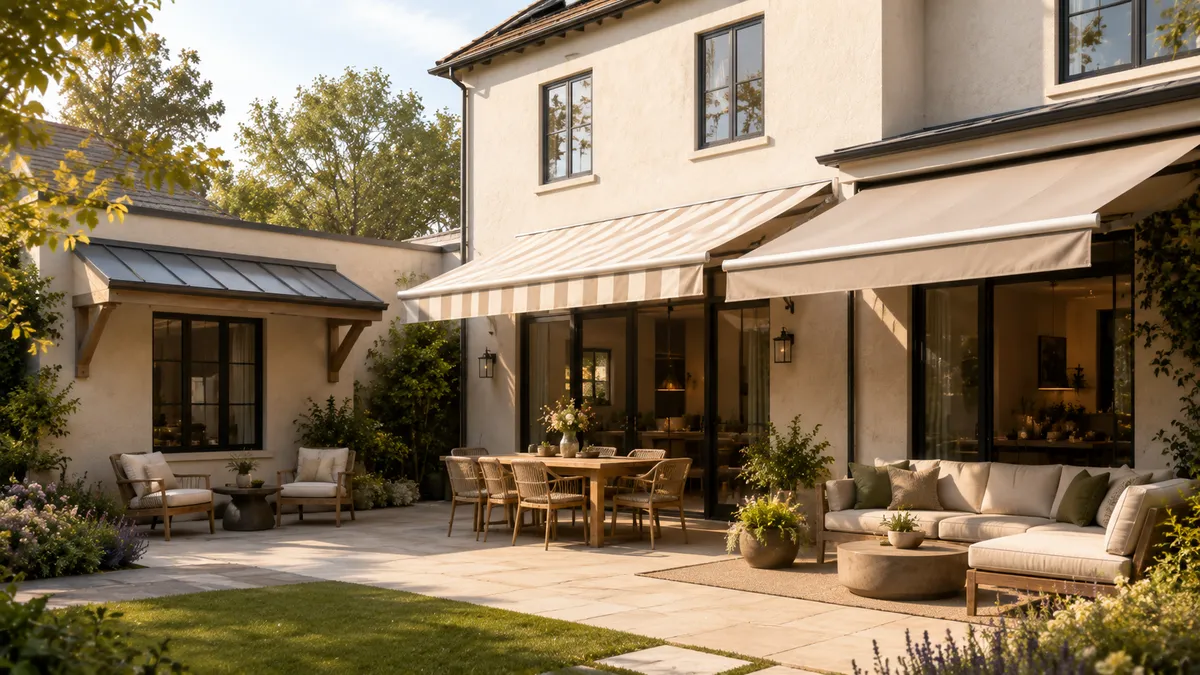
Patio Awning Guide
Use this when patio awning is closer to the real constraint than the current page.
Fixed vs Retractable Awning
Use this when fixed vs retractable awning is closer to the real constraint than the current page.
Questions
FAQ
What type of awning is best for a front door?
A fixed metal or polycarbonate canopy is usually the best starting point for daily front-door rain. Metal looks more permanent and can include gutter details. Polycarbonate keeps more light at the entry. Fabric and retractable awnings fit narrower cases where style or larger adjustable shade matters more.
How wide should a front-door awning be?
It should cover more than the door slab. Check the trim, sidelights, lock side, standing spot and bracket space. General Awnings tells installers to let a canopy exceed the door width, but exact width still depends on the product manual, wall space and facade proportion.
How far should an awning project over a front door?
Project far enough to protect the threshold, lock, mat and landing, but not so far that runoff lands on a step or the front bar interferes with doors, lights, gutters or head clearance. Treat projection as a wet-entry check, not only a listed product depth.
Can I mount a front-door awning to siding, brick or stucco?
Only if the product instructions and wall construction support it. Do not rely on siding, trim, fascia, veneer, deteriorated masonry, hollow block, stucco-only or unknown cladding. Some manuals separate solid masonry hardware from other fasteners, so verify the substrate before ordering.
Do I need a permit or HOA approval for a front-door awning?
Maybe. A front-door awning changes the visible elevation, and local or private rules vary. Some places ask for dimensions, finished height, structural support, material, color, framing and facade photos. HOA, condo, landlord or historic rules can apply even when a city permit is not required.
Is a retractable awning good for a front door?
Usually not for a small exposed front step that needs daily rain cover. Retractable fabric is better when the entry is part of a larger porch or patio shade area and someone will close it before wind, heavy rain, snow or long unattended weather.