
Quick Answer
waterproof vs breathable shade sail: the short version
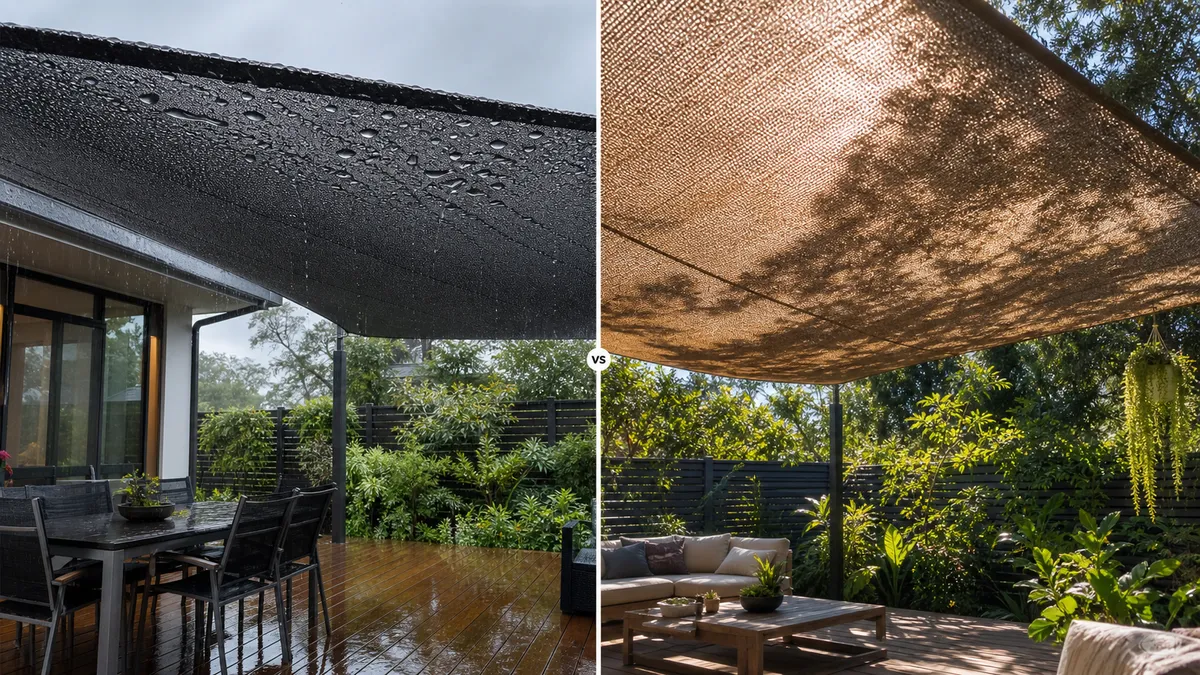
Choose a breathable shade sail for most hot patios where airflow, heat relief and wind venting matter more than dry seating. Choose a waterproof shade sail only when strong anchors, clear slope, safe runoff and tensioning room are realistic. Breathable HDPE mesh is not rain cover, and waterproof coated fabric is not a flat roof.
Choose breathable HDPE mesh for hot sun and exposed wind; choose waterproof coated fabric only when the sail can shed rain to a safe low edge.
Side by Side
Fast comparison snapshot
| When this matters | Choose | Why |
|---|---|---|
| Hot patio or pool edge where airflow matters | Choose breathable HDPE mesh and keep the span modest. | Mesh lets breeze and warm air move through the fabric instead of trapping heat below it. |
| Dining area needs light rain cover and has high and low corners | Use waterproof coated fabric only after the runoff path is clear. | Coated fabric can block more rain, but the water must leave the sail without pooling. |
| Flat deck, pergola frame or square patio with no height difference | Avoid waterproof fabric; use breathable mesh or a roofed cover. | A flat waterproof sail can sag, collect water and overload anchors. |
| Windy open yard or unattended pool area | Favor smaller breathable mesh or removable shade. | Open-knit fabric vents more wind than coated fabric, but both still need storm removal. |
| Weak fascia, fence post or unknown masonry anchor | Choose neither until the mounting point is verified. | The anchor has to carry fabric tension plus wind or rain load. |
Which fabric fits each situation
The first split is simple: breathable HDPE mesh is mainly a sun and heat fabric, while waterproof coated fabric is a rain-blocking fabric with more installation demands. Coolaroo separates HDPE shade sails from treated polyester, and Tenshon describes HDPE as water resistant rather than waterproof because the weave lets some water pass through.
For most patios, the waterproof vs breathable shade sail decision should start with the bad hour. If the space fails because hot air collects under the cover, HDPE mesh is usually easier to live with. If the space fails because a table gets wet in light rain, waterproof fabric can help only when the sail has a real fall to one edge.
Do not treat waterproof as a premium upgrade by default. It can make a flat deck worse. It can send runoff toward a door. It can also pass more wind force to the anchors because the coated fabric does not vent like mesh.
In the table below, fabric is only the answer when the mounting and weather routine also pass. If the post, wall plate, fascia or fence post is doubtful, choose no sail until the attachment point is verified.
Scenario Fit
Which fabric fits each situation
Use this after the fast comparison above. Each row points to the fabric or cover that makes the most sense for that site, not a product ranking.
| Situation | Use this | Avoid this | Why it matters |
|---|---|---|---|
| Hot exposed patio | Breathable HDPE mesh with open airflow. | Dark waterproof fabric over a low seating area. | Mesh lets warm air and some breeze move through the shade. |
| Light rain over a dining table | Waterproof coated fabric if the sail can drain to a planned low side. | HDPE mesh sold as dry rain cover. | Mesh can pass water; coated fabric needs slope and tension. |
| Flat deck or pergola frame | Breathable mesh, louvered cover or roof panel. | Flat waterproof sail. | Waterproof fabric can pool water when no corner drops. |
| Windy pool edge | Smaller breathable mesh or shade that comes down quickly. | Large waterproof span without engineered anchors. | Coated fabric can transfer more wind force to posts and wall plates. |
| Weak fascia or fence post | No sail until the structure is checked. | Any tensioned sail tied to a doubtful edge. | Fabric tension, gusts and pooled water all load the same anchor. |
| No-drill rental patio | Umbrella, weighted canopy or approved freestanding shade. | Wall-mounted or post-tensioned sail without written approval. | A sail still needs secure load-bearing points. |
| Grill, fire pit or heater nearby | Move the heat source or use no overhead fabric. | Either fabric directly above flame or high heat. | Manuals warn against grills, open flames and patio heaters. |
| Heavy rain seating | Awning, roofed pergola or permanent roof. | Any shade sail as the main dry roof. | Rain cover needs edges, drainage and detailing beyond shade fabric. |
Rain, slope and runoff are the waterproof test
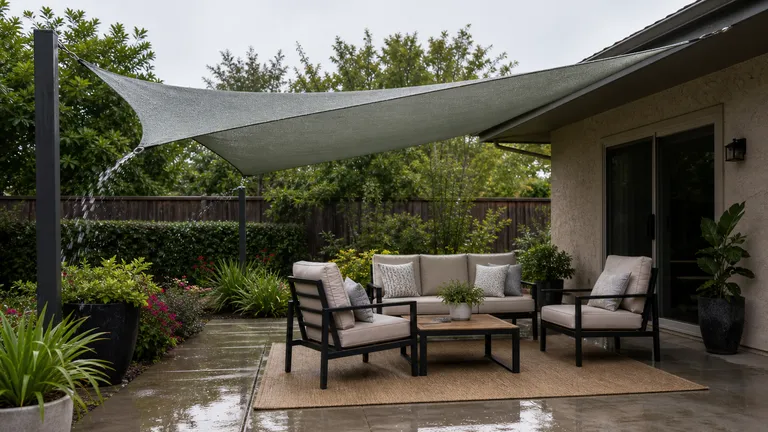
A waterproof shade sail needs a high side, a low side and a place for water to go. Shade Specialists gives one product-manual example of 30% slope, described as a 30 cm height difference per 1 m of sail length. KGORGE gives a 20% waterproof example, Mighty Covers mentions a 15 degree drainage minimum, and one Home Depot use-and-care manual says 20-30 degrees for runoff.
Those figures should not be treated as one universal rule. They show the same practical point: waterproof fabric needs meaningful fall. A small cosmetic tilt is not enough when a coated panel can hold rain across the middle.
Water pooling is not just a stain problem. KGORGE warns that a loose sail can behave like a bucket and notes that pooled water weighs about 8 lb per gallon. That weight pulls on corners, stretches fabric, bends weak posts and can make turnbuckles harder to adjust later.
Plan the low corner before ordering. Runoff should not dump onto a doorway, stair, grill, electrical outlet, walkway or neighbor's space. If the only possible low side sends water into the wrong place, use breathable mesh for shade or choose a real roof for rain.
- Do not buy waterproof fabric for a flat square patio unless the frame can create real fall.
- Leave clearance for water to exit beyond the seating area.
- Check the product manual before treating any slope number as final.
Heat, airflow and UV protection are not the same thing
Breathable HDPE mesh can feel cooler because air moves through the weave. Tenshon says the gaps in its HDPE fabric allow warmer air to rise through the material. That matters on a still patio where the problem is trapped heat, not rain.
Waterproof coated polyester, PVC or polypropylene coated fabric blocks more water, but that same closed surface can feel warmer under sun. It may still be the right fabric over a small dining area that only needs light rain protection. It is usually the wrong upgrade when the real complaint is hot air under the cover.
UV block claims need careful reading. Coolaroo lists HDPE examples with 95% UV block and treated polyester examples with 100% UV block. CHOICE recommends checking for high UVR block and independent UV testing, but Cancer Council Australia warns that real shade performance also depends on design, height, size, indirect UV and where people sit.
A cooler-feeling sail is not automatically stronger sun protection. Cancer Council NSW also warns that heat and temperature are not the same as UV radiation levels. Use UV claims as one buying check, then look at coverage size, side exposure and whether the shaded chairs actually sit under the protected zone.
Category research
Waterproof and breathable sail categories to compare
Compare fabric categories only after slope, drainage and heat behavior are understood.
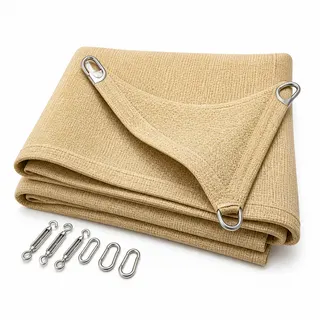
Waterproof
Waterproof Shade Sail
For rain shedding only where slope and tension are realistic.
- Sheds water
- Needs fall
Check:Pooling risk and runoff path.
Search on Amazon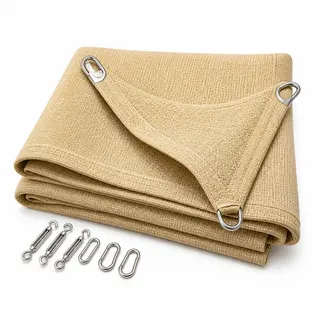
Breathable
Breathable Shade Sail
For heat relief and easier drainage in normal patio use.
- Better airflow
- Not rain cover
Check:UV label and shade footprint.
Search on Amazon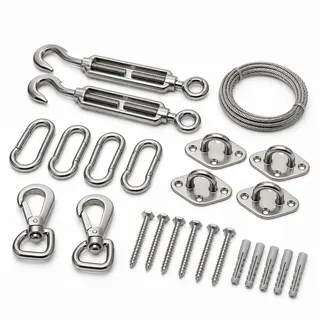
Hardware
Shade Sail Hardware Kit
For tensioning either fabric type correctly.
- Tension control
- Corner setup
Check:Turnbuckle length and anchor strength.
Search on AmazonWind load, anchors and bad-weather routines
Wind changes the fabric comparison. Maanta's guidance says open-knit breathable fabric is more wind-resistant because air can pass through, while waterproof fabric traps wind and transfers force to the anchors. Treat that as a reason to be more cautious with coated fabric in open yards, pool edges and roofline wind tunnels.
Both fabric types still need real mounting points. Mighty Covers calls structural mounting critical and recommends builder or engineer advice when attaching to fascia if unsure. Shade Specialists requires strong, stable mounting points aimed toward the sail center, with tensioning space at each corner.
Plan tensioning room before setting post or wall-plate positions. Mighty Covers says to leave at least 10% of the sail length between each corner and mounting point for hardware. Shade Specialists gives another product-manual minimum of 25 cm and lists M8 turnbuckles for smaller sails up to 4 m and M10 turnbuckles for larger sails from 4 m.
Plan bad-weather removal before the sail goes up. Tenshon recommends removing shade fabric in extremely high winds and where snow accumulation is possible unless the project has a specific engineered limit. The listed Home Depot use-and-care manual also warns to remove the sail during severe weather, snow or storms. If nobody will remove the sail, reduce the span or choose a different cover.
- Stop and get professional advice for fascia, large spans, doubtful masonry or posts set only into thin slabs.
- Use pulleys or quick-removal hardware where wind exposure is common.
- Keep sails away from grills, open flames, fire pits and patio heaters.
Installed cost: compare the whole job
Do not compare fabric price by itself. A breathable sail may need normal stainless fittings, turnbuckles and sound anchors. A waterproof sail may add taller posts, a larger height difference, drainage changes, more certainty that the anchors can carry the load and easier removal hardware.
A small waterproof sail between two masonry walls can work well if the low corner drains cleanly. A large waterproof rectangle over a flat patio can cost more than expected because the fabric purchase can turn into posts, footings, wall plates, pulleys and repair work.
CHOICE recommends asking about fabric specifications, warranty, maintenance, structural engineer reports and installer credentials when the shade job becomes more involved. That advice matters here because waterproof fabric often asks more from the structure than the product listing suggests.
Cost Drivers
Cost drivers to price before fabric
Compare the full job, not product-only prices. Posts, drainage and removal hardware can change the total more than the fabric.
| Cost driver | Breathable HDPE mesh | Waterproof coated fabric | What changes the bill |
|---|---|---|---|
| Fabric-only purchase | Low complexity when anchors already exist. | Low to medium, but only if slope already exists. | Fabric price is only the start. |
| Turnbuckles and fittings | Required for proper tension. | Required, often with less tolerance for slack. | Stainless fittings, shackles and corner hardware. |
| Posts and footings | Needed when no safe anchor exists. | More likely when high and low corners must be created. | Post height, footing size and load path. |
| Runoff management | Usually lower because water can pass through mesh. | Medium to high if water must be directed away. | Doors, walkways, electrics and seating edges. |
| Removal hardware | Useful in exposed wind. | More important where wind or storms are likely. | Pulley, easy-release corner or seasonal takedown plan. |
| Professional advice | Needed for doubtful anchors or large spans. | More likely with fascia, big spans or heavy runoff. | Builder, engineer or experienced installer review. |
No exact price is shown because the page has no current local labor source. Compare the complete installed job before buying fabric.
When neither sail fabric is the right answer
Choose neither fabric when the job is reliable dry cover in heavy rain. Cancer Council NSW describes shade cloth as porous and lacking rain protection. Waterproof fabric can improve light rain cover, but it still lacks gutters, flashing, sealed edges and the structural logic of a roof.
Choose neither when anchors are weak or permission is missing. A renter patio, vinyl fascia, fence rail or loose masonry joint should not become the mount for a tensioned sail. Use an umbrella, freestanding canopy or approved temporary shade until the attachment problem is solved.
Choose neither over heat sources. Shade Specialists and Home Depot manuals warn against placement near open flames, grills, barbecues, patio heaters and similar heat sources. Move the heat source, leave the area uncovered or use a noncombustible permanent structure designed for that appliance.
Choose neither for snow load, severe wind, blocked door clearance or permanent weatherproof seating. Use an awning for wall-adjacent dry shade, a roofed pergola for a patio that must stay dry, or a permanent roof when drainage, code approval and year-round weather matter.
Watch-outs
Before you buy or install
- A flat waterproof sail can pool water and overload corners.
- HDPE mesh may resist light moisture, but it is not dependable rain cover.
- Weak fascia, fence posts and unknown masonry need professional review before tensioning.
- Do not place either fabric above a fire pit, grill, barbecue or patio heater.
- Remove or release the sail when the product manual calls for storm, snow or high-wind takedown.
Read Next
Related guides
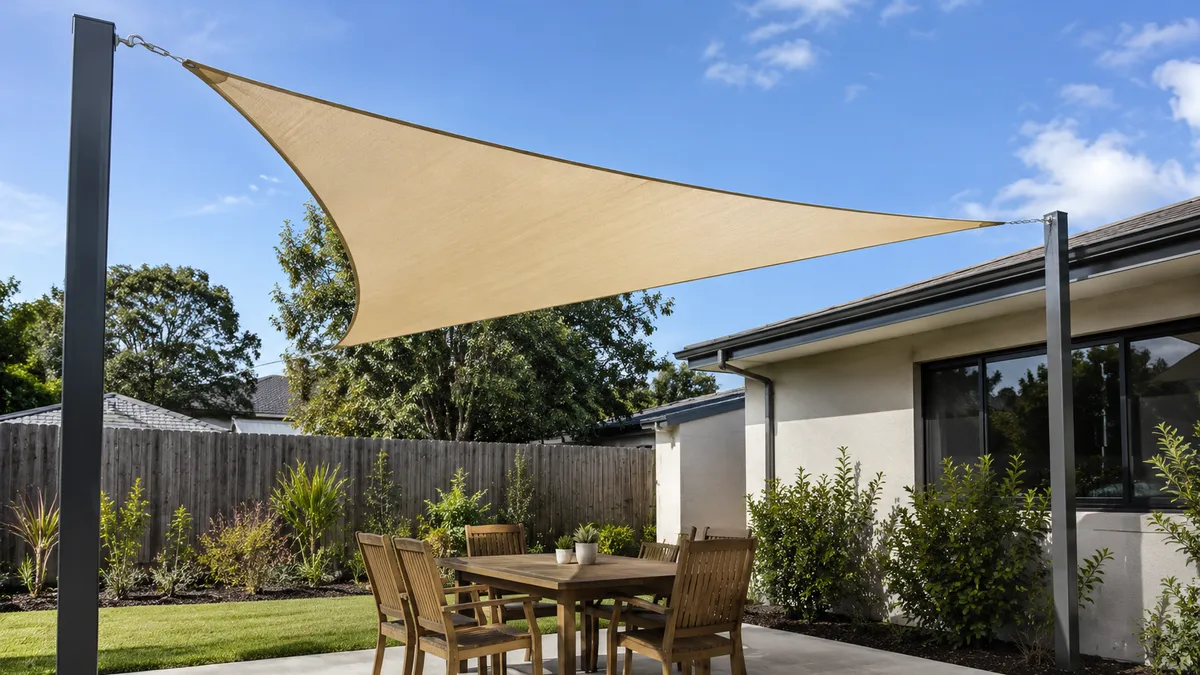
Shade Sail Guide
Use this when shade sail is closer to the real constraint than the current page.
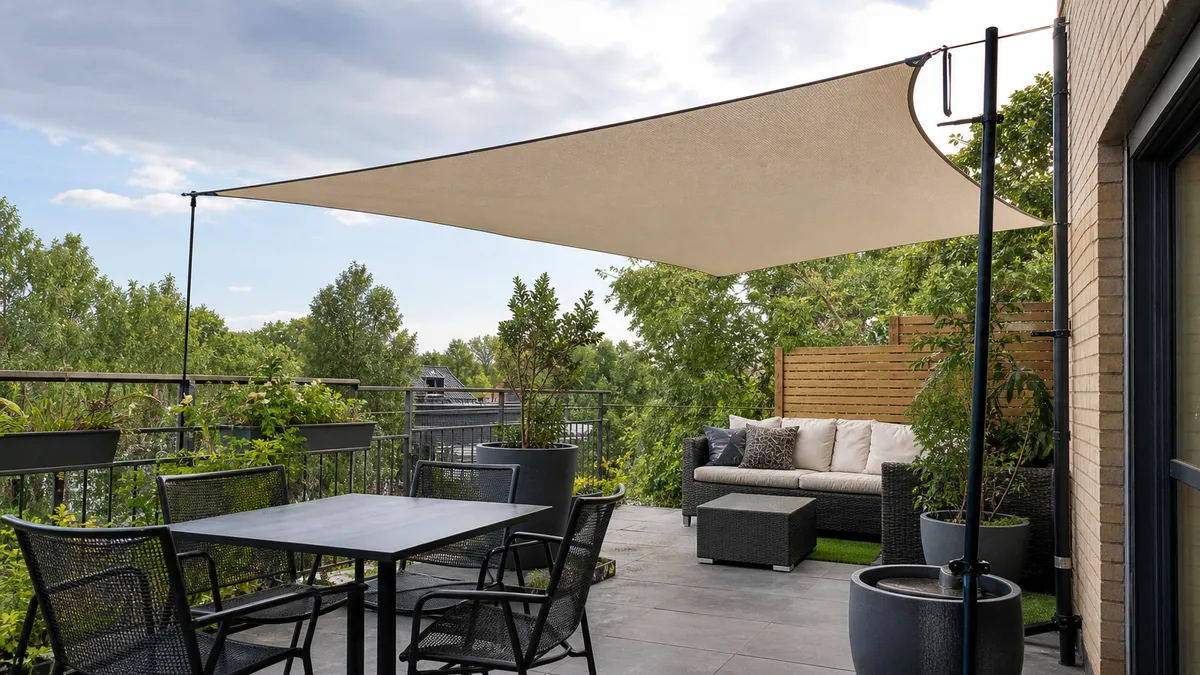
Best Shade Sail for Patio
Use this when best shade sail for patio is closer to the real constraint than the current page.
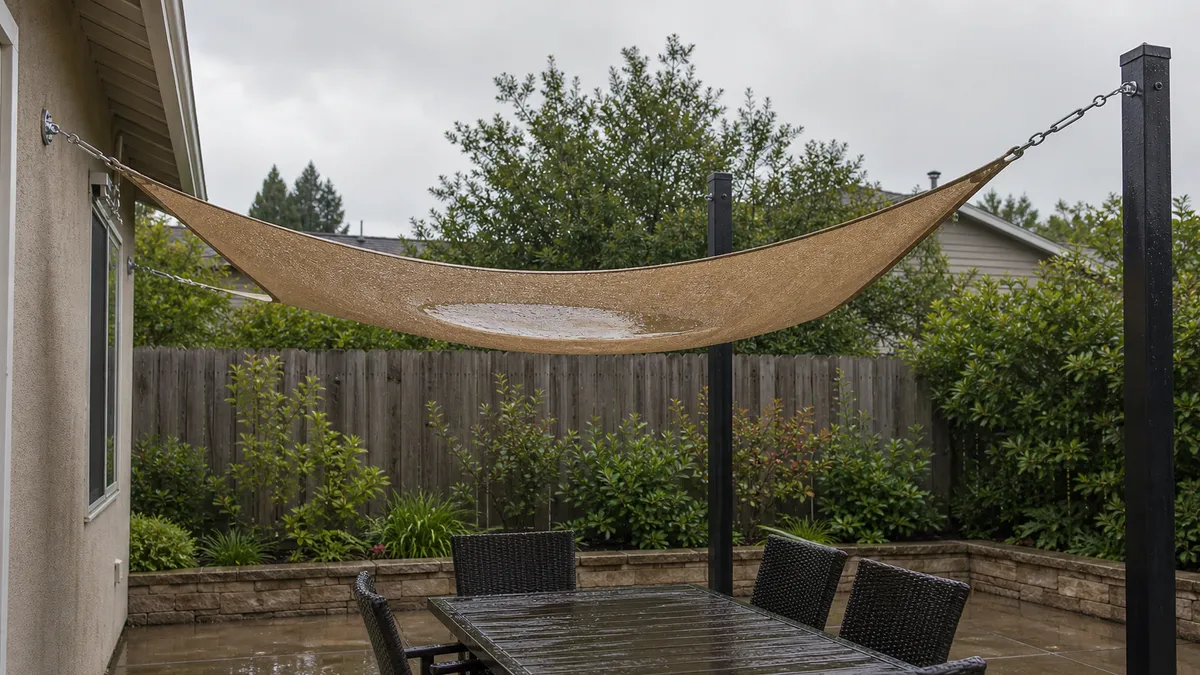
Shade Sail Water Pooling
Use this when shade sail water pooling is closer to the real constraint than the current page.
Questions
FAQ
Is a waterproof shade sail better than a breathable shade sail?
Not automatically. Breathable HDPE mesh is often better for hot sun, airflow and exposed wind. Waterproof coated fabric is worth considering only when the patio genuinely needs light rain cover and the sail can drain safely from high corners to a planned low edge.
Will rain go through a breathable HDPE shade sail?
Yes, some rain can pass through the mesh. Many HDPE sails are described as water resistant rather than waterproof because the woven fabric has gaps. They may shed light moisture at an angle, but they should not be used as dependable dry cover.
Can I install a waterproof shade sail flat over a patio?
No. Waterproof fabric needs meaningful fall so water can run off instead of pooling. Manuals give different examples, including 15 degrees, 20-30 degrees, 20% and 30% slope. The exact number depends on the product, but flat is the wrong starting point.
Which costs more after installation, waterproof or breathable?
Waterproof often costs more as a complete job, even when the fabric price looks close. It may require taller posts, anchors that can clearly carry the load, better drainage clearance, careful tensioning and removal hardware. Breathable mesh usually has fewer drainage demands, but still needs sound anchors.
Does a higher UV block percentage mean better protection under the sail?
A high UV block claim helps, but it is not the whole answer. CHOICE recommends high UVR block and independent testing. Cancer Council sources warn that real protection also depends on design, height, size, indirect UV and where people sit under the shade.