
Quick Answer
Quick answer for newly planted trees
Shade cloth for young trees is worth buying only when hot sun, reflected heat or drying wind is stressing leaves after planting. It is not a substitute for watering the root ball, fixing mulch, checking the trunk flare or diagnosing disease. Use light to moderate short-term shade on a freestanding frame, keep fabric off leaves, bark and branches, leave airflow open, and remove panels before wind or storms.
Buy a small removable shade setup only after the root zone is watered and mulched correctly; skip the cloth when the problem is soggy soil, trunk injury, disease or a site the tree cannot tolerate.
Buying Direction
What to buy or skip for young-tree shade
Use this table after checking the failing sun hour, root-zone moisture, trunk condition and wind exposure.
| Situation | Buy / use this | Why |
|---|---|---|
| A new planting scorches during a heat wave | Use light or moderate cloth on a small removable frame during the hottest hours. | OSU Extension treats shade as heat-stress help, but new plants still need careful water. |
| The worst damage faces west or southwest | Choose a side screen on the hot side instead of covering the whole canopy. | USDA guidance on seedlings favors afternoon shade from the south or west when exposure is the problem. |
| Leaves wilt and soil is dry around the root ball | Water deeply and correct mulch before buying more fabric. | UMN Extension and Missouri Botanical Garden both put root-zone moisture at the center of new-tree survival. |
| Bark is exposed or trunk sunscald is the real issue | Use local extension guidance on trunk guards or wraps instead of canopy shade cloth. | USU Extension separates trunk sunscald from leaf scorch and points to reflective trunk protection. |
| The site is windy or the only anchor points are branches | Do not buy a large panel; use a smaller freestanding setup or no cloth. | Fabric can pull like a sail, and UMN staking guidance warns against damaging stems and branches with contact or tight ties. |
| Symptoms include soggy soil, spots, dieback or buried trunk flare | Diagnose the planting problem before buying shade gear. | Shade can hide root, drainage, disease and planting-depth failures without fixing them. |
What to buy, or not buy, for a stressed young tree
The parts are usually simple: fabric, clips and a light support frame. The harder question is whether cloth is the right fix. A young tree can look sun-stressed when the root ball is dry, the backfill is soggy, mulch is piled against the trunk, or the planting site is wrong for the species. Buy shade only after the failing hour and the root zone both point to sun or heat as the pressure.
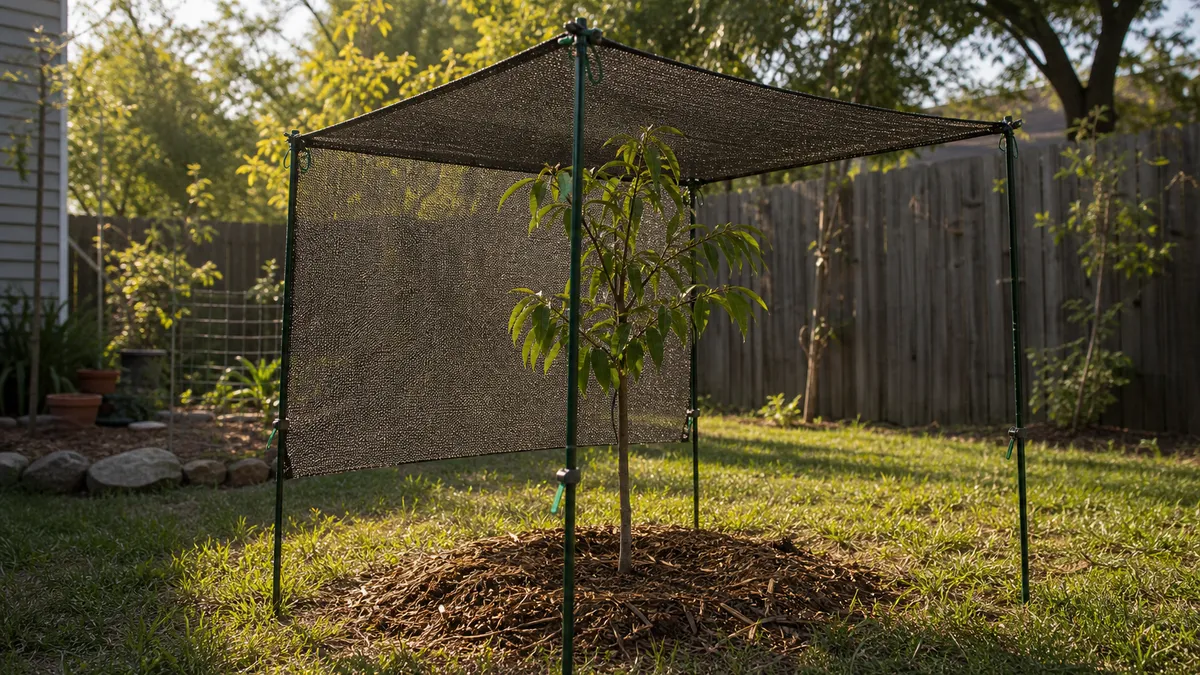
For most after-planting problems, a small removable panel is safer than a large cover. A freestanding frame lets the cloth shade the leaves without turning the tree into an anchor. The frame can be two or more stakes outside the trunk area, a simple wood or PVC rectangle, wire hoops for a very small tree, or a tripod-style support placed so it does not rub bark.
Avoid the instinct to make a dark tent. New leaves need light, air and inspection access. A side panel can solve harsh west sun while leaving morning light and airflow. An overhead panel can help during high midday heat if it stays above the canopy and comes down when the heat wave breaks.
First buy/no-buy check
Buying choices by tree stress pattern
Use this before comparing cloth rolls, clips or frame kits.
| Situation | Buy / do first | Why | Avoid |
|---|---|---|---|
| New planting scorches in a hot week | Light or moderate cloth plus a removable frame. | Short shade can reduce leaf heat while roots recover from planting. | All-day dark cover that stays after the heat passes. |
| West or southwest leaves fail first | Side screen on the hot side. | Low afternoon sun often hits from the side, not from overhead. | Draping fabric across the crown. |
| Dry root ball or dry backfill | Water and mulch correctly before adding shade. | Shade cannot move water into a limited new root system. | Treating cloth as a substitute for root care. |
| Trunk bark is the concern | Extension-backed trunk guard or wrap guidance. | Sunscald and bark injury are different from leaf heat stress. | Wrapping shade cloth around bark or branches. |
| Wind pulls on every temporary cover | Small panel, independent stakes and a quick removal routine. | Less fabric means less pull on supports. | Large sail-like cloth tied to the tree. |
| Soggy soil, spots, dieback or poor planting depth | Diagnosis, drainage correction or local extension help. | These are not solved by blocking sunlight. | Hiding a failing tree under fabric. |
When shade cloth helps a newly planted tree
Shade cloth helps most when the stress pattern is directional and weather-driven. Look for leaf scorch that appears after hot afternoons, reflected heat from paving or a wall, dry wind, or strong sun on the south or west side. Morton Arboretum describes scorch as damage that often starts at leaf tips and margins, and notes that young or newly transplanted trees are more susceptible when heat, wind and low rainfall combine.
A newly planted tree has not yet rebuilt the wide root system it needs for a hot site. OSU Extension notes that young plants need more frequent water than established plants during heat stress. That is why the cloth should be treated as a short-term leaf-protection tool, not as the main establishment plan.
Side shade is often the better first purchase. USDA Forest Service seedling guidance points to afternoon protection on south and west exposures, which matches many yard failures: the tree looks acceptable in the morning and collapses after the hard sun angle arrives. In that case, buying a west-side panel makes more sense than covering the whole tree from breakfast to dusk.
Do not use this page as a Japanese maple diagnosis shortcut. Japanese maple scorch has its own species, foliage and exposure details. If the tree is a Japanese maple with repeated afternoon leaf burn, use the related Japanese maple guide after checking water and site stress.
- Good shade-cloth case: hot afternoon injury on one exposed side after planting.
- Weak shade-cloth case: all-over decline, wet soil, trunk damage or disease signs.
- Best first setup: a side screen or raised panel that protects the tree during the failing hour.
Check water, mulch and roots before buying more fabric
Water is the survival check. UMN Extension gives new-tree watering by trunk diameter and says newly planted trees need regular watering until roots establish. Minnesota DNR also gives a weekly watering benchmark for newly planted trees and notes that meaningful rain can change the schedule. Use local extension numbers for exact gallons, but do not assume a brief shower reached the root ball.
Check two places: the original root ball and the surrounding backfill. A tree can be wet in the outer planting hole and dry in the root ball, or soaked at the base while the top layer looks dusty. Missouri Botanical Garden lists improper watering as a major reason trees and shrubs fail to establish, with both dry root balls and overly wet soil causing trouble.
Mulch should help, not bury the tree. UMN recommends mulch for moisture and temperature moderation, but it also warns against deep mulch and mulch against the trunk. Pull mulch back from the trunk flare, keep the ring broad rather than volcano-shaped, and make sure water can enter the soil instead of running away from a hard mound.
If water and mulch are wrong, fix them before ordering a larger roll. Shade may slow leaf stress for a few hours, but it cannot correct root rot, a buried flare, turf competition, planting too deep, or a species placed where it will never tolerate the exposure.
- Probe moisture before deciding that leaves need more shade.
- Keep mulch off the bark and visible trunk flare.
- Pause shade purchases when soil stays soggy or smells sour.
Category research
Young-tree shade categories to compare
Compare categories only after transplant stress, trunk protection and airflow are separated from true shade needs.
Tree shade
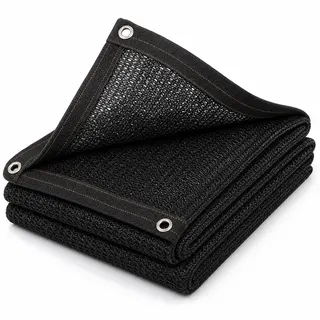
Tree Shade Cloth
For temporary sun relief around newly planted trees.
- Temporary protection
- Avoids direct wrapping
Check:Air gap, stake placement and removal date.
Search on Amazon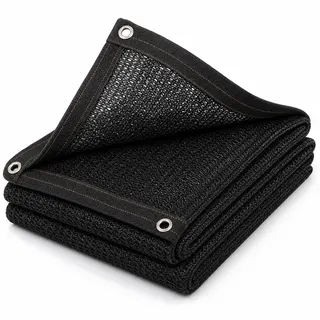
Plant cloth
Shade Cloth For Plants
For broader plant protection during heat waves.
- Reusable fabric
- Flexible setup
Check:Percentage, airflow and plant stretch.
Search on AmazonShade fabric
Tree Protection Shade Fabric
For screening afternoon sun without enclosing the canopy.
- Side-sun control
- Seasonal use
Check:Wind load and branch clearance.
Search on AmazonHow to set shade cloth without loading the tree
The cloth should be supported by a frame, not by the tree. University of Maryland Extension describes wood, PVC and wire frames with clips as ordinary ways to hold covers above plants. For a young tree, the same idea becomes a freestanding shade support: stakes or frame pieces outside the trunk area, fabric clipped to the support, and enough gap for leaves to move without rubbing.
Do not tie fabric to the trunk, scaffold branches or nursery bamboo. UMN Extension warns that ropes, wires and cables should not contact stems or branches when staking trees, because abrasion and girdling can injure the tree. Shade cloth adds wind pull, so the load belongs on independent stakes, not bark or limbs.
Keep one side open unless the panel is only a side screen. Air must move through the canopy, and the person watering still needs access to the root zone. Maryland Extension warns that covers can trap heat and disease-friendly humidity when conditions are hot. If the space under the cloth feels still or hotter than the open air, raise the panel, reduce the area or remove it.
Wind decides how large the panel can be. A small panel that can come down quickly is more useful than a large cover left flapping overnight. Remove panels before storms, after strong gusts, or whenever the frame starts leaning. If the setup needs rigid tree staking to stay upright, it is the wrong setup.
Setup options
Match the frame to the sun pattern
The goal is shade during the failing hour without cloth touching bark, leaves or branches.
| Exposure problem | Better setup | How to support it | Avoid |
|---|---|---|---|
| Low west or southwest sun | Side screen outside the canopy line. | Two or more independent stakes or a narrow frame on the hot side. | Fabric pulled over branch tips. |
| High midday heat | Raised overhead panel with open sides. | Wood, PVC, wire or hoop frame that stands clear of the canopy. | A sealed tent that traps heat. |
| Reflected heat from paving or a wall | Shade the hot side and protect the root zone from drying. | Small angled panel plus corrected watering and mulch. | Deep shade over the whole tree all day. |
| Windy exposed site | Smaller removable panel. | Short frame, secure clips and a planned takedown before gusts. | Large sail-like fabric left unattended. |
| Southwest trunk bark exposure | Trunk guard or wrap advice from extension sources. | Use the correct seasonal protection for bark, not a canopy frame. | Shade cloth wrapped around the trunk. |
What shade percentage to start with
There is no single best percentage for every young tree. Species, local heat, planting season, reflected surfaces and the time of day matter too much. Treat shade percentage as a test, not a permanent label.
For most rescue situations, start with temporary partial shade rather than heavy darkness. University of Maryland Extension lists 30% and 50% shade cloth as common garden examples. That supports using light to moderate cloth as a starting comparison, but it does not prove that every new tree needs 30% or 50%. A sun-loving tree may need fewer shaded hours, while an understory species in a hot reflected site may need stronger short-term relief.
Avoid routine heavy shade for young-tree establishment unless a local arborist, nursery or extension source gives a species-specific reason. Too much shade can reduce growth, keep foliage damp and make a sun-adapted tree weaker. OSU Extension also warns that too much shade can lead to stretched growth in plants, which is the opposite of good establishment.
Adjust by new growth, not by the old brown tissue. Existing scorched leaf margins will not heal. The useful sign is that new leaves hold color and shape during the hot hour while the root zone stays evenly moist. If new growth is pale, stretched or damp under the cover, reduce shade hours or raise the fabric.
- Broad starting range: light to moderate cloth, often discussed around 30% to 50% in garden sources.
- Use the lowest shade and shortest hours that stop new heat stress.
- Compare shade cloth percentages separately if the percentage choice is the main remaining question.
When a trunk guard, watering fix or no cloth is better
Trunk sunscald is not the same problem as hot leaves. USU Extension describes sunscald on thin-barked trees as a bark injury often tied to south or southwest exposure and winter temperature swings. Where trunk protection is needed, follow local extension guidance for white guards or wraps and their seasonal removal. Do not wrap shade cloth around bark and call it a trunk guard.
Root and planting failures also come before cloth. Missouri Botanical Garden lists wrong location, improper watering, dry root ball, mechanical damage and poor establishment as common causes of new-tree decline. If the trunk flare is buried, roots are circling, soil stays wet, leaves show spots, or twigs die back, shade cloth may only delay the correct diagnosis.
No cloth is better when the frame cannot be made independent from the tree. A young tree should not carry a fabric load while it is establishing. If every design requires tying to branches or pulling against the trunk, choose no cloth, move a container tree, add temporary afternoon shade from a nearby freestanding screen, or ask a local nursery or extension office for a better site fix.
This is also different from hardening off plants. Seedlings and vegetable starts need a gradual exposure schedule before or just after transplanting. A woody young tree already planted in the ground needs roots kept evenly moist, bark protected from rubbing, and a shade frame matched to the site, not a tray routine.
- Choose trunk protection for bark sunscald, not a cloth wrap around the tree.
- Choose diagnosis when symptoms include spots, dieback, soggy soil or repeated decline.
- Choose no cloth when wind or support limits would make the frame unsafe.
How long to leave temporary shade up
Leave the cloth up for the stress window, not for the calendar. During a heat wave, that may mean the hottest afternoon hours for several days. During establishment on a harsh west exposure, it may mean a removable panel used during the recurring failing hour while watering and mulch are corrected.
Remove or reduce shade when new growth holds up under normal watering, when the heat wave breaks, when the cloth starts causing pale or stretched growth, or when the panel blocks inspection. Existing scorched leaves may remain brown, so do not wait for old damage to reverse before adjusting the cover.
Weather overrides the plant schedule. Take panels down before storms, gusty nights or any event that makes the fabric flap. OSU tree-care guidance supports temporary barriers for wind exposure but treats them as short-term while roots strengthen, and UMN staking guidance warns against letting support systems linger after their job is done.
If the same tree needs shade every summer, stop buying larger temporary covers and reassess the site. The long-term answer may be a different planting location, a permanent landscape screen placed away from the tree, species-specific advice, or a tree better matched to the exposure.
- Use cloth during the hot hour or heat wave, then taper.
- Remove before wind if the frame can pull, lean or flap.
- Reconsider the planting site if temporary shade becomes a yearly crutch.
Watch-outs
Before you buy or install
- Shade cloth will not repair leaf tissue that is already brown or crispy.
- Do not tie fabric, rope, wire or cable to a young tree's trunk or branches.
- Do not use permanent heavy shade to cover a sun-loving tree in the wrong site.
- Do not ignore soggy soil, buried trunk flare, disease signs or repeated decline.
- Remove cloth before wind if the panel can pull on stakes, clips or frame joints.
Read Next
Related guides if your situation is different
Shade Cloth Guide
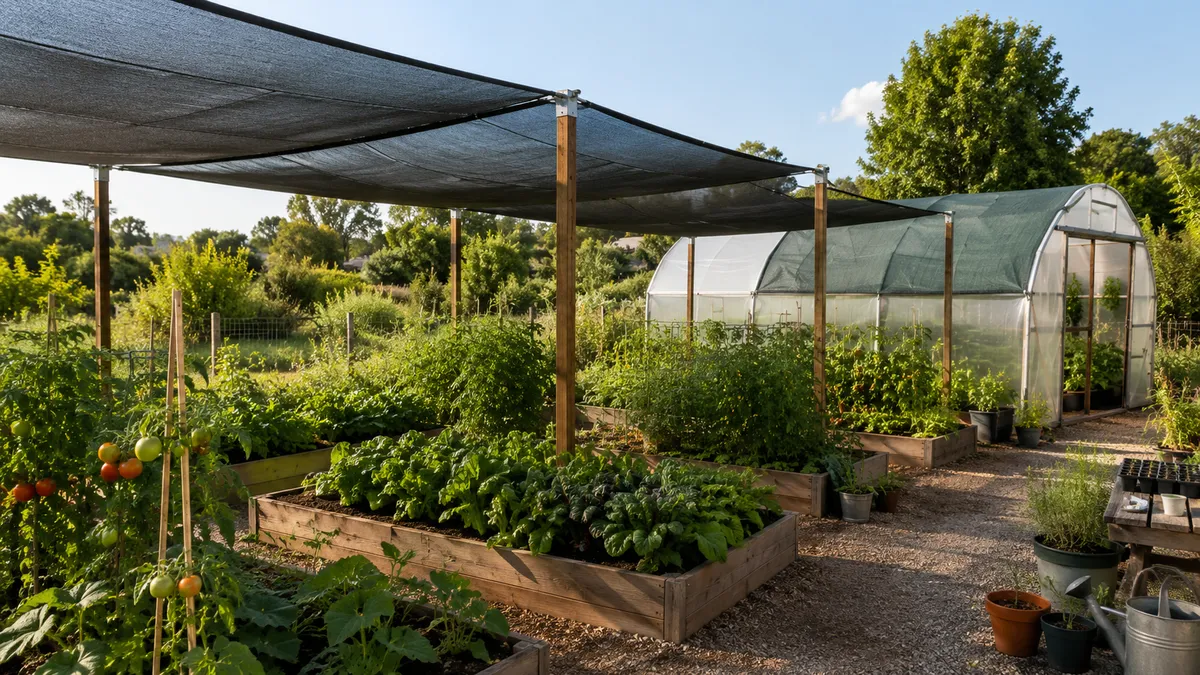
Use this when shade cloth is closer to the real constraint than the current page.
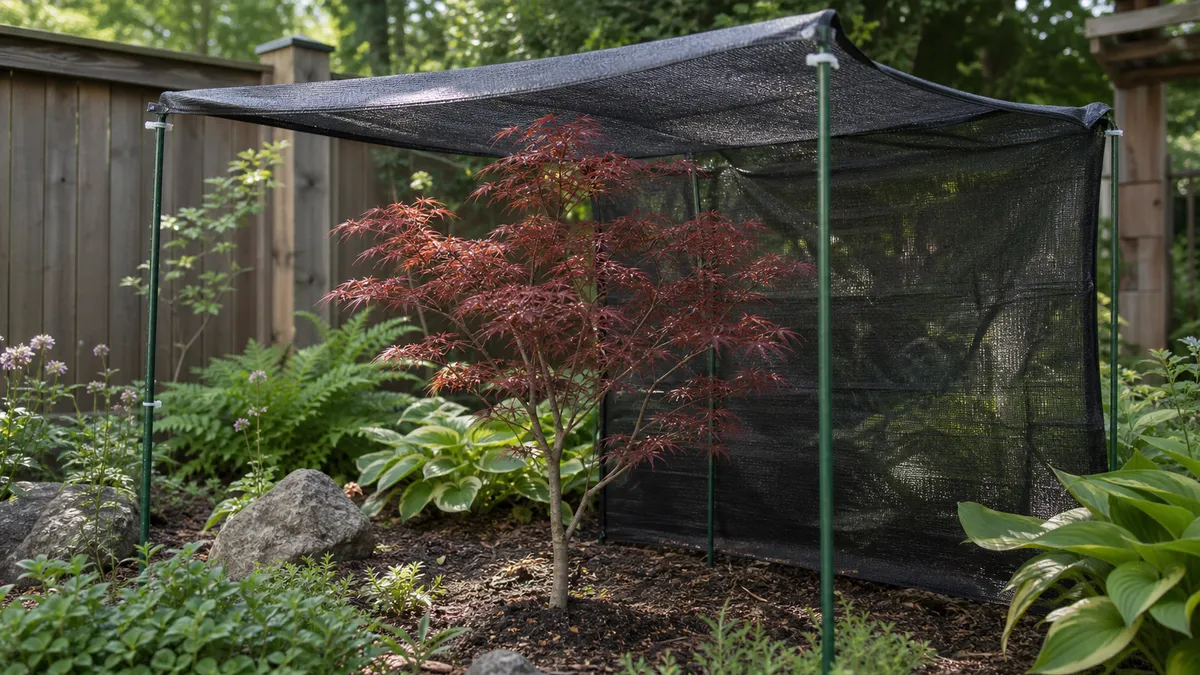
Shade Cloth for Japanese Maple
Use this when shade cloth for japanese maple is closer to the real constraint than the current page.
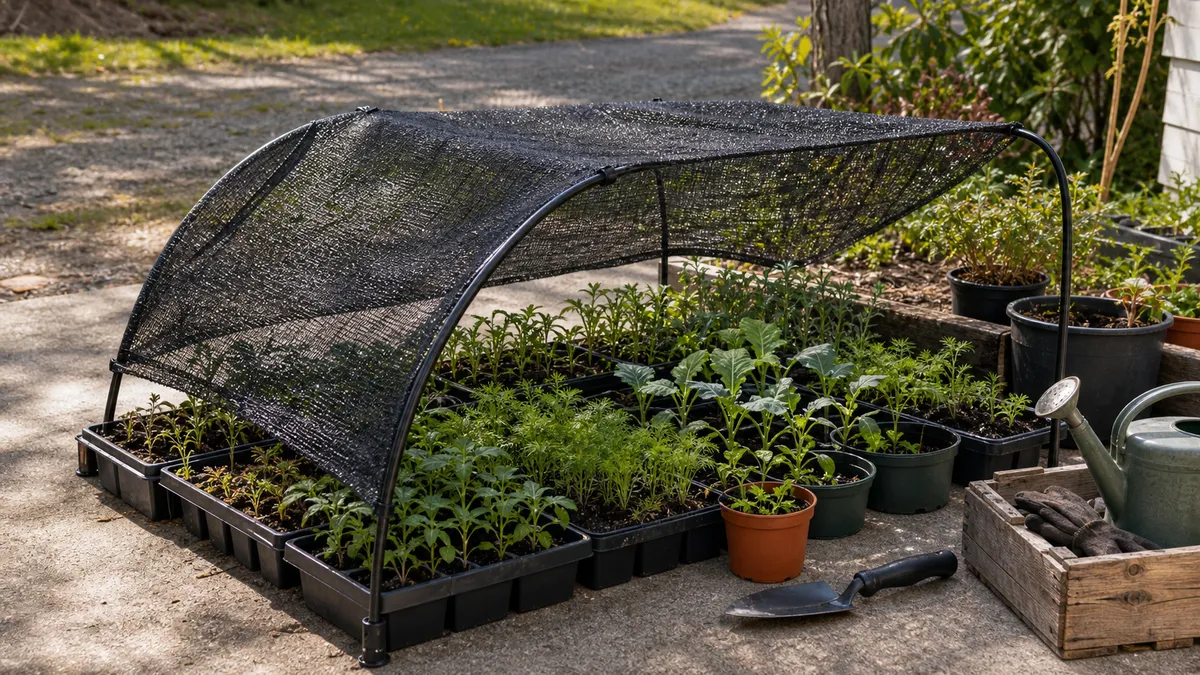
Shade Cloth for Hardening Off Plants
Use this when shade cloth for hardening off plants is closer to the real constraint than the current page.
Questions
FAQ
What percentage shade cloth should I use for a young tree?
There is no universal tree percentage. Start with temporary partial shade and use the lowest amount that protects new growth during the hot hour. Garden sources commonly discuss 30% and 50% cloth, but species, exposure, heat and airflow decide whether either number fits.
Can shade cloth touch a young tree's leaves or branches?
No. Keep cloth on a freestanding frame or side screen so it does not rub leaves, load branches, trap heat or hide pests and disease. The tree should move normally, and the cover should be easy to lift for watering and inspection.
Can I tie shade cloth to the trunk or existing tree stakes?
Do not tie fabric to the trunk or branches. Existing tree stakes are for limited tree support, not for holding a wind-catching cloth panel. Put the shade load on independent stakes, a hoop, a tripod or a light frame outside the trunk area.
How long should shade cloth stay on a newly planted tree?
Use it during the heat wave or the recurring failing sun hour, then reduce or remove it when new growth holds up under normal watering. Take it down before storms or gusty weather. If annual shade is required, reassess the planting site.
Should I water less when shade cloth is up?
Do not automatically water less. Check the root ball and backfill moisture because a new tree can still dry out under shade. Cloth can reduce leaf heat, but it does not replace deep watering, correct mulch or drainage checks.
Is this the same as hardening off plants?
No. Hardening off is a gradual exposure routine for seedlings and vegetable starts. This page is about woody young trees already planted in the ground or a large container, where root establishment, bark safety, wind and site exposure drive the shade decision.