
Quick Answer
Quick answer for Japanese maple scorch
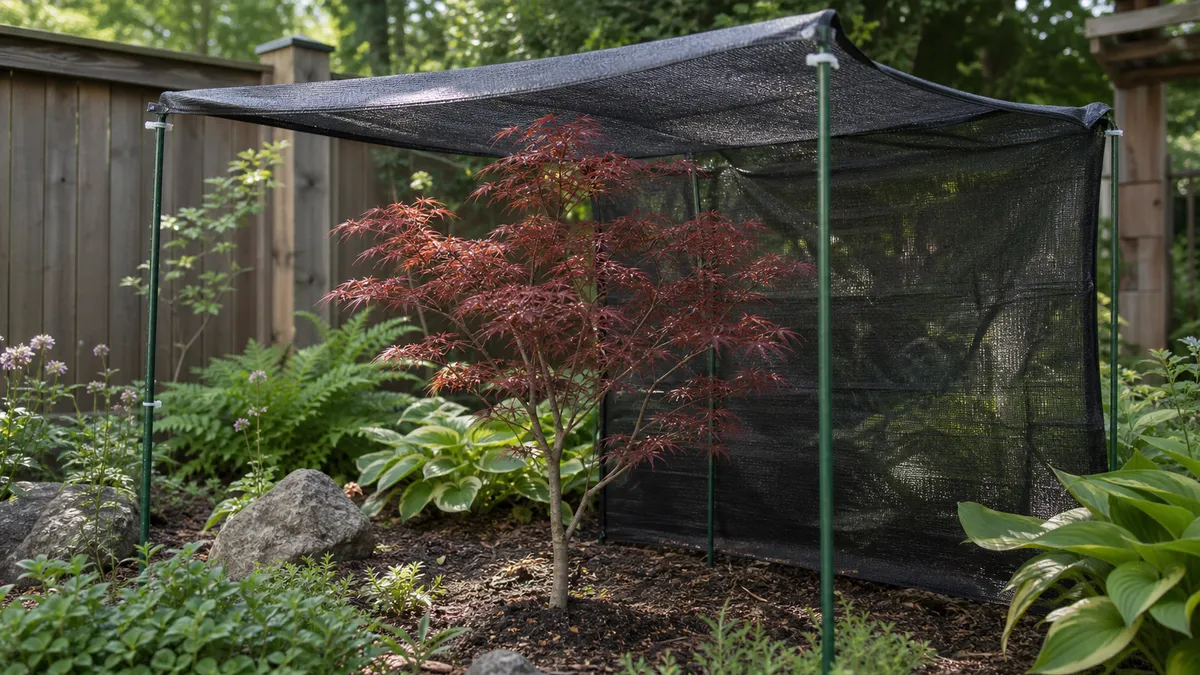
Shade cloth can help a Japanese maple when the damage pattern points to hot afternoon sun, reflected heat, drying wind or first-season stress. Start with light to moderate short-term shade, usually discussed around 30-50% for garden heat relief, but do not treat any percentage as a fixed Japanese maple rule. Keep cloth raised off leaves, leave airflow open, and fix watering, mulch or site stress before buying more fabric.
Use removable light or moderate shade only when hot sun is the clear stress; move the pot, water the root zone or correct the site when scorch comes from roots, drought, soggy soil or wind.
Buying Direction
What to buy or use for a scorched Japanese maple
Use this table after scorch pattern, root-zone moisture, fabric position, airflow and wind removal are clear.
| Situation | Buy / use this | Why |
|---|---|---|
| A potted Japanese maple sits on hot paving or beside a reflective wall | Move it to morning sun and afternoon shade before buying cloth. | Container roots heat and dry faster, and moving the pot removes the hottest exposure without adding fabric. |
| A planted tree browns mostly on the west or southwest side | Use a removable side screen or small raised panel with light to moderate cloth. | Uneven injury on the sunny or windy side points to scorch more clearly than whole-canopy browning. |
| A new or transplanted maple has dry soil under thin mulch | Deep-water and mulch first, then add short-term shade during the hot hour. | Morton Arboretum and UC Cooperative Extension both tie scorch risk to water deficit and root establishment. |
| The only support would be branches, the trunk or loose stakes in wind | Do not buy a large panel; use a freestanding frame, tripod, weights or no cloth. | Fabric becomes sail area, and trunk or branch ties can rub bark, load limbs or create girdling risk. |
| Brown leaves come with spots, twig dieback, soggy soil or root restriction | Diagnose the plant problem before buying shade cloth. | Shade cannot fix disease, poor drainage, restricted roots, chemical injury or chronic wrong-site planting. |
Is it sun scorch or a root-zone problem?
Japanese maple sun scorch usually shows as dry brown tips, crispy leaf margins or curled leaves after hot weather. Morton Arboretum describes leaf scorch as an environmental condition, not automatically a disease, and says injury can start at tips and margins before larger leaf areas dry. Missouri Botanical Garden adds that sunburn and heat stress often show on the sunny south or windy side first.
That uneven pattern matters before a purchase. A tree that browns only where afternoon sun hits a wall, driveway or patio may need a short-term side screen. A tree that browns evenly, drops leaves, sits in soggy soil or shows twig dieback needs closer diagnosis before cloth. Morton lists root damage, compaction, poor drainage, salts, chemicals and vascular disease among possible scorch causes.
Water is the common trap. UC Cooperative Extension frames Japanese maple sunburn as often a water-deficit problem: too much sun, dry air, hot wind, shallow watering, runoff or immature roots can leave leaves short of water. Existing brown tissue will not turn green again. The practical test is whether new leaves and remaining green foliage stop worsening after water, mulch and exposure are corrected.
- Cloth may help: crispy margins on the sun-facing or wind-facing side during hot afternoons.
- Pause before buying: soggy soil, spots, twig dieback, severe leaf drop or restricted roots.
- Do not judge by one leaf; check which side and which hour fails.
Buying guide
What to buy, or not buy, for a scorched Japanese maple
Use this before comparing cloth rolls, stakes, clips or frames.
| Situation | Buy / do first | Why | Avoid |
|---|---|---|---|
| Potted tree on hot paving | Move the pot to morning sun and afternoon shade. | This removes reflected heat and protects the root ball without hardware. | Leaving a dark pot to cook under a fabric roof. |
| West-side leaf scorch on a planted maple | Try a removable west or southwest side screen. | Low afternoon sun often hits from the side, not straight overhead. | An all-day dark tent around the whole canopy. |
| Recent transplant with dry root zone | Water deeply, add proper mulch, then shade the hot hour. | New roots are scorch-prone and cloth cannot replace water uptake. | Using fabric as a substitute for root-zone care. |
| Windy exposed corner | Use a smaller panel on a freestanding frame that can come down. | Less fabric means less pull on stakes, clips and weights. | Tying cloth to branches, trunk, or weak stakes. |
| Browning plus disease or drainage signs | Diagnose before buying shade gear. | Root, drainage or disease problems can mimic or worsen scorch. | Masking a sick tree with a larger cover. |
What shade percentage to start with
No credible source in the research set gave one exact best percentage for Japanese maples. Treat any precise claim as a shortcut unless it names cultivar, region, exposure and duration. Morton Arboretum lists Japanese maple as a partial-sun to partial-shade tree, and NC State recommends dappled shade, even moisture and protection from drying winds. That supports gentle protection, not deep permanent shade.
For a heat spell or first-season rescue, start with the least shade that stops new scorch during the hard hour. K-State Extension says shade cloth commonly ranges from 20-70% and cites 30-50% for cool-season crops in summer. Treat that crop range as cautious garden context, not maple-specific proof. For this tree, use light to moderate cloth first, monitor leaf response, and avoid jumping to 70-90% unless a qualified local source gives a clear reason.
Darker is not always cooler. WSU Master Gardeners note that shade cloth percentage describes light reduction, and that dark cloth can absorb more heat while lighter cloth can keep the space brighter and cooler. If the maple turns pale, stretches, or keeps damp leaves under cover, reduce the hours, raise the cloth or remove it. For wider density comparisons, use the shade cloth percentage guide after this Japanese maple check.
- Starting point: light to moderate short-term shade, not a permanent dark cover.
- Use 30-50% only as cautious garden-context language, not a fixed maple rule.
- Watch new foliage, leaf color, airflow and soil moisture after the cover goes up.
How to set the cloth without hurting the tree
Match the fabric position to the hot hour. Low west or southwest sun usually needs a side screen set outside the canopy line. High midday sun can use a raised overhead panel. In both cases, the cloth should sit off the leaves and branches. Draped fabric rubs foliage, traps heat and loads small limbs.
Use freestanding stakes, hoops, a tripod, a light frame or safe nearby support that does not pull on the tree. UMN Extension notes that tripod support can avoid attaching material to the trunk, and Purdue warns that tight, high or long staking can abrade or girdle young trees. Those staking cautions apply to shade cloth supports too: tie fabric to the frame, not to bark or branches.
Leave at least one side open. WSU recommends raising shade fabric several feet above the canopy and leaving one side open for ventilation. K-State warns that enclosed shade cloth spaces can become sauna-like and that poor airflow can raise humidity and disease risk. Keep watering access open so the cover does not hide dry or saturated soil.
- Side screen: best for low west or southwest afternoon sun.
- Raised overhead panel: useful for high midday sun when it stays above the canopy.
- Remove before storms or strong gusts if the frame cannot resist wind pull.
Setup
Match the cloth position to the sun pattern
Reduce hot-hour stress without making a dark, still tent.
| Sun pattern | Better setup | Why | Check daily |
|---|---|---|---|
| High midday sun | Raised overhead panel | It softens top light when the sun is above the canopy. | Leaf clearance and warm trapped air. |
| Low west or southwest sun | Side screen outside the branch tips | It blocks the harsh afternoon angle without shading the whole day. | Screen lean, branch rubbing and wind. |
| Paved patio container | Move pot plus a short shade panel if needed | Relocation reduces root heat before more gear is added. | Pot moisture and reflected heat. |
| Windy corner | Small removable panel | Less fabric pulls less on stakes and clips. | Forecast gusts and loose edges. |
| Annual scorch in the same site | Plan landscape shade or dormant-season relocation | Recurring damage often means the site is wrong for that cultivar. | Do not build a year-round dark enclosure. |
Category research
Japanese maple shade categories to compare
Compare shade cloth categories only after leaf scorch, pot location and afternoon exposure are checked.
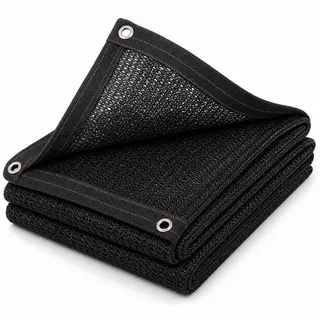
Light shade
30 Percent Shade Cloth
For reducing harsh afternoon sun without over-darkening the tree.
- Gentler light reduction
- Good first test
Check:Leaf response and morning light access.
Search on Amazon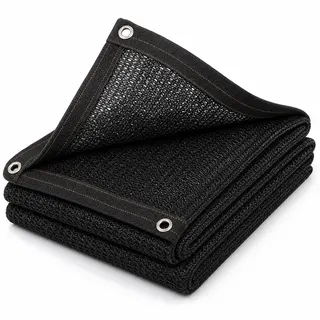
Tree cover
Shade Cloth For Trees
For temporary protection around young or container trees.
- Focused plant shade
- Seasonal use
Check:Air gap, branch clearance and tie points.
Search on Amazon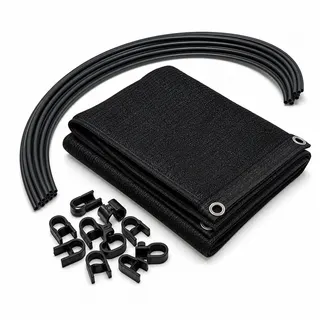
Frame setup
Garden Shade Cloth Frame
For keeping fabric off foliage and bark.
- Holds cloth clear
- Reusable support
Check:Wind exposure, stake depth and removal.
Search on AmazonContainer maples versus planted maples
A container Japanese maple gives you the cheapest fix first: move the pot. Try morning sun with afternoon shade, away from brick, asphalt, pale walls and hot paving. Then check the potting mix with a finger or moisture probe. A small canopy under cloth can still fail if the root ball is hot, dry or repeatedly saturated.
A planted maple is slower to change. Virginia Cooperative Extension recommends deep watering during dry periods to the top 12 inches of soil within the drip line and mulching around the base to the drip line. UC Cooperative Extension recommends about 3 inches of mulch, pulled away from direct trunk contact, and warns that overwatering is a leading Japanese maple killer. Moist soil is not soggy soil.
Newly planted trees deserve special restraint. Morton Arboretum says recently transplanted trees and shrubs are more scorch-prone and need deep, slow soaking during dry weather. Use temporary shade for newly planted trees only as one part of establishment: root-zone water, mulch, wind reduction and a cover that comes down when heat breaks.
- Container tree: move first, then decide whether fabric is still needed.
- Planted tree: correct water, mulch and exposed side before buying larger cloth.
- Recent transplant: protect the hot hour, but do not hide root-zone stress.
When not to buy shade cloth
Do not buy more fabric when the tree is telling you the site is wrong. Missouri Botanical Garden notes that Japanese maple can take more sun in northern areas but often prefers afternoon shade farther south, and it recommends avoiding hot dry sites. If the same cultivar scorches every summer in the same afternoon exposure, a living screen, nearby planting shade or dormant-season relocation may solve more than a bigger panel.
Skip cloth as the first fix when the soil stays wet, the pot is root-bound, water runs off the root ball, the trunk flare is buried, or leaves show disease-like spotting and twig dieback. Shade reduces light stress; it does not repair roots, drainage, girdling, fertilizer injury or vascular disease. Ask a local extension office or certified arborist when symptoms point beyond exposure.
Also skip the purchase when wind would turn the cloth into a sail. A Japanese maple has fine twigs and delicate leaves; it should not carry the load of a flapping panel. If the only way to install the fabric is to tie it to branches or leave it unattended through storms, use no cloth, a smaller removable screen, or move the container.
- No-buy trigger: repeated annual scorch from a clearly unsuitable site.
- No-buy trigger: root, drainage or disease signs dominate the problem.
- No-buy trigger: fabric cannot be kept off the canopy or removed before wind.
Watch-outs
Before you buy or install
- Shade cloth will not turn existing brown Japanese maple leaves green again.
- Do not tie fabric to the trunk or branches; attach cloth to a separate support.
- Do not trap the tree in a dark, humid tent with poor airflow.
- Do not keep soil saturated because scorched leaves may use less water than healthy foliage.
Read Next
Related guides if your situation is different
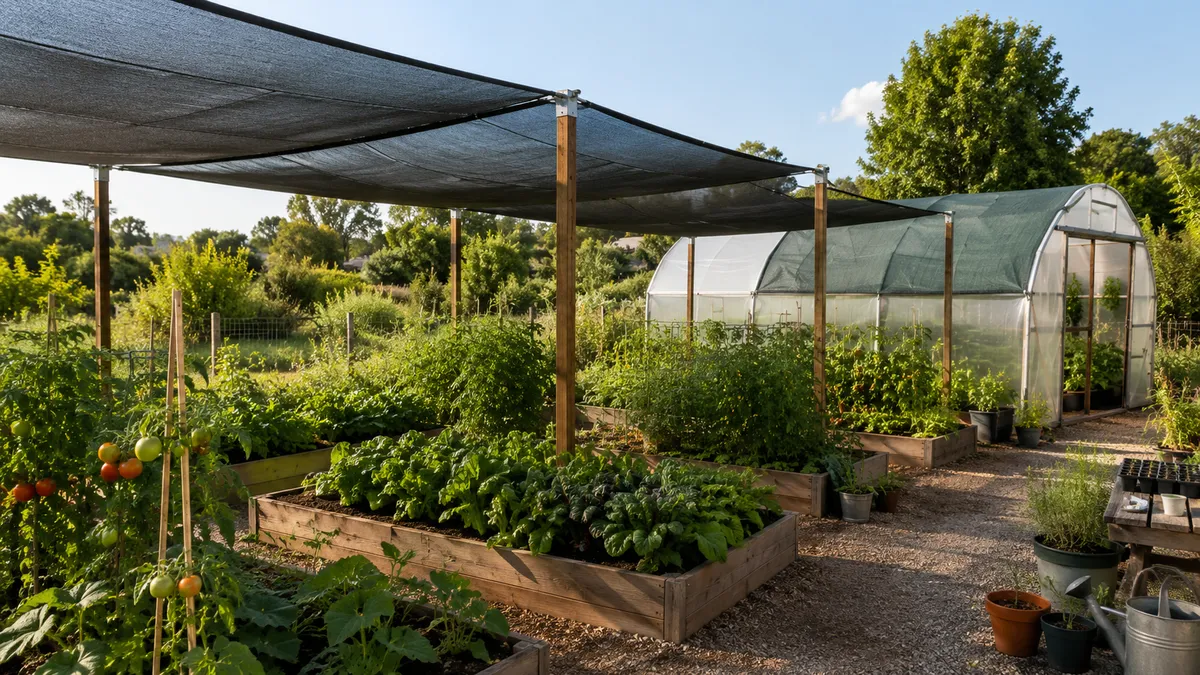
Shade Cloth Guide
Use this when shade cloth is closer to the real constraint than the current page.
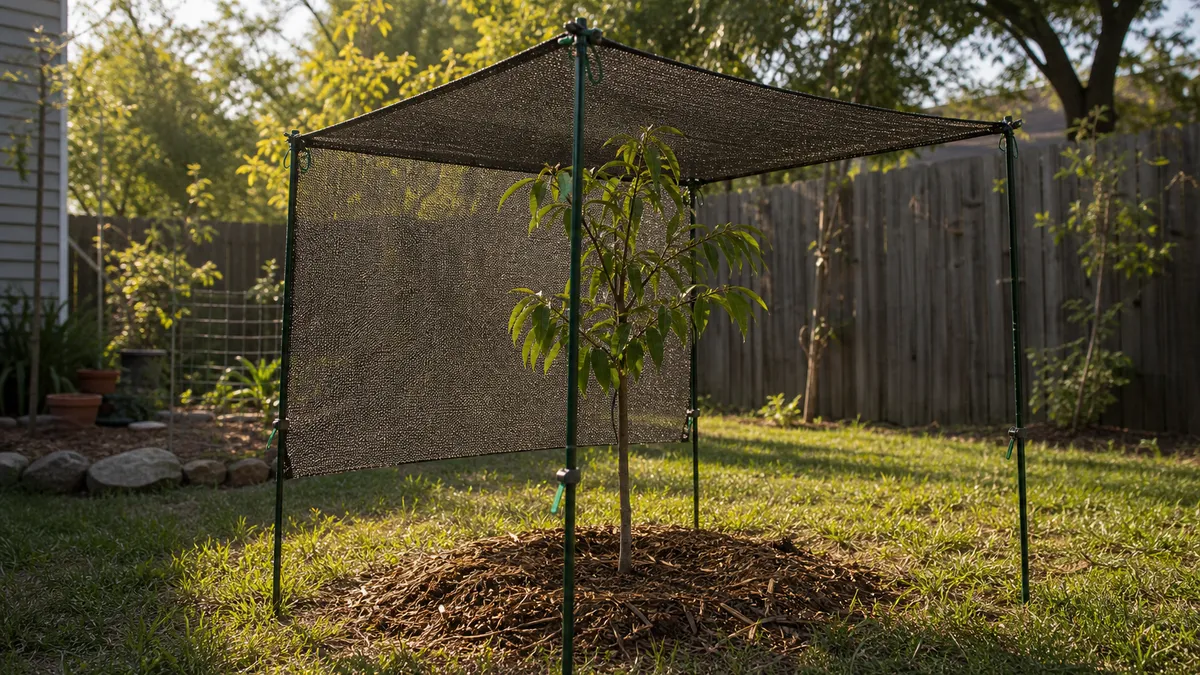
Shade Cloth for Young Trees
Use this when the maple is newly planted and the setup needs establishment shade, root-zone care and a removable frame.
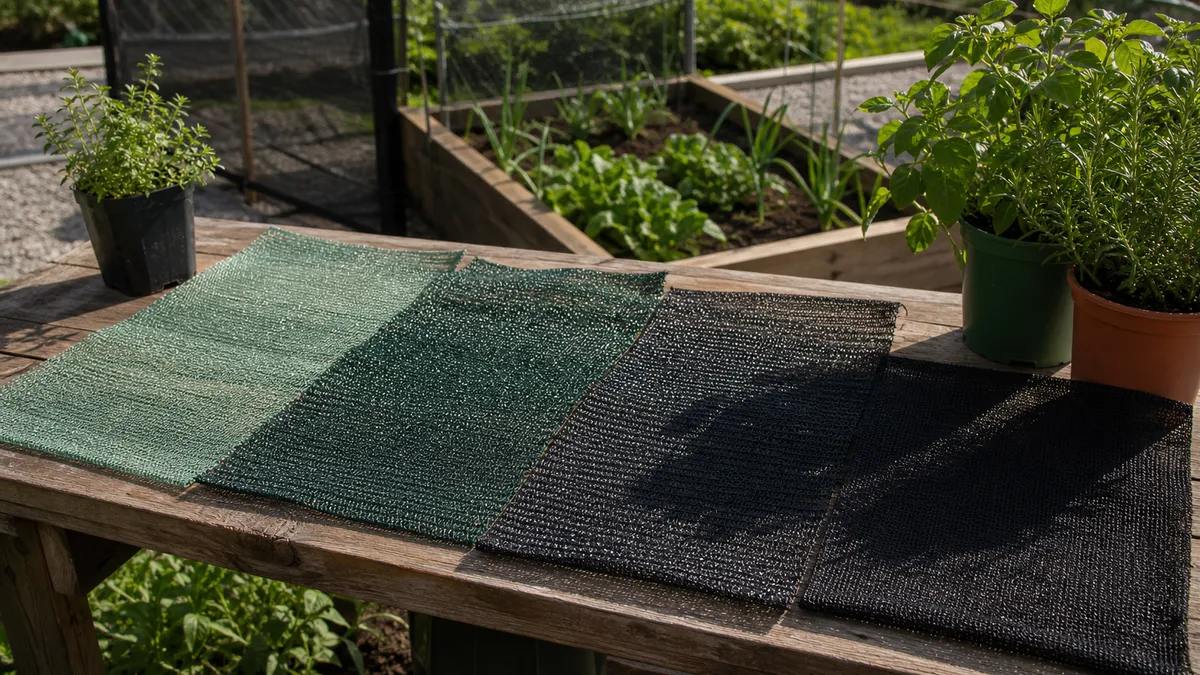
Shade Cloth Percentage Guide
Use this after the maple scorch diagnosis is clear and you need to compare 30%, 40%, 50% and heavier cloth.
Questions
FAQ
What percentage shade cloth should I use for a Japanese maple?
Use light to moderate short-term shade and monitor the tree. The research did not find an exact Japanese-maple-specific percentage. General garden shade-cloth sources discuss 30-50% for some summer plant protection, but that should be a cautious trial range, not a rule for every maple.
Can shade cloth touch Japanese maple leaves?
No. Keep the cloth above or beside the canopy. Fabric resting on leaves can rub in wind, trap heat, hold humidity and load small branches. Use a freestanding frame, stakes, hoops or a tripod so the fabric is supported separately from the tree.
Will shade cloth fix brown crispy Japanese maple leaves?
It can reduce further stress when hot sun or reflected heat causes the damage, but brown scorched tissue will not green up again. Judge success by whether remaining leaves stop worsening and new growth looks healthier after water, mulch and exposure are corrected.
Is side shade better than overhead shade for Japanese maple?
Side shade is often better for low west or southwest afternoon sun because it blocks the harsh angle without shading the tree all day. Overhead shade works for high midday exposure. Match the panel to the hour and direction that causes browning.
Should I move a potted Japanese maple instead of buying shade cloth?
Yes, if you can move it to morning sun and afternoon shade. Container maples on paving can suffer from hot root balls and reflected heat. Move the pot first, then add a small temporary shade panel only if the same hot-hour stress continues.
Can I leave shade cloth on a Japanese maple all summer?
Use it as a removable heat and exposure tool, not a permanent cover. Remove or reduce cloth after heat breaks, during windy weather, or if leaves look pale and stretched. Repeated annual scorch usually points to site correction rather than all-season fabric.