

Quick answer: which balcony privacy screen to buy
For most apartment balconies, buy an HDPE mesh railing screen as tall as your railing (about 3 ft for a 36 in rail, 3.5 ft for a 42 in rail) and long enough to wrap every side neighbors can see, then tie it on with UV-rated zip ties. It blocks the view at seat height, lets some wind through and comes off without marks. If your building bans anything on the railing, use a freestanding screen; for privacy at standing height along a long balcony, a retractable side awning is the step up.
Seat-height privacy on a railing: HDPE mesh screen with zip ties. Natural look: bamboo or reed roll. Nothing allowed on the rail: freestanding screen or tall planters. Standing-height privacy on one side: retractable side awning.
What to buy
Balcony privacy screens most renters start with
Product types to compare, matched to the answer above. Measure the railing height and the total length of the exposed sides before you order.
Disclosure: As an Amazon Associate, we may earn from qualifying purchases.
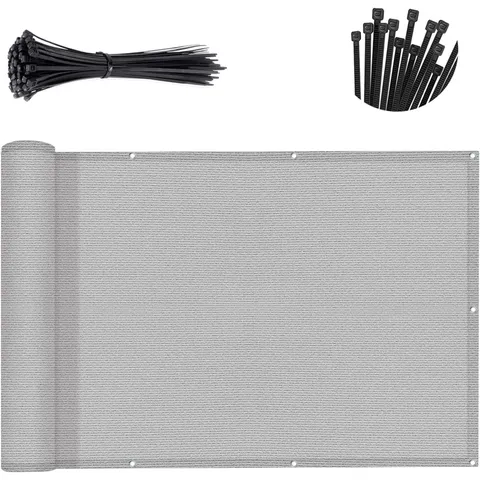
Renter-friendly
SUNNY GUARD 3 x 16 ft HDPE Balcony Privacy Screen
Zip-ties to a standard 3 ft balcony railing with no tools or holes
- 3 x 16 ft, 180 g HDPE, light gray
- 85-90% visibility blockage, 95% UV protection
- Grommets every 19.7 in; zip ties included
Check:Slightly see-through; length can vary by about 4 in.
$29.99as of 2026-11-04 17:57 CET
See sizes on Amazon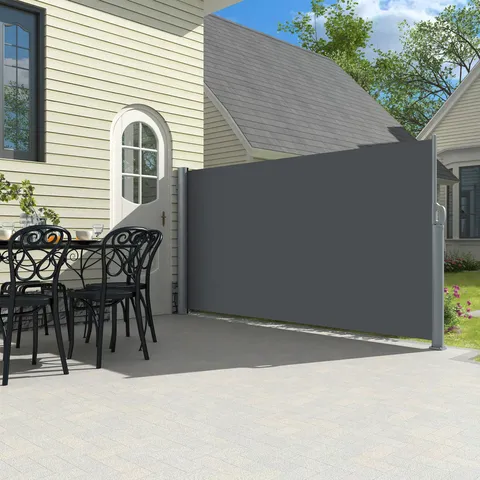
Standing-height privacy
Retractable Side Awning Privacy Screen, 118 x 63 in
Standing-height screen that rolls out along one balcony side and back when not needed
- Pulls out to 9.8 ft, 5.9 ft high
- PU-coated polyester in an aluminum housing
- 2 wall brackets, auto roll-back with clip lock
Check:No end post included; the pulled-out end needs its own fixing point.
Check price on Amazon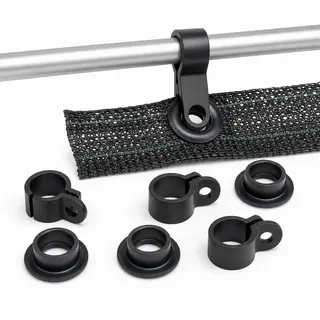
Needed for railing screens
UV-rated zip ties and railing clips
Outdoor cable ties or clips that hold the screen to the rail
- UV-resistant ties last longer than the clear indoor kind
- Longer ties fit thick rails and posts
- Clips make the screen easier to remove at move-out
Check:Tie length against your rail and post thickness; kits included with screens are often short.
Shop outdoor zip ties on AmazonPrices and availability are accurate as of the date/time indicated and are subject to change. Any price and availability information displayed on Amazon at the time of purchase will apply to the purchase of this product.
Buying Direction
What to buy or use
| Situation | Buy / use this | Why |
|---|---|---|
| Open railing, neighbors or the street see you at seat height | HDPE mesh railing screen, cut to the rail height, tied on with UV-rated zip ties | Mesh blocks most of the view, lets air through and needs no holes. Confirm your building allows items on the railing before you buy. |
| You want a natural look on a metal or picket railing | Bamboo or reed fence roll, tied to the balusters | Looks warmer than plastic mesh, but it is nearly solid, so it catches more wind and needs more ties. Bamboo also needs sealing to last outdoors. |
| Lease or HOA bans anything attached to the railing | Freestanding privacy screen or tall planters set inside the rail | Nothing touches the railing or walls. Weight the base and fold or store light screens before wind. |
| Long balcony, you want privacy at standing height along one side | Retractable side awning (about 63 in tall, pulls out to about 118 in) | Covers head height, which a railing screen cannot. The cassette usually screws to a wall, post or railing, so get written approval. |
| Covered balcony with solid walls at both ends | Outdoor curtains on a tension rod | Full-height privacy you can slide open. Needs two solid surfaces to brace the rod against. |
| Upper floor or windy corner | Lower-density mesh (about 75 to 85%) or screen only the sides you need | Denser screens turn the railing into a sail. A more open mesh still blocks most of the view and puts less load on the rail. |
Balcony privacy screen types compared
Most balcony privacy problems sit at seat height: someone on the next balcony, the parking lot or the street can see you when you sit down. A screen along the railing solves that. Privacy at standing height, or from a balcony above, needs a taller product such as a side awning, curtains or an overhead awning.
HDPE mesh is the default because it is light, breathable and cheap to replace. One listing describes a 3 x 16 ft HDPE screen with grommets about 19.7 in (500 mm) apart, zip ties included and a claim of blocking up to 90% of outside visibility. A Dearhouse listing sells a 3.5 x 16.5 ft version with 35 cable ties. Treat privacy percentages as the seller's claim: most mesh still shows shapes at night with lights on.
Bamboo and reed rolls look better on wood or plant-filled balconies. Backyard X-Scapes sells a 4 ft x 8 ft rolled bamboo panel held together with galvanized steel wire, fastened with zip ties or wire, and recommends sealing it after installation. They are close to solid, so they block more view and more wind.
Compare
Railing screen, bamboo, freestanding, side awning or curtains
| Screen | Privacy height | Wind | Attaches with | Catch |
|---|---|---|---|---|
| HDPE mesh railing screen | Seat height (rail height) | Breathable, lowest load | Zip ties through grommets | Shapes still visible; railing rules |
| Bamboo or reed roll | Seat height, 4 ft rolls can sit higher | Near solid, more load | Zip ties or wire | Needs sealing; burns; heavier |
| Vinyl or solid fabric panel | Seat height | Solid, highest load | Ties or straps | Can flap and trap heat |
| Freestanding screen or planters | Seat to standing height | Can tip if light | Nothing (base or weight) | Takes floor space; store before wind |
| Retractable side awning | About 63 in | Retract in strong wind | Screws for cassette and pole | Approval needed |
| Outdoor curtains on tension rod | Floor to ceiling | Tie back in wind | Tension rod between walls | Covered balconies with walls only |
How tall and how long should a balcony privacy screen be?
Height first. Building codes set minimum guard heights: 36 in under the International Residential Code for houses and townhomes, and 42 in under the International Building Code, which covers most apartment and condo buildings with three or more units. Local codes can change this, so measure your own railing from the balcony floor to the top of the rail. A 3 ft screen matches a 36 in rail; a 3.5 ft screen matches a 42 in rail. A screen taller than the rail sticks out above it and is the first thing a building manager notices.
Then length. Add up every side someone can see into, including the short return sides, and add a little for overlap at the corners. Railing screens are sold as long runs (16 to 16.5 ft is common) and you can trim HDPE with scissors, so buy one roll that covers the run rather than two short pieces that leave a gap.
For privacy above rail height, a railing screen is the wrong product. A retractable side awning such as the common 63 x 118 in size gives you head-height cover along one side, and curtains go floor to ceiling on covered balconies.
- Measure floor to top rail at both ends; balcony floors slope for drainage.
- Measure each exposed side separately and add them up.
- Count posts and balusters you will tie to; plan a tie at every grommet.
- Check the tie length against the thickest post.
How to attach a privacy screen to a balcony railing without drilling
Work from the inside of the balcony so the ties and the cut tails face you, not the street. Hang the screen on the inside of the balusters if you can; the railing then takes the wind load instead of the ties alone.
- Tie the two top corners first, level with the top rail.
- Tie every top grommet to the rail, then every bottom grommet to the bottom rail or balusters.
- Snug the ties without stretching the mesh; one seller warns against pulling on the screen.
- Cut the tails short and keep a few spare ties for the ones that break in sun.
- No ties allowed? Stand a freestanding screen or heavy planters just inside the rail instead.
- Covered balcony with side walls: a tension rod with outdoor curtains needs no screws at all.
Do balcony privacy screens catch wind?
Yes. An open railing lets wind through; once you cover it, the whole run acts like a sail. A fence wind-load guide from Sandbaggy notes that pressure rises with the square of wind speed, so going from 30 to 60 mph roughly quadruples the force. The same guide puts typical mesh screens at 85 to 90% blockage with some airflow relief, says 98% screens carry more load, and suggests about 75 to 85% in exposed spots.
Solid is not better for comfort either. University of Nebraska extension research on windbreaks found that very dense barriers build pressure on the windward side and create turbulence behind them, and that a density of 40 to 60% protects the largest area downwind. That figure is for field windbreaks, which only have to slow wind; a privacy screen also has to block sight lines, so the 75 to 85% mesh is the trade-off between privacy and load on the railing. On a balcony that means a breathable mesh often feels calmer than a solid vinyl panel or a tight reed roll.
On an upper floor or a corner balcony, choose the more open mesh, add ties at every grommet, and take bamboo, reed and freestanding screens down before storms. The National Weather Service tells people to bring unsecured patio and balcony items inside when high winds are forecast.
Lease, HOA and fire rules for balcony screens
No-drill does not mean allowed. The AXIS HOA handbook lists items attached to railings among things its board will not approve and requires architectural approval for changes to balconies. A Fairhaven Housing Authority policy bans attaching wire, lattice or any other material to the railing and requires permission from the director for any change. Washington's condominium statute is one example of exterior changes needing association approval. Read your lease or condo rules, and ask in writing if they are unclear.
Bamboo, reed and fabric burn. Keep screens away from grills and heaters; NYC Buildings tells residents to keep barbecues at least 10 ft from combustibles, and many buildings ban open-flame grills on balconies outright. Never block the balcony door or a fire escape with a freestanding screen or planters.
Watch-outs
Before you buy or install
- Many buildings ban anything attached to the railing; get approval in writing.
- Solid screens and reed rolls catch more wind; take them down before storms.
- Keep screens and planters out of the exit path and away from grills and heaters.
- Keep planters, freestanding screens and furniture away from the rail so children can't climb over.
Read Next
Related guides if your situation is different
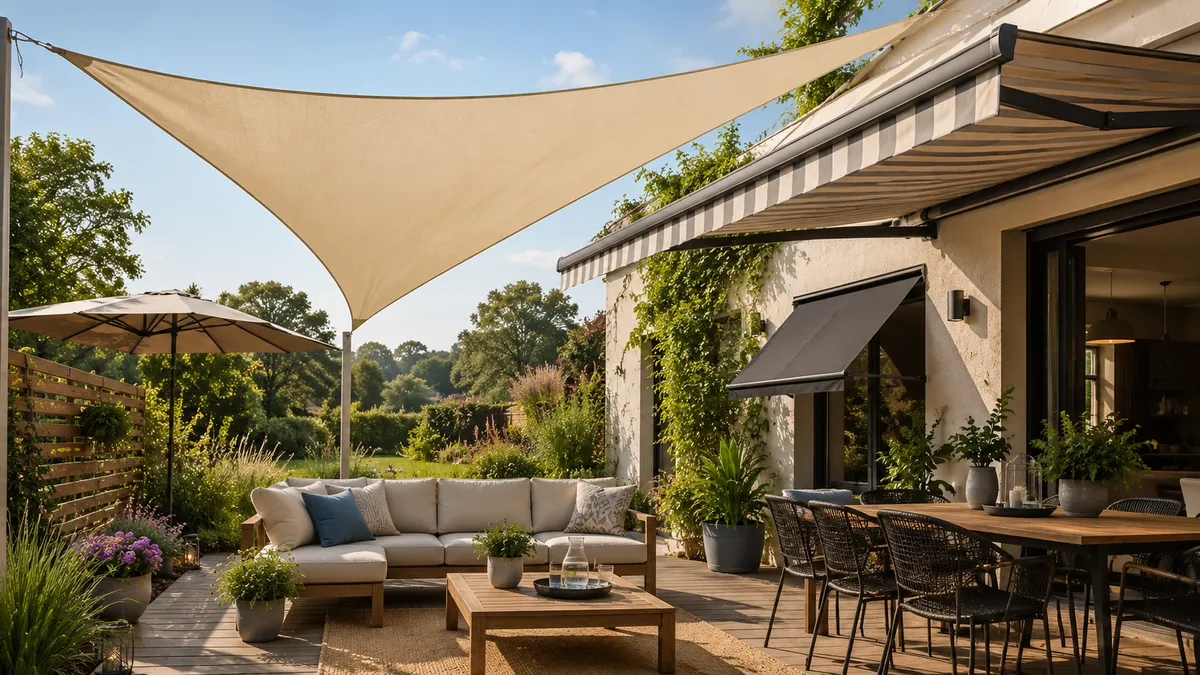
Patio Shade Ideas
Patio shade ideas matched to the problem: awnings for wall-side heat, sails for open space, umbrellas for no-drill patios, side screens for low sun.
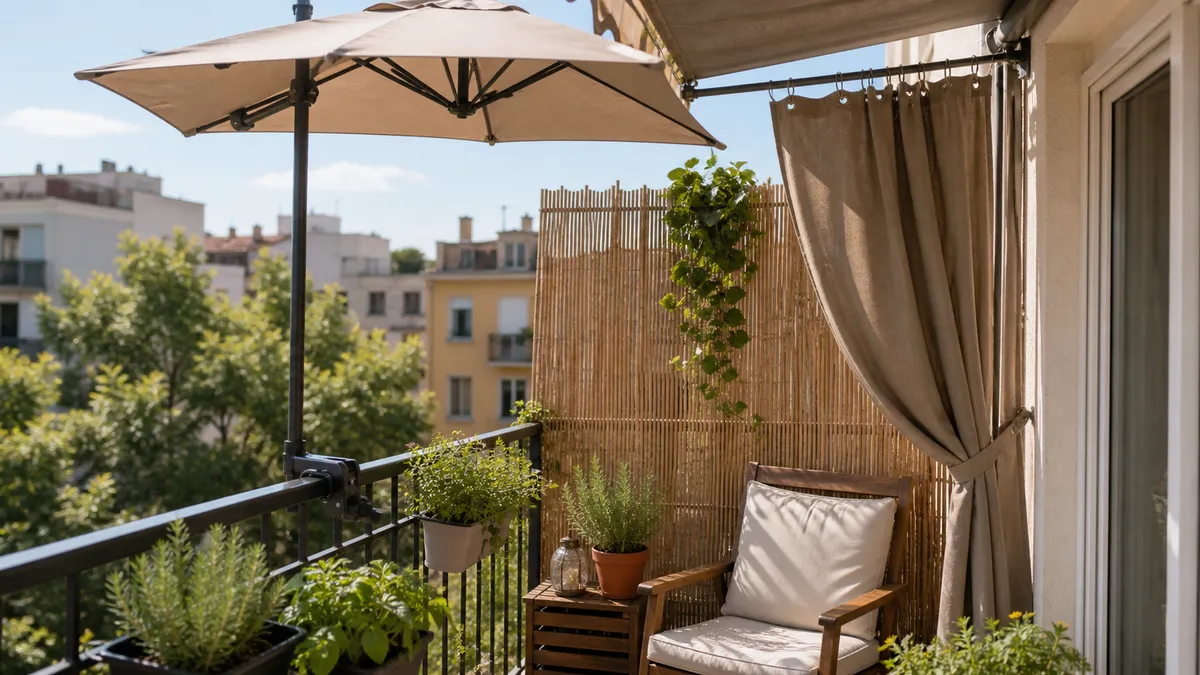
Balcony Shade Ideas
Balcony shade ideas for apartments: railing screens, half umbrellas, outdoor curtains, plants and 6 more, with when each works and what to buy.
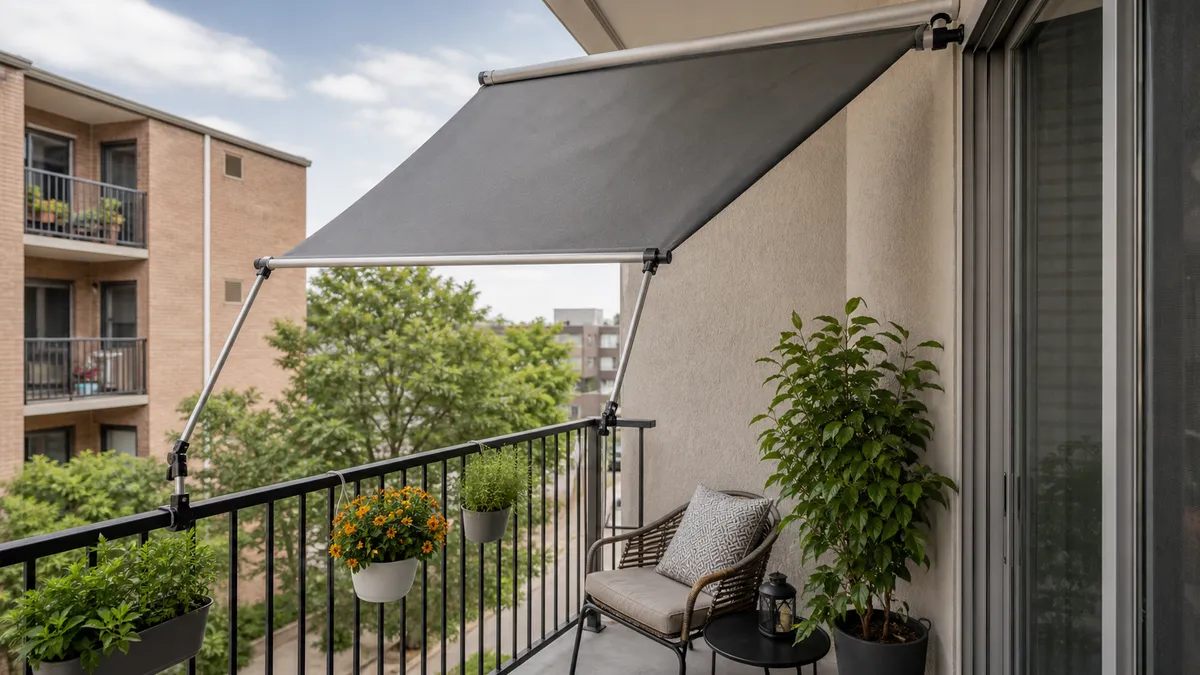
Apartment Balcony Awning
Awnings for balconies that work in apartments: floor-to-ceiling retractable awnings, half umbrellas, rail screens and wall mounts, with sizes and costs.
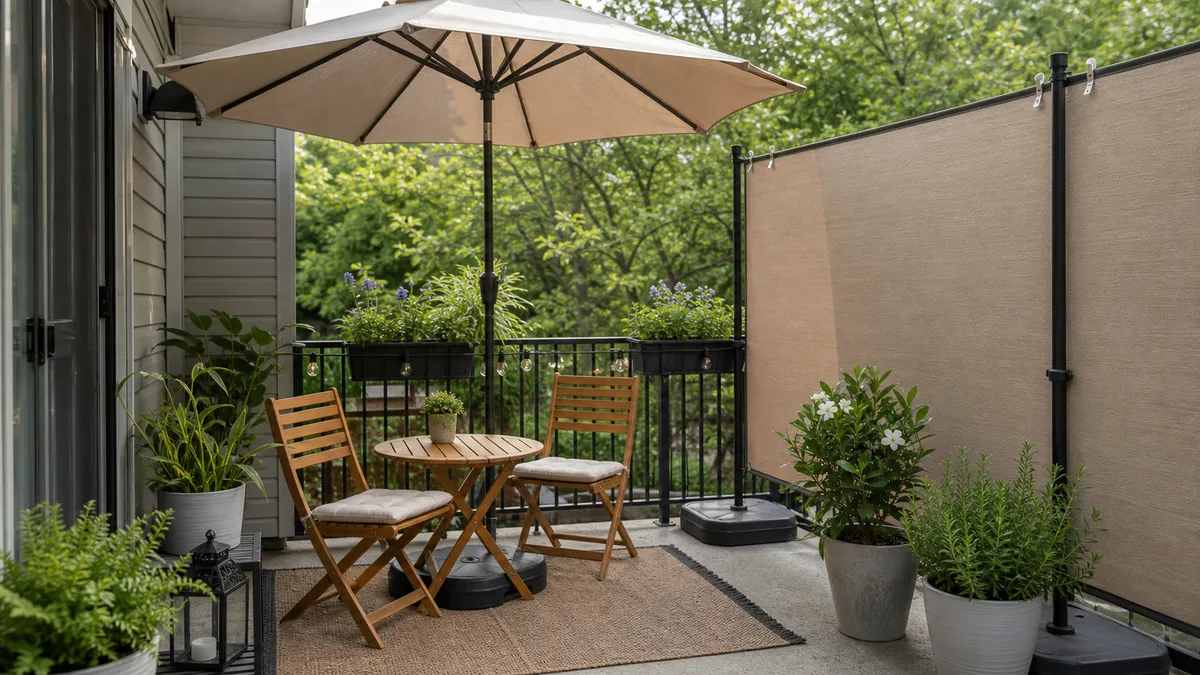
Renter-Friendly Patio Shade
Renter-friendly patio shade that leaves no holes: cantilever umbrellas, no-drill awnings for covered patios, weighted canopies, screens and weights.
Questions
FAQ
How do I attach a privacy screen to a balcony railing without drilling?
Use zip ties or clips through the screen's grommets: tie the top corners first, then every top grommet to the rail and every bottom grommet to the bottom rail or balusters. Tie from the inside so the screen sits inside the balusters. If nothing may touch the railing, use a freestanding screen or planters instead.
What is the best material for a balcony privacy screen?
HDPE mesh suits most balconies: it is light, breathable, UV-treated and easy to trim. Bamboo or reed looks warmer but is nearly solid, heavier in wind and needs sealing. Solid vinyl gives the most privacy but catches the most wind.
How tall should a balcony privacy screen be?
Match your railing height so the screen does not stick out above it: usually about 3 ft for a 36 in railing and 3.5 ft for a 42 in railing, which is the IBC minimum for most apartment buildings. For privacy at standing height, use a side awning or curtains.
Do balcony privacy screens block wind?
They reduce it, and they also add wind load to the railing. Breathable mesh around 75 to 90% blockage lets some air through and feels calmer than a solid panel, which creates more turbulence behind it.
Can my landlord or HOA make me remove a balcony privacy screen?
Yes, if the lease or association rules ban items on railings or changes to the exterior. Some HOA handbooks state outright that items attached to railings will not be approved, so ask before you buy.