
Quick Answer
Quick answer for a grill pergola
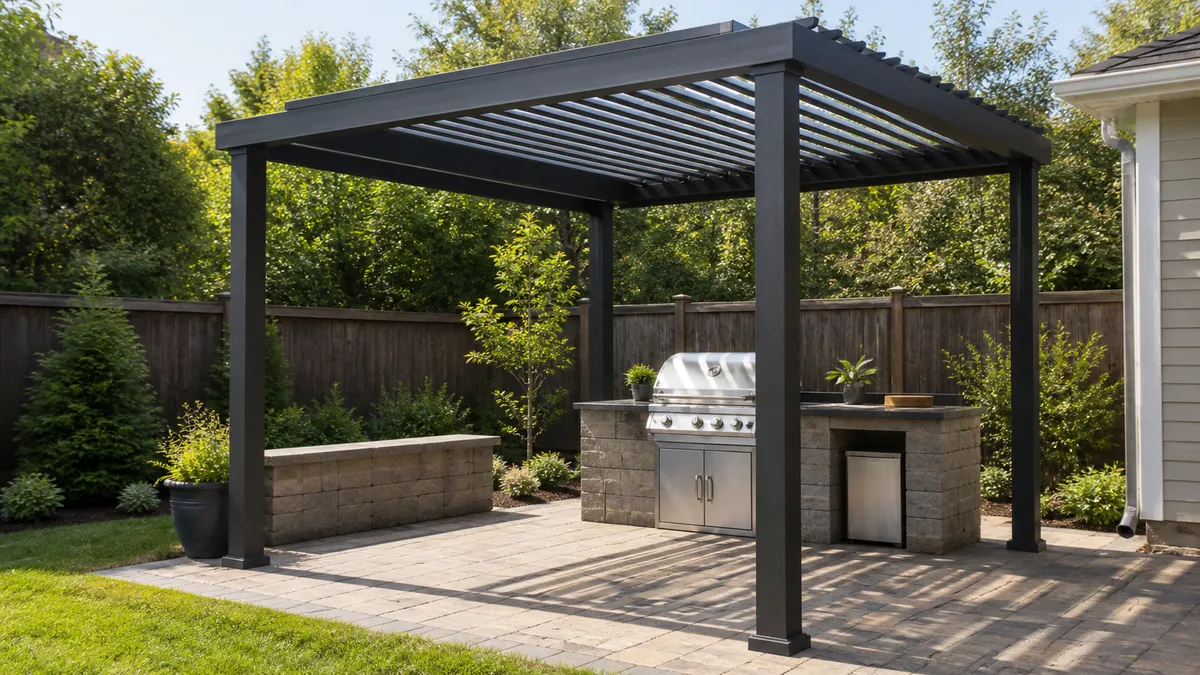
A BBQ grill can sit under or beside a pergola only when the grill manual, local fire rules, side clearance, rear clearance, overhead clearance and airflow all pass. If the manual bans overhead combustible construction or the roof traps smoke, keep the grill outside the covered zone and shade the dining area instead.
Choose an open-edge grill pergola only when clearances, airflow and local rules pass; otherwise shade the seating area and keep the BBQ outside the roof.
Buying Direction
What to buy or skip for a grill pergola
Use this table after checking the grill manual and local rules. It does not replace model-specific clearance instructions.
| Situation | Buy / use this | Why |
|---|---|---|
| Gas grill with manual-approved clearance near an open side | Use an open pergola edge or set the roof back from the grill | Heat and smoke can leave the cooking area while the dining space still gets shade. |
| Charcoal grill or kettle moved under cover for bad weather | Keep the charcoal grill outside the covered roof and shade seating instead | Charcoal creates carbon monoxide and hot coals keep producing risk after cooking. |
| Pellet grill near posts, panels or side screens | Use only an open-sided shelter after clearance, grease and cord checks | Pellet grills still need outdoor airflow, dry pellet storage and a clear heat path. |
| Built-in gas grill, counter, shutoff, fan or vent hood planned | Treat the project as an outdoor kitchen, not a simple pergola kit | Built-in grills can produce heavy heat and smoke and need designed ventilation. |
| Fabric canopy or low polycarbonate roof would sit above the grill | Skip the roof-over-grill plan and shade the eating area instead | Heat can damage panels or fabric, and canopy manuals may ban grills underneath. |
How grill type changes the pergola plan
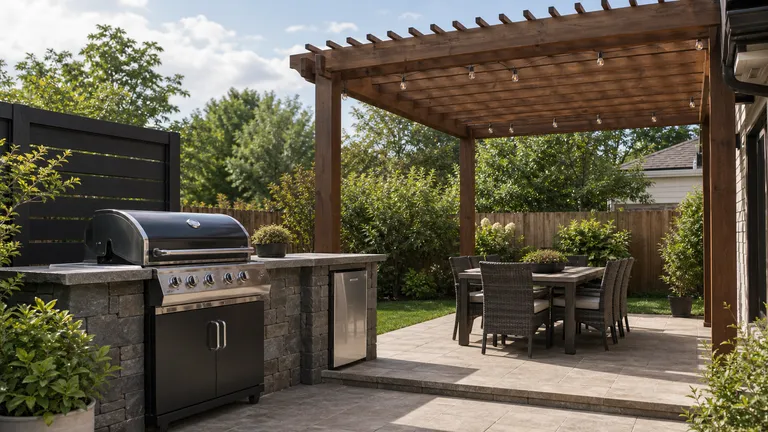
Start with the grill manual before choosing the pergola roof, screen or kit. USFA says propane, charcoal and wood-pellet grills belong outside and should be kept away from siding, deck railings, eaves and overhanging branches. It also recommends a 3-foot safe zone around the grill and grease cleaning after use.
Clearance numbers vary by model, so do not turn one manual into a universal pergola rule. Weber's referenced Genesis II family warns against use beneath overhead combustible construction and lists 24 in / 61 cm combustible clearance. Napoleon's referenced 450B manual gives different side and rear examples and also warns against overhead combustible construction. Traeger's referenced pellet-grill manual gives 12 in clearance to combustibles and 40 in overhead clearance under overhead combustibles for that model.
CPSC gas-grill guidance is stricter as a general safety frame: use a grill at least 10 ft from a house or building and not in a garage, breezeway, carport, porch or under a surface that will burn. Under a pergola, that means the grill location has to pass the manual first and then pass the larger site check.
Charcoal needs the most conservative placement. CPSC warns that charcoal keeps producing carbon monoxide until fully extinguished and says charcoal should never be burned in enclosed environments. A pergola with a low roof, side panels or wind-blocking screens can move a charcoal cook closer to an enclosed or semi-enclosed problem.
- Use the grill manual as the first clearance source.
- Treat overhead combustible construction as a stop sign when the manual bans it.
- Keep charcoal outside covered or screened cooking bays.
Clearance Checks
Grill type and clearance checks
Use these examples as manual-check prompts, not universal clearance rules.
| Grill type | Manual or safety example | Pergola implication | Stop trigger |
|---|---|---|---|
| Gas or propane grill | CPSC gives 10 ft from a house or building as general gas-grill guidance; Weber and Napoleon manuals give model-specific combustible clearances. | Keep the grill in open air and obey the manual before choosing a roof, screen or post location. | Stop if the manual bans overhead combustible construction or the hose runs near heat or grease. |
| Charcoal grill | CPSC warns about carbon monoxide and says charcoal should never burn in enclosed environments. | Keep the grill outside the covered pergola and shade the dining area instead. | Stop if weather is the reason the charcoal grill is being moved under cover. |
| Pellet grill | Traeger's referenced manual gives a 12 in combustible clearance and 40 in overhead combustible clearance for that model. | Use only with open airflow, dry pellet storage, grease cleaning and safe cord routing. | Stop if side screens, low panels or a roof block heat and exhaust. |
| Built-in gas grill | DCS says built-in grills need a well-ventilated area and warns about heavy heat and smoke during use. | Plan it as an outdoor-kitchen installation with ventilation and shutoff access. | Stop if gas, electrical, enclosure or vent work would be improvised. |
Roof materials that do and do not belong over a BBQ
The pergola material does not approve the grill. Wood, aluminum, louvers, panels and fabric all still need the same basic checks: manual clearance, local fire rules, airflow, grease control and a heat path that does not run into the roof.
An open-slat pergola is usually easier to make work because it lets heat and smoke rise. Even then, combustible rafters can still be too close to the grill lid, side burner or flare-up zone. A wood pergola near a BBQ should be treated as combustible until the manual, clearance and local rules say otherwise.
Aluminum and louvered pergolas can look safer because they are not fabric, but they do not erase smoke or grease. Closed louvers can trap hot air. Rain settings can push smoke sideways. If the louvered roof would sit directly above the lid of a hot grill, read the grill manual and the pergola roof guidance before buying.
Polycarbonate and fabric need stronger caution. A polycarbonate panel manual warns against direct open flame or high-temperature exposure and says prolonged heat contact can damage panels. A canopy manual warns not to use grills, fire pits, deep fryers or smokers under the canopy. Do not buy a low panel or fabric cover to sit over the cooking heat.
- Use open slats or a set-back roof before a low covered cooking bay.
- Do not treat metal or louvers as automatic grill clearance.
- Keep fabric and low polycarbonate away from direct grill heat.
Roof Materials
Roof and cover setups near a BBQ
The safer use depends on clearance, airflow and whether the roof sits over the grill or over the seating area.
| Roof or cover | Better use | BBQ caution | Check before buying |
|---|---|---|---|
| Open-slat pergola | Shade frame near the cooking area or over dining. | Combustible rafters can still be too close to the grill. | Check grill-manual overhead clearance and roof height. |
| Wood pergola | Dining shade or set-back grill edge. | Wood remains combustible and can collect grease smoke. | Check manual warnings and local fire code. |
| Aluminum or louvered pergola | Adjustable shade away from direct heat. | Closed louvers can trap heat and move smoke sideways. | Check airflow, roof operation and drainage path. |
| Polycarbonate roof | Rain or sun cover away from grill heat. | High heat or open flame can damage panels. | Check panel guidance and keep heat away from the roof. |
| Fabric canopy or shade cover | Shade over seating, not over the grill. | Canopy manuals can warn against grills underneath. | Do not cover the BBQ cooking zone with fabric. |
Smoke, grease and side screens
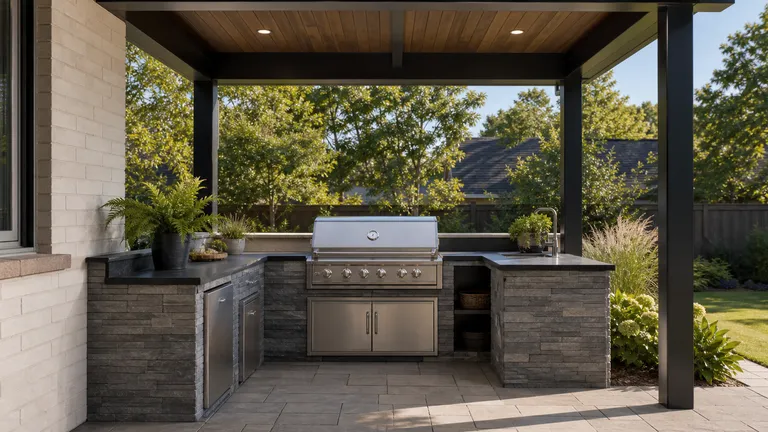
Privacy can make a BBQ pergola worse. A side screen, privacy panel or half wall may block the exact path the grill needs for intake, exhaust or smoke movement. If smoke rolls back under the roof or toward the control panel, the screen is not helping.
DCS warns that wind direction can disrupt airflow on a built-in grill and cause heat buildup around the control panel. That matters near a pergola because side screens and roof panels change wind behavior. A screen that feels comfortable at the table can push smoke into faces or hold heat around the grill body.
Grease is part of the structure decision. USFA and NFPA both emphasize cleaning grease so buildup cannot ignite. A pergola roof, side curtain or privacy wall close to the grill can collect smoke film and grease over time. That does not mean every pergola near a grill is unsafe, but it does mean the cleaning path has to be easy before the screen or panel is bought.
Leave a clear escape route for heat and smoke. The grill lid needs room to open. The exhaust side needs open air. The grease tray needs access. If a side panel blocks any of those paths, move the screen, move the grill or shade only the seating area.
- Keep the grill exhaust path open.
- Do not put a privacy panel where it traps smoke or heat.
- Plan grease-tray access before adding screens or counters.
Safer ways to place a BBQ near a pergola
The safest BBQ pergola setup often separates shade from the heat source. Put the dining table, prep table or sitting area under the pergola, then keep the grill just outside the roof line. The table stays shaded without putting the lid, flare-up zone and grease smoke below a low cover.
An open-edge grill zone can work when the manual allows the clearances and the roof is set back from the grill. This placement keeps the cook close to the shaded area but leaves the grill with open side airflow. It also makes it easier to roll a cart grill away from the pergola when weather or smoke changes.
An open-sided grill bay can work only when the floor, counters and nearby posts are chosen for heat and cleaning. Use non-combustible surfaces near the grill, keep the grease tray reachable and leave side airflow open. Do not add privacy panels around the grill just because they look finished in a product photo.
A built-in grill belongs in a different planning lane. If the project includes a gas shutoff, counter opening, vent hood, electrical outlet, fan, light, roof penetration or appliance enclosure, use the outdoor kitchen guide instead of treating it as a pergola kit purchase. If the heat source is a fire pit, fire bowl or open-flame seating feature, use the fire pit pergola guide.
- Shade the dining table and keep the grill outside the roof when clearance is tight.
- Use an open edge when the manual allows the grill to be near the pergola.
- Route built-in grills to outdoor-kitchen planning before buying a roof kit.
Gas hose, shutoff and bad-weather routine
The grill path matters after the pergola is built. CPSC says gas hoses should stay away from hot surfaces and grease-drip areas. Under a pergola counter or beside a post, that means the hose route has to stay visible, reachable and clear of the cooking heat.
Do not hide the shutoff behind a screen, storage box or fixed panel. A side screen that looks tidy can make a gas problem harder to reach. If the setup needs a permanent gas line, shutoff cabinet or appliance enclosure, move the project into outdoor-kitchen planning before buying more shade structure.
Plan what happens when the flame goes out. CPSC says to turn off the gas and wait 5-10 minutes for gas to dissipate before restarting. That wait is more important in a semi-covered pergola with counters or panels because still air can make a small mistake more serious.
Bad weather is not a reason to trap the cook area. If wind pushes smoke sideways, rain makes you close louvers over the grill, or a screen has to be zipped down while cooking, stop the cook instead of forcing the pergola to act like a kitchen hood.
- Keep hoses and shutoffs reachable after screens, posts and counters are added.
- Wait after a gas flameout instead of relighting immediately under a semi-covered roof.
- Do not close panels around an active grill to keep rain or wind out.
Gear to research
Pergola gear to compare after the safety checks
Compare these only after the grill manual, roof clearance, airflow and local rules have passed.
Open frame
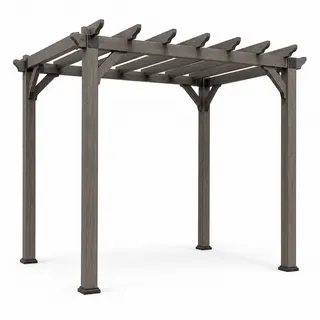
Open pergola kit
For shading dining or prep space while the grill stays near an open edge.
- Best for shade beside the grill
- Easier smoke escape than panels
Check:Confirm post locations, roof setback and manual clearance.
Compare pergola kits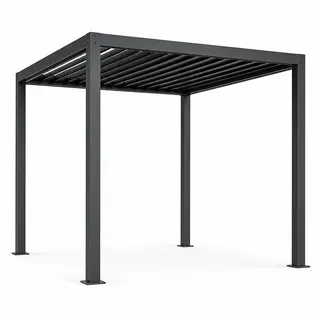
Adjustable roof
Louvered pergola
For adjustable shade or rain control after the grill zone is kept clear.
- Can vent when open
- Still needs heat clearance
Check:Do not close louvers over active cooking heat unless the manual and local rules allow it.
Research louvered pergolas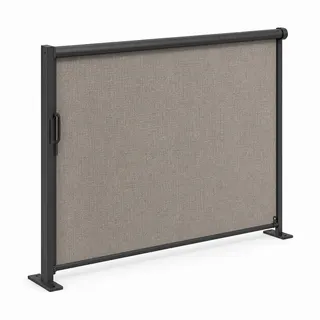
Screening
Pergola side screen
For privacy or low sun away from the grill exhaust path.
- Useful away from smoke
- Can block airflow
Check:Keep screens out of the heat, smoke and grease-tray service path.
Compare side screensCosts and accessories that change the purchase
Do not compare only pergola kit prices. A grill area can need post and footing work, a non-combustible floor zone, heat-resistant wall protection, side-screen changes, lighting placement, outlet work, gas shutoff access and cleaning space. Those parts can matter more than the roof style. Ask installers to price the shade structure and cooking clearance as one job so the safety work is not hidden.
A louvered roof or fixed-panel roof can raise the budget and the safety burden at the same time. If the roof is added for rain, confirm where grease smoke and hot air go when the louvers are closed or the panels are fixed. Use the rain-focused pergola guide only when rain control, drainage and roof operation become the main problem.
Side screens can look inexpensive, but they are not harmless near a grill. They add wind surface, change airflow and can trap smoke. A screen that belongs beside a dining bench may not belong behind a grill.
Professional work is not optional when utilities enter the plan. Gas line changes, electrical outlets, fans, lighting, vent hoods, roof penetrations and built-in appliance openings are outdoor-kitchen work. If those items are in the project, read the outdoor kitchen guide and bring in qualified help before buying the pergola roof.
- Price post, footing, roof, screen and surface work together.
- Treat gas, electrical and vent work as professional planning triggers.
- Do not let a cheaper pergola kit hide the cost of making the grill area safe.
Budget Checks
What can change the real project cost?
These are cost drivers to include in quotes. Exact prices depend on local labor, materials and code requirements.
| Cost item | Why it matters near a BBQ | Check before buying |
|---|---|---|
| Posts and footings | Screens, roof panels and louvers add load to the pergola frame. | Ask whether the frame is sized for the final covered shape. |
| Non-combustible surface | The grill area needs a floor and nearby surfaces that can handle heat and grease. | Keep carts, hoses and grease trays away from combustible clutter. |
| Louvered roof or panels | Rain control can trap smoke or put roof material closer to heat. | Check ventilation and roof-material limits. |
| Side screens | Privacy screens can block wind, smoke and exhaust paths. | Use screens away from the grill side, not around the cooking heat. |
| Utilities or venting | Gas, electrical, fan and hood work changes the project scope. | Plan it as an outdoor kitchen instead of a kit add-on. |
Do not use these items as a shopping list until grill manual clearances and local rules pass.
When not to put a grill under a pergola
Do not put a BBQ under a pergola when the manual prohibits overhead combustible construction. That warning is not a styling note. It controls whether the grill can be used under rafters, panels, fabric or louvers at all.
Skip the roof-over-grill plan when side clearance, rear clearance or overhead clearance cannot be met. Keep the grill outside the covered zone and shade the table instead. This is often cheaper, cleaner and easier to explain to a landlord, HOA or insurer.
Do not move charcoal under cover because rain starts. CPSC's charcoal warning is about carbon monoxide and coals that keep producing risk after cooking. A garage, enclosed porch, carport or low screened pergola is the wrong escape route for bad weather.
Do not buy fabric or low polycarbonate over the cooking zone. Do not place a gas hose where heat or grease can reach it. Do not add privacy screens that trap exhaust. Do not treat local fire code as optional; Raleigh Fire's guidance is one example showing that local rules can restrict open-flame cooking near combustible construction.
- Stop if the grill manual bans the roof condition.
- Stop if local fire code, HOA or rental rules block the setup.
- Stop if charcoal, smoke or grease would be pushed into a covered or screened area.
- Use the fire pit pergola guide for fire bowls, fire pits, fireplaces or open-flame seating.
Watch-outs
Before you buy or install
- Do not use a pergola roof to override a grill manual's overhead combustible warning.
- Do not move charcoal cooking under a covered or screened structure when weather changes.
- Do not place low fabric or polycarbonate directly above grill heat.
- Do not add side screens where they trap smoke around the grill or control panel.
Read Next
Related guides if your situation is different
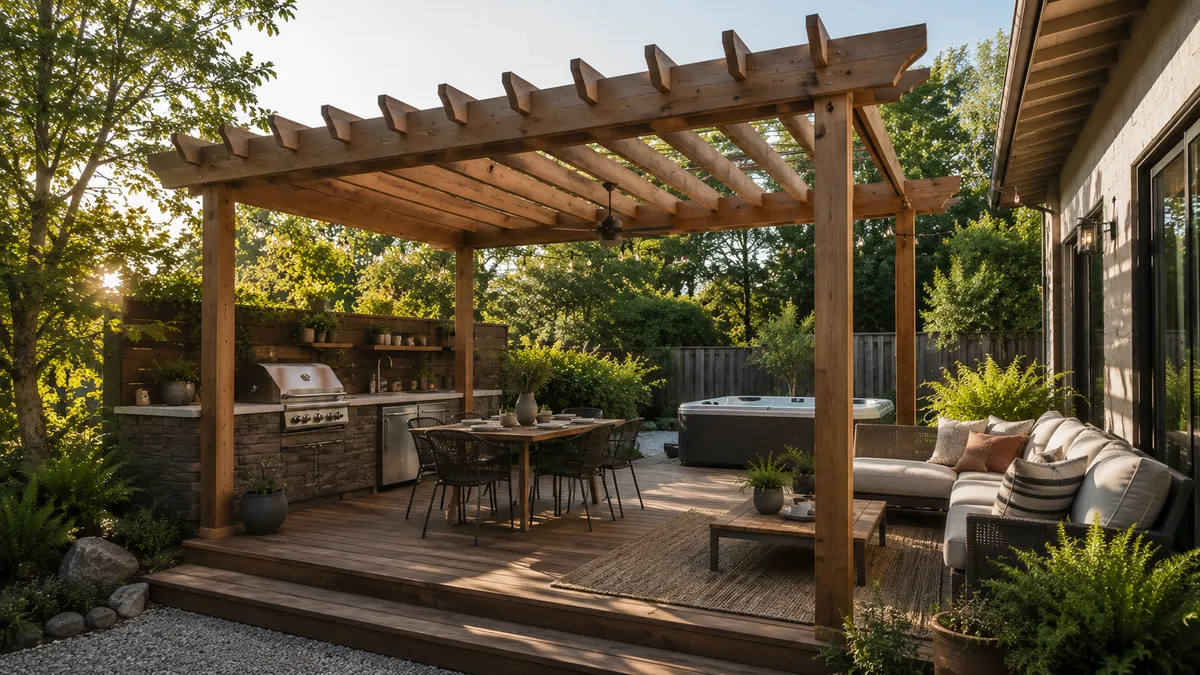
Pergola Guide
Use this when pergola is closer to the real constraint than the current page.
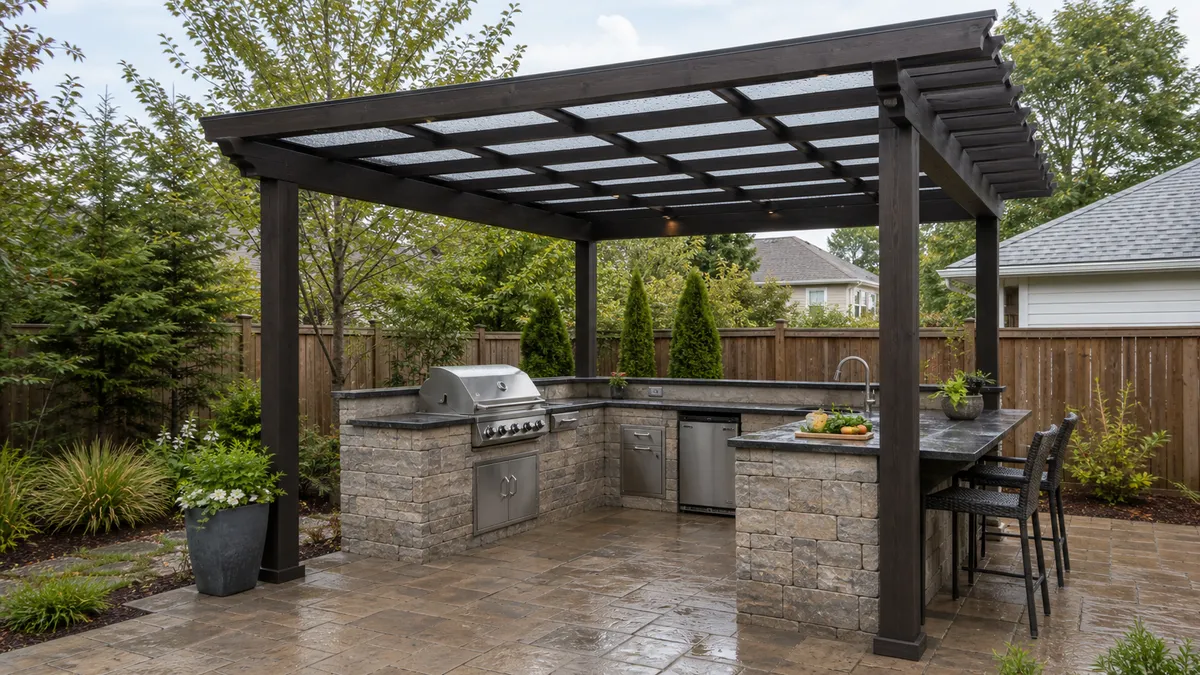
Pergola for Outdoor Kitchen
Use this when pergola for outdoor kitchen is closer to the real constraint than the current page.
Pergola for Fire Pit
Use this when pergola for fire pit is closer to the real constraint than the current page.
Questions
FAQ
Can you put a gas grill under a pergola?
Only if the grill manual, overhead clearance, side clearance, rear clearance, airflow and local rules all allow it. USFA and CPSC guidance both point away from burnable overhead surfaces and enclosed spaces. If the manual bans overhead combustible construction, keep the gas grill outside the roof line.
Is a charcoal grill safe under a covered pergola?
Treat charcoal more conservatively than gas. CPSC warns that charcoal creates carbon monoxide and continues producing risk until fully extinguished. Do not move a charcoal grill into a covered porch, carport, garage or low screened pergola because rain or wind arrives.
How high should a pergola roof be over a grill?
There is no single safe height for every grill. Use the grill manual first. The research examples differ: one Weber family lists 24 in combustible clearance, a Traeger model lists 40 in overhead combustible clearance, and other manuals use different side or rear limits.
Is polycarbonate roofing safe over a BBQ?
Do not assume polycarbonate is safe above a BBQ. A polycarbonate panel manual warns against direct open flame and high-temperature exposure. Use panels away from direct grill heat, check the panel instructions and keep the cooking zone open if clearance is uncertain.
Should the grill be inside the pergola or at the edge?
The edge is usually easier to make safe. An open-edge placement lets heat, smoke and grease leave the structure while the dining area stays shaded. Putting the grill deeper inside the pergola needs stronger proof from the manual, roof material, airflow and local rules.
Do I need a vent hood for a grill under a pergola?
If the setup needs a vent hood, roof penetration, built-in grill, gas line, electrical outlet or fan, it is no longer a simple pergola-kit purchase. Treat it as an outdoor kitchen project and plan it with qualified help before buying the roof or screens.